English


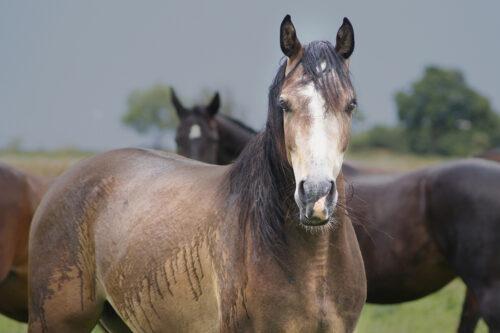
The American Paint Horse is an eye-catching breed with distinctive colouring and stock horse bloodlines. This American breed shares ancestry with the Quarter Horse, which deliberately excluded horses with pinto coat patterns from their breed registry.
Paint Horses are adored by a loyal fan base of riders thanks to their willing dispositions and colourful coat patterns. Unfortunately, the same genes responsible for specific Paint coat patterns can contribute to genetic disorders.
Founded initially to preserve colourful horses ineligible for AQHA registration, the American Paint Horse is now one of the most popular breeds in North America.
This article will review the history, origins, breed characteristics, health problems, and nutritional needs of American Paint Horses. Keep reading to learn more about feeding and caring for this colourful breed.
American Paint Horse History
The multicoloured ancestors of Paint Horses served as mounts for conquistadors, indigenous tribes, and cowboys throughout American history. But their colourful coats weren’t always considered a favourable trait.
Origin
The first record of paint-coloured horses in North America dates back to 1519 when multi-coloured horses accompanied the Spanish conquistador Hernán Cortés across the Atlantic. [1]
Now infamous for the atrocities he committed against indigenous people, Cortés rode these horses during an expedition that led to the fall of the Aztec empire and the Spanish conquest of Mexico. [2]
Letters from Bernal Díaz, one of Cortés’ soldiers, describe several of the expedition’s spotted warhorses. The Spanish used the term pintado, or pinto, to refer to a multicoloured horse. These letters suggest Cortés personally rode a sorrel and white pinto stallion. [1]
History scholars believe that horses brought to the Americas on Spanish expeditions are the ancestors of feral populations of horses that eventually roamed western plains. Some wild horses displayed pinto coats similar to those described in Díaz’s letters. [3]
Research suggests that Spanish horses had Andalusian, Barb, and Arabian bloodlines. Direct descendants of these horses, called Spanish Barbs, played significant roles in developing the American Mustang, Quarter Horse, Appaloosa, and Paint Horse. [3]
Historic Use
By the first half of the 17th century, feral horses spread through the northern Rockies and central plains. Local people domesticated these horses, and they became integrated into many indigenous cultures well before the arrival of colonial settlers on the western frontier. [4]
Many indigenous people preferred the flashy colouring of pinto horses, and selective breeding programs helped proliferate the coat pattern. Breeding programs also favoured versatile horses with willing dispositions for hunting, battle, and transport. [4]
These horses were crossed with working horses owned by American settlers to produce the ideal stock horses for western ranching operations. Many of these horses inherited multicoloured coat patterns from their pinto ancestors.
When the American Quarter Horse began the official breed registry for these stock horses, excessive white markings were considered an undesirable trait for the Quarter Horse breed. [5]
Before breeders understood horse coat colour inheritance, they believed that “cropout” colouring with excessive white indicated non-purebred breeding.
As a result, the pinto stock horses of the American West were excluded from registration. The American Paint Horse breed emerged from a concerted effort to preserve these horses and their unique coat patterns.
Breed Registry
The American Paint Horse Association (APHA) is the official breed registry of the American Paint Horse. This organization was founded in 1962 after the merger of the American Paint Quarter Horse Association and the American Paint Stock Horse Association.
Unlike the Pinto Horse Association, which registers horses with pinto colouring regardless of ancestry, the APHA only registers horses that meet colour and bloodline requirements. [6] To be eligible for registration, Paint Horses must have parents registered with the APHA, AQHA, or the Jockey Club.
Horses with characteristic coat patterns receive regular registration, while solid-coloured horses with at least one Paint parent are recorded in the breeding stock registry.
Today, the APHA maintains a registry of almost 800,000 American Paint Horses. The organization is also one of the fastest-growing breed registries in the world, with 50,000 new registrations each year. [5]
| Breed Summary | |
|---|---|
| Breed Name | American Paint Horse |
| Also Known As | Paint; Paint Horse |
| Breed Type | Stock horse |
| Origin | United States (North America) |
| Breed Registry | American Paint Horse Association (APHA) |
| Population Status | Popular; almost 800,000 registered horses |
| Average Height | 14 – 16 hh |
| Average Weight | 990 – 1,200 lb (450 – 545 kg) |
| Common Coat Colors | Bay, black, brown, buckskin, chestnut, sorrel, palomino, dun, grullo, gray, roan, cremello, perlino; tobiano, overo, tovero patterns |
| Conformation | Stocky, powerful, well-balanced, strong-boned, short-coupled |
| Common Uses | Ranching, western pleasure, reining, roping, trail riding, showing, low-level jumping |
| Temperament | Amiable, trainable, easy-going |
| Best For | Riders of all levels |
| Common Health Concerns | Lethal White Overo, deafness, HYPP, PSSM1, sunburn, photosensitization, skin irritation, ocular squamous cell carcinoma |
What's your top priority with your horse's health?

Enter your email to receive your store credit
Breed Characteristics
Because of the bloodline requirements of the APHA, breed standards for Paints extend beyond coat colour. American Paint Horses also have characteristic conformations and temperaments that make them well-suited for Western disciplines.
Conformation
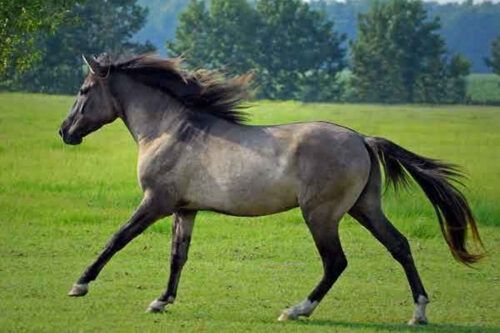
American Paint Horses are a stock breed with conformation that strongly resembles their shared bloodlines with the Quarter Horse. Some Paint Horses with Thoroughbred parentage may have a lighter body type.
Most Paint Horses stand between 14 and 16 hands tall. The ideal American Paint Horse has a stocky build with powerful muscling. These horses are generally well-balanced, strong-boned, and short-coupled.
Colour patterns differentiate the Paint Horse from other stock breeds with similar conformation.
Paint Coat Patterns
Equestrians use many terms to describe multicoloured patterns in horses, but the APHA only recognizes three main patterns that result from different combinations of Paint colour genes. These coat patterns include tobiano, overo, and tovero.
Paint colour patterns are identified by the location of white on the horse, not the colour of the coat. Paint horses come in multiple coat colours and often have other unique markings associated with Paint genetics.
Tobiano
Tobiano Paints usually have a dark colour on their flanks and white over their backs somewhere between their withers and tails. Most tobianos also have four white legs with regular spots that form ovals or round patterns over the neck and chest.
Their faces are usually dark, and face markings resemble a solid horse. Any horse carrying the dominant TO gene will display a tobiano colouring. However, some tobianos are mistaken for solid colours if they have minimal white markings. [7]
Overo
Overo Paints usually don’t have white crossing their back between the withers and tails. The white is generally irregular, scattered, and splashy. Most overos also have at least one dark leg and distinctive head markings.
Research into the genetics responsible for overo patterns is ongoing. Overo paints include three genetically distinct patterns: frame overo, sabino, and splashed white. [8]
Frame overo refers to the typical overo colouring, while sabino overos have white spotting that extends from the horse’s legs in ragged patches onto the horse’s belly and body.
Sabinos occur in many breeds, but frame overos only appear in horses with Spanish ancestry. [9]
Splashed white overo is the least common spotting pattern. These horses appear dipped in white paint, with white covering the legs, head, and bottom portions of the body.
Tovero
Many Paint Horses have combinations of genes responsible for tobiano and overo coat patterns. As a result, coat patterns on these horses can be challenging to classify.
If the offspring of a tobiano and overo Paint Horse exhibit characteristics of both coat patterns, the APHA recognizes the horse’s pattern as tovero. [10]
Toveros typically have more white than coloured hair, with dark pigmentation around the ears and flanks. Spots can vary in size but generally have regular patterns with distinct borders.
Coat Colours
The APHA recognizes 16 base coat colours in Paint Horses, which can combine with any of the recognized coat patterns. These colours include:
- Bay Roan
- Bay
- Black
- Blue Roan
- Brown
- Buckskin
- Chestnut
- Cremello
- Dun
- Gray
- Grullo
- Palomino
- Perlino
- Red dun
- Red Roan
- Sorrel
Paint Horse Traits
Familiar face and leg markings in other breeds also appear in the American Paint Horse. Many Paints have additional characteristic traits associated with their unique colouring.
Additional Paint Horse traits include:
- White leg markings extending above hocks or knees
- Blue eyes
- Bald face markings
- White jaw or lower lip
- Blue zones of white hair on black-pigmented skin
- Multicoloured manes and tails
- Dark spots in white hair on the face or legs
- White or contrasting coloured areas on the midline
Temperament
Because of their shared ancestry, American Paint Horses and Quarter Horses have similar temperaments and personality traits. These horses are highly regarded for their amiability, trainability, and easy-going personalities.
As with all horses, personalities can vary significantly between individual horses. For example, registered Paint Horses with Thoroughbred ancestry are typically more sensitive and reactive than Paints with more Quarter Horse blood.
Disciplines
Their stock horse origins allow Paints to thrive as working ranch horses and competitive mounts in Western disciplines. Today, the American Paint Horse is a popular partner for riders in Western pleasure, reining, and roping arenas.
Their friendly and quiet dispositions also make Paint Horses enjoyable pleasure mounts for riders of all levels. You can often spot colourful Paints trail riding, showing in hand, and taking their owners around low-level jumping courses.

American Paint Horse Health
Stock horses such as the American Paint Horse are typically hardy horses bred for the soundness and adaptability necessary to work long days on the ranch.
Some genes responsible for the desirable coat patterns in Paints can increase the risk of undesirable medical issues and genetic diseases.
Genetic Diseases
Lethal White Overo (LWO) is the primary genetic disorder that can affect American Paint Horses. This autosomal recessive condition results when offspring inherit two copies of a gene associated with the frame overo coat pattern.
Foals with LWO are characterized by a completely white coat and an underdeveloped intestinal tract. As a result, these foals cannot defecate, which leads to severe colic and death.
There is no treatment for LWO, and most breeders choose to euthanize affected foals.
DNA testing is available to detect the mutation responsible for LWO. While heterozygous carriers are unaffected by the mutation, owners should avoid breeding two carriers to limit the risks of producing an affected foal. [11]
Paint Horses can also carry genetic diseases found in Quarter Horses and related breeds. These diseases include hyperkalemic periodic paralysis (HYPP) and polysaccharide storage myopathy (PSSM1). Learn more about these disorders in our Quarter Horse breed guide.
Health Problems
Paint owners have long observed that many splashed white overo horses are deaf; research studies have confirmed a link between specific Paint coat patterns and deafness in horses. [12]
Horses with extensive white markings and blue eyes have a particular risk of deafness because of a lack of functional melanocytes in the inner ear. While scientists are still exploring the role of melanocytes in the ear, studies suggest the cells are critical for cochlear function. [12]
Fortunately, many deaf Paint Horses can lead normal lives with modified training and management programs that do not require the horse to respond to voice cues.
Care and Management
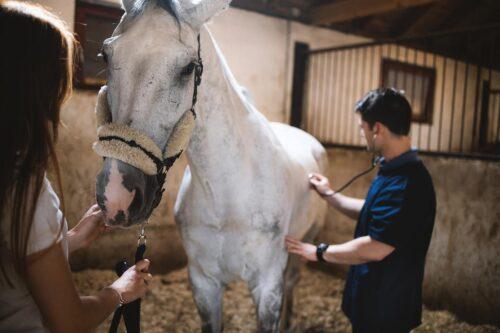
Like all horses, Paints need quality basic care that meets their physical, mental, and social needs. Basic care includes safe housing, adequate turnout, regular farrier care, routine dental exams, and a preventative veterinary wellness program with vaccinations and deworming.
Daily grooming helps to keep every horse’s coat and skin healthy, but Paint Horses with lots of white often need more elbow grease to stay clean.
Areas with non-pigmented (pink) skin are often more susceptible to sunburn, photosensitization, and skin irritation. Paint Horses can benefit from enhanced UV protection and fly control to protect their sensitive skin when outside in hot weather. [13]
Paints also have an increased risk of ocular squamous cell carcinoma due to lack of protective pigmentation around the eyes. [19]
Regular exercise helps horses maintain a healthy weight, strong bones, and cardiovascular fitness. Most Paint Horses don’t need intense training to use excess energy or discourage undesirable behaviours.
American Paint Horse Nutrition
Feeding a balanced diet is one of the best ways to support the health of your Paint Horse. As with most stock breeds, weight maintenance is essential for preventing common problems in Paints.
Targeted dietary management can also help support Paint Horses with certain genetic disorders.
Weight Maintenance
American Paint Horses are generally easy keepers. Like Quarter Horses and other stock breeds, Paints can quickly gain weight if they consume too many calories.
Carrying excess weight can be a consequence of metabolic disorders, such as insulin resistance which puts the horse at risk of laminitis. Excess weight can also negatively impact performance and joint health.
Owners can use regular body condition scoring to determine if their Paint Horse is overweight or underweight. Adult paint horses typically have a body weight between 450 – 545 kg (990 – 1200 lb).
If your Paint Horse struggles to maintain weight or experiences sudden weight loss, it could indicate an underlying digestive issue. Work with your veterinarian to determine if your horse needs treatment, and consult a nutritionist about developing an appropriate diet.
Sample Diet
Diet for a Mature American Paint in Light Work with Normal Body Condition
| Feed | Maintenance Diet |
|---|---|
| (Amount / Day) | |
| Mid-Quality hay (10% crude protein) | Free-choice |
| Salt | 30 g (2 tbsps) |
| Omneity® Pellets | 200 g (2 scoops) |
| Diet Analysis | |
| Digestible Energy (% of Req) | 101% |
| Protein (% of Req) | 145% |
| HC (ESC + starch % Diet) | 8.9% |
All horses need a balanced forage-based diet with adequate energy, amino acids, vitamins, and minerals to meet their nutritional requirements.
The equine digestive system also relies on fibre from roughage to support hindgut fermentation. Microbes in the horse’s hindgut convert fibre into volatile fatty acids, which are used by the horse as a primary energy source. [14]
Average-quality, low-ESC (sugar) and starch hay is ideal for easy keeper breeds such as the American Paint Horse. Owners should provide free-choice forage to support digestive function and prevent behavioural issues, such as stereotypies.
Horses diagnosed with metabolic syndrome need hays with HC (ESC + starch) no higher than 10% and may overeat if given free choice. Use a slow feeding system, and give 2% of ideal body weight or 1.5% of current weight, whichever is larger.
Horses have unique dietary needs depending on their health history, work level and physiological status. Your hay’s nutritional value can vary significantly depending on forage species and maturity.
Consult a qualified equine nutritionist when formulating your Paint’s diet. For more information, read our guide to choosing the right hay for your horse.
Nutritional Deficiencies
While many Paint Horses in light work can thrive on a forage-only diet without added energy from complete feeds, hay and pasture grass alone will not meet a horse’s NRC vitamin and mineral requirements.
The most common deficiencies in the equine diet include:
- Selenium (depending on geographic location)
- Zinc and copper (trace minerals)
- Iodine (trace mineral)
- Vitamin E (for horses consuming hay)
- Sodium (an electrolyte)
Feed your horse a balanced vitamin and mineral supplement that provides key micronutrients to help fill these gaps and ensure your horse meets their nutritional requirements. [14]
Horses also need constant access to fresh water and salt. Always add salt to your horse’s daily ration and provide free-choice plain loose salt at all times, but especially in hot weather or after exercising.
Paint Horses in heavy work may need additional energy sources in their diet. Adding healthy fats, or readily fermentable fibre like beet pulp can provide a concentrated source of calories without the adverse digestive and metabolic effects of high-starch concentrates. [15]
Note that the safety of high fat feeding has not been established in horses with metabolic syndrome. Beet pulp is a good choice for them, or soy hulls if available.
Additional Recommendations
Horses in the wild graze continuously, eating small amounts of forage throughout the day and spending little time on an empty stomach. The best way to manage your Paint Horse is with a feeding program that matches the natural behaviours of wild horses.
Feeding hay in a small hole hay net is one way to maintain a constant forage supply while slowing down consumption and regulating calorie intake. This can help to prevent weight gain and metabolic issues.
If your Paint has Equine Metabolic Syndrome (EMS), you may need to restrict grazing on fresh pasture to prevent pasture laminitis. [16]
Managing non-structural carbohydrate intake is also essential for horses diagnosed with PSSM. This condition causes muscle cramping due to abnormal sugar storage in muscles. [17]
Paint Horses with certain Quarter Horse bloodlines may inherit HYPP, another genetic condition that affects muscle function. These horses have high blood potassium levels, so they need low-potassium diets. [18]
Submitting a hay sample for forage analysis can help determine if your forage is appropriate for your horse’s nutritional needs and will also identify nutritional imbalances.
Nutritional Supplements
Ensure your Paint horse gets all of the nutrients they need to support optimal health by feeding a mineral and vitamin supplement.
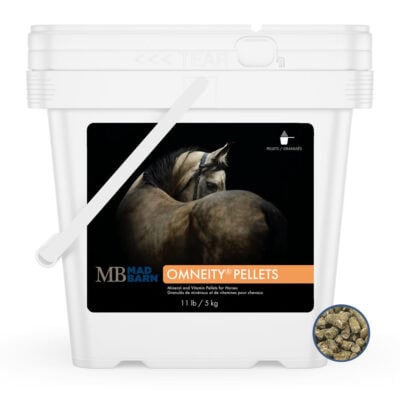
Mad Barn’s Omneity® is a comprehensive vitamin and mineral supplement that provides essential nutrients required for hoof health, skin and coat quality, energy metabolism and more.
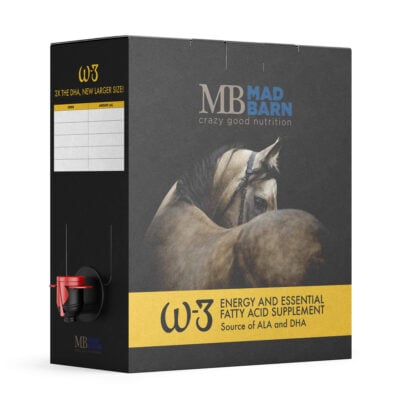
Fat sources with omega-3 fatty acids can provide additional energy and promote a shiny coat in Paint Horses that need extra support. Mad Barn’s W-3 Oil contains high levels of DHA and natural Vitamin E to support joints, respiratory health, and immune function.
Paint Horses with muscle disorders can benefit from extra antioxidant support from Vitamin E and Selenium. Vitamin E is rapidly degraded when hay is harvested, and horses with limited access to fresh pasture may not get enough of this nutrient from forage.
Frequently Asked Questions
Here are some frequently asked questions about American Paint Horses:
The American Paint Horse is an American stock horse breed known for its distinctive white spotting patterns, muscular build, and shared ancestry with the Quarter Horse. American Paint Horses are defined by both bloodline and color-pattern registration requirements through the American Paint Horse Association. This breed developed from colorful stock horses that were once excluded from Quarter Horse registration because of excess white markings. Today, the American Paint Horse is valued for athleticism, trainability, and versatility across many riding disciplines.
American Paint Horses stand apart from other breeds because they combine classic stock horse ability with distinctive white spotting patterns. Their tobiano, overo, and tovero patterns make them visually recognizable, while their muscling, agility, and willing temperament reflect their stock horse heritage. Unlike breeds defined mainly by color alone, the American Paint Horse is also recognized for bloodline and performance ability. This combination of appearance and versatility makes American Paint Horses especially popular in North America.
American Paint Horses typically have calm, intelligent, and people-oriented temperaments. Many American Paint Horses are known for being willing, steady, and trainable, which makes them popular for both work and recreation. Their stock horse background often gives them a dependable, practical nature. Individual temperament can vary, especially in horses with more Thoroughbred influence, which may be more sensitive or energetic.
American Paint Horses are used for ranch work, Western performance events, trail riding, pleasure riding, and a variety of competitions. Their athletic build and practical temperament make them especially well suited for disciplines such as reining, roping, western pleasure, and other stock horse events. American Paint Horses are also popular for showing in hand and for general recreational riding. Their versatility is one of the main reasons the breed remains so widely used today.
American Paint Horses typically have compact, muscular, well-balanced bodies that closely resemble the Quarter Horse. Most American Paint Horses have strong bone, a deep body, and a short-coupled frame that supports power, agility, and athleticism. Their overall build is practical and sturdy, making them well suited for ranch work and performance events. Some individuals with more Thoroughbred influence may appear lighter or more refined, but the breed is generally known for strength and balance.
American Paint Horses come in many base coat colors combined with distinctive white spotting patterns. The American Paint Horse Association recognizes tobiano, overo, and tovero patterns, along with a wide range of base colors such as bay, black, brown, buckskin, chestnut, sorrel, palomino, and roan variations. In American Paint Horses, the pattern is defined by the placement of white markings rather than the horse’s base color. Blue eyes, bold facial markings, and multicolored manes or tails are also common and contribute to the breed’s striking appearance.
American Paint Horses are prone to a few important genetic and management-related health concerns. The best-known inherited disorder in American Paint Horses is Lethal White Overo Syndrome (LWO), which affects foals that inherit two copies of the frame overo gene and is fatal. Some American Paint Horses may also carry conditions seen in related stock horse lines, including PSSM1 and HYPP. Horses with extensive white markings can also be more susceptible to deafness, sunburn, photosensitization, skin irritation, and ocular squamous cell carcinoma, so careful breeding and proactive care are important.
Most American Paint Horses stand between 14 and 16 hands high. This moderate height is typical of stock horse breeds and makes them suitable for many riders and disciplines. Some American Paint Horses may fall slightly outside that range depending on breeding and body type.
Adult American Paint Horses typically weigh between 990 and 1,200 pounds (450 to 545 kg). An American Paint Horse’s weight depends on height, muscling, frame, and body condition. Because many American Paint Horses are easy keepers, carefully maintaining their diet helps to keep a healthy body condition and ensure their long-term soundness and metabolic health. Sudden weight gain or weight loss should prompt a closer look at diet, management, and possible underlying health issues.
American Paint Horses are often a good choice for beginners because many are calm, friendly, and trainable. Their steady temperament and versatility make American Paint Horses appealing for novice riders, especially in pleasure riding and basic Western disciplines. However, whether a horse is good for a beginner depends on the individual horse’s age, training, and personality. A well-trained American Paint Horse with a quiet disposition can be an excellent beginner horse.
Summary
American Paint Horses are colourful stock horses with Quarter Horse bloodlines, versatility, and distinctive coat patterns. These traits make them favourites for Western disciplines, though some coat genes carry health risks.
- Developed from Spanish and Quarter Horse ancestors excluded from AQHA registration
- Recognized coat patterns include tobiano, overo, and tovero
- Registry requires APHA, AQHA, or Jockey Club lineage for registration
- Lethal White Overo is a major genetic risk from frame overo breeding
- Some coat patterns correlate with deafness and photosensitivity
- Balanced forage diets and sun protection support long-term Paint health
References
- Denhardt, R. The Truth about Cortes's Horses. Hisp Am Historic Rev. 1937.
- Brinkerhoff, T. Reexamining the Lore of the "Archetypal Conquistador": Hernán Cortés and the Spanish Conquest of the Aztec Empire, 1519-1521. The History Teacher. 2016.
- Luis, C. et al. Iberian Origins of New World Horse Breeds. J Heredity. 2006. View Summary
- Taylor, W. et al. Early dispersal of domestic horses into the Great Plains and Northern Rockies. Science. 2023. View Summary
- American Quarter Horse Association. AQHA Rulebook. 2023.
- American Paint Horse Association. APHA Registration Guide. 2023.
- Brooks, S. et al. A chromosome inversion near the KIT gene and the Tobiano spotting pattern in horses. Cytogenet Genome Res. 2007. View Summary
- Bowling, A. Dominant Inheritance of Overo Spotting in Paint Horses. J Heredity. 1994. View Summary
- Brookes, S. et al. Exon skipping in the KIT gene causes a Sabino spotting pattern in horses. Mammalian Genome. 2005. View Summary
- American Paint Horse Association. APHA Guide to Coat Color Genetics. 2016.
- McCabe, L. et al. Overo lethal white foal syndrome: Equine model of aganglionic megacolon (Hirschsprung disease). Am J Med Genet. 1990. View Summary
- Magdesian, G. et al. Evaluation of deafness in American Paint Horses by phenotype, brainstem auditory-evoked responses, and endothelin receptor B genotype. J Am Vet Med Assoc. 2009. View Summary
- Williams, P. Sun-induced dermatoses in the horse. Equine Health. 2018.
- National Research Council. Nutrient requirements of Horses. National Academies Press. 2007.
- Zeyner, A. et al. Effect of feeding exercised horses on high-starch or high-fat diets for 390 days. Equine Vet J. 2010.View Summary
- Geor, R. Pasture-Associated Laminitis. Vet Clin North Am Equine Pract. 2009.
- Firshman, A. et al. Epidemiologic characteristics and management of polysaccharide storage myopathy in Quarter Horses. Am J Vet Res. 2003. View Summary
- Reynolds, J. et al. Genetic-diet interactions in the Hyperkalemic Periodic Paralysis syndrome in Quarter Horses fed varying amounts of potassium: I. Potassium and sodium balance, packed cell volume and plasma potassium and sodium concentrations. J Equine Vet Sci. 1998.
- Lassaline, M.E. Equine ocular squamous cell carcinoma: Genetic associations. Equine Vet Educ. 2021.