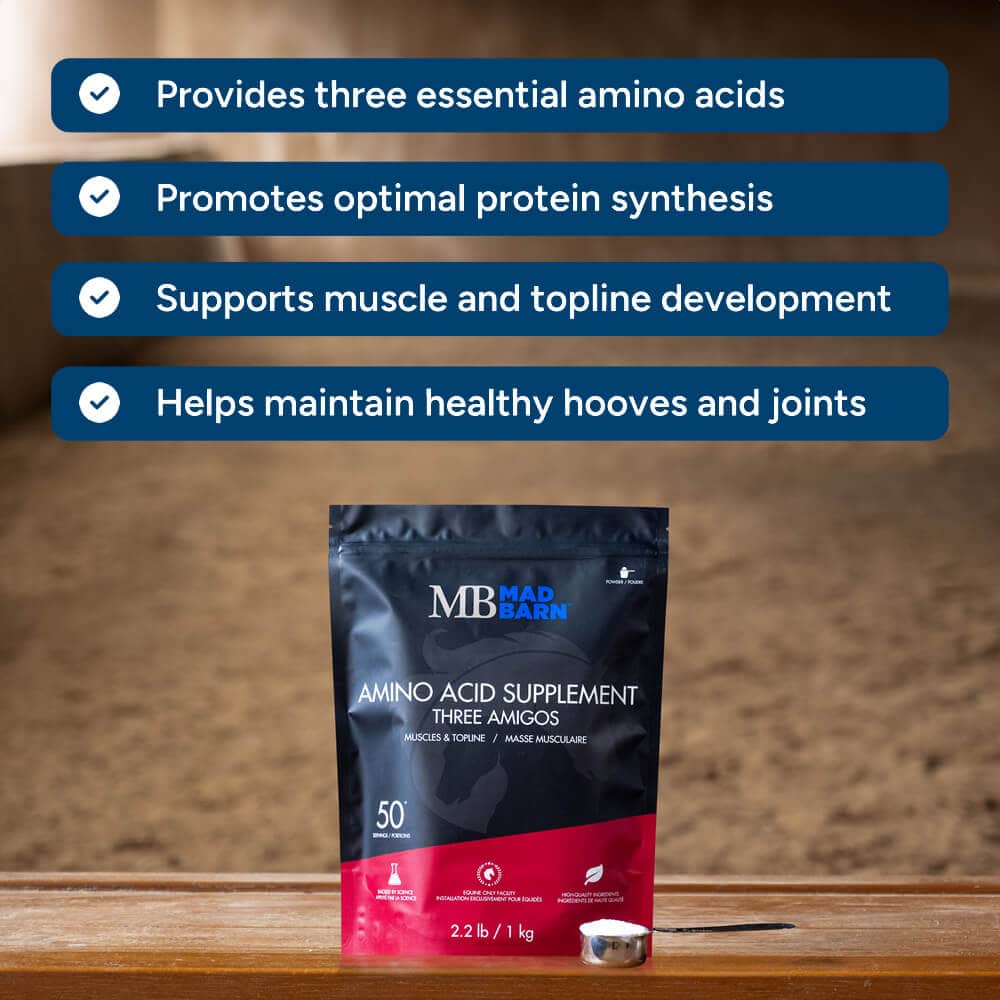
Three Amigos is an essential amino acid supplement for horses providing lysine, methionine and threonine in an optimal 5:3:2 ratio. Three Amigos supports muscle development, immune function, hoof growth, hair and coat quality, and healthy connective tissues.
Ideal blend of limiting amino acids to support protein synthesis
Contributes to muscle maintenance and topline development
Beneficial for performance, growing, senior and stressed horses
Pure amino acids with no fillers in a palatable powder
Excellent product. Ingredients and concentrations well listed and way more bang for the buck than what I had been previously using. Customer service seems excellent.
Jane Bartosik
Verified Customer
This stuff is worth it's weight in gold! Started [my 20+ year old gelding] on this supplement... The difference in him physically and mentally is incredible!
Breanna Britt
Verified Customer
I've been using this for a senior mare that came to me in very poor body condition. I feel like it has improved her ability to put lean muscle back on and not just fat.
Alana Brochu
Verified Customer
I see a big difference after only one month. The coat is more shinny, the topeline is better and he is more calm
Chantal Poissant
Verified Customer
The product was suggested to me by a friend, so I tried it. [My] horse is now at optimal weight and his feet are in good condition. I believe the 3 Amigo's helped with that.
Chris Pohlkamp
Verified Customer
Three amigos has helped my horse raven gain such an improvement in his top line development it’s noticeable in how much more willing and easily he can move through our training routines.
Alyssa Krystyan
Verified Customer
I've been using this for a senior mare that came to me in very poor body condition. I feel like it has improved her ability to put lean muscle back on and not just fat.
Alana Brochu
Verified Customer
I purchased a new horse and although his weight was ok he lacked shine and muscle... I added three Amigos and his muscle development has helped his hind end and the top line
Bonnie Whipple
Verified Customer
My amazing and attentive barn owner also suggested the Three Amigos to help with his muscle and top line development.. He is already looking amazing and I am one happy Thoroughbred owner...
Brianna George
Verified Customer
Three amigos has helped tremendously with my growthy youngster. Aiding in proper muscle development and recovery has be crucial in her diet this past year. Her topline and coat look wonderful!
Chloe Lynch
Verified Customer
This has help to restore some muscle to my senior geldings topline. He was losing strength and this product has turned the clock back for him about 5 years.
Tamara Kettlehut
Verified Customer
I can't believe how much the manes of my horses started to fill out when starting on this product. That wasn't even the primary intention... but it has been so visible after even a few weeks on it
Simone Haerri
Verified Customer
Love 3 Amigos! Purchased this to supplement some hay I bought that tested lower protein. My horse loved it and did very well on it... zero complaints! It smells delicious
Lisa Lanyon
Verified Customer
My horse has been on this for 6 months and I have noticed such a difference. He has a hard time keeping muscle... and this has changed his body shape for the better!
Vanessa Berlinguette
Verified Customer
The Three Amigos has been working well for my horse with Cushing's, slowly but surely gaining his muscle mass back after a tough winter.
Nina Phillips
Verified Customer
Three Amigos keeps my older gelding feeling great and I noticed huge improvement in his [top] line. I also feed it to my growing 2YO and have been for about a year now
Elizabeth Murray
Verified Customer
The product was great! Been using it on my gelding who needs to build back muscle after a medical incident in the summer and it has greatly helped him build his topline...
Kara Popplestone
Verified Customer
Was recommended by my farrier b/c my old boy got really sick & lost almost all muscle tone. After only a couple weeks we noticed he was getting stronger & filling back out.
Jennifer Peirson
Verified Customer
My horses do well on this supplement. My one horse who suffered from periodic lameness has not had an episode since i started this supplement over a year ago.
Jacquie Brezovski
Verified Customer
We stand behind our products to provide the best nutrition for your horse. No fillers, just research-backed ingredients. If your horse doesn't love this product, our Customer Happiness team is here to help or give you a refund guaranteed.
Lysine
Lysine is an essential amino acid and one of the most common limiting nutrients in equine diets. Because it cannot be synthesized by the body, it must be obtained from feed or supplementation. Lysine is required for protein synthesis, muscle development, tissue repair, and growth.
This amino acid is a structural component of collagen and elastin, supporting the strength and resilience of tendons, ligaments, skin, and bone. It also contributes to calcium absorption and immune function by aiding in the production of antibodies, enzymes, and hormones. Inadequate lysine intake can reduce protein utilization, impair growth and muscle maintenance, and limit performance capacity.
Grasses and cereal grains are naturally low in lysine, making supplementation particularly beneficial for horses in training, growing horses, and those on hay-based diets. Providing adequate lysine helps ensure optimal protein metabolism, topline development, and overall performance.
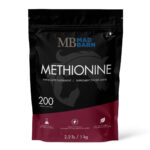
DL-Methionine is an essential sulfur-containing amino acid that serves as a building block for proteins involved in metabolism, growth, and tissue repair. Because horses cannot synthesize methionine internally, it must be obtained from feed or supplementation. It is often identified as the second-most limiting amino acid in equine diets, meaning insufficient methionine can restrict overall protein synthesis even when other amino acids are present in adequate amounts.
Methionine supports the formation of structural proteins such as keratin and collagen, contributing to strong hooves, healthy skin, and a glossy coat. It also plays a critical role in maintaining connective tissue integrity, supporting joints, ligaments, and tendons. In the nervous system, methionine assists in the production of neurotransmitters such as serotonin and helps support normal mood and focus.
Biochemically, methionine acts as a precursor for several important compounds, including taurine, L-carnitine, and cysteine. It is also required for the synthesis of S-adenosylmethionine (SAMe), a key methyl donor involved in cellular metabolism, detoxification, and liver health. Through its conversion to cysteine and subsequently glutathione, methionine supports antioxidant defense and helps protect tissues from oxidative stress.
According to the NRC’s Nutrient Requirements of Horses, a 500 kg (1,100 lb) horse at maintenance requires approximately 7,500 mg of methionine per day. Supplementation may be beneficial for horses on high-fiber or low-protein diets, those in heavy training, or horses needing nutritional support for hoof growth and coat quality.
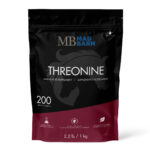
Threonine is an essential amino acid and one of the primary limiting amino acids in equine diets, meaning it often limits the rate of protein synthesis when insufficiently supplied. It plays a key role in maintaining normal muscle development, immune function, and digestive health.
Within the gastrointestinal tract, threonine is a critical component of mucin glycoproteins that protect and maintain the gut lining. Adequate threonine intake supports gut integrity, particularly in horses consuming high-grain or low-quality forage diets, or those experiencing digestive stress.
Beyond its role in gut barrier function, threonine contributes to the synthesis of structural proteins, enzymes, and neurotransmitters. It works synergistically with lysine and methionine to optimize amino acid balance, supporting lean tissue development and recovery in growing, performance, or metabolically challenged horses.
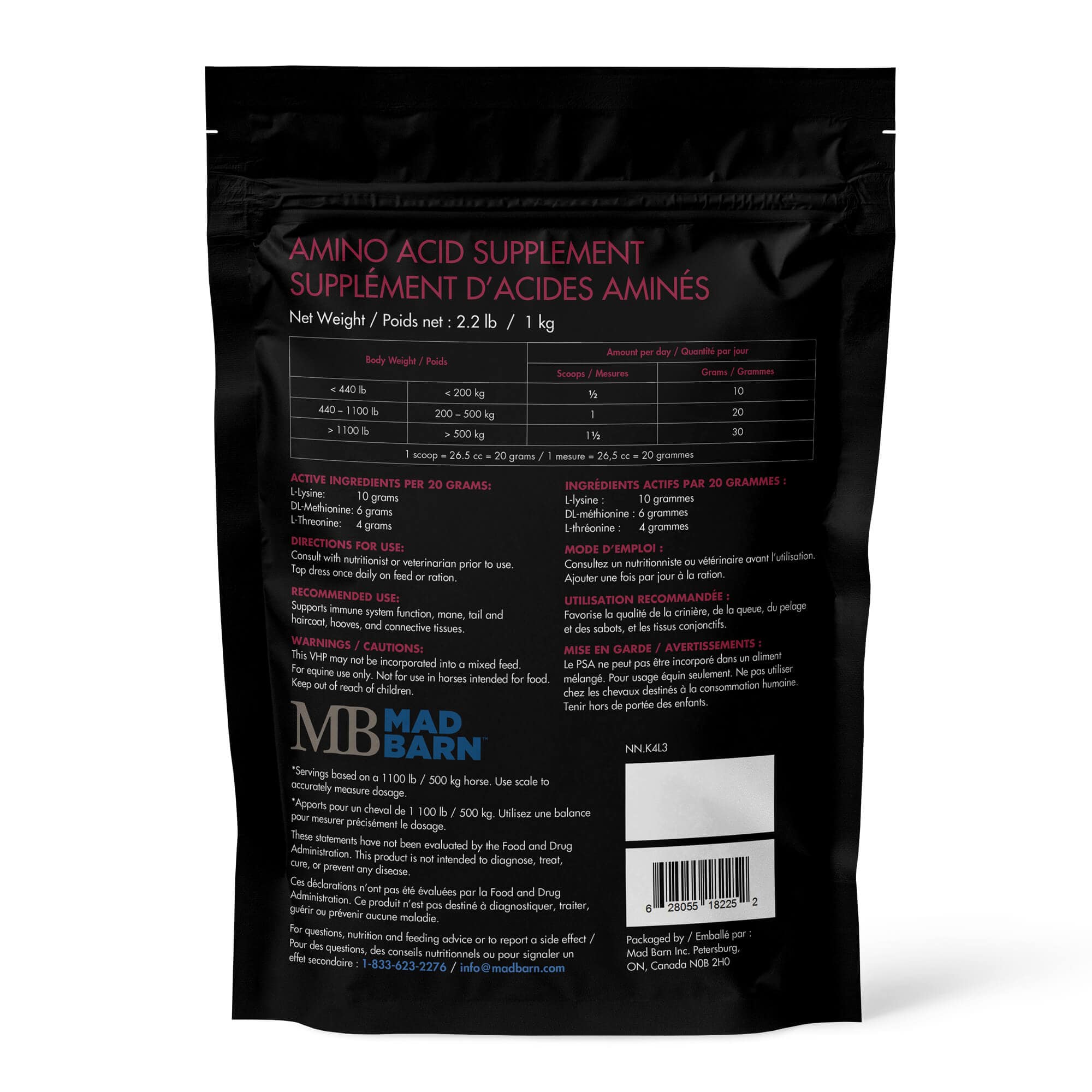
Recommended Use: Supports immune function, mane and haircoat, hooves and connective tissue.
Packaged by: Mad Barn Inc., Petersburg, ON, N0B 2H0, Canada.
Disclaimer: These statements have not been evaluated by Health Canada or the FDA. This product is not intended to diagnose, treat, cure or prevent any disease.
1 kg (2.2 lb): SKU 628055182252 5 kg (11 lb): SKU 628055182269
Cost Calculator
Metric (kg)
Imperial (lb)
kg
grams
* Recommended serving size of 4 grams per 100 kg (220 lb) of body weight
Servings
Cost Per Day
Disclaimer: Recommended feeding rate varies depending on your horse's condition and current diet. Consult with a nutritionist to determine the appropriate inclusion rate for your horse.
Frequently Asked Questions
Essential amino acids are the amino acids that horses cannot produce in sufficient amounts within their own bodies and therefore must obtain from the diet. They are the building blocks of protein and play critical roles in muscle development, tissue repair, immune function, and hoof and coat health. In horses, lysine is considered the first limiting amino acid, followed by methionine and threonine. If these amino acids are deficient, the horse cannot fully utilize other amino acids for protein synthesis, which can limit growth, topline development, and overall performance.
Horses require a balanced profile of essential amino acids in their diet, but lysine, methionine, and threonine are considered the most limiting. This means they are the amino acids most likely to be deficient in common equine diets and can restrict the horse’s ability to use other amino acids for protein synthesis. Three Amigos is specifically formulated to provide these three key amino acids in the proper ratio to support muscle development, topline, hoof quality, and overall protein utilization. Other essential amino acids are typically present in adequate amounts in forage and concentrates when the diet is balanced. For complete nutritional support, Three Amigos should always be fed as part of a well-formulated feeding program that meets all vitamin, mineral, and amino acid requirements.
Essential amino acids such as lysine, methionine, and threonine are the building blocks of protein and must be supplied in the horse’s diet. Supplementing these amino acids can help ensure that dietary protein is used efficiently to support muscle development, topline, recovery after exercise, immune function, and healthy hooves, skin, and coat. Horses on low-protein or poor-quality forage, as well as performance horses, broodmares, and growing horses, often have higher amino acid demands. Providing a targeted supplement helps prevent deficiencies that may otherwise limit growth, condition, and overall performance.
Lysine, methionine, and threonine are often referred to as the three most limiting amino acids in equine diets. This means they are typically present in the lowest amounts relative to the horse’s needs, and if they are deficient, the body cannot fully utilize other amino acids for protein synthesis. By supplementing these amino acids in the correct proportions, Three Amigos helps ensure that dietary protein is used efficiently to support muscle growth, topline, and recovery.
All horses require essential amino acids, but certain groups may benefit the most from targeted supplementation with lysine, methionine, and threonine. These include performance horses in training, broodmares, growing horses, senior horses, and those fed primarily low-protein or poor-quality forage. Horses struggling to build or maintain topline condition despite adequate calorie intake may also benefit significantly from Three Amigos.
Horses require both adequate total protein and the right balance of essential amino acids in their diet. If overall protein intake is too low, the diet should first be adjusted by providing higher-quality forage or concentrates to meet basic protein requirements. However, even when total protein needs are being met, many equine diets are still deficient in the limiting amino acids lysine, methionine, and threonine.
If your horse is already receiving enough protein but is struggling to build or maintain topline, muscle, or hoof quality, then supplementing with essential amino acids can help. Products like Three Amigos provide these key amino acids in the correct ratio, ensuring that dietary protein is used efficiently for muscle development, tissue repair, and overall condition.
Results vary depending on the horse’s current diet and condition. Some horses may show improvements in topline development, muscle tone, and overall condition within 4–8 weeks of consistent supplementation, especially when paired with a balanced diet and regular exercise. For others, changes may be more gradual over several months as muscle and topline condition build steadily over time.
Yes. Amino acids are critical not only for muscle and topline development but also for hoof growth and strength. Methionine, in particular, is a sulfur-containing amino acid involved in keratin production, which forms the structure of the hoof wall. When combined with adequate levels of zinc, copper, and other nutrients in a balanced diet, Three Amigos can support healthier, stronger hooves in addition to improving muscle condition.
Three Amigos provides targeted amino acid support and should always be fed as part of a balanced diet that includes a vitamin and mineral supplement or properly formulated ration balancer. Mad Barn’s Omneity or AminoTrace+ supply the full spectrum of essential vitamins and minerals required to support protein synthesis and meet your horse’s nutrient requirements.
Three Amigos supports muscle health, topline, and overall condition by supplying lysine, methionine, and threonine — the three most limiting amino acids for protein synthesis. Horses on low-quality forage or protein-restricted diets may struggle to build or maintain muscle even when they consume enough calories. By providing these amino acids, Three Amigos helps ensure that dietary energy is directed toward topline growth and muscle development.
When fed as part of a properly formulated diet that provides sufficient calories, Three Amigos can also contribute to healthy weight gain. By preventing amino acid deficiencies that limit protein utilization, it allows horses to make the most of the nutrients in their diet. The best results are achieved when supplementation is combined with balanced nutrition and a consistent exercise program.
Yes. Amino acids are safe for broodmares and growing horses. As the building blocks of protein, they support both mare and foal during pregnancy and lactation. Three Amigos provides pure lysine, methionine, and threonine with no fillers or additives.
Yes. Three Amigos is safe for horses with metabolic conditions and contains no sugar, starch, or fillers. It is a pure amino acid supplement with 0% NSC, making it suitable for horses with insulin resistance (IR), PPID, EMS, or laminitis.
Yes. Three Amigos is competition-legal and contains no prohibited substances according to FEI guidelines. Regulations may change, so always confirm with your governing organization.
Yes. Three Amigos can be used alongside common medications, including NSAIDs and PPID therapies. It contains only lysine, methionine, and threonine, with no known drug interactions.
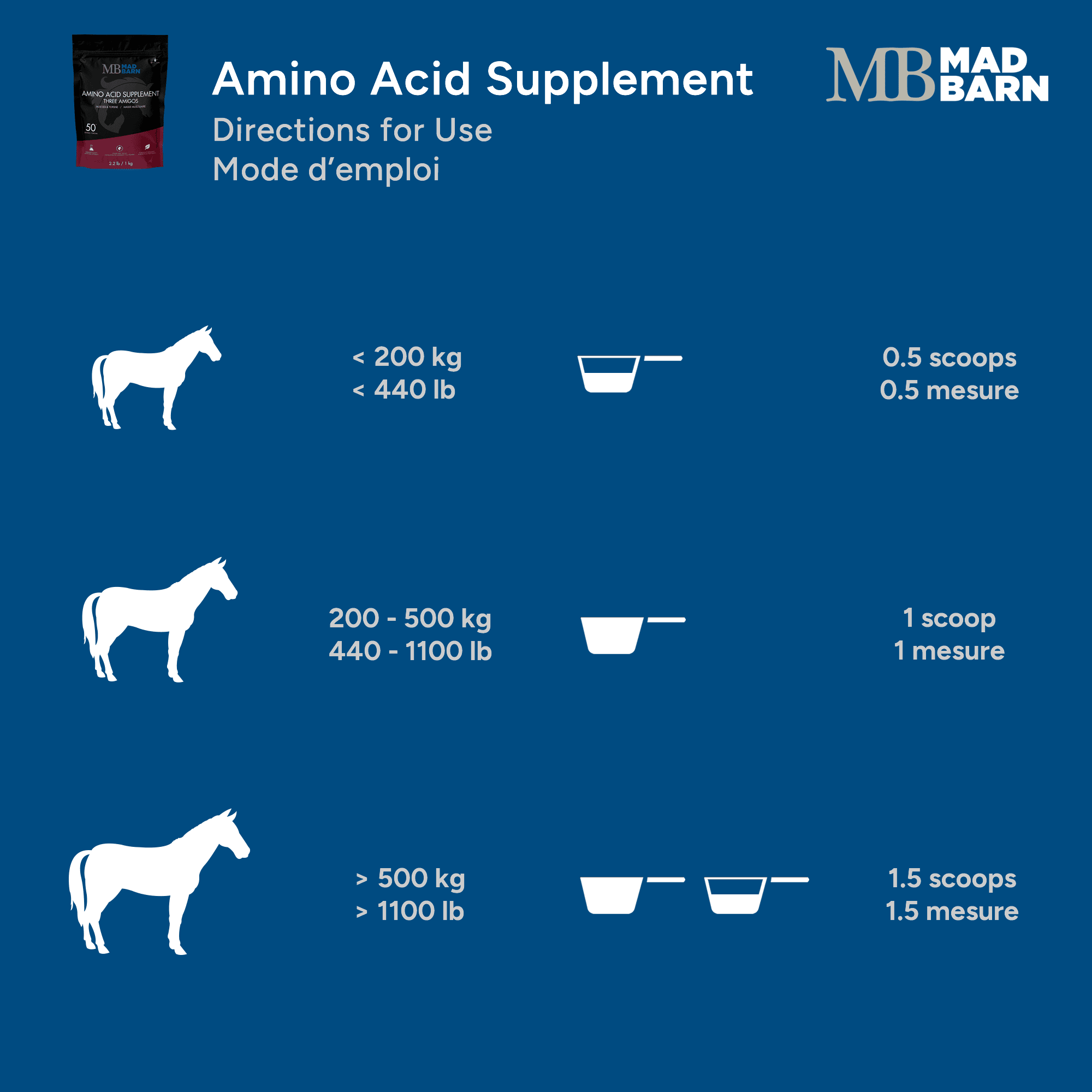
The typical feeding rate is 20 g per day (one scoop) for a 500 kg (1100 lb) horse. This provides supplemental lysine, methionine, and threonine to support protein balance, topline, and muscle development.
Yes. Three Amigos is a fine powder with no added flavors, fillers, or sweeteners. Most horses accept it readily when mixed into their regular ration, especially when combined with soaked forage pellets, beet pulp, or a mash. For picky eaters, the supplement can be introduced gradually to allow the horse time to adjust. Mad Barn also offers a 100% Customer Happiness Guarantee to ensure your horse is satisfied with our products.
Three Amigos is a pure amino acid supplement. Each 20 g scoop is made up entirely of amino acids — lysine, methionine, and threonine — all of which contribute directly to the horse’s protein intake.
Yes. Three Amigos is a pure amino acid supplement and can be safely combined with other common equine supplements, including Mad Barn’s spirulina, w-3 oil, MSM, Optimum Probiotic, and Visceral+. It does not interfere with digestive support products, joint supplements, or other nutrition programs.
Yes. Three Amigos can be combined with Omneity to provide additional amino acid support on top of a balanced vitamin and mineral program. AminoTrace+ already contains higher levels of lysine, methionine, and threonine, so additional supplementation is usually not required unless the forage is very low in protein. The best way to determine need is through a hay test or a diet evaluation.
Yes. Three Amigos can be used across all life stages. Seniors may benefit from improved protein utilization, broodmares require additional amino acids during pregnancy and lactation, and growing horses need balanced amino acids for proper muscle and tissue development. As always, supplementation should be part of a complete feeding program that provides adequate protein, vitamins, and minerals.
The amino acids in Three Amigos are produced synthetically to ensure purity and consistency. They are not derived from legumes, soy, or whey isolates, making the product suitable for horses with sensitivities to common plant proteins.
This statement is required by the CFIA for regulatory purposes. It applies to commercial feed manufacturers, not horse owners. It means that the product’s ingredients may not withstand certain industrial feed processing methods. For individual horse owners, it is completely safe to mix Three Amigos into the daily ration.
Yes. Three Amigos contributes to healthy weight gain by ensuring amino acid deficiencies do not limit the use of dietary calories for muscle and topline development. Amino acids are not an energy source like starch or fat, so they will not increase excitability or “hot” behavior. They help direct calories already in the diet toward building lean muscle mass.
Yes. Three Amigos can be safely fed to donkeys and miniature horses. The feeding rate should be adjusted for body weight, typically ¼ to ½ scoop per day depending on size and condition. Always measure carefully and feed as part of a balanced diet.
Yes. The daily dose can be split into two meals or fed all at once. Splitting may improve acceptance in picky horses, but it is not required.
Each 20 g scoop provides approximately 10 g of lysine, 6 g of methionine, and 4 g of threonine.
Yes. Three Amigos is compatible with Visceral+, Optimum Probiotic, and other gut health supplements. It is a pure amino acid product with no ingredients that interfere with digestive support.
Three Amigos is a powdered formula that can be top-dressed on dry feed or mixed with soaked hay cubes, beet pulp, grains, or mash.
Yes. Each container includes a 20 g scoop for accurate daily feeding.
Three Amigos has a guaranteed shelf life of two years from the date of manufacture, printed on the label. Store sealed in a cool, dry place to maintain freshness and potency.
Ask A Question
Have a question about this product? Ask below and our nutritionists will be happy to assist.
“Three Amigos delivers essential amino acids to support muscle development and exercise needs, in a palatable formula that’s easy to feed.”
Mad Barn’s Three Amigos is an essential amino acid supplement for horses, formulated with lysine, methionine and threonine in an optimal 5:3:2 ratio to support protein synthesis, muscle development, topline and athletic performance.
Three Amigos provides a concentrated blend of limiting amino acids — the essential nutrients most likely to hold back protein synthesis when they are undersupplied in the diet.
For many horses that need muscle support, protein intake is only part of the picture. The horse’s diet may provide enough protein, but still fall short in the essential amino acids needed to build muscle, maintain topline and support healthy tissues.
By improving the amino acid profile of the ration, Three Amigos helps ensure the essential building blocks of proteins are available for the horse to use. This supports the synthesis of muscle proteins, collagen, keratin, enzymes, immune proteins and other functional tissues involved in growth, recovery, hoof quality, coat condition and normal body function.
This science-backed formula is especially useful for horses with higher amino acid demands, including horses in work, growing horses, broodmares, lactating mares, senior horses and horses on mature hay.
For horses that need more visible condition, better muscle support or a stronger nutritional foundation, Three Amigos is the best choice for supplementing amino acids in the diet.
What are Limiting Amino Acids?
Amino acids are the building blocks used to make proteins in the horse’s body. These proteins support growth, speed, strength, stamina, hoof health, skin and coat quality, joints, tendons, ligaments, reproductive function and more.
Some amino acids are essential, meaning they cannot be synthesized by the horse in sufficient amounts and must be supplied by the diet.
During digestion, dietary protein is broken down into single amino acids or short peptides, absorbed from the small intestine and delivered throughout the body. Inside cells, these amino acids are assembled in the specific sequence required to form each new protein.
Protein synthesis depends on the right amino acids being available in the right amounts. If one essential amino acid is too low relative to the horse’s needs, it becomes the limiting amino acid — the amino acid that restricts how efficiently the cells can use the rest of the amino acids.
In equine diets, lysine is typically the first limiting amino acid, followed by methionine and threonine. Horses can fall short in these amino acids because grass hay, pasture and cereal grains often do not provide enough of them to meet the horse’s needs.
Three Amigos supplies these first three limiting amino acids together in an optimal 5:3:2 ratio, with lysine provided at the highest level, followed by methionine and threonine. This helps support a better-balanced amino acid profile in the ration.
Roles of Lysine, Methionine and Threonine in the Body
Lysine
Lysine is the first limiting amino acid in many equine diets. It is the amino acid most likely to restrict protein synthesis when intake is too low relative to the horse’s needs.
Protein Synthesis: Lysine is required to assemble proteins throughout the body, including muscle proteins, collagen, keratin, enzymes, transport proteins and immune proteins. It supports muscle development, topline maintenance, growth and normal recovery after exercise.
Joints Mobility: Lysine contributes to collagen formation, a structural protein found in skin, bone matrix, cartilage, tendons, ligaments and other connective tissues.
Bone Health: Lysine also enhances calcium absorption from the gut, increasing the availability of this mineral for healthy bone formation and normal muscle and nerve function. [5]
Energy Metabolism: Lysine is required to synthesize carnitine, a vitamin-like nutrient involved in transporting long-chain fatty acids into mitochondria where they can be used for energy production.
According to the NRC (2007), a 500 kg (1,100 lb) horse at maintenance requires a minimum of 18 grams of lysine per day, with optimal intake estimated at 27 grams per day.
Exercising horses require approximately 29 to 35 grams per day, depending on workload. A 170 kg (375 lb) weanling requires 29 grams per day, while yearlings require approximately 48 to 50 grams per day.
Methionine
Methionine is a sulfur-containing essential amino acid that supports hoof quality, coat condition, connective tissue, cartilage, antioxidant defenses and normal cellular function.
Hoof, Skin & Coat: Methionine is converted into cysteine, another sulfur-containing amino acid that helps proteins maintain their structure. Cysteine is important for keratin – the main protein in hoof horn and hair. As a sulfur source methionine supports connective tissue metabolism and the synthesis and maintenance of structural proteins such as collagen.
Antioxidant Defences: Methionine is an important precursor of glutathione, one of the body’s major antioxidant compounds. This pathway supports normal antioxidant status, cellular protection and recovery after exercise. [4]
Cellular Function: Methionine is converted to S-adenosyl-L-methionine, or SAM, a major methyl donor in cells. SAM transfers methyl groups to compounds such as DNA and proteins, changing how these molecules function. [4]
The NRC (2007) estimates that a 500 kg (1,100 lb) horse at maintenance should receive 7.5 grams of methionine per day. Growing horses should receive approximately 8 to 11 grams per day, and exercising horses should receive approximately 8 to 10 grams per day, depending on workload. [3]
Threonine
Threonine is an essential amino acid that supports protein synthesis, digestive tract function, nutrient absorption, muscle development and immune protein production.
Digestive Lining: A large proportion of dietary threonine is used by tissues in the digestive tract. This makes threonine important for maintaining the intestinal lining and supporting normal nutrient absorption. [1]
Mucin Production: Threonine is required to produce mucin proteins, which help form the protective mucus layer lining the intestinal tract. When dietary threonine is low, the body may prioritize mucin production, leaving less threonine available for muscle growth and other protein synthesis needs. [2]
Protein Synthesis: Threonine contributes to muscle proteins, digestive proteins and immune proteins. Growing horses, performance horses, broodmares and lactating mares have higher demands for protein synthesis, making threonine an important part of a balanced amino acid profile.
According to the NRC, a 500 kg (1,100 lb) horse at maintenance should receive 17 grams of threonine per day for optimal protein synthesis. Exercising horses should receive approximately 19 to 22 grams per day, depending on workload. A 170 kg (375 lb) weanling requires 18 grams per day, while yearlings should receive approximately 29 grams per day.
Which Horses Benefit Most from Three Amigos?
Three Amigos is beneficial for horses with higher demands for protein synthesis or horses whose diets may provide less lysine, methionine and threonine relative to their needs.
Performance horses
Training increases the need to repair muscle and maintain connective tissues exposed to repeated loading. Horses in heavier work have higher amino acid needs to support muscle protein synthesis, topline maintenance, exercise recovery and adaptation to training.
Growing horses
Foals, weanlings and yearlings are rapidly building muscle, bone matrix, connective tissue, skin and hair. Lysine, methionine and threonine support the amino acid supply needed for normal growth and new tissue formation.
Broodmares and lactating mares
Pregnancy and lactation increase the demand for essential amino acids. Three Amigos supports reproductive function, maternal tissue maintenance, fetal growth and the synthesis of milk proteins used to support foal growth.
Senior horses
Older horses often benefit from amino acid support for lean tissue, topline, immune proteins, skin, coat and normal tissue maintenance. Three Amigos helps support the amino acid balance needed for these functions.
Horses on forage-only diets
Forage is the main protein source in many equine diets, but hay and pasture can vary widely in amino acid content. Three Amigos helps balance the amino acid profile of forage-only rations so dietary protein can be used more efficiently.
Horses on underfortified grain rations
When horses do not receive the full recommended amount of a fortified feed, their essential amino acid intake is largely determined by forage quality. Three Amigos supplies the amino acids most likely to limit protein synthesis in these rations.
Mad Barn’s Three Amigos provides pure lysine, methionine and threonine in a palatable formula that can be top-dressed onto the daily ration. It is designed for horses needing targeted support for protein synthesis, muscle development, topline, growth, connective tissue, hoof quality, coat condition and overall amino acid balance.


 English





 AminoTrace+
  L-Lysine
  Omneity® Pellets
  Omneity® Premix
 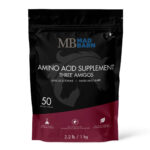 Three Amigos
 DL-Methionine
  Visceral+
 Threonine
 Muscle Development
 Athletic Performance
 Physical Stamina
 Hoof Strength and Growth
 Joints and Connective Tissue
 Coat Quality and Skin Health
 Post-Exercise Care
 Weight Maintenance
 Topline Muscles
 Immune Function


















