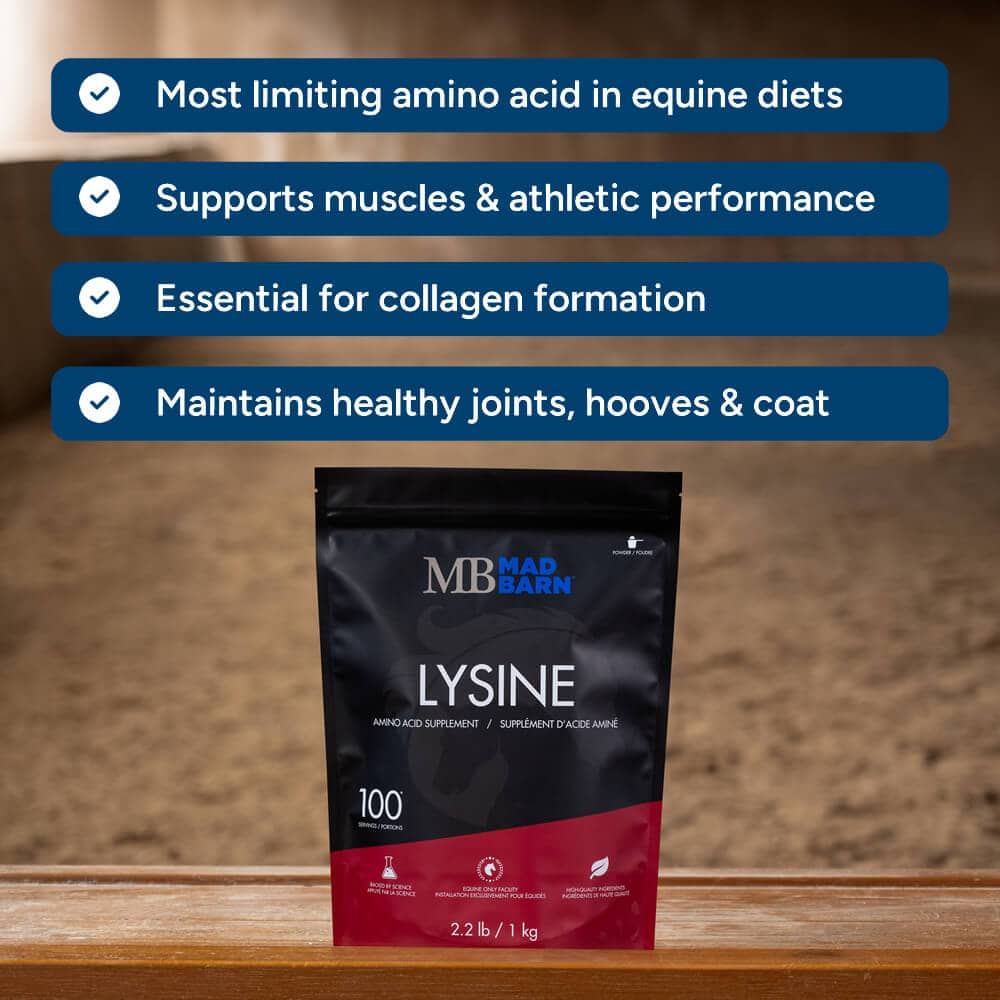
Lysine is an essential amino acid that is important for maintaining healthy skin and joints in horses by forming strong collagen bonds. Lysine is the most commonly deficient amino acid in the equine diet. Supplementing with our pure lysine powder supports protein synthesis and efficient energy production in horses.
Supports muscle maintenance and post-exercise care
Contributes to joint function in exercising and aging horses
Helps maintain normal immune function and energy metabolism
Important for calcium absorption and bone health
I am happy with this product. It smells like high quality lysine and seems to help with eye issues.
Andrea Birkby
Verified Customer
I have been using mad bard products for a couple of years now and they are fantastic will not use anything else.
Shannon Osborne
Verified Customer
My horse looks, and feels better. He is 18 years old, and he acts like a colt. Also his mane, tail, and forelock are growing. I have my mini on it too. The same results on this horse too.
Lisa Engle
Verified Customer
Very good quality of L-Lysine, unlike any other brand we were using, noticable difference, thank you we are very pleased with the product, and service!
Teri Wallace
Verified Customer
I have had my 17yr OTTB and 19yr QH on this product for 4 months and appears to be working great.
Heather Lipsett
Verified Customer
MadBarn had the best selection and, for many single-ingredient items, best prices... Add in MadBarn's out of this world customer service, and it's a win!
Nicole Levesque
Verified Customer
Been bying your brand of suplements for a few years now. My 10 years old mare has been on B1, magnesium and lysine suplements for a few years now....
Louise Lessard
Verified Customer
Good product, great service, easy to order and arrives promptly
Chelsea McNeill
Verified Customer
Super happy with the fast shipping and the product. Thank you so much!
Amber Swaan
Verified Customer
We stand behind our products to provide the best nutrition for your horse. No fillers, just research-backed ingredients. If your horse doesn't love this product, our Customer Happiness team is here to help or give you a refund guaranteed.
Lysine
Lysine is an essential amino acid and one of the most common limiting nutrients in equine diets. Because it cannot be synthesized by the body, it must be obtained from feed or supplementation. Lysine is required for protein synthesis, muscle development, tissue repair, and growth.
This amino acid is a structural component of collagen and elastin, supporting the strength and resilience of tendons, ligaments, skin, and bone. It also contributes to calcium absorption and immune function by aiding in the production of antibodies, enzymes, and hormones. Inadequate lysine intake can reduce protein utilization, impair growth and muscle maintenance, and limit performance capacity.
Grasses and cereal grains are naturally low in lysine, making supplementation particularly beneficial for horses in training, growing horses, and those on hay-based diets. Providing adequate lysine helps ensure optimal protein metabolism, topline development, and overall performance.
Please consult a qualified nutritionist or veterinarian for recommended inclusion rates in your horse’s diet.
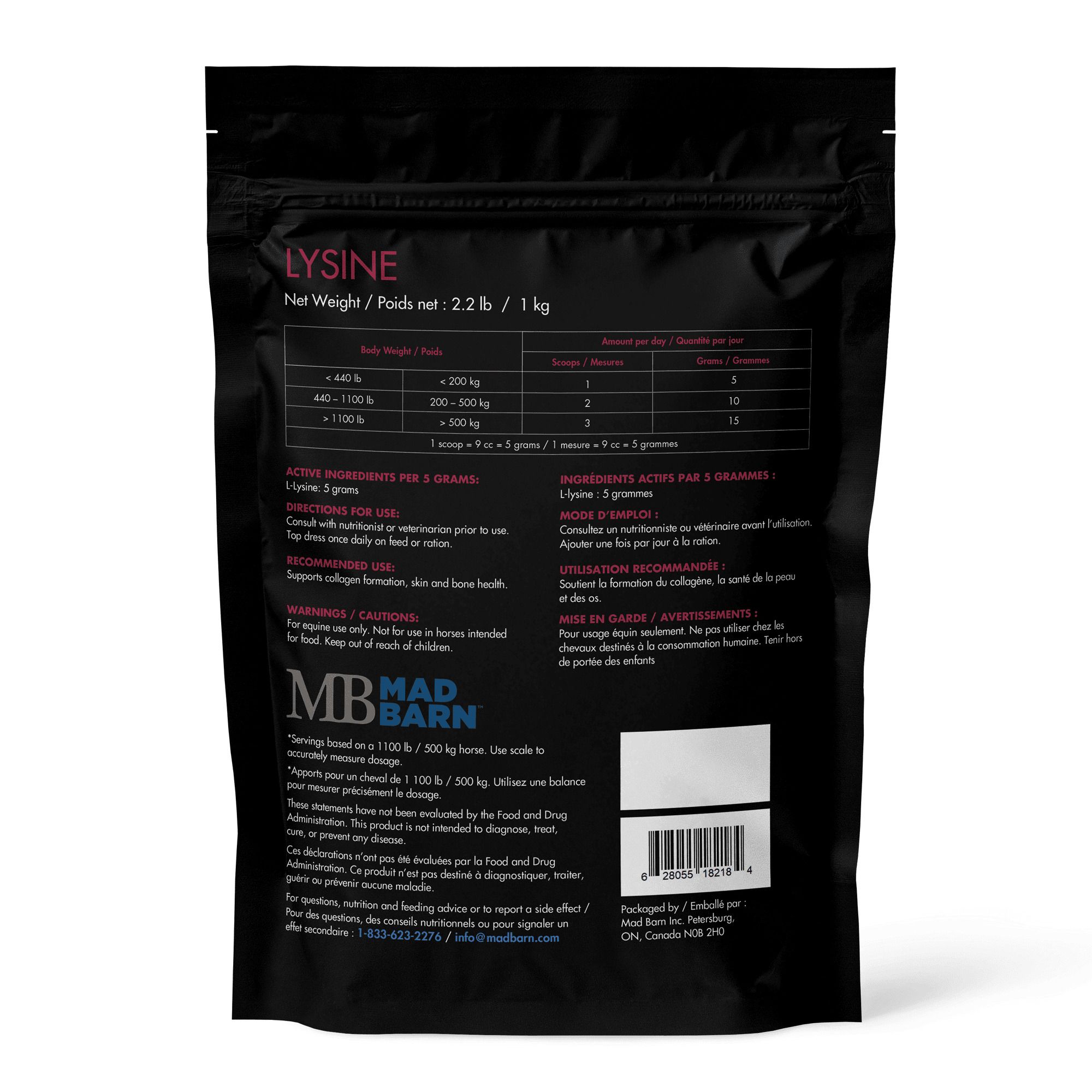
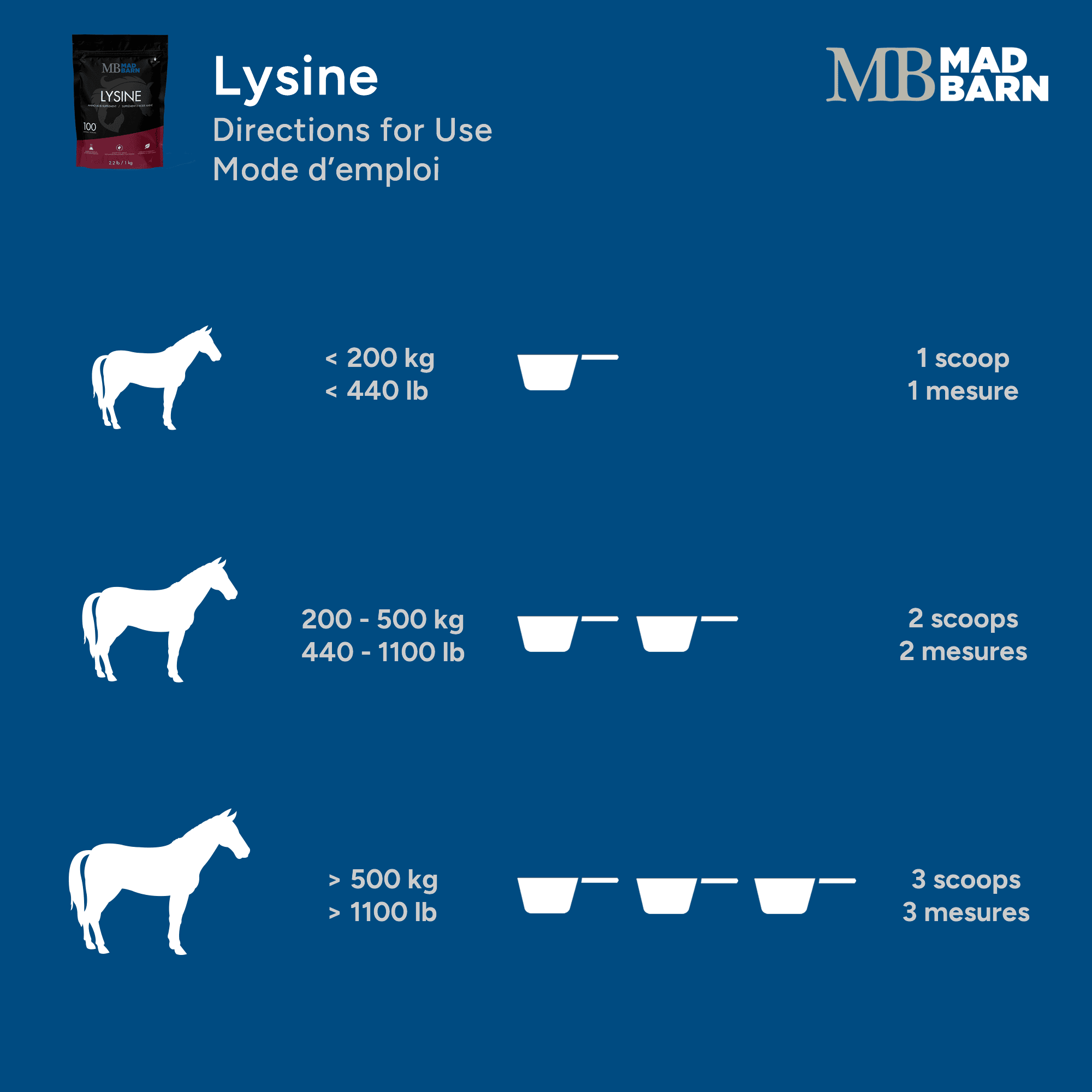
Top dress once daily on feed or ration.
Body Weight
Scoops
Dose
< 200 kg
1 scoop
5 g
200 – 500 kg
2 scoops
10 g
> 500 kg
3 scoops
15 g
1 scoop = 9 cc = 5 grams
Body Weight
Scoops
Dose
< 440 lb
1 scoop
5 g
440 – 1100 lb
2 scoops
10 g
> 1100 lb
3 scoops
15 g
1 scoop = 9 cc = 5 grams
Warning / Caution:
A scale should be used with all individual ingredients to ensure accurate dosing.
For equine use only. Not for use in horses intended for food. Keep out of reach of children.
Active Ingredients: Per gram serving
Ingredient
Per 5 g
L-Lysine
5
g
Recommended Use: Supports collagen formation, skin and bone health.
Packaged by: Mad Barn Inc., Petersburg, ON, N0B 2H0, Canada.
Disclaimer: These statements have not been evaluated by Health Canada or the FDA. This product is not intended to diagnose, treat, cure or prevent any disease.
1 kg (2.2 lb): SKU 628055182184
Cost Calculator
Metric (kg)
Imperial (lb)
kg
grams
* Recommended serving size of 2 grams per 100 kg (220 lb) of body weight
Servings
Cost Per Day
Disclaimer: Recommended feeding rate varies depending on your horse's condition and current diet. Consult with a nutritionist to determine the appropriate inclusion rate for your horse.
Frequently Asked Questions
Lysine is an essential amino acid required for muscle development, tissue growth, immune support, and collagen formation. Because horses cannot synthesize Lysine, it must be supplied through the diet. It is often the first limiting amino acid in equine rations, meaning inadequate Lysine restricts the body’s ability to use other amino acids for protein synthesis. Supplementation helps ensure dietary protein is efficiently utilized for growth, conditioning, and recovery.
Potential signs of Lysine deficiency include poor topline, reduced muscle mass, slower growth in foals, impaired recovery after exercise, and reduced immune function. Because these signs may overlap with other nutrient deficiencies, a complete diet evaluation is recommended before supplementing with single amino acids.
Lysine, Methionine, and Threonine are the three most limiting amino acids in equine diets. Research suggests that a practical ratio for growing and working horses is approximately 5:3:2 for Lysine, Methionine, and Threonine. Providing these amino acids in balance supports efficient protein utilization, muscle development, and tissue repair.
Lysine is naturally abundant in soybean meal, canola meal, and legume forages such as alfalfa. However, levels can be low in grass hays and cereal grains, which form the base of many equine diets. In these cases, supplementing with pure Lysine helps ensure adequate intake to support growth and topline development.
Horses that may benefit most from Lysine supplementation include growing horses, broodmares, performance horses in training, and those on grass-hay–based diets. Senior horses may also benefit due to reduced digestive efficiency and protein utilization. Supplementing Lysine helps these horses build and maintain muscle mass and topline condition.
Lysine is considered a limiting amino acid because it is often the first amino acid in short supply relative to the horse’s requirements. When Lysine is deficient, the body cannot fully utilize other amino acids for protein synthesis, which can limit growth, muscle development, and tissue repair. Ensuring adequate Lysine intake is key to maximizing the benefits of dietary protein.
Lysine supports muscle health, topline, and condition by providing the most commonly limiting amino acid for protein synthesis. Horses consuming low-protein or poor-quality forage may struggle to build or maintain muscle even when consuming enough calories. Supplementing Lysine helps ensure that dietary protein and calories are effectively used for topline development and muscle repair.
Lysine is not a weight-gain supplement. Weight gain depends on supplying extra calories from forage, fat, or grains. However, when calorie needs are already met, Lysine supplementation can help improve condition by preventing amino acid deficiencies that limit muscle growth. Best results occur when paired with a balanced diet and regular exercise program.
Whether Lysine should be supplemented on its own or with other amino acids depends on the horse’s diet. For best results, it is usually recommended to provide Lysine, Methionine, and Threonine together, as these are the three most limiting amino acids in equine nutrition. Supplying them in balance, such as with Mad Barn’s Three Amigos product, supports optimal protein synthesis and topline development.
Yes, Lysine is an essential amino acid and is safe for broodmares and growing horses, who have higher requirements. As a building block of protein, it supports foal development during pregnancy, milk production during lactation, and proper muscle and tissue growth in young horses. This supplement provides pure Lysine with no fillers or additives and should be fed as part of a balanced diet.
Yes, Lysine is safe for horses with metabolic conditions. This supplement contains only the amino acid Lysine and contributes no sugar, starch, or fillers, making it suitable for restricted diets. It contains 0% NSC and can be fed safely to horses with PPID, IR, EMS, or laminitis.
Yes, Lysine is competition-legal and does not contain prohibited substances based on current FEI regulations. Rules may change, so always confirm with your sport’s governing body.
Yes, Lysine can be safely used alongside common equine medications, including NSAIDs and PPID therapies. There are no known drug interactions.
Yes, the daily dose can be divided between meals or fed at once. Splitting may improve acceptance in picky horses, but it is not required.
Yes, each container includes a 5 g scoop for accurate daily feeding. For precise measurement, it is best to weigh the powder with a scale.
Yes. Lysine can be combined with Omneity or other vitamin and mineral supplements. Omneity already provides balanced vitamins and minerals, but additional amino acid support may be helpful when lower-quality forage is being fed. Lysine supplementation is often not required with AminoTrace+, which already contains elevated amino acid levels, but it can be added if further support is needed.
Yes. Lysine is compatible with Visceral+, Optimum Probiotic, and other gut health products. As a pure amino acid, it does not interfere with digestive support supplements.
Lysine is a powdered supplement that can be top-dressed on feed or mixed into soaked hay cubes, beet pulp, grains, or a mash. It can be fed dry or soaked depending on the horse’s routine.
Lysine has a guaranteed shelf life of two years from the date of manufacture, printed on the label. Store in a cool, dry place with the container tightly sealed to maintain freshness and potency.
Ask A Question
Have a question about this product? Ask below and our nutritionists will be happy to assist.
“Lysine is the amino acid most likely to limit protein synthesis in equine diets, making it an important nutrient for topline, growth and muscle maintenance.”
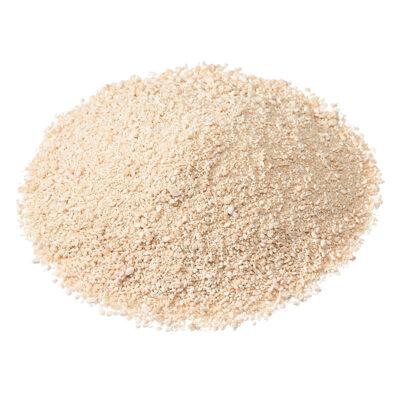
Mad Barn’s L-Lysine powder is a pure amino acid supplement for horses, providing a 99% pure crystalline source of lysine to support protein synthesis, muscle development, growth, collagen formation, hoof quality, coat condition, exercise recovery and immune function.
Lysine is an essential amino acid, meaning it must be supplied by the horse’s diet. It is also considered the first limiting amino acid in many equine rations. This means lysine is the amino acid most likely to restrict protein synthesis when it is not supplied in the right amount relative to the horse’s needs.
After dietary protein is digested, it is broken down into single amino acids or peptides that are absorbed from the small intestine and delivered throughout the body. These amino acids are then assembled together inside cells in a specific sequence to form new proteins. If dietary lysine is insufficient relative to the horse’s needs, it limits the rate of protein synthesis.
Lysine is often limiting in equine diets because many common feeds including grass hay, pasture and cereal grains have relatively low lysine content. A horse can meet its overall protein requirement and still be deficient in lysine.
Lysine is especially important for horses with higher protein turnover, including horses in work, growing horses, broodmares, lactating mares, senior horses and horses on hay-based or forage-first diets. These horses rely on a steady supply of essential amino acids to build and maintain muscle, collagen, keratin, enzymes, immune proteins and other functional tissues.
According to the NRC (2007), the minimum lysine requirement for a 500 kg (1,100 lb) horse at maintenance is at least 18 grams per day. Requirements increase during growth, work, pregnancy and lactation because the horse is building, repairing or maintaining more protein-based tissue.
Roles of Lysine in the Body
Protein Synthesis & Amino Acid Balance
Lysine is required to assemble proteins throughout the body, including muscle proteins, collagen, keratin, enzymes, transport proteins and immune proteins.
Protein synthesis depends on all essential amino acids being available at the same time and in the right proportions.
As the first limiting amino acid, lysine helps determine how effectively the horse can use the other amino acids supplied by forage, grain and supplements.
Muscle Development & Topline
Muscle tissue is constantly being broken down and rebuilt through normal protein turnover.
Lysine supplies amino acid building blocks for contractile and structural muscle proteins involved in posture, movement, strength and topline development.
Horses in regular work have higher demands for muscle remodeling, making lysine important for maintaining lean tissue and supporting normal recovery after exercise.
Growth & Bone Matrix Formation
Growing horses are actively depositing new protein into muscle, skin, hair, connective tissue and the organic matrix of bone.
Bone is not only mineral; it also contains a collagen-rich protein scaffold that supports normal bone structure during growth and development.
Lysine helps supply the amino acids needed for new tissue formation during active growth stages.
Collagen & Connective Tissue
Collagen is a major structural protein in tendons, ligaments, cartilage, skin, bone matrix and other connective tissues.
Lysine is incorporated into collagen proteins and contributes to collagen maturation and cross-linking.
This makes lysine relevant for tissues exposed to repeated loading, stretching and remodeling during turnout, training, growth and competition.
Hoof, Skin & Coat Quality
Hoof horn, skin and hair are protein-rich tissues that require a consistent supply of amino acids.
Lysine supports the protein synthesis needed to build and maintain keratin-containing tissues.
Balanced amino acid nutrition helps maintain normal hoof quality, skin integrity and a healthy hair coat.
Immune Function & Tissue Maintenance
Antibodies, enzymes, acute-phase proteins and many immune signaling molecules are made from amino acids.
Lysine supports the protein synthesis required for normal immune defenses, tissue repair and cellular maintenance.
This is especially relevant during growth, training, breeding, lactation and other periods of increased nutrient demand.
Energy Metabolism
Lysine is a precursor for carnitine, a vitamin-like compound involved in fatty acid metabolism.
Carnitine helps transport long-chain fatty acids into mitochondria, where they can be used to produce energy through beta-oxidation.
This connects lysine nutrition to normal metabolic pathways that support working muscle and day-to-day body function.
Breeding & Lactation Support
Broodmares need adequate lysine to support reproductive function, fetal growth and the higher protein demands of pregnancy.
During lactation, the mammary gland uses circulating amino acids to synthesize milk proteins that support foal growth and development.
Lysine helps supply one of the essential amino acids required for mare maintenance, milk production and normal growth of the foal.
Which Horses Benefit Most from L-Lysine?
L-Lysine is beneficial for horses with higher demands for protein synthesis or horses whose diets may provide less lysine relative to total protein intake.
Performance horses
Training increases muscle protein turnover and connective tissue remodeling. Horses in heavier work have higher lysine needs to support muscle protein synthesis, topline maintenance, exercise recovery and adaptation to training.
Growing horses
Foals, weanlings and yearlings are rapidly building muscle, bone matrix, connective tissue, skin and hair. Lysine is required for new tissue formation and is a key amino acid for normal growth and development.
Broodmares and lactating mares
Pregnancy and lactation increase the demand for essential amino acids. Lysine supports maternal tissue maintenance, fetal growth and the synthesis of milk proteins used to nourish the foal.
Senior horses
Older horses benefit from high-quality protein nutrition to support lean tissue, topline, immune proteins, skin, coat and normal tissue maintenance. Lysine helps ensure dietary protein provides the amino acid balance needed for these functions.
Horses on forage-only diets
Forage is the main protein source in many equine diets, but hay and pasture can vary widely in lysine content. Supplemental lysine helps balance the amino acid profile of forage-only rations so dietary protein can be used more efficiently.
Horses on underfortified grain rations
When horses do not receive the full recommended amount of a fortified feed, their essential amino acid intake is largely determined by forage quality. L-Lysine supplies the amino acid most likely to limit protein synthesis in these rations.
Mad Barn’s bulk L-Lysine contains pure crystalline lysine with no added fillers, flavors or carriers. It is a concentrated top-dress powder that can be added to the daily ration for horses needing targeted support for protein synthesis, muscle development, growth, connective tissue, hoof quality and overall amino acid balance.
References
National Research Council. Nutrient Requirements of Horses. 6th rev. ed. National Academies Press. 2007.


 English



 AminoTrace+
 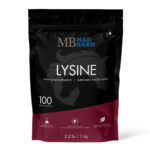 L-Lysine
  Omneity® Pellets
  Omneity® Premix
  Three Amigos
 Muscle Development
 Athletic Performance
 Bone Health and Growth
 Hoof Strength and Growth
 Joints and Connective Tissue
 Coat Quality and Skin Health
 Post-Exercise Care
 Energy Metabolism
 Topline Muscles
 Immune Function



















