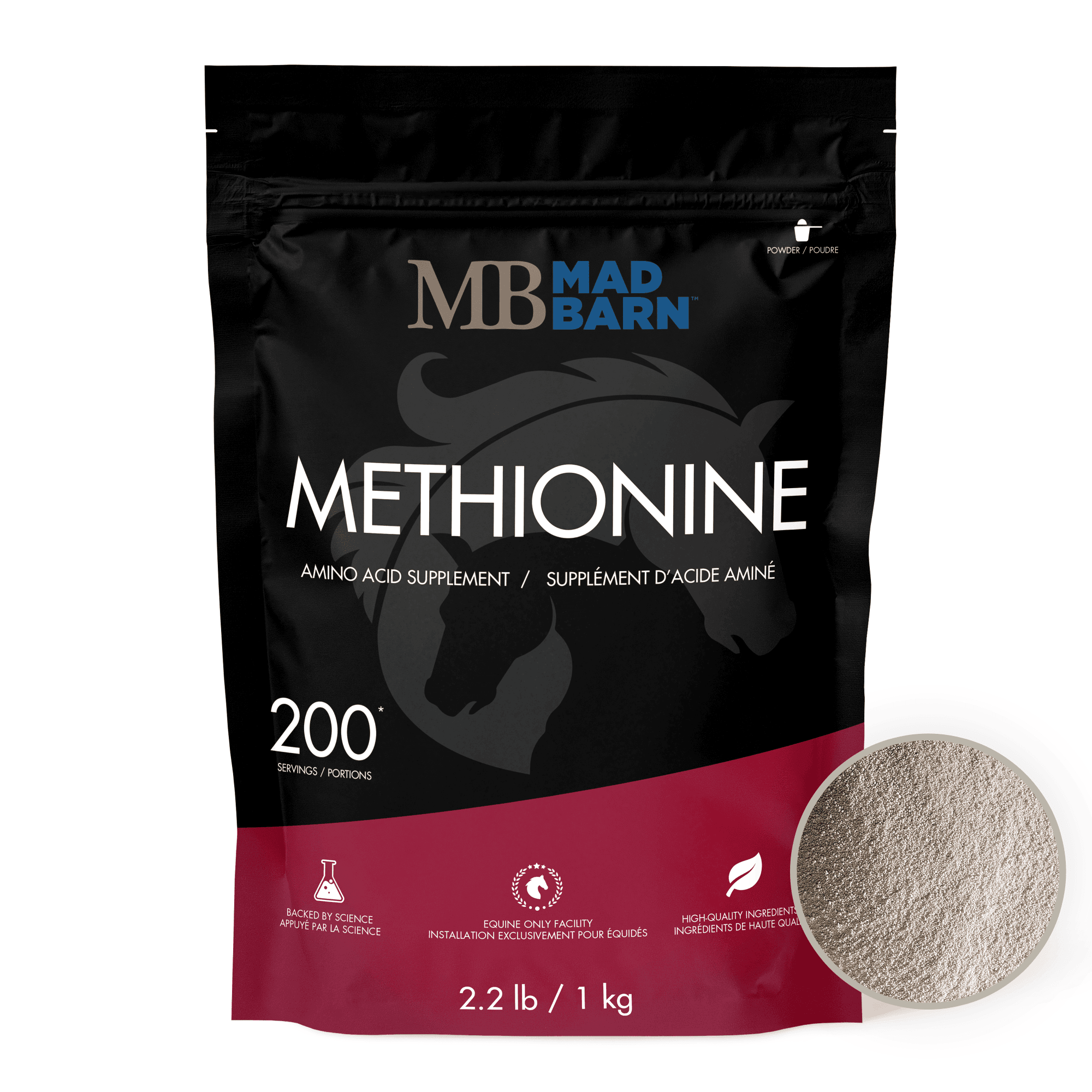
Methionine is an essential amino acid that is important for maintaining healthy hooves, tendons and ligaments, and supporting coat quality. Growing horses and heavily exercised horses have a high demand for methionine and benefit from supplementation.
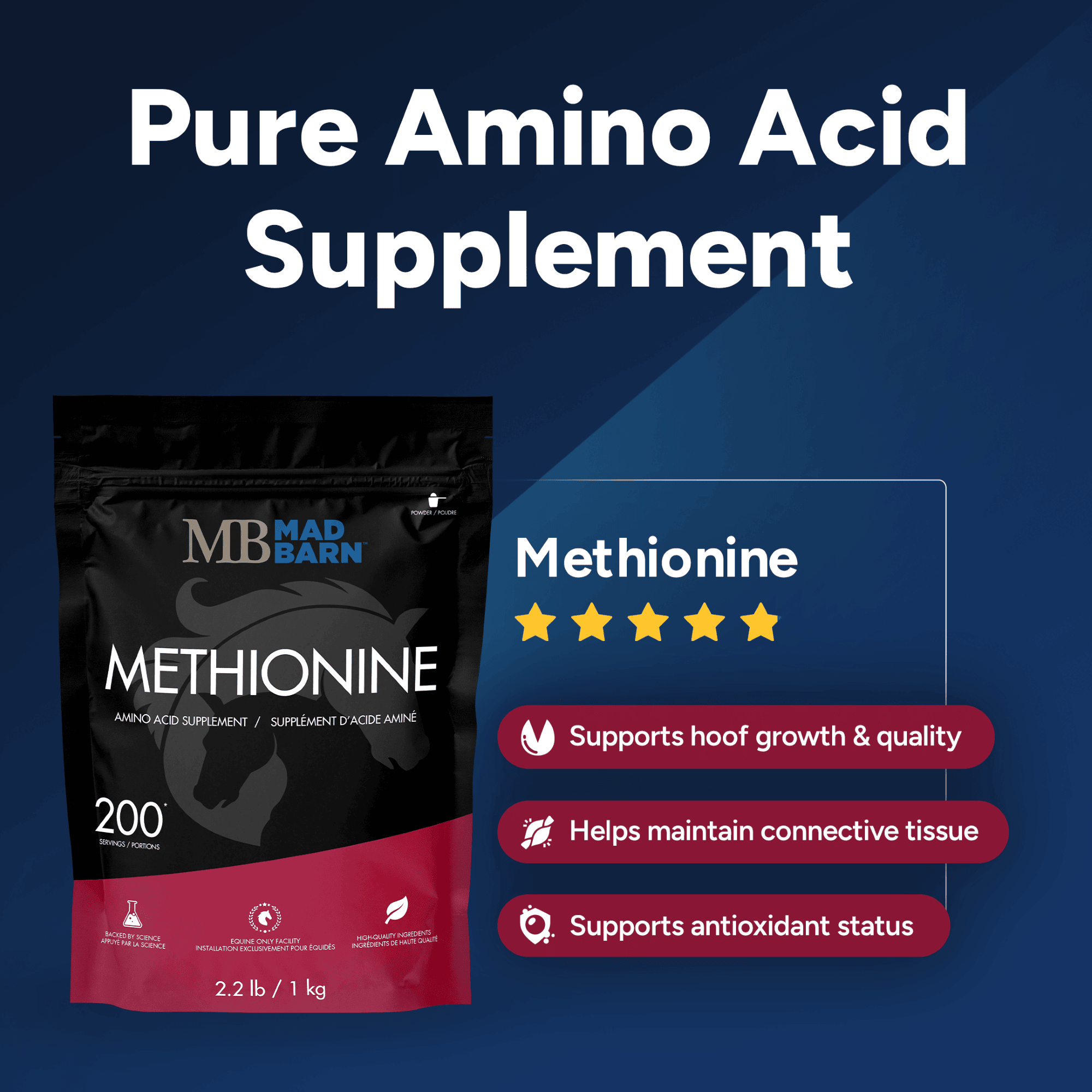
Essential for keratin formation and healthy hoof growth
Helps maintain healthy connective tissue and cartilage
Required for the production of glutathione – a key antioxidant
Supports post-exercise care and resistance to illness and stress
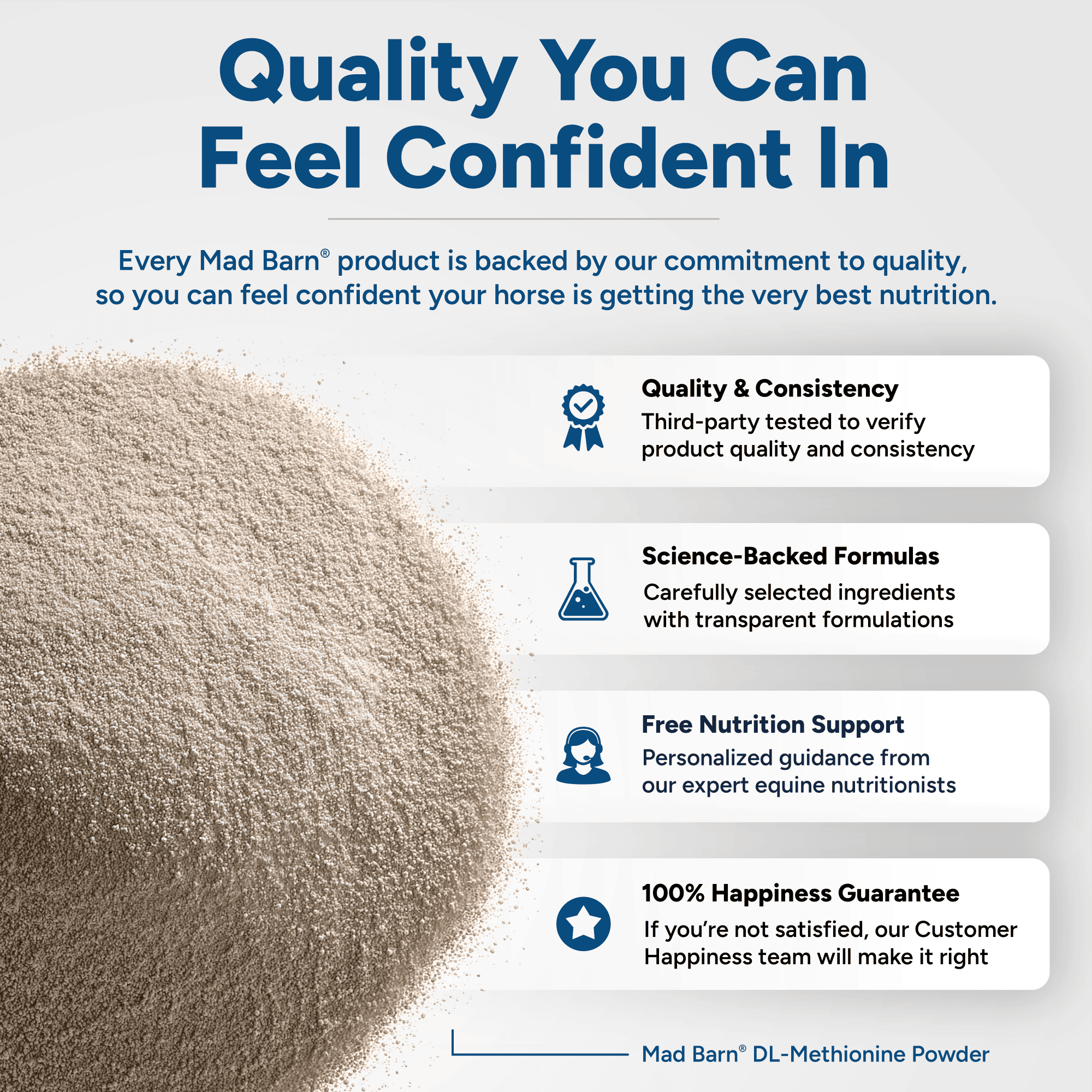
We stand behind our products to provide the best nutrition for your horse. No fillers, just research-backed ingredients. If your horse doesn't love this product, our Customer Happiness team is here to help or give you a refund guaranteed.
Methionine
DL-Methionine is an essential sulfur-containing amino acid that serves as a building block for proteins involved in metabolism, growth, and tissue repair. Because horses cannot synthesize methionine internally, it must be obtained from feed or supplementation. It is often identified as the second-most limiting amino acid in equine diets, meaning insufficient methionine can restrict overall protein synthesis even when other amino acids are present in adequate amounts.
Methionine supports the formation of structural proteins such as keratin and collagen, contributing to strong hooves, healthy skin, and a glossy coat. It also plays a critical role in maintaining connective tissue integrity, supporting joints, ligaments, and tendons. In the nervous system, methionine assists in the production of neurotransmitters such as serotonin and helps support normal mood and focus.
Biochemically, methionine acts as a precursor for several important compounds, including taurine, L-carnitine, and cysteine. It is also required for the synthesis of S-adenosylmethionine (SAMe), a key methyl donor involved in cellular metabolism, detoxification, and liver health. Through its conversion to cysteine and subsequently glutathione, methionine supports antioxidant defense and helps protect tissues from oxidative stress.
According to the NRC’s Nutrient Requirements of Horses, a 500 kg (1,100 lb) horse at maintenance requires approximately 7,500 mg of methionine per day. Supplementation may be beneficial for horses on high-fiber or low-protein diets, those in heavy training, or horses needing nutritional support for hoof growth and coat quality.
Please consult a qualified nutritionist or veterinarian for recommended inclusion rates in your horse’s diet.
Top dress once daily on feed or ration.
Body Weight
Scoops
Dose
< 200 kg
½ scoop
2.5 g
200 – 500 kg
1 scoop
5 g
> 500 kg
1 ½ scoops
7.5 g
1 scoop = 9 cc = 5 grams
Body Weight
Scoops
Dose
< 440 lb
½ scoop
2.5 g
440 – 1100 lb
1 scoop
5 g
> 1100 lb
1 ½ scoops
7.5 g
1 scoop = 9 cc = 5 grams
Warning / Caution:
A scale should be used with all individual ingredients to ensure accurate dosing.
For Equine Use Only. Not for use in horses intended for food. Keep out of reach of children.
Active Ingredients: Per gram serving
Ingredient
Per 5 g
DL-Methionine
5
g
Recommended Use: Supports hoof, tendon, ligament, and coat health.
Packaged by: Mad Barn Inc., Petersburg, ON, N0B 2H0, Canada.
Disclaimer: These statements have not been evaluated by Health Canada or the FDA. This product is not intended to diagnose, treat, cure or prevent any disease.
1 kg (2.2 lb): SKU 628055182177
Cost Calculator
Metric (kg)
Imperial (lb)
kg
grams
* Recommended serving size of 1 grams per 100 kg (220 lb) of body weight
Servings
Cost Per Day
Disclaimer: Recommended feeding rate varies depending on your horse's condition and current diet. Consult with a nutritionist to determine the appropriate inclusion rate for your horse.
Frequently Asked Questions
Methionine is an essential amino acid used in protein synthesis. It plays a role in muscle development, hoof and hair growth, antioxidant defense, and methylation pathways. Because horses cannot produce Methionine on their own, it must be provided through the diet. Supplementation helps ensure protein in the diet is effectively utilized for growth, conditioning, and recovery.
Possible signs of low Methionine intake include poor hoof quality, brittle or slow-growing hooves, a dull hair coat, and difficulty building or maintaining topline. Because these symptoms can also result from other nutrient imbalances, a full diet analysis is recommended before supplementing with single amino acids.
Horses that may benefit most include those with weak or brittle hooves, poor-quality forage diets, broodmares, growing horses, and performance horses with higher protein demands. Senior horses may also benefit due to reduced digestive efficiency and protein utilization.
Lysine, Methionine, and Threonine are the three most limiting amino acids in equine diets. Research suggests that a practical ratio for growing and working horses is approximately 5:3:2 for Lysine, Methionine, and Threonine. Balancing these amino acids supports protein utilization and helps maintain healthy muscle, tissue, and hoof development.
Methionine is naturally found in protein-rich feeds such as soybean meal, canola meal, and legumes. However, it is often present at low levels in typical grass hay and cereal grain diets. Supplementing with Methionine ensures horses receive adequate levels to balance their amino acid profile and support hoof, hair, and muscle health.
Methionine is considered a limiting amino acid because it is often supplied in smaller amounts relative to the horse’s needs. When Methionine is deficient, it restricts the body’s ability to use other amino acids efficiently for protein synthesis. In many equine diets, Methionine is the second most commonly deficient amino acid after Lysine. Adequate Methionine supports hoof integrity, coat quality, and muscle development.
Methionine supports muscle health, topline, and overall condition by providing one of the key limiting amino acids for protein synthesis. Horses consuming low-protein or low-quality forage may struggle to build or maintain muscle even with sufficient calories. Supplementing Methionine helps ensure dietary protein and calories are effectively used for topline development and muscle repair.
Methionine is not a weight-gain supplement. Weight gain requires additional calories from forage, fat, or grains. However, when calorie needs are already met, Methionine supplementation can help improve condition by preventing amino acid deficiencies that limit muscle growth. The best results are achieved when combined with a balanced diet and appropriate exercise program.
Whether Methionine should be supplemented alone or with other amino acids depends on the horse’s diet. For best results, it is usually recommended to provide Lysine, Methionine, and Threonine together, since these are the three most limiting amino acids in equine diets. Combining them, such as with Mad Barn’s Three Amigos product, helps ensure protein synthesis is supported and that the diet is properly balanced for growth, recovery, and hoof health.
Yes, Methionine is an essential amino acid and is safe for broodmares and growing horses, who have higher requirements. As a building block of protein, it supports foal development during pregnancy, milk production during lactation, and proper muscle and tissue growth in young horses. This supplement provides pure Methionine with no fillers or additives and should be fed as part of a balanced diet.
Yes, Methionine is safe for horses with metabolic conditions. This supplement contains only the amino acid Methionine and contributes no sugar, starch, or fillers, making it suitable for restricted diets. It contains 0% NSC and can be fed safely to horses with PPID, IR, EMS, or laminitis.
Yes, Methionine is competition-legal and does not contain prohibited substances based on current FEI regulations. Rules may change, so always confirm with your sport’s governing body.
Yes, Methionine can be used safely alongside common equine medications, including NSAIDs and PPID therapies. There are no known drug interactions.
Yes, the daily dose of Methionine can be divided between meals or fed at once. Splitting may help with acceptance in picky horses, but it is not required.
Yes, each container includes a 5 g scoop for convenient daily feeding. For the most accurate dosage, it is recommended to weigh the powder with a scale.
Yes, Methionine can be combined with Omneity or other vitamin and mineral supplements. Omneity already provides balanced vitamins and minerals, but additional amino acid support may be helpful when lower-quality forages are fed. Methionine supplementation is often not required with AminoTrace+, since it already provides elevated amino acid levels, but it can be added if extra support is desired.
Yes, Methionine is compatible with Visceral+, Optimum Probiotic, and other gut health products. As a pure amino acid, it does not interfere with digestive support supplements.
Methionine is a powdered supplement that can be top-dressed on feed or mixed into soaked hay cubes, beet pulp, grains, or a mash. It can be fed dry or soaked depending on the horse’s routine.
Methionine has a guaranteed shelf life of two years from the date of manufacture, which is printed on the label. Store in a cool, dry place with the container tightly sealed to preserve freshness and potency.
Ask A Question
Have a question about this product? Ask below and our nutritionists will be happy to assist.
Essential Sulfur-Containing Amino Acid
Pure DL-methionine for hoof health and protein synthesis.
Mad Barn's Methionine is a 99% pure crystalline DL-methionine powder used to correct inadequate methionine intake and improve the balance of essential amino acids in the diet.
Methionine is required to produce proteins in hoof horn, skin, muscle, cartilage and connective tissues. It also supplies sulfur for the production of cysteine and glutathione, an important cellular antioxidant.
✓Provides pure DL-methionine with no fillers or additives
✓Supports keratin production for hoof and coat quality
✓Improves availability of amino acids for protein synthesis
✓Supplies sulfur for cysteine and antioxidant metabolism
Why Horses Need Methionine
Your horse can get enough protein and still lack methionine.
If your horse has brittle hooves that crack, chip, or crumble, their diet may be lacking essential amino acids. Healthy hoof growth depends on adequate intake of sulfur-containing amino acids such as methionine, which is used to produce keratin, the structural protein that gives hooves their strength.
Horses cannot make methionine on their own, so it must come from forage, feed or supplements. Commonly fed cereal grains and grasses are typically low in methionine, along with lysine and threonine.
As a result, methionine is often considered the second limiting amino acid in equine diets. When methionine intake is inadequate, the body cannot use all other available amino acids efficiently to produce new proteins, even if total crude protein intake meets requirements.
Supplementing DL-methionine can correct amino acid imbalances, allowing your horse to make better use of the protein in their forage and feed. Adequate methionine supports hoof growth, coat quality, muscle maintenance, tissue repair and normal exercise recovery by providing the building blocks required to make these proteins.
99%
Pure DL-Methionine
Single-ingredient crystalline powder without added sugars, starches, sweeteners or fillers.
Essential
Amino Acid
Must be supplied in the equine diet and is required for normal protein synthesis.
5 g
Standard Serving
One easy-to-feed scoop per day for horses weighing 200 – 500 kg (440 – 1,100 lb).
$0.17
Cost Per Day
Affordable pure amino acid supplement, with a 1 kg (2.2 lb) container lasting 200 days for typical horses.
Which Horses Benefit Most from Methionine?
Horses with slow hoof growth, cracked or crumbling hooves, or poor coat quality benefit from methionine supplementation when dietary intake is inadequate. Horses fed mature grass hay or grain-based diets with low protein quality are also at risk of methionine deficiency, even when total crude protein levels are sufficient.
Growing horses, lactating mares, and horses in exercise training have higher protein and amino acid requirements to support physiological needs. In addition to poor hoof and coat condition, signs of inadequate essential amino acid intake can also include muscle loss, reduced stamina, and low milk production in lactating mares.
Horses with brittle or cracking hooves
Methionine supplies sulfur needed to produce cysteine, an amino acid involved in the structure of keratin in hooves.
Horses with coarse coats
A dull, rough coat or poor hair growth can accompany inadequate protein quality. Methionine is required to produce proteins in hair and skin.
Forage-based diets
Horses fed primarily mature grass hay or underfortified cereal grains may get enough crude protein but still lack essential amino acids such as methionine.
Horses struggling with topline
Even with adequate calorie intake and exercise, insufficient limiting amino acids can impair muscle protein synthesis and topline maintenance.
Performance horses
Regular or intense training increases protein turnover and demand for amino acids used in muscle development and recovery.
Growing horses
Foals and young horses require higher concentrations of essential amino acids for the rapid formation of muscle, cartilage, and bone-associated tissues.
Broodmares
Pregnancy and lactation increase protein and amino acid demands for fetal development, maternal tissues and milk protein production.
Senior horses
Aging horses losing muscle or eating less forage and feed may need dietary adjustments to maintain sufficient essential amino acid intake.
Recovering horses
Horses recovering from illness or injury need balanced amino acids to support tissue repair and normal immune function.
Methionine Requirements
How much methionine does a horse need?
Horses cannot make methionine on their own, so they must obtain it from their diet. The National Research Council (NRC) provides scientific guidelines for how much of each nutrient horses need to maintain normal health. Based on these guidelines, a typical 500 kg (1,100 lb) adult horse at maintenance needs approximately 7.5 grams of methionine per day.
This requirement is calculated as 1.2% of dietary crude protein intake, based on a protein requirement of approximately 630 grams. These figures represent the total methionine needed from the diet, not the amount that must be supplemented. Requirements vary with body weight, age, workload, growth, pregnancy, and lactation.
7.5 g
Maintenance
Estimated methionine requirement per day for a 500 kg (1,100 lb) adult horse at maintenance.
8.4 – 10.3 g
Exercise
Estimated requirement per day for a 500 kg (1,100 lb) horse in light to heavy work.
8 – 10.2 g
Growing Horses
Estimated daily requirement for growing horses aged 4 – 24 months, with an expected mature weight of 500 kg (1,100 lb).
18 g
Lactating Mares
Estimated daily requirement for a 500 kg (1,100 lb) mare during the first three months of lactation.
Methionine requirements vary between horses.
Individual needs depend on age, body weight, activity level, and physiological status, including growth, pregnancy, and lactation. To determine your horse's methionine requirements and whether supplementation is needed, submit your horse's diet for a free evaluation by a Mad Barn equine nutritionist.
How Methionine Works
Methionine supports protein formation and sulfur metabolism.
Methionine is an essential sulfur-containing amino acid used by cells to build proteins and synthesize other important compounds. It is the initiating amino acid in the production of most new proteins, and adequate methionine must remain available as the protein chain is assembled.
Beyond its role in protein formation, methionine is converted through metabolic pathways into cysteine and S-adenosylmethionine (SAMe). These compounds support normal tissue structure, antioxidant defense, methylation and cellular metabolism.
1
Protein synthesis
Methionine is needed to initiate protein production and supply amino acids for muscle growth, tissue repair, metabolic enzymes and immune proteins.
2
Keratin and connective tissue
Methionine supplies cysteine, which forms sulfur-containing bonds in keratin and supports the structural proteins of hooves, skin and connective tissue. Sulfur metabolism also contributes to cartilage compounds associated with glucosamine.
3
Glutathione production
Cysteine derived from methionine is used to form glutathione, a cellular antioxidant that helps regulate oxidative stress during normal metabolism, exercise and immune activity.
4
SAMe and methylation
Methionine is converted into SAMe, which transfers methyl groups (CH3) to DNA, proteins and other compounds. Methylation helps regulate which genes are active and supports normal liver and cellular metabolism.
Methionine participates in diverse metabolic pathways.
Methionine also serves as a precursor for compounds including taurine, L-carnitine and creatine. Through its conversion to SAMe, it supplies methyl groups used in cellular metabolism and assists in the production and metabolism of neurotransmitters such as serotonin. These functions help support normal nervous-system activity, mood and focus.
Methionine for Hoof Health
Methionine is critical for building strong hooves.
The horse's hoof wall is composed mainly of keratin, a structural protein that protects the internal hoof and withstands repeated loading. Keratin contains the sulfur-bearing amino acid cysteine. Disulfide bonds between cysteine residues reinforce keratin, contributing to the strength and durability of hoof horn.
Methionine is metabolized into homocysteine, which is converted into cysteine through the transsulfuration pathway. Cysteine is then used to synthesize keratin in hooves and hair.
Methionine also contributes sulfur needed for the formation of sulfated glycosaminoglycans in cartilage and other connective tissues. These compounds contain amino sugars, including glucosamine, and help retain water within the extracellular matrix, contributing to joint structure and resistance to compression.
Horses with cracking, crumbling or slow-growing hooves> may no be getting enough methionine or other essential amino acids. Supplementing methionine alongside biotin, zinc and copper as part of a balanced diet can help support normal hoof growth and quality.
Nutritional improvements affect newly growing hoof horn rather than repairing existing hoof tissue, so supplementation should be maintained consistently for 8–12 months to support the growth of a complete new hoof wall.
Antioxidant and Immune Function
Methionine helps maintain the body's antioxidant defenses.
Methionine is an important precursor for glutathione, a tripeptide antioxidant present in cells throughout the body. Glutathione helps protect cells from oxidative damage and participates in normal liver metabolism and detoxification pathways.
Strenuous exercise, inflammation and illness increase oxidative stress. Horses with inadequate methionine intake could experience signs of reduced antioxidant defenses, including slow recovery from exercise and more frequent or prolonged illness. Adequate methionine helps support normal immune function and resistance to physiological stress.
Horses with frequent allergic reactions, including heaves, may also benefit from supplemental methionine to support antioxidant status. Studies have found elevated levels of oxidized glutathione in the airway lining fluid of affected horses during flare-ups, indicating increased oxidative stress in lung tissue.
Best Amino Acid Supplements
Does your horse need DL-methionine or a blend of amino acids?
Pure Methionine is most appropriate when a diet evaluation identifies low methionine and the other essential amino acids are already adequately supplied.
For overall support of topline, muscle development, growth and performance, a blend supplying lysine, methionine and threonine together is usually better than adding individual amino acids.
Precision Formulation
Pure Methionine
Best when you specifically need to increase methionine without adding other amino acids or nutrients.
✓Your horse's ration has been evaluated for methionine intake
✓Lysine and threonine are already adequately supplied in the diet
✓You need to increase methionine independently of other nutrients
✓A nutritionist has recommended methionine for hoof health or other benefits
Best for Most Horses
Amino Acid Blend
Mad Barn's Three Amigos supplies lysine, methionine and threonine together in a 5:3:2 ratio to improve the amino acid balance of the overall diet.
✓Horses struggling to build or maintain muscle and topline
✓Growing horses and lactating mares with higher amino acid requirements
✓Performance horses with increased demands for muscle maintenance and recovery
✓Horses consuming forage-based diets with lower protein quality
Feeding Instructions
How to Feed Methionine
Feed 1 Scoop Per Day
For horses weighing 200 – 500 kg (440 – 1,100 lb), add 5 grams to their regular ration.
Ensure Adequate Crude Protein
The complete diet must provide enough total protein for your horse's age and workload.
Balance Other Amino Acids
Ensure intake of lysine, threonine, and other essential amino acids also meets your horse’s requirements.
Not sure how much methionine your horse needs?
Our nutritionists can evaluate your horse's diet and calculate their nutritional requirements to recommend the correct feeding rate.
Submit your horse's diet online for a free analysis.
100% Customer Happiness Guarantee
Try Methionine Risk-Free
We're confident you'll love Methionine. If you're not satisfied with the product, our team is here to help you find the right solution or provide a full refund.
Less than 1% of customers ever use our satisfaction guarantee.
Need help deciding? Talk to a nutritionist for free before you buy.
Every horse is different, including their forage, turnout, workload, body condition, age, supplement regimen, protein and amino acid intake, and health history. Always consult a qualified nutritionist or veterinarian before changing the feeding program, especially when inadequate protein or amino acid intake is suspected.
Submit your horse's diet for analysis online.
One of our equine nutritionists can provide a complimentary review and help determine whether Methionine or Three Amigos is the best fit.


 English



 AminoTrace+
 DL-Methionine
 Omneity® Pellets
 Omneity® Premix
 Three Amigos
 Visceral+


















