English











Working student programs provide aspiring equestrians with the opportunity to experience daily barn life and work closely with horses.
Many positions offer room, board, or lessons instead of regular wages, and are designed to support rider development while also filling essential barn roles. For people interested in careers with horses, including riding, training, grooming, or barn management, these roles can serve as an entry point into the industry.
How these programs are designed varies widely depending on the discipline, facility, and expectations of the working mentor or facility owner. Some placements focus heavily on hands-on education and mentorship, while others may be more labor-intensive with limited structured instruction.
Because these arrangements often combine long hours, physical work, and informal compensation, it’s important for prospective working students to understand what is typically included and to ask clear questions before committing.
Keep reading to learn more about working student programs in the equestrian industry, including how to evaluate a potential placement, how to weigh the risks and benefits, and how to set expectations between students and owners for a successful learning experience.
What are Equestrian Working Student Programs?
In the equestrian industry, a working student is someone (often a young adult or recent graduate) who exchanges time and labor for training, mentorship, or riding experience. These positions can last a few weeks, a season, or several years depending on how the arrangement is structured.
Working student programs (WSPs) differ from formal employment or structured internships. Compensation varies by program and may include stipends, housing, or educational credit rather than wages.
Instead, benefits of WSPs include:
- Mentorship from an experienced equestrian
- Saddle time
- Housing and meals
- Access to competitions, clinics, and client networks
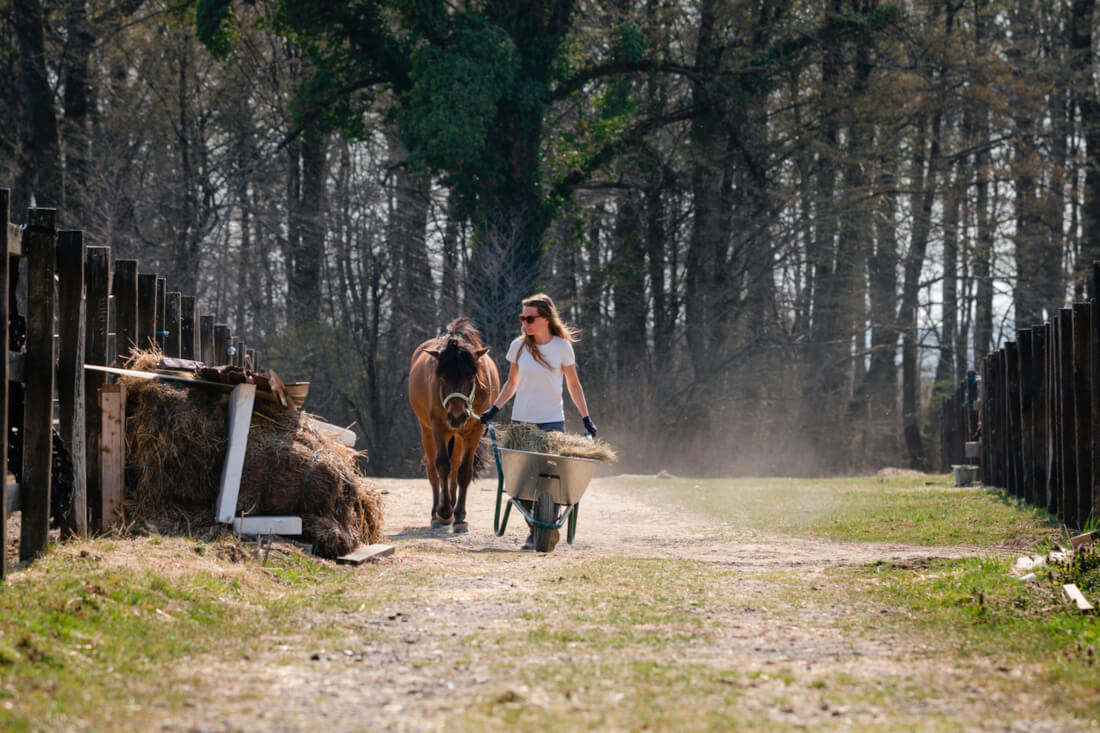
Working students usually help with many aspects of barn life, including mucking stalls, feeding horses, cleaning tack, and turning horses in and out. Support roles may also include helping with lessons, grooming, and occasional riding.
Placements often demand physical effort, long hours, and high responsibility. Students learn from experienced mentors, observe how barns operate, and get valuable exposure to the daily demands of horse handling and care.
Some programs have extra responsibilities such as traveling to competitions, handling entries, or helping coordinate events depending on the barn’s size and program focus.
The way these working agreements are structured varies considerably between facilities. Some programs provide clear schedules, defined roles, and regular instruction, while others have dynamic operations and expect support staff to adapt to changing needs as required.
Levels of guidance, riding access, and mentorship can differ sharply between barns, even when programs use similar descriptions. Whether the goal is to compete internationally, run a lesson barn, or simply deepen equestrian knowledge, choosing the right working student position is essential to ensure both the student and facility are satisfied with the working arrangement.
What's your top priority with your horse's health?

What's your top priority with your horse's health?
Benefits of Working Student Programs
Working student positions are appealing to upcoming equestrians for several reasons. Riders without access to consistent high-level instruction might see working student roles as a more affordable path to growth.
Many equestrians aim to improve their riding skills or gain firsthand experience managing a training facility. Others plan for careers as trainers, barn managers, grooms, or farriers and view these placements as a way to build skills and connections. [1][2]
High-quality WSPs often resemble apprenticeships and extend beyond routine barn tasks such as mucking stalls and feeding horses.
Common features of a well-structured placement include: [1][3][4]
- Access to competitive horses and instruction: Programs provide feedback, exposure to horses in active competition, and insight into how experienced riders approach training, conditioning, and daily care.
- Affordability and financial support: Riders without the budget for lessons can gain instruction through placements. Some WSPs also offer housing and meals, which lowers living costs.
- Networking and career advancement: WSPs can help open job opportunities, professional references, sponsorships, and international experience.
- Structured learning opportunities: Students can learn horsemanship, horse care, and riding while shadowing grooms, farriers, and other professionals.
- Clear communication and feedback: Good WSPs are clear with what they expect from students. Regular check-ins, goal setting, and feedback help students track progress.
- Manageable work-life balance: Long days are common, but sustainable programs offer regular breaks and time off.
Programs that clearly explain what students gain and how support is provided may offer a better overall experience. Some WSPs also offer trial periods, daily schedules, or opportunities to speak with past students that can help inform a prospective student’s decision.
Potential Limitations of Working Student Placements
Working student programs vary widely in structure, workload, and educational content. In many barns, including those with active competition schedules, placements involve long days, physically demanding work, and limited personal time. These programs are typically designed as immersive experiences rather than flexible or part-time roles.
In some cases, working student placements require labor contributions without clearly defined educational components. The scope and quality of instruction may not always be apparent in written descriptions and can vary between programs.
Factors that may indicate limited educational value or unclear expectations include:
- Limited availability of references or prior participant feedback: Programs that cannot connect prospective students with former participants may offer less transparency about daily responsibilities and learning outcomes.
- Unclear duties, schedules, or benefits: Programs without a defined outline of expected work hours, responsibilities, or compensation may lead to mismatched expectations.
- Minimal riding or instruction: Some placements include structured riding or formal teaching, while others focus primarily on stable work with limited educational involvement.
- Safety or facility concerns: Poorly maintained equipment, understaffing, or signs of compromised horse health may increase risk for both horses and students.
- Frequent participant turnover: High turnover can indicate that program demands or expectations are not consistently aligned with participant goals.
Labor Laws & Working Student Programs
Working student programs (WSPs) operate in a legal area that differs from standard employment arrangements. In the United States, the Fair Labor Standards Act (FLSA) establishes that individuals performing work for a for-profit business are generally considered employees entitled to wages and overtime unless the primary beneficiary of the arrangement is the trainee rather than the employer. [5][6]
An individual’s agreement to work without pay does not, on its own, determine whether a placement meets labor law requirements. To be treated as a training or educational experience rather than employment, a working student program must demonstrate a clear instructional or skill-development purpose.
Programs that align with training-based classifications typically include: [5][6]
- A defined educational scope outlining skills or competencies to be learned
- Regular guidance, instruction, or supervision
- Structured schedules and clearly communicated expectations
- An emphasis on learning outcomes rather than operational labor needs
Placements that require full-time work hours with limited instruction or oversight may warrant closer evaluation under applicable labor standards. Reviewing program structure in advance helps prospective participants understand how responsibilities, training, and legal classifications are defined.

Types of Working Student Programs
Working student positions cover many disciplines, barn types, and regions. From high-performance competition barns to therapeutic centers focused on rehabilitation, expectations, pace, and educational opportunities differ between placements.
Understanding common program types helps students find placements that match their goals, comfort level, and learning style.
Competition Barns
Some of the most popular working student positions are found in elite eventing, dressage, or show jumping barns. These programs offer hands-on experience with professional riders, well-trained horses, and the daily routines behind major competitions.
In these programs, work days are typically fast-paced and long, with students expected to assist with feeding, turnout, grooming, tacking up, and often traveling to shows. Riding time may include hacking out, warming up horses, or competing, depending on the trainer and the student’s ability.
These roles suit young riders who aspire to professional careers and are prepared to embrace the full intensity of a competitive lifestyle. Pressure to perform, limited time off, and physical demands can be overwhelming for some, especially those unaccustomed to the high stakes of elite sport.
Lesson Barns & Riding Schools
Riding schools, camps, and lesson barns often rely on working students, especially during summer months. Students commonly help with beginner lessons, lead-line pony rides, group camps, and care of school horses.
These placements suit younger riders, those exploring future roles in instruction, and people building foundations of general horsemanship.
Lesson barns and riding schools may offer less exposure to sport horses, with workloads focused more on basic tasks or supervising children.
Riding time can also be limited, though barn schedules usually follow set hours that support a more predictable work-life balance than competition barns.
International Placements
International WSPs offer a chance to experience horse culture in another country. Popular destinations include Germany, the UK, New Zealand, and the Netherlands, where riders can train in show jumping, dressage, or eventing.
These placements combine daily riding with exposure to different training styles, barn routines, and local customs. These WSPs often appeal to riders interested in global competition or long-term careers in the horse industry.
International placements add extra challenges, with visa requirements, insurance coverage, housing arrangements, and language differences shaping day-to-day life. Homesickness and culture shock remain common, especially for younger riders or people traveling abroad for the first time.
Is a Working Student Program Right for You?
Before committing to a working student program (WSP), riders benefit from considering their long-term goals, current abilities, and overall expectations.
Some equestrians thrive in high-energy, full-immersion environments where they learn quickly by doing. Others may find the pace unsustainable or discover that the WSP benefits don’t align with their future plans. [5]
The following questions provide a useful framework to assess whether a working student program is a realistic option: [6][7]
- What are your long-term goals? Your long-term career goals shape what experience you need to succeed. Whether it’s access to a certain level of training or exposure to specific services, placements need relevance to have value.
- What do you want to gain? Clear priorities help narrow program options. Goals may include more saddle time, access to instruction, hands-on barn management experience, or industry connections.
- What can you realistically contribute? Physical fitness, mental stamina, and available time affect success. Many placements involve long days, often eight to sixteen hours, up to six days per week. Work can feel demanding, making trial placements useful when full-time commitment feels uncertain.
- Can you afford it? Unpaid roles still involve costs such as travel, equipment, competition fees, and insurance. Housing or meals may or may not be included, making budgeting an important part of preparation.
- Are you comfortable with minimal personal time? Limited downtime often comes with working student roles. Social time, hobbies, and family contact may decrease, especially during busy seasons.
- Does the placement feel like a healthy learning environment? Strong programs offer new skills, supportive guidance, and clear communication. Hesitation about recommending a placement to a friend may signal a poor fit.
A working student program can be a valuable step for riders seeking hands-on experience, structured learning, and greater immersion in the equine industry. However, the right placement depends on clear expectations, realistic self-assessment, and a program that supports both education and long-term development.
How to Apply to a Working Student Position
Applications for working student roles typically follow similar professional standards as other employment applications, regardless of whether the position is paid. A well-prepared application improves acceptance chances and signals commitment, reliability, and maturity.
Each program has its own application process, but most barns ask for the following:
- Cover Letter or Statement of Intent: A clear, well-written email outlines your background, relevant experience, and goals. Trainers are more likely to respond to riders who articulate clear goals and show an understanding of the role’s demands.
- Relevant resumé: An equestrian resumé strengthens the application by highlighting previous experience in riding, horse care, competition, or barn management.
- Program-specific questionnaire: The facility may have an application form that outlines their expectations and helps ensure only suitable candidates apply.
- References: People reviewing applications may ask to speak to your previous instructors, employers, or mentors to assess work ethic and overall fit for their program.
Check the facility or trainer’s website for details about application requirements and expected timelines. It may be helpful to call before applying to ask questions about their process and to assess if their program is a good fit for your goals and availability.
Professional Expectations for Working Students
Success in an equestrian working student program depends as much on mindset as opportunity. While the quality of instruction, horse care, and daily structure varies between barns, a motivated and open-minded student can take away valuable lessons from even basic training at a professional facility.
Strong working students bring consistency, awareness, and professionalism to the barn. Punctuality, reliability, and clear communication support trust within any team.
A steady work ethic, paired with an open attitude toward routine tasks, shows commitment to the role and respect for the learning process. Attention to safety and personal limits also matters, especially in physically demanding environments.
Relationships built during a working student placement often carry lasting value. Trainers, veterinarians, grooms, and fellow students frequently reappear later as colleagues, mentors, or references. These connections shape professional paths over time and extend the impact of the experience well beyond the placement itself.
Frequently Asked Questions
Here are some frequently asked questions about working student programs:
Working student programs in the equine industry often replace traditional pay with lessons, housing, meals, or riding access. Many barns present the arrangement as an educational exchange instead of employment. Some placements include stipends or small bonuses, but income is not guaranteed. Evaluating whether programs offer pay requires reviewing the full package, including living costs and instruction.
Riding opportunities for working students vary widely depending on the barn and the stated agreement. Some programs include regular saddle time, lessons, or exercise rides, while others focus almost entirely on barn chores. Riding access usually reflects experience level and program priorities. Clear expectations reduce misunderstandings.
The length of a working student position in the equine industry depends on program structure and personal goals. Some placements last only a few weeks or a single season, while others continue for a year or longer. Short stays often emphasize exposure, while longer commitments allow deeper skill development. Duration should align with stamina and future plans.
The value of working student placements is defined by the student. The most rewarding placements tend to provide measurable education, mentorship, or training of some kind. Strong programs outline duties clearly and provide instruction rather than shifting expectations. Feedback from past students and transparent communication signal value. A role centered only on labor rarely delivers lasting benefit.
Applying to a working student position in the equine sector usually begins with a professional introduction outlining riding experience and goals. Many barns expect a résumé, references, or a short riding video. Conversations about duties, lessons, housing, and time off reduce future conflict. Preparation and clarity support a productive placement.
Summary
Working student programs place riders directly inside the daily operations of a barn, combining hands-on labor with opportunities to learn from experienced professionals. These roles can open doors within the horse industry, but outcomes depend heavily on structure, expectations, and fit between student and program.
- Working student roles typically exchange labor for lessons, mentorship, housing, or riding time rather than a traditional salary
- Daily responsibilities often include core barn tasks such as feeding, mucking stalls, grooming, and assisting with lessons or shows
- Well-run programs provide structured learning, regular feedback, and clear communication about duties and benefits
- Long hours, physical demands, and limited personal time are common realities that require stamina and resilience
- Poorly designed placements may rely on unpaid labor while offering little education or supervision
- Legal and ethical considerations matter, especially when roles resemble full-time employment without pay
References
- What It’s Like Being a Working Student. Horse Sport. 2024.
- Internships, Apprenticeships, Working Student Positions. Falling Star Ranch. 2018.
- Adriaanse. L. The Importance Of Barn Culture. The Chronicle of the Horse. 2021.
- How to Build Supportive Cultures in Our Horse Barns. Horse Journals. 2021.
- Mintz. L. Working Students: Tradition or Trouble?. US Eventing. 2019.
- Morris. L. Looking a Gift Horse in the Mouth: Working Students Under the Fair Labor Standards Act. Washington and Lee Law Review. 2023.
- Lakin. N., What To Know Before Taking a Job as a Working Student. BarnManager. 2025.