English



The Missouri Fox Trotter is a popular gaited breed of horse that originated in the Ozark Mountains. Recognized as the official horse of the U.S. State of Missouri, this breed is famous for its ability to perform a smooth ambling gait known as the fox trot.
Ozark settlers developed the breed as a sure-footed and comfortable mount that could serve various purposes on the Western frontier. Fox trotters combined the best attributes of popular breeds in America to produce horses with an attractive look and good disposition.
Today, Missouri Fox Trotters are the ultimate pleasure and trail horses for owners of all physical abilities thanks to their smooth gait. While this breed is relatively healthy, they still need appropriate care and management to maintain long-term well-being and soundness.
This breed profile will review the history, breed characteristics, common health problems, and nutritional needs of the Missouri Fox Trotting Horse. Keep reading to learn more about feeding and caring for Missouri Fox Trotters.
Missouri Fox Trotter History
While the Missouri Fox Trotter did not become the official state horse of Missouri until the 21st century, these horses have a long history in the region. Multiple breeds influenced the development of Foxtrotters, but today these horses belong to a closed studbook.
Origin
Missouri Fox Trotters descend from horses brought across the Mississippi from Virginia, Kentucky, and Tennessee by settlers in the early 19th century. Most of these horses came from equine stock bred on southern plantations.
Some had ambling gaits and served as foundation stock for Kentucky Saddlers and other gaited American horses. Others were fine saddle horses with Arabian and Morgan blood, which added refinement to local breeds.
Additional influences from American Saddlebreds, Tennessee Walking Horses, and Standardbreds helped concentrate the genes responsible for ambling gaits in the breed. The resulting horses displayed a unique foxtrotting gait from which they got their name. [1]
Studies show ambling gaits reduce vertical oscillations of body mass over unstable terrain. This suggests that ambling gaits helped horses conserve energy while traversing the Ozarks’ rocky hills, which may have contributed to the success of gaited horses in these regions. [2]
Early breeders also selectively bred the horses for the sure-footedness needed on the challenging terrain. And by the mid-19th century, the gaited horses of Missouri earned a reputation as comfortable, attractive, and hardy mounts.
Historic Use
Settlers in the Ozarks relied on the Foxtrotters for many demanding jobs that characterized life on the frontier. The easy-travelling horses needed willing personalities and robust soundness to work through the long days.
Ancestors of Missouri Fox Trotters spent their days clearing dense forests, plowing fields, and working cattle. But the same horses also needed versatility to serve as riding horses and pull the family’s carriage. [3]
The breed rapidly gained popularity with cattlemen for their cow-horse abilities. Foxtrotters could also cover great distances quickly while maintaining a comfortable gait, making the horses a favourite mount for doctors and sheriffs in rural communities. [4]
Initially, the Foxtrotter name applied to any horse that could perform the fox trot gait. But eventually, the Missouri Fox Trotting Horse gained recognition as a distinct breed with a unique breed standard. Today, Foxtrotters are found worldwide and are among the most popular horse breeds in the United States.
Breed Registry
The Missouri Fox Trotting Horse Breed Association (MFTHBA) was founded in 1948, based out of Ava, Missouri.
This breed association initially managed an open studbook that registered all horses with a fox trotting gait. A studbook is an official record of the pedigree and breeding details for animals within a specific breed.
In 1982, the association closed the studbook, which meant that no outside animals could be introduced into the breed. Only purebred foals with verified pedigrees descending from registered Missouri Fox Trotter parents are eligible for registration.
| Breed Summary | |
|---|---|
| Breed Name | Missouri Fox Trotter |
| Also Known As | Missouri Fox Trotting Horse; Foxtrotter |
| Breed Type | Gaited |
| Origin | Ozark Mountains, Missouri, United States |
| Breed Registry | Missouri Fox Trotting Horse Breed Association (MFTHBA) |
| Average Height | 14 – 16 hh |
| Common Coat Colors | Any solid color or pinto; buckskin, palomino, cremello common |
| Conformation | Proud, graceful neck, short strong back, deep chest, sloping shoulders, muscular hindquarters, sturdy legs, well-formed hooves |
| Common Uses | Trail riding, pleasure riding, cattle work, endurance |
| Temperament | Gentle, calm, friendly, intelligent, willing |
| Best For | Riders seeking a smooth, comfortable trail or pleasure mount |
| Common Health Concerns | Multiple congenital ocular anomalies (MCOA), equine metabolic syndrome, laminitis, arthritis, hind leg lameness, athletic injuries, gastric ulcers |
Breed Characteristics
Closing the studbook for Missouri Fox Trotters solidified a breed type that is easily recognizable today. While initially developed for practicality on the frontier, Missouri Fox Trotting Horses are now known for their elegant and graceful conformations.
Conformation
Missouri Fox Trotters have an average height of 14 to 16 hands. The MFTHBA also maintains a separate registry of foxtrotting ponies standing between 11 and 14 hands.
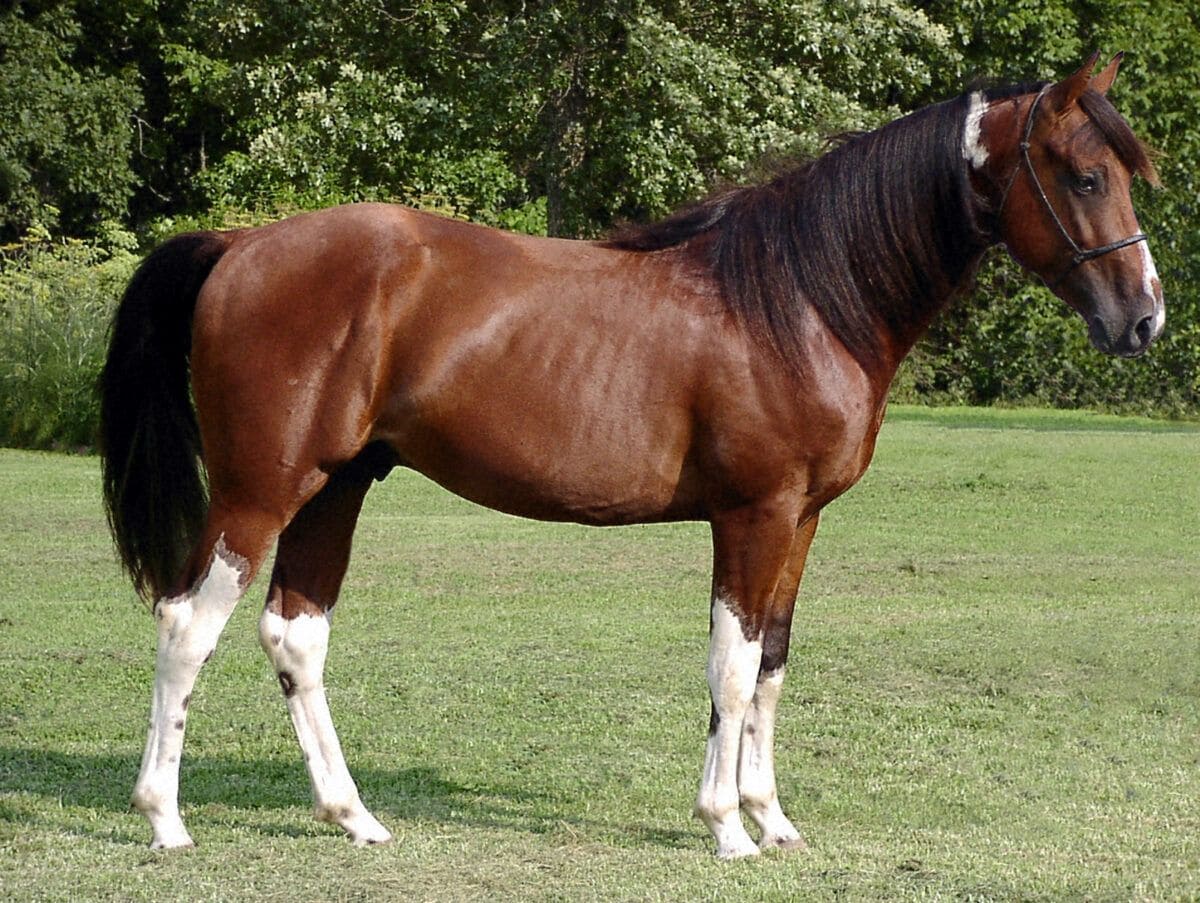
These horses have a naturally proud presence with a high head carriage and graceful neck. The head is well-proportioned with an intelligent expression and pointed ears. Their backs are short and strong, with deep chests and well-sprung ribs.
Muscular, sloping shoulders and hindquarters power the Foxtrotter’s animated movement. While some gaited horses tend to be sickle-hocked, the ideal Missouri Fox Trotter should stand squarely on sturdy legs and well-formed hooves.
Colours
Missouri Fox Trotters can be any solid colour or pinto. White markings on the leg and face occur frequently. While MFTHBA breed standards prefer horses with silky hair, some Foxtrotters are born with curly coats.
The genes responsible for buckskin, palomino, cremello, and other diluted coat colours are also common within the breed. Unfortunately, some of these dilution genes are associated with congenital eye problems in Foxtrotters.
Gaits
The two standard ambling gaits Missouri Fox Trotters perform are the flat foot walk and the fox trot. Several gaited breeds show a flat foot walk, which is a four-beat gait with an even cadence in which the back foot over-strides the track of the front foot in a smooth, sliding movement.
Foxtrotters are distinguished by the fox trot, a broken diagonal gait characterized by the horse moving the front foot slightly before the opposite rear foot. Unlike a standard trot, this gait feels smooth because the horse maintains contact with the ground.
Kinematic studies helped to objectively define these gaits and distinguish between ambling paces in different breeds. While the two gaits share similar stride lengths, research shows significant differences in stride duration and frequency between the fox trot and flat walk. [5]
Temperament
Missouri Fox Trotters have gentle natures and calm temperaments. Although the breed has an alert and charismatic expression, they are relatively quiet horses. These traits make them tolerant of energetic youths and mistakes made by inexperienced riders.
Foxtrotters still have the work ethic and willingness that made them the ideal all-around working horse of the Ozarks centuries ago. They are friendly, intelligent horses that enjoy spending time with people and learning new things.
Disciplines
This breed remains popular with cattlemen for working cows, but most Missouri Fox Trotter owners enjoy their horses as pleasure mounts. A majority of MFTHBA members report that they primarily use their Foxtrotters for trail riding.
Bravery and stamina help the breed excel in competitive trail riding and endurance. Pleasure riders enjoy trail riding these horses thanks to their comfortable gaits. Their smooth movement also suits older equestrians and riders with back problems.
Missouri Fox Trotters can compete in model, performance, and versatility classes at breed events. Model Missouri Fox Trotters are judged based on the breed standard for conformation and gait in hand, while performance classes showcase the horses under saddle.
Versatility arenas feature Western pleasure, English, horsemanship, reining, ranch horse, pole bending, and barrel racing classes. These classes allow Foxtrotters to demonstrate their abilities in a chosen discipline. But unlike non-breed events, these horses also fox trot.
What's your top priority with your horse's health?

Enter your email to receive your store credit
Missouri Fox Trotter Health
Most health problems affecting Missouri Fox Trotters are common conditions in the general horse population. However, gaited horses are known to be more susceptible to specific lamenesses.
Some coat colours observed in the breed are also associated with eye problems.
Genetic Diseases
Multiple congenital ocular anomalies (MCOA) is an inherited eye disorder found in several breeds, including the Missouri Fox Trotter. The condition is associated with the silver dilution gene PMEL17, which is also responsible for the silver coat colour in these horses. [6]
Affected horses have several abnormalities in their eye anatomy, including ocular cysts, enlarged corneas, and malformed retinas. Foxtrotters with the disorder have impaired vision, which can interfere with their wellness and performance. [6]
Horses with one copy of the PMEL17 gene have a milder form of the disease compared to those with two copies. Chestnut Foxtrotters with the PMEL17 gene variant can develop the disease without displaying a silver coat colour. DNA testing can identify your horse’s genotype to determine if they are a carrier of this gene. [6]
Health Problems
The specific health risks of your Missouri Fox Trotter will depend on his workload and lifestyle. Foxtrotters are one of several breeds prone to equine metabolic syndrome, a metabolic disorder characterized by insulin resistance, general obesity and/or regional fat deposits, and an increased risk of laminitis. [7]
Laminitis is a debilitating condition that affects the laminae of your horse’s hooves. Weakening of the laminae compromises the connection between the coffin bone and the hoof wall, potentially causing the coffin bone to sink and rotate. [8]
You can reduce your horse’s risk of laminitis by ensuring a balanced diet, maintaining a healthy weight, providing regular hoof care, and monitoring for early warning signs.
Endurance races, long trail rides, and competition training in Missouri Fox Trotters can result in additional wear and tear on the horse’s joints. These horses can develop arthritis or suffer from athletic injuries that cause lameness. [9]
Minor lameness is more difficult for owners to spot in gaited horses. Gaited horses are also more prone to hind leg lameness than non-gaited horses due to the biomechanics of ambling gaits. [10]
Care and Management
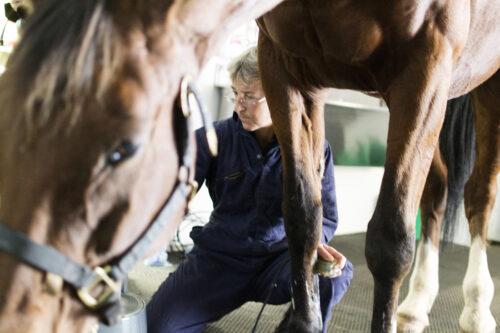
All Missouri Fox Trotters need quality basic care that meets their physical, mental, and emotional health needs. Work together with your veterinarian to develop a preventative health program that includes the following:
- Veterinary Visits: Regular veterinary check-ups and lameness exams help keep your horse healthy and ensure issues are detected early.
- Vaccinations: Adhere to a veterinarian-recommended vaccination schedule to prevent infectious disease.
- Dental Care: Schedule routine dental checks to support optimal chewing. Teeth floating helps to maintain dental balance and prevent issues.
- Parasite Control: Follow a comprehensive deworming program to safeguard your horse against internal parasites.
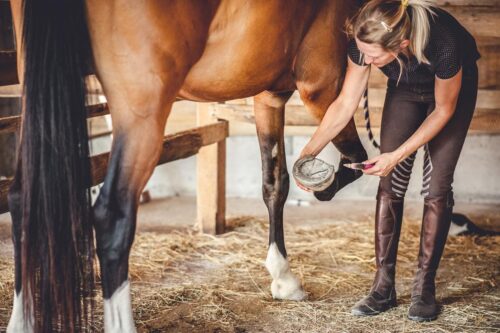
- Farrier Care: Regular hoof maintenance by a professional farrier helps to promote hoof balance and prevent lameness.
- Grooming: While Missouri Fox Trotters are naturally beautiful horses, daily grooming can keep their coats shiny and skin healthy.
If your Missouri Fox Trotter has existing joint concerns, consult with your veterinarian about treatment options that can help keep them comfortable and improve mobility.
Routine farrier care from a hoof professional experienced in trimming and shoeing gaited horses is essential for maintaining soundness. Shoeing practices should always prioritize optimal hoof balance rather than artificially enhancing gaits.
If your Foxtrotter lives inside, follow a daily turnout schedule that allows plenty of time for free exercise outdoors. Turnout time helps reduce stress and health problems associated with prolonged stall confinement. [9]

Nutrition Program
Balanced nutrition and proper management are important for reducing the risks of health problems found in Missouri Fox Trotters. Working with an equine nutritionist can help you optimize your horse’s diet to match their individual needs.
Weight Maintenance
Missouri Fox Trotters are easy keepers. These horses can easily maintain weight on a balanced diet and may become obese when overfed.
To keep your Foxtrotter at a healthy weight and support metabolic health, it is essential to limit their sugar and starch intake and provide appropriate forages and feeds.
Regularly assess your horse’s body condition score to ensure they maintain an optimal weight. The ideal body condition is a 5 on the 9-point Henneke scale. Adjust your horse’s feeding program to match their activity levels and health needs.
If your horse experiences unexpected weight loss, this could indicate an underlying digestive problem that requires veterinary attention. Missouri Fox Hunters with show careers may have an increased risk of gastric ulcers due to feeding practices and their high-stress lifestyle. [12]
Sample Diet
The following sample diet is intended for a 1000 pound (450 kg) Missouri Fox Trotter Horse with normal body condition at maintenance (not exercising).
| Feed | Amount per day |
|---|---|
| Mid-Quality Hay (8% crude protein) | Free-choice |
| Salt | 30 g (2 tbsps) |
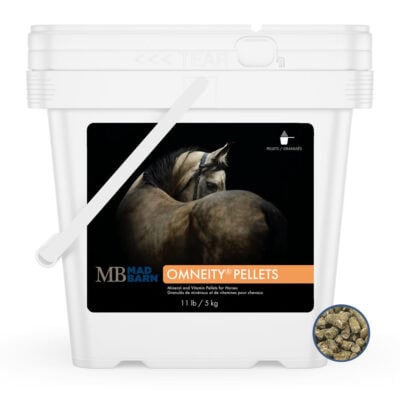
| Omneity® Pellets | 200 g (2 scoops) |
| Diet Analysis | |
| Digestible Energy (% of Req) | 105% |
| Protein (% of Req) | 127% |
| HC (ESC + starch; % Diet) | 8.8% |
This feeding program includes Mad Barn’s Omneity® vitamin and mineral supplement to address common nutrient deficiencies in forage-based diets. Omneity® is formulated with essential vitamins and amino acids, 100% organic trace minerals, a nutritionally effective level of biotin for hoof health, plus digestive enzymes and active yeast cultures to support gut health.
Forage
Horses evolved to graze on roughage continuously throughout the day. Feeding your Missouri Fox Trotter a forage-based diet is the best way to replicate their natural grazing behaviours and support your horse’s digestive health and overall wellness.
Most horses will consume about 2% of their body weight daily in forage. For the average 1000 lb (450 kg) Missouri Fox Trotter, this is equal to 20 lb (9 kg) of hay per day on a dry matter basis. Average-quality, low-sugar and starch grass hay is best for most Foxtrotters with light workloads.
Look for hay that has less than 10% hydrolyzable carbohydrates (HC) which is the combination of ESC (sugars) and starch. These are the components that are digested in the small intestine and can trigger insulin secretion.
If your Foxtrotter gains too much weight with unrationed forage, use a hay net or slow feeder to slow down their hay intake. Providing hay in a slow feeder extends foraging time while maintaining free-choice access to forage.
Higher-quality grass hay can help meet the energy and protein needs of Missouri Fox Trotters with heavy workloads. Depending on availability in your region, alfalfa hay and pellets are also good forage-based sources of calories for hard-working horses.
Unrestricted access to lush pastures should be avoided by Missouri Fox Trotters with metabolic health concerns. Some grasses have high levels of starch and sugar, which can contribute to laminitis. [11]
Wearing a grazing muzzle during turnout can help reduce your Missouri Fox Trotter’s grass intake, but some horses may need dry lot turnout to safeguard their health.
Feeding Recommendations
While forage should be the foundation of every horse’s diet, hay often lacks certain essential nutrients, including vitamins and trace minerals. For this reason, many horse owners add commercial grain-based feeds to their horse’s diet to prevent nutrient deficiencies.
However, commercial concentrates often add too much energy to the diets of easy keepers. Instead of using high volume feeds or ration balancers, feeding a concentrated vitamin and mineral supplement is a better way to support your horse’s overall health.
If you choose to feed grain, split the daily ration into multiple small meals to limit the risk of digestive upset and hindgut issues. [13]
Some Missouri Fox Trotters with higher energy requirements may benefit from fat supplements as a concentrated source of cool calories. [13] Choosing a fat source with omega-3 fatty acids can provide additional health benefits for your horse.
You could also choose to feed a high calorie, high fiber source such as beet pulp or soya hulls which are also very safe for horses prone to high insulin.
Fresh water and salt should always be available to your horse. Constant access to fresh, clean water is also important to prevent dehydration, especially for exercising horses during hot weather.
Providing your horse with adequate salt also encourages thirst and helps to replace electrolytes lost in sweat. Nutritionists recommend adding 1 – 2 ounces of plain loose salt to your Missouri Fox Trotter’s daily ration. Feeding loose salt is more effective than relying on a salt block or salt lick to fulfill your horse’s needs.
Consult an equine nutritionist or your veterinarian when modifying your horse’s diet. Make all feeding changes gradually to allow your horse’s digestive system to adapt.
Nutritional Supplements
Feeding a well-balanced diet with adequate vitamins and minerals is important for the overall health of your Missouri Fox Trotter. Once you have balanced your horse’s diet, you can consider other nutritional supplements to address individual needs and performance goals.
- W-3 Oil is an essential fatty acid supplement that provides cool calories for Missouri Fox Trotters with higher energy requirements. W-3 oil is rich in DHA, an omega-3 fatty acid, that supports joint health, skin and coat quality, and helps maintain eye health.
- MSM is a natural joint supplement that supports healthy connective tissues in horses. This natural compound provides key nutrients that are involved in the synthesis of glucosamine and collagen.
- Visceral+ is a comprehensive gut supplement that can help maintain stomach and hindgut health in Missouri Fox Trotters at risk of stomach issues. Visceral+ contains probiotics, yeast, herbs, minerals, and amino acids that support the health of the entire gastrointestinal tract.
Looking for personalized guidance on what to feed your Missouri Fox Trotter? Submit their information online for a free nutrition consultation by one of our qualified equine nutritionists.
Frequently Asked Questions
Here are some frequently asked questions about Missouri Fox Trotter Horses:
The Missouri Fox Trotter is a gaited horse breed that originated in the Ozark Mountains of Missouri in the United States. Missouri Fox Trotters are best known for their smooth fox trot gait, sure-footedness, and comfortable ride. The breed was developed as a versatile frontier horse that could work long days over rough terrain while remaining pleasant to ride. Missouri also recognizes the Missouri Fox Trotter as the official state horse.
Missouri Fox Trotters are used primarily for trail riding, pleasure riding, competitive trail riding, endurance, and cattle work. Their smooth gait and steady temperament also make Missouri Fox Trotters popular for breed shows and versatility classes. This breed was originally valued for plowing fields, clearing land, pulling carriages, and covering long distances in comfort. Today, they are especially prized as dependable all-around riding horses.
Missouri Fox Trotters are sturdy, well-balanced horses with a short, strong back, sloping shoulders, a deep chest, solid legs, and well-formed hooves. These conformation traits give the breed a compact, athletic appearance while also support their stability and confidence on uneven ground. Missouri Fox Trotters are especially known for their smooth gaits and sure-footed movement, which make them comfortable and reliable riding horses. Their intelligence and strong work ethic also add to their reputation as versatile horses for a wide range of riding jobs.
The fox trot is the signature gait of the Missouri Fox Trotter. It is a smooth, four-beat broken diagonal gait in which the front foot lands slightly before the opposite hind foot. Because the horse keeps contact with the ground, the fox trot creates less bounce than a standard trot. This gait helps Missouri Fox Trotters travel comfortably over long distances and rough terrain.
Missouri Fox Trotters come in many coat colors and patterns, including both solid colors and pinto patterns. Common colors in Missouri Fox Trotters include bay, black, chestnut, gray, palomino, buckskin, roan, cremello, and perlino. White facial and leg markings are also common. Some Missouri Fox Trotters carry dilution genes, including the silver gene, which is linked to certain inherited eye conditions.
Missouri Fox Trotters are known for having a gentle, calm, and willing temperament. Most Missouri Fox Trotters are people-oriented, intelligent, and easy to handle, which makes them appealing to a wide range of riders. Their steady nature helps them stay reliable on the trail and in everyday riding situations. They are also valued for being friendly horses with a strong work ethic.
Most Missouri Fox Trotters stand between 14 and 16 hands high. This height range gives Missouri Fox Trotters a practical, versatile size for trail riding, pleasure riding, and general use. The breed also includes a pony division, with foxtrotting ponies measuring between 11 and 14 hands. Their moderate height contributes to their balance, comfort, and athleticism.
Adult Missouri Fox Trotters typically weigh about 900 to 1,200 pounds, depending on height, build, and body condition. Missouri Fox Trotters are sturdy horses, but they are often easy keepers and can gain excess weight if overfed. Keeping them in a healthy body condition supports soundness and metabolic health. Diet and workload both influence their ideal weight.
Yes, Missouri Fox Trotters are considered excellent riding horses, especially for trail riding and pleasure riding. Their smooth gait helps reduce rider fatigue, and their sure-footedness makes them dependable on uneven ground. Missouri Fox Trotters are also used for endurance riding, competitive trail events, cattle work, and breed competitions.
Missouri Fox Trotters are often a good choice for beginners because they are calm and comfortable to ride. A well-trained Missouri Fox Trotter can be especially suitable for inexperienced riders who want a steady, forgiving mount. Their smooth gait and tolerant nature make riding easier for many people. As with any breed, temperament, training, and individual match still matter.
Missouri Fox Trotters are generally healthy, but they can be prone to some common equine health problems. Because Missouri Fox Trotters are often easy keepers, they have an increased risk of insulin resistance, obesity, and related metabolic problems such as equine metabolic syndrome and laminitis. Arthritis and lameness may occur in Missouri Fox Trotters used for endurance riding, long trail rides, or competition due to the repeated strain on the joints and limbs. Missouri Fox Trotters with show careers may have a higher risk of gastric ulcers because of feeding practices and stress. As horses that can carry the silver dilution gene, they may also be affected by multiple congenital ocular anomalies, an inherited eye disorder that can impair vision. Good nutrition, weight management, hoof care, and regular veterinary attention help reduce these risks.
Missouri Fox Trotters do best on a forage-based diet built around grass hay or pasture. Because many Missouri Fox Trotters are easy keepers, their diet should usually stay low in sugar and starch to support metabolic health and reduce laminitis risk. Grain is often unnecessary unless the horse is in heavier work or needs extra calories. A balanced vitamin and mineral supplement, along with fresh water and loose salt, helps round out the diet.
Summary
The Missouri Fox Trotter is a gaited horse breed developed in the Ozark Mountains as a sure-footed, comfortable mount valued for its smooth fox trot gait. Now maintained through a closed studbook, the breed is widely used for trail riding and pleasure, with management needs that support soundness, metabolic health, and eye health in certain colour lines.
- The breed developed from multiple American saddle and gaited horses brought into Missouri in the 19th century, with selection for sure-footedness and a comfortable ambling gait
- Missouri Fox Trotters are typically 14–16 hands with a balanced, athletic build and two hallmark gaits: the flat-foot walk and the fox trot
- They are known for calm, trainable temperaments and are popular mounts for trail riding, competitive trail, and versatility classes
- A recognized inherited concern is multiple congenital ocular anomalies (MCOA), associated with the silver dilution gene (PMEL17), which can affect vision even in horses without obvious silver colouring
- Foxtrotters are also predisposed to common issues in easy-keeper gaited horses, including insulin dysregulation/EMS and laminitis risk, plus wear-and-tear lameness in horses in regular work
References
- Promerova, M. et al. Worldwide frequency distribution of the ‘Gait keeper’ mutation in the DMRT3 gene. Anim Genet. 2014. View Summary
- Schmitt, D. et al. Adaptive value of ambling gaits in primates and other mammals. J Exp Biol. 2006. View Summary
- Campbell, B. "A Gentle Work Horse Would Come in Right Handy”: Animals in Ozark Agroecology. Anthrozoos. 2015.
- Clayton, H. et al. Temporal characteristics of the fox trot, a symmetrical equine gait. Appl Anim Behav Sci. 1995.
- Nicodemus, M. et al. Forelimb kinematics of the flat walk and fox trot of the Missouri Fox Trotter. Comparat Exerc Physiol. 2010.
- Herb, V. et al. Multiple Congenital Ocular Anomalies in a silver coat Missouri Fox Trotter stallion. Tierarztl Prax Ausg G Grosstiere Nutztiere. 2021. View Summary
- McCue, M. et al. Equine Metabolic Syndrome: A Complex Disease Influenced by Genetics and the Environment. J Equine Vet Sci. 2015.
- Johnson, P. et al. Laminitis and the equine metabolic syndrome. Vet Clin Equine Pract. 2010. View Summary
- Schlueter, A. et al. Equine osteoarthritis: a brief review of the disease and its causes. Equine Compar Exerc Physiol. 2007.
- Axelsson, M. et al. Risk factors associated with hindlimb lameness and degenerative joint disease in the distal tarsus of Icelandic horses. Equine Vet J. 2010. View Summary
- Geor, R. Pasture-associated laminitis. Vet Clin North Am Equine Pract. 2009. View Summary
- Nieto, J. et al. Prevalence of gastric ulcers in endurance horses – a preliminary report. Vet J. 2004. View Summary
- Zeyner, A. et al. Effect of feeding exercised horses on high-starch or high-fat diets for 390 days. Equine Vet J. 2010.View Summary