English











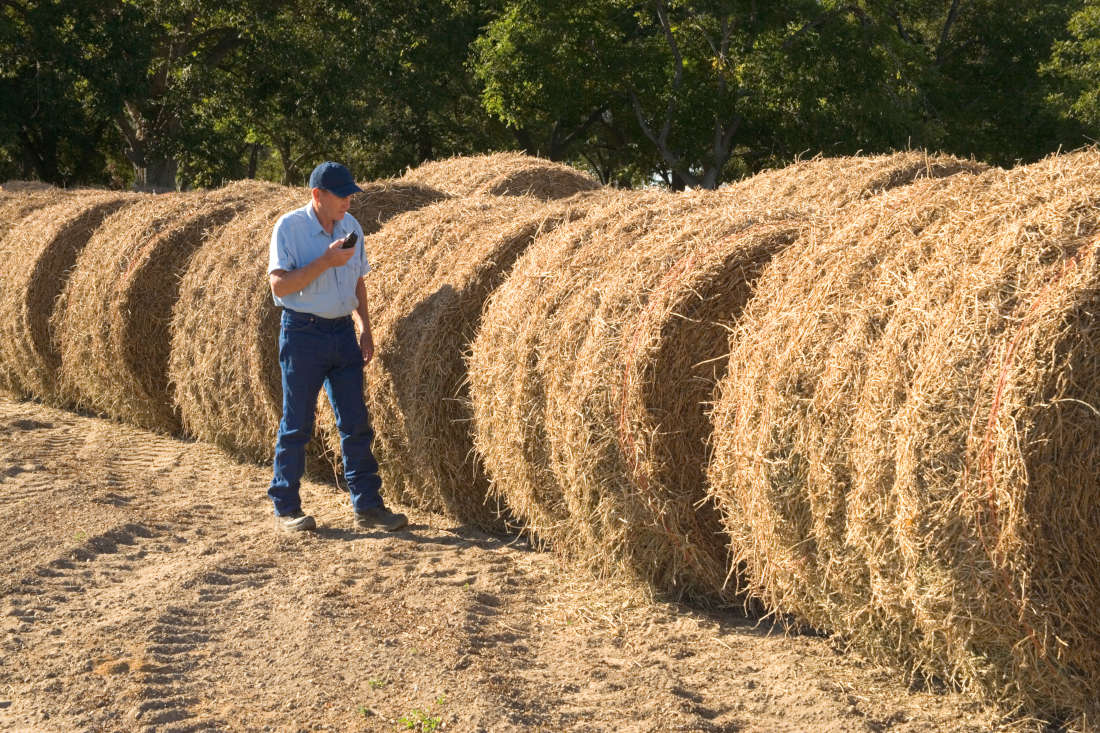
Perennial peanut hay is a warm-season legume commonly fed to horses as a high-quality forage. It grows best in full sunlight under warm, humid conditions and produces a leafy, nutrient-dense hay that horses generally enjoy.
This legume provides elevated levels of protein and digestible energy, making it a practical option for many horses, whether supporting higher nutritional needs or strengthening diets based on lower-quality forage.
Perennial peanut can be offered as hay or incorporated into mixed pastures to enhance the overall nutritive value of grazing systems.
Its ease of harvest, low maintenance requirements, and dependable performance contribute to perennial peanut’s widespread use as a legume forage throughout the southern United States. Keep reading to learn more about perennial peanut hay and how to best use it in your horse’s feeding program.
Perennial Peanut Hay for Horses
Perennial peanut (Arachis glabrata) came to the United States from South America in the 1930s. [1][2] Its ability to thrive in warm conditions supported its long-term use across the southeast, and today it is commonly grown across Georgia, Florida, and Alabama.
Perennial peanut does not require yearly replanting and can persist for more than 25 years once established. [3]
Perennial peanut is frequently used as both hay and pasture, offering a nutritious and cost-effective forage option for horses. It is now recognized as a leading perennial warm-season legume, sometimes called the “alfalfa of the south.” [4]
The modern perennial peanut was developed by the Agricultural Research Service and related agencies through decades of cultivar refinement focused on yield, persistence, disease resistance, and drought tolerance. [5]
As a result of this work, there are several cultivars (varieties) of Perennial Peanut that have been developed for forage, including: [5]
- Florigaze
- Arbrook
- Latitude 34
These efforts produced forage types that support low-maintenance production and remain adaptable across varied soils, climates, and growing conditions. [3]
What's your top priority with your horse's health?

Enter your email to receive your store credit
Nutritional Composition of Perennial Peanut
Nutritional values of perennial peanut vary with environmental conditions and management practices. Published averages provide a practical baseline for assessing its overall nutrient composition as a forage.
Below is an average nutrient range for peanut hay on a dry matter basis: [6][7]
| Nutrient | Average Composition |
|---|---|
| Digestible Energy | 2.14 – 2.53 Mcal / kg |
| Crude Protein | 11 – 16% |
| Acid Detergent Fiber (ADF) | 30 – 34% |
| Neutral Detergent Fiber (NDF) | 40 – 46% |
Perennial peanut generally offers higher overall crude protein and digestibility compared to many grass hays, including bermudagrass. [6]
Its protein content may be lower than other legumes fed to horses such as alfalfa, but still provides a substantial contribution to most feeding programs. [8][9]
Factors Influencing Hay Quality
Environmental and management conditions can influence the nutritive value of perennial peanut stands.
Fertility, growing conditions, harvest practices, and spoilage each contribute to the final quality of the forage.
Fertilization
Pasture productivity and long-term persistence are influenced by soil quality over time. It’s beneficial to check soil fertility to assess the need for supplemental fertilization before planting a new crop of perennial peanut to feed to horses.
Perennial peanut doesn’t always respond consistently to fertilization, and annual applications may not be necessary after the crop is established. [10]
Regular assessment of soil fertility and forage nutrient content is the best way to ensure that a perennial peanut crop is properly supported.
Growing Conditions
Environmental conditions affect perennial peanut’s growth and nutrient composition, with light, temperature, and moisture each influencing how much forage develops and how its nutrients form.
Higher light levels support stronger photosynthesis and encourage greater leaf growth. Shaded perennial peanut stands show reduced nutritive value compared to plants grown with more access to sunlight. [11]
Moisture availability influences the quality of pasture grasses. Perennial peanut is known for its drought tolerance, and its nutrient composition remains relatively stable when water is limited.
Lower moisture levels, however, may slow pasture growth, leading to reduced forage production during extended dry spells. [12][13]
Harvesting
Perennial peanut generally maintains its nutritive value across a range of harvest methods and schedules. Its tolerance to different means and timing of harvest make it a flexible forage option for pasture management. [14]
Adequate recovery between grazing periods helps preserve pasture density and consistent forage availability.
Perennial peanut benefits from longer rest intervals of roughly six weeks between grazing periods. This spacing supports steady regrowth and helps maintain a stand’s productivity over time. [15]
Spoilage
Hay spoilage occurs when hay is stored with excess moisture. Warm, damp conditions allow bacteria and mold to grow, increasing the presence of microbes, mycotoxins, and mold that degrade nutrients and release airborne spores. [16]
Consumption of spoiled hay risks digestive upset and respiratory irritation in horses.
Proper baling moisture, dry storage conditions, and routine inspection support hay quality over time while limiting spoilage and unnecessary waste. [16]
Forms of Perennial Peanut in Equine Diets
Perennial Peanut is most often fed to horses as hay, but it can also be incorporated into pastures to enhance their nutritive quality.
Pasture
Pasture refers to forage grown for grazing rather than harvesting. Perennial peanut offers higher protein, energy, and lysine levels than many grasses, and is sometimes used as an alternative to grazing alfalfa mixes when high-quality pasture is needed. [17][18]
As a legume, perennial peanut is commonly blended into pastures rather than planted alone. Inclusion alongside grasses contributes to higher nutrient density and supports a more balanced forage profile compared with many warm-season grasses grown on their own.
When planted alongside bahiagrass, perennial peanut was found to improve the pasture’s overall forage quality. Mixed stands showed a nutrient profile comparable to well-fertilized bahiagrass, without relying on added nitrogen. [19]
Hay
Hay is harvested pasture dried and stored for later feeding. Perennial peanut offers good digestibility with strong nutrient retention, making it a suitable forage for many horses. [6] Compared to many grass hays, it provides higher energy, and is often used for horses in heavier work.
Horses with higher energy demands often consume more perennial peanut hay compared to grass hays such as bermudagrass and alfalfa. It appears to be preferred, though studied horses also had greater energy requirements, making it unclear whether increased intake reflects palatability or their higher nutritional demand. [7]
Pros & Cons of Perennial Peanut
As with any forage, the advantages and limitations of perennial peanut vary with growing conditions, harvest practices, and feeding strategies. Considering these elements will help you assess whether it aligns with your horse’s nutritional needs.
Benefits of Perennial Peanut
Perennial peanut hay provides a palatable and nutrient-dense forage with elevated protein and energy levels similar to alfalfa. This makes it well suited to horses with higher energy requirements, or to supplement low-quality forage. [17][18]
As a pasture grass, perennial peanut offers a long-term forage option that often requires less maintenance once established compared to other forage types. Productive stands often require minimal fertilization and have no major insect or fungal issues, which helps simplify pasture care over time.
Its reputation as a low-maintenance and environmentally friendly crop has earned perennial peanut the description “clean and green.” [3]
Compared to alfalfa, perennial peanut may be a more affordable option in the southern United States where transport costs are lower. Regional production supports steadier availability and pricing, contributing to cost savings for horse owners sourcing local forage. [1]
This combination of favorable cost, low-maintenance management, and high-quality nutrition supports perennial peanut’s strong reception among horse owners in the southern US. [21]

Disadvantages of Perennial Peanut
Disadvantages of feeding perennial peanut to horses are minimal. Most concerns with perennial peanut stem from how it fits individual horses’ dietary needs, rather than safety issues with the legume.
When fed at 2% body weight per day, perennial usually exceeds the energy and protein needs of horses at maintenance. [20] This may lead to unwanted weight gain, especially when used as the sole forage source. [5] Careful feeding helps limit excess caloric intake in horses with lower nutritional demands.
New hay should always be checked for mold or spoilage before feeding.
How to Feed Perennial Peanut to Horses
Successful inclusion of perennial peanut in your horse’s diet involves selecting clean, high-quality hay, offering an appropriate amount, and balancing the full diet to meet all nutritional requirements.
1) Selecting the Right Hay
Selecting the right hay begins with matching forage to a horse’s calorie and protein needs. Suitable hay provides enough energy and protein to support workload and body condition without contributing unnecessary excess.
Perennial peanut provides more energy and protein than most grass hays, making it a strong choice for horses whose requirements exceed that which mature or mid-maturity grasses can provide.
Growing horses, lactating mares, and horses in heavier work often benefit from a more nutrient-dense forage.
Perennial peanut should be offered cautiously to horses at maintenance or those prone to weight gain. Higher calorie density can oversupply energy and protein when fed as a primary forage, particularly for horses with lower workload demands.
Careful selection is also important. Annual peanut and perennial peanut hays have similar names but very different qualities. Annual peanut is not suitable for most horse diets, as it is low in nutritional value and can be quite dusty. Its consumption increases the risk of nutritional imbalance and respiratory irritation.
High-quality perennial peanut hay should be clean, free of dust or mold, and dry to the touch.
2) Feed the Appropriate Amount
Once a forage type has been selected, feeding amounts shape how it fits into a horse’s daily ration. Adjusting intake helps align energy and protein delivery with workload, body condition, and overall nutritional needs.
Horses with high energy requirements may benefit from unrestricted access to perennial peanut forage. For most horses, however, free-choice access to legume hays oversupplies their energy and protein needs. Instead of free-choice feeding, perennial peanut is usually mixed alongside ample grass hay to complement a forage-based diet
For low-energy horses, perennial peanut usually fortifies diets of otherwise low-quality grass hay, filling in nutrient gaps where grass forage falls short. This approach allows horses to benefit from perennial peanut’s palatability and nutrient contribution while keeping their overall calorie intake down.
A hay analysis can help gauge how much perennial peanut to include in a dietary program. A qualified equine nutritionist can also assist in balancing a horse’s diet to best fit their specific needs.
3) Balance the Diet
Perennial peanut can increase dietary energy and protein and may, in some cases, make up most of a horse’s forage intake.
Forage-based diets often fall short in key minerals and vitamins such as zinc, copper, selenium, and vitamin E, all of which support overall well being. [22]
Adding an appropriate vitamin and mineral source such as Mad Barn’s Omneity® helps address these nutrient gaps and supports daily requirements. Omneity® provides complete vitamin coverage, including vitamins E, A, and D, along with 100% organic trace minerals such as zinc, copper, and selenium, plus a nutritionally effective level of biotin.
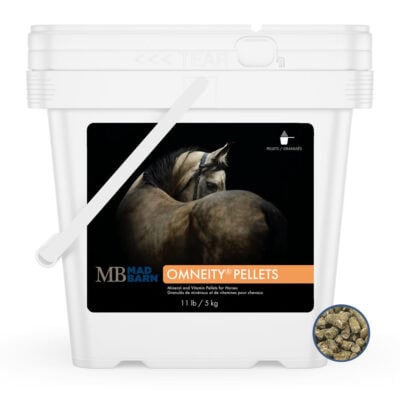
Feeding Omneity® supports hoof strength, skin and coat quality, immune function, and consistent performance across a wide range of horses.
Example Diet
Below you’ll find a sample diet for an average 1,100 lb (500 kg) horse in moderate exercise receiving grass hay as the cornerstone of the diet, with perennial peanut supplemented to provide energy and protein.
The grass hay used in this analysis had an average crude protein content of 10%, and the peanut hay contains 14% crude protein.
| Feed | Amount per day |
|---|---|
| Average Quality Grass Hay | 22 lb (10 kg) |
| Perennial Peanut Hay | 6 lb (2.75 kg) |
| Salt | 30 g (2 tbsp) |
| Omneity® Pellets | 250 g (2.5 scoops) |
| Diet Analysis | |
| Digestible Energy | 100% of requirement |
| Protein | 160% of requirement |
| NSC | 8.8% of diet |
Age, activity level, and physiological conditions all influence a horse’s nutrition needs. For a more tailored approach, you can submit your horse’s current feeding plan online for a free evaluation by a professional equine nutritionist.
Frequently Asked Questions
Here are some frequently asked questions about perennial peanut for horses:
Differences between legume hay and grass hay lie in perennial peanut's higher protein and digestible energy compared to grasses. Grass hays such as Bermudagrass provide lower protein and higher fiber, while perennial peanut offers a richer, more digestible forage for horses needing greater nutritional support.
The nutritional value of perennial peanut pasture is affected by sunlight exposure and soil fertility. Strong light supports higher protein and energy content, while shaded areas result in pasture with reduced nutritive value. Moisture levels affect growth as well, with drought lowering yield but usually leaving nutrient composition steady. Fertility assessments help maintain stands with consistent nutritional quality for horses.
Peanut hay is a legume. Legumes can have lower sugar than grass hays, but they are a richer hay overall, meaning they may oversupply calories to metabolic horses, which tend to be very easy-keepers. Additionally, some metabolic horses seem sensitive to legumes like alfalfa or peanut hay
Forms of perennial peanut available for feeding horses include hay and pasture blends. Hay offers a dense, digestible forage option, while pasture use enhances warm-season grass stands by increasing protein and lysine and supporting balanced grazing. Perennial peanut is often offered as part of a mixed-forage program rather than used entirely on its own.
Summary
Perennial peanut hay is a highly palatable legume forage that offers substantial nutritional value and serves as an effective alternative to traditional grass hays. Its longevity, hardiness, and adaptability make it a practical option for many equine feeding programs.
- Perennial peanut provides elevated protein and energy compared to most warm-season grasses, supporting increased intake and overall nutrition
- This legume is widely used in the southeastern U.S., offering a cost-effective legume option that fits well into hay- or pasture-based diets for horses
- As a perennial, the plant persists for decades, usually needs minimal fertilization once established, and thrives under challenging environmental conditions
- Perennial peanut can be fed as hay or used in mixed pastures to supply nutrient-dense forage for various classes of horses
- Perennial peanut may exceed energy and protein needs when fed without limits, so careful ration balancing and appropriate vitamin and mineral support are important
References
- Holland. C. and Dillard. L. Perennial Peanut Hay for Horses. Alabama A&M and Auburn Universities. 2017. View Summary
- Rhizoma Perennial Peanut (Arachis Glabrata) – Perennial Peanut for Urban Conservation in Florida. Natural Resource Conservation Service. 2008.
- Mayo. D. Perennial Peanut Hay – An Alternative Crop Worth Serious Consideration to Diversify Farms in North Florida. IFAS. 2024.
- Coleman. S. W. Perennial Peanut for Quality Pasturage and Hay. Agricultural Research. 2008
- Lemus. R. Perennial Peanuts as a Forage Crop. Mississippi State University Extension. 2025.
- Eckert. J. V. et al. Digestibility and Nutrient Retention of Perennial Peanut and Bermudagrass Hays for Mature Horses. Journal of Animal Science. Oxford Academic. 2010. View Summary
- Vasco. A. C. C. et al. Feeding Behavior and Preference of Horses Fed Rhizoma Peanut Hay. Journal of Veterinary Behavior. Elsevier. 2022.
- Terrill. T. H. et al. Rhizoma Peanut and Alfalfa Productivity and Nutrient Composition in Central Georgia. Agronomy Journal. 1996.
- Romero. F. et al. Effect of Cutting Interval upon Yield, Composition and Digestibility of Florida 77 Alfalfa and Florigraze Rhizoma Peanut. Journal of Animal Science. 1987.
- Williams. M. J. et al. SS-AGR-349/AG358: Rhizoma Perennial Peanut. Ask IFAS. 2024.
- Johnson. S. E. et al. Nutritive Value of Rhizoma Peanut Growing under Varying Levels of Artificial Shade. Agronomy Journal. 2002.
- Mansfield. C. W. Water Management Effects on Photosynthate Distribution, Physiology, and Nutritive Value of Perennial Peanut. University of Florida ProQuest Dissertations & Theses. 1990.
- Ocumpaugh. W. R. Production and Nutritive Value of Florigraze Rhizoma Peanut in a Semiarid Climate. Agronomy Journal. 1990.
- Butler. T. J. et al. Rhizoma Peanut Yield and Nutritive Value Are Influenced by Harvest Technique and Timing. Agronomy Journal. 2007.
- Mullenix. M. K. et al. Herbage Accumulation, Nutritive Value, and Persistence Responses of Rhizoma Peanut Cultivars and Germplasm to Grazing Management. Crop Science. 2016.
- Nutrient Requirements of Horses: Sixth Revised Edition. National Academies Press, Washington, D.C. 2007. View Summary
- Wallau. M. O. et al. Pastures and Forage Crops for Horses: SS-AGR-65/AA216. Agronomy. 2019.
- Vasco. C. et al. PSXII-3 Amino Acid Profile of Warm-Season Perennial Grass-Legume Mixed Pasture Continuously Stocked by Horses. Journal of Animal Science. 2024.
- Vasco. A. C. et al. Herbage Responses and Grazing Performance of Mature Horses in Warm-Season Perennial Grass-Legume Mixed Pasture. Journal of Equine Veterinary Science. 2025.
- Vasco. A. C. C. M. et al. Digestibility and Nitrogen and Water Balance in Horses Fed Rhizoma Peanut Hay. Journal of Animal Science. 2021.
- Degner. R. L. et al. Marketing Opportunities for Perennial Peanut Hay. Florida Agricultural Market Research Center Food and Resource Economics Department Institute of Food and Agricultural Sciences. 2003.
- Richards. N. et al. Nutritional and Non-Nutritional Aspects of Forage. Veterinary Clinics of North America: Equine Practice. 2021.