English


Pinto horses are a recognized colour breed in North America. Unlike some colour breed registries, the Pinto breed organization accepts horses with diverse and undocumented ancestry.
Registered Pintos are classified as miniature, pony, horse, or utility types depending on their breeding and conformation. However, all of these horses share colourful tobiano or overo coat patterns.
Their distinct coat patterns allow Pintos to stand out in many different arenas. But the genes responsible for some pinto patterns are also associated with certain inherited diseases. These horses may also need extra management to protect their sensitive pink skin.
This breed profile will discuss the history, characteristics, health problems, and nutritional needs of the Pinto horse breed. Keep reading to learn more about feeding and caring for Pinto horses.
Pinto Horse History
Multicoloured horses have a long history in North America, but pinto coat patterns weren’t always desirable. Discrimination against colourful patterns in other breeds eventually led to the formation of the modern Pinto breed.
Origin
The term pinto originated from the Spanish word pintado, used to describe the spotted horses that Spaniards brought to the Americas in the 16th century. [1]
Historical records mention several pintado warhorses ridden by Spanish conquistadors on early expeditions in the Americas. Horses left behind by these expeditions are likely the ancestors of feral herds that eventually inhabited the western plains of North America. [1]
Bloodlines from Colonial Spanish horses contributed to the development of the American Paint, Mustang, Quarter Horse, and Appaloosa. Pinto coat patterns are still found in herds of feral horses in North America today.
Historic Use
Feral horses spread throughout the central plains and northern Rockies of North America by the first half of the 17th century. Indigenous people domesticated these horses, integrating them into their cultures long before colonial settlers arrived on the western frontier. [2]
Many indigenous tribes selectively bred horses for flashy coat patterns. Settlers later crossed these local horses with stock breeds brought west to work on ranching operations.
Early stock horse registries excluded horses with excessive white due to misconceptions about equine coat colour inheritance. The Paint horse breed was formed to preserve pinto stock horses. The Pinto breed includes horses from more diverse backgrounds.
Breed Registry
The Pinto Horse Association of America was incorporated in 1956. The PtHA aims to improve, promote, and enhance the Pinto breed and collect, record, and preserve Pinto pedigrees in North America.
The organization’s coloured breed registry accepts horses that meet coat colour requirements. Horses can have undocumented parentage or belong to an approved outcross breed. The PtHA also maintains registries for mules, donkeys, and solid-coloured horses.
Quarter Horses and Thoroughbreds are the only approved outcrosses for American Paint Horses. However, the Pinto breed includes horses with bloodlines from Arabians, American Saddlebreds, Tennessee Walking Horses, Shetland Ponies, Gypsy Vanners, and more.
| Breed Summary | |
|---|---|
| Breed Name | Pinto |
| Breed Type | Color breed |
| Origin | North America |
| Breed Registry | Pinto Horse Association of America (PtHA) |
| Common Coat Colors | Tobiano, overo, tovero; bay, black, chestnut, gray, buckskin, palomino, roan |
| Conformation | Varies by type; miniature, pony, horse, or utility |
| Common Uses | Riding, driving, halter, trail, ranch work |
| Temperament | Varies; easy-going, sensitive, cheeky, or docile |
| Best For | Riders seeking a versatile colored horse; varies by type |
| Common Health Concerns | Lethal White Overo, deafness, sunburn, photosensitization, squamous cell carcinoma |
What's your top priority with your horse's health?

Enter your email to receive your store credit
Pinto Horse Conformation
Pinto horses can be one of four different classifications. These classifications are further divided into different types based on conformation and height.
Miniature
Miniature Pinto horses are small Pintos that should not exceed 39 inches tall at the withers (the highest point of the back at the base of the neck) when fully grown.
- Mini A includes miniature Pintos with a height under 35 inches at the wither at maturity.
- Mini B includes miniature Pintos that stand between 35 inches and 39 inches tall.
Miniature horses are bred to retain horse proportions, rather than resembling a smaller pony breed. These Pintos have similar types to American Miniature Horses.
Pony
A Pinto pony is any Pinto with a height between 39 inches and 14 hands. These small equines have typical pony characteristics and often descend from Shetland Ponies and other pony breeds crosses.
Horse
Pinto horses stand over 14 hands tall and are divided into four types:
- Stock: Pinto horses with western types and Quarter Horse or Paint breeding
- Hunter: Pinto horses with Thoroughbred or European Warmblood breeding and conformation
- Pleasure: Pinto horses with conformation and breeding similar to Arabians, Andalusians, or Morgans
- Saddle: Gaited Pinto horses with Saddlebred, Hackney, or Tennessee Walking Horse conformation and breeding
Utility
Utility Pinto horses have a gypsy or drum type. Gypsy Pintos include horses with Gypsy Vanner breeding, heavy builds, and short frames. Drum Pintos have draft blood and larger, taller bodies.
Pinto Horse Colours
All Pinto horses in the colour registry have tobiano or overo coat patterns, both with different genotypes.
Tobiano patterns arise from the dominant TO gene. These horses typically have dark colouring on their flanks and faces with white over their backs, four white legs, and round patterns over the neck and chest. Some tobianos have minimal white markings. [3]
Overo patterns don’t have white areas over the back between the withers and tail. This coat pattern has a more irregular, scattered appearance. Most overo Pintos have distinct head markings and at least one dark leg.
Research is ongoing into the genetics of overo pinto patterns in horses. Different genetically distinct overo patterns exist, including frame overo, sabino, and splashed white. [4]
Pinto horses that inherit both overo and tobiano genes may display tovero coat colours, which is a combination of pinto patterns.
These coat patterns can combine with nearly any base coat colour in Pintos, including:
- Bay
- Black
- Chestnut
- Gray
- Buckskin
- Palomino
- Roan
Temperament
Temperament can vary significantly in Pinto horses depending on their type. Pinto ponies and miniatures may have cheeky personalities, while utility Pintos are often docile, gentle giants.
Pinto horses with Thoroughbred or Arabian ancestry may have more sensitive temperaments. Many Pintos share bloodlines with Quarter Horses, well-known for their amiability and easy-going personalities.
Disciplines
Your horse’s coat colour doesn’t influence his ability to perform, but flashy coats often help Pintos stand out in the competition arena.
Miniature Pintos are too small for riding but can compete in driving and halter classes. These small equines are also popular pets and companion animals. Pony Pintos are commonly used as riding ponies for children.
The hunter Pinto horse type is well-suited for English disciplines, while stock Pintos excel as western mounts and working ranch horses. Saddle Pintos with smooth gaits are comfortable trail mounts for riders with bad backs. And pleasure Pinto are excellent all-around horses.

Pinto Horse Health Concerns
Although Pintos don’t all share a common ancestry, these horses can still inherit genetic disorders associated with their coat patterns. Their colouring can also increase the risk of skin irritations.
Genetic Diseases
Lethal White Overo (LWO) is the primary genetic disease of concern in Pinto horses. This autosomal recessive condition is associated with the mutation responsible for the frame overo coat pattern in horses.
LWO affects foals that inherit two copies of the frame overo gene. These foals are born with an underdeveloped intestinal tract leading to an inability to defecate, severe colic, and death. [5]
The name refers to the completely white coat seen in affected foals. There is no treatment for the disease, and most breeders choose to euthanize foals with LWO.
Heterozygous carriers display the frame overo coat pattern and are unaffected by the disease. DNA testing can help breeders avoid carrier matings and reduce the risk of producing an affected foal. [6]
Health Problems
Some overo Pintos with extensive white face markings and blue eyes are deaf. Studies found these horses have an increased risk of deafness due to a lack of functional melanocytes in the inner ear. Deaf horses can lead normal lives with modified management and training. [7]
Many Pinto horses have large areas of pink skin, which is more susceptible to skin irritations, sunburn, and photosensitization. [8]
Pink skin around the eyes can increase the risk of squamous cell carcinoma, a common type of skin cancer in Pinto horses. UV light exposure contributes to the development of these tumours around the eyelids. [9]
Pinto Horse Care and Management
All Pinto horses need quality basic care to perform and feel their best. Proper management can also help keep their sensitive skin healthy.
Work with your equine care team to develop a preventative wellness program for your pinto that includes:
- Veterinary Exams: Schedule wellness check-ups and lameness exams with your veterinarian to monitor for early signs of health problems.
- Vaccinations: Administer vaccines recommended by your veterinarian to protect your Pinto from common diseases in your region.
- Deworming: Follow a strategic dewormer schedule recommended by your veterinarian to protect your Pinto from internal parasites.
- Dental Care: Routine dental exams once to twice yearly and teeth floating keep your Pinto’s mouth balanced.
- Farrier Care: Regular trimming from a qualified farrier keeps your Pinto’s hooves balanced. Some Pintos in heavy work may need extra protection from shoes.
Your Pinto’s living situation should include safe shelter and adequate turnout. These horses may need extra UV protection from sunscreen, fly sheets, and fly masks to protect their skin while outside.
Thorough grooming routines also support skin and coat health in Pinto horses. Horses with large white areas on their coat often require longer grooming sessions to keep clean.
If your Pinto is deaf or has difficulty hearing, modify your training and handling so you don’t have to rely on voice cues to communicate with your horse.
Nutrition Program
The ideal nutrition program for your Pinto horse will vary depending on his workload and genetics. However, all horses need a balanced, forage-based diet to support their health and well-being.
Weight Maintenance
Depending on your Pinto horse’s parentage, they may be easy keepers or harder keepers. Pony, miniature, utility, and stock Pintos typically have an efficient metabolism and have little difficulty maintaining their weight on a typical diet. Pinto horses with Thoroughbred blood may need more dietary energy to maintain their condition.
Some Pinto horses are genetically predisposed to developing insulin resistance and equine metabolic syndrome. This condition is correlated with a higher risk of obesity and laminitis.
It is important to develop a feeding program that maintains your horse’s body condition score between a 4 and 6 on the Henneke scale. [10] This scale objectively assesses fat accumulation on a horse’s body to determine whether they are at an appropriate weight.
Unexplained weight loss in Pinto horses could indicate an underlying digestive health issue, such as gastric ulcers. Consult your veterinarian if you have any concerns about your Pinto’s weight.
Sample Diet
The following sample diet is intended for a mature 450 kg (1000 lb) Pinto Horse with normal body condition at maintenance (not exercising).
| Feed | Amount per day |
|---|---|
| Mid-Quality Hay (8% crude protein) | Free-choice |
| Salt | 30 g (2 tbsps) |
| Omneity® Pellets | 200 g (2 scoops) |
| Diet Analysis | |
| Digestible Energy (% of Req) | 105% |
| Protein (% of Req) | 127% |
| HC (ESC + starch; % Diet) | 8.7% |
Pinto horses in light work should be able to meet their energy and protein requirements with forage alone. Pintos with heavier training and competition schedules may need additional calorie sources in their diet, but grain-based diets should be avoided in favour of high calorie, high fibre alternatives such as beet pulp and soya hulls.
Forage alone will not supply all of the required vitamins and minerals a horse needs for optimal health. Supplementing with a well-balanced vitamin and mineral formula can help fill these nutritional gaps, ensuring a balanced diet.
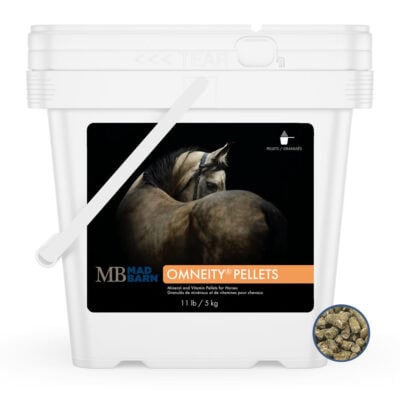
Mad Barn’s Omneity® is a comprehensive vitamin and mineral supplement that is formulated to provide key nutrients commonly lacking in forage. This supplement is made with higher-quality organic trace minerals that will balance your Pinto’s diet to support their overall health and performance.
Forage
Pinto horses need to consume adequate amounts of forage to maintain healthy digestive function and mimic natural grazing behaviors. The amount of forage your Pinto requires depends on their body weight.
Pintos in light work are expected to consume daily forage ration equal to about 2% of their body weight. For example, a 1000 lb (450 kg) Pinto horse should eat approximately 20 lb (9 kg) of hay daily. In comparison, a 500 lb (225 kg) Pinto pony should consume around 10 lb (4.5 kg) daily.
Mid-quality grass forages with low hydrolyzable carbohydrate (HC) content are the safest option for easy keepers, but Pintos in heavy work may need more nutrient-dense forages.
Some studies indicate that consumption of alfalfa hay may be linked to photosensitization in horses, so large amounts of this legume forage may not be suitable for Pinto horses with sensitive skin. [11]
Overweight Pinto horses may need their forage intake restricted to support safe weight loss. Slow feeders are a great option to regulate hay consumption and slow down feed intake while still providing your horse with free-choice forage. Grazing muzzles can also be used to restrict the intake of pasture grass during turnout.
Feeding Recommendations
Most Pinto horses don’t need commercial concentrates in their diet to meet their energy requirements. High-energy grains also increase the risk digestive problems in all horses and the risk of laminitis in horses with metabolic syndrome. [10]
If your Pinto needs extra energy, consider feeding higher quality forage or fiber-based feeds, such as soaked hay pellets or beet pulp. Fat supplements are another safe source of concentrated calories for horses. Feeding fats that provide omega-3 fatty acids can also support skin health in Pinto horses with inflammatory skin conditions. [12]
All Pinto horses need fresh water and salt available at all times to maintain hydration and electrolyte balance. However, most horses won’t consume enough salt from a salt lick alone.
Our nutritionists recommend adding 1 – 2 ounces of plain loose salt to your horse’s daily ration to ensure they meet their sodium requirements.
Nutritional Supplements
Prevention of nutritional deficiencies and balancing the overall diet should be the priority when developing a feeding plan for your Pinto horse. Once the diet is balanced, you can consider other supplements to provide individual support.
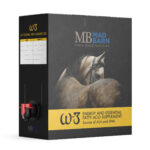
- W-3 Oil is an essential fatty acid supplement that contains microalgae-synthesized DHA, an omega-3 fatty acid not found in plants. This oil also contains high levels of vitamin E. Both DHA and vitamin E help support skin and immune health in Pintos.
- Visceral+® is a comprehensive gut support supplement with natural ingredients that help maintain stomach and hindgut health. This product is made with probiotics, yeast, herbs, minerals, and amino acids to support digestive function.
- MSM is a natural supplement commonly used to support the body’s own homeostatic mechanisms to moderate inflammation.
- Spirulina, a blue-green algae, is densely packed with nutrients and offers numerous health benefits for horses. Research shows it can support skin health, metabolic functions, respiratory health and the immune system.
Not sure if your feeding program is meeting the needs of your Pinto horse? Submit their information online for a free evaluation, and consult with our qualified equine nutritionists for help formulating a balanced diet.
Frequently Asked Questions
Here are some frequently asked questions about Pinto horses:
A Pinto horse is a recognized color breed in North America defined by a qualifying tobiano or overo coat pattern rather than a single fixed ancestry. Pinto horses can come from diverse or undocumented backgrounds as long as they meet Pinto Horse Association of America color requirements. The registry includes horses of several conformational types, which is why Pinto horses vary widely in build, size, and use.
A horse is eligible for Pinto registration if it displays the coat color and marking pattern required by the Pinto Horse Association of America. Pinto registration does not require documented parentage, and horses from many different backgrounds can qualify if their markings meet registry standards. The organization also maintains registration options for certain outcross horses, as well as some mules and donkeys with qualifying color patterns.
The difference between tobiano and overo markings on a Pinto horse is the way white patterning appears on the body. Tobiano Pinto horses usually have rounded white patches, white legs, and white that crosses the back. Overo Pinto horses typically have more irregular white markings that do not cross the back between the withers and tail, along with more dramatic facial white. Some Pinto horses inherit both pattern types and are described as tovero.
Pinto horses are most commonly identified by tobiano, overo, or tovero coat patterns layered over many base coat colors. Common base colors in Pinto horses include bay, black, chestnut, gray, buckskin, palomino, and roan. Because Pinto refers to a color breed, the pattern is more important than the underlying coat color.
Pinto horses do not have one single conformation type because the registry includes horses from many different backgrounds. Instead, Pinto horses are classified as Miniature, Pony, Horse, or Utility types based on height and build. Horse-type Pintos may be further divided into Stock, Hunter, Pleasure, or Saddle types, while Utility Pintos often have Gypsy or Drum-type conformation. As a result, Pinto horse conformation can range from compact and refined to heavy and draft-influenced.
Pinto horses are used for a wide range of riding, driving, and showing disciplines depending on their type and breeding. Miniature Pinto horses often compete in halter and driving, while Pinto ponies are commonly used as children’s mounts. Horse-type Pintos may work as western horses, ranch horses, English performance horses, trail mounts, or all-around riding horses. Their colorful coats also make them popular in the show ring.
The temperament of Pinto horses varies widely because Pinto horses come from many different breed backgrounds. Some Pinto horses are easy-going and family-friendly, while others are more sensitive, energetic, or cheeky depending on their ancestry and type. Utility Pintos are often docile, pony and miniature Pintos can be more spirited, and Pintos with Thoroughbred or Arabian influence may be more reactive. Many Pinto horses with stock-horse breeding are known for calm, amiable temperaments.
Pinto horse height varies by classification. Miniature Pinto horses stand under 39 inches, Pinto ponies measure from 39 inches up to 14 hands, and horse-type Pinto horses stand over 14 hands tall. Because the registry includes several size divisions, there is no single standard height for all Pinto horses.
Pinto horses are susceptible to several health concerns linked to coat genetics and areas of unpigmented skin. Pinto horses with frame overo genetics may carry the mutation associated with Lethal White Overo, a fatal condition in foals that inherit two copies of the gene. Some overo-patterned Pinto horses, especially those with extensive white facial markings and blue eyes, also have a higher risk of deafness. In addition, pink skin in Pinto horses is more vulnerable to sunburn, photosensitization, and squamous cell carcinoma around the eyes.
An easy-keeper Pinto horse should generally maintain a body condition score of 4 to 6 on the Henneke scale. Many Pinto horses, especially pony, miniature, utility, and stock types, maintain weight easily and may be prone to excess condition if calorie intake is not managed carefully. Feeding programs for easy-keeper Pinto horses should focus on forage, controlled energy intake, and appropriate non-structural carbohydrate levels to support metabolic health.
Summary
Pinto horses are a North American colour breed defined by striking tobiano or overo patterns across diverse body types and bloodlines. They are versatile across disciplines but some colour-linked traits require targeted health and nutrition management.
- Origin traces to 16th-century Spanish spotted horses; PtHA (1956) accepts coloured horses from diverse or undocumented ancestry
- Classifications include Miniature, Pony, Horse (Stock, Hunter, Pleasure, Saddle), and Utility types
- Coat patterns include tobiano, overo, or tovero across many base colours
- Key risks include Lethal White Overo, possible deafness with extensive white/blue eyes, and sun-sensitive pink skin
- Management focuses on UV protection, routine care, and a forage-based diet balanced with vitamins/minerals while avoiding grain-heavy feeds
References
- Luis, C. et al. Iberian Origins of New World Horse Breeds. J Heredity. 2006. View Summary
- Taylor, W. et al. Early dispersal of domestic horses into the Great Plains and northern Rockies. Science. 2023. View Summary
- Haase, B. et al. An equine chromosome 3 inversion is associated with the tobiano spotting pattern in German horse breeds. Anim Genet. 2008. View Summary
- Bowling, A. Dominant Inheritance of Overo Spotting in Paint Horses. J Hered. 1994. View Summary
- Metallinos, D. et al. A missense mutation in the endothelin-B receptor gene is associated with Lethal White Foal Syndrome: an equine version of Hirschsprung Disease. Mammal Genome. 1998.View Summary
- Vrotsos, P. et al. The Impact of the Mutation Causing Overo Lethal White Syndrome on White Patterning in Horses. AAEP Proceed. 2001.
- Magdesian, G. et al. Evaluation of deafness in American Paint Horses by phenotype, brainstem auditory-evoked responses, and endothelin receptor B genotype. J Am Vet Med Assoc. 2009.View Summary
- Stegelmeier, B. et al. Equine photosensitization. Clin Technique Equine Pract. 2002.
- Taylor, S. et al. A review of equine mucocutaneous squamous cell carcinoma. Equine Vet Ed. 2012.
- Morgan, R. et al. Equine metabolic syndrome. Vet Rec. 2015.View Summary
- Puschner, B. et al. Alfalfa hay induced primary photosensitization in horses. Vet J. 2016. View Summary
- O'Neill, W. et al. Flaxseed (Linum usitatissimum) supplementation associated with reduced skin test lesional area in horses with Culicoides hypersensitivity. Can J Vet Res. 2002. View Summary