English








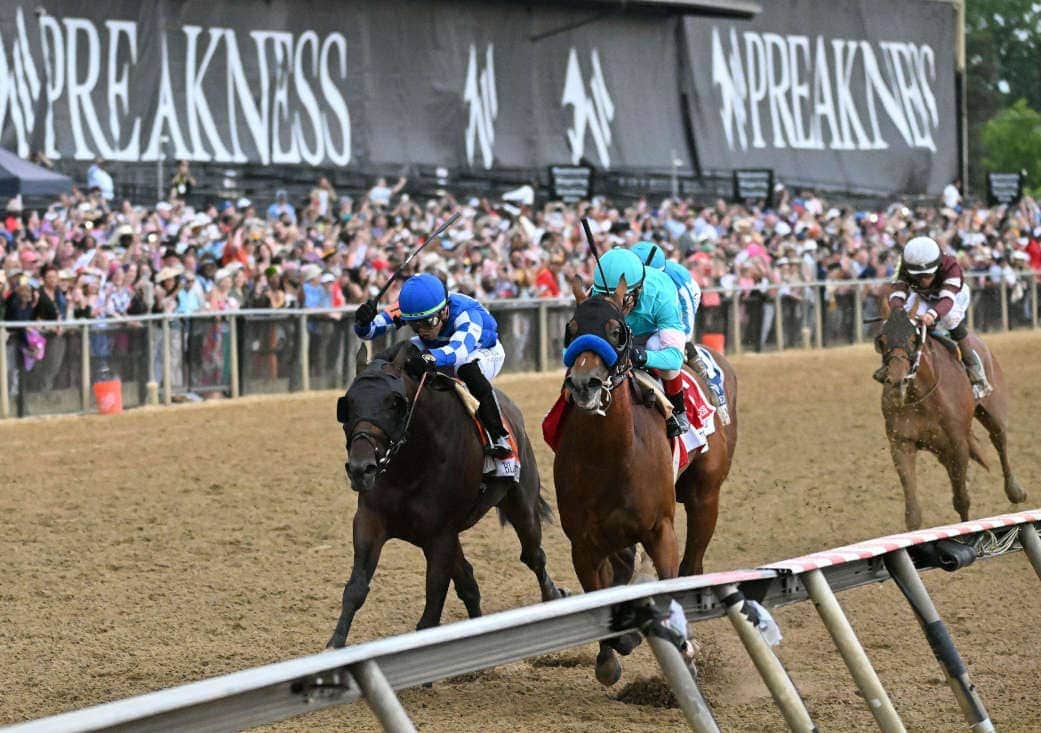
The Preakness Stakes is the second leg of the Triple Crown and one of the most historic races in American Thoroughbred racing. For more than a century, it has played a defining role in Triple Crown campaigns, testing horses just two weeks after the Kentucky Derby.
That short turnaround demands exceptional recovery, speed, stamina, and composure under pressure. The Preakness can keep a Triple Crown bid alive or end it, making it both a major sporting event and a true test of elite equine performance.
Explore the history of the Preakness Stakes, its most notable winners, and the training, nutrition, and management strategies that can influence success in the race and throughout the Triple Crown.
The Preakness Stakes
The Preakness Stakes is the second leg of the American Triple Crown, run after the Kentucky Derby and before the Belmont Stakes.
It is the race that determines whether a three-year-old Thoroughbred will continue to the Belmont with a chance to win the Triple Crown. To sweep the series, a horse must win all three races in just five weeks, one of the most difficult accomplishments in horse racing.
The Preakness Stakes is especially demanding because it comes only two weeks after the 1 1/4-mile Kentucky Derby. In that short window, horses must recover from a hard effort, maintain body condition and soundness, and be ready to deliver another Grade 1 performance against elite competition.
The Preakness rewards horses with the speed to secure position, the stamina to finish strongly, and the mental composure to handle intense pressure on a compressed Triple Crown schedule. [1]
Preakness Stakes at a Glance
- First run: 1873
- Location: Pimlico Race Course, Baltimore, Maryland
- Distance: 1 3/16 miles (9.5 furlongs)
- Race order: Second leg of the American Triple Crown
- Nickname: “The Run for the Black-Eyed Susans”
- Eligible horses: Three-year-old Thoroughbreds
Distance
The Preakness is slightly shorter than the Kentucky Derby at 1 3/16 miles, but it presents challenges of its own. The race often unfolds at a sharp pace, requiring both speed and stamina, while track conditions at Pimlico Race Course can further test a horse’s adaptability, from fast footing to muddy surfaces. [2]
Because of these demands, the Preakness often becomes the decisive race of the Triple Crown. The combination of pressure and athletic difficulty makes the Preakness one of the most compelling events in horse racing.
The Preakness Stakes has not always been run at its current distance. When the race was first contested in 1873, seven three-year-olds competed over 1 1/2 miles, a considerably longer test than today’s race. Over the following decades, the distance changed multiple times before eventually settling at 1 3/16 miles. [2]
What's your top priority with your horse's health?

Enter your email to receive your store credit
Why the Preakness is Called the “Run for the Black Eyed Susans”
The Preakness became known as the “Run for the Black-Eyed Susans” because the winning horse is draped in a blanket of black-eyed Susan flowers, the official state flower of Maryland.
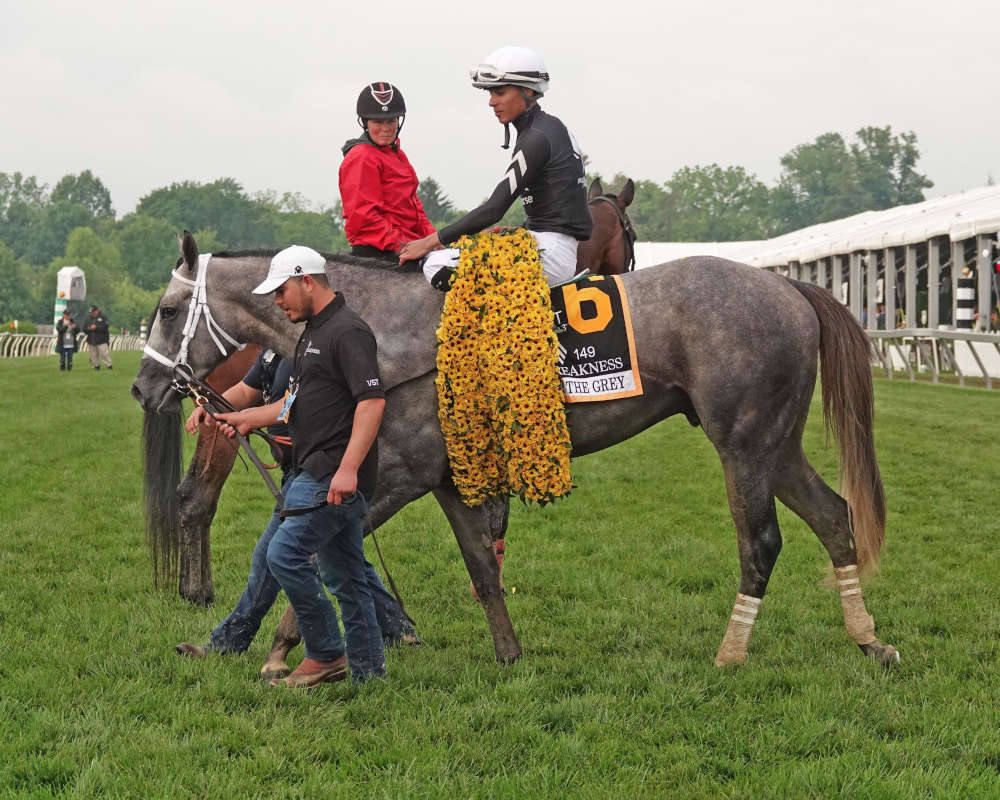
Although black-eyed Susans are Maryland’s state flower, they typically do not bloom until June or July, after the race is run. To preserve the tradition, officials instead use yellow daisies with their centers painted black to resemble the flower.
In the same way the Kentucky Derby is known as the “Run for the Roses,” this custom helped earn the Preakness its own enduring nickname. [3]
How Horses Qualify for the Preakness Stakes
As with all Triple Crown races, any horse competing in the Preakness Stakes must be a 3-year-old Thoroughbred. The race is limited to just 14 starters, making qualifying very competitive.
There is no formal point system to qualify for the Preakness. To compete in the race, horses typically must win or perform exceptionally well in a recognized preparatory race, such as the Kentucky Derby or the Frederico Tesio Stakes. [4]
Preakness Purse
The Preakness Stakes has offered a purse of $2 million USD since 2024. That purse is divided among the top five finishers, with the winner currently receiving $1.2 million USD. The total prize decreases for each subsequent horse and jockey that cross the finish line. [5]
The total purse has fluctuated over decades, but overall has risen greatly from the first ever Preakness purse of $2,050 USD. [1]
Preakness Stakes vs. Kentucky Derby & Belmont Stakes
The Preakness Stakes is the shortest race among the three races for the Triple Crown. Listed in running order, the three race lengths are:
- Kentucky Derby: 1 1/4 miles (10 furlongs)
- Preakness Stakes: 1 3/16 miles (9.5 furlongs)
- Belmont Stakes: 1 1/2 miles (12 furlongs)
The purse for the Preakness Stakes matches the Belmont Stakes purse of $2 million USD, but the Kentucky Derby tops the Triple Crown earnings with a $5 million USD purse. [5]
Qualification for the Preakness also aligns with the Belmont Stakes, as both races require that horses perform well in previous preparatory races. The Kentucky Derby, however, accepts competitors through a points system called the “Road to the Kentucky Derby.” [4]
History of the Preakness Stakes Race
The first Preakness Stakes took place on May 27, 1873 at Pimlico Race Course in Baltimore. Named after Pimlico’s very first Dinner Party Stakes winner, Preakness, this inaugural race had seven three-year-olds compete over 1 1/2 miles before a crowd of approximately 12,000 spectators. [1][2]
The favorite was Catesby, owned by Maryland Governor Oden Bowie. However, an overlooked colt named Survivor crossed the finish line first. [1][2]
Owned by John Chamberlin and trained by A. Davis Pryor, Survivor entered the race as a maiden with little expectation. Survivor stayed just behind the front runners for most of the race, guided by 22-year-old jockey George Barbee, then surged ahead in the final stretch. He pulled away convincingly, winning by about 10 horse lengths and finishing the race in 2 minutes and 43 seconds on a muddy track. [1][2]
The victory earned $2,050 USD in prize money, with $1,850 USD awarded to Chamberlin. Survivor’s 10-length margin stood as the race record for more than a century, until Smarty Jones surpassed it with an 11 1/2-length victory in 2004. [2]
Pimlico Race Course: The Historic Home of the Preakness
Pimlico Race Course opened on October 25, 1870, during the Reconstruction era following the Civil War, making it the second-oldest racetrack in the United States behind Saratoga Race Course.
At a time when Thoroughbred racing was expanding rapidly nationwide, Maryland sought to reestablish itself as a national center of the sport. [6]
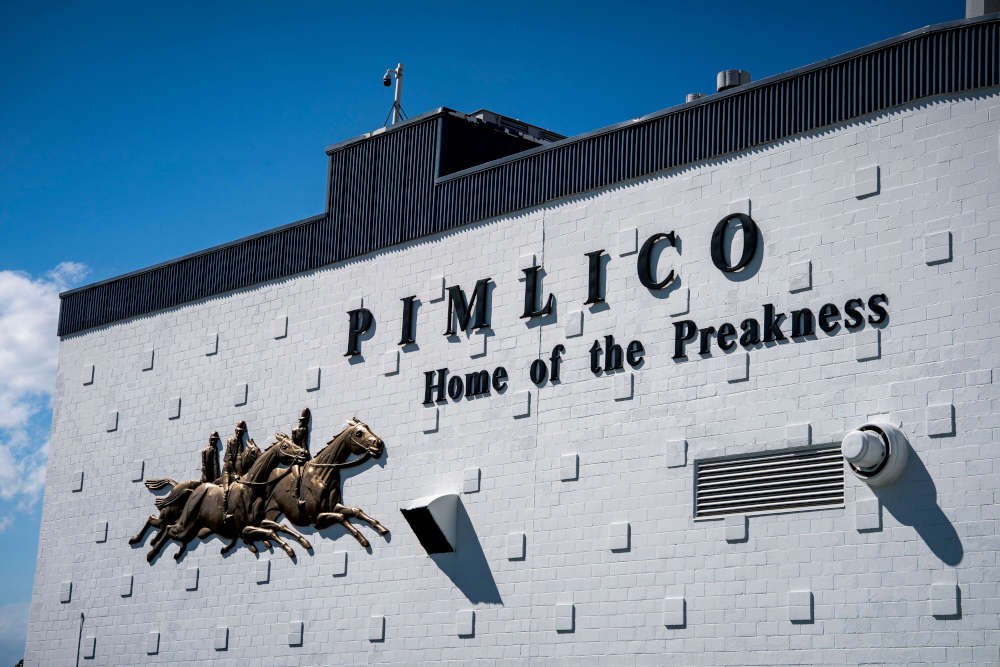
Maryland Governor Oden Bowie announced plans for the new track at a Saratoga dinner party in 1868, proposing that Baltimore host a premier racing venue. When rival interests debated the location of a commemorative race, Bowie pledged to build a model racetrack in his home state. [6]
The Maryland Jockey Club subsequently purchased 70 acres west of the Jones Falls for $23,500 USD and constructed the facility for $25,000 USD. Pimlico officially opened two years later and soon became the home of the Preakness Stakes. [6]
Tradition & the Legacy of “Old Hilltop”
Pimlico became known as “Old Hilltop,” named for a small rise in the infield where trainers and spectators gathered to watch races. The infield developed a reputation as a fashionable social center, developing traditions such as the champagne lunch that continues today in the Corporate Village at Preakness. [6]
The original hill was removed in 1938 to improve sightlines for emerging film and television coverage. [6]
Another enduring Preakness tradition is painting the Pimlico weather vane in the winning owner’s colors after each race, a custom that remains a signature part of the celebration. [1]
Preakness Stakes Records
Throughout its long history, the Preakness Stakes has produced several remarkable performances that highlight the enduring power of elite Thoroughbred racehorses. [1][2][7][8][9]
- Fastest time: Secretariat (1973) – 1:53 for 1 3/16 miles, the official stakes and track record after the Maryland Racing Commission corrected the time in 2012
- Largest winning margin: Smarty Jones (2004) – won by 11 1/2 lengths, breaking a record that had stood for 131 years
- Longest-standing winning margin record: Survivor (1873) – won the inaugural Preakness by 10 lengths, a mark that stood for more than a century
- First winner: Survivor (1873) – captured the first-ever Preakness Stakes at Pimlico Race Course
- Most wins by a trainer: Bob Baffert – 8 victories between 1997 and 2023
Secretariat’s 1973 performance remains one of the most celebrated in Preakness history, while Smarty Jones’ record-setting victory in 2004 demonstrated how rare it is for even exceptional horses to surpass the race’s oldest standards. [2][7][8]
The Middle Jewel: Why the Preakness Is the Deciding Race of the Triple Crown
The Preakness Stakes gained formal recognition as the middle jewel of the American Triple Crown around 1930, when the three-race series achieved national prominence. Positioned between the Kentucky Derby and the Belmont Stakes, it serves as the pivotal test in the series. [10]
Run just two weeks after the Derby, the Preakness demands rapid physiological recovery following the Derby’s taxing 1 1/4-mile effort. Horses must maintain peak fitness while managing inflammation, muscle fatigue, energy depletion, and travel stress.
Strategic conditioning, nutrition, and management often determine whether a Triple Crown bid continues or ends. [10]
Why Many Derby Winners Fail to Win the Preakness
Many Kentucky Derby winners enter the Preakness as favorites but fail to repeat their Derby success. The primary reason is physical fatigue. Even elite, well-conditioned Thoroughbreds may not fully recover from the Derby’s demands in two weeks. Tactical differences also matter.
Additionally, the Preakness typically features a smaller field which can create different pace dynamics, and some Preakness competitors may not have run in the Derby.
Horses that bypassed the Derby may hold a recovery advantage, having had more time to rest and prepare than Triple Crown contenders returning to the races after only two weeks.
Legendary Preakness Stakes Winners
Throughout its history, the Preakness Stakes has served as a career-defining race for champions. The following winners illustrate how the Preakness has repeatedly shaped Triple Crown campaigns and solidified racing legacies across generations.
Secretariat (1973): The Great Timing Debate
Secretariat turned the 1973 Preakness into a defining performance, unleashing a bold last-to-first move to win by 2 1/2 lengths and secure the second leg of his Triple Crown. The track’s electronic “Visumatic” timer initially posted 1:55 for 1 3/16 miles, slower than Canonero II’s stakes record. [7]
However, Daily Racing Form clockers Frank Robinson and Frenchy Schwartz independently recorded 1:53 2/5, casting doubt on the electronic reading. Pimlico’s backup clocker hand-timed the race in 1:54 2/5, and officials revised the time the next day. [7]
After decades of debate, the Maryland Racing Commission voted unanimously in 2012 to correct Secretariat’s official time to 1:53, establishing a stakes and track record. [7]
Citation (1948): A Classic “Complete Horse”
In 1948, Citation cemented his reputation as a “complete horse” during a dominant Triple Crown campaign, with the Preakness serving as a pivotal race. Trained by Jimmy Jones for Calumet Farm and ridden by Eddie Arcaro, Citation entered the race as the 1–10 favorite in a four-horse field. [11]
On May 15, 1948, over a muddy track, he led wire to wire and won the 1 3/16-mile Preakness by 5 1/2 lengths over Vulcan’s Forge, following his 3 1/2-length Kentucky Derby victory. He combined elite speed with exceptional stamina, racing confidently in the lead without heavy urging. The performance reinforced his superior ability and helped establish him as one of the era’s iconic champions. [11]
Seattle Slew (1977): The Undefeated
In 1977, Seattle Slew entered the Preakness undefeated, carrying the weight of national expectations to win. Facing intense scrutiny and only two returning rivals from the Kentucky Derby, he seized the lead early and never relinquished it, winning by 1 1/2 lengths.
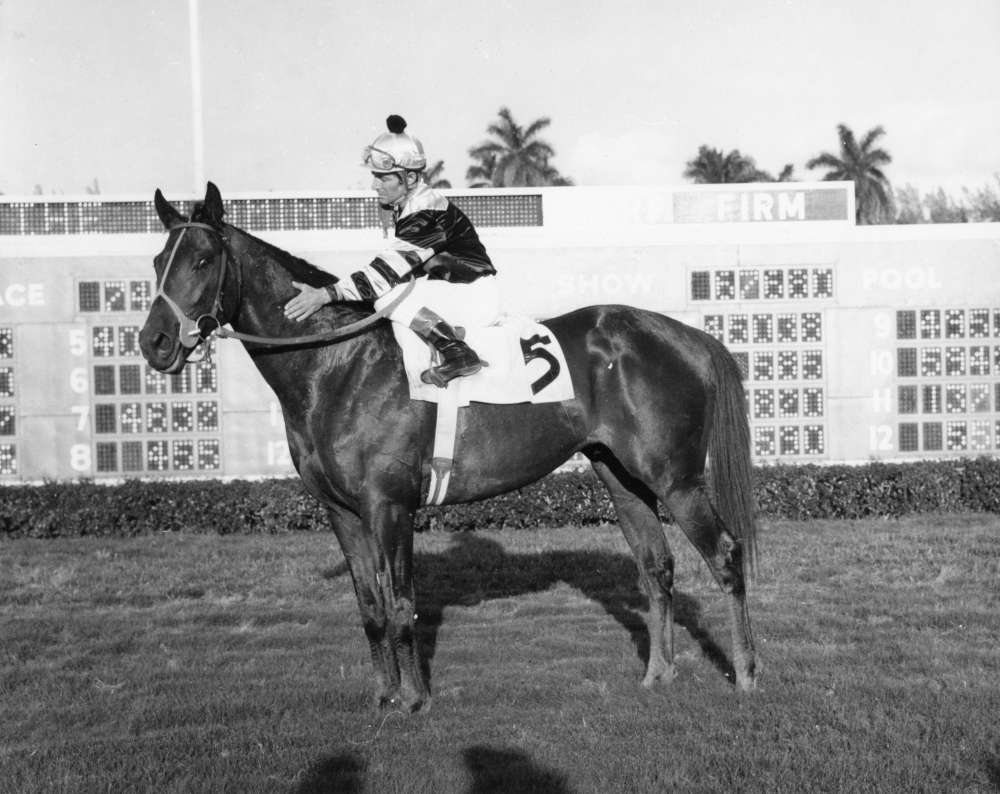 Seattle Slew, Hialeah Racetrack, 1977
This victory kept Slew’s Triple Crown bid alive and propelled him to the Belmont Stakes, where he secured his place as the only undefeated Triple Crown winner in history. [12]
Affirmed (1978): Greatness in a Rivalry
Affirmed’s victory in the 1978 Preakness Stakes stands out because it unfolded against sustained, elite opposition. His rivalry with Alydar defined the 1978 Triple Crown series.
Affirmed won by a neck after a relentless stretch duel. The two colts met 10 times over their careers, often separated by narrow margins, forcing Affirmed to deliver peak performances repeatedly.
The Preakness victory kept his Triple Crown bid intact and set the stage for another dramatic showdown in the Belmont Stakes, where Affirmed secured his place as the 11th Triple Crown winner. [13]
Smarty Jones (2004): Breaking the 131-Year Record
Two weeks after his Kentucky Derby win, Smarty Jones delivered a record-setting performance in the 2004 Preakness, winning by 11 1/2 lengths at Pimlico under Stewart Elliott before a crowd of 112,168.
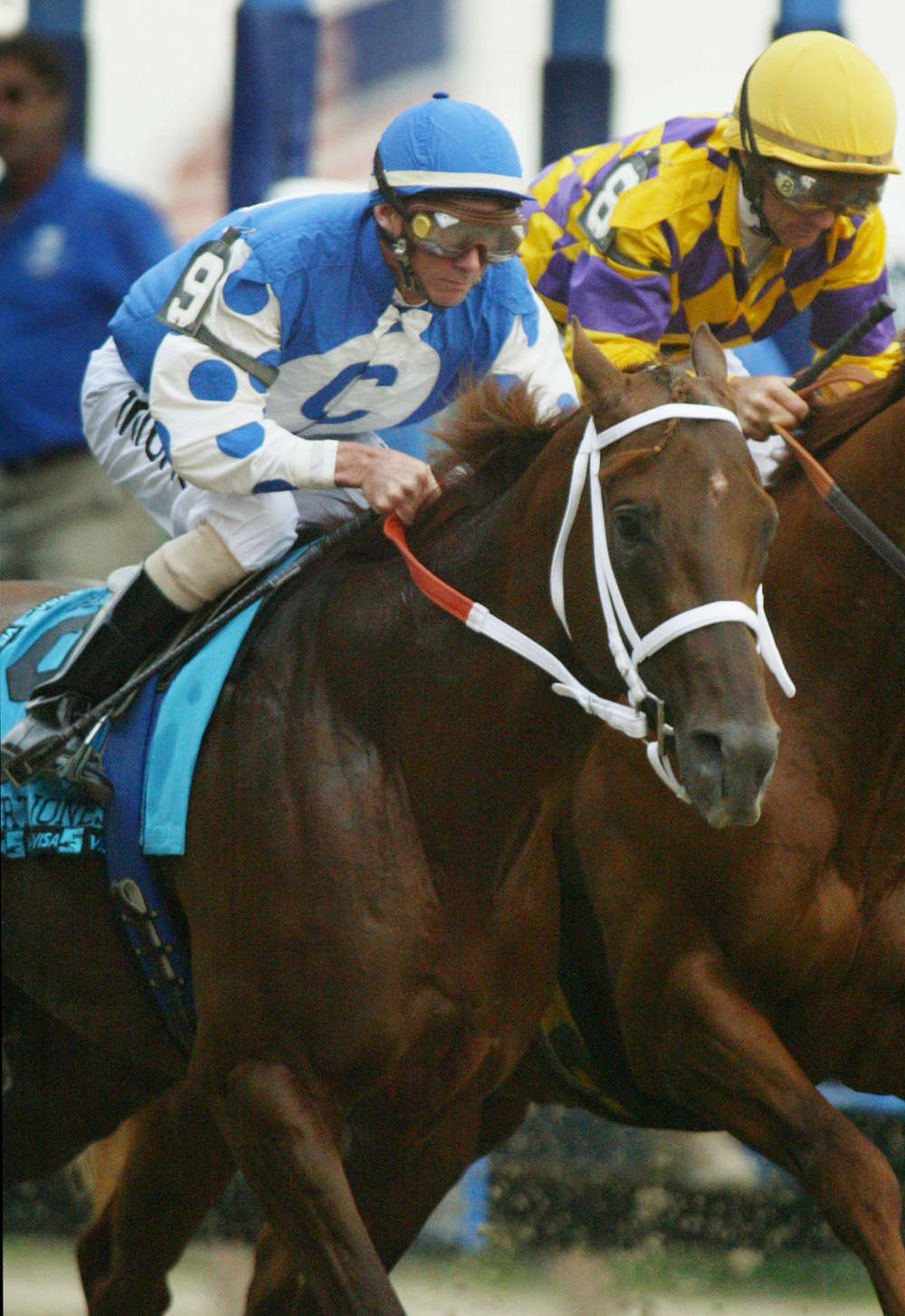 Smarty Jones starting at Belmont Park, 2004
He broke Survivor’s 131-year-old record of 10 lengths from 1873. Smarty Jones earned a career-best 118 Beyer Speed Figure for the effort, one of six races in which he posted a Beyer of 100 or higher. [8]
American Pharoah (2015) & Justify (2018): Modern Day Champions
Following a 37-year Triple Crown drought, American Pharoah and Justify reignited the sport over a period of four years, thrilling audiences and restoring racing’s most elusive achievement.
American Pharoah navigated difficult conditions at Pimlico to secure the Preakness and keep his Triple Crown bid intact, underscoring the importance of adaptability and resilience. [14]
Justify delivered an equally determined performance, dueling with rivals throughout the Preakness and prevailing by a half-length to preserve his Triple Crown campaign. He then completed the sweep with a decisive wire-to-wire victory in the Belmont Stakes before retiring to stud. [14]

Training, Conditioning, & Modern Management for the Preakness Stakes
The Preakness presents unique physiological challenges. Run just two weeks after the Kentucky Derby, it requires rapid recovery while maintaining peak race fitness. In the modern era, success in the Preakness relies heavily on advanced management strategies, veterinary oversight, and conditioning decisions guided by evolving technology. [1]
Nutrition & Supplementation
Nutritional management helps racehorses meet the energy demands of training and racing while supporting recovery between works and starts. Traditionally, these diets have relied on forage plus relatively large grain meals to supply enough calories for high-intensity exercise, and that basic model is still common in many racing barns. [15]
Modern feeding programs generally place more emphasis on ration balance, forage quality, and careful management of starch intake, but grain concentrates still play a central role in most racehorse diets because they provide a dense source of readily available energy. [16]
High-quality forage remains important for digestive health, feeding behavior, and maintaining more consistent intake throughout the day. Trainers and nutritionists then use concentrates and supplements to help meet the horse’s energy, protein, vitamin, and mineral requirements based on workload, body condition, and individual tolerance. [16][17]
Supplementation is used to address specific needs within the broader diet rather than replace a well-formulated ration.
Depending on the horse and management program, this may include electrolytes to replace sweat losses, along with other nutrients used to support recovery, joint health, muscle function, oxygen utilization, and overall health. [17][18]
Training & Conditioning
Until the mid-20th century, trainers relied on long, steady gallops, higher daily workloads, and frequent racing to build aerobic stamina and help maintain fitness.
Modern conditioning focuses more on the individual horse’s needs. Advances in exercise physiology, biomechanics, and diagnostic tools now guide the development of training plans. Trainers typically emphasize structured interval work and strategic recovery to optimize performance while reducing injury risk. [19][20]
Between Triple Crown races, horses typically perform light gallops and controlled breezes to maintain fitness while minimizing fatigue and injury. [20]
Here are some frequently asked questions about the Preakness Stakes:
The Preakness Stakes is the second race in the American Triple Crown, held between the Kentucky Derby and the Belmont Stakes. It plays a critical role in determining whether a three-year-old Thoroughbred can continue a Triple Crown bid. Because it is run just two weeks after the Derby, the race places significant emphasis on recovery, consistency, and the ability to perform at a high level in quick succession.
The Preakness Stakes race is run over 1 3/16 miles, or 9.5 furlongs, making it shorter than both the Kentucky Derby and the Belmont Stakes. Despite being the shortest of the three Triple Crown races, it still requires a balance of speed and stamina. The slightly shorter distance often results in a faster early pace and can favor horses with strong tactical positioning.
The Preakness Stakes is called the "Run for the Black-Eyed Susans" because the winning horse is draped in a blanket of flowers modeled after black-eyed Susans, the official state flower of Maryland. Since these flowers are not in bloom at the time of the race, yellow daisies are used and styled to resemble them. This tradition has become one of the defining visual symbols of the Preakness.
Horses qualify for the Preakness Stakes by meeting eligibility requirements as three-year-old Thoroughbreds and demonstrating competitive performance in recognized prep races. Unlike the Kentucky Derby, the Preakness does not use a formal points system, allowing for more discretion in selecting the field. With a maximum of 14 starters, entry is competitive and often includes a mix of Derby runners and fresh contenders.
Many Kentucky Derby winners lose the Preakness Stakes because the two-week interval between races limits recovery time after a physically demanding effort. Horses must quickly regain condition while preparing for another top-level race against elite competition. Additionally, the Preakness often includes fresh horses that skipped the Derby, creating a competitive advantage for rested horses.
The Preakness Stakes is held annually on the third Saturday in May, two weeks after the Kentucky Derby. This timing is a fixed part of the Triple Crown schedule and creates a rapid progression between the first two races. The short interval contributes to the unique challenge of maintaining peak performance across multiple starts.
The Preakness Stakes is held at Pimlico Race Course in Baltimore, Maryland, which has been its home for most of the race's history. The venue is closely associated with the identity of the Preakness and contributes to its regional traditions and atmosphere. Pimlico’s configuration and track conditions can also influence race strategy and outcomes.
The Preakness Stakes differs from the Kentucky Derby and Belmont Stakes in distance, timing, and field composition. It is shorter than both races and takes place just two weeks after the Derby, creating a unique emphasis on recovery and adaptability. The race often features a mix of Derby participants and new challengers, making it strategically distinct within the Triple Crown series.
A horse cannot win the Triple Crown without winning the Preakness Stakes, as it is the second leg of the three-race series. To achieve the Triple Crown, a horse must win the Kentucky Derby, Preakness Stakes, and Belmont Stakes in the same year. Missing or losing any one of these races eliminates the possibility of a Triple Crown title.
Summary
The Preakness Stakes is the second leg of the Triple Crown and a defining test of speed, stamina, and recovery for three-year-old Thoroughbreds.
- Its long history, unique traditions, and legendary winners have made the race one of the most iconic events in American horse racing
- Run just two weeks after the Kentucky Derby, the Preakness often determines whether a Triple Crown bid continues or comes to an end
- Success in the Preakness depends not only on talent, but also on careful conditioning, recovery, nutrition, and race management
- From Survivor to Secretariat, Smarty Jones, and Justify, the Preakness has repeatedly shaped racing legacies across generations
References
- The History of the Preakness Stakes.
- Survivor: Forgotten Star of the First Preakness | National Museum of Racing and Hall of Fame.
- Drager, M. Preakness Stakes. Britannica. 2026.
- Preakness Stakes Prep Races. TwinSpires. 2025.
- Keeler Johnson, J. 2025 Preakness Stakes Purse: How MUch Prize Money the Winning Owner and Trainer Will Earn. TwinSpires. 2025.
- History | Pimlico.
- Hill. D., Secretariat, the Preakness, and a 39-Year Controversy.
- Smarty Jones (PA) | National Museum of Racing and Hall of Fame.
- Ehalt, B. Two Weeks' Rest? No Problem for Baffert, Lukas. BloodHorse. 2025.
- Triple Crown. Kentucky Derby.
- Conway. T., The Mighty Citation: ‘So Fast He Scared Me’.
- Seattle Slew.
- Ehalt. B., The Sport’s Great Rivalries: Affirmed and Alydar.
- Triple Crown Head-to-Head: American Pharoah vs Justify. Kentucky Derby.
- Harris. P. A., Developments in Equine Nutrition: Comparing the Beginning and End of This Century. The Journal of Nutrition. 1998.
- Feeding Horses for Competitions: From Racing to Dressage | Equine Science Center.
- Noble. G. K., Horse Husbandry–Nutrition, Management and Welfare. Animals : an Open Access Journal from MDPI. 2023.
- Electrolytes and the Exercising Horse | Iowa State University Extension and Outreach Equine Science.
- Paulick. R., Triple Crown Training Patterns. Paulick Report. 2012.
- Morrice-West. A. V. et al. Association of Thoroughbred Racehorse Workloads and Rest Practices with Trainer Success. Animals. 2021.