Phosphorus is an essential macromineral that supports bone development, energy metabolism, and overall cellular function in horses. It forms a key part of adenosine triphosphate (ATP), the body’s main energy molecule, and contributes to the structure of DNA, cell membranes (phospholipids), and connective tissue. Phosphorus also helps regulate pH balance and fluid homeostasis in the body.
In equine diets, phosphorus is supplied naturally by forages, grains, and protein meals such as oats and soybean meal. Feeds like wheat bran and rice bran contain higher concentrations of phosphorus, although much of it exists in a bound form known as phytate, which reduces bioavailability. To ensure adequate intake and proper mineral ratios, supplemental inorganic phosphorus sources such as monosodium phosphate may be used.
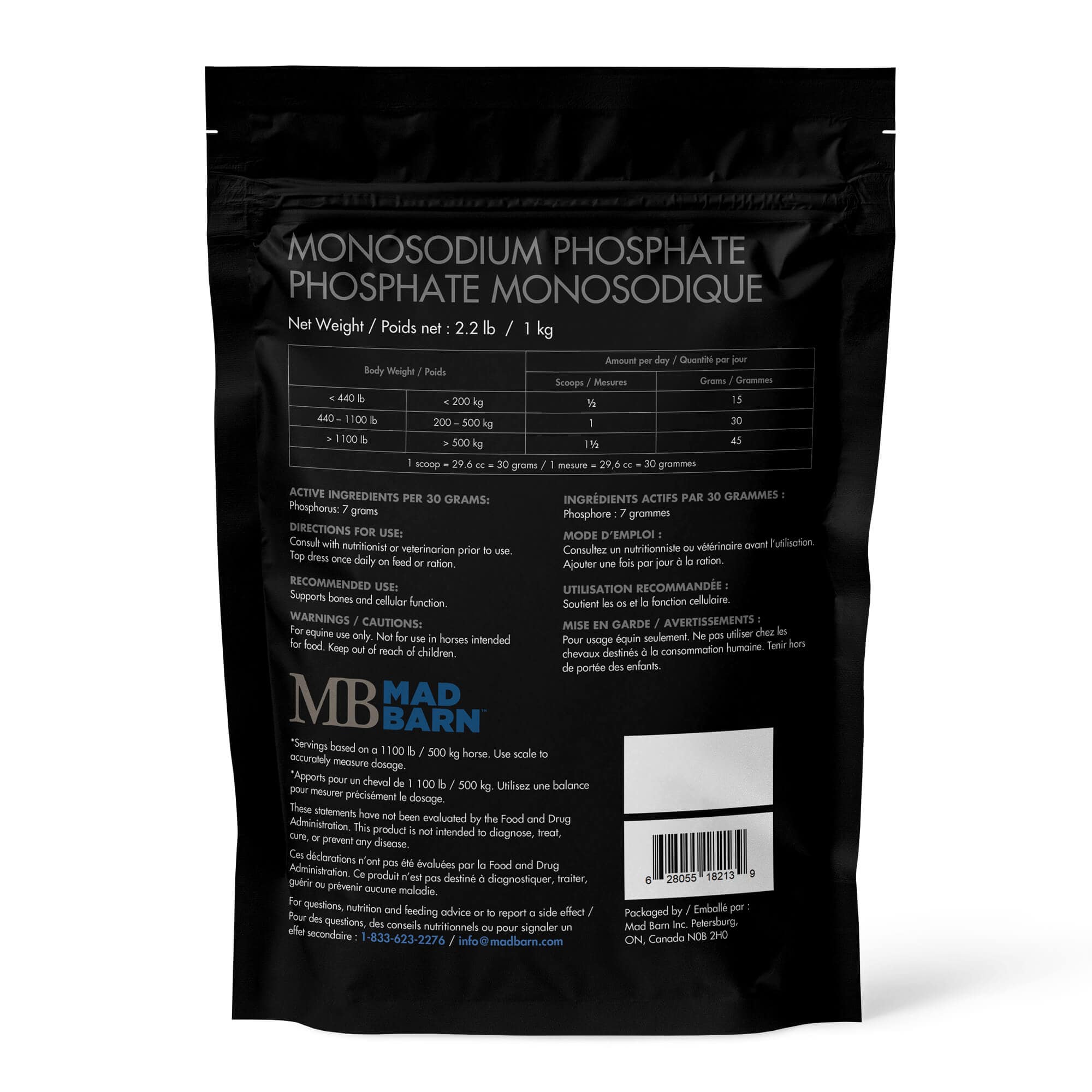
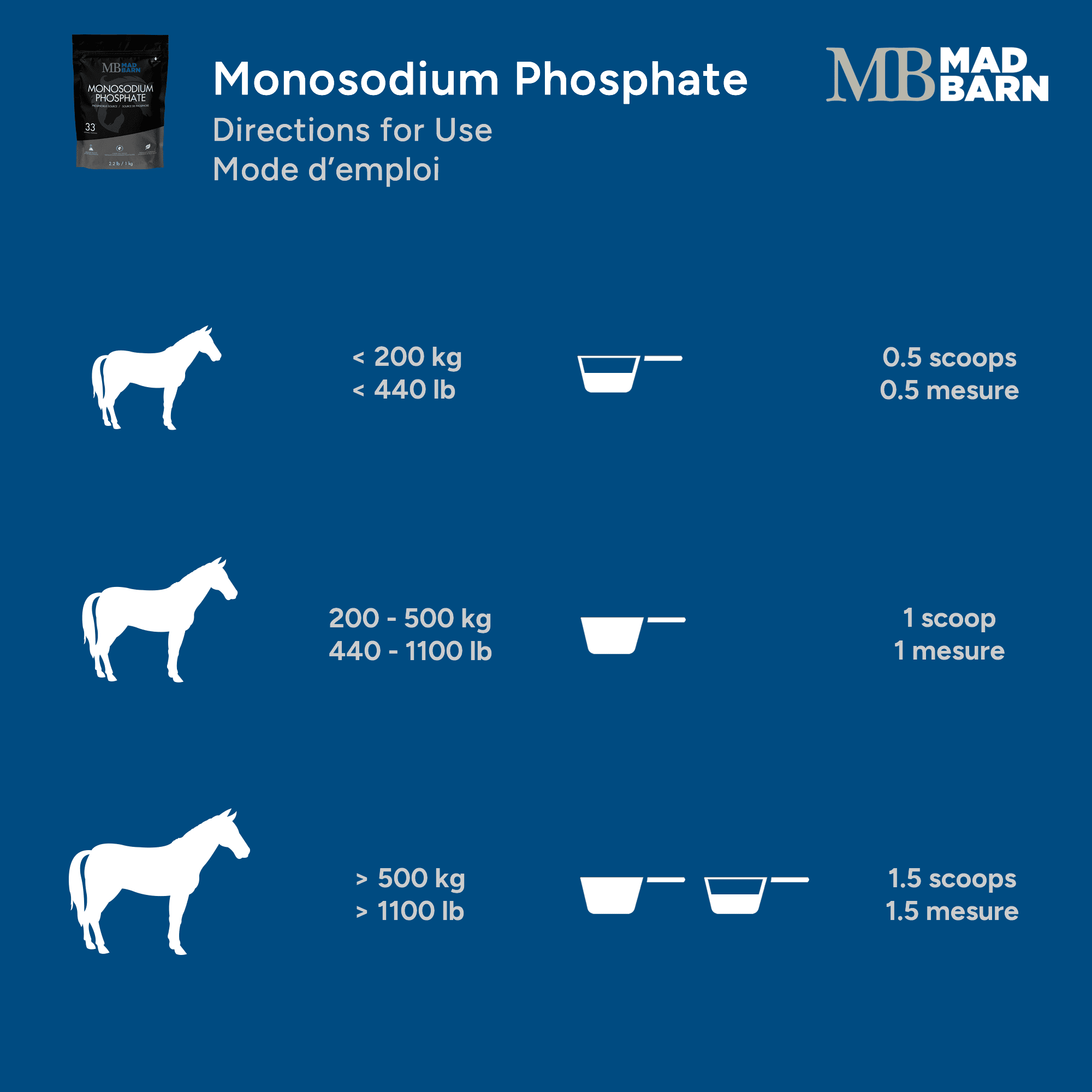
Monosodium phosphate is a highly bioavailable source of phosphorus that supports bone density, cartilage health, and energy metabolism. It is particularly beneficial for growing horses, lactating mares, and performance horses with higher mineral demands. This form of phosphorus is also used to balance high-calcium diets, such as those containing alfalfa, to maintain the ideal calcium-to-phosphorus ratio for skeletal and metabolic health.
Compared to other phosphate sources, such as monocalcium phosphate, monosodium phosphate contains very low levels of trace iron. This makes it an excellent option for horses that require careful management of the zinc:copper:iron ratio in their diet—an important factor for maintaining metabolic balance, coat quality, and hoof integrity.
Because phosphorus is a non-renewable resource mined from natural deposits, appropriate supplementation helps meet equine requirements without contributing to environmental excess. Balancing phosphorus intake ensures optimal bone and tissue health while minimizing nutrient waste.


 English




 AminoTrace+
  Monosodium Phosphate
  Bone Health and Strength
 Mineral Balance
 Energy Metabolism
 Joints and Connective Tissue
 Growth and Development
 Muscle Function
 Post-Exercise Care
 Cellular Integrity
 Neurological Health
 Overall Well-Being















