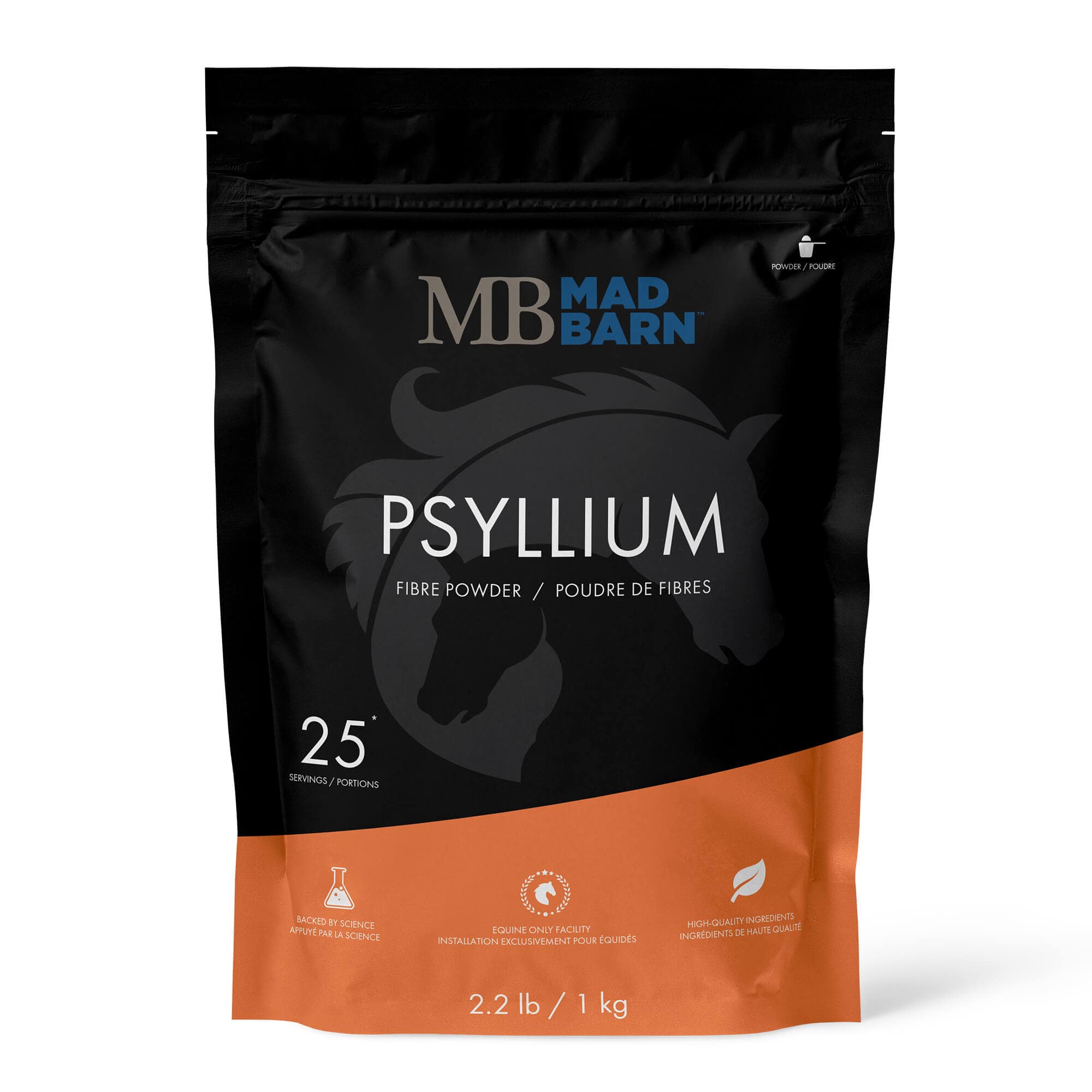
Psyllium husk powder is a plant-derived soluble fiber used to support digestive regularity and gut health in horses. It absorbs water as it moves through the digestive tract, helping support normal motility and manure consistency, which is beneficial for horses exposed to sand, dietary changes, or environmental stress.
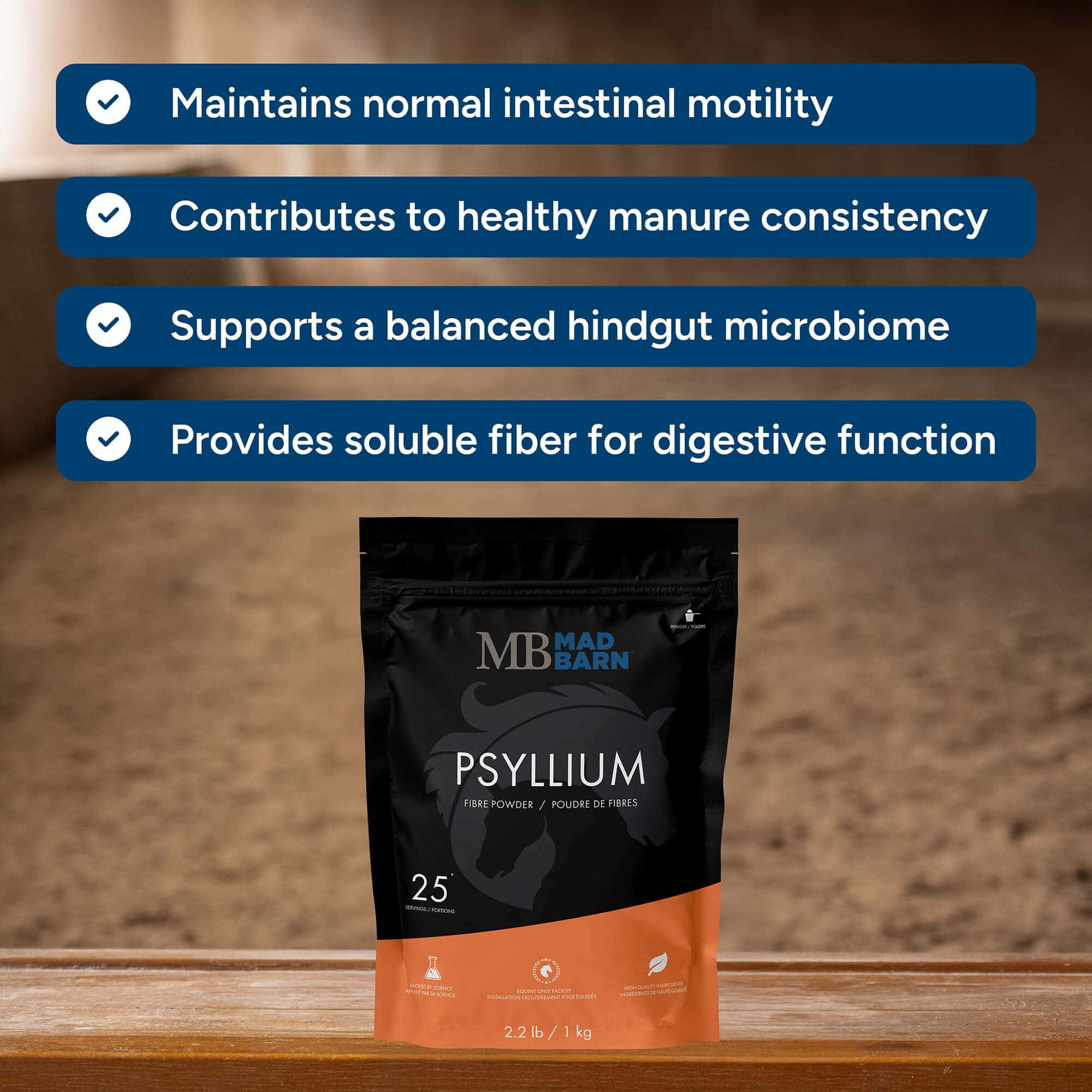
Supports normal intestinal motility and manure consistency
Supplies fermentable fiber to support hindgut function and microbial diversity
Provides functional & soluble fibers suitable for metabolic horses
Supports digestive health in horses exposed to sandy or stressful conditions
We stand behind our products to provide the best nutrition for your horse. No fillers, just research-backed ingredients. If your horse doesn't love this product, our Customer Happiness team is here to help or give you a refund guaranteed.
Psyllium (Plantago ovata)
Psyllium is derived from the husk of Plantago ovata seeds, a plant traditionally cultivated in parts of Asia and the Mediterranean. The husk is rich in soluble fiber and mucilage, a gel-forming polysaccharide that expands when hydrated. These properties make psyllium a functional dietary fiber used to support normal digestive function in horses.
When consumed, psyllium absorbs and retains water within the gastrointestinal tract, forming a hydrated gel that contributes to normal intestinal transit and manure consistency. This water-holding capacity helps maintain hydration of intestinal contents, which may be particularly relevant during periods of travel, environmental stress, or dietary change.
Psyllium also provides fermentable fiber fractions that can serve as a substrate for beneficial microbes in the hindgut. Microbial fermentation of psyllium fiber contributes to the production of short-chain fatty acids, including butyrate and propionate, which are involved in supporting normal intestinal epithelial function and overall hindgut integrity.
Research in horses and other species further suggests that psyllium's viscous gel structure may slow the rate of carbohydrate digestion and absorption, contributing to more moderated post-meal glucose responses when used as part of a balanced diet.
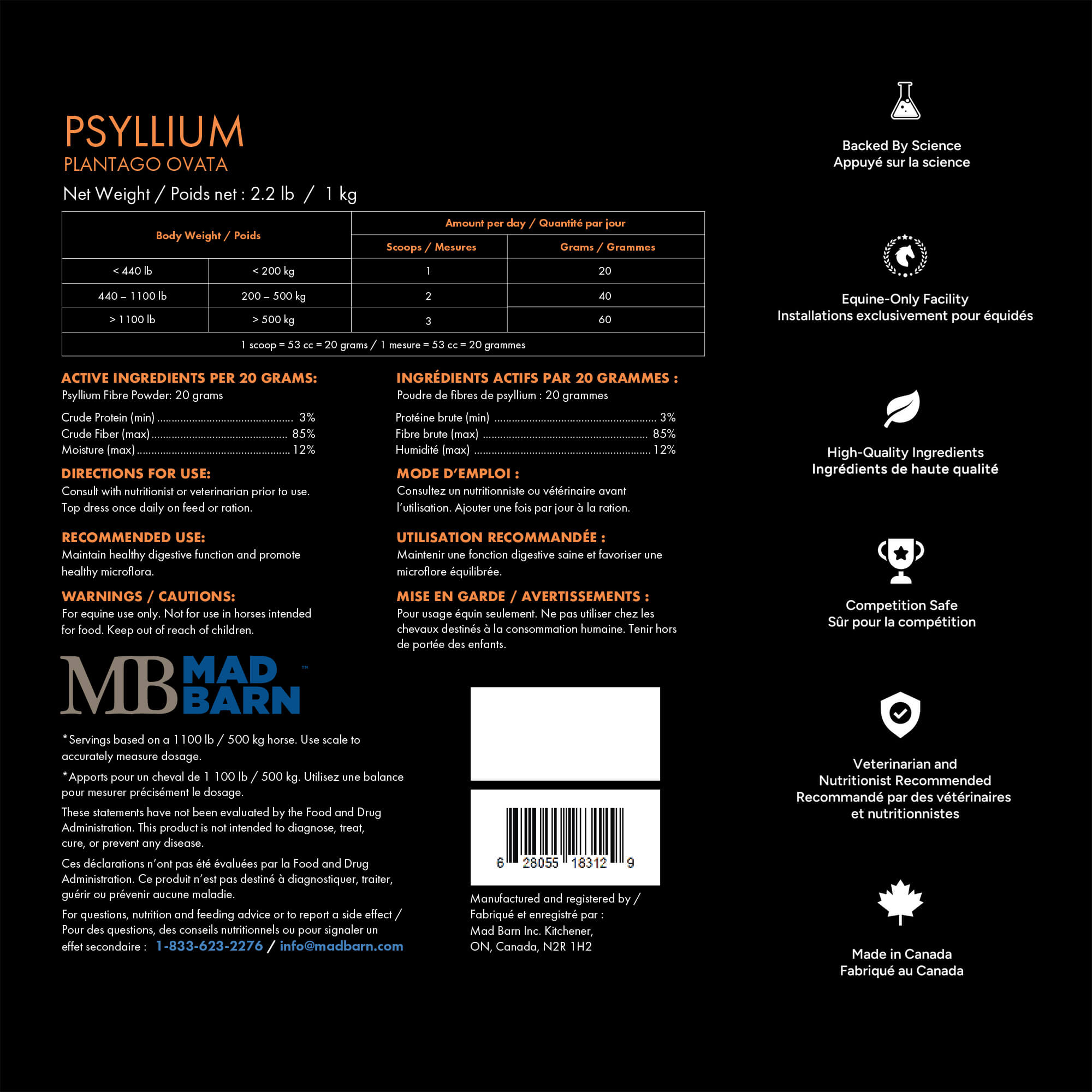
A scale should be used with all individual ingredients to ensure accurate dosing.
For equine use only. Not for use in horses intended for food. Keep out of reach of children.
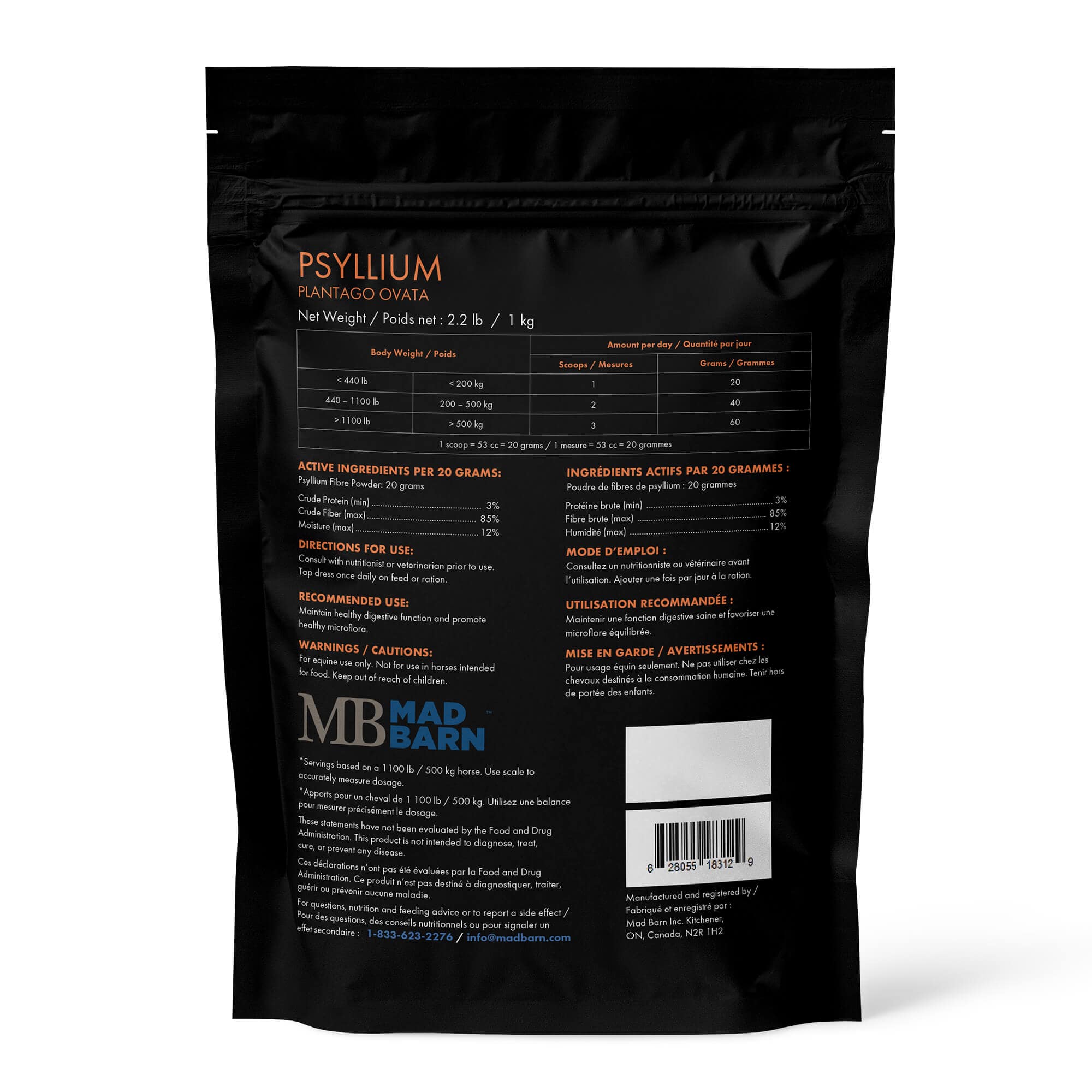
Active Ingredients: Per gram serving
Ingredient
Per 20 g
Psyllium fiber powder
20
g
Nutrition Analysis
Crude Protein (min)
3%
Crude Fiber (max)
85%
Moisture (max)
12%
Recommended Use: Maintain healthy digestive function and promote healthy microflora.
Packaged by: Mad Barn Inc., Kitchener, ON, N2R 1H2, Canada.
Disclaimer:
These statements have not been evaluated by Health Canada or the FDA. This product is not intended to diagnose, treat, cure or prevent any disease.
1 kg (2.2 lb): SKU 628055183129
15 kg (33 lb): SKU 628055183136
Cost Calculator
Metric (kg)
Imperial (lb)
kg
grams
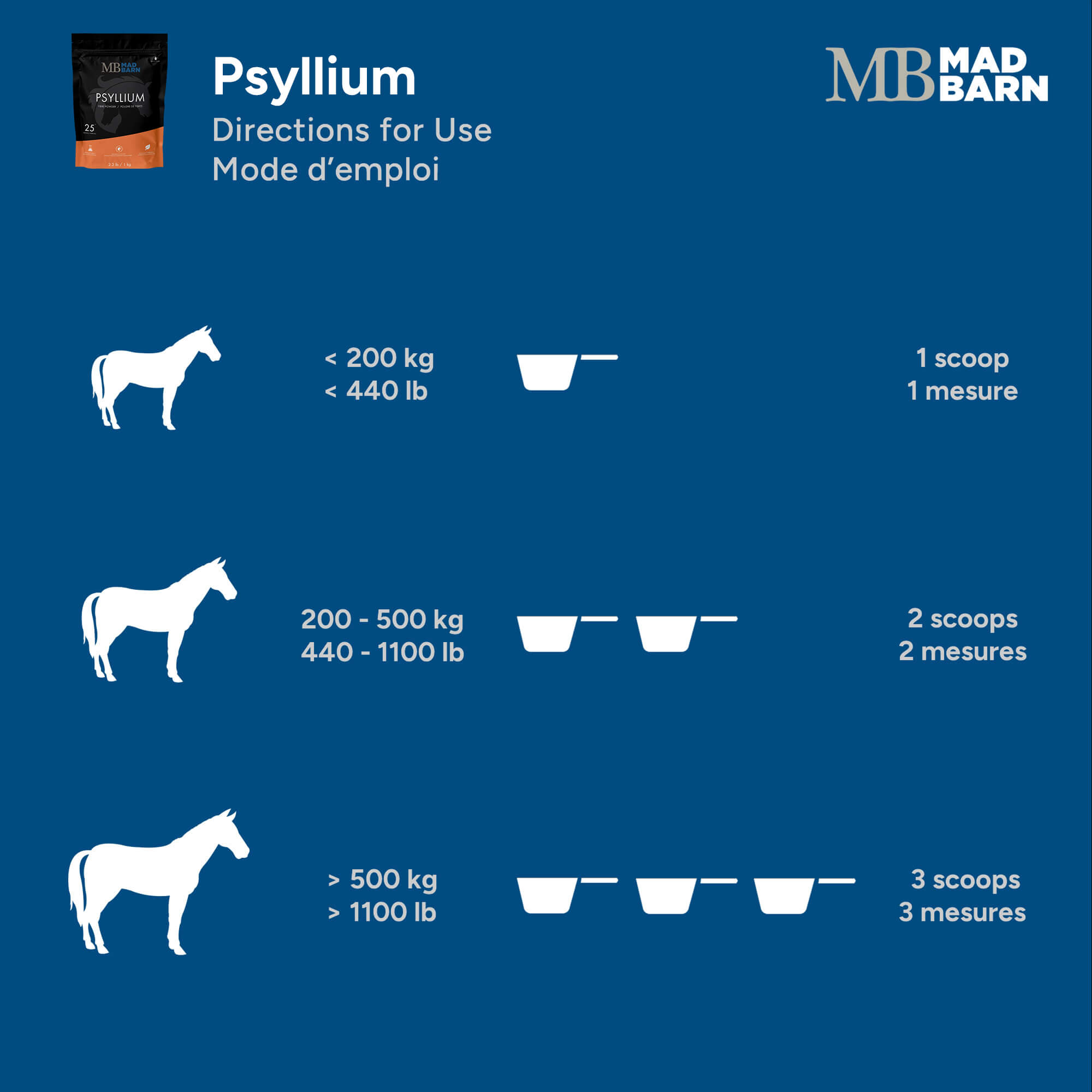
* Recommended serving size of 8 grams per 100 kg (220 lb) of body weight
Servings
Cost Per Day
Disclaimer: Recommended feeding rate varies depending on your horse's condition and current diet. Consult with a nutritionist to determine the appropriate inclusion rate for your horse.
Frequently Asked Questions
Psyllium is a plant-derived, gel-forming soluble fiber (from Plantago ovata) commonly used in equine diets to support digestive regularity, manure consistency, and hindgut function. It absorbs water in the gastrointestinal tract to form a hydrated bulk that helps maintain normal intestinal transit and digestive comfort. As a low-sugar and low-starch fiber source, it is also safe for metabolic horses.
Psyllium contains fiber with a high water-holding capacity, allowing it to form a viscous mucilage as it moves through the gut. This hydrated bulk supports normal movement of digesta and manure consistency. Psyllium passes largely undigested to the hindgut where it can be partially utilized by microbes, supporting normal fermentation patterns and microbial activity.
Psyllium is a soluble fiber that reaches the hindgut largely intact. There, it can serve as a fiber substrate for microbes and support normal hindgut fermentation. Research suggests psyllium supplementation can alter fecal microbial patterns and support microbial activity, though responses can vary by diet, dose, and duration of supplementation. In equine feeding programs, psyllium is commonly used to support overall hindgut stability and digestive comfort.
Horses that may benefit from psyllium include those with inconsistent manure, those grazing in sandy or dry conditions, horses undergoing diet changes, and horses under travel, training, or management stress that can affect digestion. Psyllium is also commonly used for metabolic horses because it is low in sugar and starch, and it can be useful in performance programs where supporting hydration and digestive stability is a priority.
Psyllium is commonly used to support manure consistency and digestive regularity because it forms a hydrated bulk in the gut. However, persistent diarrhea, fever, colic signs, or sudden changes in manure should always be evaluated by a veterinarian to rule out infection, pain, or underlying disease.
Effects of psyllium related to manure consistency and digestive regularity may be noticed within days to a few weeks, depending on the horse and feeding rate. For microbiome-related goals, changes may take several weeks of consistent use and depend heavily on the overall diet, forage quality, and management practices.
Current research suggests that when sand removal from the intestinal tract is required to prevent sand colic in horses, the most effective protocols are those carried out under veterinary supervision using nasogastric administration of psyllium in combination with veterinarian-directed laxatives (such as magnesium sulfate and/or mineral oil). While psyllium does have properties that can support intestinal transit, the smaller amounts that horses will typically consume in a single meal have shown mixed results for sand removal and should be viewed as a supportive strategy rather than a standalone solution. If you suspect sand accumulation, consult your veterinarian for diagnosis and guidance on an appropriate treatment plan.
Yes. Psyllium is generally considered safe for young horses, broodmares, and mature horses when fed at recommended amounts as part of a balanced diet. If your horse has a history of impaction or other digestive concerns, consult your veterinarian for individualized advice.
Yes. Psyllium is naturally low in sugar and starch, making it suitable for horses with PPID, insulin resistance, or equine metabolic syndrome when fed appropriately. Some studies suggest psyllium may help moderate post-feeding glucose and insulin responses, though results are variable and psyllium should not replace overall diet and management strategies.
Psyllium is generally safe to feed to horses with ulcers when used as directed. That said, psyllium is not a targeted gastric support formula. For horses with confirmed or suspected ulcers, Visceral+ is a more appropriate option for stomach and hindgut support.
Psyllium is generally compatible with many medications, but because it is a gel-forming fiber, it may affect absorption timing for certain oral drugs in some cases. As a precaution, consider separating psyllium and oral medications by a few hours unless your veterinarian advises otherwise. Always consult a veterinarian before adding supplements to the diet when your horse is on medication.
Psyllium can be fed wet or dry, but it is best fed dampened or mixed into a wet feed. Once moisture is added, psyllium quickly forms a viscous mucilage that can stick to buckets and become harder for horses to consume if it sits too long. For ease of feeding, moisten the meal and mix psyllium in immediately before feeding. Avoid feeding very large amounts (greater than 400 g / 14 oz) completely dry.
Psyllium is generally well-tolerated when fed according to directions. Overfeeding, inadequate water intake, or feeding very large dry amounts can increase the risk of impaction or bezoar formation. Always follow feeding guidelines, ensure adequate hydration, and consult a veterinarian if your horse shows any signs of colic or discomfort.
No. Psyllium is primarily a fiber supplement, not a protein supplement. Its main role is to provide soluble fiber that supports digestive function. Horses should meet protein needs through quality forage and balanced concentrates, and amino acid needs through targeted supplementation when required.
Psyllium is not a probiotic because it does not contain live microorganisms. Psyllium is a soluble fiber that can function as a prebiotic fiber source by helping provide substrate for beneficial microbes already present in the hindgut, supporting normal microbial activity and fermentation.
Yes. Psyllium is a natural fiber and is not typically considered a prohibited substance under major equestrian competition rules. Because regulations can change and may vary by discipline and federation, always verify current rules that govern your specific event.
Psyllium quality can vary by supplier and processing. Mad Barn sources ingredients through approved suppliers and uses quality control procedures including third-party testing for heavy metals to help ensure identity and purity.
Yes. Psyllium can be fed daily at appropriate amounts. When used daily, psyllium functions as a soluble, fermentable fiber that supports normal hindgut fermentation and microbial balance. The best feeding plan depends on your horse’s total diet, digestive sensitivity, and goals, so consult your veterinarian or an equine nutritionist for individualized guidance.
For active digestive concerns such as free fecal water, a common program is approximately 100 g / 3.5 oz (about one cup) twice daily. For general hindgut maintenance, smaller amounts around 30 – 40 g / 1 - 1.5 oz per day are often sufficient. Exact amounts should be adjusted based on body weight, total diet, and veterinary or nutritionist guidance.
This product can be fed once or twice daily, depending on your feeding schedule. Some horses with very sensitive digestive systems may do better with the daily amount split into two meals, which provides a more continuous supply of fermentable fiber to the hindgut.
Psyllium can be mixed into wet feeds, but it thickens quickly once water is added. For easier feeding, moisten the meal first and mix psyllium in immediately before feeding. If psyllium sits too long, it can become gummy and harder for horses to consume.
Psyllium is often well-accepted because it has a mild taste and minimal odor. However, at higher feeding rates it can add noticeable volume and texture. For best acceptance, mix psyllium into a carrier such as soaked beet pulp, forage pellets, or a small amount of complete feed to ensure full consumption. Introduce gradually over several days for picky horses.
Many horses accept psyllium readily, but the texture can be noticeable, especially if it is mixed in water and becomes gummy. For picky eaters, introduce slowly and mix into a carrier such as soaked beet pulp, forage pellets, or a small amount of complete feed. Moisten the meal first, then mix in the psyllium right before feeding to reduce clumping. If your horse does not readily eat it, consider splitting the amount into two meals or using a different carrier feed.
Yes. Psyllium is a fiber supplement and does not replace the need for balanced vitamins and minerals. For best results, it should be used as part of a well-balanced feeding program that includes appropriate vitamins and minerals, such as Omneity® or AminoTrace+. It can also be combined with digestive support products like Visceral+® and Optimum Digestive Health® for additional gut support.
Mad Barn's psyllium husk is a pure powder with no added fillers, sweeteners, or flavors.
Ask A Question
Have a question about this product? Ask below and our nutritionists will be happy to assist.
“For horse owners seeking a simple, plant-based prebiotic fiber to nourish hindgut health, psyllium stands apart. Its unique fibers nourish and support a resilient microbiome, making it a valuable addition for horses prone to loose manure or fecal water challenges.”
Psyllium husk powder (Plantago ovata) is a natural source of gel-forming soluble fiber that absorbs water in the digestive tract to create a soft, hydrated bulk. This helps support normal intestinal motility and manure consistency while promoting comfortable passage of digesta through the large intestine.
Unlike most fiber sources, psyllium is largely undigested by the horse but can be partially utilized by hindgut microbes, supporting microbial activity and diversity.
Research also suggests psyllium may influence hindgut fermentation patterns, which is one reason it’s often included in digestive programs when horses are experiencing dietary changes, environmental stress, or inconsistent manure quality.
Horse owners commonly use psyllium as part of routine digestive management in sandy environments where incidental sand intake is a concern. It is also used as a low-sugar, low-starch fiber option suitable for horses requiring careful metabolic diet control.
Why Use Psyllium?
Digestive Regularity
Supports normal intestinal motility and manure consistency
Helps maintain comfortable passage of digesta through the gastrointestinal tract
Hindgut Support
Provides soluble fiber that supports hindgut microbial activity
Contributes to normal hindgut function as part of a balanced diet
Intestinal Hydration
Absorbs and retains water within the digestive tract
Supports normal hydration of intestinal contents, particularly during stress or travel
Sand & Environmental Exposure
Commonly used in horses exposed to sandy soils or dry conditions
Supports digestive health as part of routine management when environmental exposure is a concern
Metabolic-Friendly Fiber
Low in sugar and starch
Suitable for horses requiring careful dietary management
This product is not intended to diagnose, treat, cure, or prevent any disease. For a complimentary consultation, submit your horse’s diet online and our qualified nutritionists will be happy to help.
*Competition Safe: this product contains no ingredients listed on the 2025 FEI Prohibited Substances List. Because regulations can differ by discipline, national federation, and country, verify the current rules that govern your specific event before use.
Is Your Horse's Diet Missing Anything?
Identify gaps in your horse's nutrition program to optimize their well-being.


 English


 Psyllium
 Gut Motility
 Manure Consistency
 Hindgut Microbiome
 Digestive Health
 Hydration Status
 Metabolic Health
 Low-NSC Fiber
 Resistance to Stress
 Endurance Athletes
 General Well-Being















