English
Mad About Forage: Feeding the Equine Athlete [The Humble Hoof]

In a continuation from last episode, Scott Cieslar of Mad Barn, Inc. talks about feeding the equine athlete, alfalfa and the hoof, and gut health and the hoof. How do we safely increase calories for hardworking horses? Do they need concentrates/grain? Is alfalfa safe for the metabolic horse? What does gut distress do to the feet? These questions are explored in part two with Scott!
Also in this episode: Kayleigh Tansey, Danna-Lea Swanson, Hannah Croteau, and Maia Chaput.
Transcript:
[0:00]
Alicia: Welcome to The Humble Hoof Podcast. My name is Alicia Harlov. This is a podcast for both horse owners and hoof care professionals, offering discussions into various philosophies on the health of the hoof and the soundness of your horse. Please check us out on Facebook or at thehumblehoof.com.
[0:19]
Previously on The Humble Hoof Podcast
Scott: Hi, my name is Scott. I'm the founder and lead nutritionist with Mad Barn — a nutrition company located in Ontario, Canada. I try to impress on people that we're doing this really for you and the horse, because honestly, I'll tell you: there are a lot easier ways to make money than selling horse supplements. [Music]
[0:43]
Alicia: Last episode, Scott and I chatted about nutrition and its effect on the hoof. After talking about iron, hay testing, mineral balancing, and reading labels, I realized there was so much more I wanted to talk about. We decided to record another episode and get into some of the topics we missed in the first one. If you missed the first episode with Scott, check out episode number 20, Mad About Hooves.
[1:09]
Alicia: In this episode, Scott and I get into some of the myths in the nutrition world I hear from so many people — like “my horse needs grain because he’s in work,” or “alfalfa is totally safe for metabolic horses because it’s low in sugar and starch.” We also chat about how gut health can affect the feet.
[1:23]
Alicia: I don’t know if we wanted to start talking a little bit about how you approach the dietary needs of equine athletes, because that’s sort of where we left off on the last call. I come across a lot of clients who say they can’t cut the grain even though I’m seeing issues in the feet that I think would benefit from lower sugar and starch. They say they can’t cut the grain because their horses are in heavy work. Do you have any baseline diet you tell people to feed their harder-working horses?
[2:00]
Scott: There are tons of options when it comes to diets. We seem to be really stuck in the horse industry on “horses need grain,” and the hay is just this side thing we feed to keep them busy — especially with performance horses. My base is: evaluate the hay. Yes, hay testing can be difficult if it changes week over week, but there is a point in testing — you can at least get a general idea by looking at the hay and the associated test results.
[2:55]
Scott: When we’re talking performance horses, it’s really about the protein and energy that’s in the hay, versus metabolic horses where we’re more focused on the mineral profile and sugars and starches. For a performance horse, having higher sugars isn’t really an issue because they’re going to use it.
[3:18]
Scott: Start with testing the hay — even four or five times a year — and build the base of the program from there. We want the horse eating for the majority of the day, then match the forage as best we can to the output in terms of energy. Then it just becomes math: maximize forage, then add caloric density if needed. That doesn’t necessarily mean a commercial horse feed. You can increase caloric density with things like soy hulls, distillers grains, and especially vegetable oil, which is about two and a half times more energy dense than grain.
[5:02]
Scott: Usually I start with maximizing forage, figure out if we need to add extra energy, see what ingredients fit with the client and their area, and work with what they’re willing to accept — moving away from pounding a lot of grain into the horse.
[5:15]
Alicia: Obviously you’re saying forage first. When you add things on top of that, I’m always thinking about what’s safe for feet. You’re saying you don’t worry as much about that for athletes because they’re utilizing sugars and starches as they’re working. If the horse had metabolic concerns, would you have different additions, or are the ones you listed fine for feet in general?
[5:54]
Scott: “Athletic horse” covers a huge range. This is where heart-rate monitors are a huge benefit — you can set the total caloric expenditure of the horse and match the diet to it. We want to limit sugars and starches across the board. Even with Dr. Kellen’s recommendations for an insulin-resistant horse, it’s okay to add oats — just make sure it’s after they’ve worked, within a couple of hours, so they utilize it right away.
[7:08]
Scott: Essentially, from metabolic horses all the way up to very high-performance horses, the diet should be: forage and fiber, limited sugars and starches. The tolerance for a bit of sugar and starch is higher in high-performance horses, but many diets in the industry far exceed reasonable limits.
[8:00]
Scott: Glycogen loading like humans do (big pasta dinner before an event) doesn’t work in horses — they’re not built to take that higher load of sugar and starch. The essence of any diet should be forage, add more soluble fiber if needed, add fat for more calories, and there’s a place for a bit of starch to increase palatability and digestibility — but within limits. A lot of issues come from far exceeding those limits.
[8:58]
Scott: This all ties into hindgut health. Many people say they have to feed a lot of grain to maintain weight, but often the issue is hindgut dysfunction. It takes up to six weeks for the hindgut microflora to adjust to a major diet change, and people don’t usually wait that long. Reduce grain, improve hindgut efficiency, and you can often vastly reduce the amount of grain fed.
[10:12]
Alicia: I chatted with a friend, Hannah Croto, about her Hanoverian gelding, his feeding program, and past gut issues. She’s a dressage trainer in southern Maine and has her horse in heavy work. Once she switched to a forage-based diet, a lot of his gut issues resolved.
[10:29]
Hannah: His issues kind of went hand in hand. He has probably chronically had hindgut ulcers on and off his entire life, and it wasn’t really caught until I got him at eight. A year later he got navicular. Hoof health was definitely lacking for most of his life with the lack of gut health. The forage-based diet really helped long-term with both issues. I have almost no issue with ulcers anymore.
[11:14]
Alicia: What did you do to help his gut — what helped the most?
[11:19]
Hannah: I did a lot. We tried pretty much every medication under the sun at first. I keep misoprostol on hand; some people keep horses on a small maintenance dose daily, but mine only gets it here and there if he seems off. Eliminating sugars and starches was key — it doesn’t help gut microflora to have all that sugar. He’s on free-choice hay with two “grain” meals a day — really not grain, but timothy pellets, beet pulp, and flaxseed mixed with Vermont Blend. The hay is really important. If protein is too low, he loses weight. I try to keep it above 10%, somewhere between 10–15%, with low sugar and starch. That’s where he gets most of his nutrients.
[13:57]
Alicia: A friend of mine, Maya Shampoo, is a hoof care provider in Canada. She talks about meeting Scott and discussing feeding equine athletes.
[14:03]
Maya: One thing that blew me away when I first met him was this idea that even horses doing really high-level exercise don’t necessarily need a ton of grain. He had racehorses and endurance horses doing 100 miles — living on hay, some flax, salt, and vitamins — and doing fine. If they can do that, the rest don’t need grain.
[14:48]
Alicia: I wanted to talk about gut health for overall health and for hooves. The feet are a mirror of what’s going on health-wise. The gut has been elusive to me because there are so many things people say to make gut function better. Any insight into making sure your horse’s gut is functioning well? Have you noticed any correlation between gut health and the feet?
[15:26]
Scott: Absolutely. You see nutrition and stresses come out in the hooves. Gut health is huge. To say anybody fully understands it would be a stretch. There’s a lot of human research on gut microflora, behavior, and health; we have some in horses, but not to that extent. There are correlations between gut health, behavior, and overall health. Gut health seems to go wrong in a high percentage of cases — just look at gastric ulcer prevalence and hindgut dysfunction. “Colic” is a generic term, but the high incidence indicates we’re not doing a great job feeding horses. It’s not just what you feed, but how you feed and how you keep them.
[17:00]
Scott: There’s the brain-to-gut direction (chronic low-grade stress affects gut health) and the gut-to-brain direction (disturbed microbiota can cause stress). Even if a lab analysis looks perfect, environmental issues — like herd changes — induce stress and you see it in digestion and the hooves. The gut is constantly exposed to pathogens via airways and feed; a healthy horse deals with them, but when things go off, a lot can go wrong.
[18:51]
Alicia: What do you recommend to support the gut in general? Do you have different recommendations for the foregut versus the hindgut?
[19:09]
Scott: Number one: forage in front of the horse — an appropriate forage — so they can do what they want to do: eat. Studies show if you take away forage and stall a horse with only six hours to eat hay, they’ll eat bedding, feces, and chew on the stall. Adequate forage reduces stress. Additives can help (probiotics, yeast, prebiotics), but remember: forage is essentially a prebiotic for the hindgut.
[20:38]
Scott: Ensure you’re not feeding excess starch or sugar that the horse can’t digest — it will disturb the microbiota. Another big one we don’t talk about enough is protein. Protein often only gets discussed for muscle or topline, but excess protein reaching the hindgut can wreak havoc over time. Many diets feed excess protein that isn’t digested in the small intestine; it hits the hindgut and alters fermentation end-products, which can negatively impact hoof circulation and overall health.
[21:49]
Alicia: My own horse has bouts of mild colitis since IV antibiotics after stepping on a nail. He’ll have gut issues now and then. I’ve tried different probiotics, prebiotics, and yeast, but I board, so I only have so much control over forage timing. Dr. Kellen says probiotics should be used for a time and be in the billions of live bacteria. Is there anything you can feed that actually helps the gut be healthier, other than making sure they have hay all the time?
[22:53]
Scott: Yes, forage — but also the quality. Some hay is almost like straw; you can essentially starve the hindgut bacteria. Everyone’s seen a “hay belly” — hay that’s too indigestible means too much non-digestible material passing through. That might be fine for a metabolic horse’s calories, but you still have to feed the bacteria. Just feeding forage isn’t enough; the forage must be appropriate.
[23:33]
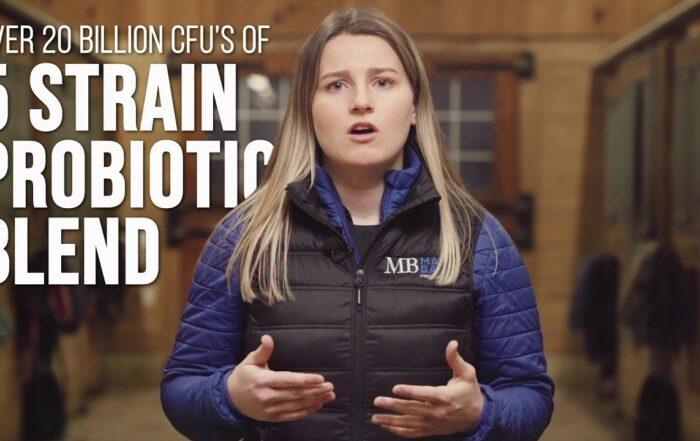
Scott: There’s a lot of “label dressing” in the market. On yeast: in horses, 30 billion CFU per day is kind of the bottom, and ~50 billion CFU per day is optimal per research. Very few products actually hit those levels. With bacteria-based probiotics, they also need to be in the billions, because many will die in the stomach or small intestine; you need enough to reach the hindgut to have an effect.
[26:09]
Scott: It’s hard for consumers to know the right strains and amounts. Use reputable suppliers aiming for proven levels. At my alma mater, Guelph, Dr. Scott’s group did work feeding foals native hindgut strains and sometimes saw negative outcomes. People ask if feeding non-native strains is good — I think it can be, because something caused the native microbiome to falter. A foreign strain with properties that inhibit pathogens may give a positive response.
[28:45]
Alicia: In regards to gut issues, I talked with Kaylee Tanzi, a friend and hoof-care client. I’ve been trimming her navicular/ringbone-diagnosed horse for about a year. She’s been through a lot with his feet and his gut. I asked about steps she took to help his gut.
[29:10]
Kaylee: I kind of threw the kitchen sink at him. He always had free fecal water. In winter, if he overheated, he’d get diarrhea down his legs — it was horrific. I was at the barn every day washing his legs. He also had a lot of gas issues and a couple bouts of gas colic on hot days. I found a barn that would allow unlimited forage long term. I stopped feeding commercial grain, started mineral balancing to the average hay for my region, added a high-quality probiotic, and learned what that actually meant. I discovered the probiotic I’d used for years was under 1 billion CFU — actually in the low millions — so it likely never reached his gut. I switched to a product with several strains and at least billions of CFU. Mineral balancing and the right probiotic made a big difference.
[31:15]
Alicia: I hear so many say, “alfalfa is safe for feet because it’s low in sugar and starch,” yet I see many horses become footsore with even a few bites. Scott talks about why this might be. You’d mentioned alfalfa earlier — what are your thoughts on alfalfa for horses and its effect on feet?
[31:53]
Scott: There are still a lot of unknowns, but some clues. With metabolic horses, I generally say cut it out — not to the point of avoiding a supplement that might have a little alfalfa (like 200 grams), but don’t feed flakes of it. I’ve seen enough cases where even a flake creates issues with hooves. For athletic horses or lactating mares, there’s definitely a place for alfalfa — it boosts protein and calcium — but in limited amounts.
[33:12]
Scott: People argue that alfalfa is low in sugar and starch so it should be fine for metabolic horses. It is low in sugar and starch, but horses are hindgut fermenters and there’s a lot of non-enzymatically degraded carbohydrate in alfalfa. When those carbs hit the hindgut, they rapidly ferment and produce propionate, which becomes glucose in the liver and can generate an insulin response. It’s not a spike like a sugar meal, but it can chronically elevate insulin — a problem for many horses.
[34:49]
Scott: Alfalfa also tends to be high in protein; a lot of that hits the hindgut and can cause dysbiosis and negative fermentation byproducts, potentially impacting circulation to the hoof and general health. On paper, alfalfa looks great (low NSC), but it’s often not a great alternative for metabolic horses. It’s probably a combination of those factors.
[35:30]
Alicia: Another friend and client, Dana Lee Swanson, runs a 14-horse boarding barn in southern New Hampshire. What I love is they have a mineral-balanced feed program as part of board. She talks about issues when introducing alfalfa to their program.
[35:50]
Dana: We have several OTTBs and feed minerals with a timothy pellet base. Some harder keepers get Triple Crown Senior, especially picky older eaters. This spring I did a 50/50 hand-mixed blend of timothy pellets and alfalfa pellets to help some horses keep weight. Within three weeks, I had three horses go totally footsore, literally within a day of each other. We pulled the alfalfa and within 48 hours they were no longer footsore. We also had a horse on alfalfa cubes plus timothy pellets and senior; once the owner didn’t order cubes for a week, he actually gained weight faster and has kept it better since being off alfalfa. Firsthand, pulling alfalfa changed body condition and hoof sensitivity.
[38:49]
Alicia: To clarify, alfalfa isn’t “bad” — many horses do great on it. I just see issues in horses that already have hoof sensitivities. I want people to be aware of what might happen in some horses. Have you heard of or used fermented alfalfa, the chaff/”haylage”-style product? Because it’s fermented, it’s supposedly great for the gut and safe for feet.
[39:40]
Scott: They ferment alfalfa and grasses. In the ruminant world it’s haylage — harvested wet and fermented without oxygen. Bacteria use the sugars and turn them into VFAs — essentially what happens in the hindgut. You get a different VFA profile. There’s merit: if your concern is sugar, fermenting gets rid of it because bacteria burn it up, and the acid preserves the hay. That can make it safer sugar-wise.
[40:29]
Scott: But many chaff/fermented feeds are harvested less mature; if fed free-choice, caloric intake can be quite high. That’s great for performance horses, not great for metabolic horses. So, again, nutrition is never as simple as just sugar content. Chronic excess calories will lead to problems. Balance is key: it can be a great feedstuff, but ensure caloric intake isn’t too high for too long.
[42:02]
Alicia: I think that’s the main stuff I wanted to touch on. Any closing advice for a horse owner interested in nutrition?
[42:08]
Scott: Stay off Google — I’m kidding. It’s great people want to learn, but if it sounds too good to be true, it probably is. Keep it simple. Some people keep it super simple: pasture and salt. Others feed all kinds of crazy things. Enlist the help of experts — it’s worth it. It’s never black and white. Stick to sound principles: lots of forage, keep the horse happy eating, control caloric intake, and feed good minerals and vitamins.
[43:26]
Alicia: Perfect — this is all stuff I get asked about all the time, and I don’t always know. It’s good to hear from someone who has done the research and looked into it. Thank you so much for doing this again.
[43:46]
Scott: No problem — thanks!
[43:52]
Alicia: I always say I’m slightly more hoof-obsessed than the average person, and chances are if you’re listening to a hoof care podcast, you are too — so we should probably be friends. Feel free to find me on Facebook or email me at thehumblehoof@gmail.com.


![Ep. 12 – A Day in the Life of a Horse – Mad About Horses – [Podcast]](/wp-content/uploads/2023/11/maxresdefault-700x441.jpg)
![Ep. 18 – The Many Benefits of Horse Riding – Mad About Horses – [Podcast]](/wp-content/uploads/2024/01/maxresdefault-4-700x441.jpg)