English
Why Vaccines Are Critical to Equine Health

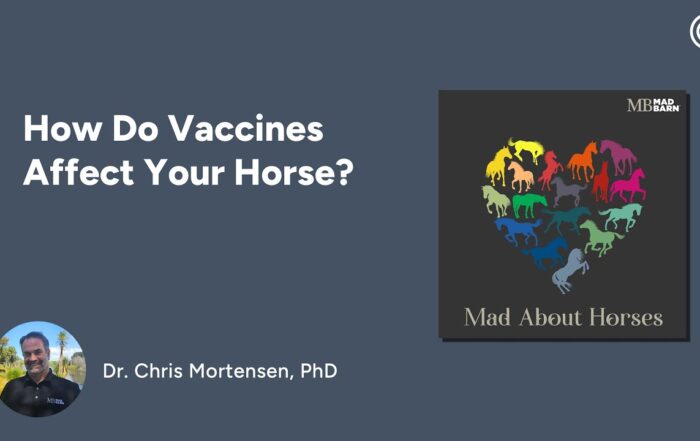
This video podcast delves into the paramount importance of vaccinating horses, addressing vaccine hesitancy, the working mechanism of vaccines, and the difference they can make in preventing deadly diseases like West Nile Virus, tetanus, and rabies.
Through personal anecdotes and historical data, Dr. Mortensen highlights both the effectiveness of vaccines in saving horses’ lives and the consequences of neglecting vaccination. He emphasizes various core and risk-based vaccines essential for horses depending on geography and lifestyle, while also addressing the management of horses post-vaccination.
Moreover, Dr. Mortensen touches upon the origins of vaccine hesitancy, its impact on equine health, and the professional perspectives of veterinarians striving to protect animal welfare. Viewers are encouraged to engage and share their thoughts on this crucial aspect of equine care.
Podcast Timeline
00:00 Introduction to the Importance of Vaccines
00:19 Personal Story: The Impact of Vaccines on Horses
01:19 The Spread and Impact of the West Nile Virus
05:52 The Role of Vaccines in Controlling the West Nile Virus
06:17 Addressing Vaccine Hesitancy Among Horse Owners
06:30 Understanding How Vaccines Work and Their Importance
06:57 The Controversy Surrounding Vaccines
07:20 The Impact of Vaccine Hesitancy on Horse Health
08:34 The Importance of Vaccination Against Tetanus and Rabies
10:04 The Continued Threat of the West Nile Virus
16:49 Understanding Vaccine Hesitancy in the Context of the Hendra Virus
24:46 The Importance of Vaccination Against Equine Flu
27:18 The History and Impact of Vaccines on Human Health
29:05 The Impact of the Anti-Vax Movement on Vaccination Rates
31:39 The History and Controversy of Vaccinations
32:04 The Role of Veterinarians and Personal Experiences
33:25 Debunking Myths about Vaccines and Pharma Industry
35:41 The Importance of Vaccines in Equine Health
38:18 Understanding How Vaccines Work
41:09 The Controversy and Misunderstandings about Vaccination Schedules
43:40 The Importance of Vaccinesin Preventing Disease Outbreaks
45:09 Understanding Different Types of Vaccines and Their Uses
49:36 The Importance of Proper Vaccination Schedules
57:35 The Risks of Vaccine Failure and Importance of Proper Handling
58:15 The Importance of Advocacy for Animal Health
59:36 Closing Remarks and Contact Information
Visit https://madbarn.com/mad-about-horses/ to learn more about the Mad About Horses podcast.
———————————
Mad Barn Academy is dedicated to supporting horse owners, handlers and practitioners through research, training and education.
Visit us to learn more at https://madbarn.com
You can also find Mad Barn at:
Instagram @madbarnequine
Facebook @madbarnequine
TikTok @madbarnequine
YouTube @madbarn
We would love to hear from you! Please send any questions or comments to podcast@madbarn.com
Transcript:
[0:00]
Are vaccines really that important to your horse? You know, do we really need them? And do your horses benefit from them? How do they work, and why is there so much vaccine hesitancy in today’s world, in the 2020s?
[0:13]
Just to start this video podcast off, I just want to kind of give you a story because it shows you how vaccines have saved horses’ lives. Going back to 2001 — so this is over two decades ago — I was sitting there in the Central Valley of California. Hot summers and mild winters, but as we entered the autumn, or fall, I remember Dr. Ann Rodic, who is my mentor and advisor — incredible horsewoman and has made so many positive impacts in my life — she asked me my opinion. Which, you know, as a young graduate student you’re like, “Wow, oh, she really does care about my opinion.” And we were just having a discussion and she was like, “Chris, do we want to vaccinate our herd this year for this virus that was introduced into the United States?”
[1:16]
The Spread and Impact of the West Nile Virus — this virus showed up in the late 1990s, so around 1998–1999, around New York City. We were hearing about this disease that could kill up to 40% of horses, but it was isolated to the Eastern United States. And here I was on the West Coast, in California. In 2000, that virus started to spread rapidly, and I think after all of us have lived through the COVID era — the post-COVID era — we can kind of understand. But that spread so quickly in a matter of months. This virus took a couple years, and I’ll explain why.
[2:08]
We saw this virus start popping up in Florida. Now, humans are not a vector for this virus — meaning they don’t carry it. And after living in Florida for 10 years, we would get what we call “snowbirds” — people coming down to winter in Florida from Canada and the northern United States — but it wasn’t snowbirds. It was actual birds that were the vector, and they were migrating south down into Florida carrying this virus. Slowly, each year, this virus started marching west. People were getting sick but not dying. This wasn’t like COVID — this was a virus that birds would carry, a mosquito would suck the blood of a bird, and then go and bite a horse, transmitting that virus. And it started to march westward, killing a lot of horses along the way.
[3:16]
This virus is called the West Nile Virus. Many of you that live in North America now understand — or in other parts of the world, down in Africa, maybe parts of Europe — this virus is pretty deadly to horses. It was an interesting outbreak that, as I was starting my career in academia and science, we saw this virus march across the United States. We sat there in 2001–2002 thinking, “Do we vaccinate?” There was a vaccine available because this is a global virus — this isn’t something that just popped out of nowhere like COVID. Dr. Rodic was wondering if we should hedge our bets — would it be coming next year? Would the virus be found in California the next year?
[4:04]
Funny enough, she did hedge her bets and we did vaccinate the herd. It wasn’t cheap — I mean, you’re talking about eighty-something horses: broodmares, young horses, stallions. We had a couple riding horses, but mainly a breeding operation there. We did vaccinate. She decided, “No, it’s better to vaccinate — rather be safe than sorry.” Preventative medicine. And the next year we did see the first case of West Nile show up in California in 2003.
[4:39]
Now, not everybody vaccinated their horses. So in 2004 — this is 20 years ago — 540 horses were infected with the West Nile Virus, 229 of which died or were euthanized. In 2005, the next year, people knew it was there, and there was a big push by veterinarians and organizations in the western United States — throughout the United States, Americas, and Canada — to vaccinate your horses. But still, in 2005, 456 horses were infected with West Nile, of which 200 died.
[5:18]
Now in 2006 — two-plus years later — that dropped drastically to only 58 infections and 24 deaths. In 2007 — four years after the virus showed up in the western United States — 28 horses were infected, 14 died. And by 2020, just a few years ago, there were 20 cases with five deaths. So we went from hundreds of horses in the state of California being infected and dying to just a small handful. And why? What changed? The disease is still there, still in the environment — and that’s because of the vaccine. That’s because horses were vaccinated against West Nile Virus and were able to withstand that disease if infected by a mosquito. They were able to fight it off.
[6:16]
In this podcast, I just ask you to stick with me today. We’re going to talk about vaccine hesitancy — what other horse owners are saying, why they won’t vaccinate, why the rules have changed for equine flu with a lot of competition organizations around the world, how these vaccines work, how long they give us coverage for. We’ll also talk about what to vaccinate against — your core vaccines, your at-risk horses, and depending on what region you live in — and then how to manage the horse afterward, how long the vaccine might make them feel a little off for a few days.
[7:02]
The Controversy Surrounding Vaccines — talking about vaccines, I know these last few years have been a roller coaster in the media, social media, wherever you look online. I’m going to touch a little bit about why there is a controversy, but again — that’s not my fight, it’s not your fight, it’s not our horses’ fight. To talk about vaccines, especially in the human medicine world, but I will give you some data and some information. We are seeing some of that hesitancy now with our horses, which is very disheartening from a medical and veterinarian standpoint. We’re going to talk about that.
[7:33]
I want to ask you to give me any feedback — anything that I say in this video podcast that you feel like, “Hey, this is an issue you need to discuss further,” or you just want to give me some comments, please, please email me: podcast@madbarn.com. I do read those emails, I am emailing listeners back, so please don’t hesitate if there’s something in here that you’re like, “Hey, I wasn’t quite clear on that,” or, “Did you ever think about it from this standpoint?” Because I feel you — in this information age that we live in now, in the 21st century, the information is overwhelming. I feel like we’re getting too much information, and it gets overwhelming. But this one is such an important topic, and if you do share it or remind your friends, “Hey, vaccinate your horses,” we could prevent things like tetanus — which 80% of horses die from. It’s a horrific disease, a horrible way to die for an animal, and just one simple vaccine a year will prevent them from ever experiencing that. And tetanus is everywhere in the world, and horses are particularly at risk because they live outdoors and get small cuts or puncture wounds.
[9:01]
Tetanus is horrible. Rabies — if a horse gets infected with rabies, and yes, they can get rabies, because a rabid fox, raccoon, or skunk could bite a horse out in pasture and spread rabies — that horse dies horribly, and it’s 100% fatal. These are diseases that we can prevent against with one simple shot that’s not expensive. In the overall scheme of horse care and costs, vaccines are cheap — very cheap compared to the costs of supportive care, calling the veterinarian, having to euthanize your animal, and having to dispose of your horse. It’s horrible and it’s expensive, and many of you have experienced that.
[9:54]
That’s why I try to be a voice for those that can’t talk for themselves — and those are horses. Okay, let’s finish out the West Nile Virus story. In the United States, over roughly 20 years since West Nile first showed up — and this is some data out of Rutgers University — roughly 27,600 U.S. horses have been infected with the West Nile Virus. Now, we saw a lot of that early on because people just didn’t know — didn’t know there was a vaccine, or didn’t know that this was really going on. The next thing they know, their horses are sick and have a neurological disease, and the veterinarians out trying to treat it are probably saying, “Oh, it’s this new disease that’s out there.” And as I said, up to 40% of horses die from West Nile Virus.
[10:51]
Now, we saw it march across the United States. By 2005, there were cases throughout the country — some human cases, some horse cases. We really saw a peak in 2012, which is surprising because it had been out for 8 to 10 years — about 627 horses were reported to be infected with West Nile Virus. So that’s a little bit over 10 years ago. In the last few years, we’ve seen those numbers peaking anywhere from 300 to 400 per year, down to 71 in 2020, 220 in 2021. I don’t have data past that. So it is still out there, horses are still getting infected with it, and it’s probably people that just aren’t vaccinating their animals — they’re just not. Or, vaccines don’t work all the time. At the end of the podcast, I’ll talk about storage — how your veterinarian should be storing them, or if you vaccinate yourself, how you should be storing them. Because if they are improperly stored, the vaccines won’t work. If they get cooked or anything like that, we’ll talk about that.
[12:02]
West Nile Virus — just in California — like I said, it peaked in 2005, and then in 2020, there were only 20 cases or five deaths. We saw those numbers drop drastically once people started vaccinating. And in California — you’re talking about a million horses. It’s a huge state with a lot of horses. So to only have 20 be infected, that’s pretty low. That means it’s a really good uptake of the vaccine, and the veterinarians out there are doing a tremendous job treating these horses.
[12:37]
To see a horse with a neurological disease is horrible. Just to tell you a quick story — when I was training students on riding while doing my PhD down in Texas, it was Parsons Mounted Cavalry at Texas A&M. This is the honorary group — we taught them as sophomores how to ride, and then in their junior and senior years they were out there riding in parades around Texas. Before every football game, they would march in, and things like that. It was fun. We had about, I think I heard, about 40 riding horses if I remember right.
[13:12]
One day, we were out there and one of our geldings was just stumbling a little bit. I thought, “Uh oh — did he have a lameness or something like that?” Gave him some rest. Came out the next day, and this horse was like a drunken sailor — excuse the pun. Very wobbly, couldn’t balance himself, had trouble walking, obviously had something wrong neurologically. Called the veterinarian — and we were very lucky to have one of the top vet hospitals in the state just around the corner at the university, where we could just trailer horses right over, five or ten minutes away. We could get the horse there quickly. The horse collapsed on his haunches in the trailer — could barely stand. That’s how bad the neurological disease had advanced.
[14:06]
All of our horses were vaccinated against West Nile, but for some reason, this horse got a neurological disease and we suspected West Nile Virus. That’s what the veterinarians fed back to us. Took him to the vet hospital, started giving him supportive care, but the vet bills were going to come in. They decided to euthanize the horse because he was almost too far gone for any sort of rehabilitation, and the vet bills were going to be outstanding. The Mounted Cavalry couldn’t afford the thousands and thousands of dollars it was going to take to support this one horse that might never be able to be ridden again.
[14:52]
When you experience something like that, it sticks with you, and you’re like, “Wow. Okay, I should be vaccinating my horses.” Now, this brings up the issue of vaccine hesitancy, and I want to tackle this head-on because we are now, as a culture around the world, hesitant to vaccinate our animals — not only people or children. And I’m a father. When all of this was coming out over a decade ago about vaccines, MMR, and autism, and the preservatives — I did talk to my pediatrician before I vaccinated my eldest. I said, “Hey, I know there’s a lot in the news…” — this was 2011 — “and I just want to ask, what are you hearing back? What’s the data showing?”
[15:54]
She said, “Chris, it’s fine. Your son’s going to be fine. They’ve actually changed the preservatives…” — blah blah blah. Okay. So even me, as a scientist, who vaccinated animals no problem, when it came to vaccinating my son, I had some hesitancy because of the information age. I was overwhelmed — “Wow, is there something there?” Now, as I’ve dug deeper and deeper and looked into the research, I’ll talk about that in a second. But some of you are like, “Oh, I vaccinate, no problem.” But some of you watching this are like, “Wow, I really don’t know if I should vaccinate my horse. Do other people feel that way?” And yes, some do. Some people are hesitant to vaccinate their animals. We love these animals so much — they’re our children. Like me with my oldest son, you may feel like, “Oh, should I be giving them this or not?”
[16:48]
So there was a survey done in Australia, and it was titled: Why Won’t They Just Vaccinate? Horse Owner Risk Perception and Uptake of the Hendra Virus Vaccine. This is a very specific disease that is horrible, by the way, in Australia. It is very rare — so keep that in mind as I talk about this — but it does kill people. This is one of the very few, if not the only, diseases I can think of off the top of my head that a horse can have that can kill its owner — not by biting, just by you being around them, touching them. It’s in their bodily fluids, and somehow people get it. Humans have died from this disease — the Hendra Virus.
[17:40]
In this study, done just a couple years ago, up to 70% of horse owners in Australia had vaccinated against the Hendra Virus. These researchers were wondering, “Why aren’t people vaccinating against this? Their health is at risk — not only will it kill your horse, it will kill you — and people are hesitant.” Now, in 1994, this virus was discovered, and it killed a horse trainer and 14 of his horses. Later — all in Queensland, I was just there a few weeks back in the northern part — another farmer and horse breeder died. Then a third person died from this. The way it’s spread is there are flying foxes — big bats in Australia — and they think it’s in their urine. The bats go around and urinate on pasture, a horse gets it either eating or grazing, and then they have the virus. Then the horse owner is around them, and the horse owner picks it up. That’s how they think it’s being spread.
[18:47]
Veterinarians and other health officials in Australia are frustrated because horse owners aren’t vaccinating against this disease — not only are you worried about horse health, but also about owner health, veterinarian health, farrier health — anybody around that horse if they’re infected could be at risk of death. So it’s very serious. But they went in and asked, “Why are you not vaccinating?” The three main themes, or concerns, with this — they asked 210 people who weren’t vaccinating their horse — “Why won’t you vaccinate?”
[19:25]
The first big concern is attitude towards the vaccine. I think all of us living through COVID, all of us having to deal with that decision to vaccinate or not, hearing in the news — no matter where you live in the world — about vaccines, about mRNA vaccines… We were bombarded with information. You had a lot of anti-vaccine movement stand up and everything, so I can understand where that would bleed over into our animals — like, “Hey, I don’t know. This was a new vaccine for the Hendra Virus.” People think it’s not effective yet. They asked, “Okay, so why do you have this attitude towards the vaccine?”
[20:21]
To quote some of these people: “I only vaccinated due to pressure from vets, but I’m now reconsidering due to risk factors and my horse’s reaction to the vaccine each time it was given.” Another person said: “There have been more cases of a reaction to the vaccine than there is of a horse contracting the virus. The reactions I’ve heard or read about were quite confronting and scary, which made me reconsider.” And then another one, finally: “Concerns from social media with side effects means that, at present, I have not done our miniature horse.”
[21:04]
Okay, so social media, information age, being bombarded with info — people are like, “Huh, this vaccine… plus there’s bad reactions to it, so I don’t want to do it.” That goes into the next theme: risk assessment. People were saying it’s very rare, the risk is very low, so why am I going to vaccinate my horse and then have these horrible side effects, right? To quote what they said: “I believe that the infection rate of both horses and humans to be statistically insignificant. The virus has been around forever, why the panic now? Does someone know something I don’t? Awareness and PPE covers risks.” So, protective gear, handling horses, things like that — people were saying they’ll take more strict biosecurity measures rather than vaccinate their horse.
[22:00]
Okay, and then the third one was attitude towards authorities — which, again, we’ve heard a lot of in the last few years with lockdowns. I’ll say something too in this video — I’m probably one of the few people on Earth that have been locked down in three different countries during COVID. My own personal story: I was locked down in the USA at the initial outbreak, I made it over to the UK to be with my partner and was locked down there with her while I fought to get back into New Zealand — because this place was shut down like Fort Knox. I made it into New Zealand, did my two weeks in quarantine, and then got out… and then we were locked down again. So I was locked down in three different countries. I get it. I wasn’t happy. Lockdowns weren’t fun, but it’s what we did. We all lived through it, and we all had experiences through that.
[22:54]
So when it comes to horses and vaccine hesitancy, these owners are saying: “The fact people are trying to force us to vaccinate, vets are refusing to treat horses that are unvaccinated, some grounds will not allow horses that are unvaccinated — right, they can’t ride or compete. The amount of things being swept under the rug and the lies being told by the vaccine company and vets that are reading from the same song sheet.” So — pushing back against authority. People saying, “You need to do this,” and others saying, “No, I don’t, I’m not going to.”
[23:31]
They asked some questions: If the vaccine was free, would you vaccinate your horse? These are owners that refused — because cost was an issue. Close to 40% said they would, another 16% said they were unsure. If one of their horses became infected, would they vaccinate? That jumped close to 50%, and another 21% said they weren’t sure. But 20% were still, “No, I won’t vaccinate, even if one of their horses next to them has it.” Those are the ones you can’t win over — you just can’t convince them of anything. And if the vet told them — even if their vet recommended it — only 10% said they would do it. So people were pretty adamant they weren’t going to do it. Again, that’s because only three or four people died. If it was four to ten people a year? My goodness, for sure they probably would.
[24:41]
Another one — equine flu. Just like human flu, it is not as deadly — less than 1% of horses die. But again, like our own population, young and old are very susceptible to severe illness. So geriatric horses, young horses — if they get equine flu, they can have a really bad time. Flu is something that is recommended every year, especially in places like the United Kingdom and Europe. If you compete, it’s compulsory — you have to have your horse vaccinated for equine flu. I’m going to talk a little more about that here in a second, and why it’s… think about it like COVID. We lived through the COVID era — all of us. We all had to wear masks, do all that stuff. How highly infectious COVID was — sneezing, coughing, runny nose, bodily fluids — that’s how COVID was spread. That’s how equine flu is spread too, between horses. That’s how human flu spreads between us.
[25:57]
So, owners hesitant with equine flu — this paper was just published a couple of years ago: Equine Influenza Vaccination as Reported by Horse Owners and Factors Influencing Their Decisions to Vaccinate or Not. Why aren’t they vaccinating their horses against flu? That’s 20% out of all those horse owners. A lot of them said, “My horse doesn’t compete.” Many that didn’t vaccinate said, “I don’t take my horse to competitions, so maybe they’re not at risk, maybe they’re not being exposed to others.” It’s personal reasons — “If my horse isn’t at risk…”
[26:37]
I guess there are core vaccines that vets say every horse needs — like tetanus, rabies — we’ll cover those — West Nile Virus in the United States, Canada, Mexico. Then there are the “at risk” vaccines, which in North America, equine flu is considered “at risk.” In Europe, the UK, or down here in Australia/New Zealand, equine flu is one they always recommend every year.
[27:07]
So why this hesitancy? What’s the genesis of this? Again, it’s not my fight, but to give you the idea — vaccine hesitancy has been around since we started vaccinating or inoculating against diseases. Really, the history of vaccines is very interesting when you study it. Smallpox was a pretty virulent disease that killed three out of ten people that got it, and there were no vaccines available. Scientists estimate in the 1900s — from 1900 to 1999 — smallpox alone killed upwards of 500 million people around the world until it was eradicated in 1979.
[28:22]
It was a horrible disease that marked your face and body — it was terrible. Edward Jenner was a physician back in the late 1790s. What he did was inoculate a young boy with cowpox — very similar to smallpox, but it wouldn’t infect him like the human version. So his body — when they inoculated, they would make little cuts and smear some of the cowpox on — his immune system made antigens to fight this cowpox, which in turn gave him immunity to fight off smallpox. That inoculation started the whole vaccine development into the 1800s.
[29:12]
They started to produce a smallpox vaccine, but it wasn’t widely available in the world until the later 1900s — 1950s, ’60s, ’70s. It was eradicated in 1979, and smallpox is gone — nobody’s getting sick from it anymore due to the smallpox vaccine. 500 million people died from this disease, but now we have nobody dying from it because of a vaccine.
[29:49]
Now, the anti-vax movement — this is something I highly suggest, if you’re really interested in it, research it on your own. In 1998, a paper by Andrew Wakefield — and then all the other authors pulled their names off the study — was published in The Lancet. It was talking about links of the MMR vaccine to autism. One little study — I believe, if I remember right, it was like 12 subjects — and he was interviewing the family, looking for signs of autism. It was not a robust study by any stretch of the imagination, and there’s a lot of background to it that I’m not going to get into because it’s not really that pertinent.
[30:32]
But what it did — that study came out and it scared everybody off the MMR vaccine. Me, in 2011, asking my pediatrician — which, she probably, every time a parent was going to vaccinate their kids, got fed up with — and I said, “Hey, what do you think? I just want to, before we vaccinate my son, know where we are with this.” Because I didn’t have the information; I didn’t do the deep dives that I’ve done since. That paper led to billions and billions and billions of dollars in research to disprove that vaccines are linked with autism. Again, not my fight, not what this is — this whole topic — meant to be. This is about vaccines and horses. But that started it.
[31:17]
Now we’re inundated with social media. During the whole COVID pandemic, all around the world, you saw massive pushback — a lot of people very vocal about vaccines. So that’s the genesis of the anti-vax movement. But again, that’s been going on for centuries — people with the smallpox vaccine, there was pushback with that, even though it was saving millions of lives. There was a lot of pushback with polio — we eradicated polio, but now that might be coming back. So it’s just something to research for yourselves, go down that road. I recommend it — you learn a lot.
[32:05]
Where I am with horses — I’m an advocate for them, and I’m an advocate for your veterinarians. I’ve trained many veterinarians, I’ve trained many undergraduate students that have gone on to be veterinarians, helped guide them to get into vet school. A lot of my graduate students have gone on to vet school and now are DVMs. I made a decision — I’ll talk about this in a future podcast about equine vets — not to go to vet school. I went the PhD route because I love teaching, I love science in a different way, and I always wonder how my life would be different if I did go down that route. But for me, it was more of a financial decision, because equine vets don’t make a ton of money. Some do really well — and we’ll talk about that in a future podcast — but a lot of them don’t. The ones I’ve worked with were struggling to make a decent living.
[33:02]
Many other jobs, after four years of medical school, could be making five times the amount they were making. These are very bright students that could have gone into human medicine, but their love for horses, or their love for animals, propelled them into vet school. They don’t get rich — despite what some people think — and they also don’t get kickbacks from pharmaceutical industries. I worked in the pharma industry before I went to graduate school, and I was making very good money. I gave it up because I love animals — like your veterinarians. I had a really good human medicine territory, I was visiting human doctors, making a very good salary. Even human doctors weren’t making bank from the pharmaceutical industry. We were funding some research at the universities, but not your general day-to-day doctor. I was not passing them thousand-dollar checks to write prescriptions — no. That’s unethical and illegal.
[34:09]
So this idea that the pharma industry is pushing your veterinarians to vaccinate to make money is laughable — not happening. Especially with your equine vets — let me protect them, at least — no way. That is not happening. Your veterinarians, whether they’re small animal or large animal, have stressful enough lives. They’re on call 24/7, out there helping your animals, there in the middle of the night dealing with colics, during foaling season they’re up all hours caring for sick mares, sick babies — whatever it is — they give it their all.
[34:53]
I say this because there was an opinion piece I ran across — very snarky, and it triggered me a little bit because I think it’s unfair. The title was: “Why I Won’t Be Following the New Equine Vaccine Regime.” The subtitle: “The vet has admitted that extra dose of the flu jab doesn’t confer any additional immunity.” This was published a couple of years ago in The Spectator by an opinion writer. She’s a horsewoman — she rides horses — and I don’t know what else she writes about, but it was a snarky article and I disagree with a lot of what she had to say. I don’t think her vet said that — or she misheard her vet — because what she said is not true.
[35:41]
What she was referencing is that in competition horses, they now require two doses of equine flu each year. I’ll explain why in a minute — it is based in science. To quote her — and this is the snarky part: “In terms of immunity,” said the young girl as she put the used syringes back into the boot of a 4×4 that she didn’t look old enough to drive, “it obviously doesn’t make any difference.” And then she puts in brackets, “The vets are now so young you have to help them.” I’m sorry, what? I asked — that’s the author. “Well, obviously they don’t need vaccinating every six months — it’s just the rules have changed,” said the vet. And then she goes on to say, “I suppose the rule change will coincidentally make everyone involved, from vets to vaccine manufacturers, a nice pile of money. But all the same, I said I would ring and make an appointment as usual next year.”
[36:39]
Let’s put that in perspective. First of all, she’s complaining about a young veterinarian — well, let me tell you what, take care of your veterinarians. They deal with a lot, and many do leave the industry because of the stress. We need veterinarians — we are losing vets. They’re in high demand around the world, losing them to foreign countries, losing them to other industries — biomedical or otherwise — because dealing with us horse owners day-to-day, and not making that great of a living, is tough. They’re not making tons of money, and I find it laughable that a “nice pile of money” is the motivation. That’s a joke. Vets come out, charge a nominal fee — they probably spent half of that in gas just to get to your property and vaccinate your horse, and then go off. Or you do it yourself. Vaccines are not that expensive, and that’s not what’s driving it.
[37:46]
That perception around vaccines and some of our preventative healthcare is what really hurts the industry and will cost horses their lives. It will absolutely cost horses their lives if you convince people not to vaccinate, not to do preventative deworming, or some of these other things that are based in science and medical facts. We’re in a world of hurt — these poor animals will suffer when they don’t need to.
[38:15]
Now, to get to the flu vaccine — why? Well, first we have to understand how vaccines work. Now that these horses require it twice per year — why are all the competitions in the United States, in Europe, in Australia — where this was referenced — requiring this? Particularly with equine flu, there are two types generally given. The first type is inactivated, or killed, vaccine — so this is the virus, but it’s dead. What that means is the virus, when it’s introduced via a vaccine, cannot infect your horse, cannot replicate and make your horse sick. They don’t get the disease — it doesn’t trigger the disease, then replicate, and make the horse ill. But what it does is trigger the immune system to react.
[39:12]
The horse may feel a little ill after — I get a flu vaccine and sometimes I feel a little off for a day or two, my shoulder’s sore where they give it. My immune system’s kicked into high gear — it’s producing antibodies, so that if I come across the live virus, my body’s already primed to fight it. Boom — kills the virus off and I don’t get ill. The other type of flu — the intranasal type — is a modified live vaccine.
[39:51]
Okay, so that gets a little scary once you talk these science-fiction-type things, but it’s done perfectly safe. Millions of horses are given this every year, and the virus is modified so it can’t replicate. The horse does get a little sick, or again, the immune system kicks in, gets a strong immune response, and then when the non-modified live virus — if they ever come across it — the horse can fight it off right away. So there is a lot of information out there on vaccines, modified live, and why that’s not scary. The University of Guelph has a horse care sheet — “What Is a Modified Live Vaccine?” Dr. Amy Bennett talks about it, the fears that people have. I get it, I get it. Science — if you’re not in it — some of the things I could talk about would probably blow your mind away. When I talk about cloning and all the things that we were doing in the lab, you’re like, “Oh my goodness, it’s a science fiction film.” But these vaccines are produced to protect your horse, and they’re up to date, so fewer horses are getting sick, less vaccine failure, and horses are getting longer coverage.
[41:05]
That’s another big thing. So, begs the question — why two times a year? A lot of times we were just giving the flu vaccine once a year. We get the flu vaccine once a year, usually before the fall or autumn going into winter, when chances are we’re going to get sick. We’re indoors more, it’s wet, our bodies are fighting off different bugs, we’re around more people inside, we’re not getting fresh air and sun. That’s where flu likes to circulate — just like COVID. We’re all trained now to understand these infectious diseases. So when you think of COVID and how that spread, that’s how flu spreads. That’s why we would get our vaccines right before then — we mount this strong immune response, but it goes away. It’s not lifelong immunity. It lasts about four to six months, and then our immune system’s kind of back, maybe just a little bit above what it was. But then if you get it again — boom — you get that strong immune response again, and that takes a while to dissipate.
[42:25]
Really quick, there was a study — “Impacts of Mixed Equine Influenza Vaccination on Correlate of Protection in Horses.” This was actually done out of Morocco. Very interesting study — giving different vaccines, looking at the immune response to equine flu. You get that initial — and this was in yearlings, so their immune systems are what we call “naïve,” never exposed to this virus — so you give them an initial dose, and the immune system is like, “Whoa, what’s this?” And then you give them that booster dose, and that’s what really takes off with the immune system and the body fights it. Then, once your immune system has that memory — because it does — every year you just give one booster. Going into fall/winter/autumn/winter, you’ll get that coverage that dissipates in spring/summer, but then again you boost before the next high-risk period. That’s why, for horses, for a long time, one flu vaccine before then covered them, and then spring/summer they were generally okay.
[43:40]
But for competition horses — where we’ve seen tons of disease outbreaks throughout the world that shut down competitions because of equine flu, or others like EHV (equine herpesvirus) — you get these outbreaks and all of a sudden all the horses are in quarantine, the show’s cancelled, all that money spent, or the next weekend’s show is cancelled, the week after that is cancelled. It’s cost millions and millions of dollars — not so much to the shows, but to you. All that money you spend trailering your horse, all that fuel, accommodations, fees — everything is out the window because a horse comes up sick with flu. You could prevent this with one simple vaccine. So that is why you’re seeing now competitions and competitive horses getting flu vaccines twice a year — so you keep that coverage high throughout the year. Chances are they won’t get sick, or they won’t be carrying disease, or they won’t be able to spread it as rapidly.
[44:50]
And then the other one that all competitors need twice per year is the equine herpesvirus. If you’re confused, always check with your veterinarian: What vaccines do I need? Especially if you’re showing, wherever you live in the world. There’s also a very good article on madbarn.com — “Vaccination Guide for Horses: Schedule and List of Equine Vaccines.” It talks about newer, second-generation vaccines that are coming on the market — if you want to learn more about that. These are some of those DNA, mRNA-type vaccines. What are they? You can look at that and see the different types, and then different types of diseases that we want to vaccinate for.
[45:39]
But I’m going to talk about our vaccine schedule now — who, what, when. I would always say: talk to your veterinarian wherever you are in the world. They’re going to know what diseases are endemic in your area, they’re going to know what vaccinations your horses will need each year — because it’s going to differ from where you live in the world, or even parts of the country. Different regions have different diseases. But in general, we talk about the core vaccines that all horses need, and then our risk-based vaccines.
[46:10]
Core vaccines — these are the ones that can result in severe illness or death. Preventative medicine. The risks are again — these competition horses, or say you’re sending your broodmare to a breeding farm. Another story — and I’ve talked about this in a previous podcast — we brought in an outside mare to our farm in Texas. We had over a hundred horses on our farm. Strangles went through the entire herd — broodmares, everybody had strangles — and it was because we brought in an outside horse. Our waterers were set between two fences, so it just went from this pasture to that pasture to this pasture — next thing we know, we had a strangles outbreak. And that’s something you can vaccinate against — but that was an at-risk disease. That horse should have been vaccinated for it.
[47:08]
First one — tetanus. Talked about it — vaccinate your horse, please, once a year. It is not a good prognosis if the horse gets it — up to 80% will die. You’re talking thousands in vet bills and care. Tetanus is a neurotoxin produced by the bacterium Clostridium tetani that’s everywhere in the soil, worldwide. It’s here, it’s there — wherever you are outside, it’s everywhere. Thousands of horses per year — about 1% each year of equine cases worldwide — are tetanus cases. Horrible death — they get lockjaw, they can’t open their jaw — it’s terrible. And it’s one easy vaccine that has been effective for decades. That is one every single horse in the world needs every year, period.
[48:10]
Now rabies — another horrific disease. Just popping up in the U.S. — I saw this headline before I started putting this together just last week (February 29, 2024): “Tennessee Horse Positive for Rabies.” In the middle of the United States, they’ve had a couple of cases of rabies. These are — like I said — a rabid fox, a rabid skunk, a rabid raccoon, or a bat, a dog bites a horse — they have rabies. The horse gets it, it’s 100% fatal in horses. One vaccine can prevent that horse from dying from it. So that’s a core vaccine that is yearly that horses need. Now, rabies isn’t everywhere — we don’t have rabies here where I live in the United Kingdom. They’re rabies-free — Fiji, certain islands, Belgium, Australia — rabies-free. So certain places don’t have rabies; you don’t need to vaccinate for it, unless you’re flying your horse from Australia to the United States, which could happen for competitions or something like that. That horse doesn’t need a rabies vaccine — but again, if they’re at risk, traveling to a place with it, yes. But if they’re staying and living their entire life in Australia, they don’t need a rabies vaccine.
[49:33]
Okay, so those are the big ones. Then West Nile Virus — that is one in North America that every horse owner should get. It’s a big one — again, because of the vaccine, hundreds of horses’ lives have been saved, if not thousands. In the United States, they have probably thousands per year — easily, easily.
[49:59]
And then just to finish out the Americas, the other one is equine encephalitis — so you have the eastern and western strains. Those are neurological diseases; horses, again like West Nile Virus, should be vaccinated against. So those are really your five core vaccines: your rabies, your tetanus, your eastern and western equine encephalitis, and then your West Nile Virus. And that’s the Americas.
[50:28]
Now in Europe or the United Kingdom, their vaccine schedules obviously are tetanus, and then if they need rabies or not. And then they recommend as a core vaccine equine herpesvirus — so EHV — there’s different strains, one and four, EHV-1 and EHV-4. Both can be problematic; again, I dealt with it in reproduction because it causes abortion in mares. But that’s one that they say to vaccinate against. And then equine flu — that’s more of a risk-based one in the United States or in Canada or Mexico or even South America if you’re traveling, if you’re going to competitions where horses can, you know, nose-to-nose contact or they share water or fences, anything like that where they might be at risk.
[51:17]
There are a lot more vaccines — things like rotavirus, leptospirosis, depends on where you are in the world; botulism, anthrax, strangles. That mare should have been vaccinated against strangles — she wasn’t, she had it, she spread it to our farm. We should have had all our horses — they were at risk. That was a big learning curve for us at Texas A&M. But like I said, in the United States, herpesvirus, influenza — those are competition horses. Potomac horse fever — that is one, if your vet says to vaccinate against, please do. That is one that is in certain parts of the United States; it’s been discovered actually in most of the United States and Canada, South America, and parts of Europe and then India. So that is a disease that, if your vet says, “Hey, it’s in the area, you should vaccinate for it,” please do, because your horse is at risk.
[52:18]
If you live in Australia, the Hendra virus — what’s your life worth? You know, what’s your horse’s life worth? They’re pushing that your horse is at risk in Queensland or where there are, you know, flying foxes, where, you know, this could be in the environment. So listen to your veterinarians. And you know when to do this — obviously your young horses, your adult horses, and then your broodmares all have different vaccination schedules. Usually the foals and weanlings are going to need more doses of a vaccine because, again, I talked about a naïve immune system — never been exposed to it. So like you get it for the first time, you’re like, “Whoa, what’s this?” It’s trying to recognize it. Then you give a booster and it gets a big immune response, and then another booster to give them long-lasting immunity. So they may need three doses, two doses on some vaccines — it just depends. Talk to your vet.
[53:23]
Adult horses — generally annually, and I’m going to talk about when here in a second. And then broodmares — we always vaccinate not only annually, but then about four to six weeks before their due date, and that’s to boost colostrum production and boost mare health before that. Now the AAEP — this is the American Association of Equine Practitioners — has updated their vaccination recommendations in the last couple of years. And typically, they said — and to quote them — “Traditionally, veterinarians have vaccinated horses for core diseases (except for rabies and influenza) in the spring, and performed rabies vaccines and dental checkups in the fall. It’s now recommended by the AAEP that vaccination for all core diseases happen in early spring.”
[54:16]
Late spring and summer are peak times for wildlife that can carry rabies, so they updated when. And then mosquitoes — that’s when West Nile Virus and the encephalitis that can infect your horse — so that’s timing. That boost I talked about, that immune response, we want that high when the horses are going to be at most risk, and so that’s why they’re talking about late spring and summer — that’s when you want those antibodies to be the highest. And, you know, it used to be — because there was a time lag between a horse being bitten by a rabid animal and symptoms — that’s why they weren’t seeing it until fall or winter, they were thinking that’s when they were bit. It’s actually — they’re finding out that if they are going to be exposed, it’s earlier in the year.
[55:10]
Okay, so again — talk to your veterinarian and follow their recommendations. They’re going to be the ones to help guide you wherever you are in the world. Now some of the other questions is — after a vaccine, when can my horse go back to normal? And there’s been some studies — one, this one was published out of Denmark — “Vaccination Elicits a Prominent Acute Phase Response in Horses,” published about 10 years ago. But it was just talking about there’s some inflammation, heart rate goes up — there is a response to a vaccine. And think about it — you’re putting a virus, a foreign body, in the bloodstream. The immune system is responding like it’s infected and it’s fighting off a cold or a flu or something like that. So that’s biology — that’s normal.
[56:04]
And by 96 hours — so you’re looking at three, four, five days — horses are back to normal. That response — they see that graph, it was within two days that it peaked, and then by four days it was going back to baseline. By five days, they should be okay. A veterinarian — this was published on Equus — when to exercise — said after just a few days, you know, give it a few days, light exercise, get those muscles moving. You know how whenever we get our vaccines and we’re sore — yeah, get the muscle working a little bit to work it out. Within two to three days they should be okay.
[56:46]
Also, check competition rules — your vaccine should be given at least seven days before a competition. Depends on the organization, but the one I was reading — seven days before a competition because you need that immune response. You can’t give it the day before — the vaccine won’t be effective. If your horse is sick — and just put a caveat in there too — if you do compete and your horse can’t have the vaccine for whatever reason, you have to lobby the governing body to allow them. But they do — there’s a bunch of rules that you can read online.
[57:27]
Now I did say earlier — vaccines do fail. If vaccines aren’t stored properly or handled properly, they won’t work. And one of the things is — vaccines must be stored at proper temperatures of 35 to 45 degrees Fahrenheit, which is, you know, a few degrees above zero Celsius. If they’re kept in the open, in the sunlight, or too warm, it ruins the vaccine — they won’t work. Or if you give it in the wrong place on the horse. So always — my recommendation is always — read the manufacturer’s instructions on how to store the vaccine and how to give it right. That is important to limit vaccine failure.
[58:11]
Wrapping all this up — I want to be an advocate for your horses. They can’t talk to you. Horses should not die from tetanus. Horses should not die from rabies. And every year they do. It’s easily preventable with one simple shot per year. It’s not that expensive, and it’s not detrimental to your animal. Watching an animal suffer is something none of us should experience or want. Or, you know, not vaccinating your animal and then being faced with thousands and thousands of dollars in veterinary bills at a hospital to save your animal’s life is also not nice — and it is tough. And owners are faced with that every single day. I know many of you watching have been faced with that. I’ve been faced with that — you know, do you spend the thousands of dollars to save this animal? And do you have it? That’s the other thing — do you have it?
[59:16]
So, you know, understand your veterinarians are only doing what’s best for you and your animal — that’s all they care about, that’s why they got into veterinary medicine. And listen to them. We love these animals so much, and they really, really deserve our best effort, and we’ve got to help them every way we can.
[59:43]
Now if you have any concerns, always talk to your vets. You can always email me: podcast@madbarn.com. Any questions, please go there. Check us out on social media — TikTok, Instagram, Facebook, LinkedIn — you name it, we’re there: Mad Barn. You can go to the Mad Barn website, learn, go to the articles and type in stuff on vaccines or anything health-related with your horse, nutrition-related with your horse — it’s on there. And if you can click the subscribe button, that would make everybody at Mad Barn happy, and we’d just know that, you know, we’re on the right track, we’re doing the right thing, and we’re going to keep this information going. And give me your opinions — please send them my way, podcast@madbarn.com. I’d be really curious to see how you feel about this topic and anything else you might want me to cover. So take care and stay tuned to this channel for more.
![Ep. 11 – The Emergence of Equestrian Sports – Mad About Horses – [Podcast]](/wp-content/uploads/2023/11/maxresdefault-1-700x441.jpg)

![Ep. 13 – Horses for Courses: Western Riding Performance Breeds – Mad About Horses – [Podcast]](/wp-content/uploads/2023/12/maxresdefault-4-700x441.jpg)


![Ep. 21 – What Makes Mares Tick? – Mad About Horses – [Podcast]](/wp-content/uploads/2024/01/maxresdefault-3-700x441.jpg)