Bog spavin is a common term for effusion in the horse's tarsocrural joint. This painful condition describes inflammation and fluid accumulation in the joint capsule between the tibia and the tarsal bones in the hock. Bog spavin is characterized by...
Keratosis is an equine skin condition where patches or bands of skin become thickened, rough, dark, and oily. The patches are not painful nor itchy, are not contagious, and do not impact the overall health of the horse. There are...
As horse owners the world over know, equines are prone to many forms of gastrointestinal disease and dysfunction. Strangulating lipomas are among the varied and complex risks of GI disruption in horses. A lipoma is a tumor made of fat...
Proximal Enteritis (also known as Anterior Enteritis) describes inflammation of the first two parts of the horse's small intestine. Proximal Enteritis (PE) is a serious concern for horse owners, as it can block passage of food and water through the...
Ear mites are tiny, wingless, external parasites that live in the ears of horses and cause psoroptic mange. They are round with eight legs and are sometimes visible to the naked eye. They do not burrow into the horse but...
The horse's digestive system is both large and sensitive. It has evolved over millennia to absorb nutrients from grazing pastures and meet the unique energy needs of a free-roaming, incredibly athletic animal. As the horse evolved on the Steppes of...
As with other parasites that feed on blood, mosquitoes can transmit diseases between hosts. In horses, Eastern, Western, and Venezuelan Equine Encephalitis (EEE, WEE, and VEE, respectively) and West Nile Virus are mosquito-borne illnesses. Equine encephalitis and West Nile viruses...
Lice are an external parasite found on the hair or fur of mammalian hosts, including horses. A lice infestation is also referred to as pediculosis. There are different species of these small, wingless insects, and horses are usually infested with...
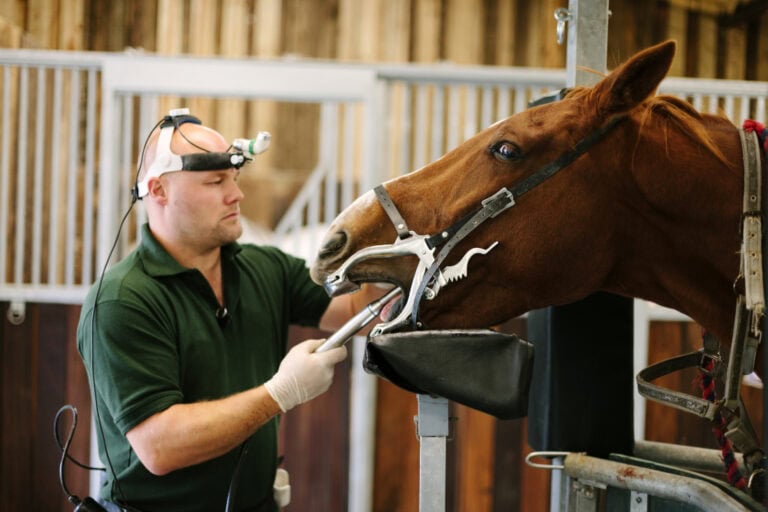
Wolf teeth in horses are short teeth sometimes found in the space between the front and cheek teeth on both sides of the upper jaw. Wolf teeth are normal, but have no particular function for horses. Wolf teeth have traditionally...