English


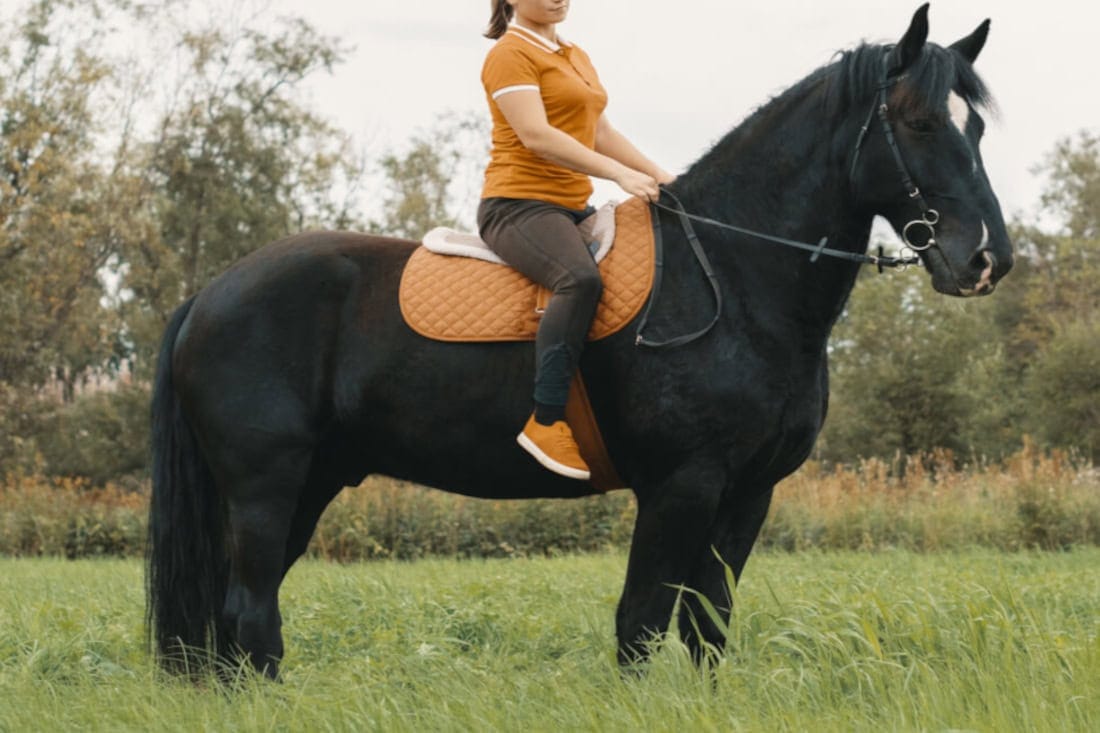
Bareback riding pads for horses offer a comfortable and secure way to ride without a traditional saddle, combining the close contact of bareback riding with added support and grip. Designed to cushion both horse and rider, these pads help distribute weight, reduce pressure points, and improve stability during rides.
Bareback riding offers a unique way to connect with a horse, enhancing balance, communication, and confidence. While riding completely bareback can be rewarding, it also presents challenges, such as potential discomfort for both horse and rider.
Bareback pads provide a practical solution. These lightweight pads come in various materials and designs, catering to different riding needs. Bareback pads are a comfortable alternative for casual rides, warm-ups, or training sessions.
Whether you’re looking to improve your balance, enhance communication with your horse, or enjoy casual riding with less bulk, a bareback pad can be a valuable addition to your tack. Read on to learn about the benefits, features, and drawbacks of using a bareback pad, and how to choose the right one for your needs.
Bareback Riding
Bareback riding is the practice of riding a horse without a saddle, where the rider relies solely on balance and grip to stay mounted. This style of riding has been used for centuries and some consider it a more natural way to connect with a horse. [1][2]
While bareback riding presents unique challenges, it also offers many benefits for rider and horse.
Advantages
One of the biggest advantages of bareback riding is the improved balance and core strength it develops in the rider. Without the support of a saddle, the rider must actively engage their muscles more to maintain stability. This leads to better posture, coordination, and a stronger connection to the horse’s movement. [3]
Another major benefit is enhanced communication between the horse and rider. Without the interference of a saddle, the rider can feel every movement the horse makes, from subtle weight shifts to changes in muscle tension. This heightened sensitivity allows for more refined cues and a deeper understanding of the horse’s responses.
Bareback riding also helps develop rider confidence. Since there is no saddle to rely on, riders learn to trust their balance and instincts. This increased reliance on body awareness not only improves physical coordination, but also fosters a more intuitive connection between horse and rider. [3]
Disadvantages
While bareback riding offers many benefits, it also comes with challenges. Lack of stability is the most obvious difficulty, making it easier for a rider to fall if the horse moves unexpectedly.
This is why riders should start on a calm, well-trained horse and practice in a safe environment, such as an enclosed arena or a soft riding surface, with other people present.
Riders interested in trying bareback should be aware of their own level of skill and balance before attempting to ride. Bareback riding requires a balanced, strong rider with an independent seat and hand who can stay tall through their core.
An unbalanced rider who slams down on the back and balances with their hands can cause soreness, ring sour and frustration in their horse if they ride like this regularly – just as poor riding with tack can have the same effects.
Finally, riding bareback for extended periods can put pressure on the horse’s back, especially if the rider is unbalanced. It’s essential to ride with good posture and avoid excessive bouncing to prevent soreness.
Bareback Pads for Horses
Without a saddle, riders may experience discomfort from the horse’s spine or prominent withers. A bareback pad is a cushioned pad designed to provide comfort and grip for both horse and rider when riding without a saddle.
There are many different types and designs of bareback pads, but most feature a contoured shape, a non-slip underside, and a girth to secure it in place. While bareback pads don’t have the rigid structure of a saddle, they help distribute weight and offer additional support, making bareback riding more comfortable for horse and rider. [4]
What's your top priority with your horse's health?

Enter your email to receive your store credit
Features of Bareback Saddle Pads
Bareback pads come in a variety of styles to suit different riding needs, from casual hacks to focused training sessions. Some pads are minimalist and lightweight, designed for maximum closeness and feel. Others include additional padding or built-in handles to provide extra security — especially for novice riders.
Although they do not offer the same support or structure as a saddle, a well-fitted bareback pad can make bareback riding more accessible, particularly for longer sessions or horses with prominent withers.
Top Layer (Rider-Side Contact)
The top layer of a bareback pad needs to offer comfort, grip, and durability as the material is in direct contact with the rider. Common materials used in this layer include: [4]
- Suede: Whether genuine or synthetic, suede is a popular choice. This material offers natural grip, helping the rider stay secure without slipping. Synthetic suede is less breathable but more weather resistant than natural suede.
- Fleece or Sherpa: Some bareback pads feature a fleece or sherpa top layer for extra cushioning and warmth. These materials are soft and comfortable, but sometimes lack the grip of suede.
- Neoprene: Though less common for the top layer, some bareback pads incorporate neoprene for a non-slip surface and moisture repellent.
Padding & Cushioning
The inner padding of a bareback saddle pad ensures comfort for both rider and horse by absorbing impact and distributing weight. The padding in bareback pads is often made of: [4]
- Foam: High-density foam provides lightweight cushioning without excessive bulk. It is commonly used for shock absorption
- Memory Foam: Some pads incorporate memory foam to conform to the horse’s shape, offering a custom fit and extra support
- Wool or Felt: Natural wool or felt padding provides excellent breathability and conforms to the horse’s back over time
- Gel: This filling is less breathable than other types, but offers a high degree of shock absorption
Bottom Layer (Horse-Side Contact)
The underside of the bareback pad makes direct contact with the horse and must provide comfort and stability. Most types of bareback pads have one of the following materials for the bottom layer: [4]
- Neoprene: Prevents slipping and wicks away moisture, keeping the horse comfortable
- Wool or Fleece: These natural materials reduce friction and help regulate temperature, making them ideal for sensitive horses
- Non-Slip Rubberized Material: Some pads include a rubberized grip layer to enhance stability and minimize shifting during rides
Girth
Much like conventional saddles, the girth keeps the bareback pad securely in place. Common girth materials include: [4]
- Nylon Webbing: Durable and resistant to stretching, nylon girths are commonly used for their longevity
- Neoprene: Some girths feature neoprene for a comfortable, non-slip fit
- Leather: Found on some high-end bareback pads, both synthetic and genuine leather offer a sleek, durable fit similar to English girths
- Elastic: Offers stretch for a snug but comfortable fit, allowing movement
In addition, some styles come with fleece or wool lining along the girth to reduce friction and promote comfort for the horse. [4]
Benefits of Bareback Pads
Bareback pads serve as a useful tool for enhancing the riding experience for both horse and rider. By offering a compromise between the close contact of true bareback riding and the support of a saddle, these pads can promote better comfort, stability, and confidence. [3]
Riders often find that using a bareback pad allows them to develop a stronger seat and a deeper connection with the horse, while also minimizing the risks of direct bareback riding. [3]
Horse Benefits
For casual riding, bareback pads provide a comfortable alternative to saddles without the extra weight and restriction. They are particularly useful for warming up, cooling down, or light trail rides where a full saddle may not be necessary.
Bareback pads offer multiple benefits to horses by providing comfort and improved communication with the rider. Key benefits for horses include: [4][5]
- Improved weight distribution: A well-designed bareback pad helps distribute the rider’s weight more evenly than riding bareback with no pad at all, reducing pressure points and discomfort.
- Reduced friction: Bareback pads also add a layer of cushioning between the horse’s back and the rider, preventing excessive friction from the rider’s legs. Additionally, many bareback pads are made with non-slip materials and soft liners, preventing the pad from shifting while riding. This helps avoid chafing, hair loss, or irritation that can occur with direct contact.
- Reduced loading: Bareback pads are generally much lighter than saddles, reducing strain on the horse’s back.
- Optimized thermoregulation: Many bareback pads are made with breathable materials that allow airflow, preventing excessive heat buildup and allowing sweat to evaporate.
Rider Benefits
Bareback pads also offer several benefits for the rider, improving comfort, security, and overall riding experience compared to bareback riding in direct contact with the horse. The primary benefits for riders include: [4][6]
- Enhances comfort: A bareback pad provides more cushioning between the rider and the horse’s spine than riding bareback without a pad, reducing discomfort from bony withers or a prominent backbone.
- Improves grip: Many bareback pads are made with non-slip materials or have suede, synthetic, or rubberized surfaces that offer better grip. This helps prevent slipping, making the rider feel more secure, especially when riding at faster gaits.
- Improves communication: Without the barrier of a saddle, the rider can feel the horse’s muscles, movement, and responses directly. This increased connection allows for better seat aids, making subtle cues more effective and improving overall riding skills.
- Facilitates tacking up: Bareback pads are much lighter than saddles, making them easier to handle, put on, and remove.
- Builds ideal equitation: Using a bareback pad encourages a more natural seat position, helping riders develop a deeper feel for their horse’s movement.

Drawbacks of Bareback Pads
While bareback pads offer many advantages in terms of rider comfort and connection with the horse, they are not without limitations. Since they lack the rigid structure of a traditional saddle, their ability to distribute weight evenly relies on the rider holding a well-balanced seat — particularly on longer rides or with certain horse conformations.
Horse Drawbacks
One drawback of using a bareback pad is related to bareback riding itself. A saddle effectively distributes the rider’s weight over a large area of the horse’s body. Riding bareback creates a much smaller surface area of pressure between the rider’s body and the horse’s back, particularly along the muscle groups most vulnerable to back pain in horses. [7] Bareback pads help improve weight distribution when riding without a saddle, but they are not as effective as saddles themselves.
Another consideration is skin irritation. Some bareback pads, particularly those without a secure girth or non-slip material, may slide around during riding. This can cause discomfort or even rub the horse’s skin, leading to irritation or sores. Bareback pads also trap heat between the horse’s back and the pad, especially those made from synthetic materials. This can lead to excessive sweating and discomfort, particularly in hot weather.
Additionally, unlike saddles with a gullet, most bareback pads sit directly on the horse’s spine. If the pad lacks adequate cushioning or the horse has a prominent backbone, this can cause soreness or irritation over time.
Finally, much like saddles, bareback pads can lead to discomfort if they are not well-fitted to the horse’s body. Horses with high withers, short backs, or a more rounded body shape may have difficulty keeping a bareback pad in place. Some designs can shift or press uncomfortably on certain conformations.
Rider Drawbacks
There are some potential drawbacks for the rider when using bareback pads. While they offer a more natural riding experience, there are a few considerations to keep in mind.
First, bareback pads typically do not provide the same level of support as a traditional saddle. Bareback riders have less stability, especially at higher speeds or during activities like jumping. This can lead to a less secure seat, increasing the risk of falling.
While bareback pads are generally more comfortable than riding directly on the horse’s back, they can still cause discomfort, especially during longer rides. The lack of seat depth or cushioning can lead to saddle sores or soreness in the rider’s seat, thighs, or knees.
Finally, unlike a saddle, bareback pads don’t have stirrups, which means the rider cannot stand up or shift weight easily during certain riding movements. This limits the rider’s ability to use specific riding techniques that require stirrup use.
Frequently Asked Questions
Here are some frequently asked questions about bareback pads for horses:
A bareback pad is a cushioned pad designed to provide comfort and grip for both horse and rider when riding without a saddle. Unlike a saddle, it does not have a rigid structure but helps distribute weight more evenly and offers additional support.
A bareback pad can help reduce pressure points, provide cushioning, and improve comfort for the horse. It also allows for better freedom of movement compared to a saddle with a rigid tree.
Yes, riding with a bareback pad requires the rider to engage their core muscles, improving balance, posture, and coordination over time.
While bareback pads offer comfort, they do not distribute weight as effectively as a saddle. Some designs may slip or cause heat buildup, and they may not provide enough cushioning for high-withered horses.
Summary
A bareback pad is a cushioned, girth-secured pad designed to enhance comfort, grip, and weight distribution when riding without a saddle. While it does not offer the structure of a saddle, it provides additional support for both horse and rider, making bareback riding a more comfortable and practical experience.
- Riding without a saddle strengthens balance, improves rider awareness, and enhances communication with the horse, but it is more difficult and should be attempted only by confident riders
- Bareback saddle pads come in a variety of materials, cushioning, and girth types, each affecting comfort, grip, and stability
- A bareback pad reduces direct pressure points and helps develop a strong, balanced seat
- Pads may trap heat, cause pressure issues, or slide if not properly fitted. They provide less stability than a saddle, limited support, and no stirrups for weight adjustment
References
- Tariq, N., Bareback Riding: Benefits, Tips, and Beginner Mistakes to Avoid. Bay Area Equestrian Network. 2025.
- How did Indians ride horses without saddles?. Environmental Literacy Council. 2025.
- The Advantages and Art of Bareback Riding. Horse Sport. 2021.
- Stanek, A., 8 Best Bareback Saddle Pads Guide. Horsey Hooves. 2023.
- Parker, E., Best Bareback Pads Guide. The Horse and Stable. 2022.
- All About Bareback Saddle Pads. Horse Saddle Corral. 2023.
- Clayton. H. M. et al., Forces and Pressures on the Horse’s Back during Bareback Riding. The Veterinary Journal. 2013.