English
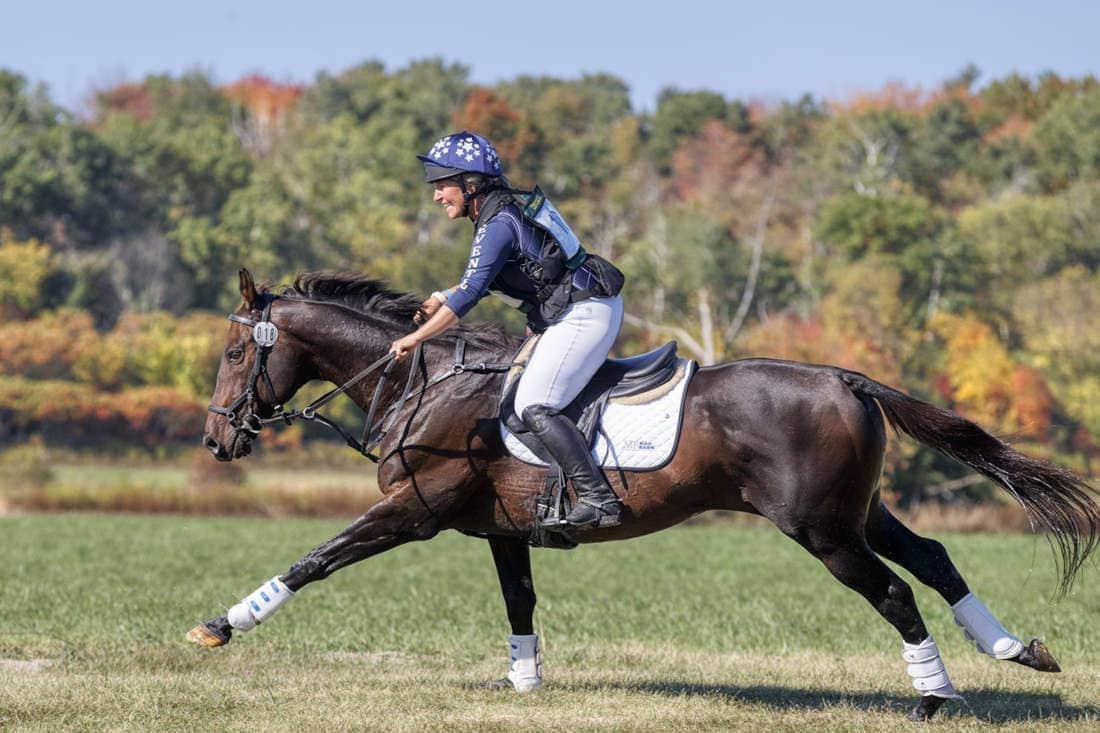
Photo: Cealy Tetley, 2025
Canadian eventer Claudia Iannuccilli has built a successful riding and coaching career—but she didn’t follow the traditional playbook.
She develops off-track Thoroughbreds and competes them barefoot at the FEI level, approaching horse management with a philosophy centered on long-term soundness, thoughtful nutrition, and understanding the horse as a whole.
Over the years, that philosophy has led her to rethink many conventional approaches to feeding, hoof care, and equine performance management. In this way, Claudia has developed a successful system for managing every horse in her program.
Early Riding Opportunities: Friendship, Horses, & A Small Local Barn
For Canadian eventer Claudia Iannuccilli, the path to equestrian sport didn’t begin in a professional training program or a high-performance barn. Instead, it started at a small local stable where the culture was just as much about friendship and community as it was about riding.
“I was around 12 years old when I first started riding. I took weekly lessons at a small family-run barn,” Iannuccilli says.
“We’d go to little local horse shows or fairs, and honestly, sometimes it felt like the pizza parties before the shows were just as important as the competition itself. That’s also where I met my best friend—she’s also still in the horse industry now.”
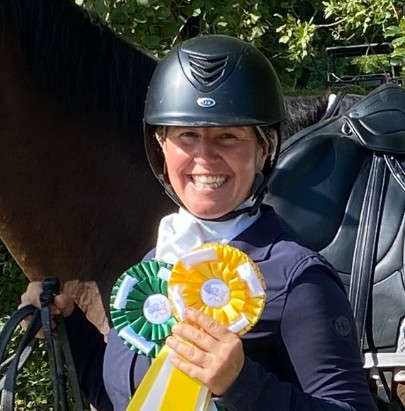
“I was completely horse-crazy. All week at school, I'd just be waiting for my riding lesson.”
— Claudia IannuccilliMad Barn High Performance Athlete
Horses quickly became the center of her world. Growing up between her father’s home in the Laurentians and her mother’s in Montreal, she counted down the days until her Saturday riding lessons each week.
By her mid-teens, riding had become a central part of her life. “My barn was really like a family,” she says. “I was there all the time as a teenager, and it became such a big part of my life.”
What's your top priority with your horse's health?

What's your top priority with your horse's health?
Finding Her Stride
A few years later, a job at Sandridge Saddlery shifted Claudia’s perspective on her options as a rider.
“It was about an hour and twenty minutes from where I lived, but I didn’t care. Who doesn’t want to work in a tack shop when you’re young and horse crazy?” she laughs.
Located in Hudson, Quebec, a horse-centered community filled with small farms and a bigger, more active show circuit than back home, the job exposed her to a much broader side of the sport.
“Before that, I was mostly showing at fairs and local shows, but suddenly I was seeing the rated hunter-jumper world and all the equipment that goes with it,” she says.
A life-changing moment in her riding career came from an unlikely source—a small TV in the tack shop where she worked, playing VHS tapes of major eventing competitions.
“We’d watch things like old Badminton and Burghley competitions while we worked,” she recalls. “That’s actually where I discovered eventing, and I remember thinking those riders were incredible.”
At the time, she was competing in jumpers, but the sport had begun to lose its appeal. “It was a lot of money and not that much fun for me anymore,” she explains.
Eventually, she decided to try eventing with her horse—and despite a not-so-perfect first outing, she was hooked.
“My first event was kind of a disaster—I got lost on cross-country and was late for everything. But it was so much fun, and everyone was so friendly. After that, I never really looked back.”
— Claudia IannuccilliMad Barn High Performance Athlete
Major Chase: The Horse Who Opened the Door
As Claudia gained experience in the sport, one horse in particular gave her a first glimpse of what competing at the upper levels could look like.
“One of the horses that really shaped that part of my career was Major Chase,” she says. “I took him from his very first show all the way up to the two-star level, which was pretty wild for a young trainer.”
It might have seemed wild, but her partnership with Major Chase, owned by Don and Janice Clinton, sparked her ambition to develop other horses in the sport.
“He was a Connemara–Thoroughbred cross and definitely kept things exciting—there was spinning, moments in ditches, and a few attempts to get to the start box that somehow ended back near the trailers.”
— Claudia IannuccilliMad Barn High Performance Athlete
“That experience really gave me the bug—not just for eventing, but for seeing how far I could go with the horses I was bringing along,” she says.
“I’ve always loved Thoroughbreds, and that’s where my focus really started to shift. Over time, as I moved from farm to farm and things changed, I eventually ended up with my own farm,” she says.
Building Relationships & Developing Others
As her eventing riding career evolved, Claudia gradually found herself drawn toward coaching and developing other riders.
“I started out teaching mostly beginner lessons, but then really got into teaching Pony Club,” she says. “We ran that for about five years, and it was amazing. I still stay in touch with many of those students today, and they still talk about those days and how much they learned.”
Over time, her teaching program naturally evolved as Claudia shifted her focus toward eventing and expanding her coaching business. “I just continued coaching and focusing on eventing, and it gradually turned into more of a business—but it was always built around wanting to help other riders learn and grow,” she says.
“A lot of my students are adult amateurs with their own horses competing at the lower to mid levels because I'm very much about the long-term relationship with the horse.”
— Claudia IannuccilliMad Barn High Performance Athlete
Today, she runs her program in a way that reflects her horse-first philosophy, working primarily as a freelance riding coach while keeping her own farm focused on her horses while traveling to teach riders at multiple barns.
“I’m probably a little different than most coaches,” she says. “I’m a bit of an outside-the-box thinker, so I don’t really follow the typical path. My farm at home is just for my horses, so I travel to teach, sometimes at multiple different barns in a day or for a haul-in lesson.”
The most rewarding moments in her coaching business come when horse and rider finally connect on something they’ve been working toward together.
“It could be someone cantering for the first time, jumping bigger confidently, or riding a great dressage test,” she explains. “When you see all that work come together, it’s the best feeling.”
Reagan: The Horse Who Changed Everything
It was a horse named Reagan who would significantly shape Claudia’s horse management philosophy—both in nutrition and hoof care.
“Reagan was the one who started it all for me,” she says.
“When he was younger, he had serious colic problems and even ended up in the hospital with surgery being discussed. My hoof trimmer suggested I speak with Scott, the founder of Mad Barn, to see how they could help.”
“After evaluating Reagan's diet, we stripped everything back to the basics: just forage and Mad Barn's vitamin–mineral supplement, Omneity®. Honestly, that's what saved him. Reagan wouldn't be here today without those changes.”
— Claudia IannuccilliMad Barn High Performance Athlete
Reagan went on to enjoy a remarkable career, competing in eventing through Preliminary level and CCI1* competitions before transitioning to the jumper ring up to 1.15 meters. Now, he competes in dressage, working toward Fourth Level after successfully showing at Third Level last season.
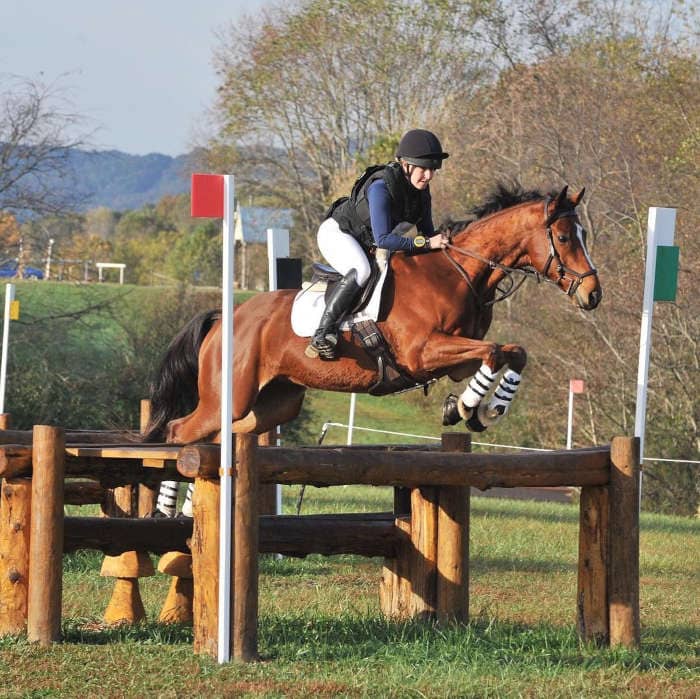
“That experience is really where everything started for me,” she says. “It pushed me to learn more about nutrition and how it affects the whole horse, which eventually led me further down the path of barefoot management as well. Proper nutrition became a huge part of my philosophy.”
Nutrition as the Foundation for Performance & Longevity
Today, equine nutrition plays a central role not only in the performance of Claudia’s horses, but also in their long-term health and well being.
“My philosophy has always been about longevity,” she says. “Of course I want my horses to compete at the highest levels, but I also want them to feel good, be happy, and stay sound well beyond their competition years.”
She believes a horse’s foundation—nutrition, management, and environment—directly influences both performance and recovery.
“If their base nutrition is good, everything else builds from there. Weight, coat quality, feet, ulcers, joints—how a horse is fed and how it lives affects all of it.”
— Claudia IannuccilliMad Barn High Performance Athlete
Supporting High Performance for Barefoot Horses
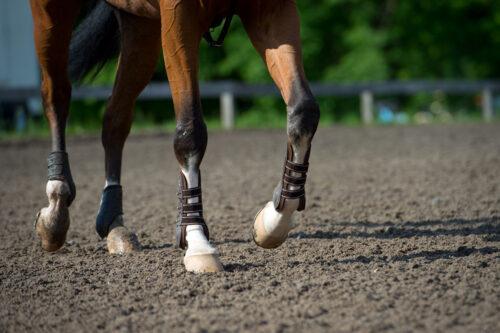
Another part of Claudia’s program that reflects her horse-first philosophy is her approach to hoof care. While many upper-level event horses compete in shoes, she prefers to keep her horses barefoot whenever possible—even at the FEI levels.
Her barefoot management philosophy, however, always comes down to the individual horse.
“I’m not anti-shoe at all,” she says. “If a horse needs shoes for traction or because that’s what works best for that horse, that’s fine. But I want to know the foot underneath is healthy.”
Claudia finds the hoof often reflects what is happening throughout the horse’s entire body.
“That's where nutrition becomes really important—because if the vitamin and mineral balance isn't right, the foot isn't going to be right. That's why I use Mad Barn's Omneity® for all my horses. It provides that nutrient-balanced baseline.”
— Claudia IannuccilliMad Barn High Performance Athlete
“The foot tells you so much,” she says. “You can see growth lines, changes in quality, and signs of stress—it’s like a record of what the horse’s body has been dealing with,” she explains.
“If the nutrition is off, the foot will tell you. When the horse is healthier nutritionally, it performs better, so what I’m really seeing in the foot is a reflection of the whole horse.”
Building a Nutrition Strategy for Off-the-Track Thoroughbreds
When Claudia brings a new off-track Thoroughbred into her program, she initially focuses on rebuilding the horse’s nutritional foundation before anything else.
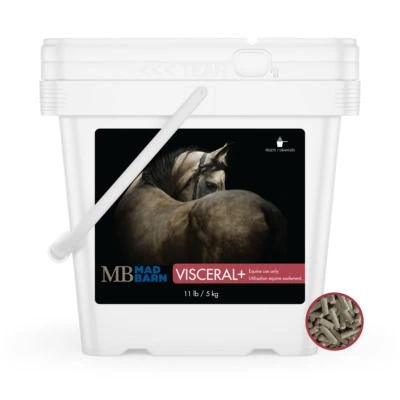
“When they first come off the track, I start with a very basic nutrition program,” she says. “It’s mostly forage, beet pulp, and Mad Barn’s Omneity® for the vitamin and mineral base. Every horse I have is on Omneity®—it’s a non-negotiable.”
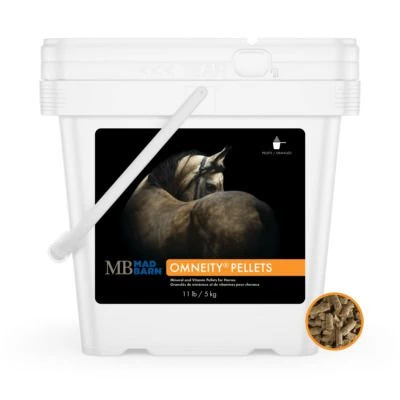
She also routinely includes Mad Barn’s Visceral+ for her horses, especially those coming directly from the track.
With a combination of prebiotics, probiotics, and ingredients that support the intestinal lining, Visceral+ helps maintain digestive health and overall resilience during this critical transition period.
“Off-track horses are often stressed just from the move and significant change in environment. I usually keep them on Visceral+ for at least a month to support their stomachs while they settle in, sometimes longer or even permanently, depending on the horse.”
— Claudia IannuccilliMad Barn High Performance Athlete
Ultimately, everything Claudia does with her horses comes back to a philosophy she applies across her entire program. Rather than relying on grain concentrates to add weight quickly, she prefers a forage-focused approach, using targeted supplements to fill nutritional gaps and support each horse’s individual needs.
“It’s really about building a strong nutritional base first,” she says. “Once that foundation is there, everything else—training, recovery, and long-term soundness—has a much better chance of falling into place.”
Expert Nutrition Fueling Elite Competition Horses
Mad Barn’s impact on Claudia’s program goes beyond individual products. The expert guidance, accessibility, and philosophy behind the company’s approach to equine nutrition have been just as important.
“What I really trust about Mad Barn is how it's not just about selling a product. It's about balance. They want the whole diet to be balanced, and they'll tell you whether something is already covered or needs to change, even if it means not making a sale.”
— Claudia IannuccilliMad Barn High Performance Athlete
The ability to easily connect with knowledgeable support has also made a major difference when managing more complex horse cases.
“You can send Mad Barn an email or call them and ask questions about hay, supplements, or a specific horse, and really talk it through with someone,” she says. “That accessibility has been a huge game changer for the horses in my program.”
Henri’s Nutrition Transformation: From Cracked Hooves to Barefoot Two-Star Competitor
One horse in her program exemplifies how careful nutrition and management can significantly transform a horse’s soundness and performance.
“Henri came off the track with some pretty rough feet,” she says. “When I first saw him, he had three extra nails driven into the back of one front shoe because the shoe had sprung. He was such a sweet horse and moved well, so we decided to rebuild everything from the ground up.”
Working closely with her farrier and the Mad Barn team, she began carefully evaluating Henri’s diet.
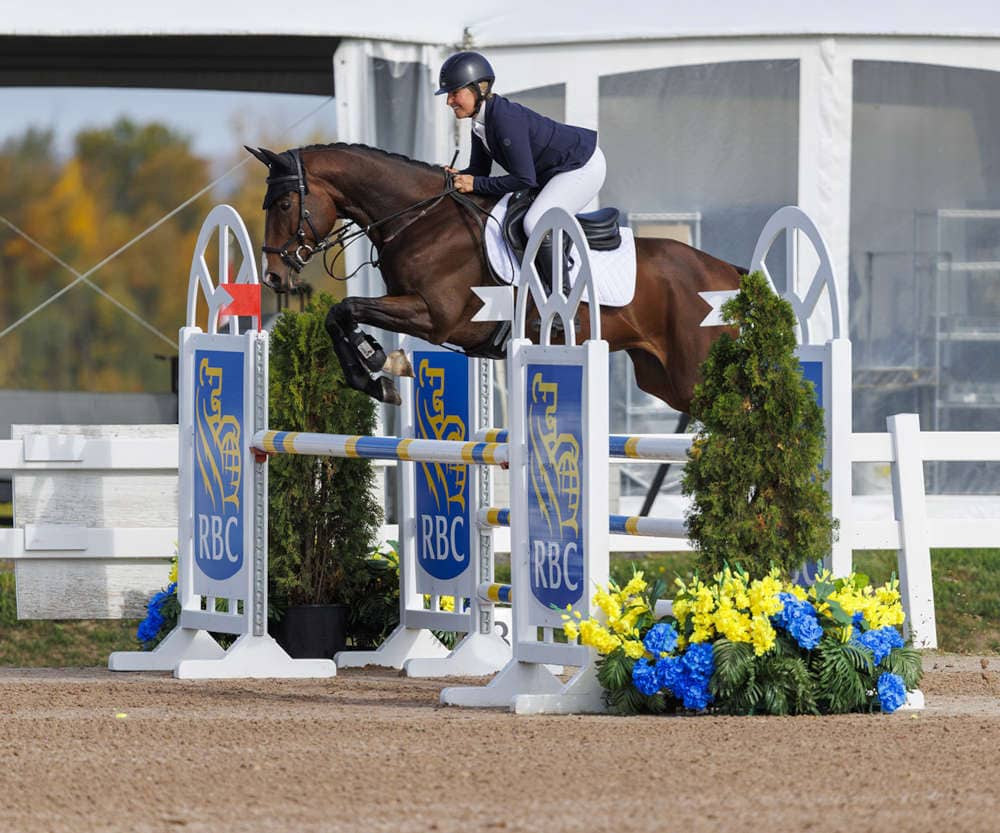 Photo: Cealy Tetley, 2025
“We kept reviewing his nutrition to figure out what might be causing the cracking issues in his hoof wall,” she says. “Eventually, we discovered alfalfa wasn’t working for him. Once we removed it and adjusted his diet, his feet completely changed.”
Today, Henri competes barefoot at the two-star level.
“For me, nutrition is non-negotiable. If you want barefoot performance horses, the foundation has to be right—and that's where working with Mad Barn has made such a difference for a horse like Henri.”
— Claudia IannuccilliMad Barn High Performance Athlete
Sherlock: Transitioning to Barefoot at 17 Years Young
One of Claudia’s earliest and clearest examples of how nutrition influences hoof health is Sherlock, a horse she never expected would transition to barefoot successfully.
“Sherlock wasn’t barefoot until he was 17,” she says. “When I first knew him, we tried taking his shoes off, and he could barely walk, so we just accepted that he wasn’t a horse who could go barefoot.”
“But by the time he was nearing retirement, he had already been on Omneity® for quite a while, and my trimmer kept saying, ‘His foot looks good, I think we can pull his shoes.'”
When Sherlock’s shoes finally came off, this time permanently, the outcome was very different.
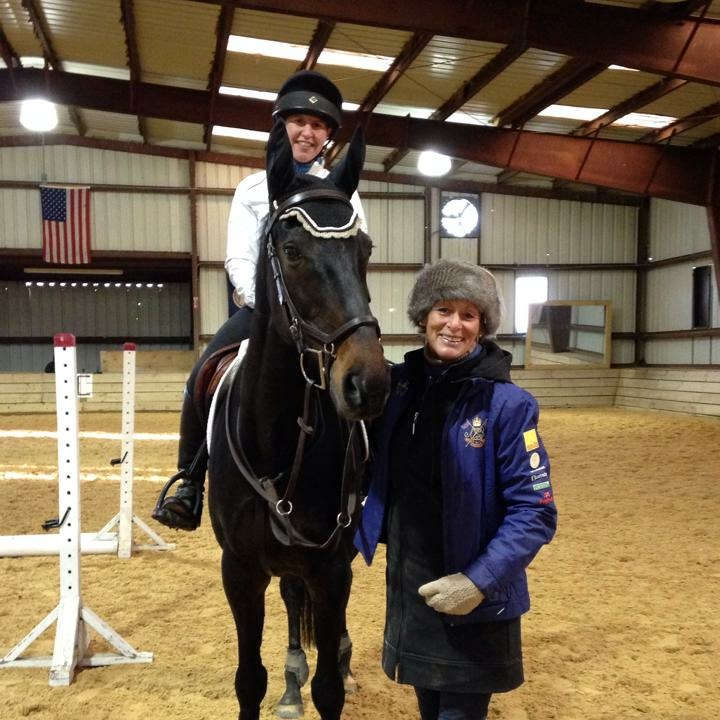
“When we pulled the shoes, he was only a little uncertain at first,” she says.
“It felt more like, ‘This is weird,’ not ‘This hurts.’ He ended up being the easiest barefoot transition ever after that and stayed sound.”
“There really weren't any other major changes, so I truly believe Omneity® made all the difference. The new hoof growth was stronger, and I don't think he could have ever made that transition without it.”
— Claudia IannuccilliMad Barn High Performance Athlete
Merlin: From Laminitic Crisis to Competing Barefoot
Another horse with a standout nutrition transformation from Iannuccilli’s herd is Merlin, who belongs to her longtime student Corry Robertson.
“Merlin was a really scary case,” she says. “He ended up laminitic and abscessing in all four feet, and we were in full crisis mode trying to get him comfortable.”
Although Merlin didn’t fit the typical picture of a metabolic horse, his feet revealed the underlying issue.
“He wasn’t the obvious type you look at and think metabolic,” she says. “But once he crashed, we realized nutrition had to become the absolute priority.”
With guidance from Mad Barn, Merlin’s feeding program was changed significantly.
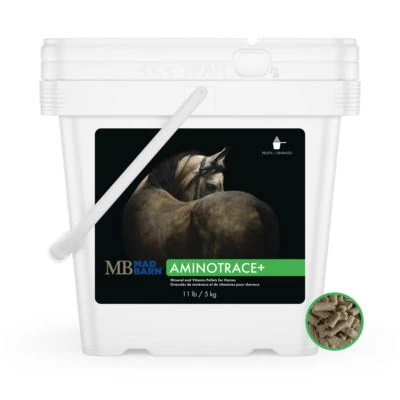
“We switched him onto AminoTrace+ and got very strict about his diet,” she says. “At that point, it was basically measured hay and the right vitamin–mineral support with AminoTrace+. For a horse like that, nutrition has to be accurate.”
Later, he successfully competed sound and barefoot.
“It took months and months of careful management,” she says. “But once his diet was truly under control, everything changed.”
“Now he’s barefoot, his feet have never looked better, and he’s the soundest he’s ever been. Once the pain went away, the horse changed too—nutrition can literally mean the difference between pain and pain-free.”
A Nutrition Philosophy Built Horse by Horse
Over the years, horses with very different challenges have come through her program, but the same pattern continues to emerge: when nutrition and management improve, the horse improves.
Whether her goal is to rebuild a compromised hoof, support a metabolic horse, or help an equine athlete stay comfortable enough to perform barefoot, Claudia believes the right nutrition foundation must come first.
“I've been using Mad Barn for about ten years now, and I keep coming back to it because I've seen the results. That trust comes from experience.”
— Claudia IannuccilliMad Barn High Performance Athlete
From putting bare feet at the top levels to helping OTTBs find new footing and beyond, Claudia is writing her own rulebook that puts horse welfare first. In doing so, she is shaping a happier, healthier future for the horses in her care, and her influence will resonate across the eventing world for years to come.
Summary
Canadian FEI eventer and coach Claudia Iannuccilli has built a program focused on improving horse performance, soundness, and longevity through better nutrition and management.
- A strong nutritional foundation is the starting point for every horse, shaping condition, recovery, and long-term performance
- Balanced vitamin and mineral programs support consistent results, with visible improvements in coat quality, hoof strength, and overall health
- Digestive support plays a key role during transitions and competition, helping horses stay comfortable and perform at their best
- Hoof quality reflects what is happening internally, offering a clear, day-to-day indicator of nutritional balance and overall health
- Feeding programs are adjusted for each horse, with targeted changes made to resolve issues and improve soundness over time
- Better management leads to better outcomes, with horses staying sound, progressing in training, and performing consistently