English



The Cleveland Bay is a rare warmblood horse breed, native to England. Unlike modern warmblood breeds, which have open studbooks and significant Thoroughbred influences, the Cleveland Bay has been genetically distinct for centuries.
Named for their characteristic bay colouring and origins in the Cleveland district of Yorkshire, these horses descend from the extinct Chapman pack horses of Medieval England. Today, the Cleveland Bay is a critically endangered breed.
Royal patronage saved these talented driving and sport horses from extinction in the 20th century. While population management tools and careful breeding decisions have improved genetic diversity, the small worldwide population of Cleveland Bays is a significant concern for the preservation of the breed.
This breed profile will review the history, characteristics, health problems, and nutritional needs of the Cleveland Bay horse. Keep reading to learn more about feeding and caring for these horses.
Cleveland Bay Horse History
While there are several native pony and draft breeds with long histories in the British Isles, the Cleveland Bay is the oldest English warmblood breed. The modern type of Cleveland Bays emerged in the 18th century, but the breed’s history goes back to the Middle Ages.
Origin
Cleveland Bays descend from pack horses bred by Monastic houses in Northeast England. These houses operated the region’s most prominent horse breeding programs during the Middle Ages.
The Cleveland Bay’s pack horse ancestors transported goods between monasteries, abbeys, and churches in the Yorkshire Dales during the Middle Ages. Travelling merchants in medieval England were called chapmen, and the horses eventually became known as Chapman horses.
Genetic studies suggest breeders crossed Chapman mares with imported Turkmen stallions to produce the original Cleveland Bay. The cross produced a powerful horse that quickly gained popularity in the local countryside and beyond. [1]
Breeding programs designed to produce an agricultural type of Cleveland Bay increased the size and build of the breed over the next century. But when roads improved in the late 18th century, breeding focused on developing a lighter and flashier Yorkshire coach horse.
The modern Cleveland Bay name originates from the Cleveland Vale of Yorkshire. Centuries of breeding concentrated the bay colour of a reddish-brown coat with black points. Despite outside influences on the breed, bay coats were considered a sign of purity. [1]
Historic Use
Original Cleveland Bays produced by crossing Chapman horses with imported stallions were versatile agricultural horses used for draft work, riding, and driving in the English countryside.
The more refined Cleveland Bays worked extensively as carriage horses. Yorkshire coach horses gained popularity throughout England and were exported worldwide. [2]
Colonel Richard Henry Dulaney imported Cleveland Bays to North America. Dulaney founded the Upperville Colt and Horse Show in 1853, the oldest horse show in America. The hunter/jumper show still features Cleveland Bay classes today.
Other famous fans of the breed in North America included Buffalo Bill, who used a team of four Cleveland Bay stallions in his Wild West Show.
British Cavalry officers rode Cleveland Bays in the First World War, but advances in weaponry soon made cavalry horses obsolete and led to a significant decline of breeding stock. The decline continued after World War II until only four purebred stallions remained in the UK in 1962. [3]
Queen Elizabeth II helped preserve the breed in Great Britain by purchasing the stallion Mulgrave Supreme before his export to an American buyer. Interest in the breed as a sport horse gradually increased, leading to renewed efforts to preserve the Cleveland Bay’s heritage.
Breed Registry
The Cleveland Bay Horse Society (CBHS) published its first stud book in 1884. Some pedigrees in the first studbook trace back to 1723. But many founding lines were lost before 1971 when the Rare Breed Survival Trust recognized the breed as endangered. [3]
Founded in 1885, the Cleveland Bay Horse Society of North America maintains census data on all purebred and part-bred Cleveland Bays in the United States and Canada. The 2023 census recorded a total population of only 219 purebred Cleveland Bays in North America. [4]
| Breed Summary | |
|---|---|
| Breed Name | Cleveland Bay |
| Breed Type | Warmblood |
| Origin | Cleveland district of Yorkshire, England |
| Breed Registry | Cleveland Bay Horse Society (CBHS); Cleveland Bay Horse Society of North America |
| Population Status | Critically endangered; 219 purebred horses recorded in North America (2023 census) |
| Average Height | 16 – 16.2 hh |
| Average Weight | 1,450 lb (660 kg) |
| Common Coat Colors | Bay with black points |
| Conformation | Broad deep body, short back, muscular loins, sloping shoulders, long quarters, bold head, Roman nose, long muscular neck, broad joints, good bone, sloping pasterns |
| Common Uses | Driving, dressage, eventing, hunting, show jumping |
| Temperament | Docile, sensible, intelligent, willing |
| Best For | Timid riders |
| Common Health Concerns | Low genetic diversity, gastric ulcers, digestive problems, degenerative joint disease, arthritis, lameness, bone tendon and ligament injuries |
What's your top priority with your horse's health?

Enter your email to receive your store credit
Breed Characteristics
The official breed registries for Cleveland Bays established breed standards that describe the ideal characteristics of purebred horses. These characteristics help the breed excel as a sport horse in many modern equestrian disciplines.
Conformation
Most Cleveland Bays stand between 16 and 16.2 hands tall. Their conformation should have well-balanced height, weight, and bone. The general appearance conveys activity and strength.
The ideal Cleveland Bay has a broad, deep body with a short back and muscular loins. Sloping shoulders and long quarters enable powerful movement. Their motion is true, free, and straight.
These horses also have bold heads carried on long muscular necks. Round, convex muzzles known as “Roman noses” are common. Their ears are large but refined, and their eyes are well-set and expressive.
Muscular legs, broad joints, and good bone promote soundness in the breed. The pastern is sloping but not too long. Narrow or shallow feet are undesirable.
Colours
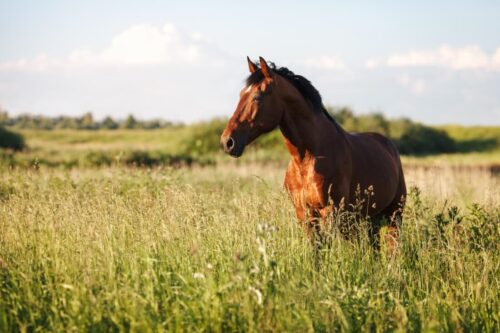
All Cleveland Bays have bay coats with black points. Their manes, tails, and legs are also black. Bright bay horses with reddish tints in their coat are preferred. Dark bays, light bays, and ordinary bays are also seen. Horses with red legs are rare.
Hooves are dark-coloured. White markings beyond a small star and a few white hairs on the heel are prohibited. However, grayish hairs in the mane and tail are a common breed characteristic.
Temperament
Cleveland Bays have docile temperaments and sensible personalities. These traits make the breed more suitable for timid riders than hotter warmbloods, but personality can vary between individual horses.
Many Cleveland Bay owners find these horses are intelligent and willing equine partners. Their breeding prioritized producing mannerly coach horses with the work ethic and amiability to work long hours in teams pulling carriages.
Disciplines
Cleveland Bays are versatile horses suited for a variety of disciplines. The breed is still a popular driving horse today for competition and recreation. Cleveland Bays are also frequently found in the British Royal Mews and are used to pull royal carriages in ceremonies and parades.
Like other warmbloods, Cleveland Bays excel as English sport horses. Cleveland Bays with mixed lineage competed in show jumping in the 1964, 1968, and 1976 Olympics. Other popular disciplines for the breed include dressage, eventing, and hunting.
Cleveland Bay Horse Health
Cleveland Bays were developed to be hardy and long-lived horses. While decreasing genetic diversity and inbreeding threaten the health of future generations, strategic breeding management and proper care can support efforts to conserve the breed.
Genetic Diversity
Thanks to centuries of pure bloodlines, Cleveland Bay horses are genetically distinct from many modern breeds affected by common genetic diseases. However, the purity of their bloodlines now threatens the future survival of the breed. [1]
Research studies reveal that Cleveland Bays have less genetic diversity than most other horse breeds, due to a genetic bottleneck in the breed during the mid-20th century. [1] Genetic bottlenecks result from a sharp decrease in the breeding population size, often leading to inbreeding and increased vulnerability to diseases.
One study found that 50% of the genome in the UK Cleveland Bay population derives from just three ancestors, demonstrating a high degree of inbreeding. [5]
Small populations with limited genetic diversity have an increased risk of health disorders and are often more susceptible to environmental stresses and diseases.
To maintain genetic diversity in the breed, the CBHS used pedigree analysis as part of their breeding management program. Over a 16 year period, this program reduced the rate of inbreeding from 3% to less than 0.5% per generation. [3]

Health Problems
Cleveland Bays are susceptible to the same health problems that commonly affect equine athletes. Many of these conditions are associated with increased stress and high-energy diets.
Gastric ulcers and other digestive problems are common in horses in regular training, including Cleveland Bays. Poor digestive health can impact other aspects of equine wellness and performance by causing discomfort and interfering with nutrient absorption. [6][7]
Intense exercise can also increase wear and tear on joints and worsen degenerative joint disease in Cleveland Bay horses. Repetitive strain can lead to arthritis and lameness in performance horses.
These horses are also at risk of athletic injuries affecting their bones, tendons, and ligaments. [8]
Care and Management
Whether your Cleveland Bay is a performance horse or not, all horses need quality basic care that meets their physical and behavioural needs.
Owners should work with their veterinarian to develop an annual wellness program that includes the following:
- Vaccinations to protect against infectious diseases
- Appropriate deworming strategies to reduce the burden of internal parasites
- Frequent dental exams and tooth floating to maintain dental health, particularly in older horses
- Lameness exams to identify early signs of joint issues and discuss prevention or treatment strategies.
Your Cleveland Bay also needs regular hoof care from a qualified farrier, including frequent trimming to maintain hoof balance. Some Cleveland Bays may need to wear shoes for extra protection.
A daily grooming routine is also important to keep this breed’s iconic bay coat healthy and shiny. Grooming not only promotes circulation to the muscles but also prevents moisture and debris buildup on the coat, which can lead to skin irritations.
Performance horses often live inside, but excessive stall confinement can be stressful and contribute to health problems. If your Cleveland Bay lives in a stall, ensure he gets daily turnout to help reduce stress and provide social interaction. [6]
Cleveland Bay Horse Nutrition
Nutrition plays a significant role in maintaining the health and well-being of Cleveland Bays and other performance horses. A balanced diet can also support reproductive success in endangered breeds.
Weight Maintenance
Cleveland Bay horses are typically average keepers. While some of these horses may need extra energy in their diet to support heavy exercise, most can easily maintain weight on a balanced diet.
This breed does not have the same predisposition to equine metabolic syndrome as other native British breeds. However, Cleveland Bays that are overweight or obese have a higher risk of joint issues.
You should regularly monitor your horse’s body condition to track weight changes and adjust their diet as needed. An ideal body condition is represented by a score of 5 on the 9-point Henneke body condition scale.
If you notice sudden weight changes in your horse, contact your veterinarian to investigate for any underlying medical problems. Unexpected weight loss could indicate digestive health issues, such as gastric ulcers, in Cleveland Bays.
Sample Diet
The following sample diet is intended for a mature 660 kg (1,450 lb) Cleveland Bay horse with normal body condition at maintenance (not exercising).
| Feed | Amount per day |
|---|---|
| Mid-Quality Hay (8% crude protein) | Free-choice |
| Salt | 45 g (3 tbsps) |
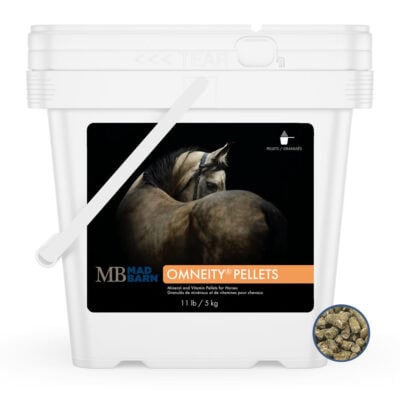
| Omneity® Pellets | 250 g (2.5 scoops) |
| Diet Analysis | |
| Digestible Energy (% of Req) | 105% |
| Protein (% of Req) | 127% |
| HC (ESC + starch; % Diet) | 8.8% |
Mad Barn’s Omneity® vitamin and mineral supplement is added to this sample diet to address nutrient deficiencies commonly seen in forage-based diets. Omneity® is formulated with higher-quality organic trace minerals, complete B-vitamin fortification, essential amino acids, and yeast to support digestive health.
Feeding Omneity® ensures your horse receives a balanced diet with adequate nutrients to support hoof health, joint function, the immune system and exercise performance. Omneity® contains no added starch or sugar, making it ideal for supporting metabolic health in average keepers, such as Cleveland Bays.
Forage
Cleveland Bays should eat a forage-based diet with free-choice access to forage to support digestive health.
The amount of forage your horse needs is calculated based on their body weight, physiological status and activity level. Typically, horses are expected to consume roughly 2% of their body weight in forage per day on a dry matter basis. [10]
Based on this, the average 660 kg (1,450 lb) Cleveland Bay is expected to consume approximately 13 kg (29 lb) of hay daily. Average quality, low-starch, low-sugar grass hay is a good option for these horses. Starch and sugar (ESC) are collectively known as hydrolyzable carbohydrates. This fraction is digested in the small intestine and can stimulate insulin secretion, unlike non-structural carbohydrates (NSC), which has components that have no effect on insulin.
Cleveland Bays in heavy work may need their diet supplemented with energy-dense alfalfa hay to help meet their calorie and protein needs. [11]
Horses at maintenance or in light work may gain excess weight with unrestricted access to high-quality forages. Overweight horses may need forage restricted to 1.5% of body weight and hay provided in slow feeders to prolong their access to forage.
Full-time pasture turnout on lush grasses can contribute to weight gain and an increased risk of laminitis in Cleveland Bays. Consider using a grazing muzzle to regulate grass intake or turning your horse out on a dry lot with lower quality hay.
Feeding Recommendations
Cleveland Bays that are not in heavy work likely do not need commercial feeds. Overfeeding high-starch grains contributes to digestive health issues and other concerns in horses.
Instead of a ration balancer or complete feed, consider using forage cubes or beet pulp as fibre-based carriers for any nutritional supplements in your Cleveland Bay’s diet.
Our nutritionists recommend adding 3 – 4 tablespoons of plain loose salt directly to your Cleveland Bay’s daily ration. Feeding loose salt encourages hydration and helps meet your horse’s nutritional requirement for sodium, a nutrient that is commonly deficient in equine diets.
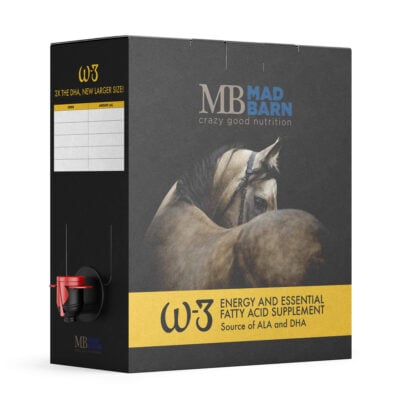
In addition to alfalfa hay, Cleveland Bays in heavy work can benefit from fat supplements to provide cool calories and help meet energy requirements. Fat is a superior energy source compared to grain-based concentrates for performance horses.
Feeding fats with higher levels of omega-3 fatty acids can also support health in these horses. The omega-3 DHA supports fertility in mares and stallions and may be beneficial for breeding programs focused on preserving this breed. [12][13]
Nutritional Supplements
When formulating a feeding program for your Cleveland Bay horse, the first priority is to balance the overall diet and meet all of your horse’s requirements for energy, protein, vitamins, and minerals. After balancing the diet, you can consider additional supplements to support your horse’s individual needs and performance goals.
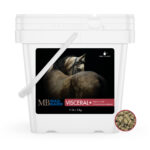
- Visceral+ is a comprehensive gut formula that helps to maintain stomach and hindgut health, and supports the immune system. Performance horses have a high prevalence of stomach issues and can benefit from added gut support to counteract the effects of their stressful lifestyle.
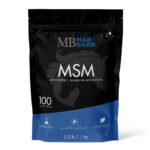
- MSM is a popular natural joint supplement that supports healthy connective tissue and mobility in horses. This supplement supports the synthesis of collagen in connective tissues and helps to maintain normal control of inflammatory processes.
- Natural E/Organic Se is a pelleted antioxidant supplement that contains natural vitamin E and selenium yeast in a highly bioavailable form. Exercising horses have higher requirements for vitamin E, and this supplement can help to support immune health, muscle function, and post-exercise care in performance horses.
Looking for personalized guidance on what to feed your Cleveland Bay horse? Submit their diet online for a free consultation with our experienced equine nutritionists to help you formulate a balanced diet.
Frequently Asked Questions
Here are some frequently asked questions about Cleveland Bay horses:
The Cleveland Bay is a rare English warmblood horse breed and the oldest native warmblood breed in England. Cleveland Bay horses originated in Yorkshire and descend from medieval Chapman pack horses. These horses were later refined for riding, driving, and carriage work. Today, Cleveland Bay horses are valued for their strength, soundness, and versatility, and they are also considered critically endangered.
The Cleveland Bay is considered endangered because the breed’s population became extremely small during the 20th century. Mechanization, the decline of cavalry horses, and wartime breeding losses sharply reduced Cleveland Bay numbers, and at one point only a few purebred stallions remained. Although conservation programs and careful pedigree management have helped protect the breed, the worldwide population is still very limited.
Cleveland Bay horses are known for their strength, stamina, soundness, and calm, sensible temperament. Historically, Cleveland Bay horses were prized as carriage and coach horses, and today they are also respected as reliable sport and driving horses. Their work ethic, durability, and willing attitude have helped them remain useful in both competition and recreational riding.
Cleveland Bay horses are large, powerful horses with balanced, athletic conformation. Most Cleveland Bay horses stand between 16 and 16.2 hands tall and have a broad chest, short back, muscular loins, sloping shoulders, and long quarters that support strong, ground-covering movement. They also have substantial bone, broad joints, and durable feet, which contribute to the breed’s reputation for soundness and longevity.
Cleveland Bay horses are always bay with black points. Their coats can range from bright bay to darker shades, but bay colouring is a defining breed trait and is required for registration. White markings are very limited, usually restricted to a small star or a few white hairs on the heel, while gray hairs in the mane or tail are considered a common breed characteristic.
Cleveland Bay horses are known for having a calm, intelligent, and cooperative temperament. Cleveland Bay horses were historically bred to be dependable, mannerly carriage horses, and those sensible traits are still associated with the breed today. They are often considered less reactive than hotter modern warmbloods, although temperament can still vary from one Cleveland Bay horse to another.
Cleveland Bay horses are used in driving, dressage, eventing, show jumping, and hunting. Cleveland Bay horses remain especially well known for driving, including ceremonial carriage work and competitive driving, and they are still associated with the British Royal Mews. Under saddle, their athleticism makes them useful in a range of English sport horse disciplines.
Cleveland Bay horses are generally hardy, but they are prone to health concerns linked to their small population and athletic use. Limited genetic diversity is one of the biggest long-term concerns for Cleveland Bay horses. The working Cleveland Bay horse may be prone to joint wear, arthritis, lameness, and tendon or ligament injuries. Gastric ulcers and other digestive issues can also affect Cleveland Bay horses, especially when they are under training or management stress.
Cleveland Bay horses do best on a forage-based diet built around hay or pasture. Most Cleveland Bay horses do not need grain unless they are in heavier work, and many maintain weight well on balanced forage alone. As forage may not supply all required vitamins and minerals, a concentrated vitamin and mineral supplement is often useful to balance the diet without adding excess starch or sugar.
Cleveland Bay horses were traditionally used for agricultural work, riding, and driving, and they later became especially popular as carriage horses. Today, Cleveland Bay horses are still used for driving in both recreation and competition, and they are also used in dressage, eventing, hunting, and other English sport horse activities. Their versatility is one of the main reasons the breed remains valued despite its rarity.
Most Cleveland Bay horses stand between 16 and 16.2 hands high. This height gives the Cleveland Bay horse a substantial, powerful appearance while still allowing them to move with athleticism and balance. Although they are taller and heavier than many light riding breeds, they remain well suited for carriage work, driving, and modern sport disciplines.
Cleveland Bay horses can be good for some beginners because they are generally known for being docile, sensible, and willing. Many Cleveland Bay horses are considered more suitable for timid riders than hotter warmblood breeds, which can make them appealing to less experienced owners. However, suitability still depends on the individual horse’s training, temperament, and management.
Summary
The Cleveland Bay is a rare English warmblood breed from Yorkshire, developed from medieval Chapman pack horses and maintained as a distinct closed-population breed for centuries. Known for uniform bay colour and suitability for driving and sport, the Cleveland Bay is critically endangered, with conservation focused on managing genetic diversity in a small global population.
- The breed originated in northeast England from Chapman-type pack horses and later selection for agricultural and coach-horse use, producing a powerful, versatile warmblood type
- Cleveland Bays are consistently bay with black points and limited white markings, and typically stand about 16–16.2 hands with strong bone and efficient, straight movement
- Historically used for farm work and carriage driving, they are still valued for driving and can perform in sport disciplines such as jumping, dressage, eventing, and hunting
- The breed experienced a severe mid-20th century bottleneck, and long-term conservation depends on careful pedigree management to limit inbreeding and preserve remaining lines
- Health concerns are largely those of athletic horses, including digestive issues and musculoskeletal wear, with risk influenced by workload, stress, and feeding practices
References
- Khanshour, A. et al. Genetic Characterization of Cleveland Bay Horse Breed. Diversity. 2019.
- Moore-Colyer, R. Aspects of Horse Breeding and the Supply of Horses in Victorian Britain. Ag Hist Rev. 1995.
- Dell, A. et al. 16 Years of breed management brings substantial improvement in population genetics of the endangered Cleveland Bay Horse. Ecol Evol. 2021.View Summary
- CBHSNA. Cleveland Bay Census March 2023. CBHSNA. 2023.
- Dell, A. et al. Genetic analysis of the endangered Cleveland Bay horse: A century of breeding characterised by pedigree and microsatellite data. PLoS One. 2020. View Summary
- Cayado, P. et al. Hormone response to training and competition in athletic horses. Equine Vet J. 2010. View Summary
- Malmkvist, J. et al. Behaviour and stress responses in horses with gastric ulceration. Appl Anim Behav Sci. 2012.
- Baccarin, R. et al. Osteoarthritis: a common disease that should be avoided in the athletic horse’s life. Anim Front. 2022.View Summary
- Carslake, H. et al. Equine metabolic syndrome in UK native ponies and cobs is highly prevalent with modifiable risk factors. Equine Vet J. 2020. View Summary
- Cipriano-Salazar, M. et al. The Dietary Components and Feeding Management as Options to Offset Digestive Disturbances in Horses. J Equine Vet Sci. 2019.
- Lybbert, T. et al. Feeding alfalfa hay to exercising horses reduces the severity of gastric squamous mucosal ulceration. Proceed AAEP. 2007.
- de Medeiros Ferrera, J.R. et al. Uterine Involution of Mares Supplemented with Dietary Algae-Derived Omega-3 Fatty Acids During the Peripartum Period. J Equine Vet Sci. 2021. View Summary
- Brinsko, S.P. et al. Effect of feeding a DHA-enriched nutriceutical on the quality of fresh, cooled and frozen stallion semen. Theriogenol. 2005. View Summary