English








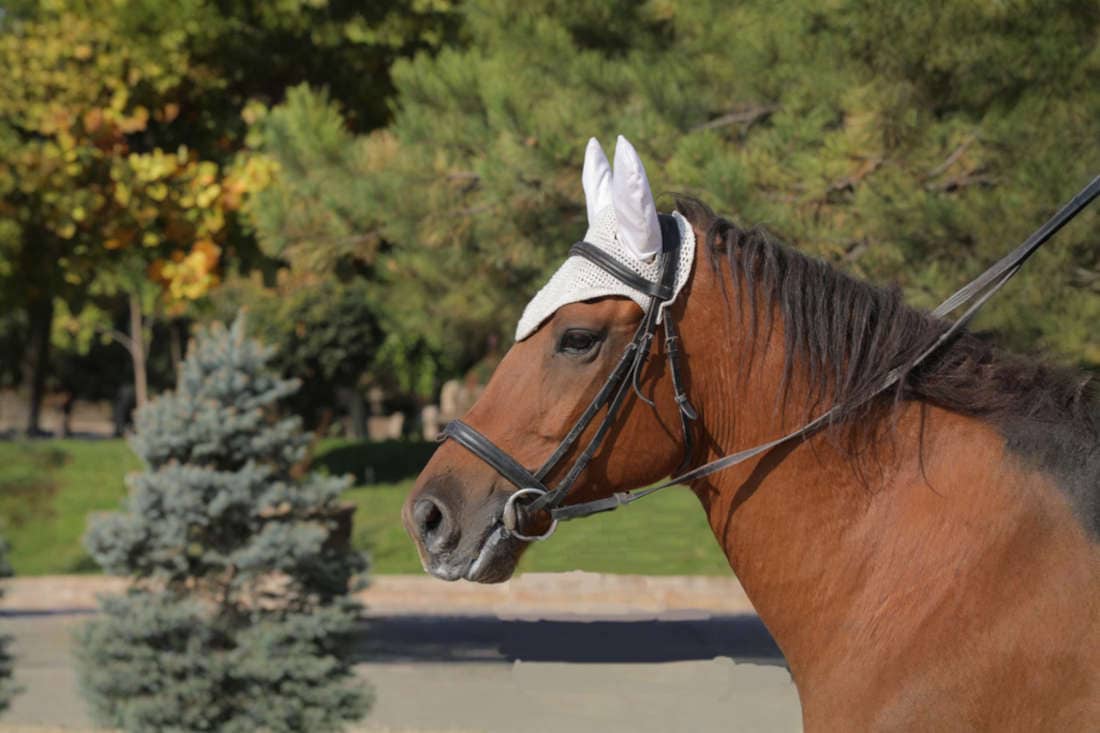
Ear bonnets for horses, also known as ear nets, are a common sight in show rings, schooling arenas, and everyday hacks. While they add a polished finishing touch to turnout, their purpose extends well beyond appearance.
Worn under the bridle, a horse bonnet covers the ears and rests smoothly across the forehead. This simple design can help reduce irritation from flies, soften environmental stimulation, and provide light protection from wind or debris.
For horses who are sensitive to insects, noise, or busy surroundings, this added comfort may translate into improved focus and a more relaxed ride.
At the same time, not every horse needs a bonnet. Understanding how they work, what benefits they can realistically offer, and how competition rules may apply can help you decide whether a bonnet can support your horse’s comfort or simply completes a look for show day.
Ear Bonnets for Horses
A horse ear bonnet, also called an ear net, is a piece of riding tack worn under the bridle that covers the horse’s ears to reduce fly irritation and soften environmental stimulation during exercise.
Bonnets are worn under the bridle, secured by the browband and crownpiece. They cover the ears while resting smoothly across the forehead. Most bonnets are made from crocheted cotton, mesh, or modern synthetic fabrics. Two fabric ear covers extend upward to enclose the ears, while the body lies flat on the horse’s forehead.
Although strongly associated with show-ring turnout, horse bonnets were originally developed for practical purposes — primarily to protect the ears from flies during riding. Today, they are also used to help reduce overstimulation in horses who are sensitive to noise, wind, or busy environments.
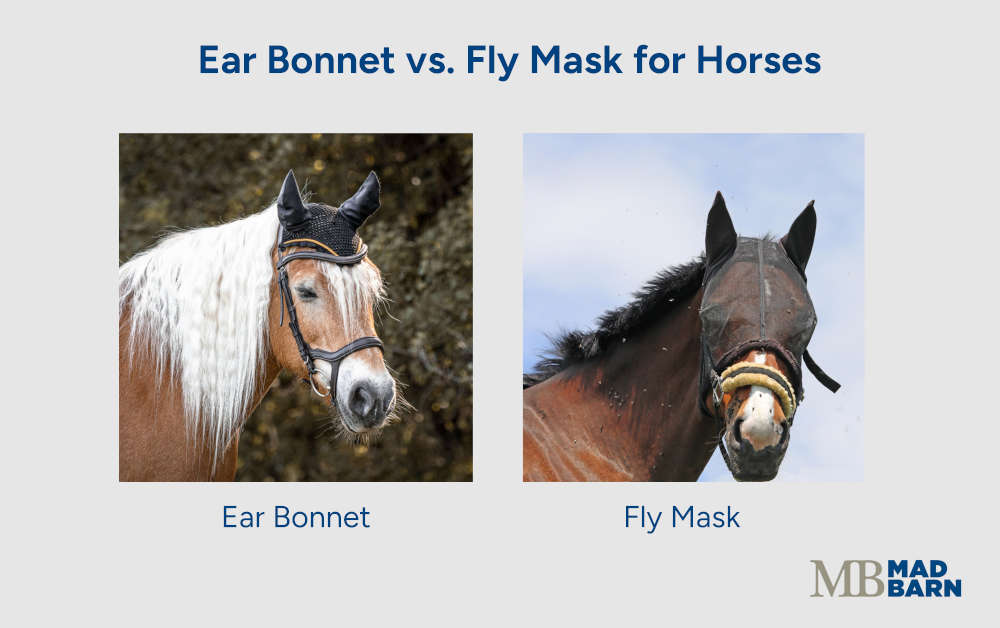
It’s important to distinguish a riding bonnet from a turnout fly mask. Fly masks are intended for extended pasture wear and protect the eyes and face. Bonnets, in contrast, are designed for use during exercise or competition.
Costs of Ear Bonnets
Across all styles, horse bonnets may incorporate a range of features, including moisture-wicking ear fabric, reinforced stitching, decorative trim, embroidery, or additional padding for sound dampening.
Materials, craftsmanship, and customization options vary widely, which is reflected in price. Basic crochet designs are often more affordable, while technical, all-weather, or specialty noise-reducing bonnets typically come at a higher cost.
Types of Ear Bonnets for Horses
Horse bonnets vary in construction, materials, and intended use. Selecting the right style depends on your riding environment, discipline, climate, and your horse’s individual sensitivity.
Crochet Bonnets
Traditional crochet bonnets are lightweight and breathable, making them a popular choice across many disciplines. The body is typically hand-crocheted from cotton yarn, with fabric ears attached for coverage.
In addition to providing mild fly protection, crochet bonnets are highly customizable. They can be made in virtually any color and often feature decorative trim, piping, contrast edging, or embroidery. Riders frequently coordinate them with saddle pads, barn colors, or team branding — particularly in hunter and dressage rings, where turnout and presentation are emphasized.
While valued for their classic appearance and airflow, crochet bonnets may be less durable than those made from other materials.
What's your top priority with your horse's health?

Enter your email to receive your store credit
All-Weather Bonnets
Modern horse bonnets increasingly use stretch mesh and performance fabrics designed for durability, flexibility, and moisture control. These lightweight, breathable materials allow airflow around the ears while helping prevent overheating during warm weather or more intense training sessions.
Compared to traditional crochet styles, synthetic sport fabrics often provide a closer, more secure fit and maintain their shape with repeated use and washing.
Many of these designs are built for year-round riding. All-weather bonnets balance breathability with slightly heavier construction to provide protection in variable conditions. In addition to fly control, they may offer added shielding from wind, light rain, or cooler temperatures while still allowing natural ear movement.
For riders prioritizing comfort, longevity, and versatility, all-weather ear nets offer a practical alternative to traditional crochet styles, especially for horses doing outdoor work in changing conditions.
Noise-Reducing Bonnets
Noise-reducing bonnets feature thicker, padded ear panels intended to soften sound intensity. Although sometimes marketed as “soundproof,” they do not eliminate noise entirely. Instead, they may help reduce sharp or sudden sounds in stimulating environments.
These bonnets are commonly used at competitions, clinics, or indoor venues where loudspeakers and crowd noise may overstimulate sensitive horses. Because rules vary by discipline, riders should confirm whether sound-dampening designs are permitted before competing. [1]
Table 1. Comparing types of horse ear bonnets
| Feature | Crochet Bonnets | All-Weather Bonnets | Noise-Reducing Bonnets |
|---|---|---|---|
| Primary Materials |
|
|
|
| Breathability |
|
|
|
| Primary Purpose |
|
|
|
| Durability |
|
|
|
| Fit & Structure |
|
|
|
| Weather Protection |
|
|
|
| Customization & Style |
|
|
|
| Best Suited For |
|
|
|
| Cost |
|
|
|
Uses for Horse Ear Bonnets
While often selected for presentation, horse bonnets can offer practical benefits when used appropriately. Ultimately, the best choice balances fit, comfort, durability, and intended use rather than appearance alone.
Fly & Insect Protection
The inside of a horse’s ear is thin-skinned and highly sensitive. Flies and gnats frequently target this area during warm weather, which can lead to head shaking, ear flicking, and distraction under saddle. [2][3]
A lightweight fly bonnet acts as a barrier, helping reduce insect irritation and allowing the horse to focus more comfortably during work.
Noise Reduction
Some bonnets are made with padded or thicker ear material designed to soften sound. They do not block noise entirely, but they may reduce the intensity of sharp or sudden sounds in stimulating environments such as competitions, indoor arenas, or crowded warm-up rings. [1]
For horses that are easily overstimulated, even mild sound reduction can contribute to a calmer ride. [1][4]
Wind & Debris Protection
Wind moving through the ears can irritate some horses, particularly in open, exposed, or dusty conditions. During strong gusts, airborne debris such as sand, arena footing, chaff, or small particles may enter the ear canal, which can be distracting and even painful.
Horses sensitive to wind or blowing debris may toss their heads, pin their ears, or show signs of agitation.
A well-fitted bonnet may provide light protection by buffering direct airflow and helping reduce the amount of debris that reaches the ears. While not designed to seal or fully block environmental elements, bonnets can support comfort and focus during outdoor rides in windy or variable conditions.
Improved Focus
When irritation from insects, wind, debris, or noise is reduced, some horses demonstrate improved relaxation and steadiness under saddle. By minimizing minor but persistent distractions around the ears, a bonnet may help certain horses settle more quickly into their work and maintain more consistent contact and rhythm.
That said, a bonnet does not address the root causes of behavioral tension. It is not a substitute for appropriate training, management, or veterinary evaluation. If a horse continues to display reactivity, signs of pain, or resistance, work with your veterinarian to rule out any underlying medical causes.
Do Bonnets Help With Head Shaking?
Headshaking in horses refers to repetitive, often sudden movements of the head and neck. It can range from mild tossing during certain conditions to more persistent, forceful jerking that interferes with performance. In some cases, horses may also rub their nose, snort, or appear unusually sensitive around the face.
When head shaking is triggered by external irritation, a horse bonnet may help by creating a barrier that reduces insect contact.
Horses that react to wind entering the ears may also show improvement when that stimulation is minimized. In these situations, a bonnet can reduce environmental triggers and improve comfort under saddle. [5][6]
However, ongoing or severe head shaking is often more complex. Underlying causes may include: [7][8][9]
- Dental issues
- Ear infections
- Allergies
- Bridle or bit fit issues
- Trigeminal-mediated headshaking
In these cases, a bonnet may reduce irritation, but does not resolve the root cause. If head shaking persists despite environmental adjustments, veterinary evaluation is recommended.
Ear Bonnets in Competition
In many English equestrian disciplines, horse bonnets are permitted in competition. However, rules vary depending on the governing body, discipline, and competition level.
In hunter, jumper, and dressage competitions, traditional crochet bonnets are commonly allowed and widely used for both presentation and fly protection. They are often coordinated with saddle pads and stable colors to create a polished turnout.
Noise-reducing or sound-dampening bonnets may be subject to additional restrictions. Some organizations allow them only in certain phases (such as warm-up) or require steward approval. Others prohibit padded or sound-modifying designs altogether, particularly if they are considered a competitive advantage.
Eventing rules may differ by phase. For example, bonnets are often permitted in show jumping and dressage phases, while cross-country regulations may be more specific about equipment modifications.
Breed shows and discipline-specific associations each have detailed tack regulations that are periodically updated. Because these rules can change, it is important to review the current rulebook for your governing organization before competing.

How to Fit a Horse Ear Bonnet
Even the highest-quality horse bonnet can cause problems if it does not fit correctly. A properly fitted bonnet should sit smoothly beneath the bridle without pulling the ears forward or compressing them.
The ear fabric should fully cover the ears while allowing natural movement. The body of the bonnet should lie flat across the forehead without bunching or slipping.
Signs of poor fit may include:
- Frequent head shaking after the bonnet is applied
- Ears pinned or held unnaturally stiff
- Rubbing or hair loss at the base of the ears
- The bonnet shifting during work
- Visible tension when bridling
Poll sensitivity is another consideration. Extra material beneath the bridle may increase pressure in horses who are already sensitive in this area. Checking the ears and poll after each ride helps catch small issues before they become persistent irritation.
How to Decide if Your Horse Needs an Ear Bonnet
Horses rely on hearing as part of an integrated sensory system that includes sight, touch, and spatial awareness. While horse bonnets can help reduce irritation from flies or soften environmental stimulation, they should not significantly interfere with natural sensory function. [10]
It’s also important to recognize that ear position and movement are key components of equine body language. Horses use their ears to express attention, tension, relaxation, and discomfort. A properly fitted bonnet should allow natural ear movement rather than holding the ears rigidly in one position.
If a bonnet appears to restrict ear mobility, causes rubbing, or increases tension, it may not be the right choice for that horse. As with any piece of tack, the goal should be improved comfort rather than forcing compliance or cosmetic presentation.
A horse bonnet is most appropriate when it clearly enhances your horse’s comfort under saddle. During fly season, it can help reduce irritation from insects targeting the ears.
In busy settings, it may soften environmental stimulation for horses that are sensitive to noise or activity. In windy or dusty conditions, it can provide light protection that helps some horses remain more settled.
That said, not every horse benefits from wearing an ear net. If your horse works calmly and consistently without signs of irritation or distraction, adding a bonnet may not provide meaningful improvement. The decision should be based on your horse’s individual response rather than routine or appearance.
When introducing a bonnet, observe carefully. If your horse shows improved relaxation, steadier focus, and natural ear movement, it’s likely supporting comfort. If you notice increased tension, resistance during bridling, or new head shaking, it may not be necessary.
Alternatives to Ear Bonnets
Ear bonnets can help reduce irritation from insects, wind, or noise, but they are not the only option. Depending on the horse’s sensitivity and the riding environment, alternative or complementary strategies may provide more targeted protection and support overall comfort.
Ear Plugs
For horses who are particularly sensitive to noise, ear plugs may provide greater sound reduction than a bonnet alone. Unlike padded ear nets, ear plugs are inserted into or at the opening of the ear canal and reduce the amount of sound entering the ear. [11]
Ear plugs can be helpful in loud environments such as indoor arenas, busy competitions, and during activities like clipping or transport. In some cases, ear plugs are used together with a bonnet, which can help keep them secure while providing additional soundproofing. [1]
Because ear plugs are more invasive than bonnets, not all horses tolerate them comfortably. They should be introduced gradually, fitted correctly, and used in accordance with competition regulations. As with bonnets, ear plugs should never be relied upon to mask pain, anxiety, or unresolved training issues. [10]
Fly Masks & Insect Control
In environments with heavy insect pressure, additional fly management strategies may be necessary. Fly masks with full ear coverage can offer more comprehensive protection during pasture turnout than a riding bonnet alone. Stable fans, proper manure management, and fly control programs may also help reduce insect populations around barns and arenas.
For horses that are particularly reactive to flies around the ears, combining environmental management with protective gear may improve comfort. However, persistent head shaking or ear irritation should be evaluated to rule out skin sensitivity, mites, allergies, or other medical concerns.
Environmental Management
For horses that react strongly to wind exposure, adjusting the riding environment may be as important as equipment choice. Selecting sheltered arenas, riding during calmer parts of the day, or avoiding especially dusty conditions can reduce irritation from airflow and airborne debris.
In particularly windy climates, some riders opt for snug-fitting technical bonnets designed to buffer airflow more effectively than traditional crochet styles.
Even so, if wind sensitivity is extreme or accompanied by discomfort, underlying causes such as ear inflammation or environmental allergies should be considered rather than relying solely on protective gear.
Frequently Asked Questions
Here are some frequently asked questions about ear bonnets for horses:
Horse ear bonnets are worn under the bridle to cover the ears during riding. They help protect against flies, reduce environmental irritation, and improve comfort for sensitive horses. While often used in competition, their primary purpose is functional rather than decorative.
No, many horses work comfortably without an ear bonnet. They are most useful for horses that are irritated by flies, sensitive to environmental stimulation, or distracted in busy settings.
Some horse ear bonnets, especially padded or noise-reducing designs, can soften sound. They do not block noise completely but may reduce sharp or sudden sounds in busy environments. Standard crochet bonnets offer minimal noise reduction.
Horse ear bonnets may help if head shaking is caused by flies or wind irritating the ears. However, persistent head shaking often has medical causes that require veterinary evaluation. A bonnet can manage mild environmental triggers but is not a cure.
Horse ear bonnets are allowed in many disciplines, but not all competitions permit them. Some organizations restrict noise-reducing styles. Always check your local competition rules before using a bonnet in the show ring.
An ear bonnet should sit smoothly under the bridle without pulling the ears forward or compressing them. The ear fabric should fully cover the ears while allowing natural movement, and the body should lie flat across the forehead without bunching or slipping.
Yes, if an ear bonnet does not fit properly, it can cause rubbing, pressure, or tension. A correct fit should allow natural ear movement and sit smoothly under the bridle.
Horse ear bonnets are designed for riding and short-term use, not continuous wear. They should be removed after exercise to allow the ears to breathe and to prevent rubbing or moisture buildup.
A horse ear bonnet is worn under the bridle during riding to cover the ears, while a fly mask is designed for turnout and protects the eyes and face during pasture wear.
Summary
Horse ear bonnets, also called ear nets, are worn under the bridle to cover the ears and are designed to improve comfort during riding rather than just enhance appearance.
- They can help reduce irritation from flies, soften environmental stimulation, and provide light protection from wind and debris, which may improve focus in sensitive horses
- Bonnets come in several styles, including traditional crochet, technical or all-weather designs, and noise-reducing versions, with materials, features, and cost varying widely
- Proper fit is essential. A bonnet should allow natural ear movement, sit smoothly under the bridle, and not cause rubbing, pressure, or tension
- Ear plugs may offer stronger noise reduction than bonnets, but they are more invasive and should be introduced carefully and used according to competition rules
- A horse bonnet may help with mild, environmentally triggered head shaking, but persistent or severe head shaking requires veterinary evaluation rather than equipment changes alone
References
- Hole. C. et al. Equine Behavioural and Physiological Responses to Auditory Stimuli in the Presence and Absence of Noise-Damping Ear Covers. Animals. publisher. 2023. View Summary
- Söderroos. D. et al. The Effect of Insect Bite Hypersensitivity on Movement Activity and Behaviour of the Horse. Animals. 2023. View Summary
- Cox. A. and Stewart. A. J. Insect Bite Hypersensitivity in Horses: Causes, Diagnosis, Scoring and New Therapies. Animals. 2023. View Summary
- Riva. M. G. et al. The Impact of Noise Anxiety on Behavior and Welfare of Horses from UK and US Owner's Perspective. Animals. 2022. View Summary
- Stange. L. M. et al. Comparison of the Current Situation of Equine Headshaking Syndrome in France and Switzerland Based on an Online Survey. Animals. 2022. View Summary
- Górecka. A. and Jezierski. T. Protective Behaviour of Konik Horses in Response to Insect Harassment. Animal Welfare. 2007.
- Bell. T. et al. Equine Headshaking Syndrome: Triggers, Seasonality, and Treatment Efficacy in Australia. Animals. 2024. View Summary
- Roberts. V. Trigeminal-Mediated Headshaking in Horses: Prevalence, Impact, and Management Strategies. Veterinary Medicine : Research and Reports. 2019. View Summary
- Thomson. K. et al. Head Tossing Behaviour in Six Horses: Trigeminal-Mediated Head-Shaking or Musculoskeletal Pain?. Equine Veterinary Education. 2020.
- Uldahl. M. and Mellor. D. J. Regulatory Integrity and Welfare in Horse Sport: A Constructively Critical Perspective. Animals. 2025. View Summary
- MacFarlane. P. D. et al. Preliminary Investigation into the Effects of Earplugs on Sound Transmission in the Equine Ear:. Pferdeheilkunde Equine Medicine. 2010.