English






![Polo on Horseback: History, Competition & Rules – [Equestrian Sport]](/wp-content/uploads/2024/11/polo-and-polocrosse-equestrian-discipline-guide.jpg)
Polo, often hailed as “the sport of kings,” is a field game played on horseback that emphasizes speed, strategy, and equestrian skill. Originating centuries ago, polo involves two teams of four riders each striving to direct a small ball into the opposing side’s goal using long-handled mallets.
Success in polo demands precise coordination among teammates, exceptional horsemanship, and the use of highly trained polo ponies. Selected for their agility, stamina, and temperament, these horses are trained to ensure they can accelerate rapidly, execute sharp turns, and maintain balance and responsiveness under varying field conditions.
From the lush fields of Argentina to elite clubs around the world, polo continues to inspire both players and fans alike. In this article, we explore the rules, history, and global appeal of polo, while offering insights into the horses and events that make this equestrian sport truly unique.
Whether you’re a seasoned player or a curious newcomer, continue reading to learn what makes polo a timeless and exhilarating equestrian sport.
History of Polo
Polo’s origins date back to ancient times, and it has since developed into a popular modern sport, recognized worldwide. Its earliest form is believed to have emerged from cavalry training exercises designed to prepare soldiers and horses for mounted combat. [1]
Originating in Central Asia, polo gained popularity among noble classes, particularly in Persia, and spread through the Middle East, China, and India. In the 19th century, British tea planters in Manipur, India, introduced the game to British military personnel, and the first formal match in England took place in 1869. [1][2]
By 1876, polo had reached the United States, becoming an integral part of upper-class sporting life. Argentina, which adopted polo in 1875, transformed it into a national passion. [1][2]
The sport’s southern expansion also brought it to South America and the Antipodes. Argentina’s favorable conditions—abundant pastureland, a strong equestrian tradition, and suitable horse breeds—helped establish the nation as a global polo leader. [2][3]
Reflecting its international appeal, polo was included in the Summer Olympic Games from 1900 to 1936.
What's your top priority with your horse's health?

Enter your email to receive your store credit
Polo Sport Organizations
As with other equestrian disciplines, a central international governing body oversees the regulation and promotion of polo at the highest levels of competition. Individual nations maintain their own organizations and are responsible for enforcing standards, training players, and fielding teams for international events.
Federation of International Polo
The Federation of International Polo (FIP) was founded in 1980 to serve as the global governing body for the sport. FIP ensures that fair play, consistent rules, and high standards of sportsmanship are maintained in polo competitions worldwide. [4]
National Organizations
Individual countries manage their own governing bodies for polo, each contributing to the international competitive landscape under FIP’s regulatory framework. Some notable national associations include: [5][6][7][8][9]
- United States Polo Association (USPA): Established in 1890, the USPA standardized rules and established handicaps so teams could compete evenly. The sport gained prominence in the U.S. during the 20th century, attracting participation from President Theodore Roosevelt and other influential figures.
- Polo Canada: After polo was removed from the Olympic program after the 1936 games, Canadian polo players established Polo Canada as their national governing body to promote the sport. Canada’s diverse terrains, climates, and regional differences pose unique challenges for standardizing and administering the game.
- Hurlingham Polo Association (HPA): The HPA is the polo association for the UK, Ireland, and other British colonies worldwide. In addition to setting rules and handicaps, the organization’s mission is to further the interests of polo and support its subsidiary members.
- Indian Polo Association (IPA): Established in 1892, the IPA governs polo in India. Under this association, the famous Jaipur team set one of the greatest polo records of all time by winning every open tournament in the Britain and Indian Open Championship in 1933.
- Argentine Polo Association (APA): Established in 1922, the APA promotes polo in Argentina, which has become a global center for the sport. The association sets handicaps, maintains the official rules, and organizes tournaments, helping to solidify Argentina’s leadership in international polo.
Rules & Game Play
Polo is played by two opposing teams, each typically consisting of four players mounted on horseback. The primary objective is to strike a small, solid ball using a long-handled mallet and drive it through the opposing team’s goalposts to score. The match is won by the team with the most goals at the end of play. [2][4]
Handicaps are assigned to players by their national federation, ranging from -4 for inexperienced individuals to 10 for the most skilled. A team’s combined handicap determines whether it competes in low, medium, or high goal matches. This system helps balance the level of play, ensuring competitive fairness. [2][4]
Each match is divided into six to eight periods, known as chukkers, each lasting about seven and a half minutes of active play. Players switch ends following each goal to compensate for field conditions and any weather-related advantages. There is no vertical scoring limit; goals can be made at any height. [2][4]
Players frequently rotate through multiple ponies during a match, switching mounts between chukkers or even mid-chukker if necessary. Fresh, well-conditioned horses help maintain the sport’s fast pace and dynamic action.
The line of the ball is a central concept in polo. This imaginary line traces the ball’s trajectory, and players must respect it to prevent dangerous encounters. Crossing another player’s line at close range is prohibited, and infractions can result in penalties that may include free hits or repositioning of the ball. [2][4]
To minimize collisions and maintain safe play, all players must also wield their mallets with their right hand.
Officiating duties are carried out by mounted referees and a third official located at the sidelines. They enforce rules that promote safety and sportsmanship, intervening when a player’s actions could endanger horses or other participants. [2][4][10]
Training
Polo requires specifically prepared horses to perform in fast-paced, high-contact environments. The training regimen focuses on developing agility, responsiveness, and endurance to meet the unique demands of the game.
Polo ponies must learn to “neck rein,” following subtle rider cues with minimal direct rein contact, and master rapid accelerations, sudden stops, and sharp turns.
In addition to honing these skills, polo ponies are conditioned to tolerate close physical proximity with other horses under saddle. This allows players to “ride-off” opponents, using controlled nudges to gain advantageous positions, without startling or distressing the animal. [2]
Safety
A number of safety practices are enforced to protect horses and players on the field: [11]
- Hydration and recovery: Adequate hydration and proper recovery routines are essential. Horses rest and cool down between chukkas, allowing their heart rate to stabilize after intense exertion.
- Leg protection: Horses wear boots and wraps on their legs to protect against impacts from sticks, balls, or collisions with other horses.
- Mane and tail care: Manes are trimmed or braided, and tails are often tied to prevent interference and reduce the risk of entanglement with riding equipment, ensuring unobstructed handling of mallets or rackets.

Equipment
The equipment used in polo is specifically designed to meet the sport’s demanding conditions, safeguarding both horse and rider. This gear emphasizes stability, reduces the risk of injury, and includes essential protective items such as helmets, leg wraps, and boots to ensure that participants can perform safely and effectively.
Horse Tack & Grooming
Polo horses are fitted with equipment designed for safety and rider-to-rider interactions. Polo teams use distinctive saddles with a surcingle to ensure stability, particularly when the rider is leaning to one side to make a play. Most polo ponies are fitted with martingales to facilitate rapid changes in direction and neck reining.
Most polo horses have their manes clipped, and tails braided to prevent interference with the mallet.
Each horse wears protective wraps and boots to safeguard their legs against impact from sticks or the ball. Horses can also wear hoof boots for additional protection. [10]
Rider Attire
Polo riders usually wear a collared polo shirt in their team colors with their player number embroidered on the back. Most players wear breeches and flexible riding boots to facilitate reaching and flexion in the saddle.
Each player carries a mallet during play which is used to strike the ball. Mallets can vary in length based on player preference and horse size. Helmets, gloves, and knee guards are mandatory for players. [10]
Polo Horses
Horses selected for polo are commonly Thoroughbreds or Anglo-Arabians, as these breeds combine the speed, agility, and endurance necessary for the sport’s demanding pace. [11]
Despite traditionally being called “ponies,” polo mounts often measure around 15 to 16 hands in height, well above the typical pony classification. The term “pony” is more a reference to their role and type in polo rather than their stature.
Polo involves high-energy play and close proximity to other horses. Ideal polo ponies must remain calm, balanced, and responsive in high-pressure situations, maintaining focus while accelerating quickly, performing tight turns, and working closely with other horses and riders.
Managing Polo Ponies
Given the intensity of polo training and matches, participating horses are prone to certain health conditions, particularly those affecting the musculoskeletal and respiratory systems. Key health considerations include: [2][12][13]
- Exercise-induced pulmonary hemorrhage (EIPH): Common in high-intensity sports, EIPH occurs when blood vessels in the lungs rupture under physical strain, leading to traces of blood in the horse’s airways. While not usually life-threatening, EIPH may indicate an underlying issue such as inflammatory airway disease.
- Myositis and rhabdomyolysis: Due to the intense and repetitive muscle exertion in polo, horses are susceptible to muscle stiffness and inflammation, known as myositis or rhabdomyolysis (tying up). Proper warm-up, cool-down, and muscle care can mitigate these risks, but management is essential for maintaining muscle health throughout the season.
- Leg and joint injuries: Polo involves rapid directional changes that can strain the horse’s joints and ligaments. The physical impact of riding-off opponents, pivoting, and abrupt stops puts horses at a high risk for joint inflammation, ligament tears, and tendon strains.
Polo horses require consistent care to maintain their health while participating in this intense sport. Regular farrier care, veterinary visits, and proper nutrition are all important parts of ensuring a horse’s well-being.
Nutrition for Polo Horses
Thoroughbred and Anglo-Arabian horses dominate polo globally. Both are considered thrifty or “hard keeper” breeds and may have difficulty maintaining adequate body condition when in heavy work.
Providing a forage-based diet with high-quality hay should meet most polo ponies’ energy and protein needs. Alfalfa is an energy-dense legume hay that can be mixed with grass forage to increase the calorie and protein content of the diet.
If your horse has difficulty maintaining weight on hay alone, consider adding fat supplements or a high-fiber energy source like soaked beet pulp or soy hulls. Avoid feeding large amounts of grain-based commercial feeds with high sugar and starch levels. Overfeeding sugar and starch can contribute to gut issues, metabolic concerns and hyperreactivity or “hot” behavior.
Once your polo horse’s energy and protein needs are met, ensure their diet is balanced with adequate vitamins and minerals. Working polo horses also require sufficient amounts of the amino acids lysine, methionine and threonine to support recovery between matches.
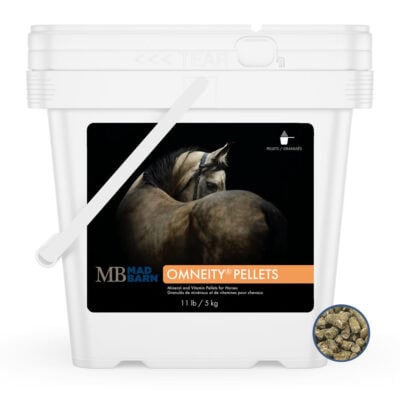
Mad Barn’s Omneity® Pellets is a complete vitamin and mineral supplement formulated with additional amino acids to keep polo ponies on top of their game. Omneity® also provides 100% organic trace minerals, full B-vitamin fortification, yeast and digestive enzymes to support athletic performance, hoof health, and post-exercise care.
In addition, all horses need free-choice access to loose salt and abundant fresh water, particularly following training or competition sessions. During periods of intense exertion, horses lose key electrolytes through sweat.
Providing appropriate electrolyte supplements helps replenish these vital minerals, supporting proper hydration, muscle function, and overall recovery.
For further guidance on optimizing a polo pony’s diet, read our complete guide on How to Feed a High Performance Horse for Training & Competition.
If you want to confirm that your polo horses are receiving the proper nutrition, book a free consultation with our qualified equine nutritionists. They can create a customized feeding regimen to support the health and performance of your entire team.
Frequently Asked Questions
Here are some frequently asked questions about the sport of polo:
Polo is a team sport played on horseback. Two teams of four players each use long-handled mallets to hit a small ball through the opposing team’s goalposts. The game is played in timed periods called chukkers, and the team with the most goals at the end wins.
Polo horses, often called polo ponies, are agile, fast, and have quick reactions. They're usually not actual ponies but full-sized horses, often standing between 15 and 16 hands tall. The primary breeds used are Thoroughbreds, Argentine Criollo Crosses and Anglo-Arabians. [11]
Polo ponies typically have their manes shaved to prevent interference with the rider's reins and hands during play. In polo, quick, precise movements are essential, and any snagging or tangling of the reins in the mane can be a distraction or a hazard. This grooming practice is paired with other management strategies, like keeping the tail braided or tied, to minimize distractions and ensure both rider and pony can perform at their best. [11]
A standard polo match consists of six to eight chukkers, each lasting about seven and a half minutes of active play. There are short breaks between chukkers to allow riders to switch horses and for both horses and players to rest.
To reduce the risk of collisions and maintain safe play, international rules mandate that all players use their mallets in their right hand. This creates consistent traffic patterns, helping prevent dangerous encounters.
Players typically change horses between chukkers, and sometimes even during a chukker, to ensure that their mounts remain fresh and can sustain the game’s intense pace. Each player may use several horses throughout a single match.
Both polo and polocrosse are team field sports played on horseback with the goal of shooting a ball through the opposing team's goalposts to score points. Polocrosse is a variation of polo that uses a netted racquet, as in the human sport of lacrosse, while polo is played with mallets used to strike the ball to make progress down the field. Polocrosse is played on a smaller field than polo, and has fewer players on the field during gameplay. Polocrosse also requires the players and horses to rotate positions, while polo positions remain the same throughout gameplay. [4][11]
Many clubs worldwide offer lessons, coaching programs, and opportunities to practice riding and stick-and-ball skills. Beginners typically start with basic riding lessons and build up to controlling a mallet and playing in practice chukkers under professional instruction.
Summary
Polo is a dynamic equestrian sport that demands strategic teamwork, exceptional horsemanship, and careful management of highly trained horses to excel on the field.
Polo is a unique equestrian sport rooted in tradition, athleticism, and skill. The goal of polo is to shoot a ball through the goalposts of an opposing team to earn points.
- Polo originated from ancient cavalry exercises and spread globally, becoming a recognized and culturally significant sport played worldwide.
- The game involves two teams of four riders using mallets to hit a ball through the opposing team’s goal; skilled players respect the “line of the ball” and must play right-handed for safety.
- Polo ponies, often Thoroughbreds or Anglo-Arabians, are trained for agility, speed, responsiveness, and composure under high-contact, fast-paced conditions.
- Player and horse welfare are prioritized through enforced rules, specialized equipment, safety protocols, and proper conditioning routines.
- Nutrition, hydration, and electrolyte replenishment are critical for maintaining peak equine performance, with a balanced diet and professional nutritionist guidance helping to ensure competition-readiness.
References
- History of Polo. Museum of Polo and Hall of Fame. 2024.
- Kaneps. A. J. et al., Eds., Equine Sports Medicine and Surgery: Basic and Clinical Sciences of the Equine Athlete. Second edition. Saunders/Elsevier, Edinburgh. 2014.
- Merlini. V. L., A Case Study of the Equestrian Sport of Polo: An integrative approach to issues of structure, function, and interaction. University of Connecticut. 2004.
- About Us - FIP . Federation of International Polo. 2021.
- About USPA. United States Polo Association. 2024.
- History. Polo Canada.
- The Association. Hurlingham Polo Association. 2024.
- History of IPA – Galloping Through Time. Indian Polo Association.
- The Association. Argentine Polo Association. 2024.
- Rules. Federation of International Polo. 2021.
- PoloHUB, The Role of The Horse in Polo: A Closer Look. Medium. 2023.
- Schumacher. A. and Gehlen. H., Health of Polo Horses. Animals. Multidisciplinary Digital Publishing Institute. 2024. View Summary
- Lascola. K. M., Exercise-Induced Pulmonary Hemorrhage in Horses. Merck Veterinary Manual. 2023.