English

The Thoroughbred is one of the most popular horse breeds in the United States, known for its speed, heart, and athleticism. Some Thoroughbreds are so iconic that their legacy endures decades, even centuries later, leaving a lasting mark on history.
Many of the most renowned Thoroughbreds in American history gained fame as racehorses, having been selectively bred for racing since the 17th century.
However, the remarkable versatility of off-the-track Thoroughbreds (OTTBs) has also earned them recognition in second careers, from Olympic showjumping and eventing to companionship and beyond.
Continue reading to discover more about the most famous American Thoroughbreds, and what made them so extraordinary that they secured their place in history forever.
Famous Thoroughbreds
The Thoroughbred breed originated in England during the late 1600s and early 1700s, primarily through the influence of three stallions from the Middle East: [1]
- Godolphin Arabian – An influential stallion, likely of Barb or Arabian descent, brought to England in the 1720s
- Byerly Turk – A Turkoman or Arabian stallion captured during the Battle of Buda in 1686 and later brought to England
- Darley Arabian – A purebred bay Arabian stallion imported to England from Syria in 1704 by Thomas Darley
These horses became known as the foundation stallions for the Thoroughbred breed. When crossed with English mares, the offspring of these horses first became known as the “thro-bred,” forming the foundation of modern Thoroughbred racing bloodlines. [1]
The early Thoroughbreds were prized for their ability to maintain high speeds over long distances, making them ideal racehorses from the outset.
American Racehorses
While many Thoroughbreds have gained fame throughout the years, a select few have distinguished themselves as true legends in the history of horse racing.
Secretariat
It should come as no surprise that Secretariat is widely regarded as the most famous racehorse in history.
Nicknamed “Big Red,” Secretariat has been a household name since the 1970s. [2][3] With his heartwarming underdog story, Secretariat rose to fame due to his incredible speed and dominance.
At the height of his career, Secretariat was hailed as one of the fastest horses in history, setting a world record for the 1 1/8 miles with a time of 1:45 2/5. His racing career spanned 21 starts, with an impressive record of 16 wins, 3 seconds, and 1 third, accumulating total earnings of $1,316,808. [2][3]

Statue of Secretariat, Ashland Virginia
By the time he captured the Triple Crown in 1973, Secretariat had already won the hearts of fans across the globe. He became the ninth horse in history to achieve this feat and the first in 25 years to do so. [2][3]
More impressively, he set records in all three races — the Kentucky Derby, the Preakness Stakes, and the Belmont Stakes — a feat still unparalleled today. [4]
Secretariat’s legacy continues to inspire, even decades later. In 2003, Disney released a film celebrating Big Red’s extraordinary journey, and his story remains a source of inspiration for young equestrians worldwide. [5]
Man O’ War
Years before Secretariat was born, Man O’ War from Lexington, Kentucky made an unforgettable impact on the world of Thoroughbred racing over the course of his two-year career.
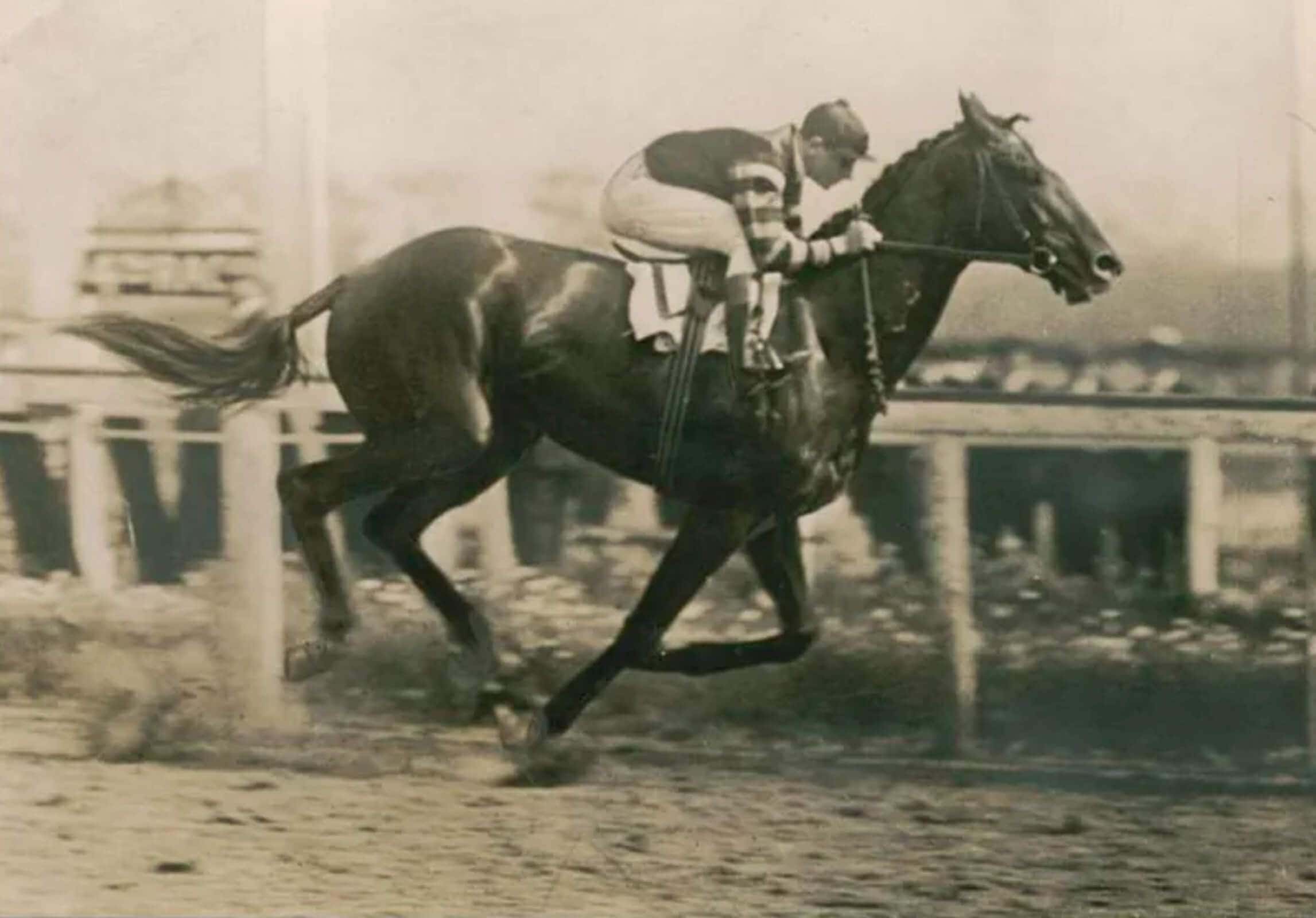
In 1920, Man O’ War won all 11 of his starts. By the time he retired, he had amassed earnings of $249,465 and secured 20 wins out of 21 starts. However, his sole loss remains one of the most talked-about performances in racing history, and is still a subject of debate and controversy.
Man O’ War’s career was nothing short of remarkable. He set two American records, seven track records, and three world records. [7]
His fame extended far beyond the racetrack, and even after his passing in 1947, his legacy continued. As a prominent stallion, Man O’ War’s influence on the breed can still be seen today.
In honor of this legendary horse, a 17-mile road named “Man O’ War Boulevard” now circles Lexington, Kentucky. [8]
Native Dancer
If you look at even just a handful of today’s Thoroughbred pedigrees, you’re likely to find Native Dancer somewhere in their lineage.

Before becoming a prominent stallion, Native Dancer was renowned as one of the greatest racehorses of all time. Born in 1950 with an impressive pedigree, he won the Youthful Stakes by six lengths only four days after breaking his maiden. [10]
He also came just shy of a Triple Crown, finishing second by a head in the Kentucky Derby. Despite his narrow loss, Native Dancer had already won the hearts of American fans, earning widespread fame that even landed him on the cover of Time magazine. [10]
Known as the “Gray Ghost,” Native Dancer won 21 of his 22 starts, becoming Thoroughbred racing’s first television superstar. By the time he retired to stud, he had earned $785,240. [10]
As a stud horse, Native Dancer sired 44 stakes winners, including 1966 Kentucky Derby winner Kauai King. His influence on the Thoroughbred breed continued through his notable descendants, including Mr. Prospector and Northern Dancer, who became two of the most significant sires of the 20th century. [10]
American Pharoah
American Pharoah made history by becoming the 12th horse to win the Triple Crown.
However, it wasn’t just his win that made him famous. He was also the first horse since 1977 to claim the Triple Crown, breaking what many considered a 37-year long “curse.” [11]
His journey to fame began with an underdog story, as his 2014 racing debut at Del Mar was a disaster. According to his trainer, Bob Baffert, everything went wrong; American Pharoah was unsettled by the crowd and couldn’t relax. After discovering his noise sensitivity, Baffert introduced earplugs, and American Pharoah became a completely different horse. [11]
He won his next race, the Grade 1 Del Mar Futurity, by 4 ¾ lengths and went on to rack up victories, including earning the Eclipse Award for Champion 2-Year-Old Male. [11]
His love for running, combined with his power and newfound calm, led him to more major wins. He entered the 2015 Kentucky Derby as the favorite and won, followed by a dominant seven-length victory in the Preakness on a sloppy track, with a record crowd of 131,680 people. [11]
At Belmont Park, American Pharoah officially broke the 37-year-long wait for a new Triple Crown winner in a 5 ½ length victory. He finished his career with a 9-1-0 record from 11 starts and lifetime earnings of $8,650,300. [11]
What's your top priority with your horse's health?

What's your top priority with your horse's health?
Olympic Legends
The Olympics are where world-class equestrians and their horses make history. Thoroughbreds are natural athletes and have a strong presence in events like show jumping and eventing.
Touch of Class
Touch of Class is regarded as one of show jumping’s greatest Thoroughbred mares and is an inductee into the Show Jumping Hall of Fame.
Originally registered with the Jockey Club under the name Stillaspil, this off the track Thoroughbred had an unsuccessful racing career, with six starts and no wins, before retiring. [12]
Initially overlooked by many professional show jumping riders, she caught the eye of Joe Fargis, who recognized her potential as a jumper despite having struggles on the hunter circuit. [12]
In her first year at the Grand Prix level in 1981, Touch of Class won several titles. She then qualified for the FEI World Show Jumping Championships in Dublin and earned a spot on the United States Equestrian Team (USET) with Fargis riding. [13]
Her defining moment came at the 1984 Los Angeles Olympics, where she and Fargis won team and individual gold medals in show jumping. Affectionately known as “Kitty” around the barn, her victory marked a historic moment in American equestrian history, as it was the first and only time the USA has won a gold medal in Olympic equestrian sport. [14]
Touch of Class went on to be named the first non-human US Olympics Committee Female Equestrian Athlete of the year. She also represented the United States on the Nations Cup team, winning in Rome, Calgary, Aachen, Washington, and New York. [14]
By the end of her show jumping career, Touch of Class had won six Grand Prix titles, placed second or third in 14 other Grand Prix finals, and secured numerous Nations Cup wins. [15]
The Gold medals won by Fargis and Touch of Class are displayed in the USHJA Show Jumping Hall of Fame Collection in Lexington, Kentucky. [16]
Gem Twist
Gem Twist is a legendary name in the show jumping world — and for good reason.
Owned by Michael Golden and ridden by Hall of Fame rider Frank Chapot, Gem Twist demonstrated incredible talent from a young age. At just six years old, he claimed a prestigious victory at the 1985 U.S. Equestrian Team Talent Derby. [17]
The Thoroughbred later earned two silver medals at the 1988 Olympic Games in Seoul. Besides his Olympic medals, Gem Twist was made famous by his nine years’ worth of Grand Prix wins and other honors. [17]
At the 1990 World Equestrian Games in Stockholm, Sweden, Gem Twist was named “World’s Best Horse.” He also won three American Grand Prix Association Horse of the Year titles (AGA), along with AGA Championship titles with three different riders. [17]
From 1995 to 1999, Gem Twist continued to dominate, winning three World Cup qualifying classes against a highly competitive field of 80 horses.
Over the course of his career, he earned more than $800,000 in prize money and attracted purchase offers as high as $2.5 million. [17]
Jenny Camp
Jenny Camp was a bay foaled in Virginia in 1926, out of the famous Thoroughbred sire Gordon Russell.
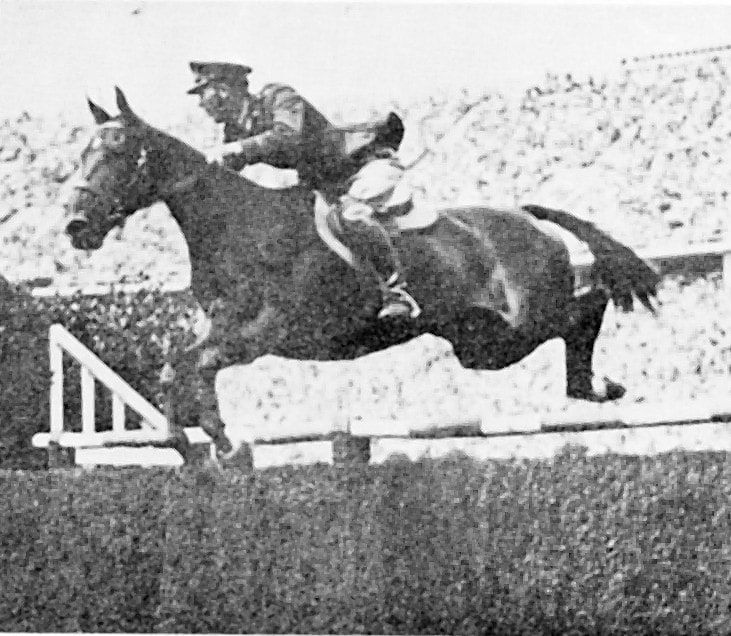
Often regarded as the most famous army-bred horse in history, Miss Jenny stood at just 15.3 hands and was initially tried as a polo pony. However, after discovering her talent for jumping, she was put on the three-day eventing squad. [19]
Jenny Camp made her mark in the sport of eventing by winning two consecutive individual Olympic silver medals in the 1932 Los Angeles Olympics and the 1936 Berlin Olympics. [19] She was ridden by U.S. Army officer Captain Earl F. Thomson, who guided her through the demanding dressage, cross-country, and show jumping events.
Only four horses have ever won back-to-back individual Olympic medals, and it would take 48 years for another horse to achieve this. To date, Jenny Camp remains the only U.S. horse to earn consecutive silver medals at the Olympic Games. [19]

Runners Up
While Thoroughbreds are best known for their success in racing and the Olympic Games, some have made their mark in other arenas as well.
Lonesome Glory
The Kentucky-bred Lonesome Glory was a Thoroughbred initially destined to be a show horse, but his rambunctious temperament made him unsuited for that career path. Instead, Lonesome Glory found his true calling in steeplechase racing.
In 1991, at just three years old, Lonesome Glory won his first and only jump race at the time. The following year, he secured his first Eclipse Award, a prestigious honor in U.S. horse racing that recognizes outstanding equine athletes in the Thoroughbred industry. [20]
At age five, he claimed victories in the $250,000 Breeders’ Cup Steeplechase by 8 ½ lengths and the Swan Lake Stakes, earning his second consecutive Eclipse Award. In 1995, with a stellar season record of 6-1-0 from seven starts, he won his third Eclipse Award in just four years. [20]
Then, in 1999, as an 11-year-old, Lonesome Glory made history by winning his fifth Eclipse Award, becoming only the fifth horse to achieve such a feat. His remarkable racing record and multiple Eclipse Awards earned him a place in the Hall of Fame, alongside legendary horses like Secretariat. [20]
By the time of his retirement, Lonesome Glory had earned $1,318,868 from 35 steeplechase starts, with a record of 19 wins, 4 seconds, and 5 thirds. He also topped the National Steeplechase Association’s theoretical handicap three times in the 1990s. [20]
Lonesome Glory retired after his final race, the Royal Chase, at Keeneland. [20]
Lexington
Lexington, a Thoroughbred named after the famed Horse Capital of the World, Lexington, Kentucky, played a pivotal role in solidifying the prominence of Thoroughbreds in the state.
Originally named Darley by his first owners, Lexington didn’t have a long racing career like other famous American Thoroughbreds, but still left a lasting legacy.
Lexington won six of his seven career races, with his only loss coming against his half-brother, Lecomte. [21][22] Unfortunately, his racing career was cut short due to rapid onset blindness, which forced him into early retirement. [21][22]
In 1856, he was sold to Woodburn Farm for $15,000, the highest price ever paid for a Thoroughbred at that time. There, he began a prominent career as a stud horse, siring hundreds of foals. [21][22]
During the Civil War, Lexington was temporarily moved to Illinois to prevent capture by Confederate forces. Known as the “blind hero of Woodburn,” he topped the sire list for sixteen years, producing numerous winners and cementing his legacy in Thoroughbred breeding. [21][22]
After his death, Lexington’s bones were exhumed and displayed at the Smithsonian Institute in Washington, D.C. From 2010 to 2013, his skeleton was exhibited at the International Museum of the Horse in Lexington, Kentucky, and now resides on permanent display in Lexington.
Caring for Thoroughbred Horses
With their famous athleticism and versatility, Thoroughbreds remain one of the most popular horse breeds in the United States today. Thoroughbred racehorses often have short careers but excel in other equestrian disciplines, making off-the-track Thoroughbreds (OTTBs) a popular choice for riders seeking competition partners and companions.
However, owning and caring for a Thoroughbred requires a deep understanding of their unique needs, from nutrition and exercise to management and welfare. These horses are known for their energy, intelligence, and sensitivity, requiring excellent care to ensure their physical and mental well-being.
Some management tips to keep in mind for your OTTB include:
- Gradual Transition: When bringing home an OTTB or any new horse, remember that gradual transitions can help reduce stress from the change in routine and environment.
- Exercise Program: This breed is usually highly energetic and does best with regular exercise and turnout. Excess stall confinement can lead to behavioral problems and stereotypies.
- Pasture Grazing: Regular pasture turnout for your Thoroughbred provides adequate grazing and freedom of movement.
- Retraining: OTTBs usually need significant retraining before they’re ready to start their new careers. Seek guidance from qualified trainers if you don’t have experience working with off-track Thoroughbreds.
- Farrier Care: Regular farrier care is essential for maintaining proper hoof balance in Thoroughbreds. Frequent trimming and corrective shoeing when necessary helps keep these horses sound.
- Veterinary Care: Schedule regular check-ups to detect health issues early in both recreational and competition horses. Follow your veterinarian’s guidance on vaccinations and deworming to prevent disease transmission on your farm and at shows.
Nutrition Program
Nutrition plays a key role in helping Thoroughbreds transition smoothly from the racetrack to new careers. When a Thoroughbred horse leaves racing, both their exercise routine and nutritional needs change significantly.
Racehorses are often fed high-grain diets to meet the intense energy demands of racing. Many OTTB owners continue to feed large amounts of grain in an effort to keep weight on these hard keepers.
However, this approach can lead to digestive problems, such as an increased risk of colic and gastric ulcers. Gut issues can result in poor nutrient absorption, making it harder for Thoroughbreds to maintain adequate body condition. [23]
For optimal health, off-the-track Thoroughbreds thrive on a forage-based diet supplemented with essential vitamins and minerals, as well as salt. If you’re unsure how to adjust your OTTB’s diet, working with a qualified equine nutritionist can help you develop a personalized plan that supports their transition and sets them up for future success.
Frequently Asked Questions
Here are some frequently asked questions about famous Thoroughbred horses:
Some of the most famous Thoroughbred horses in American history include Secretariat, Man O’ War, Native Dancer, American Pharoah, Touch of Class, Gem Twist, Jenny Camp, Lonesome Glory, and Lexington. These horses became well known through racing, Olympic sport, steeplechasing, or breeding influence. Their achievements helped shape how many riders and racing fans remember the Thoroughbred breed today.
Secretariat is often considered the greatest American racehorse of all time, especially because of his 1973 Triple Crown win and record-setting performances in all three races. Man O’ War is also frequently named among the best due to his 20 wins from 21 starts and multiple records. Both horses remain central figures in American racing history.
Secretariat is famous for winning the 1973 Triple Crown and setting records in the Kentucky Derby, Preakness Stakes, and Belmont Stakes. His Belmont victory was especially memorable because he won by a huge margin and confirmed his place in racing history. Nicknamed “Big Red,” he remains one of the best-known Thoroughbreds in the world.
Man O’ War became an important racehorse because he won 20 of his 21 starts and set several American, track, and world records. His only loss remains one of the most debated races in Thoroughbred history. After retiring, he also became an influential stallion, helping shape future Thoroughbred bloodlines through his offspring.
Native Dancer is important to Thoroughbred breeding because many modern racehorses trace back to him through major descendants such as Mr. Prospector and Northern Dancer. Before his stud career, he won 21 of 22 starts and became one of racing’s first television stars. His influence continued long after his own racing career ended.
Famous Thoroughbreds that won the U.S. Triple Crown include Secretariat in 1973 and American Pharoah in 2015. American Pharoah was especially notable because he ended a 37-year wait for a new Triple Crown winner. Triple Crown horses must win the Kentucky Derby, Preakness Stakes, and Belmont Stakes in the same year.
Famous Thoroughbreds that competed in the Olympics include Touch of Class, Gem Twist, and Jenny Camp. Touch of Class won team and individual gold in show jumping at the 1984 Los Angeles Olympics. Gem Twist earned two silver medals in 1988, while Jenny Camp won back-to-back individual silver medals in eventing in 1932 and 1936.
Off-the-track Thoroughbreds can succeed in many other sports after racing, including show jumping, eventing, and other riding careers. Touch of Class is a strong example, as she had no wins on the racetrack before becoming an Olympic gold medalist. Many OTTBs need patient retraining, consistent care, and time to adjust to their new work.
Thoroughbreds are popular beyond racing because they are athletic, energetic, intelligent, and versatile. While many are bred for speed, they can also perform well in jumping, eventing, steeplechasing, and recreational riding. Their sensitivity and work ethic make them appealing to experienced riders who can provide consistent handling, turnout, training, and care.
Off-the-track Thoroughbred care should focus on gradual transitions, regular turnout, consistent exercise, farrier care, veterinary support, and careful retraining. Many racehorses are used to high-grain diets and intense routines, so their new management plan should change slowly. A forage-based diet with balanced vitamins, minerals, and salt can help support long-term health.
Summary
This article examines famous Thoroughbred horses whose measurable achievements in racing, sport, and breeding established them as enduring figures in American equestrian history.
- Racehorses such as Secretariat, Man O’ War, Native Dancer, and American Pharoah are highlighted for specific accomplishments including Triple Crown victories, undefeated seasons, world records, and exceptional earnings.
- Several of these horses also became influential sires, with bloodlines that continue to shape modern Thoroughbred racing pedigrees.
- Thoroughbreds such as Touch of Class, Gem Twist, and Jenny Camp gained recognition through Olympic medals and sustained success in show jumping and eventing.
- Other notable horses, including Lonesome Glory and Lexington, earned distinction in steeplechase racing and breeding despite shorter or unconventional racing careers.
References
- Bower. M. A. et al., The Genetic Origin and History of Speed in the Thoroughbred Racehorse. Nature Communications. Nature Publishing Group. 2012. View Summary
- Secretariat History. Secretariat.com. 2010.
- Secretariat: Races, Records & Legend. History.com 2024.
- Secretariat (VA). National Museum of Racing and Hall of Fame. 2024.
- Disney’s Secretariat. Secretariat.com. 2024.
- Man o’ War. Encyclopædia Britannica.
- Man o’ War (KY). National Museum of Racing and Hall of Fame. 2024.
- Man o’ War (USA). American Classic Pedigrees. 2024.
- Native Dancer (USA). Gooreen collection, Public domain, via Wikimedia Commons.
- Native Dancer (KY). National Museum of Racing and Hall of Fame. 2024.
- American Pharoah (KY). National Museum of Racing and Hall of Fame. 2024.
- Lemon, L., When Touch Of Class Helped Script An American Dream. The Chronicle of the Horse. 2020.
- Hall of fame Thursday: The incomparable Touch of Class. Horse Network. 2021.
- 2000 Touch of Class. Show Jumping Hall of Fame.
- Zunker, E., Looking Back: Top Class off-Track Thoroughbreds of Yesteryear. Thoroughbred Racing Commentary. 2015.
- Show Jumping Hall of Fame Collection. United States Hunter Jumper Association.
- 2002 Gem Twist. Show Jumping Hall of Fame.
- DeLisle, M., A Trip Down Memory Lane with the U.S. Olympic Event Teams of Years Past. United States Eventing Association. 2024.
- Jenny Camp. USEA : United States Eventing Association Inc.
- Lonesome Glory (KY). National Museum of Racing and Hall of Fame. 2024.
- Talbott. T., Lexington. ExploreKYHistory. 2024.
- Lexington (KY). National Museum of Racing and Hall of Fame. 2024.
- Richards, N. et al. The effect of current grain feeding practices on hindgut starch fermentation and acidosis in the Australian racing Thoroughbred. Austral Vet J. 2006. View Summary