English



The Highland Pony is a mountain pony breed native to Scotland. They are one of the largest native pony breeds from the British Isles. While records of this breed date back to the 18th century, ponies have inhabited the Scottish Highlands for millennia.
Once the mounts of Highland warriors, these ponies would go on to gain the admiration of modern monarchs. While the Rare Breed Survival Trust classifies Highland Ponies as vulnerable, they remain popular throughout the United Kingdom.
Harsh conditions resulted in a hardy pony adapted to survive the rough mountain terrain. Feral Highland Ponies still roam their native ranges, but the breed today live pampered lives as beloved family mounts.
This breed profile will discuss the history, characteristics, health problems, and nutritional needs of the Highland Pony breed. Keep reading to learn more about feeding and caring for Highland Ponies.
Highland Pony History
Highland Ponies are one of three native Scottish Pony breeds, along with the Shetland Pony and the Eriskay Pony.
The unique environment of the Scottish Highlands, with its challenging weather, rugged terrain, and varied ecosystems, played a significant role in shaping the distinct characteristics of the Highland Pony breed.
Origin
Archeological evidence suggests that ancient ponies inhabited the British Isles by the late Pleistocene period. Genetic studies reveal links to these primitive ponies in several native British breeds, including the Highland Pony. [1]
Researchers don’t know if wild ponies naturally migrated to Scotland after the glaciers retreated 10,000 years ago or if human settlers brought the first horses to the region. Stone carvings from the Pictish period indicate ponies played important roles in Scottish society by the 6th century AD. [2]
Smaller ponies developed in the Western Isles off the Scottish coast, while larger ponies developed on the Scottish mainland. Genetic links suggest Fell and Dales Ponies brought to Scotland influenced the development of Highland Ponies. [1].
Spanish and French breeds, including the Percheron, reached Scotland in the 16th century. While pedigree records for Highland Ponies began in the 1830s, Scottish agricultural records from the 18th century describe ponies resembling the modern breed.
Historic Use
The harsh landscape and sparse vegetation of the Scottish Highlands could not support the heavy horses that developed in other parts of the British Isles.
Instead of using these heavy breeds for agriculture, Scottish farmers relied on their ponies for every aspect of life in the Highlands.
While historical dramas often depict Highland warriors riding large war horses, cavalry soldiers in medieval Scotland likely also rode the hardy native ponies.
Breeding programs produced strong, sturdy ponies with the stamina to carry heavy loads and haul timber through the mountains. Highland Ponies also did draft work on farms, plowing fields and pulling farm equipment.
The ponies had to be sure-footed to traverse rough terrain and needed quiet dispositions to accompany hunters on the game trail. Many Highlands continue serving traditional roles transporting game off the hills and forests of Scottish sporting estates. [3]
The late Queen Elizabeth II supported the conservation of the Highland breed in the 20th century, maintaining a breeding herd of Highlands at the Royal Family’s Balmoral estate in Scotland.
Breed Registry
The Highland Pony Society (HPS) in the UK maintains the official registry for the breed. Most purebred Highland Ponies reside in the UK, although a few breeders are located in North America.
| Breed Summary | |
|---|---|
| Breed Name | Highland Pony |
| Breed Type | Mountain pony |
| Origin | Scotland (Scottish Highlands) |
| Breed Registry | Highland Pony Society (HPS) |
| Population Status | Vulnerable |
| Average Height | Up to 14.2 hh |
| Average Weight | 1,100 lb (500 kg) |
| Common Coat Colors | Dun, gray, brown, black, bay, chestnut |
| Conformation | Strong, compact, well-balanced, broad muzzle, sloping shoulder, well-sprung ribs, powerful quarters, muscular thighs, short cannons, broad dark hooves, silky feathering |
| Common Uses | Showing, eventing, jumping, dressage, fox hunting, driving, Pony Club, forestry work |
| Temperament | Even, friendly, calm, inquisitive |
| Best For | Families seeking a versatile child or adult mount |
| Common Health Concerns | Equine metabolic syndrome, laminitis, PPID, obesity, grass sickness |
What's your top priority with your horse's health?

Enter your email to receive your store credit
Breed Characteristics
The HPS established breed standards for the Highland Pony to maintain the historical characteristics of the proper Highland type. The traits that once helped ponies survive in the Highlands now make them versatile driving and riding ponies.
The relative isolation of the Scottish Highlands also meant that there was limited crossbreeding with other horse breeds. This helped in preserving the unique characteristics of the Highland Pony and in its development as a distinct breed.
Conformation
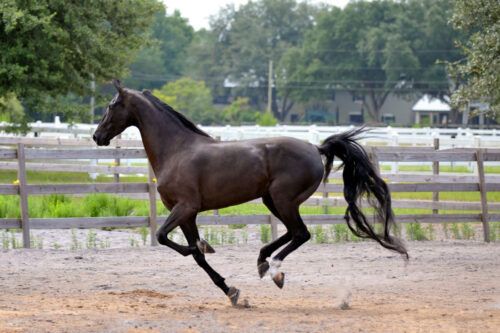
Highland Ponies are often larger than other native British ponies, but they should not exceed 14.2 hands in height. The overall impression of the breed is strong, compact, and well-balanced, with enough power to carry and pull heavy loads.
Their head has characteristic pony features with kind eyes, a broad muzzle, and deep jowl. The necks should have adequate length and connect to a sloping shoulder. Well-sprung ribs provide room for the heart and lungs.
Powerful quarters, muscular thighs, and clean hocks contribute to strength. Their legs have flat, hard bones and short cannons. Broad dark hooves are solid and well-formed. These ponies generally have soft, silky feathering on their fetlocks. Mane and tail hair is full and long, offering protection from wind and rain in the Highlands.
Colours
Highland Ponies come in several solid colours, including a range of duns. Grey, brown, black, and bay are more common than chestnut. Pinto colouring is not allowed.
Besides small stars, white markings are discouraged. Stallions with excess white coloring on their coat are not eligible for licensing.
These horses grow thick coats during cold seasons and may show seasonal variations in coat colour between winter and summer.
Temperament
Most Highland Ponies have even temperaments and friendly personalities. Like other ponies, they can be pushy and stubborn if they are not properly trained with good manners. While generally calm, they are inquisitive and like to keep busy.
Highland Pony owners often adore the big personalities of these ponies. Although they can be typical cheeky ponies without good handling, they have good natures and are suitable for riders of all ages with proper guidance.
Disciplines
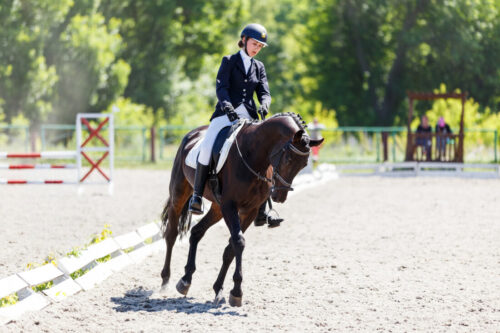
The Highland Pony’s substance and strength allow the breed to carry adults and children comfortably. Their versatility makes them a popular family mount, but they can also excel in the show ring.
Popular disciplines for Highland Ponies include showing, eventing, jumping, dressage, fox hunting, and driving. These horses are also a favourite mount of Pony Club kids in the UK. Other ponies do forestry work in remote Highland areas where modern machinery can’t reach.
Highland Pony Health
Some traits that helped the Highland Pony’s ancestors survive in their native lands can contribute to health problems with modern management strategies. Owners can reduce the risks of these health problems with proper care and feeding programs.
Metabolic Disorders
Equine metabolic syndrome is highly prevalent in native British pony breeds. This metabolic disorder is characterized by insulin resistance, increased risk of obesity and an increased risk of laminitis, a painful inflammatory condition of the hoof laminae. [4]
The high incidence of metabolic issues in certain breeds suggests horses can inherit a predisposition to the disorder. Genomic studies have identified genes involved in the disease’s pathophysiology that may contribute to an increased risk of EMS. [5]
However, there are also several modifiable risk factors for EMS that Highland Pony owners can influence through management. Risk factors include sedentary lifestyles and high-starch and sugar diets. [6]

Health Problems
Pituitary pars intermedia dysfunction (PPID), or Cushing’s disease, is another endocrine-related disease that can affect Highland Ponies. This condition is associated with an overproduction of pituitary hormones, leading to metabolic dysfunction. [7]
Delayed shedding and abnormal coat growth are two common clinical signs of PPID. Contact your veterinarian if you notice your senior Highland keeps his thick coat in summer.
The breed also gained notable attention after a high-profile case of equine grass sickness that resulted in the death of five of Queen Elizabeth’s Highlands Ponies. Grass sickness is an often fatal disease characterized by neuropathy that affects involuntary functions and gut paralysis. [8]
While researchers do not fully understand the cause of the disease, research has identified potential links to certain microbes and fungi present in the digestive systems of grazing horses. Grass sickness primarily affects horses in the UK, but Highland ponies don’t have a higher risk of the disease than other breeds. [8]
Care and Management
You can support the health and well-being of your Highland pony by providing quality basic care, including regular veterinary check-ups and preventative equine medicine. Make sure your pony is up-to-date on vaccinations, deworming, and dental exams.
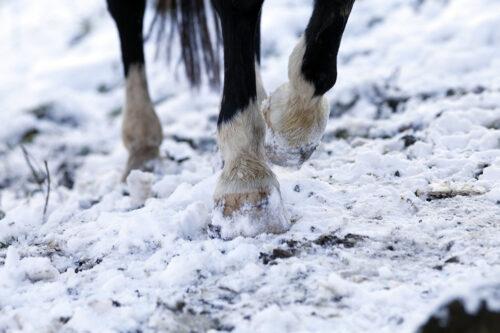
Highland ponies generally have naturally strong hooves and the breed is sometimes maintained barefoot. However, even if you keep your pony barefoot, they still need regular farrier care to trim their hooves and balance their feet.
The breed’s characteristic thick coats, feathers, manes, and tails also increase the risk of skin irritations associated with the accumulation of dirt and moisture. Daily grooming is important to help keep your pony’s coat clean and support healthy skin.
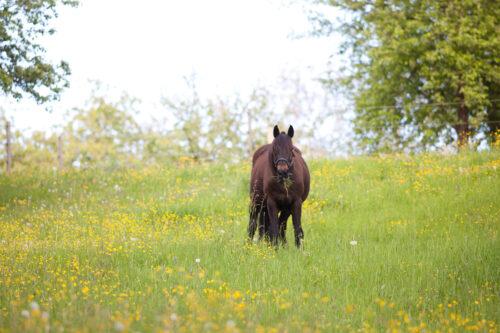
Highland Ponies are hardy horses that thrive living outside year-round. As long as they have access to adequate shelter during inclement weather, healthy ponies can easily tolerate cold temperatures in the winter.
Ponies that live inside should get daily turnout to allow for free exercise, stimulation, and social interaction.
However, unrestricted grazing on lush grass pastures can contribute to metabolic disorders and weight gain. [9] Proper pasture management is important to prevent laminitis and keep your horse healthy while grazing on grass.
Highland Pony Nutrition
Highland ponies require a nutrition program that is mindful of their efficient metabolism and predisposition for metabolic disorders. A low-starch, forage-based diet is the best option for keeping these ponies healthy.
Weight Maintenance
Highland Ponies are notoriously easy keepers. Like other British pony breeds that evolved to survive on sparse vegetation, Highland Ponies have an efficient metabolism and can become obese when consuming energy-dense feeds.
It is easy to mistake obesity in Highland Ponies for the breed’s naturally sturdy type, and many of these ponies are inadvertently overfed, leading to health complications.
Regular body condition scoring can help Highland owners monitor their pony’s fat composition and modify the diet if necessary. On the 9-point Henneke Body Condition Scale (BCS), a score of 5 is considered ideal, and scores between 6 to 9 are considered overweight or obese.
Sample Diet
The following sample diet is intended for a mature 500 kg (1100 lb) Highland Pony with normal body condition at maintenance (not exercising).
| Feed | Amount per day |
|---|---|
| Mid-Quality Hay (8% crude protein) | Free-choice |
| Salt | 30 g (2 tbsp) |
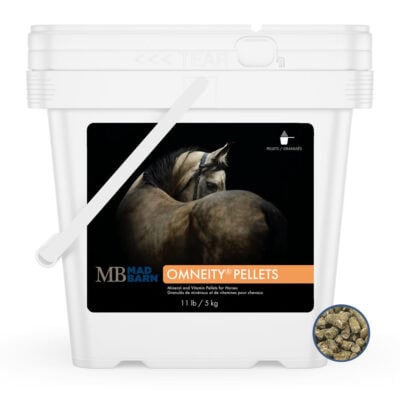
| Omneity® Pellets | 200 g (2 scoops) |
| w-3 oil | 30 ml (1 oz) |
| Diet Analysis | |
| Digestible Energy (% of Req) | 101% |
| Protein (% of Req) | 142% |
| NSC (% Diet) | 8.8% |
This nutrition program includes Mad Barn’s w-3 oil to provide the omega-3 fatty acids DHA which supports anti-inflammatory processes.
Mad Barn’s Omneity® supplement is also added, which provides essential vitamins and minerals that are commonly lacking in forages. Adding Omneity® to your pony’s diet ensures they get nutrients required to support hoof health, metabolic function, the immune system and more. [11]
Omneity® is a concentrated vitamin and mineral supplement that does not contain any added sugars. This makes it an excellent choice for easy keeper equines, such as Highland Ponies.
Forage
Forage should be the main source of energy in a Highland Pony’s diet. The recommended forage intake is approximately 2% of the pony’s body weight daily. For an average 1100 lb (500 kg) Highland Pony, this translates to about 22 pounds (10 kg) of hay each day.
Although Highland ponies are shorter than average-sized horses, they often have similar body weight and forage requirements to typical light horse breeds.
Whenever possible, choose grass hay that is low in starch and sugars. High-calorie legume hays or high-quality grass hays may be too energy-dense for the needs of Highland ponies, resulting in weight gain or metabolic issues.
Additional Nutrients
A forage-only diet should provide adequate protein and calories to meet your Highland Pony’s energy requirements. However, hay often lacks essential nutrients, such as vitamins and minerals. Feeding a vitamin and mineral supplement will help you fortify your pony’s diet without adding the extra carbohydrates that come from feeding grain-based ration balancers.
Highland ponies should have unrestricted access to salt and fresh water in their environment at all times. Add plain loose salt to your pony’s daily ration to ensure they meet their sodium requirements. [7]
Ponies with PPID often drink more water than healthy ponies. It’s crucial for owners to keep an eye on the water consumption of older Highland ponies. Owners should monitor water intake in older Highlands and consult their veterinarian if concerned about PPID.
Feeding Recommendations
Most Highland Ponies should be provided with forage in a hay net or slow feeder to control hay intake while maintaining free-choice access to forage. Selecting a mature grass hay with low digestible energy can promote optimal forage consumption while avoiding excess calories. A forage with low ESC (simple sugar + starch) is preferred to support metabolic health.
Grazing muzzles help restrict grass intake during pasture turnout. For some ponies, dry lot turnout may be safer, particularly during the spring when starch and sugar levels in grass are higher. [9]
Commercial concentrates and high-starch grains are not appropriate for most Highland Ponies. Studies show high dietary starch and/or sugar increases laminitis risk in obese and insulin-resistant horses. [10]
If you need a supplement carrier for your Highland Pony, consider replacing grain meals with forage-based alternatives such as soaked beet pulp or hay pellets.
Nutritional Supplements
When designing a feeding program for your Highland pony, the first priority is to provide a balanced diet with adequate energy, fiber, protein, vitamins, and minerals. Once your pony’s diet is balanced, you can consider additional supplements to support overall health and performance.
Research shows that supplementation with the omega-3 fatty acid DHA helps to maintain healthy inflammatory parameters in horses with EMS. [11] Omega-3 fatty acids also support joint health, immune function and a shiny coat in Highland Ponies.
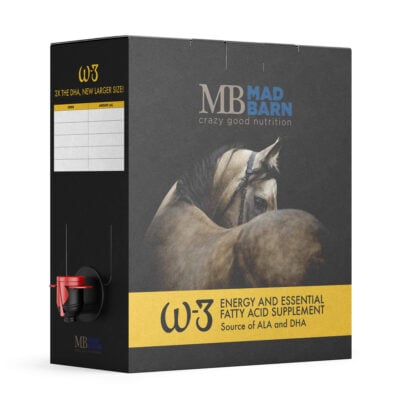
Mad Barn’s W-3 Oil is an omega-3 fatty acid supplement enriched with microalgae-synthesized DHA and natural Vitamin E. This is a more palatable DHA source for horses than fish oil supplements.
Highland ponies engaging in heavy work or frequently travelling to horse shows have a higher risk of gut issues, including gastric ulcers.
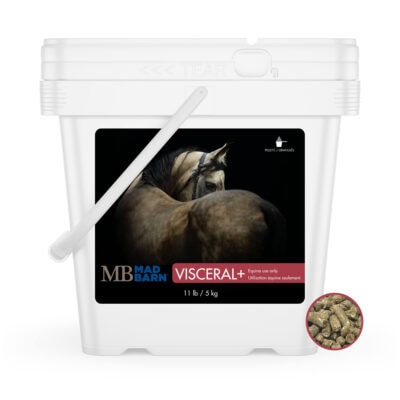
Mad Barn’s Visceral+ is a comprehensive gut health supplement formulated with probiotics, yeast, herbs, minerals, and amino acids to support stomach and hindgut health in horses.
Jiaogulan is an herbal supplement that supports healthy hoof circulation in horses prone to laminitis. Consult your veterinarian or an equine nutritionist to determine if jiaogulan could be beneficial for your pony.
Unsure whether your Highland Pony is meeting all of their nutritional requirements? Submit your pony’s diet for a free evaluation and get your questions answered by one of our qualified nutritionists.
Frequently Asked Questions
Here are some frequently asked questions about the Highland Pony:
The Highland Pony is a mountain pony breed native to Scotland. It is one of the largest native pony breeds of the British Isles and is known for its hardiness, strength, and versatility. Highland Ponies were shaped by the rugged Scottish Highlands and developed into dependable animals for riding, driving, and carrying heavy loads. Today, they are popular as family mounts and participate in a number of disciplines.
The Highland Pony was shaped by the harsh climate and rugged terrain of the Scottish Highlands. Living on sparse forage and uneven ground helped Highland Ponies develop strong limbs, sure-footed movement, dense coats, and efficient metabolisms. These same conditions also favored stamina, resilience, and a practical, steady temperament. As a result, the breed is well adapted to challenging environments and outdoor living.
Highland Ponies are used for riding, driving, showing, and traditional work. They are popular family mounts for children and adults and can compete in showing, dressage, jumping, eventing, and Pony Club activities. Highland Ponies are also used for fox hunting and driving, and some still do forestry work in remote areas. Their strength and sensible nature make them especially versatile.
Highland Ponies are strong, compact, and well-balanced ponies with enough substance to carry and pull heavy loads. They typically have a kind head, broad muzzle, deep jowl, adequate neck length, and sloping shoulders. Their bodies are supported by well-sprung ribs, powerful quarters, muscular thighs, and short cannons. Highland Ponies also have broad dark hooves, soft silky feathering, and full manes and tails that help protect them from wind and rain.
Highland Ponies come in several solid colors, with dun being especially common. Other common Highland Pony colors include gray, brown, black, bay, and chestnut. Pinto coloring is not allowed in the breed standard. White markings are generally minimal, and small stars are preferred over larger white markings.
Highland Ponies are known for their calm, friendly, and inquisitive temperament. Most Highland Ponies are steady, intelligent, and good-natured, which helps make them reliable family ponies. They can also be bold and a little cheeky if they are not given clear training and good manners. With consistent handling, they are trustworthy partners for riders of many ages.
Highland Ponies typically stand up to 14.2 hands high. They are among the larger native British pony breeds and have enough substance to comfortably carry many adult riders. Even though they are ponies, their build is strong and practical rather than small and fine. Their height and weight together give them excellent versatility.
The average Highland Pony typically weighs around 1,100 pounds (500 kg). Their exact weight depends on height, body condition, age, and workload. Because they are sturdy ponies with efficient metabolisms, it is important to watch body condition carefully. Excess weight can increase the risk of metabolic problems and laminitis.
Highland Ponies can be good for beginners when they are well trained and matched with appropriate guidance. Their calm nature, steady attitude, and versatility make many Highland Ponies suitable for families and novice riders. However, like other ponies, they can become pushy or stubborn without consistent handling. A beginner rider will do best with a well-mannered Highland Pony and knowledgeable support.
Highland Ponies gain weight easily because they evolved to survive on sparse grazing and have very efficient metabolisms. In modern management systems with rich pasture and calorie-dense feeds, Highland Ponies can become overweight quickly. This easy-keeper tendency increases their risk of insulin resistance, obesity, and laminitis. Controlled grazing, a forage-based diet, and regular exercise help manage weight safely.
Common health problems in Highland Ponies include equine metabolic syndrome, obesity, laminitis, and pituitary pars intermedia dysfunction (PPID). These conditions are linked in part to the breed’s efficient metabolism and tendency to gain weight easily under modern feeding conditions. Highland Ponies may also be affected by grass sickness, although they are not considered uniquely predisposed compared to other breeds. Good diet management, controlled pasture access, and regular veterinary care help reduce health risks.
Highland Ponies handle cold weather very well because they developed in the harsh climate of Scotland. Their thick coats, full manes and tails, and hardy constitution help protect them from wind, rain, and low temperatures. Many Highland Ponies can live outdoors year-round if they have access to adequate shelter. Even so, regular grooming and good management are important to keep the coat and skin healthy.
Summary
The Highland Pony is a hardy, native Scottish breed developed to thrive in rugged mountain terrain. Known for strength, sure-footedness, and gentle temperament, these ponies once served Highland warriors and farmers but today are versatile riding and driving ponies.
- Highland Ponies are strong, compact, and good-natured, standing up to 14.2 hands with dense coats suited to harsh climates.
- Common health issues include equine metabolic syndrome, laminitis, and PPID, often linked to rich diets or limited exercise.
- A forage-based, low-starch diet with balanced vitamins and minerals supports healthy metabolism and weight.
- Regular exercise, controlled grazing, and consistent care help maintain the breed’s long-term health and vitality.
References
- Winton, C. et al. Genetic diversity within and between British and Irish breeds: The maternal and paternal history of native ponies. Ecol and Evol. 2020.View Summary
- Hughson, I. Pictish Horse Carvings. Glasgow Arch J. 1991.
- Dodgshon, R. et al. Heather moorland in the Scottish Highlands: the history of a cultural landscape, 1600–1880. J Hist Geog. 2006.
- Morgan, R. et al. Equine metabolic syndrome. Vet Record. 2015.View Summary
- Patterson-Rosa, L. et al. Metabogenomics reveals four candidate regions involved in the pathophysiology of Equine Metabolic Syndrome. Molec Cell Probes. View Summary
- Carslake, H. et al. Equine metabolic syndrome in UK native ponies and cobs is highly prevalent with modifiable risk factors. Equine Vet J. 2020. View Summary
- Ireland, J. et al. Epidemiology of pituitary pars intermedia dysfunction: A systematic literature review of clinical presentation, disease prevalence and risk factors. Vet J. 2018.
- McGorum, B. et al. Equine grass sickness (a multiple systems neuropathy) is associated with alterations in the gastrointestinal mycobiome. Anim Microbiome. 2021.
- Watts, K. Forage and pasture management for laminitic horses. Clin Techniq Equine Pract. 2004.
- Geor, R. et al. Dietary management of obesity and insulin resistance: countering risk for laminitis. Vet Clin North Am Equine Pract. 2009. View Summary
- Elzinga, S. et al. Effects of Docosahexaenoic Acid-Rich Microalgae Supplementation on Metabolic and Inflammatory Parameters in Horses With Equine Metabolic Syndrome. J Equine Vet Sci. 2019. View Summary