English

Horses are renowned for their power, grace, and speed. Whether galloping across open fields or running down a racetrack, there’s something captivating about a horse in full stride. But how fast can horses actually run? And what makes certain breeds faster than others?
Different horse breeds have been honed for speed, stamina, and agility over centuries. From the adrenaline-pumping rush of Thoroughbreds on the track to the enduring stamina of Arabians, speed in horses isn’t just about raw power — it’s about genetics, training, and discipline.
In this article, we explore the fastest breeds in the equestrian world, the top speeds horses can reach, and the disciplines where speed counts. Read on to learn what makes these magnificent animals the ultimate athletes.
What Makes Horses Run So Fast?
The horse’s body is uniquely adapted for high-speed running. By understanding the anatomy that enables horses to run fast, we can gain insight into how and why certain breeds outpace others. For example, elite racehorses like Thoroughbreds owe much of their speed to the specialized structure of their muscular and skeletal systems. [1][2]
Horses have long, lightweight legs that contribute to an efficient and powerful stride. The length of their limbs is crucial in increasing stride length, a key factor in determining how fast they can run. Fast horse breeds, like Thoroughbreds, typically have longer legs in proportion to their body size. This anatomical trait is also observed in other animals renowned for their speed, such as greyhounds and cheetahs.
In addition to limb length, the flexibility of the spine plays a vital role. It allows horses to extend their stride further, enabling them to cover more ground with each step. This combination of long legs and a flexible spine results in a more extended stride, directly contributing to their speed.
Horses’ legs function much like pendulums, swinging with great efficiency during running. This pendulum effect means that horses with longer legs can cover more ground with each stride, requiring less effort compared to breeds with shorter limbs, translating into faster speed. [3][4]
Muscles for Speed
Another critical element that impacts running performance is the horse’s muscle mass and distribution. Research shows horses bred for speed, such as Thoroughbreds and Standardbreds, have a higher percentage of muscle mass compared to breeds designed for strength, such as draft horses. [1][2]
Specifically, elite Thoroughbreds have muscle mass that makes up about 53% to 57% of their body weight, while draft horses have around 42%. [1][2]
The muscles responsible for a horse’s movement (locomotion), particularly those in the hind limbs, are primarily fusiform, meaning most of their muscle fibers run parallel to each other. This alignment creates long muscle fibers, which are crucial for rapid contractions. [1][2]
The longer the muscle fibers, the faster they can contract, directly influencing the horse’s speed. This is also why horses with proportionally longer legs relative to their body size tend to be faster — they have longer muscle fibers that can contract more rapidly, boosting their overall speed. [1][2]
The conformation of the horse’s hindlimb also plays a role in enhancing speed by optimizing force production. The vastus lateralis and gastrocnemius, two key muscles in the hind legs, contribute significantly to propelling the horse forward. [1][2]
The arrangement of muscle fibers, known as muscle architecture, also plays a key role in how fast horses can run. Horses have different types of muscle fibers, each serving a specific function.
The muscles in the hind legs are mainly composed of fast-twitch fibers, designed for explosive speed and quick bursts of movement. These fibers enable horses to accelerate rapidly, making them effective sprinters. [3][4]
In addition to fast-twitch fibers, horses also have slow-twitch fibers, which are essential for endurance. While the fast-twitch fibers generate more power, slow-twitch fibers provide the stamina required to run for longer distances. [3][4]
What's your top priority with your horse's health?

What's your top priority with your horse's health?
Gaits & Speed
While under saddle, most non-gaited horses are trained to perform four distinct gaits, each with its own speed, rhythm, and purpose. These gaits offer a range of movement that cater to different riding styles, disciplines, and other daily uses. These gaits are called:
- Walk
- Trot
- Canter
- Gallop
There are other specialized gaits that some horses naturally perform, as they’re passed down through genetics. For example, certain lines of racing Standardbreds are “pacers”, meaning they’re bred to pace instead of trot.
With the exception of pacers, the other special gaits are performed by “gaited” horses that can “amble”. However, ambling gaits are not designed for speed, but rather for rider comfort. They tend to be very smooth and easy for the rider to sit for long periods of time. Examples include the running walk, rack, and tölt.
Walk
Walk is the slowest standard gait, averaging 4.4 miles per hour (7 km/h). It’s a smooth, four-beat gait where each hoof hits the ground separately. The walk is ideal for relaxed riding and warming up. [5]
Trot
The trot is a medium-speed gait averaging 8.1 miles per hour (13 km/h). The main characteristics of the trot are: [2][5]
- Moderate speed: Generally covering 160–280 meters per minute
- Two-time beat: Legs move in diagonal pairs at a consistent rhythm
- Period of suspension: The period of suspension occurs twice per stride, during which all limbs are airborne
- Symmetry: The horse’s left and right sides mirror each other
- Engaged hindquarters: The horse’s back end actively participates in the movement. The hind feet should not strike the forefeet
- Flexion in joints: The horse should freely flex its knees and hocks
- Steady head: The horse’s head should remain in a consistent position
When ridden, the horse may adopt a rounder outline with greater flexion of the knee and hock. [2][5]
Veterinarians commonly use the trot to assess the presence of lameness. With its regular, rhythmic nature, trotting can highlight asymmetry in the horse’s movement. Head nodding during the trot can be an indication of front limb lameness, and exaggerated movement in the back legs can suggest issues affecting the hind limbs. [2]
Canter
Cantering is a versatile, elegant and dynamic gait that sits comfortably between the trot and gallop. The canter offers a medium-speed movement that is essential in a wide variety of equestrian disciplines. Cantering averages a speed of 10 to 17 miles per hour (16-27 km/h). [2][5]
This three-time beat gait can exhibit both symmetry and asymmetry. A well-executed canter is characterized by the following key qualities: [2][5]
- Light and rhythmic with a steady, regular beat that reflects good balance and engagement
- Hindquarters engaged, with well-flexed joints and confident footfalls
- Straight movement, with shoulders aligned in front of the hindquarters
- Head should move in harmony with the horse’s body’s horizontal movement
When a rider is in saddle, the dynamics of the canter change slightly. The rider’s influence can affect the horse’s balance and stride length, impacting the overall execution of the canter. [2][5]
Gallop
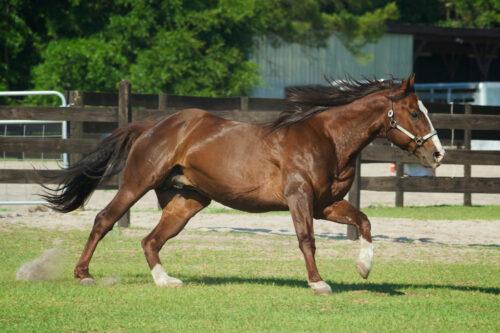
Reaching speeds of up to 25 to 30 miles per hour (40-48 km/h), galloping is the fastest gait. Wild horses use this gait when fleeing predators and other dangerous situations. [2][5]
The gallop is distinguished by its asymmetrical nature and four-time beat. During this gait, the horse’s limbs move in a sequence: [2][5]
- Non-lead hind
- Lead hind
- Non-lead fore
- Lead fore
A key feature of the gallop is locomotory–respiratory coupling that occurs when the horse’s stride is equal to its respiration rate. As the horse lifts its forelimbs, the head rises, and the gut moves back, allowing inhalation; as the forelimbs touch the ground, the head drops, the gut moves forward, allowing exhalation. [2][5]
This synchronization between breathing and movement is crucial for efficient performance and endurance during high-speed galloping. [2][5]
The gallop is an asymmetrical gait, meaning the horse can gallop on either the left or right lead. In competitive contexts, such as races, the horse typically maintains one lead throughout, especially on straight tracks or circular courses. [2][5]
Maximum Horse Speed
The current world record for fastest horse speed is approximately 44 miles per hour (71 km/h). This speed was achieved by a thoroughbred named Winning Brew, who set the record at the Penn National Race Course in 2008. [6]
With that being said, the maximum achievable speed of a horse is relative to the total distance travelled. Winning Brew’s record was set over a distance of 2 furlongs. [6]
Shorter sprints, such as those performed by quarter horses in disciplines like barrel racing, show some of the highest equine speeds over a quarter mile (~400 m), reaching top speeds over 56 miles per hour (90 km/h) in elite competitions. [6]
Speed & Endurance
While speed is impressive, endurance is equally crucial in many equine disciplines. These two aspects of equine performance are distinct yet complementary, and the most successful horses often possess a well-balanced combination of both.
When comparing sprinting horses to those bred for endurance, their differences in anatomy and purpose become clear. Sprinting breeds, like the renowned Thoroughbred, are developed for short, powerful bursts of speed. [2][6]
Sprinters are often seen on the racetrack, where the goal is to cover a short distance in the fastest possible time. Their lean, muscular build and long legs contribute to their ability to reach top speeds quickly, often surpassing 40 miles per hour in short sprints. [2][6]
On the other hand, endurance horses, such as the Arabian, are built for longevity and stamina rather than outright speed. Arabians are known for their exceptional endurance capabilities, often competing in long-distance endurance races that can cover up to 100 miles (160 kilometers) in a single event. [7][8]
Endurance races test a horse’s ability to maintain a steady, moderate pace over rough, varied terrain, sometimes for an entire day or more. The Arabian’s lighter, more compact frame and efficient cardiovascular system allows it to perform at a slower but more sustainable speed for extended periods. [7][8]
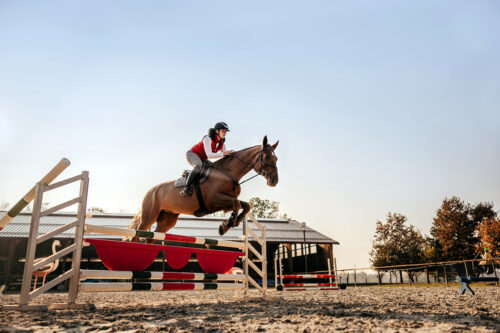
While many horses are bred and trained specifically for either speed or endurance, some disciplines require a balance of both. For example, eventing combines dressage, cross-country, and show jumping, demanding speed, agility, and stamina from participating horses.
In the cross-country phase, competitors must cover long distances at a fast pace, making it essential for these horses to have both sprinting power and the endurance to sustain their effort over many miles.
Fastest Horse Breeds
Horse breeds exhibit unique anatomical and physiological traits that make them suited to different disciplines. Thoroughbreds, which are among the most renowned racing breeds, owe their exceptional speed to a number of factors.
One important aspect is their natural oscillatory frequency (NOF), which refers to the speed at which a limb swings. Thoroughbreds have a higher NOF in comparison to other breeds. This means their limbs can swing faster with less energy expenditure, which is crucial for high-speed races. [1]
In addition to their NOF advantage, Thoroughbreds have a higher proportion of fast-twitch muscle fibers, which are essential for generating explosive power and rapid acceleration. This blend of muscle fiber types and their lean, muscular build allows them to reach high speeds, making them the stars of horse racing. [1]
Arabians are renowned for their endurance rather than speed. While they can reach respectable speeds, their true strength lies in their stamina, making them ideal for long-distance endurance events. Arabians possess more slow-twitch muscle fibers, which are suited for prolonged, steady efforts over varied terrain. [7][8]
The American Quarter Horse is famous for its short-distance sprinting ability and versatility. Known to reach speeds up to 55 miles per hour (88 km/h), their powerful hindquarters and fast-twitch muscle dominance make them ideal for disciplines like barrel racing. [9]
Each breed’s unique distribution of muscle mass and muscle fiber composition shows the direct link between their anatomy and athletic abilities.

Managing Racehorses
Proper management of racehorses requires a careful balance of exercise, nutrition, and ongoing maintenance to ensure peak performance. Management also plays a key role in preventing injury and maintaining overall health so these horses are ready to compete at top speeds.
Key aspects of managing racehorses include structured training programs with adequate recovery periods, an optimized nutrition plan, and regular veterinary check-ups, along with joint care and hoof maintenance.
Exercise & Recovery
Horses training for speed need rigorous training to develop the explosive power or endurance needed for their respective competitions. Regular exercise should include a mix of short, intense sprints to build speed, alongside longer, slower rides to enhance stamina and cardiovascular health.
An optimal training strategy depends on the discipline — training for sprinters focuses on fast-twitch muscle development, while endurance horses work to build slow-twitch muscle fibers for sustained efforts.
Recovery between training sessions is equally important. Horses must be given time to rest and allow their muscles to repair, which reduces the risk of injury and maintains peak physical condition.
A key component of recovery is the cooling-down process. After intense workouts, horses need to cool down gradually to prevent stiffness and support muscle recovery. [2][16]
If you are unsure whether your performance horse’s regimen is optimized, consider working with a qualified trainer and sports science professionals to develop a balanced training plan tailored to your horse’s individual needs and level of skill.
Nutrition
The nutritional needs of performance horses are unique due to their high-intensity training and competition. To perform at their best and enable high-speed bouts of athleticism, they require a carefully balanced diet that provides ample energy, supports muscle health, and maintains overall well-being.
Here are the key components of a performance horse’s diet:
High-Quality Forage
High-quality forage, such as hay and pasture, should form the foundation of a performance horse’s diet, providing essential fiber for digestive health. Forages such as early-maturity grass hay and alfalfa hay are nutrient-dense and can make up the bulk of the diet to support gut function and prevent digestive issues like colic.
Energy-Dense Concentrates
Since performance horses expend much more energy than average horses, additional sources of calories are often required. Muscles use glucose (sugar) during intense exercise, making it especially important for sprinting horses that depend on anaerobic energy to power short bursts of speed.
Grains, like oats and corn, are rich in starch, a carbohydrate that is broken down into glucose. For this reason, racehorses are often fed large amounts of grain-based feeds or concentrates.
While this glucose is essential for fueling performance and replenishing muscle glycogen, feeding too much starch can overwhelm the small intestine’s ability to digest and absorb it. This can cause the starch to pass into the large intestine, where it ferments, leading to issues such as colic or hindgut dysbiosis.
In addition, high starch intakes can predispose horses to gastric ulcers, which can negatively impact digestive health and performance. [10][11] Therefore, it’s important to balance energy intake from multiple nutrient sources to maintain gut health while fueling high levels of performance.
Highly digestible fibers such as beet pulp can replace a portion of calories from starch, and provide a slow release of energy while supporting hindgut health. In addition, providing a comprehensive gut supplement can be beneficial for horses that need higher levels of starch in the diet to support performance.
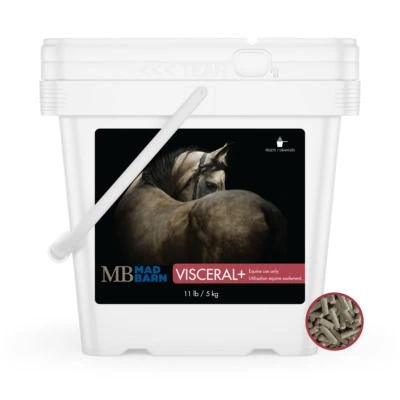
Mad Barn’s Visceral+ is a pelleted digestive supplement designed to support both gastric and hindgut health. Visceral+ is formulated with ingredients such as glutamine, lecithin to support stomach health, and probiotics and prebiotics to support hindgut health and encourage better feed efficiency.
Fats and Oils
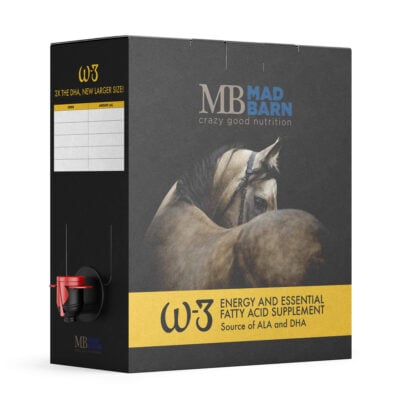
Fats are a concentrated energy source that can be used to increase calorie intake in performance horses without excessive addition of starch. Fatty acids are oxidized aerobically, and can help conserve a horse’s muscle glycogen stores during exercise.
However, fats do not contain glucose, so they cannot replenish glycogen stores. That’s why it’s recommended to use fats in conjunction with a moderate amount of starch to balance the energy needs of a high performance horse. [12]
When choosing an oil supplement, look for one that offers a balance of omega-3 and omega-6 fatty acids. Omega-3 fatty acids, such as DHA and EPA, are known for their role in supporting a healthy inflammatory response, which can benefit joint and respiratory health. [13][14]
Protein
Adequate protein is critical for performance horses, as it supports muscle development, tissue repair, and overall body maintenance. During intense training and competition, performance horses experience increased muscle breakdown and require more protein to rebuild and strengthen their muscles.
However, consuming too much protein can have negative effects on a horse’s performance and health. Excess protein intake increases the production of urea, which leads to increased ammonia excretion in urine and can irritate the respiratory system.
Given this, protein supplementation should focus on providing high-quality sources that meet, but do not exceed, the horse’s needs. Individual amino acids can enhance protein quality without the risk of over-supplementation.
Lysine, threonine, and methionine are key amino acids that help support muscle repair and maintenance in performance horses.
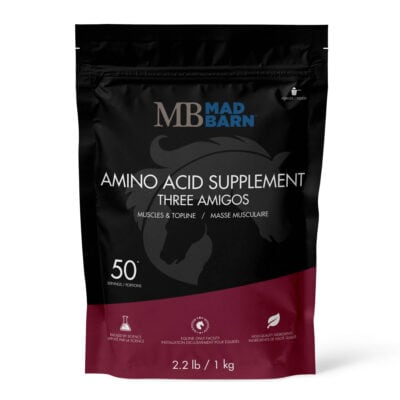
Mad Barn’s Three Amigos is an amino acid supplement containing lysine, threonine, and methionine in an ideal 5:3:2 ratio. It can be used with a balanced protein intake to meet the increased amino acid requirements of performance horses.
Hydration and Electrolytes
Lastly, adequate hydration is critical for horses exercising at top speeds. Dehydration can lead to muscle fatigue, cramping, and reduced performance. Therefore, horses need ample access to clean water and proper replacement of electrolytes lost through sweat, especially after intense workouts or competitions. [15]
Mad Barn’s Performance XL is an electrolyte supplement that provides sodium, chloride, potassium, calcium and magnesium in a balanced ratio to replenish minerals lost in sweat and encourage rapid rehydration. It also contains vitamins E and C to provide antioxidant support, helping to combat oxidative stress that racehorses can experience during high-intensity exercise.

Veterinary & Farriery Care
A horse’s overall health and hoof care are critical to its performance. Regular veterinary check-ups help monitor a horse’s condition, address any potential injuries early, and keep them in top form so they can run at peak speeds.
Proper hoof care is vital, as poor hoof health can significantly impact speed and increase the risk of injury. Regular farriery tailored to the horse’s specific needs can help prevent common problems like tendon strain and joint inflammation.
Surface conditions also play a significant role in maintaining a horse’s health. Running on poor or uneven surfaces can increase the risk of injury, particularly in the limbs. Horses should ideally gallop on well-maintained, even ground that reduces strain on tendons and ligaments, thus prolonging their career and keeping them at their fastest. [2][17]
Frequently Asked Questions
Here are some frequently asked questions about the fastest horse breeds:
Fastest recorded horse speed is about 44 mph (71 km/h), set by the Thoroughbred Winning Brew over 2 furlongs in 2008. Some Quarter Horses can reach even higher top speeds over very short distances, with elite sprinters reported over 56 mph (90 km/h). Speed records depend heavily on distance, breed, conditioning, and race conditions.
American Quarter Horses are often considered the fastest horse breed over short distances because they can accelerate rapidly and reach extreme sprinting speeds. Thoroughbreds are the dominant racing breed over longer flat races, where stride length, lean muscle, and efficient movement help them maintain high speed. Arabians are not the fastest sprinters, but they excel in endurance events.
A horse can usually gallop at about 25 to 30 mph (40 to 48 km/h), making the gallop the fastest natural gait. Elite racehorses can exceed 40 mph (64 km/h) during short bursts. Galloping speed varies based on breed, fitness, distance, surface, rider weight, and whether the horse is sprinting or maintaining pace.
Horse gait speeds increase from walk to gallop, with each gait serving a different purpose. A walk averages about 4.4 mph (7 km/h), while a trot averages around 8.1 mph (13 km/h). A canter usually ranges from 10 to 17 mph (16 to 27 km/h), and a gallop commonly reaches 25 to 30 mph (40 to 48 km/h).
Thoroughbreds are fast because their bodies are built for efficient high-speed movement. Long legs, lean muscle, a flexible spine, and a high proportion of fast-twitch muscle fibers help them produce long, powerful strides. Thoroughbreds also have limbs that can swing quickly with relatively low energy use, which supports speed over racing distances.
Endurance breeds usually cannot match the top speed of sprinting breeds, but they are built to keep moving for much longer. Arabians, for example, are known for stamina and can compete in races up to 100 miles (160 kilometers). Their strength is maintaining a steady pace over distance, while Quarter Horses and Thoroughbreds specialize in speed.
Quarter Horses are extremely fast over short distances because they have powerful hindquarters and strong sprinting ability. Their bodies are well suited to explosive acceleration, which makes them successful in events such as barrel racing and quarter-mile races. Elite Quarter Horses can reach speeds up to about 55 mph (88 km/h) in short bursts.
Training has a major effect on how fast a horse can run because conditioning builds strength, stamina, coordination, and recovery capacity. Sprint horses often need short, intense workouts that develop explosive power, while endurance horses require longer, slower rides to improve cardiovascular fitness. Rest days, cool-downs, and gradual conditioning also help reduce injury risk.
Nutrition supports speed in performance horses by supplying energy for work, protein for muscle repair, and minerals for hydration. High-quality forage should form the foundation of the diet, while concentrates, fats, and digestible fibers can help meet higher calorie needs. Diets for racehorses must balance performance fuel with digestive health to reduce problems such as colic or ulcers.
Hydration and electrolytes are important for fast horses because intense exercise causes sweat losses that can affect muscle function and performance. Sodium, chloride, potassium, calcium, and magnesium help support fluid balance and normal muscle activity. Horses working at high speeds need clean water and appropriate electrolyte replacement, especially after hard workouts, hot weather, or competition.
Hoof care can affect a horse’s speed because poor hoof balance, soreness, or weak hoof structure can shorten stride and increase injury risk. Regular farriery helps support sound movement, especially for racehorses and other performance horses. Safe footing also matters, since hard, uneven, or poorly maintained surfaces can strain tendons, ligaments, and joints.
Gaited horses are not usually faster than other horses, since ambling gaits are mainly valued for rider comfort rather than speed. Gaits such as the running walk, rack, and tölt are smooth and efficient for covering ground comfortably. Standardbred pacers are an exception among specialized movers, as some racing lines are bred for speed at the pace.
Summary
Watching a horse run in full stride — whether galloping across an open field or racing down a track — demonstrates how these graceful animals are built for speed.
- The fastest recorded speed for a horse is 44 miles per hour (71 km/h), set by a Thoroughbred named Winning Brew.
- Racehorse breeds like Thoroughbreds and Standardbreds are built for speed, with long legs, flexible spines, and a higher percentage of muscle mass.
- Fast breeds have more fast-twitch fibers for short bursts of speed, while endurance breeds like Arabians rely on slow-twitch fibers for long-distance stamina.
- Performance horses need rigorous training programs, adequate recovery and a balanced diet to support optimal athletic performance.
- Regular veterinary check-ups, hoof care, and training on well-maintained surfaces are crucial to prevent injuries and ensure top running speed.
References
- Kearns. C. F. et al., Overview of Horse Body Composition and Muscle Architecture: Implications for Performance. The Veterinary Journal. 2002.
- Pilliner. S. et al., The Horse in Motion. Blackwell Science, Oxford. 2002.
- Hildebrand. M., The Mechanics of Horse Legs. American Scientist. 1987.
- Rivero. J. L. et al., Muscle Fiber Type Composition and Fiber Size in Successfully and Unsuccessfully Endurance-Raced Horses. Journal of Applied Physiology. 1993. View Summary
- Harris. S. E., Horse Gaits, Balance and Movement. New York : Howell Book House. 2005.
- Vergara-Hernandez. F. B. et al., Average Stride Length and Stride Rate of Thoroughbreds and Quarter Horses during Racing. Translational Animal Science. 2022. View Summary
- Schiettecatte, J. et al. The Horse in Arabia and the Arabian Horse: Origins, Myths and Realities. Arabian Humanities. 2017.
- Davenport, H. The Arabian Horse. J Heredity. 1908.
- Peterson, J. et al. The American Quarter Horse: Population Structure and Relationship to the Thoroughbred. J Hered. 2014. View Summary
- Colombino. E. et al., Gut Health of Horses: Effects of High Fibre vs High Starch Diet on Histological and Morphometrical Parameters. BMC Veterinary Research. 2022.
- Luthersson. N. et al., Risk Factors Associated with Equine Gastric Ulceration Syndrome (EGUS) in 201 Horses in Denmark. Equine Veterinary Journal. 2009. View Summary
- Pagan. J., Energy and the Performance Horse. Advances in equine nutrition. 1998.
- Woodward. A. D. et al., Supplementation of Dietary Long-Chain Polyunsaturated Omega-3 Fatty Acids High in Docosahexaenoic Acid (DHA) Increases Plasma DHA Concentration and May Increase Trot Stride Lengths in Horses. Equine and Comparative Exercise Physiology. 2007.
- Nogradi. L. et al., Omega-3 Fatty Acid Supplementation Provides an Additional Benefit to a Low-Dust Diet in the Management of Horses with Chronic Lower Airway Inflammatory Disease. Journal of Veterinary Internal Medicine. 2015.
- Auwerda. P., Electrolytes and the Exercising Horse. Equine Science.
- Hinchcliff. K. W., Ed., Equine Sports Medicine and Surgery: Basic and Clinical Sciences of the Equine Athlete. 2. ed. Saunders Elsevier, Edinburgh. 2014.
- Parsons. K. J. et al., High Speed Field Kinematics of Foot Contact in Elite Galloping Horses in Training: Hoof Impact Kinematics at High Speed. Equine Veterinary Journal. 2011. View Summary