English








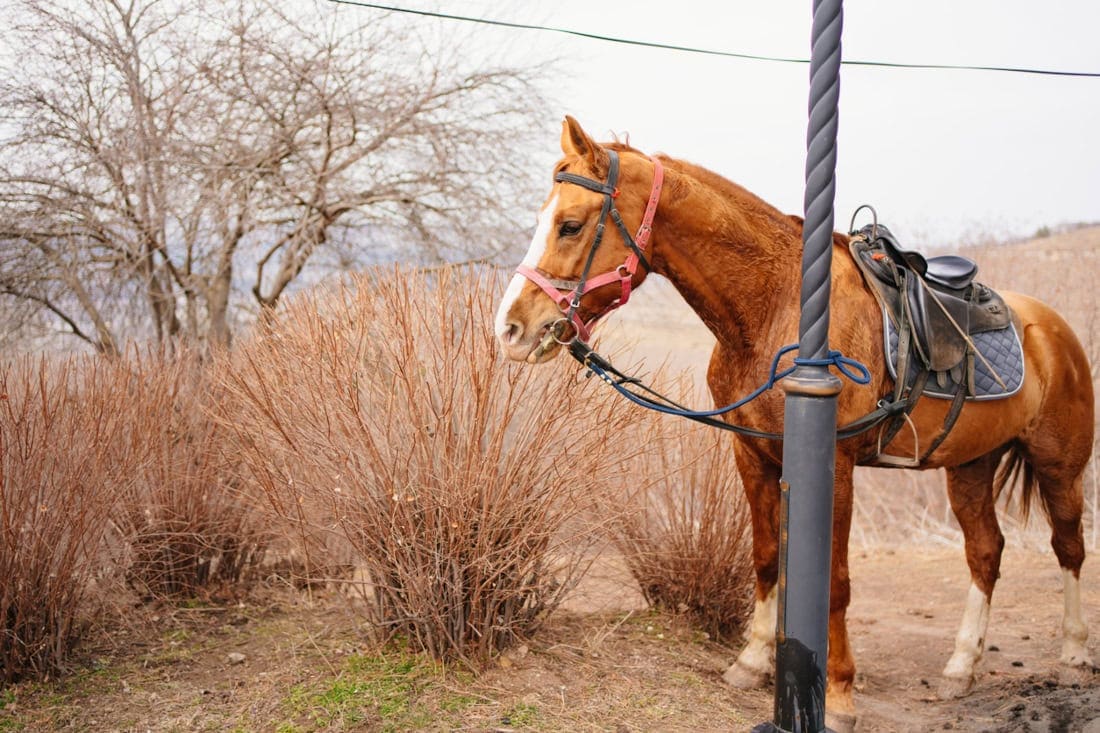
Securing a horse safely while grooming, tacking up, or providing veterinary care is a fundamental skill in horse management. However, improper tying and hitching methods can lead to stress, injury, or dangerous behavioral issues.
When selecting a hitching system, it’s important to consider the horse’s natural fear response. Horses are prey animals, and their instinct to flee when frightened can lead to dangerous pull-back scenarios if they feel trapped or confined.
Safe breakaway systems and quick-release knots not only minimize the risk of injury but also help prevent the development of learned helplessness. By aligning hitching techniques with the horse’s natural behavior, handlers can create a safer, more positive tying experience.
Read on to learn more about the principles of safe hitching, the best knots for securing horses, and effective training techniques to ensure the hitching process is safe and comfortable for the horse.
Horse Hitching Techniques
Horse hitching, or tying, involves securing a horse in one place using a rope or lead tied to a stationary object like a post, hitching rail, or a tree.
It’s commonly used to keep the horse from wandering off, especially while the rider dismounts or performs tasks. This method ensures the horse stays safe and controlled, preventing accidents or injury. When using horse hitching, the knot should be secure but easy to undo in case you need to free the horse quickly.
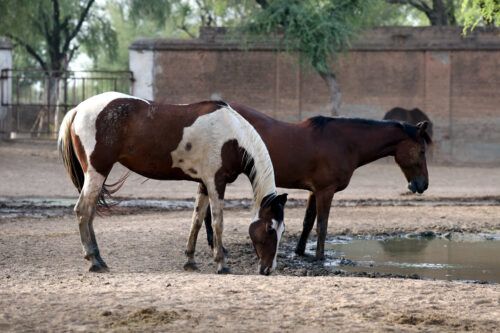
Before exploring the details of knots and tying techniques, it’s essential to understand equine behavior in response to hitching practices. Horses are prey animals, which means their instinctive response to fear or danger is to run away. In the wild, horses rely on speed and agility to escape predators, and this instinct does not disappear with domestication. [1][2]
When tied, a horse might feel confined, which contradicts their natural instincts and can cause panic. The horse might pull back forcefully, risking physical injury and the potential development of long-term behavioral issues. [1][2]
Since standing tied is challenging to the horse’s natural flight response, it’s important to teach horses this skill gradually. To ensure a smooth training process, caretakers should be prepared for the horse to resist this training, and take steps to prevent stress and fear.
Best Practices
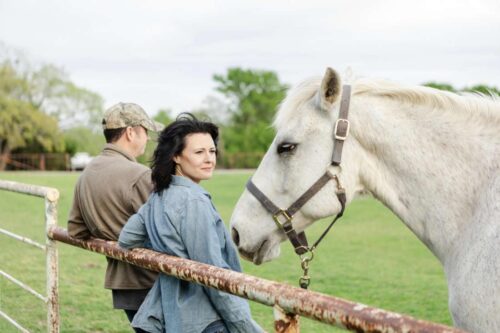
Standing tied is a learned behavior, not an instinctive one. By respecting the horse’s nature and training them with patience and care, owners can make this experience positive and stress-free for both horse and handler. [2][3]
The first step in hitching and tying horses is approaching the animal safely. Horses should always be approached calmly and confidently. Maintaining control over the horse’s movements while being mindful of their natural blind spots is fundamental to effective handling. Always remember horses cannot see directly in front of or behind them. [2][3]
While teaching a horse to stand tied can be done safely and effectively using gradual, positive reinforcement methods, some still use traditional techniques that prioritize control over comfort. These methods can place unnecessary physical and mental strain on the horse, increasing the risk of injury or creating negative associations with standing tied.
What's your top priority with your horse's health?

Enter your email to receive your store credit
Hard-Tying
Historically, hard-tying has been used as a training method to teach horses to stand still for extended periods of time. This method involves tying the horse to a solid object with no chance of breaking away. If the horse panics and tries to pull back, they are forced to stand still because there is no escape.
The premise behind hard-tying is that the horse will eventually stop resisting and learn to stand quietly. However, the risks of this method far outweigh any potential benefits.
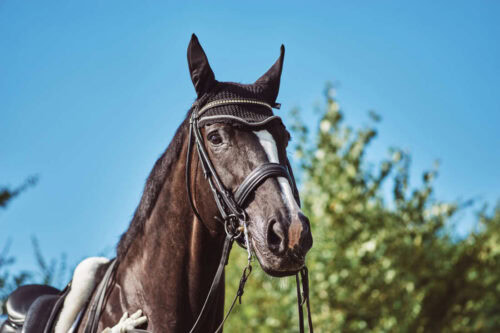
Some of the dangers associated with hard-tying include: [4]
- Horse injuries: If the horse panics and pulls back while hard-tied, the significant pressure exerted on the poll and neck can result in serious injury. Horses can develop soreness, muscle strains, or even sustain long-term damage
- Human injuries: If a horse begins panicking and kicks, flails or falls down while hard-tied, humans nearby may be injured in the process
In addition, one of the negative impacts of hard-tying is the risk of learned helplessness in the horse. Learned helplessness occurs when, after repeated attempts to escape a fearful situation, a horse realizes they cannot break free and essentially “gives up.”
While the horse may appear calm, it is not because they have learned to be patient; rather, they have stopped responding because they know they cannot escape the stressor. [4] This is detrimental to the welfare of the horse.
Given these risks, hard-tying is not recommended. Instead, horse owners and handlers should prioritize the horse’s physical and mental well-being by using safer restraint methods.
Self-tightening Knots
Some types of knots can become dangerous because they tighten under pressure. Self-tightening knots may become so tight that they are difficult to undo, which is problematic when a horse must be released quickly (e.g., if the horse panics or during an external emergency).
The sustained pressure from a self-tightening knot can also injure the horse’s head and neck if no other breakaway mechanism is in place.
When tying a horse, owners, trainers, and handlers should always use a quick-release knot that does not tighten under pressure. This keeps the horse comfortable and safe, even if they pull back or move suddenly.
Horse Hitching Guide
Hitching a horse safely involves more than simply tying a lead rope to a solid object. It requires understanding the horse’s natural behavior, selecting appropriate equipment, and using techniques that minimize stress and prevent injury.
Before beginning the hitching process, ensure the horse is calm and focused, and always use equipment that allows for a quick release in case of panic.
1) Use Breakaway Hitching Systems
Breakaway systems provide a means for horses to break free if they pull too hard, greatly reducing the risk of injury. These systems can be incorporated into the halter, the rope, or the object to which the horse is tied.
Breakaway Halters
Breakaway halters are a popular choice for horse owners who want to ensure their horse’s safety while tied. These halters are designed with a weak point, usually in the form of a leather crown piece or a piece of twine, that will snap if the horse pulls hard enough. The breaking mechanism ensures the horse can escape without injury if they panic. [5]
These halters offer a practical balance between restraint and safety, allowing the horse to be tied while minimizing the risk of injury.
A well-fitted halter is essential for your horse’s comfort, safety, and control. It should sit comfortably on the horse’s head without being too tight or too loose.
Elements of a good fit include:
- Noseband position: the noseband should ideally sit about 2-3 finger-widths down from the edge of the cheekbone
- Cheekpiece: the cheekpiece should run parallel to the animal’s cheekbone
- Throatlatch: the throatlatch should be loose enough to fit 4 stacked fingers between the horse’s cheek and the halter
Quick-Release Knots
Another essential element of tying horses safely is the use of quick-release knots. Quick-release knots allow the handler to untie the horse quickly in emergencies, such as a panic response or during a barn fire.
Unlike knots that tighten under pressure, quick-release knots are always easy to undo, regardless of how much tension is applied to the rope. Quick-release knots offer several important benefits: [6]
- Ease of use: quick release knots are simple to tie and untie, making them practical for everyday use
- Safety: in case of an emergency, the handler can quickly free the horse, minimizing the risk of injury
- Adjustability: quick release knots are easy to adjust, allowing the handler to give the horse a shorter or longer lead as needed on demand
Even when using a breakaway system, knowing how to tie a reliable quick-release knot is essential. This knot is a key element of safe horse handling, allowing for a fast response in situations where the horse becomes distressed.
It’s important to note that not all quick-release knots function the same way. Some can still self-tighten under pressure, making them difficult to undo in emergencies.
To ensure maximum safety, handlers should always pair a quick-release knot with a breakaway system. Doing so ensures that if the knot tightens too much under tension, the breakaway component will still allow the horse to free themself safely.
2) Train to Stand Tied
Since standing tied contradicts a horse’s natural instincts, it’s important to approach this training gradually and thoughtfully. The goal is to build the horse’s confidence and help them feel comfortable while being restrained, rather than forcing them to stand tied before they are ready. [4]
Training begins by introducing the horse to the idea of restraint in a low-pressure environment. While holding the lead rope, encourage the horse to stand still for short periods. If the horse remains calm, provide a reward, such as a treat or praise. Gradually increase the time spent standing still, introducing a hitching post or tie ring once the horse shows comfort with the process.
As with all horse training, positive reinforcement is a highly effective strategy for creating a good experience. Rewarding the horse when they stand quietly reinforces the idea that standing tied is a good experience, not something to fear or resist.
It’s important to recognize that not all rewards are equally effective. While some horses may respond well to verbal praise or pats, these rewards are only reinforcing if they have been associated with a positive experience.
3) Monitor Standing Horses
During training, it’s essential to monitor the horse’s stress threshold — the point at which the horse becomes overwhelmed or anxious. Each horse has a unique threshold, so signs of discomfort such as pawing the ground, pulling on the lead rope, or turning their head away should be noted.
If signs of distress appear, the trainer should not push the horse further. Instead, allow the horse to relax and take a break before resuming training.

Essential Knots Used in Horse Hitching
Mastering a few essential knots can make all the difference in hitching your horse safely and effectively. While quick-release knots are ideal for emergency situations, there are also several non-quick-release knots that every handler should know.
These versatile knots provide secure connections for hitching, tying, and securing lead ropes without tightening under pressure. Keep reading to learn the fundamentals of both types of knots to help you handle horses safely and confidently.
Quick Release Knots
There are different styles of quick release knots, but what they all have in common is the handler side of the lead is secured using slip knots. This allows the handler to pull their side of the lead to release the knot without untying the rope, while pulling on the horse-end of the lead does not tighten or undo the knot.
A popular style of quick release knot used in horse hitching is the Highwayman’s Hitch, also known as the Robber’s Knot. This knot has a quick release loop on one end and a secure tie-off on the other.
The highwayman’s hitch is convenient because the handler can tie as many loops into end as the lead length allows. This provides extra security without losing the ability to release the knot rapidly in an emergency.

How to tie a Highwayman’s Hitch knot: [7]
- Pass the rope around or through the anchor point (like a post or rail), bringing the working end (free end) toward you
- Make a loop (bight) in the standing part (the long, anchored side of the rope), and bring it toward you
- Take this bight and pass it through the opening created around the anchor point. You are creating a slip loop — the base of the hitch
- Now take the working (free) end of the rope and form another bight
- Push this second bight through the first bight you just made
- For extra security, make a third small bight in the working end and tuck it into the second bight. This prevents accidental untying if the rope is jostled
- Gently pull on the standing part of the rope to cinch the hitch against the anchor. Make sure all loops are neat and snug
Other Knots
In addition to quick-release knots, there are a few other basic knots that every horse handler should know. These knots serve different purposes and can be helpful in a variety of situations.
Before learning any knot, it’s important to understand its specific purpose and how it functions under pressure. Some knots are designed to remain secure without tightening, while others are intended to release quickly in emergencies.
Knowing which knot to use and when can make a significant difference in maintaining safety and control when handling horses.
The Bowline
The bowline knot is a non-slip knot commonly used to create a fixed loop at the end of a rope. This knot is particularly useful for securing a horse’s lead rope to a post or ring because it does not slip or tighten under pressure.
Note that the bowline knot is not a quick-release knot. If tying a horse with a bowline, they should be tied to a loop of breakaway twine, or with a leather breakaway strap on the halter.
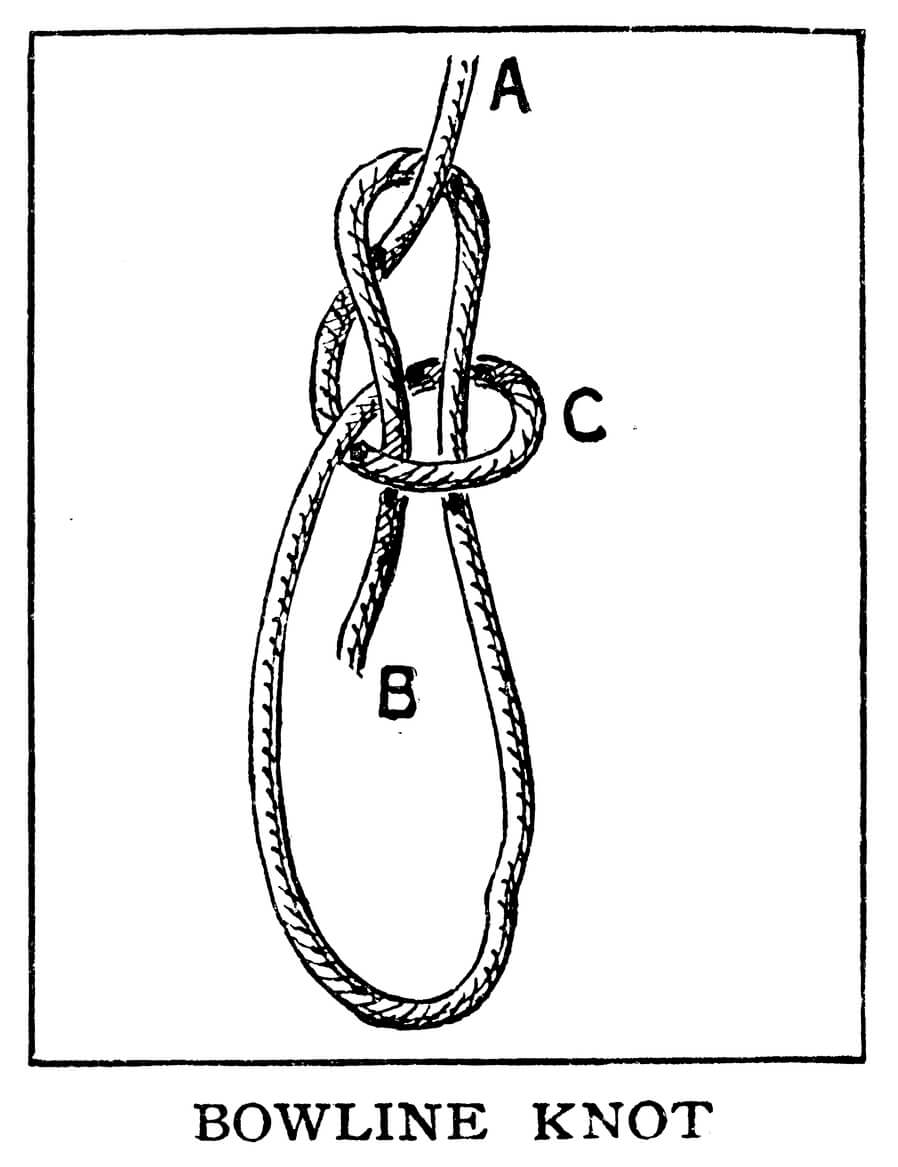
How to tie a bowline knot: [8]
- Create a small loop at the end of the rope, with the standing part of the rope on top
- Thread the free end of the rope through the loop from underneath
- Pass the free end around the standing part of the rope, then back through the loop
- Pull tight to secure the knot
The Clove Hitch
The clove hitch is a simple and versatile knot that is often used to secure ropes to poles or posts. While not as secure as a quick-release knot, the clove hitch is useful when you need to temporarily secure a horse without needing a slip knot.
Note that like the bowline knot, the clove hitch knot is not a quick-release knot. As such, the clove hitch should be used with a breakaway feature like a leather strap or twine.
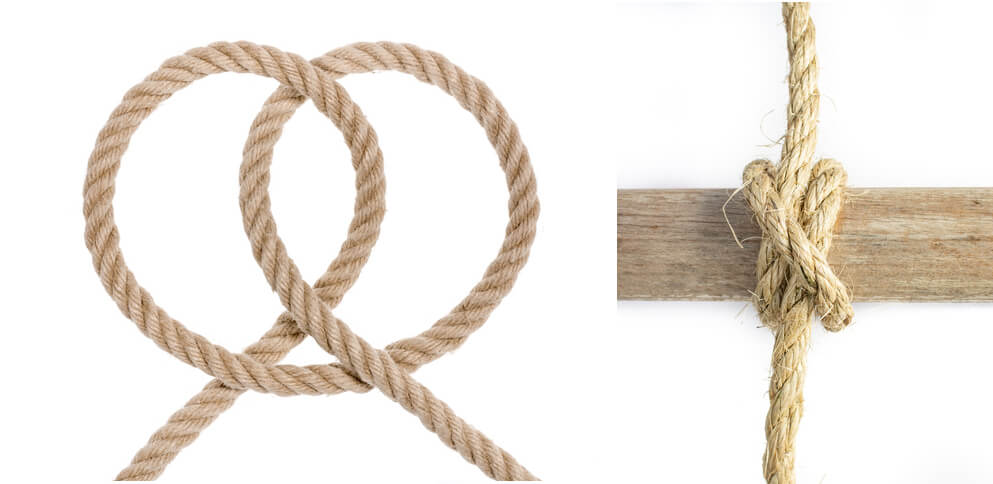
How to tie a clove hitch knot: [8]
- Wrap the free end of the rope around the post
- Cross the free end over the standing part of the rope, then wrap it around the post again
- Tuck the free end under the crossed section of the rope and pull tight
The Half-Hitch
The half-hitch is one of the easiest knots to tie and is often used in combination with other knots to add extra security. Note that the half-hitch knot is not a quick-release knot and should be used with a breakaway feature.

How to tie a half hitch knot: [8]
- Wrap the free end of the rope around the post
- Tuck the free end under the standing part of the rope, creating a simple loop
- Pull tight to secure the knot
Frequently Asked Questions
Here are some frequently asked questions about hitching horses:
The best knot for tying a horse is the quick-release knot. This knot is safe and practical because it allows the handler to untie the horse quickly in case of an emergency, such as if the horse panics or pulls back. Knowing how to tie a quick release knot is a crucial skill for any horse handler, as it offers both security and flexibility.
When haltering a horse, handlers should never approach from behind or too suddenly. Approaching this way can startle the horse, causing them to react defensively and potentially leading to an accident. Instead, they should approach calmly from the side, speaking softly to make the horse aware of their presence. Additionally, handlers must avoid fastening the halter too tightly, as this can cause discomfort or injury to the horse's head and neck.
Hard-tying involves securing a horse so tightly that they cannot break free, even if they panic. This method can lead to serious physical injuries such as neck strains, as well as psychological harm like learned helplessness.
Summary
Hitching and tying horses require careful consideration to ensure the horse’s safety and well-being.
- Breakaway halters and quick-release knots are essential tools for safely tying horses up.
- Always train horses to stand tied gradually, without pushing them beyond their stress threshold.
- Avoid methods such as hard-tying or the use of patience poles, which carry unnecessary risks of physical injury and mental distress.
- Prioritize the horse’s comfort and monitor their reactions so you can adjust your approach to suit their individual needs.
References
- McGreevy. P., Equine Behavior: A Guide for Veterinarians and Equine Scientists. Second edition. Saunders Elsevier, Edinburgh London New York Oxford Philadelphia St Louis Sydney Toronto. 2012.
- Tighe. M. M. and Brown. M., Mosby’s Comprehensive Review for Veterinary Technicians. Fifth Edition. Elsevier. 2020.
- Bickel. B., Safe Horse Handling. Pennsylvania State University.
- Waran. N. et al., Training Methods and Horse Welfare. The Welfare of Horses. 2007.
- Parker. R., Equine Science. Fifth Edition. Cengage. 2013.
- Sheldon. C. C. et al., Animal Restraint for Veterinary Professionals. Second edition. Elsevier, Maryland Heights, Missouri. 2017.
- Highwayman’s Hitch. Animated Knots. 2025.
- Aadland. D., The Pocket Guide to Equine Knots. Skyhorse Publishing. 2017.