English












Walking the course is a mainstay of preparation for show jumping equestrians. When preparing for a competition, understanding the course design and planning your ride are key strategies to ensure success. Show jumping courses are thoughtfully designed to challenge both horse and rider, testing skills like athleticism, rhythm, and timing.
Walking the course ahead of time is a preparation method that allows you to strategize and plan your ride by considering your horse’s strengths and weaknesses on the course set by the designer. By planning your path, visualizing each jump, and considering factors like pacing and stride lengths, you can set yourself up for a smooth, controlled round while reducing the risk of penalties.
Walking the course also allows you to map out your ideal lines, spot challenging combinations, and anticipate potential distractions before you mount your horse. With time and practice, you’ll learn to gauge each jump’s visual impact—from bright fillers to water elements—and tailor your pace and stride accordingly.
Planning your ride goes beyond memorizing distances — it’s about visualizing every transition and committing to a clear strategy as you move from fence to fence. In addition, integrating mental rehearsal techniques can steady your nerves and reinforce your plan.
With this level of preparation, you and your horse can approach the course with clarity, confidence, and the agility to adapt on the fly. Read on to learn tips for walking a show jumping course so you’re ready for your next big day at the show.
Understanding the Show Jumping Course
Show jumping is one of the most recognizable English disciplines in equestrian sport. Each obstacle in a jumping course demands a precise approach and balanced canter. Understanding how these elements are arranged and how the course flows helps riders anticipate transitions, adjust pacing, and set up accurate takeoffs.
By familiarizing yourself with the layout and the rhythm of the course, you can build the confidence needed to guide your horse through a smooth, fault-free round.
Course Design & Function
In FEI-regulated show jumping, each course features 10 to 16 obstacles, often constructed from lightweight materials and painted in bright, contrasting colors.
Jump courses are meant to assess a variety of competencies, such as: [1][2]
- Athleticism
- Rhythm and flow
- Tractability
- Responsiveness to the rider’s aids
- Timing
Each course is unique, with combinations and patterns that demand slightly different skills from both the horse and rider. The differences are apparent in the placement of the jumps and depend on the size and layout of the arena. Course designers base jump distances on a standard 12-foot stride, allocating about 6 feet for takeoff and landing. [1]
Course Complexity
Pacing is an important factor across all course types. A balanced pace enables the rider to maintain rhythm and position the horse correctly for takeoff. [1]
Open courses with long straight lines, wide turns, and opportunities for high-speed galloping challenge a horse’s athleticism and speed. Maintaining balance and control at speed is key to completing these rounds without faults.
Conversely, tighter indoor or smaller arena courses require short lines and precise turns, testing the rider’s accuracy and ability to regulate their horse’s stride in compact spaces. [1]
Different jump types add another layer of complexity to show jumping courses.
- Verticals: Simple upright fences consisting of poles stacked directly above one another. They require careful timing and rhythm as the horse must jump high but not wide.
- Oxers: Wider fences made up of two verticals placed close together, creating a spread that tests the horse’s power, scope, and ability to jump both high and wide.
- Liverpools: Jumps that incorporate a shallow water tray or ditch beneath a vertical or oxer. The water element can be visually intimidating, especially for inexperienced horses, and often causes hesitation.
- Combinations: A series of two or more fences set a few strides apart, such as doubles or triples. They challenge the horse and rider to maintain balance, rhythm, and precise striding throughout the sequence.
Understanding how each type of jump affects your horse’s rhythm and confidence can help you prepare a tailored riding strategy. [3]
Jump filler materials and color schemes also influence your horse’s approach. Bright colors, patterns, or unusual shapes can cause horses to hesitate or jump with caution. Course designers often use these elements intentionally to challenge your horse’s bravery and your ability to keep them focused and forward-thinking. [4][5]
What's your top priority with your horse's health?
Penalties & Faults
An important aspect of show jumping course preparation is understanding the format of the competition. Each show jumping format, known as a table, has its own set of rules, scoring, and penalties.
These tables and their rules include: [6]
- Table II, 2(a): In this format, all horse-and-rider pairs complete the first round. After all rounds are finished, those who jumped clear return for a jump-off on a shortened version of the course, following the same order as the first round. The rider with the fastest time and fewest faults wins. This format is commonly used in Grand Prix jumper classes.
- Table II, 2(b): Similar to Table II, 2(a), this format includes a jump-off. However, instead of exiting the arena, riders who complete the first round clear within the optimum time immediately continue into the jump-off. This format is frequently used in jumper classics and regular division rounds.
- Table II, 2(c): Also known as the “power and speed” format, this course is divided into two phases. Riders must jump clear in the first “power” phase to advance to the “speed” phase, which is like a jump-off but takes place within one continuous course. Some regular division rounds use this format.
- Table II: A standard format in schooling jumper shows, Table II consists of a single round with no jump-off. All clear rounds receive equal placement, allowing multiple riders to win the class.
Penalties
No matter what table format is used for the course, penalties remain the same, such as: [6]
- Time faults: Going over the allotted time leads to time faults, with riders usually receiving one penalty point for each second exceeding the time limit.
- Knockdowns: Failing to clear an obstacle results in faults being added to the rider’s score. If a horse knocks down a rail, the horse and rider pair receive four faults, regardless of whether multiple rails fall at the same obstacle.
- Refusals: The horse refusing to jump an obstacle results in a four-fault penalty. The timer also continues while the horse and rider return to the obstacle, potentially incurring time faults.
- Elimination: Multiple refusals, jumping the wrong obstacle, or falling off all result in elimination from show jumping. Riders may also be disqualified for dangerous riding or using equipment that violates the rules.
Considerations
Before your course walk, commit the track to memory. While walking the course, consider your horse’s strengths and weaknesses and how they may perceive the course.
Walking the course alone allows for personal focus, while walking with a trainer or peer can introduce alternative strategies and insights. Ideally, try both methods and consider what works best for you.
Some riders also review video footage of prior rounds or similar course types to identify potential trouble spots. If you’re competing regularly, reviewing your own past performances may help identify patterns in pacing, where faults occur, or how your horse reacts to certain types of jumps.
Mental Preparation
The goal of walking the course is to build familiarity and confidence. Setting a personal objective before entering the arena can help maintain focus. For example, are you aiming to jump clear or help a green horse build experience? This goal will shape how you approach the course. [5]
Visualizing each jump and repeating the steps aloud before and after your course walk helps commit the course to memory. Imagining the feel of the ride can improve focus and reduce nerves. Associating fences with visual cues, like “pink flower jump to black wall jump,” can be more helpful than remembering the jump numbers. [7]
If you’re prone to nerves before your round, step out of the warm-up ring a few minutes early and observe a few rounds. Seeing other riders in action on the course can remind you of your own plan and build confidence. [5]
Try incorporating breathing techniques, such as box breathing, to calm your nerves. This requires inhaling for 4 counts, holding the breath, exhaling, and holding again for 4 counts each. Breathing techniques can lower anxiety levels and steady your heart rate.
Many top-level riders also use mental rehearsal techniques, picturing not only a successful round but also how to calmly recover from small mistakes. [8]
Developing a Course Strategy
When beginning your course walk, make note of where the start and finish timers are. Establish a path to start your course that avoids crossing the timeline before making a direct approach to the first jump. [5]
Planning your ideal line, or path, from jump to jump is one of the most important parts of the course walk. Course designers base jumping distances on a 12-foot stride, factoring in about 6 feet on each side of the jump for takeoff and landing. [9]
It’s important to take your individual horse’s natural stride length into account when walking the course. Factors like arena size and jump placement also influence your horse’s stride. Instead of changing your path, adjust your canter to meet the course demands. [1]
Strides & Pacing
Some riders use a tape measure to measure strides, but many rely on converting human steps. For many riders, four large human strides roughly equal one horse stride. To do this, measure the course by taking four steps from the base of the first jump, which represents your horse’s landing stride, then count your strides to the next takeoff and divide by 4. [9]
You can practice measuring stride with this method at home by marking out 12 feet on the ground until you build a reliable sense of how large your steps need to be to walk a 12-foot stride.
When measuring, you may find that some course distances are either a step too short or long. In these cases, adapt your strategy by adjusting your horse’s canter and pace. [9]
Preparing for Jump-offs
Walking the course is also your opportunity to prepare should you make it through to a jump-off. In jump-offs, you may choose to ride inside turns or angles. If you intend to take the inside line during a jump-off, walk that exact route instead of the safer intermediate one to ensure you understand the ride required for a smooth and controlled approach. [5]
Visual Cues
Some courses are purpose-built with potential distractions, such as: [5]
- Decorative jump fillers
- Bright banners
- Judge’s booths
- Grandstands
- Shaded areas
- Proximity to the in-gate
It’s important to anticipate how your horse will react to these elements and plan your approach to avoid spooking your horse. [5]

Tips for Riding a Show Jumping Course
Some helpful tips for riding a show jumping course include: [2][10]
- Stay focused: Keep your mental game up during warm-up and your round. Calm, concentrated riders help their horse remain composed.
- Ride with a forward, rhythmic canter: Your canter should be smooth, adjustable, and balanced. Maintaining consistent pace between fences improves distance accuracy and reduces faults.
- Adapt to the setting: Small arenas can make horses feel compressed and influence their striding. Be aware of how the space affects your ride and adjust your horse’s pace accordingly.
- Ride tall with soft hands: Most rails fall due to rider error — pulling on the reins, leaning at takeoff, or disrupting the horse’s balance. Keep your upper body tall, hands quiet and steady, and maintain soft contact. Allow your horse freedom to jump by giving your cue at the appropriate time.
- Recover quickly: If you make a mistake during your round, focus on quickly resetting. Avoid dwelling on errors, just regroup and keep riding forward. A small error doesn’t have to derail the rest of your course if you respond calmly.
- Make the most of warm-up: Your warm-up routine plays a critical role in riding the course. Include transitions, small fences, and gradually increase difficulty to ensure your horse is mentally and physically prepared.
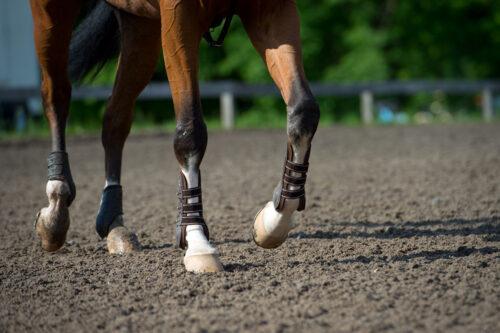
- Dress for success: Equipment choice can influence your ride. Well-fitted boots, bits, and saddle pads contribute to your horse’s comfort and your ability to give effective cues. If you’re riding a sensitive horse, choosing quieter tack and ensuring everything fits correctly can make a notable difference in their performance.
Frequently Asked Questions
Here are some frequently asked questions about planning your ride for a show jumping course:
Walking the course allows riders to evaluate each jump, plan their lines, and consider their horse’s individual strengths and weaknesses. This step is key to visualizing the round, estimating stride lengths, and anticipating potential challenges. [1][2]
Courses may include verticals, oxers, liverpools, and combination fences. Each jump type challenges different skills: verticals require timing and rhythm, oxers test power and scope, and liverpools can cause hesitation. Understanding each jump’s demands allows for tailored preparation and strategy. [4]
Penalties depend on the course’s table format but typically include time faults, knockdowns, refusals, and eliminations for multiple refusals, going off course, or unsafe riding. These penalties apply across various formats such as Table II 2(a), 2(b), and 2(c), each with specific jump-off or round structures. [6]
Jump distances are based on a 12-foot stride, with 6 feet allotted for takeoff and landing. Riders can measure distances using four large human steps to approximate one horse stride. If a line feels slightly long or short, adjustments to the horse’s canter are recommended. Practicing stride measurement at home can help develop accuracy and consistency. [1][9]
Summary
Walking and planning your ride for a show jumping course is a critical aspect of success. By understanding the course design, considering your horse's stride, and strategically planning your path from jump to jump, you set the foundation for a smooth and controlled round.
- Walking the course involves planning your round, counting strides, and preparing for possible challenges that can distract your horse.
- Mental preparation, visualization, and focus are key to executing your strategy while staying calm and in rhythm.
- Precision in your canter, awareness of potential distractions, and steady hands are essential to avoid faults and ride a clean round.
- With careful planning and practice, you'll improve both your show ring performance and your horse's confidence.
References
- The Art of Show Jumping Course Design: Timing, Pace, and Height. 2024.
- Jumping. US Equestrian.
- Obstacles in Show Jumping. Equestroom. 2023.
- Do color perceptions affect jumping performance?. EQUUS. 2024.
- 4 Tips For Walking The Course. FEI.org. 2019.
- JP Jumper Division. United States Equestrian Federation. 2025.
- 6 Mental Skills Equestrians Should Develop. FEI.org. 2023.
- Murray, B. Expert tips to help you ride your horse on the roads with confidence. Horse & Hound. 2025.
- How to Walk a Jumping Course. FEI.org. 2020.
- Murphy. S. K. M. and B., Sharpen Your Show-Jumping Skills. Practical Horseman. 2024.