English











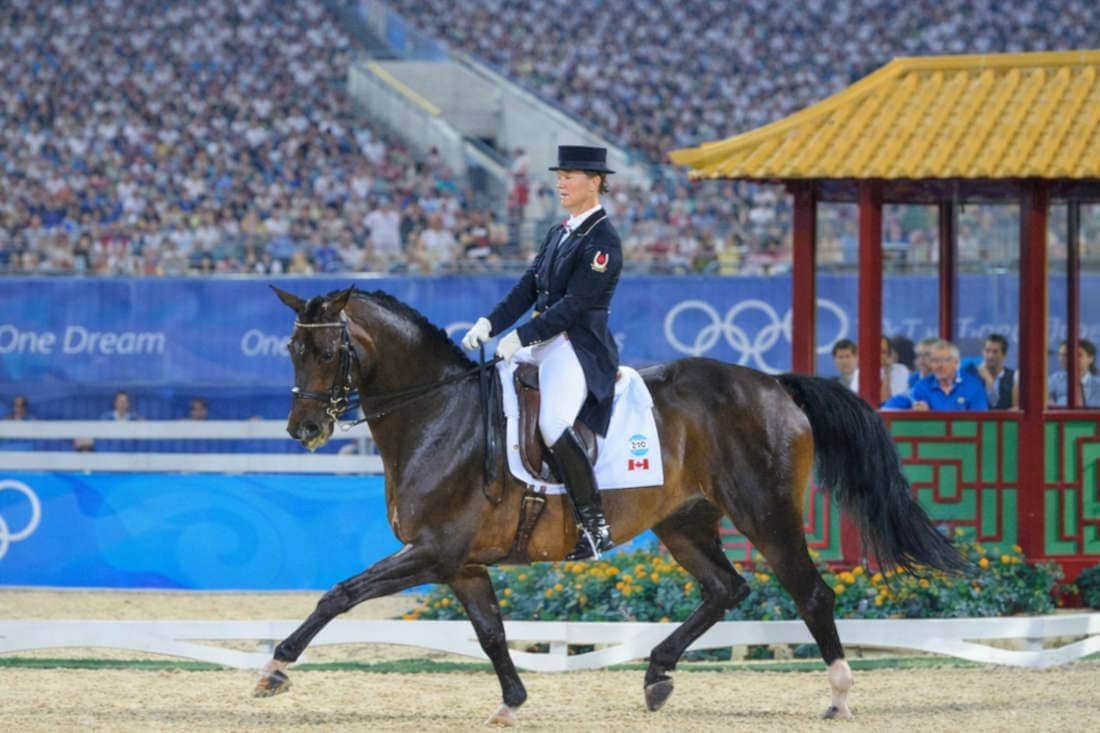
Photo: Cealy Tetley
Distinguished Canadian dressage rider Jacqueline Brooks is not one to rest on her coattails.
The two-time Olympic athlete and Pan American Games Team Silver Medalist has been named to six national teams, developed over 25 horses to the national Grand Prix level and is still competing as one of Canada’s most successful international riders.
Despite her elite equestrianism, Jacquie sees herself as an all-arounder, “I’m not the world’s best dressage rider… I’m not the world’s best anything,” she laughs with characteristic humility.
But her riding resume tells a different story – one of remarkable skill, determination, and love for the intricate art of dressage.
Her passion for equestrian sport, and dressage in particular, is a boon to her students, her teammates, and the wider horse community. Beyond her own aspirations as a rider, Jacquie is passionate about advancing the sport of dressage in Canada.
Her influence and impact – in and out of the ring – is even more impressive given Brooks did not start riding seriously until adulthood.
An Unconventional Beginning
“I’ve done a lot of sports at an elite level,” Brooks explains, referring to her early athletic life in competitive skiing, swimming and other sports.
That high-performance foundation shaped her work ethic long before horses became her focus. But her entry into the sport that would define her career came unexpectedly. Sometime in 1990, a school friend was called away from her commitment working as a groom for Canadian-born Olympic dressage rider Ashley Holzer. She asked if Jacquie could step in at short notice.
“I had the interview with Ashley,” Brooks recalls. “She asked, ‘You’re a groom, right? You know what you’re doing?’ I was like, ‘Oh, yeah!’ and then I proceeded to learn like crazy!” she laughs.
Though riding was not yet her primary sport, Brooks did have a background working with horses. What she lacked in experience, she made up for in determination.
Her first assignment with Holzer was the 1991 Pan American Games in Havana, Cuba — a trial by fire at the highest level of international sport. The Team Canada experience proved transformative for a 23-year-old Brooks.
“And that started my relationship with dressage. When I saw it at that level I thought, ‘Wow! That’s something I’ve got to do!'” And the rest is history.
What's your top priority with your horse's health?

What's your top priority with your horse's health?
From Prospect to Grand Prix
After completing her university degree, Brooks headed to Europe to find a horse who could help realize her dressage dreams.
Finnegan was not initially presented as a prospect for Jacquie but, one night, as she reviewed a video of select European horses for sale, she noticed a young chestnut on the screen.
‘Finny’, a then three-year old Oldenburg gelding, would help Jacquie cover a lot of ground. What began as a young horse prospect evolved into a defining partnership. Finnegan was talented, but more importantly, he was steady — the kind of horse that allowed a rider to grow alongside him. Together, they moved up the levels, learning the demands of each new test, building strength, refining communication, and gaining mileage in the ring.
The journey to Grand Prix is rarely linear, and for Brooks, it meant years of disciplined training and incremental progress. But the foundation she had built as a high-performance athlete translated seamlessly to the arena. She approached dressage the same way she had approached every elite pursuit: with intensity, curiosity, and a refusal to plateau.
By the time the pair reached national-level Grand Prix, Brooks was no longer the wide-eyed groom discovering international sport from the sidelines. She was in the arena herself.
The Horses Behind the Flag
By her early thirties, Brooks was riding among the best in Canada. In 1999, having shown Finny all over North America, and as far away as Australia, Brooks was looking to cross new horizons. With the prospect of making her first Olympics, she needed a horse to get her there.
With help from her parents, Jacquie bought a 1995 Oldenburg gelding named Gran Gesto, or ‘Sam’ as he was affectionately known around the barn.
After successful campaigns across the North American show circuit, Brooks and Sam had the breakthrough they needed. They were selected to compete for Canada in the 2003 Pan American Games held that year in the Dominican Republic.
Together with Leslie Reid, Evi Strasser and her mentor Ashley Holzer, Brooks helped Canada secure a team Silver Medal.
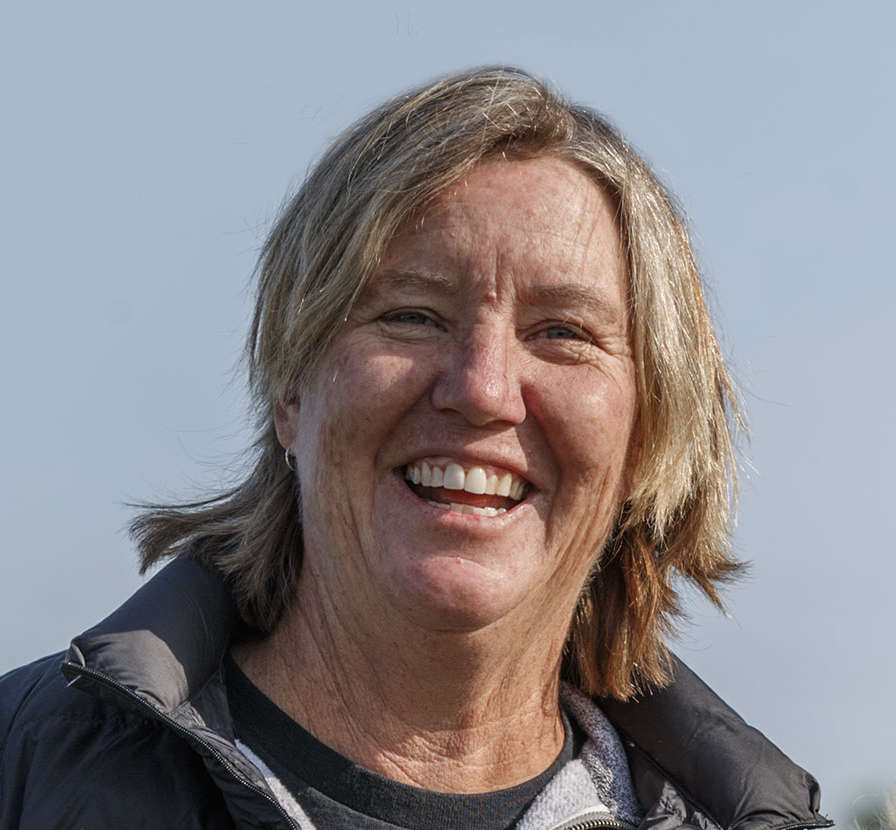
“Gran Gesto was an extraordinary horse. He was likeminded with me.... I was extremely lucky.”
— Jacquie BrooksMad Barn High Performance Athlete
The duo held their place among the world’s best, and were selected again to showcase Canadian dressage on the world stage. They made Team Canada for the 2006 World Equestrian Games in Aachen, the 2007 World Cup in Las Vegas, and the Beijing 2008 Summer Olympic Games.
“He gave me the ride of my life at the Olympics,” says Jacquie of her beloved Sam’s remarkable sense of showmanship.
In 2012, with show master Sam nearing 17 years of age, Brooks made the bittersweet decision to ask no more of him. She retired him with honors in front of an adoring hometown crowd at the Royal Agricultural Winter Fair in Toronto.
Meanwhile, a grey 12-year-old Swedish Warmblood gelding named D Niro was making quick strides under Jacquie’s care.
Within six months of his purchase, Jacquie had moved D Niro up from Prix St Georges to Grand Prix and from there, they would ride all the way to the London 2012 Olympic Summer Games. The following year, the combination rode in the World Cup Finals in Götenborg, Sweden.
“That horse loved to show. He loved to be ridden… He loved dressage,” says Brooks with fondness.
Fueling Elite Performance
Developing and showing elite horses is Jacquie’s lifelong dream. “Everything I do is keeping the dream alive,” she reflects. To fuel it, Brooks feeds simple, low-sugar diets and consistent nutrition to all of the horses in her care.
In 2023, Brooks began working with the equine nutritionists at Mad Barn to optimize her horses’ diets for the unique demands of showing on the national and FEI circuits.
With pasture and forage already the basis of her feeding plans, and energy added only as needed, working with Mad Barn was “a match made in heaven,” says Brooks. “I was excited about meeting the Mad Barn team because… to make sure my horses are getting the right nutrition without having to give them all the cereal grains and all the fillers… was really a relief for me.”
“When Mad Barn did the hay analysis and the nutritional analysis, they figured out how to round off my feed program and my horses have never felt or looked better.”
— Jacquie BrooksMad Barn High Performance Athlete
With simple, consistent meal plans that feed forage-first, Brooks was able to balance her horse’s nutritional needs with minor adjustments that optimize long-term health and performance.
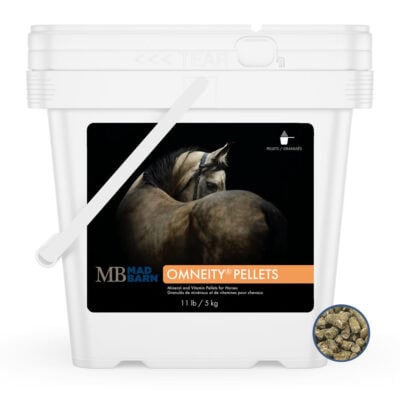
For example, all of Jacquie’s high-performance horses enjoy Mad Barn’s Omneity®. The all-in-one vitamin and mineral formula is designed to fill the gaps commonly left by hay-only diets without adding excess calories or starch.
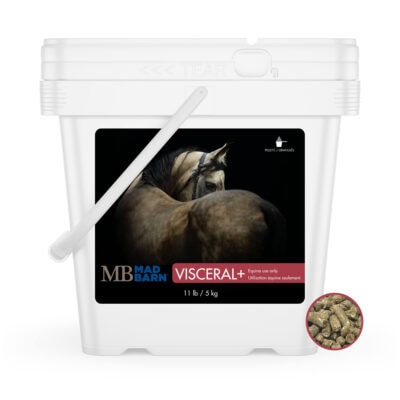
Like other top-level riders, gut health is also a primary concern for Brooks. To keep her horses feeling and performing at their best, Jacquie also feeds Mad Barn’s targeted gut health formula Visceral+.
“Anything you can do to eliminate the chance of excess gas or dehydration… to help the horses with those two issues in their nutrition, I’m for it. The digestive benefits of all-natural Visceral+ make it a great product to help with that.”
With its research-informed blend of probiotics, prebiotics, yeast, and digestive enzymes, Visceral+ is designed to support hindgut function, hydration, and nutrient absorption — key factors for horses training and competing at an elite level. For riders like Brooks, proactive digestive support is part of a larger strategy to help horses stay comfortable, resilient, and ready to perform.
Balance as Foundation
In addition to the benefits of forage-first nutrition, Jacquie brings a unique approach to the art of dressage. Her success is deeply rooted in her cross-training background.
Though she might have wished it, Jacquie did not grow up immersed in riding lessons. Rather, her athleticism was developed on the slopes, in the pool and at the gym.
Hardly a disadvantage, she credits her diverse background in competitive sport with shaping the habits that later defined her riding. Along with mental grit, she developed the physical coordination and balance needed for success in the saddle.
Making it look easy is hard work. But for Jacquie, finding the precise balance point that each horse – and rider – need to float through the passage, to flick the tempi changes, or to pirouette on a perfect plane is an endlessly fascinating process.
“If you can figure out the balance a horse needs to do the maneuver, and you're dedicated to making it as easy as possible for the horse to do it, that's what matters.”
— Jacquie BrooksMad Barn High Performance Athlete
To hear Jacquie describe it, the bridge between gym and arena is not as wide as it seems. The dressage concept of self-carriage, she argues, operates on the same principles she observed in other sports.
The grounded squat of an Olympic powerlifter, the stabilizing stance of a martial artist, the explosive serve of a tennis player — each draws power from balance and alignment rather than brute force.
“That’s key,” says Jacquie. And, in her view, the principle applies equally to horses and riders.
But, she explains, simply understanding this principle might not be enough. A rider needs to feel it for themselves, then can they develop the same understanding in their horse. “Most riders can learn it, but it’s more easily conveyed if the rider has felt it before, perhaps in a different context,” she explains.
On this, Brooks sees a potential challenge for single-sport riders: “If the only sport you have ever trained is dressage, it’s possible you don’t have that context.” She goes onto explain how this can make it more difficult to perform some of dressage’s signature moves, like the piaffe.
“Until you can feel the balance point for yourself – where strength comes from posture more than from muscle – it will be hard to communicate that feeling to your horse.”

Beyond the Show Ring
Jacquie’s thought-provoking strength-from-balance approach makes her a sought-after coach and trainer for other elite equestrians, in and out of the dressage ring.
“As a trainer, I attract athletes who want to think that way. For those who prefer ritualized, repetitive riding … well, they don’t come to me,” she says without regret, knowing what she brings to the sport.
For over twenty years, Jacquie has nurtured Brookhaven Dressage Ltd. into a community hub for dressage enthusiasts and professionals alike. She regularly hosts open training sessions where local riding schools and pony clubs are invited to experience high-level dressage close to home.
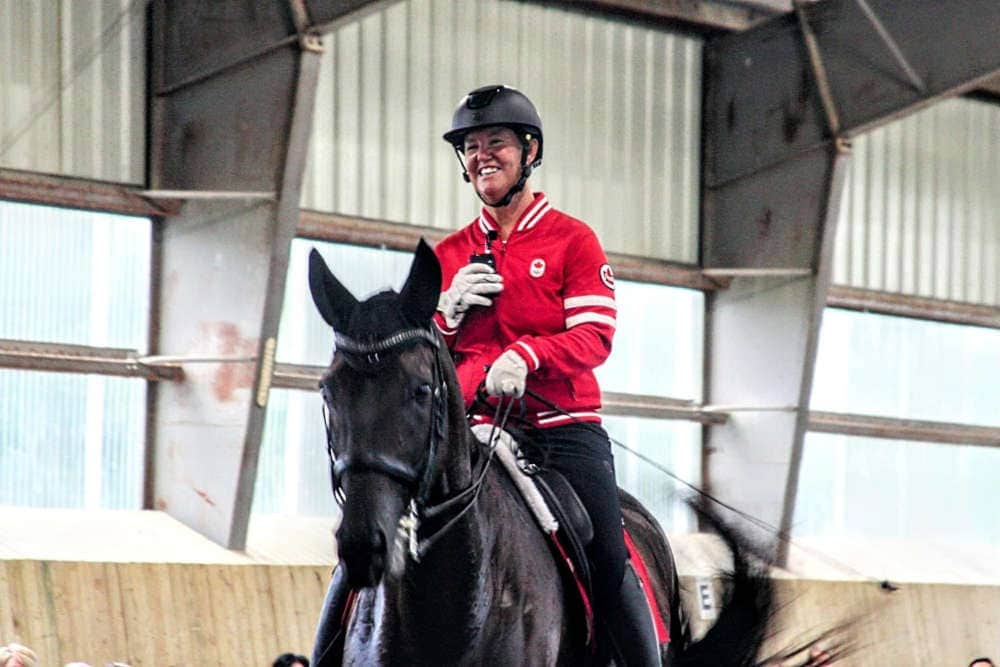
“It’s the full business,” says Jacquie of her family-owned stable, a 20-stall facility in the heart of horse country near Newmarket, Ontario.
She also offers Brookhaven as a home away from home for out-of-town riders, whether they are preparing for major shows in Ontario or stopping over before flying horses out of Toronto or New York to international competitions.
It’s a busy place. “And I like it like that!” she laughs.
Leading Canadian Dressage Forward
Brooks uses her spotlight to advocate for positive change, safety and inclusion in sport. For her consistently kind method of horsemanship, Jacquie was awarded the inaugural John Perry Memorial Award at Dressage at Devon, among other accolades that recognize her positive influence on sport.
If Canada were looking for an ambassador to the world for dressage, Jacquie Brooks would surely be a top candidate.
When she isn’t riding and training at home, the Equestrian Canada High-Performance Coach is on the road and in the ring competing throughout the North American summer and winter show seasons.
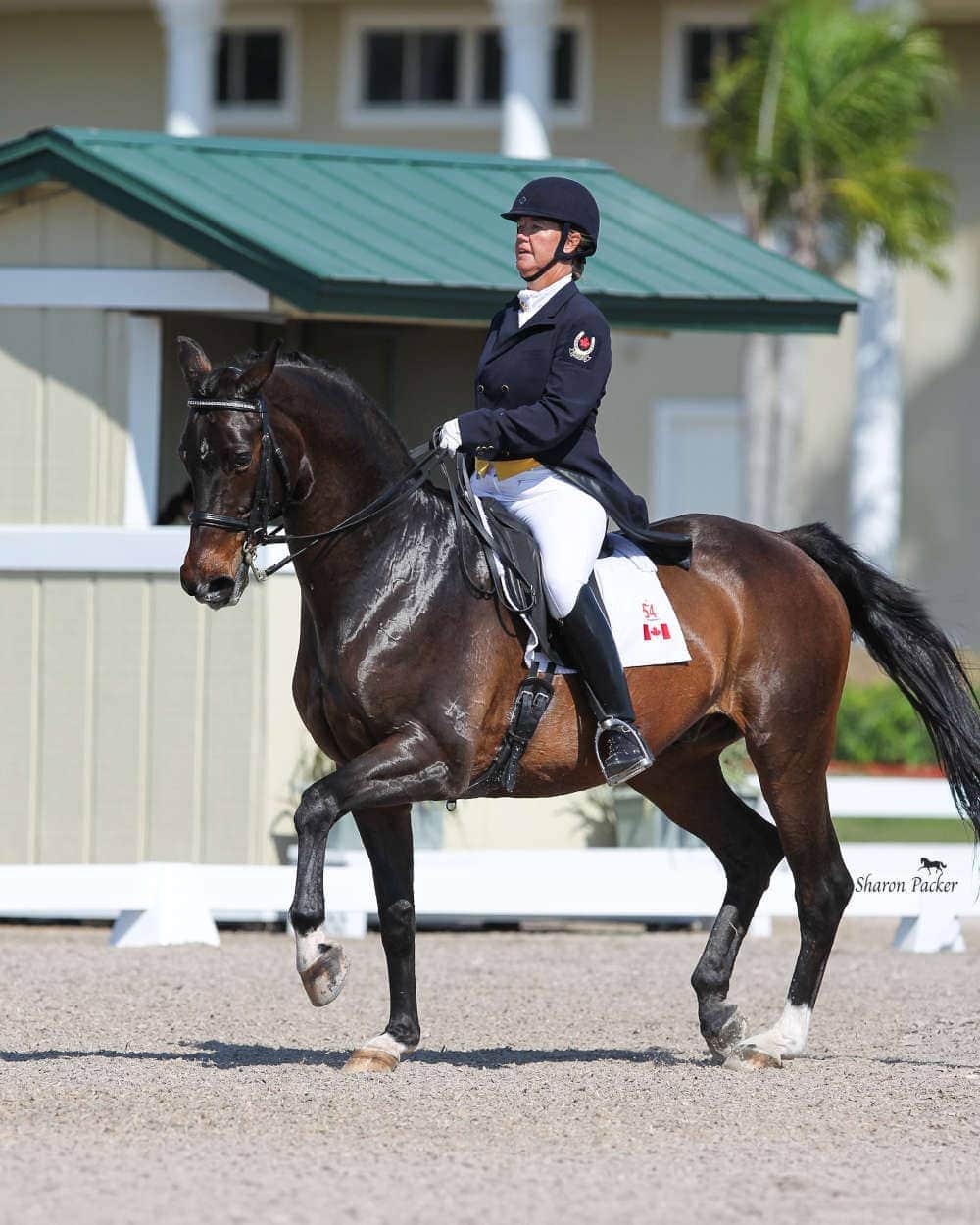
Like many other Canada-based riders seeking to maintain their world-ranking, Brooks spends her winters near Wellington, Florida, where she can continue to develop and show horses year-round against a strong field of international riders.
Looking ahead, Brooks is excited about the potential of her young horses. She has been strategically purchasing and training three-year-olds, with the hope of developing competitive Grand Prix horses for future international competition.
“Now, it’s coming to fruition and I see potential for serious competition,” Brooks says with excitement, having retired D Niro in 2018.
From her unconventional entry into dressage to her transformation into a two-time Olympian and respected coach, Jacquie’s journey has been defined by her willingness to embrace new challenges and learn from every experience.
With the FEI World Equestrian Games set for Aachen in 2026, and the next Summer Olympic Games set for Los Angeles in 2028, it’s an exciting time for Jacquie and her up-and-coming horses.
As she continues to innovate, mentor and compete, Jacquie Brooks shines a bright light over the future of Canadian dressage.
Summary
Jacqueline Brooks is a two-time Olympic dressage athlete whose unconventional path to the sport helped shape a philosophy centered on balance, partnership, and long-term performance. From grooming at the Pan American Games to representing Canada on the world stage, her career reflects disciplined athleticism, exceptional horses, and a commitment to developing both riders and the sport itself.
- She has represented Canada at two Olympic Games, as well as the World Equestrian Games, World Cup Finals, and multiple Pan American Games
- Over the course of her career, she has developed more than 25 horses to the national Grand Prix level through patient, systematic training
- She built defining partnerships with championship horses, including Gran Gesto and D Niro, who carried her to major international competitions
- Drawing on her background in skiing and swimming, she applies cross-training principles to a dressage philosophy rooted in balance, alignment, and self-carriage
- As the leader of Brookhaven Dressage Ltd., she serves as a high-performance coach and mentor to developing athletes
- She uses her platform to advocate for positive change, safety, and inclusion within Canadian dressage