English








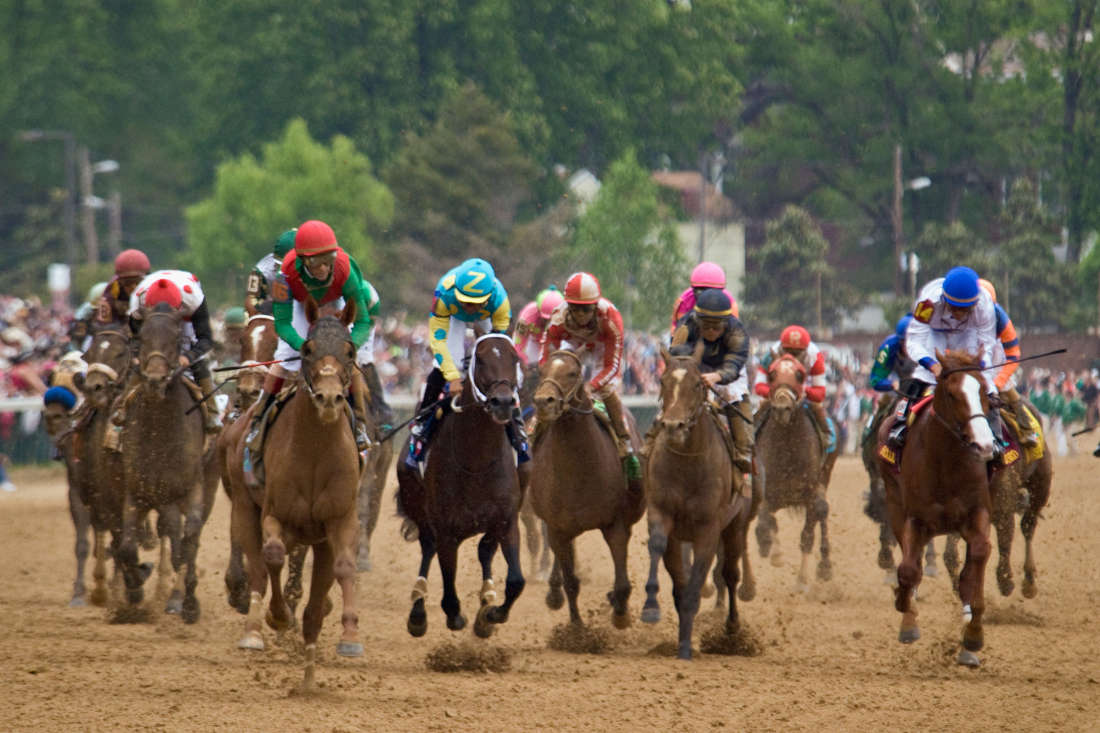
The Kentucky Derby is one of the most iconic and demanding events in American Thoroughbred racing. Held each year at Churchill Downs, the race has stood at the center of the sport for over a century, combining elite athletic performance with a rich tradition that few sporting events can match.
As the opening leg of the Triple Crown, the Derby tests Thoroughbreds under some of the most challenging race conditions they will face in their career. With a rigorous qualification process and a race distance that demands both speed and stamina, the Kentucky Derby represents a defining benchmark in a young racehorse’s career.
Explore the history of the Kentucky Derby, how horses earn their place in the starting gate, and the modern training, nutrition, and management strategies that help shape success at the highest level of the sport.
The Kentucky Derby
The Kentucky Derby, also called the “Run for the Roses,” is the first race of the American Triple Crown, followed by the Preakness Stakes and the Belmont Stakes. To win the Triple Crown, a horse must capture all three races, typically run between May and June, in the same year.
Held each spring at Churchill Downs in Louisville, Kentucky, the Kentucky Derby is restricted to 3-year-old Thoroughbreds and has been a defining event in American racing since 1875. [1][2]
As the opening leg of the Triple Crown, the Kentucky Derby helps determine which horses will continue on to the Preakness Stakes and Belmont Stakes to claim the famed title. Its outcome shapes the trajectory of the series and sets the tone for the weeks that follow. [1][3]
Kentucky Derby at a Glance
- First run: 1875
- Location: Churchill Downs, Louisville, Kentucky
- Distance: 1 1/4 miles (10 furlongs)
- Race order: First leg of the American Triple Crown
- Nickname: “Run for the Roses”
- Eligible horses: Three-year-old Thoroughbreds
Kentucky Derby Distance, Surface & Race Conditions
The Kentucky Derby is run over 1 1/4 miles (10 furlongs) on a traditional dirt surface at Churchill Downs in Louisville, Kentucky.
The race has been held at this distance since 1896, making the Derby one of the longest and most demanding races that 3-year-old Thoroughbreds face early in their careers. It requires a balance of speed, stamina, and perseverance to sustain that effort throughout the race. [4]
Field size plays a major role in how the Derby unfolds. With up to 20 starters, it’s the largest field in North American Grade I racing, the highest classification of Thoroughbred races in the United States. [4][5]
The size and competitiveness of the field heavily influence pace dynamics. Multiple horses often contest the early lead, producing a faster opening pace than in smaller races. This early speed can set up a challenging race that favors horses with strategic positioning or strong finishing ability. [4][5]
What's your top priority with your horse's health?

Enter your email to receive your store credit
How Horses Qualify for the Kentucky Derby
The Kentucky Derby uses a structured, points-based system to determine which horses qualify each year. Only 20 horses can compete, and each must earn enough points through designated prep races known as the “Road to the Kentucky Derby.” [6]
The Derby’s qualification system prioritizes performance in races that match its distance and demands, rather than relying solely on total earnings. Horses accumulate points by finishing in the top positions in a series of prep races that begin in the fall of their 2-year-old season and continue through the spring of their third year.
Both colts and fillies are eligible to compete in the Kentucky Derby. However, most fillies are pointed to the Kentucky Oaks, which is limited to 3-year-old fillies. Because of this, the Derby field is typically made up of colts. [6]
Early races award smaller point values, while major prep races closer to the Derby offer significantly higher totals. Points are awarded on a sliding scale based on finishing position, with the most important races offering up to 100 points to the winner. In most cases, finishing first or second in one of the major prep races is enough to secure a spot in the Derby field.
The point system also excludes sprint races and places greater value on two-turn races at longer distances, ensuring qualifying horses have demonstrated stamina and consistency for the Derby.
At the conclusion of the prep season, the top 20 horses on the leaderboard earn entry into the race, while others may only draw in if scratches occur. [6]
Kentucky Derby Purse & Value Significance
The Kentucky Derby offers the largest purse of the Triple Crown races, with recent years totaling $5 million USD. The winner typically earns over $3 million USD, with payouts extending through at least fifth place.
This structure provides substantial financial incentives not only for owners but also for trainers, jockeys, and breeders associated with successful horses. [7]
Beyond the race purse itself, qualifying for the Derby can significantly increase a horse’s value and future breeding potential. [7]
Kentucky Derby vs. Preakness Stakes vs. Belmont Stakes
The Kentucky Derby is the second longest race out of the three races for the Triple Crown. In the order they are run, these lengths are:
- Kentucky Derby: 1 1/4 miles (10 furlongs)
- Preakness Stakes: 1 3/16 miles (9.5 furlongs)
- Belmont Stakes: 1 1/2 miles (12 furlongs)
The Preakness is run on a smaller field than the Kentucky Derby, often resulting in a more controlled pace and less congestion. In contrast, the Belmont places greater emphasis on stamina and typically features a more spread-out field. [1][3]
The qualification process for the Derby is more structured than for the Preakness Stakes and Belmont Stakes. The latter races do not use a formal points system. Instead, they allow entry through nominations and performance in previous preparatory races.
The Derby also offers a significantly larger purse of up to $5 million USD, while both the Preakness and Belmont typically feature purses around $2 million USD. [1][7]
These differences highlight the Kentucky Derby’s role as the most competitive and selective entry point of the Triple Crown, where only horses with proven performance across multiple prep races earn the opportunity to compete.
Origins of the Kentucky Derby: Founding & Early History
The Kentucky Derby traces its origins to 1875, when the first race was held at what is now Churchill Downs. The event was founded by Meriwether Lewis Clark Jr., who established the Louisville Jockey Club after traveling to Europe and studying premier races such as England’s Epsom Derby and France’s Grand Prix de Paris. [2]
The inaugural race took place on May 17, 1875, drawing a crowd of approximately 10,000 spectators. A colt named Aristides won the first running, setting the foundation for what would become one of the most prestigious races in the world. [2]
Originally run at 1 1/2 miles, the race reflected European racing traditions before being shortened to its current distance of 1 1/4 miles in 1896. [2]
Even during its earliest years, the Kentucky Derby combined sport and spectacle, attracting both elite and general audiences. Over time, it evolved into the longest continuously held sporting event in the United States and a defining fixture in American Thoroughbred racing. [2]
Churchill Downs: The Iconic Home of the Kentucky Derby
Clark developed the racetrack on land provided by his uncles, John and Henry Churchill, and their surname later became synonymous with the venue. Located in Louisville, Kentucky, Churchill Downs has served as the permanent home of the Kentucky Derby since its first running in 1875. [8]
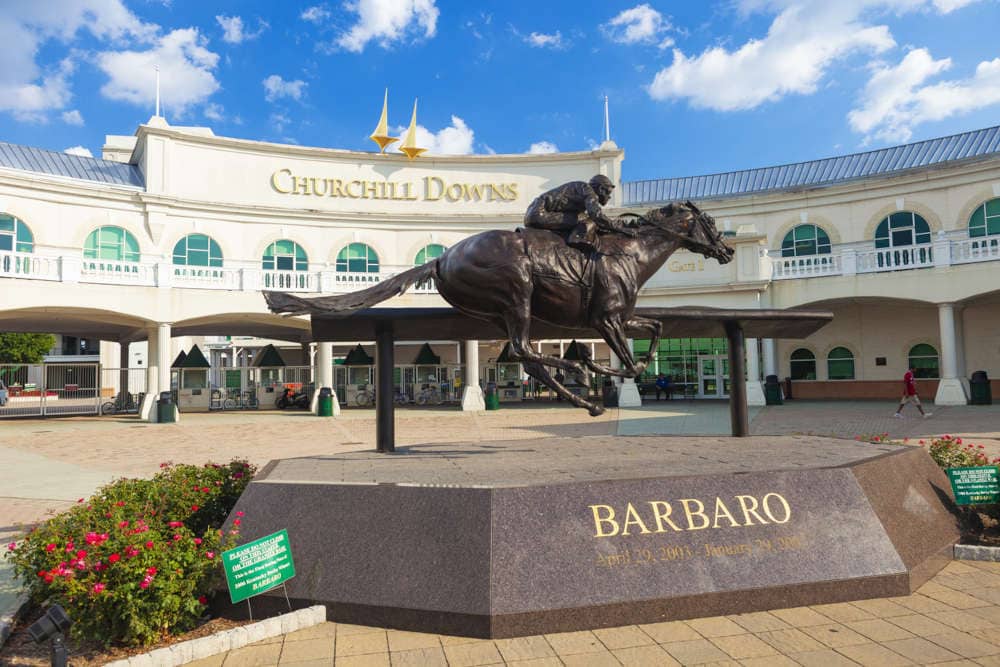
The track is best recognized for its Twin Spires, which were added in 1895 and have since become one of the most recognizable symbols in American sports.
Over time, Churchill Downs has evolved from a modest racetrack into a major racing facility while still preserving the traditions and atmosphere that define Derby Day. Each year, the venue draws hundreds of thousands of spectators, blending high-level competition with longstanding cultural traditions. [8]
Kentucky Derby Traditions: Roses, Fashion & Mint Juleps
The Kentucky Derby is defined as much by the cultural traditions surrounding the race as by the race itself.
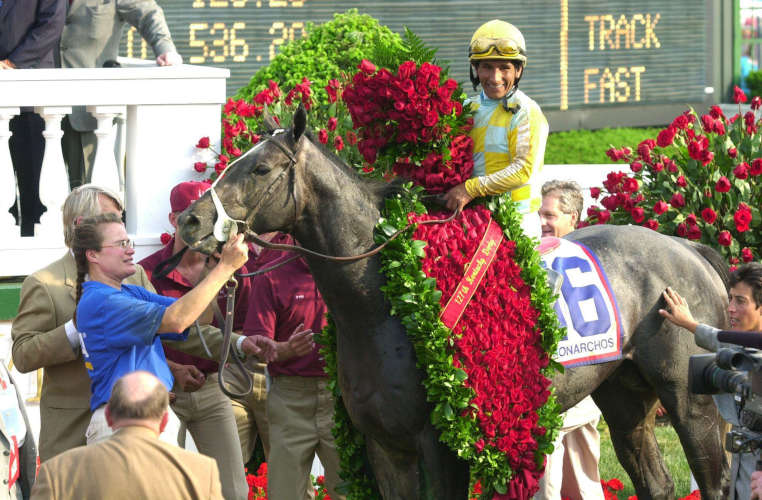
It is sometimes referred to as the “Run for the Roses,” because since the 1890s, the winner receives a garland of over 500 red roses. This custom began in 1896, years after Churchill Downs founder Meriwether Lewis Clark announced roses as the official flower of the Kentucky Derby. [3]
Derby Day is also known for its distinctive spectator fashion, including formal attire and a long-standing tradition of elaborate hats and fascinators. Since the first running, women have worn large, colorful hats, often believed to bring good luck. This tradition has become a signature part of the event’s visual identity. [3]
The race is also closely associated with the mint julep, its official drink. This drink is a traditional cocktail made with bourbon, sugar, mint, and crushed ice, typically served in a commemorative metal cup. [3]
These traditions, combined with the overall pageantry of the Kentucky Derby, contribute to the race’s identity as both a premier sporting event and a longstanding celebration of American Thoroughbred Racing.
What's your top priority with your horse's health?
Legendary Kentucky Derby Winners
The Kentucky Derby has produced some of the most influential and celebrated Thoroughbreds in racing history, with performances that continue to shape American Thoroughbred racing today.
Early Champions
Some of the most famous racehorses of all time established themselves at the Derby in the 20th century, raising the bar in the sport for generations to come.
Citation (1948)
In 1948, Citation delivered one of the greatest three-year-old seasons in Thoroughbred history, winning 19 of his 20 starts. [9]
He captured the Kentucky Derby over a sloppy track, defeating stablemate Coaltown. His dominant Triple Crown campaign became the centerpiece of a year that earned him Horse of the Year honors and included a remarkable 16-race winning streak. [9]
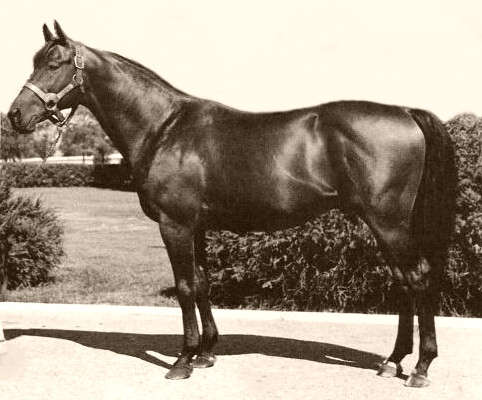 Citation circa 1950 [10]
Secretariat (1973)
Secretariat delivered one of the most iconic performances in racing history, winning the Kentucky Derby in a record time of 1:59 2/5. His Derby run was defined by remarkable acceleration, as he galloped each quarter mile faster than the previous one, an almost unheard-of feat while racing at an elite level. [11]
That performance set the tone for his Triple Crown sweep and cemented his legacy as one of the greatest Thoroughbreds of all time.
Seattle Slew (1977)
Seattle Slew (1974–2002) remains the only horse to win the American Triple Crown while undefeated, accomplishing the feat in 1977. [12]
Known for his front-running speed, he dominated the Kentucky Derby, Preakness Stakes, and Belmont Stakes. [12]
Affirmed (1978)
Affirmed secured a hard-fought Derby victory over Alydar, beginning one of the most famous rivalries in racing history. He went on to consistently defeat his arch-rival in all three Triple Crown races, winning the Kentucky Derby by 1 1/2 lengths, the Preakness by a neck, and the Belmont Stakes by a head to seal the title. [13]
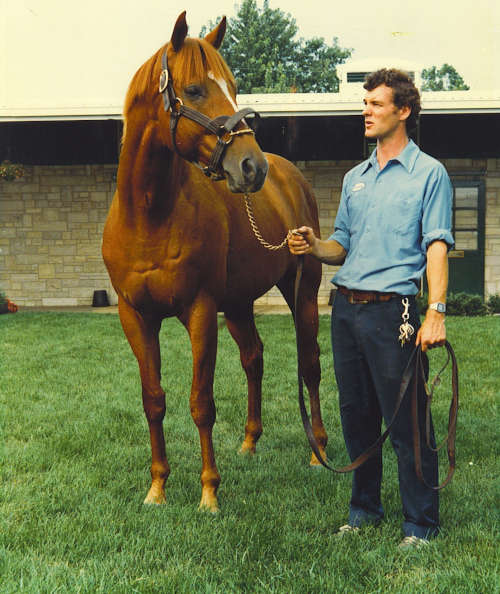 Affirmed at Spendthrift Farm, 1981 [14]
Modern-Day Legends
In the modern era, the Kentucky Derby continues to define careers for elite 3-year-old Thoroughbreds, with a select few delivering performances that carry through to the Triple Crown.
American Pharoah (2015)
American Pharoah ended a 37-year Triple Crown drought, beginning with a composed and tactical Kentucky Derby victory. He carried that momentum through the Preakness and Belmont, redefining modern expectations for elite 3-year-old Thoroughbreds. [15]
Justify (2018)
Justify won the Derby without having raced as a 2-year-old, defying a long-standing trend. His victory came over a sloppy track, highlighting his adaptability. He went on to deliver a dominant, wire-to-wire performance under Hall of Fame jockey Mike Smith to secure the Triple Crown, becoming racing’s 13th Triple Crown winner while remaining undefeated. [16]
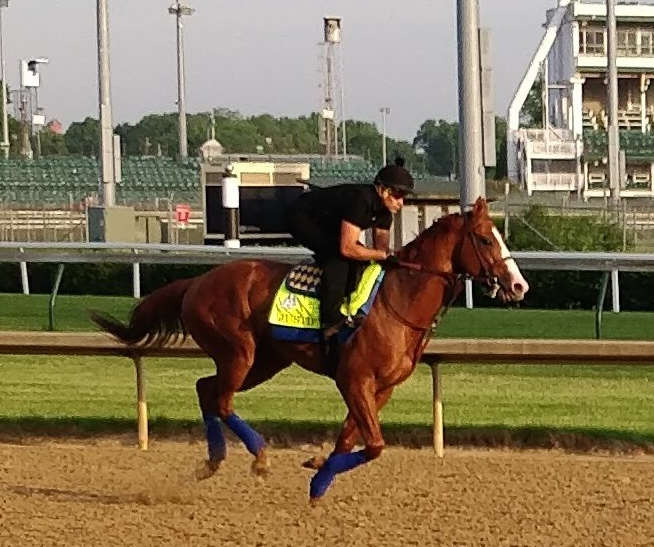 Justify training, 2018 [17]
Recent Kentucky Derby Winners
Recent editions of the Kentucky Derby have highlighted the race’s unpredictability and depth of competition.
Rich Strike (2022)
Rich Strike delivered one of the biggest upsets in Derby history, entering the field only after a late scratch and rallying from last to win at 80-1 in a dramatic come-from-behind finish. [18]
Mage (2023)
Mage won the 149th Kentucky Derby as a lightly raced 3-year-old with just three prior starts, finishing with a strong late surge to score by a length at 15-1 odds. The victory also marked the first Derby win for jockey Javier Castellano after 15 previous attempts. [19]
Mystik Dan (2024)
Long-shot Mystik Dan captured the 150th Kentucky Derby in a dramatic three-way photo finish, prevailing by a nose at 18-1 in one of the most thrilling and closely contested finishes in the race’s history. [20]

Training, Conditioning, & Modern Management for the Kentucky Derby
Preparing a horse for the Kentucky Derby requires a balance of fitness, nutrition, and recovery strategies designed to support peak performance.
Because the Derby is the first of three races in the Triple Crown, horses must be prepared to handle the race’s speed and distance while also maintaining the soundness and stamina needed to continue on to the Preakness Stakes and Belmont Stakes.
Training & Conditioning
Modern conditioning programs commonly used to prepare for the Kentucky Derby focus on building aerobic capacity while carefully managing workload and fatigue. Racehorse trainers use gallop sets, timed breezes, and interval training to develop both speed and stamina without overtraining.
Compared to earlier eras that emphasized frequent racing and heavier workloads, today’s approach prioritizes controlled intensity and strategic recovery.
Horses are typically maintained with light gallops and occasional breezes leading up to the Derby, allowing them to stay fit while minimizing the risk of injury. Advances in monitoring tools, such as heart rate monitors, and stride analysis, help guide training decisions and adjust programs for the individual horse.
A more precise approach tailored to each individual horse reflects advances in exercise physiology and veterinary care. Modern training for the Kentucky Derby places greater emphasis on long-term soundness while still preparing racehorses for the demands of a 1 1/4-mile effort. [21][22]
Nutrition & Feeding Strategies
Nutrition plays a central role in supporting both performance and metabolic stability in racehorses. Racehorse diets still commonly rely on grain and concentrates to meet high energy demands, but modern feeding strategies place greater emphasis on maintaining adequate forage intake and balancing concentrate use appropriately. [23]
Racehorse diets today may also incorporate fat- and fiber-based energy sources to support a more sustained release of energy. Compared to high-starch feeding programs, these approaches may help reduce rapid fluctuations in blood glucose while supporting performance and metabolic health. [23]
Targeted vitamin and mineral supplementation is also used to help maintain hydration, energy production, and recovery during intense training periods. [22][23]
Recovery & Veterinary Management
Recovery is an essential part of preparing horses for the Kentucky Derby, particularly given the demands of training and the potential for a Triple Crown campaign.
A structured cool-down period allows horses to recover physically and mentally, with hand-walking often used to gradually lower respiratory rate, body temperature, and excitement. [24]
This time can also give trainers the opportunity to monitor a horse’s hydration, sweating, and soundness. Careful rehydration, bathing or sponging, and additional walking can further support recovery before the horse returns to their stall. [24]
After intense exercise, many Derby-bound horses also benefit from quiet time, forage, and leg care to help manage heat and inflammation. Trainers may follow strenuous sessions with lighter activity the following day to allow further recovery before the next demanding session. [24]
Modern veterinary care emphasizes early detection and prevention, using diagnostic tools such as imaging and performance monitoring to identify strain before it progresses to injury.
Trainers and veterinarians focus on managing inflammation, supporting musculoskeletal health, and ensuring adequate recovery between workouts. This proactive approach helps maintain soundness and allows horses to perform at their peak when it matters most. [22]
Here are some frequently asked questions about the Kentucky Derby:
The Kentucky Derby is a Grade I Thoroughbred horse race for 3-year-old horses held each spring at Churchill Downs in Louisville, Kentucky. As the first leg of the American Triple Crown, it sets the stage for the Preakness Stakes and Belmont Stakes, making it one of the most influential races in North American racing. The Derby’s long history and national visibility have made it both a premier sporting event and a cultural tradition. [1][2]
The Kentucky Derby race is run over 1 1/4 miles, or 10 furlongs, a distance that has remained unchanged since 1896. This length is considered demanding for 3-year-old Thoroughbreds, requiring a balance of early speed, stamina, and race strategy. The distance often exposes weaknesses in conditioning or pacing, making it a true test of a young horse’s capabilities. [4]
The Kentucky Derby is held at Churchill Downs in Louisville, Kentucky, where it has taken place every year since 1875. The venue is closely tied to the identity of the race, with its Twin Spires serving as a widely recognized symbol of American horse racing. The consistency of location contributes to the Derby’s tradition and prestige. [8]
Horses qualify for the Kentucky Derby through the Road to the Kentucky Derby, a structured points system based on performance in designated prep races. The top 20 point earners gain entry, which prioritizes horses that have performed well in longer and more competitive races. This system helps ensure the field includes horses capable of handling the Derby’s distance and intensity. [6]
The Kentucky Derby is called the "Run for the Roses" because the winner is draped in a garland of more than 500 red roses. This tradition dates back to 1896 and has become one of the race’s most recognizable visual symbols. The nickname reflects both the ceremonial aspect of the race and its longstanding traditions. [3]
The Kentucky Derby winner typically receives more than $3 million USD from a total purse of approximately $5 million USD. While the prize money is substantial, the long-term financial impact of winning the Derby is often greater due to increased breeding value and industry recognition. A Derby win can significantly influence a horse’s career trajectory. [7]
The Kentucky Derby is held annually on the first Saturday in May, a date that has remained consistent for decades. This timing positions the race as a major seasonal milestone in horse racing and contributes to its cultural recognition. The fixed schedule also supports the structured progression of Triple Crown races.
The Kentucky Derby features a maximum field of 20 horses, making it one of the largest fields in major horse racing. This large number of competitors increases the complexity of race strategy, particularly in terms of positioning and pace. It also contributes to the unpredictability and competitive nature of the event.
The Kentucky Derby is considered important because it is the first leg of the Triple Crown and one of the most prestigious races for 3-year-old Thoroughbreds. Success in the Derby often establishes a horse as a leading contender for the Triple Crown and elevates its status within the industry. The race's history, media attention, and economic impact all contribute to its significance.
Not every horse can run in the Kentucky Derby, as entry is limited to 3-year-old Thoroughbreds that qualify through the points system. This restriction ensures that only horses with demonstrated performance and readiness compete in the race. The qualification process also helps maintain a high level of competition.
The Kentucky Derby differs from other horse races due to its combination of history, distance, field size, and cultural significance. It is one of the few races restricted to 3-year-olds and serves as the opening leg of the Triple Crown, adding strategic importance. The event also stands out for its traditions, large audience, and influence on the racing industry.
Summary
The Kentucky Derby combines history, tradition, and elite competition in a way that few sporting events can match.
- Since its origins in 1875, and as the opening leg of the Triple Crown, it continues to test the limits of equine athleticism and shape the careers of the sport's top Thoroughbreds
- Modern advances in training, nutrition, and veterinary care have refined how horses are prepared for the Kentucky Derby, but the core demands of the race remain unchanged
- Success still depends on the careful balance of speed, stamina, soundness, and training timing
- To this day, the Kentucky Derby remains not only a defining moment for individual horses but also a benchmark for excellence in Thoroughbred racing
References
- Triple Crown. Kentucky Derby. 2026.
- About. Kentucky Derby. 2026.
- Tran. D. and Omatiga. M. Kentucky Derby Traditions: Hats, Food, Winner's Circle, Garland of Roses, Dresses. NBC Sports. 2024.
- FAQ. Kentucky Derby. 2026.
- King. B. How the Kentucky Derby Shapes Up: A Pace Analysis. BloodHorse.com. 2024.
- How It Works. Kentucky Derby. 2026.
- Kentucky Derby Purse Raised to Record $5 Million. Kentucky Derby. 2026.
- About. Churchill Downs. 2026.
- Conway. T. The Mighty Citation: 'So Fast He Scared Me'. The Sport. 2026.
- Citation, circa 1950. The Gooreen Collection, via Wikimedia Commons. 1950.
- Secretariat (VA). National Museum of Racing and Hall of Fame. 2026.
- Seattle Slew (KY). National Museum of Racing and Hall of Fame. 2026.
- Affirmed (FL). National Museum of Racing and Hall of Fame. 2026.
- Tikua. S. Affirmed at Spendthrift Farms 1981. Visindar via Wikimedia Commons. 1981.
- Hughes. A. American Pharoah's Influence Continues a Decade after His Triple Crown Coup. Belmont Park. 2025.
- Justify | 2018. The Inside Post. 2025.
- Aiken. E. Justify workout may 15 2018 pre-Preakness. atthepaddock.com via Wikimedia Commons. 2018.
- Reilly. K. Rich Strike Springs 80-1 Stunner in Kentucky Derby. Brisnet.com via Kentucky Derby. 2022.
- Reilly. K. Mage Rallies Past Two Phil's to Win 149th Kentucky Derby. Brisnet.com via Kentucky Derby. 2023.
- Reilly. K. Mystik Dan Wins 150th Kentucky Derby in Three-Way Photo Finish. Brisnet.com via Kentucky Derby. 2024.
- Paulick. R. Triple Crown Training Patterns. Paulick Report. 2012.
- Morrice-West. A. V. et al. Association of Thoroughbred Racehorse Workloads and Rest Practices with Trainer Success. Animals. 2021.
- Ralston. S. L. Feeding Horses for Competitions: From Racing to Dressage. Rutgers University New Jersey Agricultural Experiment Station. 2004.
- Gantz. T. Racehorse Recovery. Retired Racehorse Project. 2019.