English








Equine nasal strips are non-invasive devices used to support respiratory function in horses during intense physical activity. Made from stiff, spring-loaded plastic with an adhesive backing, these strips are applied externally across the bridge of the horse’s nose.
Nasal strips are designed to keep a horse’s nasal passages open by providing mechanical support to soft tissues that may otherwise collapse in competition. Nasal strips are intended to ease breathing, reduce airflow resistance, and decrease internal airway pressure.
There is significant interest in the use of nasal strips to reduce the risk of exercise-induced pulmonary hemorrhage (EIPH) — a condition where blood enters the nasal passages during or after intense exercise. However, research into the effects of nasal strips on respiratory function in horses has had variable results. [1][2][3][4][5]
While the efficacy of these devices remains a matter of ongoing study, trainers continue to rely on nasal strips as a legal method to support equine performance and respiratory health. Read on to learn how nasal strips may benefit your horse and how they should be used to keep your horse comfortable and performing at their best.
Equine Nasal Strips
Nasal strips (also known as Equine Nasal Dilation Strips (ENDS) or external nasal strip devices) are stiff, self-adhesive plastic strips embedded with springs that are placed on a horse’s nose to help keep the nostrils open. [1][2][3]
Nasal strips are intended to reduce resistance in the nasal airways by gently opening up the narrowest part of the inner nostrils, making it easier to breathe. This in turn may reduce stress on the lungs during intense activity, which could decrease the risk of bleeding associated with strenuous exercise. [1][2][3]
While equine nasal strips are designed to improve breathing and potentially enhance performance, their actual impact on breathing in horses is widely debated, with studies reporting mixed results. [1][3][5][9]
Effects of Nasal Strips
About 50% of airflow resistance in exercising horses comes from the nasal passages. The primary point of resistance is the nasal valve, the narrowest part of the nasal cavity located just behind the nostrils and in front of the nasoincisive notch. [3]
During exercise, horses reduce airflow resistance by flaring their nostrils, increasing the volume of air passing through the nasal valve. Nasal strips are designed to support this natural mechanism by helping keep the nasal passages open. [3]
These strips are commonly used by trainers aiming to boost oxygen intake, as they remain legal in both FEI disciplines and the racing industry. [1]
What's your top priority with your horse's health?

Enter your email to receive your store credit
Uses for Nasal Strips
When a nasal strip is applied, its springs tighten and straighten out, which lifts the skin and helps open the narrowest part of the nasal passage. The nasal strip also provides extra support to the soft tissues in the nose, which could prevent them from collapsing during strenuous activity. [3]
In general, nasal strips are intended to decrease air resistance in the horse’s nasal passages. If this effect is achieved, the expected results include: [2][5][6][8]
- Reduced respiratory effort
- Reduced lung pressure
- Extended time to fatigue
- Increased maximum respiratory flow
- Increased rate of cool down
- Improved thermoregulation
These effects have yet to be confirmed, as some studies support the efficacy of equine nasal strips while others have had inconclusive results. [1][3][5][9]
Exercise-Induced Pulmonary Hemorrhage
One of the main reasons trainers and riders use nasal strips on horses is to help manage exercise induced pulmonary hemorrhage (EIPH). EIPH describes cases where blood is detectable in the horse’s airways after strenuous physical activity.
EIPH is a serious condition frequently observed in racehorses and horses competing in other high-intensity sports such as barrel racing, eventing, and polo. [2][6][7][8][9][10][12]

“Nasal strips are popular for performance horses, but they don’t treat underlying lung issues. If you notice coughing, poor recovery, or blood after exercise, it's important to consult your veterinarian. Nasal strips aren’t a substitute for medical care; only your vet can diagnose EIPH and recommend the best treatments to keep your horse safe.”
— Dr. Madison Ricard, DVMMad Barn Veterinary Educator
Although the exact cause of EIPH isn’t fully understood, it’s thought to result from high lung pressures during intense exercise. This pressure stresses the capillaries in the lungs, causing them to rupture and leak blood into the airways. [6]
Changes in lung pressure may result from the collapse of the outer walls of the nasal passages during inhalation. This collapse can restrict airflow, increasing pressure in the small blood vessels of the lungs. Nasal strips help support this vulnerable area of the nose to reduce airway resistance. [6]
Nasal strips are also considered a potential alternative to furosemide (Lasix), a drug that lowers blood pressure and is commonly used to prevent EIPH. Many horse owners are looking to reduce reliance on Lasix, as it can cause weight loss, a side effect not seen with nasal strips. [6][7]
Beyond side effects, furosemide is classified as a controlled medication under FEI Clean Sport Regulations. Improper use may lead to disqualification and other penalties. In contrast, nasal strips are permitted across all equestrian sports, with the exception of dressage. [13][14]
While nasal strips are widely used in certain disciplines, always consult your veterinarian before making any changes to your horse’s medication plan.
Scientific Evidence
Nasal strips are marketed for their benefits in horses, but scientific evidence supporting their effectiveness remains limited. While some studies indicate potential advantages, only a small number of studies have been conducted, and findings are not consistent across all studies.
Supporting Evidence
The proposed effects of nasal strips on horses include: [3]
- Reduced pressure in the windpipe and lungs during intense exercise
- Increased stability of soft nasal tissues
- Decreased risk of exercise-induced pulmonary hemorrhage
Some studies have shown that nasal strips can affect airflow through the equine airways during intense exercise. Specifically, research indicates that horses wearing nasal strips while running at high speeds experience lower pressure in the windpipe during inhalation and reduced airflow resistance. [3]
These findings suggest that nasal strips help keep the nasal passages open by stabilizing the soft tissues in the nose. The proposed mechanism is that the strip lifts the skin over the narrowest part of the nasal passage, pulling the dorsal conchal fold outward and increasing the diameter of the airway in that region. [3]
Other Results
Although there is some research supporting the use of nasal strips, there are also several studies suggesting that nasal strips have no effect on respiratory efficiency.
One study examined the respiratory efficiency of Thoroughbred racehorses with and without a nasal strip. [9] Researchers evaluated blood gas levels of oxygen and carbon dioxide to determine respiratory function. They also measured lactic acid concentrations, to see if nasal strips improved oxygen use during exercise. [9]
The researchers found that nasal strips did not improve gas exchange in the lungs, and did not affect the buildup of lactic acid during exercise. They also showed that nasal strips did not affect the development of EIPH in this study population. [9]
Similarly, a study in endurance racing horses showed that application of nasal strips did not affect heart and respiratory rates during a 20 km competition. [1] Applying a nasal strip also did not affect thermoregulation in horses exercising on a treadmill. [5]
Because study results have been inconsistent, more research is needed to determine how effective nasal strips are during exercise.

How to Apply Equine Nasal Strips
To ensure the best results, it’s important to apply nasal strips properly to your horse’s nose.
Below is a general guide for applying equine nasal strips. Always read and follow the manufacturer guidelines when using nasal strips for your horse. [8][11]
- Prepare the Horse’s Nose: Secure the horse using a halter and lead rope in a quiet area. Gently clean the nose with a towel or cloth to remove dirt, sweat, or oils. The area must be dry and clean for the strip to stick properly. For best results, wipe the bridge of the nose with rubbing alcohol and allow it to dry completely; this removes oils that may prevent adhesion.
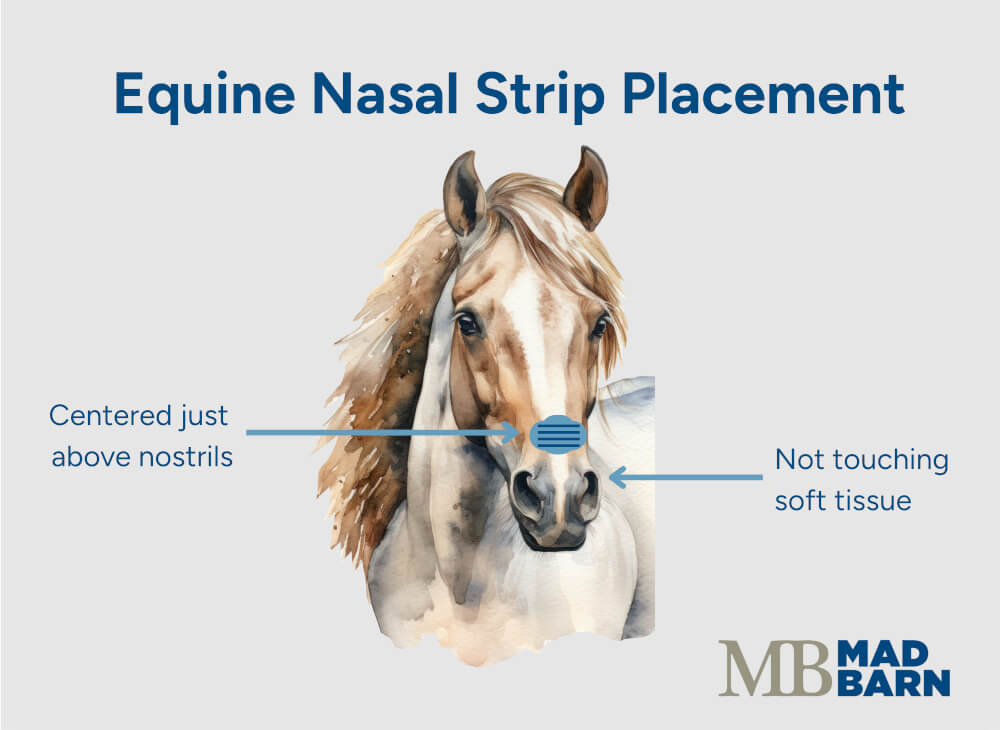
- Locate Correct Placement: The nasal strip goes over the nasal valve, which is just above the soft part of the nostrils on the bony part of the horse’s nose. It should be centered just below the bony ridge between the eyes and above the soft cartilage. Avoid placing the strip too low on the flexible part of the nostrils, as this is ineffective at keeping the nostrils open and unlikely to stay in place. The correct position is in front of the nasoincisive notch, where airflow resistance is greatest. This is the indentation on the nose where the bridge of the nose meets the incisive bone, which supports the upper front teeth.
- Peel Off the Backing: Remove the nasal strip from its packaging, then peel off the protective backing to expose the adhesive.
- Apply the Nasal Strip: Hold the strip by the ends, sticky side down. Line it up so that it is centered between the nostrils and symmetrically placed on both sides. Press firmly across the entire strip with your fingers or palm. Ensure that the springs in the strip lie flat and stretch slightly as you apply pressure; this “tents” the skin and supports the airway. Press down along the length of the strip for 10–15 seconds to ensure it bonds well to the skin. Apply shortly before riding to ensure the adhesive stays in place. In some cases, nasal strips come with a positioning guide to help properly place the device. This guide must be removed once the strip is in place.
- Check Fit: Let the horse move or shake its head briefly to check if the strip remains in place. Ensure the strip is centered on the nose, evenly adhered with no lifting edges and positioned on the bony bridge rather than the soft tissue.
- Remove the Strip: After riding, remove the strip by peeling gently from one side to the other. Do not rip it off quickly as it may pull on the skin or hair. Clean the nose again to remove any adhesive residue. Monitor the skin for any signs of irritation if used frequently.
Drawbacks of Nasal Strips
Nasal strips are intended to improve breathing in horses during intense physical activity. However, some research shows that these devices do not significantly impact performance or respiratory function. At this time, the efficacy of nasal strips remains a topic of debate. [1][4][5][7][9]
Additionally, since nasal conformation varies between horses, nasal strips have different effects on individual animals. They tend to be more effective in horses with narrower noses, as more force is applied through the strip. [3]
There are very few reported side effects of equine nasal strips. One concern is that improper removal can cause mild skin irritation, especially with repeated use or incorrect handling. [11]
Frequently Asked Questions
Here are some frequently asked questions about nasal strips for horses:
Nasal strips are designed to support the soft tissues of a horse's nasal passages during exercise. By helping to keep the nasal valve open, they reduce airflow resistance and may improve breathing efficiency, lower lung pressure, and reduce the risk of conditions like exercise-induced pulmonary hemorrhage (EIPH). [1][3]
Some studies suggest nasal strips may enhance performance by decreasing the work of breathing and improving oxygen delivery to muscles. However, scientific evidence on performance benefits remains mixed, and results can vary depending on the individual horse.
Yes, nasal strips are generally safe and well-tolerated. The main side effects are minor and may include mild skin irritation if the strip is removed improperly or used frequently without breaks. [3][11]
Nasal strips are permitted in most equestrian sports, with the exception of dressage under some governing bodies. They are a drug-free option and are not classified as controlled substances by most regulatory authorities. Always check the current rules for your sport before using devices like nasal strips.
Summary
Nasal strips are external, adhesive devices designed to reduce airflow resistance and support the soft tissues of the nasal passages in horses during exercise. They are commonly used to manage conditions like EIPH and improve respiratory efficiency, though their overall effectiveness is still being studied.
- Proper cleaning and placement are necessary to ensure the strip adheres securely and functions correctly over the nasal valve.
- Effectiveness can vary between horses, especially those with wider noses, and some research remains inconclusive.
- Some owners use nasal strips as an alternative to furosemide in managing EIPH, but stopping medication should always be under the guidance of your attending veterinarian.
- Side effects are minimal, but improper removal or repeated use may cause mild skin irritation.
References
- GaRotti. J. R., Do Nasal Dilators Improve Endurance Performance in Horses submitted to a 20 Km Run?. Ciência Animal Brasileira. 2009.
- Geor. R. J. et al., Effects of an External Nasal Strip and Furosemide on Pulmonary Hemorrhage in Exercising Thoroughbreds. General Medicine. 2001.
- Holcombe. S. J. et al., Effect of Commercially Available Nasal Strips on Airway Resistance in Exercising Horses. American Journal of Veterinary Research. 2002.
- Oliveira. T. M. et al., Use of External Nasal Strip Influences Alveolar Cell Population of Horses after Exercise. Arquivo Brasileiro de Medicina Veterinária e Zootecnia. 2021.
- Buchalski. F. M. et al., The Effects of an External Equine Nasal Strip on Thermoregulation During Exercise. Journal of Equine Veterinary Science. 2022. View Summary
- Geor. R. J. et al., Effects of an External Nasal Strip and Furosemide on Pulmonary Haemorrhage in Thoroughbreds Following High‐intensity Exercise. Equine Veterinary Journal. 2001. View Summary
- Kindig. C. A. et al., Efficacy of Nasal Strip and Furosemide in Mitigating EIPH in Thoroughbred Horses. Journal of Applied Physiology. 2001. View Summary
- Erickson. H. H. et al., Exercise-Induced Pulmonary Hemorrhage: A New Concept for Prevention. Journal of Equine Veterinary Science. 2000.
- Goetz. T. E. et al., Nasal Strips Do Not Affect Pulmonary Gas Exchange, Anaerobic Metabolism, or EIPH in Exercising Thoroughbreds. Journal of Applied Physiology. 2001. View Summary
- Poole. D. C. et al., Effects of External Nasal Support on Pulmonary Gas Exchange and EIPH in the Horse. Journal of Equine Veterinary Science. 2000.
- FLAIR® Strips: How to Apply & Remove. Flair Nasal Strips. 2024.
- Lascola. K. M. and Boone. L., Exercise-Induced Pulmonary Hemorrhage in Horses. Merck Veterinary Manual. 2024.
- FEI Clean Sport. FEI. 2024.
- FEI Tack Equipment Database. FEI. 2024.