

 English

Omneity® Pellets
All-In-One Vitamin & Mineral Pellet
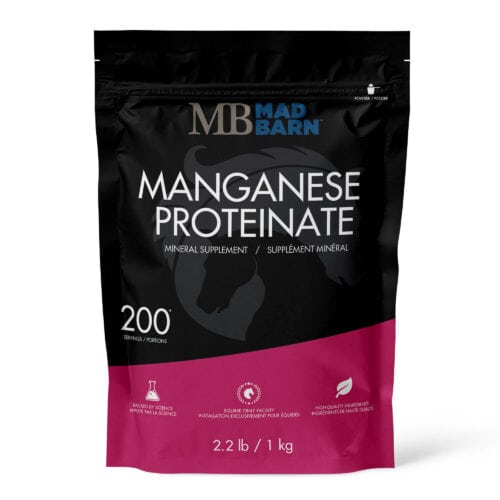
Explore Mad Barn’s bone health supplements for horses. The products below are formulated to support skeletal development, mineral balance, and bone strength in horses of all ages.


Strong bones are essential for your horse’s long-term soundness, performance, and injury prevention. Whether you're raising a growing foal, training a high-performance athlete, or caring for a horse recovering from injury, maintaining bone health is a top priority.
Bone is a dynamic, living tissue that is constantly broken down and rebuilt in a process known as remodeling. This natural turnover is influenced by hormones, exercise, and nutrition.
To maintain skeletal strength and integrity, horses require a continuous supply of nutrients involved in bone metabolism, including calcium, phosphorus, magnesium, vitamin D, vitamin K, and trace minerals such as copper, zinc, and manganese.
Deficiencies or imbalances in these nutrients can compromise mineral deposition, leading to weaker bones, delayed growth, and increased susceptibility to injury or developmental issues, especially during critical growth phases or periods of high demand.
The best way to support healthy skeletal development and build resilient bone tissue is by feeding a balanced, forage-first diet that provides adequate levels of essential vitamins, minerals, and amino acids.
In young, growing horses, overfeeding calories and protein can promote rapid growth and increase the risk of developmental orthopedic disorders (DODs). Instead, aim to meet, but not greatly exceed, macronutrient requirements. A balanced diet produces steady growth and supports proper mineralization of the developing skeleton.
Mad Barn offers several scientifically formulated supplements designed to help balance the diet and support optimal bone metabolism at every stage of life.
Your horse’s bones adapt in response to stress and nutrient availability. Adequate turnout, weight-bearing activity, and proper conditioning are important, but they must be supported by nutrition that meets the horse’s mineral and vitamin requirements.
Young, growing horses and pregnant or lactating mares have increased requirements for nutrients that support bone development and structural integrity. Deficiencies in calcium, phosphorus, magnesium, vitamin D, or trace minerals can increase the risk of developmental orthopedic issues, reduced bone density, injury, or lameness.
Routine forage testing and diet evaluation can help identify gaps before they affect your horse’s health. Our equine nutritionists are available to review your program and ensure your horse receives the nutritional support they need. Request a free diet evaluation today to develop a plan that supports your horse’s bone strength.
Horses build the majority of their bone density before reaching skeletal maturity, typically by around 2–6 years of age. After this developmental window closes, it becomes much harder to increase bone mass. That’s why it's important to support bone development early in life through balanced nutrition and controlled exercise.
Adult horses can still benefit from nutrition and management strategies to help maintain existing bone density and reduce age-related loss. This includes ensuring adequate intake of calcium, phosphorus, magnesium, vitamin D, and trace minerals such as copper, zinc, and manganese. The correct calcium-to-phosphorus ratio (typically 1.5–2:1) is especially important.
Feeding a complete vitamin and mineral supplement such as Omneity® or AminoTrace+ provides the essential nutrients required to support skeletal health at all life stages. Regular turnout and weight-bearing activity are also important, as mechanical loading stimulates bone remodeling and helps preserve bone mass over time.
Bone development depends on a balance of minerals, vitamins, and cofactors that support proper skeletal growth and mineralization. The most critical nutrients include calcium, phosphorus, magnesium, vitamin D, vitamin K, and trace minerals like zinc, copper, and manganese. These elements contribute to bone density, structural integrity, and normal remodeling activity.
The calcium-to-phosphorus ratio is especially important in young horses, where imbalances can increase the risk of developmental orthopedic disorders (DODs). Magnesium and vitamin D are also important for calcium absorption and regulation, while copper and zinc play key roles in collagen formation and bone matrix stability.
Mad Barn’s Omneity® and AminoTrace+ are scientifically formulated to provide these nutrients in balanced, highly bioavailable forms to support bone health at all stages of life.
Horses have different nutrient needs depending on their age, workload, and stage of life. Young, growing horses have the highest demand for nutrients to build bones and are the most responsive to nutritional intervention. This includes foals, weanlings, and yearlings undergoing rapid growth, where deficiencies in calcium, phosphorus, magnesium, or trace minerals can compromise bone strength and increase the risk of developmental orthopedic disorders (DODs).
Broodmares in late gestation and lactation also benefit from additional support to meet the demands of fetal development and milk production. Performance horses in heavy training have higher nutrient requirements to help maintain bone density and reduce the risk of stress-related injuries.
In all of these cases, the first priority should be feeding a balanced diet that provides adequate levels of vitamins, minerals, and amino acids to support skeletal health. Once your horse’s diet is properly balanced, they may not need a separate bone supplement. If you're unsure whether your horse’s current diet supports optimal bone health, submit a free diet evaluation to receive personalized guidance from our nutritionists.
There is no magic supplement for bone health. The most effective way to support your horse’s skeletal system is by feeding a properly balanced diet that supplies adequate levels of vitamins, minerals, and amino acids. Bone strength relies on the consistent intake of nutrients like calcium, phosphorus, magnesium, vitamin D, and trace minerals such as copper, zinc, and manganese, all delivered in the correct amounts and ratios. Deficiencies or imbalances in any of these nutrients can impair bone development, particularly in growing horses and broodmares.
Rather than reaching for a product marketed specifically for bone health, the best place to start is with a complete vitamin and mineral supplement that fills common gaps in forage-based diets. Omneity® and AminoTrace+ are designed to correct common nutritional gaps in equine diets and provide the key nutrients needed to support bone strength and overall health.
If you’re unsure whether your horse’s current feeding program supports optimal skeletal health, submit a free diet evaluation to receive personalized recommendations from our nutritionists.
The daily calcium requirement for a horse depends on age, weight, workload, and physiological status. For example, a 500 kg (1100 lb) mature horse at maintenance typically requires around 20 grams of calcium per day, based on National Research Council (NRC) guidelines.
Working horses, growing foals, lactating mares, and pregnant broodmares require more. To determine your horse’s specific calcium requirement, you can use Mad Barn’s Equine Nutrition Calculator.
The best way to meet calcium needs is through a forage-first diet balanced with a complete vitamin and mineral supplement such as Omneity® or AminoTrace+. If you're unsure whether your current feeding program meets your horse’s calcium requirement, submit a free diet evaluation to get personalized guidance from our equine nutritionists.
Yes, feeding too much calcium without enough phosphorus can negatively affect bone development and overall mineral balance. In young horses, an imbalanced calcium-to-phosphorus ratio may reduce the absorption of both minerals and impair proper skeletal growth. While adult horses are less sensitive to excess calcium, long-term imbalances can still impact health and performance.
To avoid over-supplementation, it’s important to start with a forage analysis and use a balanced vitamin and mineral supplement such as Omneity or AminoTrace+ to meet your horse’s needs without exceeding safe levels.
The ideal calcium-to-phosphorus (Ca:P) ratio for horses varies by life stage. For most mature horses, a dietary ratio of 1.5:1 to 2:1 is considered optimal, meaning 1.5 to 2 grams of calcium for every gram of phosphorus. All horses should receive at least as much calcium as phosphorus, with the ratio never falling below 1:1.
Young, growing horses can tolerate wider ratios up to 3:1 as long as their total phosphorus intake is adequate. However, feeding ratios above 6:1 may reduce phosphorus absorption and interfere with proper bone mineralization.
Consistently inverted ratios, where phosphorus exceeds calcium, can impair bone development and increase the risk of developmental orthopedic disorders (DODs). Excess calcium can also interfere with the absorption of other minerals such as zinc and copper.
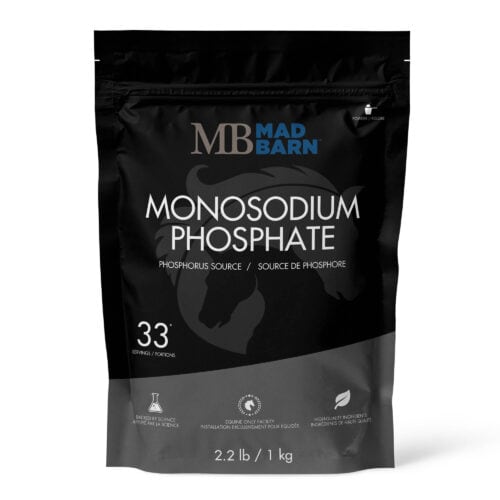
To ensure your horse’s diet provides the correct Ca:P ratio, start with a forage analysis to determine mineral content. If calcium is disproportionately high, a targeted supplement like Monosodium Phosphate can help restore balance. Submit your horse’s current feeding program online for a free diet evaluation to receive personalized guidance from our nutritionists.
Monosodium Phosphate is used in equine diets to correct imbalances in the calcium-to-phosphorus ratio, particularly when forage or other dietary components are high in calcium and low in phosphorus. This situation can occur with alfalfa-rich diets or when feeding calcium-rich mineral sources without sufficient phosphorus.
If you're unsure if your horse’s diet is properly balanced, submit a free diet evaluation and we’ll help you determine whether phosphorus supplementation is appropriate.
The best vitamin and mineral supplement for bone health in most horses is Mad Barn’s Omneity®. Omneity provides balanced levels of calcium, phosphorus, magnesium, and trace minerals that support bone formation, mineralization, and skeletal maintenance.
Forage-based diets often supply adequate calories but may be deficient in trace minerals such as copper, zinc, and manganese that are essential for collagen formation and bone matrix development. Omneity helps correct these common nutrient gaps and supports healthy skeletal function across all life stages.
For horses with higher mineral requirements or metabolic concerns, Mad Barn’s AminoTrace+ may provide additional trace mineral support.
Growing horses benefit from a balanced vitamin and mineral supplement such as Mad Barn’s Omneity® to support proper skeletal development. Young horses require adequate calcium, phosphorus, copper, zinc, and manganese to support bone growth and connective tissue formation.
Rapid growth without balanced mineral intake can increase the risk of developmental orthopedic disorders. Omneity helps supply these essential nutrients in the correct ratios to support steady growth and healthy skeletal development.
If forage analysis reveals a phosphorus deficiency or an excessively high calcium-to-phosphorus ratio, a targeted supplement such as Monosodium Phosphate may be used to restore mineral balance.
Nutrition plays an important role in reducing the risk of developmental orthopedic disorders (DODs) in growing horses by supporting proper skeletal growth and mineralization. Healthy bone and cartilage development depend on adequate intake of calcium, phosphorus, copper, zinc, and manganese, along with balanced energy intake that promotes steady rather than rapid growth. When young horses consume excess calories but insufficient trace minerals, the skeleton may grow quickly without adequate structural support, which can contribute to conditions such as physitis or osteochondrosis. Feeding a balanced vitamin and mineral supplement such as Mad Barn’s Omneity® helps ensure growing horses receive the nutrients required for proper bone mineralization and connective tissue development while maintaining appropriate nutrient ratios within the diet.
Healthy bone and cartilage development in young horses depends on a balanced supply of minerals, vitamins, and amino acids that support skeletal growth and connective tissue formation. Key nutrients involved in this process include calcium and phosphorus for bone mineralization, copper and zinc for collagen synthesis and cartilage maturation, and manganese for normal cartilage and bone matrix development. Adequate protein and essential amino acids are also necessary to support tissue growth and repair during periods of rapid development. When these nutrients are deficient or out of balance, cartilage may fail to mature properly and bone mineralization can be impaired, which may increase the risk of developmental orthopedic conditions such as osteochondrosis (OCD) or physitis. Feeding a balanced vitamin and mineral supplement such as Mad Barn’s Omneity® helps ensure growing horses receive the nutrients required for proper skeletal development while maintaining appropriate mineral ratios in the diet.
Bone tissue constantly adapts to the stresses placed on it during training, which means performance horses rely on both mechanical loading from exercise and proper nutrition to maintain skeletal strength. Weight-bearing activity stimulates bone remodeling, a process where old bone is broken down and replaced with new bone that is better adapted to the demands of work. For this process to occur effectively, the diet must consistently supply the minerals and nutrients involved in bone formation and connective tissue development.
Key nutrients for skeletal integrity include calcium and phosphorus, which provide the mineral structure of bone, along with magnesium and vitamin D, which help regulate mineral metabolism. Trace minerals such as copper, zinc, and manganese are also important because they support collagen formation and the development of the bone matrix that gives skeletal tissue its strength and resilience. Without adequate intake of these nutrients, the horse may struggle to maintain bone density and adapt to the stresses of training.
Feeding a balanced vitamin and mineral supplement such as Mad Barn’s Omneity® helps ensure performance horses receive the micronutrients required to support bone remodeling, connective tissue strength, and overall skeletal health during training.
Copper and zinc are essential trace minerals that support collagen formation and bone matrix development in horses. These minerals help maintain connective tissue strength and contribute to proper skeletal growth.
Deficiencies in copper or zinc may impair cartilage maturation and bone mineralization, particularly in growing horses. Forage-based diets are commonly low in these minerals, making supplementation important for maintaining proper trace mineral balance.
Mad Barn’s AminoTrace+ provides elevated levels of copper and zinc to help support connective tissue health and skeletal integrity.
Supporting strong bone density in horses begins with a forage-based diet that provides adequate minerals and vitamins involved in skeletal metabolism. Key nutrients include calcium and phosphorus, which form the structural mineral component of bone, along with magnesium and vitamin D, which help regulate mineral absorption and utilization. Trace minerals such as copper, zinc, and manganese are also essential because they contribute to collagen formation and the development of the bone matrix that supports mineral deposition and bone regeneration.
Forage alone may not always supply optimal levels of these nutrients or the correct calcium-to-phosphorus ratio, particularly in diets based heavily on certain hays. Feeding a balanced vitamin and mineral supplement such as Mad Barn’s Omneity® helps ensure horses receive the minerals, vitamins, and amino acids required to maintain bone density and support normal skeletal remodeling.
All-In-One Vitamin & Mineral Pellet

Advanced Gut Health Supplement

DHA-Enriched Fat Supplement
All-In-One Vitamin & Mineral Pellet

All-In-One Vitamin & Mineral Powder
Enhanced Vitamin & Mineral Pellet
Advanced Gut Health Supplement

Probiotic & Prebiotic Supplement

High-Potency 5-Strain Probiotic
All-In-One Vitamin & Mineral Pellet
Enhanced Vitamin & Mineral Pellet

Hoof, Skin & Coat Support
DHA-Enriched Fat Supplement
All-In-One Vitamin & Mineral Pellet
Organic Trace Mineral Blend
Enhanced Vitamin & Mineral Pellet

Mood & Hormone Support

Metabolic Health Formula
Mood & Hormone Support

Muscles & Nerve Support
Advanced Gut Health Supplement
Advanced Gut Health Supplement

Respiratory & Performance Supplement

Essential Amino Acid Blend
Essential Amino Acid Blend
Muscles & Nerve Support

Performance & Muscle Support
Respiratory & Performance Supplement
DHA-Enriched Fat Supplement

Immune & Respiratory Support



What's your top priority with your horse's health?
