Manganese is an essential trace mineral in horses, required for bone development, cartilage formation, and antioxidant defenses. Manganese aids in synthesizing chondroitin sulfate for healthy connective tissue and supports energy production from fats and carbohydrates.
Organic manganese powder for improved bioavailability
Aids in normal bone growth, density and strength
Contributes to healthy joint function and connective tissues
Key component of the antioxidant enzyme superoxide dismutase
We stand behind our products to provide the best nutrition for your horse. No fillers, just research-backed ingredients. If your horse doesn't love this product, our Customer Happiness team is here to help or give you a refund guaranteed.
Manganese Proteinate
Manganese is an essential trace mineral required for the development of bone, cartilage, and connective tissue in horses. It functions as a cofactor for several key enzymes involved in carbohydrate and lipid metabolism, reproductive health, and antioxidant defense. One of its most important roles is activating the enzyme manganese superoxide dismutase (MnSOD), which helps protect cells from oxidative damage.
This mineral also contributes to the synthesis of chondroitin sulfate, a critical component of joint cartilage, supporting soundness and long-term joint integrity. Adequate manganese intake is therefore particularly important for growing horses, broodmares, and equine athletes with high structural and metabolic demands.
Organic sources such as manganese proteinate offer improved bioavailability compared to inorganic forms like manganese oxide, enhancing absorption and utilization. This allows for more effective support of skeletal strength, enzyme activity, and metabolic efficiency.
This product should be used under the supervision of a veterinarian or other qualified equine health professional.
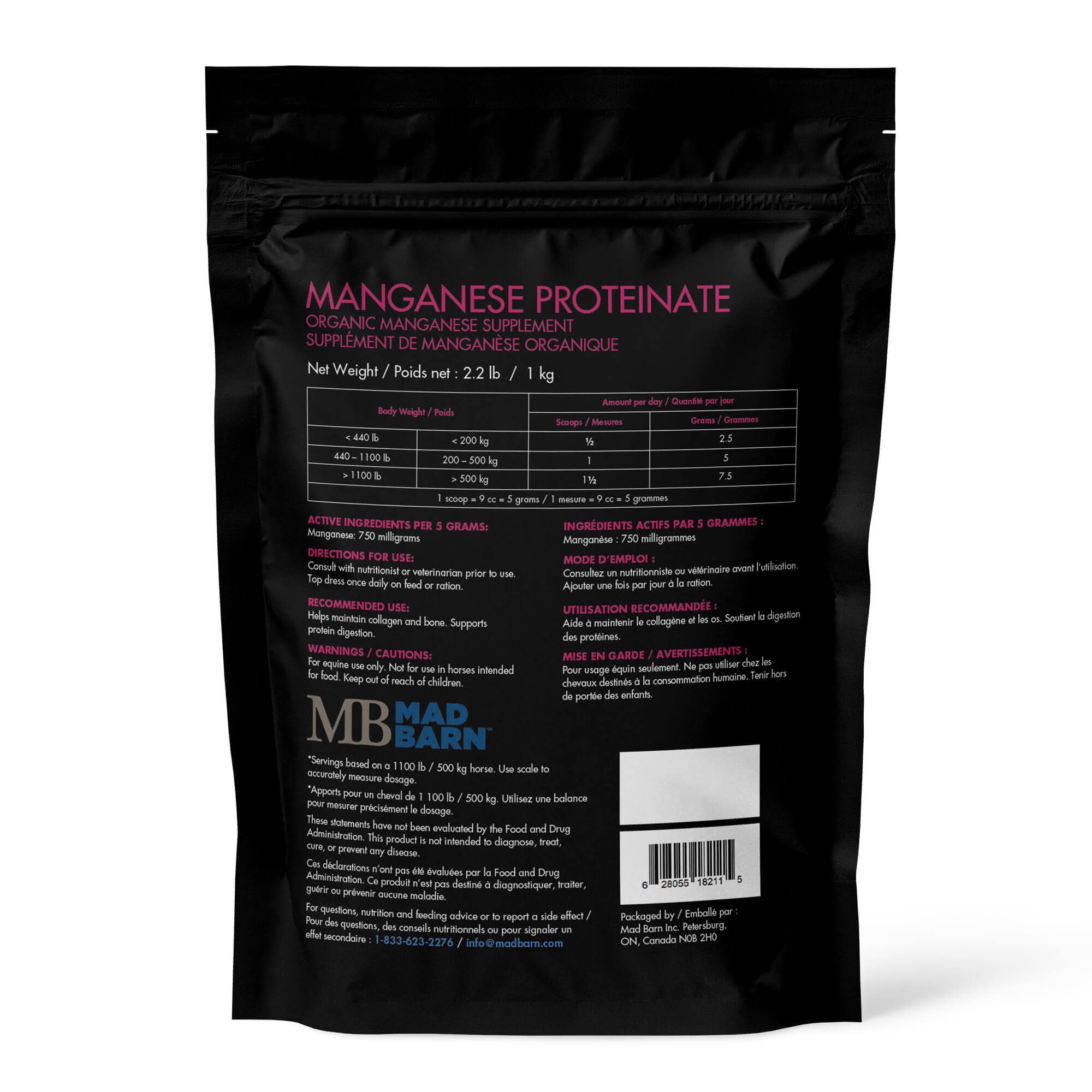
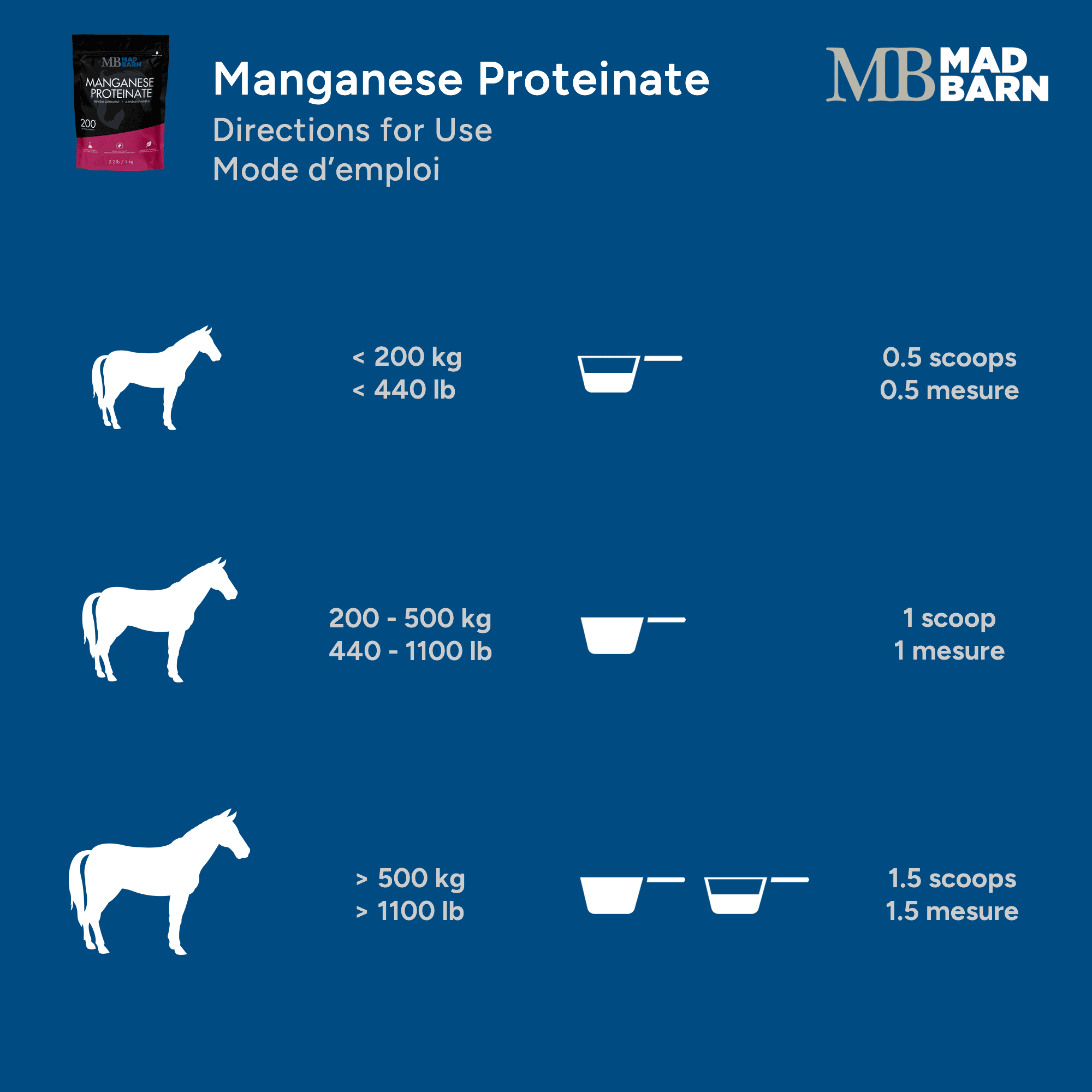
Directions for Use:
The feeding rate for Manganese varies depending on your horse’s condition and current diet.
To determine the appropriate inclusion rate for Manganese in your horse’s diet, submit your horse’s feeding program for analysis online and one of our equine nutritionists will be happy to provide a complementary review.
Top dress once daily on feed or ration.
Body Weight
Scoops
Dose
< 200 kg
½ scoop
2.5 g
200 – 500 kg
1 scoop
5 g
> 500 kg
1 ½ scoops
7.5 g
1 scoop = 9 cc = 5 grams
Body Weight
Scoops
Dose
< 440 lb
½ scoop
2.5 g
440 – 1100 lb
1 scoop
5 g
> 1100 lb
1 ½ scoops
7.5 g
1 scoop = 9 cc = 5 grams
Warning / Caution:
A scale should be used with all individual ingredients to ensure accurate dosing.
For equine use only. Not for use in horses intended for food. Keep out of reach of children.
GUARANTEED ANALYSIS: Per gram serving
Nutrient
Concentration
Per 5 g
Manganese (Mn)
150,000 mg/kg
750
mg
Ingredients: Manganese Proteinate
Recommended Use: Helps maintain collagen and bone. Supports protein digestion.
Register & manufactured by: Mad Barn Inc., Petersburg, ON, Canada.
Disclaimer: These statements have not been evaluated by Health Canada or the FDA. This product is not intended to diagnose, treat, cure or prevent any disease.
1 kg (2.2 lb): SKU 628055182115
Cost Calculator
Metric (kg)
Imperial (lb)
kg
grams
* Recommended serving size of 1 grams per 100 kg (220 lb) of body weight
Servings
Cost Per Day
Disclaimer: Recommended feeding rate varies depending on your horse's condition and current diet. Consult with a nutritionist to determine the appropriate inclusion rate for your horse.
Frequently Asked Questions
Manganese is an essential trace mineral that plays roles in bone development, reproduction, cartilage formation, and connective tissue health. It also supports antioxidant defense and enzyme activity in the body. Adequate manganese is especially important for growing horses and broodmares.
Possible signs of low manganese include impaired bone growth, poor fertility, weak tendons and ligaments, and abnormal cartilage formation. Because these issues may also be linked to other nutrient deficiencies, a complete diet evaluation is the best way to assess manganese intake.
The best way to determine manganese requirements is to evaluate your horse’s diet through forage testing and ration analysis. Horses fed diets high in iron may be at greater risk of manganese deficiency, since excess iron can interfere with its absorption. If your horse is already on a complete vitamin and mineral program such as Omneity or AminoTrace+, additional manganese supplementation is usually unnecessary unless addressing a specific imbalance.
Organic manganese supplements, such as Mad Barn’s Manganese Proteinate, use chelated forms of this trace mineral that are bound to amino acids. This improves stability and enhances absorption in the gastrointestinal tract compared to inorganic forms like manganese oxide or manganese sulfate.
Organic forms are less likely to interact with other minerals in the digestive tract and are typically more bioavailable, meaning the horse can absorb and utilize more of the manganese per dose. For horses on high-iron diets or with connective tissue concerns, organic manganese is often preferred by nutritionists to help correct dietary imbalances.
Manganese is naturally found in forages and grains, but levels can vary widely and may not always meet a horse’s requirements. Legume forages such as alfalfa tend to contain higher amounts, while many grass hays are relatively low. The most effective way to ensure adequate intake is through supplementation with a highly bioavailable form such as organic manganese (manganese proteinate), which is better absorbed than inorganic sources like manganese oxide. Mad Barn’s Manganese Proteinate provides a consistent, easily absorbed source of this essential trace mineral to support bone development, connective tissue strength, and overall health.
The amount of Manganese a horse requires depends on factors such as body weight, workload, age, and physiological status. The NRC (2007) recommends a minimum of 40 mg per day for a 500 kg (1100 lb) horse at maintenance, but optimal intake is often higher, especially for growing, breeding, or performance horses. Because manganese interacts closely with other trace minerals, it should always be supplemented as part of a balanced feeding program that provides all essential vitamins, minerals, and amino acids. Work with a qualified equine nutritionist to determine the correct feeding rate for your horse’s individual diet and needs.
Yes, Manganese can be safely fed to broodmares at the recommended rate. It supports fetal growth, bone development, reproduction, and connective tissue formation. However, it should always be fed as part of a complete diet that provides all essential vitamins and minerals.
Yes, Manganese is safe for horses with Cushing’s (PPID), insulin resistance (IR), EMS, or laminitis. This supplement contains only manganese with no sugar or starch, making it suitable for metabolic horses.
Yes, there are no known interactions between manganese and common equine medications.
Yes, this product is competition-legal and contains no prohibited substances, making it safe for performance horses across all disciplines. Regulations may change, so always confirm with your governing body.
Mad Barn’s Manganese Proteinate powder can be top-dressed on feed or mixed into soaked hay pellets, beet pulp, or grains. It can be fed dry or soaked depending on your horse’s routine.
Mad Barn’s Manganese supplement is provided in powdered form for easy mixing. Each container includes a 5 gram scoop for convenient measuring.
Yes, this supplement uses a highly bioavailable chelated form of manganese. Chelated minerals are bound to amino acids or peptides, which improves stability in the digestive tract and enhances absorption compared to inorganic forms such as manganese oxide.
Yes, Mad Barn’s pure Manganese Proteinate powder is palatable for horses. Many owners report that their horses accept it easily when mixed into the daily ration. Mad Barn also offers a 100% Customer Happiness Guarantee to ensure your horse loves our products. Keep in mind that some horses can be sensitive to changes in flavor or texture, and picky eaters may take time to adjust. To improve acceptance, start with a small amount and gradually increase to the recommended serving. You can also mix the powder with soaked feed or a palatable carrier. For more tips, see our guide on How to Introduce a New Supplement to Your Horse.
Manganese has a guaranteed shelf life of two years from the date of manufacture, printed on the package. Store in a cool, dry environment with the container tightly sealed to maintain potency.
Ask A Question
Have a question about this product? Ask below and our nutritionists will be happy to assist.
Manganese Supports:
Bone Health and Strength
Joints and Connective Tissue
Fat and Carbohydrate Metabolism
Antioxidant Defenses
Growth and Development
Hoof Strength and Growth
Mineral Balance
Intense Exercise
Resistance to Stress
Overall Well-Being
Mad Barn’s Manganese Proteinate powder is used to support healthy cartilage, efficient carbohydrate and fat metabolism, and to protect horses from oxidative stress. Manganese Proteinate is a highly absorbable form of this essential mineral and provides 15% elemental manganese without additives.
In horses and other mammals, manganese is essential for proper formation of chondroitin sulfate – a key component of cartilage. It is also important for the development of strong bones.
Manganese is part of the antioxidant enzyme superoxide dismutase that protects cells from oxidative stress to keep tissues healthy. It is a co-factor for several enzymes that make energy from carbohydrates and fats.
Severe manganese deficiency is rare and not well described in horses. Young growing animals are most at risk of manganese deficiency which could cause problems related to unusual bone formation such as enlarged joints, crooked limbs, and abnormal cartilage formation which have been observed in cows and pigs. Manganese toxicity has not been demonstrated in horses.
Supplemental manganese may be required for performance horses exercising at a heavy workload or for horses on a high grain diet. The average requirement for a 500 kg horse is between 400 – 500 mg per day.
Forage is a good source of manganese for your horse and provides between 40 to 300 ppm (mg/kg). However, grains like barley and oats have lower content, ranging from 5 ppm to 15 ppm. If you are feeding a high-grain diet you may want to assess the manganese content to ensure your horse has optimal manganese intake.
The mineral content of horse’s drinking water will vary by region and could contain significant levels of manganese and other minerals. You may also want to consider having a water sample analyzed for manganese content.
This product should be used under the supervision of a veterinarian or other qualified equine health professional.
You should always consult a qualified nutritionist before altering your feed program. Submit your horse’s diet for analysis online and one of our equine nutritionists will be happy to provide a complementary review.
Is Your Horse's Diet Missing Anything?
Identify gaps in your horse's nutrition program to optimize their well-being.


 English



 AminoTrace+
  Manganese
  Omneity® Pellets
  Omneity® Premix
  Trace Mineral Pak
  Bone Health and Strength
 Joints and Connective Tissue
 Fat and Carbohydrate Metabolism
 Antioxidant Defenses
 Growth and Development
 Hoof Strength and Growth
 Mineral Balance
 Intense Exercise
 Resistance to Stress
 Overall Well-Being



















