





 English











Topline & Muscle Supplements for Horses
Explore Mad Barn’s supplements for building topline and supporting muscle health in horse. Formulated to promote lean muscle development, support post-exercise recovery, and meet the demands of training, growth, or rehabilitation.





Supporting Topline & Muscle Development
Horses are exceptional athletes, capable of excelling in a wide range of disciplines: from intricate dressage movements to high-speed galloping, explosive show jumping, and tight turns in barrel racing. Their strength, speed, and agility depend on a well-developed muscular system, with muscle making up a significant portion of their total body mass.
Whether you're conditioning for competition, building muscle in a young horse, or trying to maintain topline, nutrition plays a central role. Muscle loss, poor topline, or fatigue during work are often signs that the diet isn’t meeting the horse’s needs, even when training is consistent.
Muscle protein synthesis is the biological process that builds new muscle tissue in response to mechanical loading from exercise. To support this process, horses require adequate dietary energy and high-quality protein that provides all essential amino acids. Additional nutrients such as vitamins, minerals, and antioxidants also contribute to protein metabolism, muscle contraction, cellular repair, and recovery.
Nutrition for Muscle Growth in Horses
Optimizing muscle development starts with a balanced, forage-first diet that meets your horse’s basic nutrient requirements. Horses in heavy work, growth, or recovery have higher nutritional demands and may require additional support. Supplements can help fill gaps in the diet and provide targeted nutrients to support muscle maintenance, recovery, and overall performance based on individual needs.
- All-in-One Nutritional Support: To support muscle development and maintain topline, horses need consistent intake of vitamins, minerals, and amino acids. Omneity® and AminoTrace+ are complete vitamin and mineral supplements designed to balance forage-based diets and support normal muscle function. Both provide organic trace minerals and a full vitamin profile, while AminoTrace+ offers higher levels of amino acids and additional support for horses with elevated nutritional demands, such as those in heavy work or with metabolic concerns.
- Essential Amino Acids: Muscle protein synthesis depends on the availability of key amino acids, particularly lysine, methionine, and threonine, which can be limiting in forage-based diets. These amino acids are critical for building and maintaining muscle tissue, especially in growing horses, high-performance athletes, and horses experiencing muscle loss. Three Amigos provides these three pure amino acids in the ideal 5:3:2 ratio to support muscle development, topline, and overall protein status.
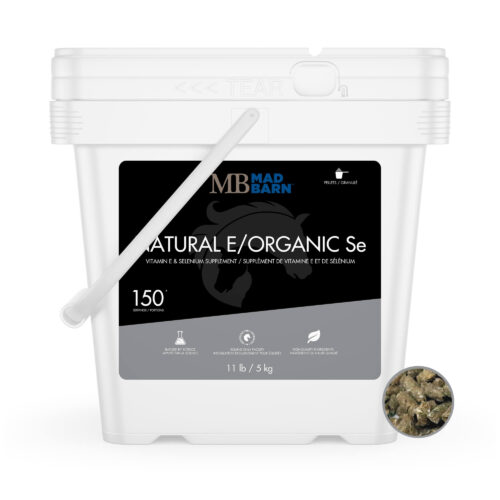
- Post-Exercise Antioxidant Support: Exercise increases metabolic activity in muscle cells, leading to the production of free radicals, which are unstable molecules that can damage cell membranes and other tissues if not neutralized by antioxidants. Horses in regular work have higher requirements for vitamin E, one of the body’s primary antioxidants, to help protect muscle cells from oxidative stress. Natural E/Organic Se provides natural vitamin E and organic selenium to support antioxidant status and maintain normal muscle function, especially in horses without access to fresh pasture.
- Muscle Relaxation and Calm Nerves: Horses showing signs of muscle tension, stiffness, a tight back, or excitable behaviour may not be getting enough magnesium. This mineral plays an important role in muscle relaxation and normal nerve function. Magnesium Oxide supports normal muscle and nerve function by contributing to cellular electrolyte balance and muscle relaxation.
- Stamina and Energy Metabolism: Horses that fatigue easily or struggle to maintain energy during exercise may benefit from metabolic support. Acetyl-L-Carnitine plays a key role in transporting fatty acids into the mitochondria, where they are used to generate cellular energy. This supports efficient energy use in working muscles and helps maintain stamina in performance horses.
Principles of Muscle Function & Health
Exercise is the primary stimulus for muscle growth, but conditioning alone isn’t enough. Horses need time to recover between training sessions so that muscle fibers can repair, adapt, and strengthen. Without proper recovery, the body can’t complete the biological processes required for muscle development.
Exercise causes micro-damage to muscle fibers, especially during eccentric contractions or unfamiliar workloads. This damage triggers muscle protein synthesis, where new muscle proteins are produced to repair and reinforce muscle tissue. This breakdown and rebuilding process is ongoing, even at rest, but becomes more active in response to training stimuli.
Muscle maintenance and repair depend on more than just amino acid supply. They also require adequate rest, a consistent workload, and proper management of factors like saddle fit and movement quality. Overtraining, discomfort, or inconsistent routines can all limit topline development, even in horses receiving optimal nutrition.
Turnout and regular movement support circulation, reduce muscle stiffness, and help maintain range of motion. Work should be progressive and discipline-appropriate, with a focus on building strength, suppleness, and postural control over time.
If your horse is in regular work but not building or maintaining muscle, nutrition may be part of the issue. Request a free diet evaluation to assess your feeding program and identify whether additional nutritional support is needed to complement your horse’s training and recovery.
Muscle development in horses depends on a consistent supply of essential amino acids, which are needed to support muscle protein synthesis and tissue repair. The amino acids lysine, methionine and threonine are often limited in equine diets, so horses often benefit from supplementation.
In addition to amino acids, horses need adequate dietary energy and key micronutrients, including vitamin E, selenium, magnesium, and B-vitamins. These nutrients play important roles in muscle contraction, antioxidant defense, and recovery after exercise.
Feeding a complete, balanced vitamin and mineral supplement helps ensure your horse receives the nutrients required to support topline and overall muscle function. Mad Barn offers two options: Omneity® for general use, and AminoTrace+ for horses with higher amino acid and trace mineral requirements.
Increasing protein intake may help support muscle development, but only if the horse’s current diet is lacking in protein. Muscle growth depends on adequate intake of a balanced profile of essential amino acids, the building blocks that make up protein. If the horse’s diet is already providing sufficient amino acids and overall energy, adding more protein is unlikely to produce additional muscle gain.
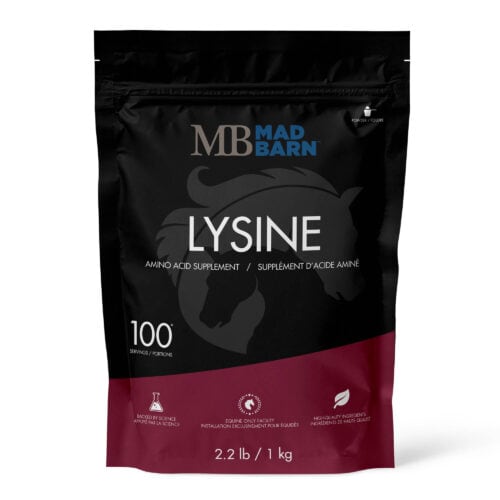
However, forage-based diets can be low in amino acids, especially lysine. In these cases, supplementation with high-quality protein sources or specific amino acids can help meet requirements and support muscle maintenance and topline development.
If you’re unsure whether your horse’s current protein intake is adequate, submit a free diet evaluation to receive personalized guidance from our nutrition team.
Following exercise, the body repairs and rebuilds muscle tissue through a process that requires energy, amino acids, and micronutrients. Providing adequate dietary protein and essential amino acids, especially lysine, methionine, and threonine, helps support muscle protein synthesis. Antioxidants such as vitamin E and selenium also play a key role by protecting muscle cells from oxidative stress generated during intense work.
Without these nutrients, recovery may be slower and the risk of muscle soreness or stiffness increases. Alongside proper nutrition, allowing time for rest and implementing a consistent, progressive training program are also essential for recovery and adaptation.
Natural E/Organic Se provides natural-source vitamin E and organic selenium to support antioxidant status in horses with increased oxidative demands or limited access to fresh forage.
Building topline requires exercises that consistently engage the horse’s core, back, and hindquarters. Activities such as hill work, raised poles, transitions within and between gaits, and collected or lateral work encourage the horse to lift through the back and engage the hind end. These exercises promote strength, balance, and postural alignment when introduced progressively and performed with correct form.
Recovery is equally important. Muscle adaptation occurs during rest, so horses need time between sessions to repair and rebuild muscle tissue. Nutrition also plays a key role. Without adequate amino acids, energy, and micronutrients, the horse will not be able to develop muscle in response to training.
A proper conditioning program is important for building muscle, but topline development also depends on nutrition and recovery. If your horse isn't consuming enough amino acids, calories, or nutrients like magnesium or vitamin E, muscle repair and growth may be limited. Poor saddle fit, discomfort, or inconsistent training can also interfere with topline development.
To identify whether nutritional gaps are affecting your horse, submit a free diet evaluation for personalized recommendations from our nutritionists.
Signs that your horse may need additional nutritional support for muscle development include loss of topline, uneven muscling, persistent fatigue, difficulty maintaining condition, or stiffness during work. Horses in heavy training, those recovering from illness, and those on restricted diets may have higher demands for amino acids and micronutrients.
Targeted supplements like Three Amigos, Natural E/Organic Se, or Magnesium Oxide can be used alongside a balanced base diet to address specific needs.
Muscle loss in horses can result from a variety of factors, including inadequate nutrition, lack of exercise, aging, chronic illness, or metabolic conditions. One of the most common causes is a diet that doesn’t supply enough high-quality protein or essential amino acids, particularly lysine, which can be limiting in forage-based diets. Without these building blocks, the horse cannot maintain or rebuild muscle tissue.
Other nutritional factors, such as deficiencies in vitamin E, selenium, or B-vitamins, can also impair muscle function and contribute to muscle wasting over time. Horses that are on calorie-restricted diets, recovering from illness, or experiencing chronic pain may also lose muscle due to reduced mobility or increased metabolic demands.
If you're noticing topline loss, uneven muscling, or a decline in condition, submit a free diet evaluation to determine whether nutritional factors could be contributing to muscle loss in your horse.
Muscle development in horses is a gradual process that depends on consistent training, adequate recovery, and proper nutrition. Most horses begin to show visible changes in muscle tone and topline within 12 weeks of starting a structured conditioning program, provided their diet meets the requirements for energy, protein, and key nutrients.
The rate of progress depends on factors such as age, fitness level, exercise intensity, and the presence of any nutritional deficiencies. Horses recovering from illness or starting from a lower baseline may take longer to rebuild muscle mass. Adequate intake of essential amino acids, vitamins, and minerals is necessary to support muscle protein synthesis and tissue repair.
If your horse is not developing muscle as expected, submit a free diet evaluation to identify any potential gaps in their feeding program.
