B-Vitamin Pak is a complete, powdered vitamin B complex supplement designed to support horses in intense training, under stress from transport or illness, or those fed high-grain diets. This balanced formula includes all essential B-vitamins in a premium-quality supplement at an unbeatable price.
Supports energy metabolism in performance horses
Promotes hoof growth and coat quality
Aids in maintaining a calm disposition
Helps support overall well-being in stressed horses
I love the results of this B mix vitamin on my nervous two year old.
Kathy Newbery
Verified Customer
Horses eat it well seems to be doing its job- of supporting metabolism, supporting healthy skin and nerves.
Dorothy Williams reich
Verified Customer
I am very pleased with this product. Blood work has improved... I will purchase again!
Sue Williams
Verified Customer
I love that this is vitamin packed and able to be fed in such a small volume. My mares like the taste. Quick delivery too
Marina Atkins
Verified Customer
Great they eat it well and keeps RBC levels where they should be
Heather Pickett
Verified Customer
I really appreciate the speed the order is filled. My horse like the taste and I love the way it smells, like burnt sugar cookies!
Linda Peden
Verified Customer
Good product! Helps m’y thoroubred mare to relax a bit !
Marie-Claude Perrier
Verified Customer
My picky horse had no problem cleaning it up, and it seemed to resolve his pica. Thanks!
Amanda Berges
Verified Customer
The vitamin B pak is great for my whole herd!
Lisa Bown
Verified Customer
This is clean raw Vit B, and palatable. Great product!
Mimi Sidwell
Verified Customer
My horse absolutely loves the taste of the B-Vitamin Pak, will definitely buy again!
Olivia Ferrendelli
Verified Customer
Lovely product, arrives within a couple of days after placing the order. Very consistent product, thanks Mar Barn
Kayce Fisher
Verified Customer
Mad Barn makes it very easy to maintain my horses supplement program.
Janice Pearson
Verified Customer
My horse is happy to eat it and the daily amount is a small scoop.
Suzette Dybiec
Verified Customer
We stand behind our products to provide the best nutrition for your horse. No fillers, just research-backed ingredients. If your horse doesn't love this product, our Customer Happiness team is here to help or give you a refund guaranteed.
Biotin (Vitamin B7)
Biotin (vitamin B7) is a water-soluble vitamin that functions as a coenzyme for carboxylase enzymes involved in carbohydrate, lipid, and amino acid metabolism. It also plays a structural role in keratin synthesis, contributing to the integrity of hooves, skin, and coat.
Biotin is not synthesized by the horse in sufficient quantities and must be obtained from dietary sources such as fresh pasture, alfalfa, oats, barley, and soybean meal. Supplementation with biotin has been shown to support normal hoof growth rate, hardness, and horn quality, especially in horses with brittle or weak hoof walls.
Clinical studies in horses demonstrate that daily biotin intake of approximately 20 mg supports the development of strong, resilient hoof horn when provided consistently over several months. Biotin also contributes to normal cellular metabolism and energy production through its role in enzymatic reactions within mitochondria.
Calcium-D-pantothenate is the stable, supplemental form of pantothenic acid (vitamin B5), a water-soluble vitamin essential for cellular energy metabolism. It is a structural component of coenzyme A (CoA) and acyl-carrier proteins, which are required for carbohydrate oxidation, fatty acid synthesis, and amino acid metabolism.
Pantothenic acid supports the synthesis of steroid hormones, neurotransmitters, and acetylcholine, and contributes to maintaining healthy skin, coat, and hoof tissue. In horses, adequate B5 levels help sustain normal metabolic activity and recovery during periods of stress or high workload.
Deficiency is uncommon, as pantothenic acid is supplied by forages, grains, and microbial synthesis in the hindgut. However, horses with digestive disturbances, high-grain diets, or antibiotic use may benefit from additional supplementation to maintain optimal nutrient utilization.
Choline is an essential nutrient that functions as a structural component of cell membranes, a methyl group donor in metabolic reactions, and a precursor for the neurotransmitter acetylcholine. It plays critical roles in liver function, lipid transport, and nervous system communication.
In equine nutrition, choline is considered a vitamin-like compound closely associated with the B-vitamin group. It contributes to normal fat metabolism and supports hepatic and muscular energy balance. Although horses can synthesize some choline endogenously, requirements may increase under metabolic stress, high performance demands, or when diets are low in methyl donors such as methionine or folate.
Choline also influences intestinal and hepatic lipid metabolism and may contribute to maintaining normal gut function through its effects on phospholipid synthesis and membrane integrity. Supplementation with bioavailable forms such as choline chloride or phosphatidylcholine supports these physiological roles in horses.
Folic acid (folate, Vitamin B9) is a water-soluble B-vitamin that functions as a one-carbon donor in DNA synthesis, methionine regeneration, and amino acid metabolism. It supports normal cell proliferation, tissue repair, and red blood cell maturation, processes that are particularly important during periods of growth, training, or recovery.
In horses, folate status reflects both dietary intake and microbial synthesis in the hindgut. Levels may be lower in animals maintained primarily on hay compared with those on fresh forage. Medications that interfere with folate metabolism, such as sulfadiazine or pyrimethamine used in EPM treatment, can also reduce availability, making supplementation beneficial in some cases.
Folic acid helps maintain normal hematologic and mucosal function, contributing to overall metabolic efficiency and recovery from exercise or illness.
Niacin (Vitamin B3) is a water-soluble vitamin essential for maintaining normal energy metabolism, circulatory function, and cellular health. It serves as a precursor for the coenzymes NAD⁺ and NADP⁺, which are critical to oxidation–reduction reactions involved in carbohydrate, fat, and protein metabolism.
In horses, niacin supports efficient energy release from feed, healthy skin and nerve function, and normal vascular tone. It also contributes to gastrointestinal function by promoting tissue metabolism and maintaining mucosal integrity. Horses can synthesize niacin from the amino acid tryptophan and via microbial production in the hindgut, though dietary sources such as alfalfa and soybean meal can also contribute to intake.
Niacin requirements increase with exercise and higher protein intake. Supplemental niacin is included in performance and comprehensive vitamin–mineral formulations to help support energy utilization, metabolic resilience, and circulatory health in working horses.
Pyridoxine (Vitamin B6) is a water-soluble vitamin that serves as a coenzyme in more than 150 enzymatic reactions involved in amino acid metabolism, gluconeogenesis, glycogen utilization, and neurotransmitter synthesis. It supports normal energy metabolism, immune competence, and red blood cell formation.
In horses, Vitamin B6 is synthesized to some extent by hindgut microbes but may require dietary support under conditions of high metabolic demand, such as intense training, growth, or recovery. It also plays roles in maintaining normal homocysteine metabolism and supporting muscle and nervous system function.
Supplementation may be beneficial for horses on high-grain or hay-only diets, under prolonged stress, or with impaired hindgut function that could limit microbial synthesis or nutrient absorption.
Riboflavin (Vitamin B2) is a water-soluble vitamin that serves as a precursor for the coenzymes flavin adenine dinucleotide (FAD) and flavin mononucleotide (FMN), which are essential for oxidative metabolism and ATP generation. These coenzymes participate in numerous redox reactions, supporting carbohydrate, protein, and lipid catabolism.
Riboflavin also contributes to antioxidant defense by maintaining glutathione in its reduced, active form through FAD-dependent glutathione reductase activity. Adequate riboflavin status supports energy metabolism, muscle performance, and recovery in exercising horses.
Horses obtain riboflavin primarily from forage, particularly legumes such as alfalfa and clover, and from microbial synthesis in the hindgut. Deficiency and toxicity have not been documented in horses, though supplementation may support animals on low-quality forage, under high workload, or during periods of digestive disturbance.
Thiamine (vitamin B1) functions as a coenzyme for key enzymes in carbohydrate metabolism, including pyruvate dehydrogenase, α-ketoglutarate dehydrogenase, and transketolase. Through these reactions, it facilitates ATP generation and supports normal neuromuscular function.
Most horses obtain sufficient thiamine from forage and microbial synthesis in the hindgut, but additional supplementation may be useful in animals under heavy training, stress, or antibiotic therapy that may impair gut microbial activity. Thiamine status influences energy utilization, coordination, and glucose metabolism, making it relevant for performance and recovery in athletic horses.
Rich dietary sources include brewer’s yeast, rice bran, and whole grains, while content in hay declines with age and storage. Thiamine hydrochloride is the most common supplemental form, with documented safety and bioavailability in horses.
Vitamin B12 (cobalamin) is a water-soluble cofactor for methionine synthase and methylmalonyl-CoA mutase. Through these pathways it supports one-carbon metabolism, red blood cell maturation, myelin maintenance, and mitochondrial energy production from propionate.
In horses, most B12 is synthesized by hindgut microbes from dietary cobalt. Status may be influenced by cobalt intake, forage-only rations with low fresh pasture, or disruptions to hindgut function. Supplementation is used to help maintain normal energy metabolism, appetite, and hematologic parameters when intake or endogenous synthesis may be insufficient.
Store in a cool, dry place, protected from direct sunlight. Keep tightly closed when not in use.
Feeding vitamins other than vitamins A, D, E, riboflavin, pyridoxine, and thiamine to horses may not have a beneficial effect.
Shelf Life:
12 months from date of manufacture.
Disclaimer:
These statements have not been evaluated by Health Canada or the FDA. This product is not intended to diagnose, treat, cure or prevent any disease.
Register & manufactured by: Mad Barn Inc., Petersburg, ON, Canada.
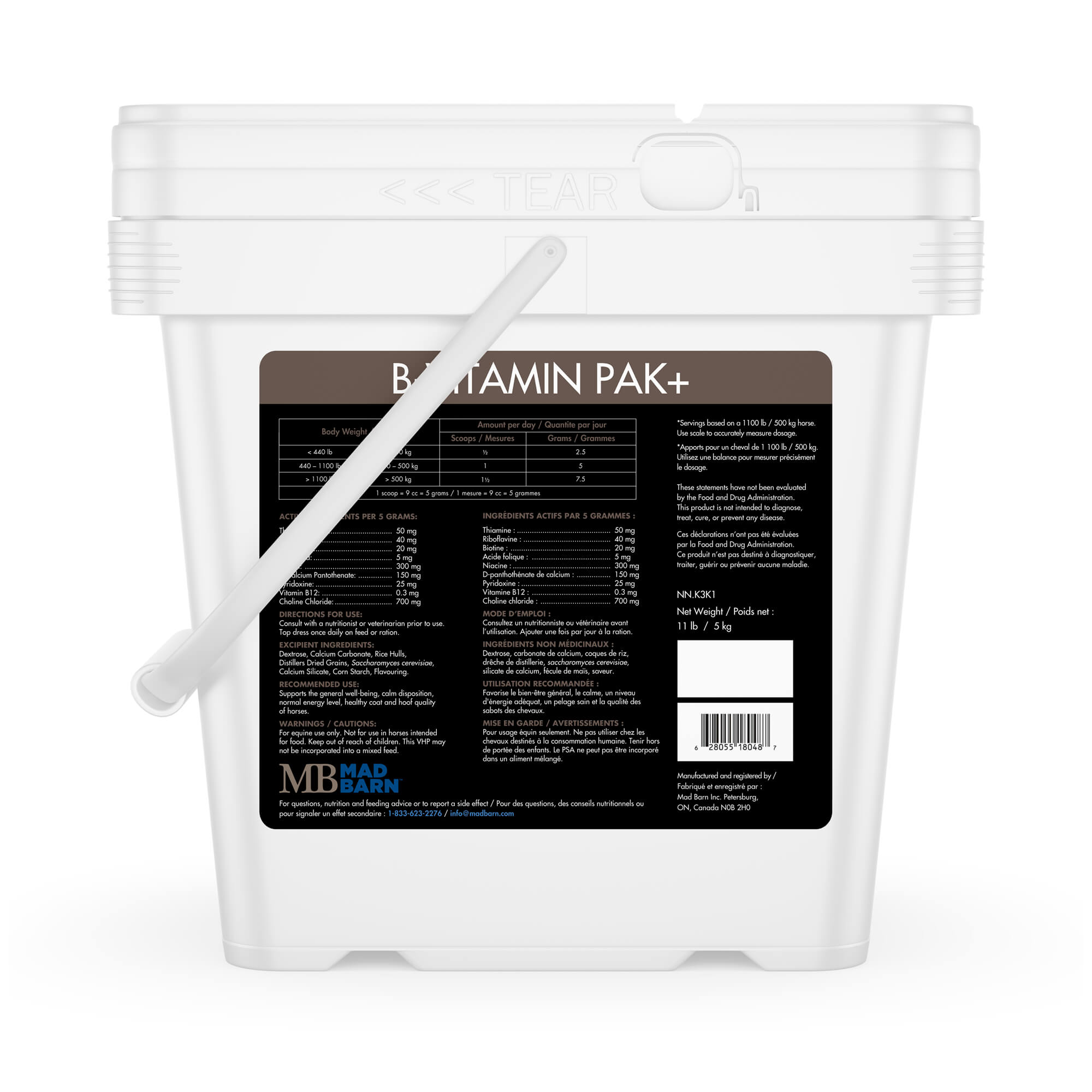
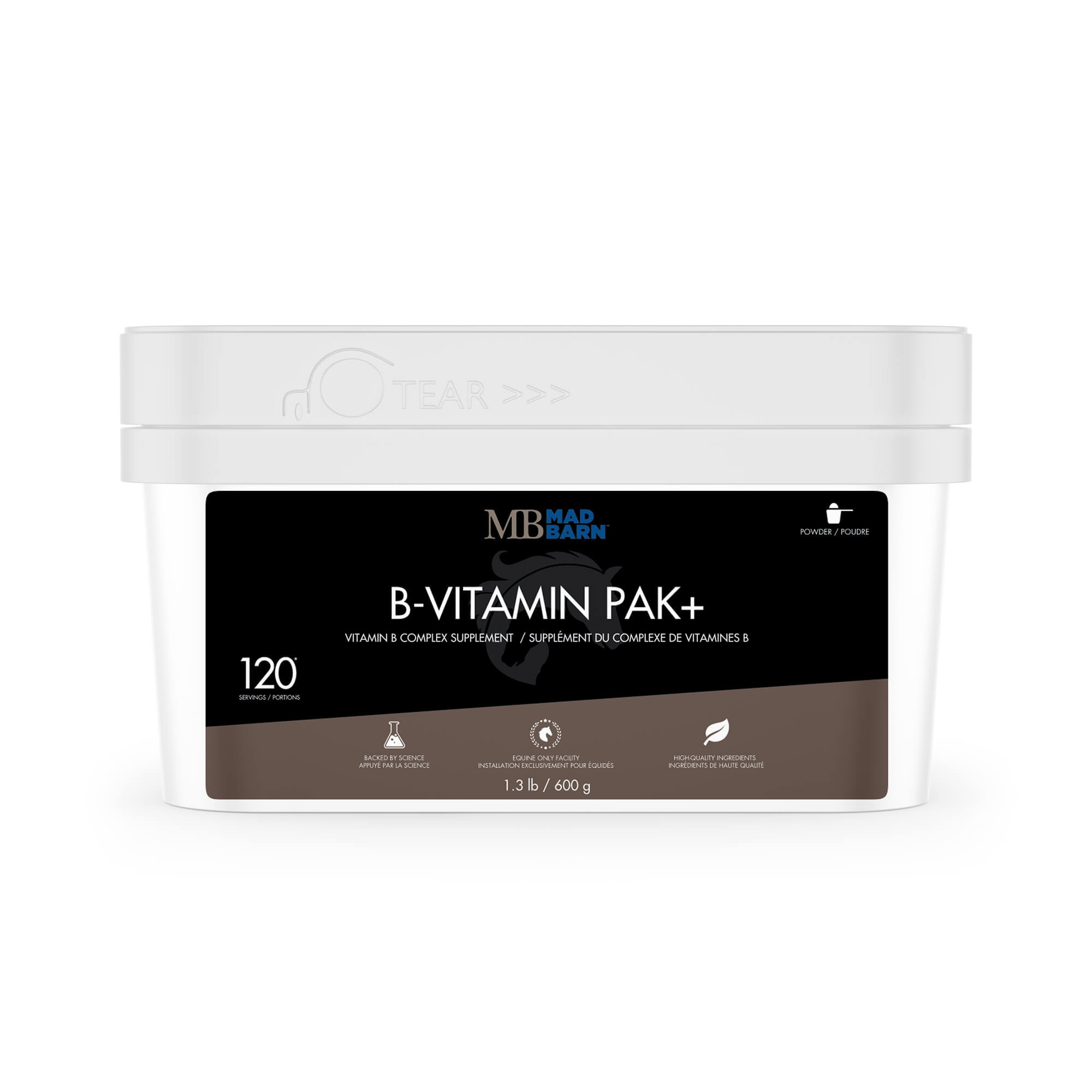
600 g (1.32 lb): SKU 628055182412 5 kg (11 lb): SKU 628055180487
Cost Calculator
Metric (kg)
Imperial (lb)
kg
grams
* Recommended serving size of 1 grams per 100 kg (220 lb) of body weight
Servings
Cost Per Day
Disclaimer: Recommended feeding rate varies depending on your horse's condition and current diet. Consult with a nutritionist to determine the appropriate inclusion rate for your horse.
Frequently Asked Questions
B-Vitamin Pak is designed for horses that need extra nutritional support beyond what is produced in the hindgut. While healthy horses often make enough B-vitamins through microbial fermentation, many situations increase demand or reduce natural production. Performance horses in hard training, those stressed by travel or competition, horses on high-grain or low-forage diets, seniors with reduced digestive efficiency, or horses recovering from illness may all struggle to maintain adequate B-vitamin levels. Supplementing with B-Vitamin Pak helps support consistent appetite, energy metabolism, red blood cell formation, and stress resilience, keeping these horses eating well, recovering faster, and performing at their best.
The B-vitamins are a family of water-soluble vitamins that work together in many of the body’s metabolic pathways. They are grouped together because they share common roles in energy metabolism, red blood cell formation, nervous system function, and tissue repair. Unlike fat-soluble vitamins, B-vitamins are not stored in large amounts in the body, so they need to be consumed regularly through the diet or produced in the hindgut by microbial fermentation.
Each B-vitamin has a specific role in equine physiology:
Thiamine (B1): Supports carbohydrate metabolism and normal nerve function.
Riboflavin (B2): Essential for energy metabolism, skin, and eye health.
Niacin (B3): Helps maintain circulation, digestion, and nerve activity.
Pantothenic acid (B5): Required for coenzyme A production, fat metabolism, and energy generation.
Pyridoxine (B6): Involved in amino acid metabolism and neurotransmitter synthesis.
Biotin (B7): Important for keratin formation, supporting hoof, skin, and coat integrity.
Folic acid (B9): Necessary for DNA synthesis, tissue repair, and red blood cell production.
Vitamin B12 (Cobalamin): Supports red blood cell formation and amino acid metabolism.
B-vitamin supplementation is most useful when a horse’s natural production of these vitamins in the hindgut does not keep up with demand. Performance horses in regular training have higher needs to support energy metabolism and recovery. Horses that travel or compete frequently may eat less or experience digestive upset, reducing microbial production of B-vitamins. Picky eaters or horses on high-grain, low-forage diets can also have altered hindgut function that limits vitamin synthesis. Senior horses with declining digestive efficiency and horses recovering from illness or injury may not produce or absorb enough B-vitamins on their own. In these cases, adding B-Vitamin Pak helps maintain appetite, support energy utilization, and maintain resistance to stress so horses can stay in good condition.
B-vitamin deficiencies are uncommon in healthy horses but may occur when hindgut function is impaired or dietary intake is inadequate. Possible signs include poor appetite, weight loss, dull coat, lethargy, reduced performance, slower recovery, and weak hoof horn growth. Horses showing these signs may benefit from additional B-vitamin support.
B-vitamins are synthesized in the horse’s hindgut by microbial fermentation. When gut health is disrupted, such as with hindgut dysbiosis, frequent antibiotic use, low forage intake, or other intestinal challenges, natural B-vitamin production can decline. Supplementing with B-Vitamin Pak helps maintain energy metabolism, appetite, and resistance to stress in horses with compromised hindgut function.
B-vitamins help support normal brain function by contributing to neurotransmitter production, which can influence mood and behavior. Horses typically make B-vitamins in the hindgut, but stress, poor-quality forage, digestive issues, or microbial imbalances can reduce this natural production. If you observe behavior or mood improvements after supplementing, it may indicate your horse’s B-vitamin status was previously low.
Each serving of B-Vitamin Pak provides 20 mg of biotin, which is the level shown in research to support hoof horn quality and growth. However, biotin alone is not enough for optimal hoof health. Strong hooves also depend on adequate intake of trace minerals such as zinc and copper, as well as amino acids like methionine and lysine that are critical for keratin formation. For this reason, we recommend feeding a comprehensive vitamin and mineral program such as Omneity or AminoTrace+. Both provide 20 mg of biotin per serving along with full B-vitamin fortification and balanced mineral nutrition to give your horse everything needed to support hoof growth and overall health.
Each 5 g scoop of B-Vitamin Pak provides 20 mg of biotin. This amount is considered the research-backed dose to support hoof growth and quality in horses.
The time frame to see results with B-Vitamin Pak depend on the individual horse and the reason for supplementation. Improvements in appetite, energy metabolism, and overall attitude are often noticed within days to weeks of consistent feeding. For performance horses, regular supplementation may help support stamina, recovery, and focus during training and competition over the longer term. As with all supplements, the best results come from daily use as part of a balanced feeding program.
The only B-vitamins with established daily requirements for horses are thiamine and riboflavin. One scoop of B-Vitamin Pak meets the daily needs for these nutrients in a mature horse at maintenance or in light work. For other B-vitamins, specific requirements have not been established in horses. However, the levels provided in one scoop are consistent with research and practical feeding experience, helping to support appetite, energy metabolism, stress resilience, and overall well-being.
Yes. Senior horses with reduced forage intake due to dental problems often produce fewer B-vitamins in the hindgut. Supplementing with B-Vitamin Pak can help support appetite and energy metabolism, encouraging better feed intake and utilization. For best results, it should be fed as part of a balanced diet that also provides adequate protein, calories, vitamins, and minerals to maintain body condition and weight in older horses.
Healthy horses generally produce B-vitamins in the hindgut through microbial fermentation, which is often enough to meet basic needs. However, some horses have higher demands or may not produce sufficient amounts. Horses in heavy training, those under stress from travel or competition, horses with poor appetite, picky eaters, or those recovering from illness may all benefit from supplemental B-vitamins. B-Vitamin Pak helps support energy metabolism, appetite, and resistance to stress in horses whose natural production or intake is not sufficient.
The B-complex vitamins play key roles in the nervous system by supporting neurotransmitter production and maintaining gut–brain axis function. Horses generally make B-vitamins in the hindgut, but this natural production can be disrupted by high-grain diets, which alter microbial populations and reduce vitamin synthesis. When this happens, horses may show changes in appetite, attitude, or behaviour. Supplementing with a balanced B-vitamin complex ensures adequate thiamine, riboflavin, folate, and other nutrients needed to support normal energy metabolism and brain function. Owners often notice improvements in appetite, focus, or overall demeanor when B-vitamin needs are being met, especially in horses on high-grain or low-forage diets where natural production may be compromised.
B-Vitamin Pak can be fed daily to support overall well-being, or used strategically during periods of stress, travel, training, or reduced appetite. Horses in heavy work, frequent competition, or under chronic stress often benefit from daily supplementation.
Yes, Both Omneity and AminoTrace+ already provide B-vitamins as part of their complete formulations, which is sufficient for most horses. B-Vitamin Pak is typically only needed in special cases, such as horses in very heavy training, those under significant stress, or those with poor appetite or recovery challenges. In these situations, the extra B-vitamin support can be beneficial, but it’s best to make the decision based on your horse’s individual needs and, if possible, with guidance from a nutritionist or veterinarian.
Yes. B-Vitamin Pak is a fine powder that mixes easily with feed and is accepted by most horses. For picky eaters, it can be blended with soaked forage pellets or beet pulp. Mad Barn also offers a 100% Customer Happiness guarantee — if your horse won’t eat it, we will provide a refund or store credit.
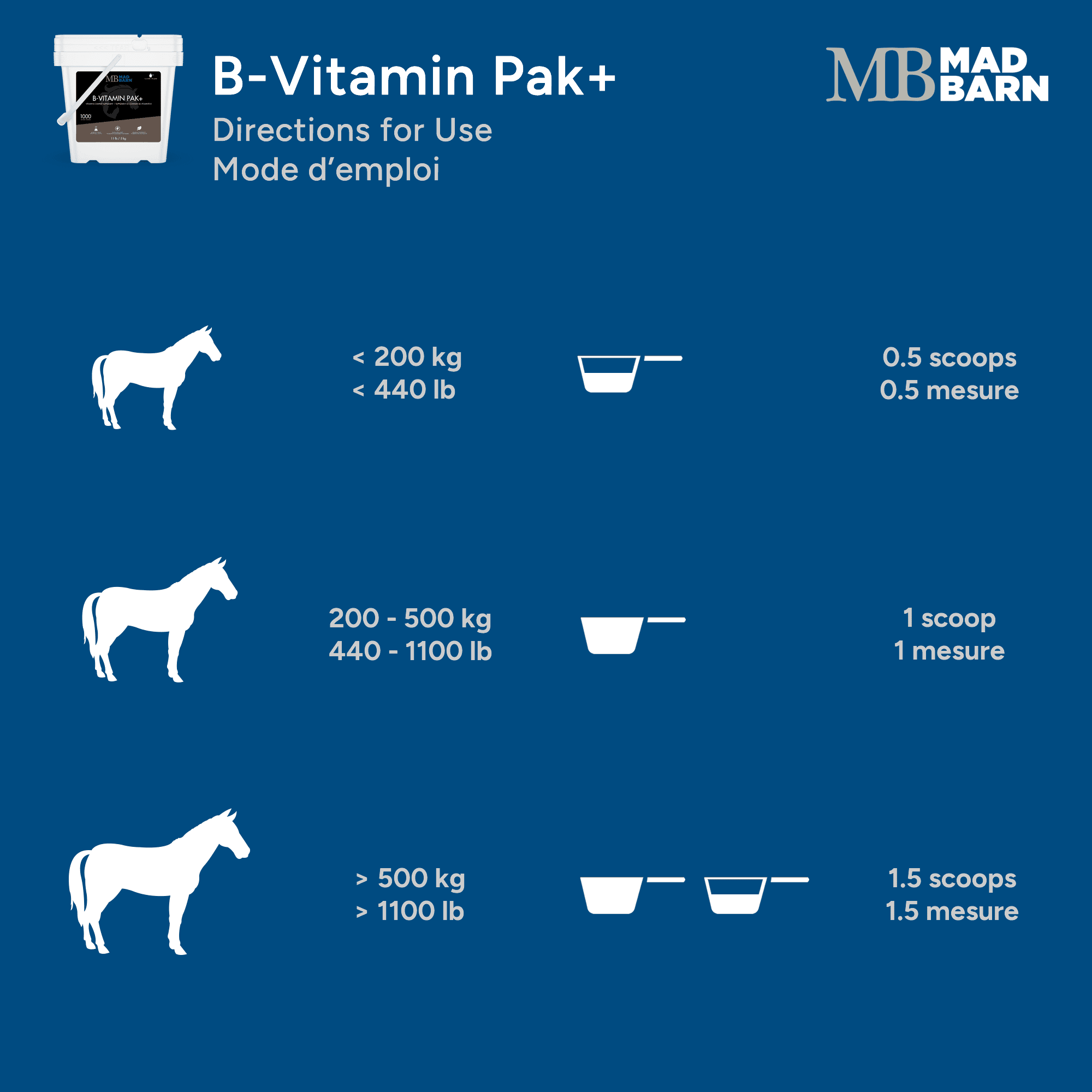
Yes. Each container includes a measuring scoop that delivers 5 grams of product. An average-sized horse should receive one scoop daily, unless otherwise recommended by a nutritionist or veterinarian.
B-Vitamin Pak is a powdered supplement that mixes easily with feed, making it simple to incorporate into the daily ration.
B-Vitamin Pak does include a small amount of carrier ingredients. Because the active B-vitamins are fed in very small quantities, excipients are added to improve stability, ensure even mixing, and make the product easier to scoop and less dusty. The excipients used include small amounts of extrose, calcium carbonate, rice hulls, distillers dried grains, yeast culture, calcium silicate, corn starch, and natural flavouring. At the recommended feeding rate of only 4–5 grams per day, the contribution of non-structural carbohydrates (NSC) from these ingredients is negligible and considered safe for insulin-resistant (IR) horses. For comparison, the NSC delivered is far lower than what is found in even a handful of low-sugar hay.
B-Vitamin Pak can be top-dressed on your horse’s daily ration or mixed into soaked forage pellets, beet pulp, or a small grain meal. It can be fed dry or soaked, once daily or divided into two meals. For horses that need ongoing B-vitamin support, daily feeding is recommended.
Yes. B-Vitamin Pak is competition-legal and does not contain prohibited substances under current FEI regulations. Because rules can change, always confirm with your governing organization before competition.
The guaranteed shelf life is one year from the date of manufacture. Store sealed in a cool, dry environment away from moisture and direct sunlight to maintain freshness and potency.
Yes. B-Vitamin Pak is safe to feed during pregnancy and lactation. B-vitamins are water-soluble, meaning the horse’s body uses what it needs and eliminates the rest. These vitamins play key roles in energy metabolism, appetite regulation, and stress response, which can be beneficial for broodmares throughout gestation and lactation.
Yes. B-Vitamin Pak is safe for horses with metabolic conditions such as insulin resistance (IR), PPID (Cushing’s), or equine metabolic syndrome (EMS). It does not contribute any meaningful sugar or starch to the diet and can be used as part of a balanced feeding program for metabolic horses.
Yes. There are no known interactions between B-Vitamin Pak and common equine medications. Always consult your veterinarian before making major changes to your horse’s diet if they are on prescription medications.
Ask A Question
Have a question about this product? Ask below and our nutritionists will be happy to assist.
B-Vitamin Pak Supports:
Athletic Performance
Energy Metabolism
Hoof Growth
Resistance to Stress
Muscle Function
Post-Exercise Care
Immune Function
Skin and Coat Quality
Competition Readiness
Mood Balance
Mad Barn’s B-Vitamin Pak is a comprehensive, powdered formula that delivers a balanced profile of all the B-vitamins that your horse needs.
We dare you to compare B-Vitamin Pak – you will not find a lower priced/higher quality B-vitamin equine supplement on the market!
The complex of B-vitamins is made up of thiamine (B1), riboflavin (B2), niacin (B3), pantothenic acid (B5), pyridoxine (B6), biotin (B7), folic acid (B9), and cobalamin (B12).
Together, these essential nutrients are chiefly involved in the metabolism of fat, protein and carbohydrates, proper functioning of the liver and blood production. Supplementing with B-Vitamin Pak can support your horse’s well-being, mood, energy levels, coat quality and more.
Why Supplement B-vitamins in your Horse?
The horse is able to synthesize the majority of B-vitamins in the hind gut, thanks to its bacterial population. These vitamins are also very efficiently recycled within the body and not typically needed in large quantities in the diet.
For this reason, it is common for equine nutritionists to indicate that horses do not need supplemental B-vitamins to prevent deficiency.
However, studies consistently show that supplementing 20 mg/day of biotin will improve hoof growth and structure. This is why all Mad Barn mineral and vitamin products provide 20 mg of biotin/day.
This indicates that endogenous production levels of B Vitamins is not sufficient for optimal health with current feeding and management practices.
Similarly, if you supplement thiamine and note an improvement in your horse’s mood and behaviour, then clearly B-vitamin levels were insufficient prior to supplementation.
Unlock the full potential of your horse by supplying optimal levels of B-Complex vitamins with B-Vitamin Pak, rather than aiming for the minimum.
When to Use B-Vitamin Pak
Supplementing B-vitamins with Mad Barn’s B-Vitamin Pak can especially assist horses:
Undergoing intense training or competition
Lower than ideal B-complex levels may negatively impact horses that spend a lot of time off pasture, adhere to strict schedules or other management practices that are seen in horses that are engaged in high levels of training and competition. Supplementing B-vitamins can restore optimal levels.
Under stress due to transportation
Disruptions in your horse’s feeding schedule, changes in the environment and changes in diet can all contribute to increased stress, which can compromise gut health and weaken the immune system.
With a reduced digestive capacity
Very young horses may have a low bacterial population in their hind gut, meaning they are not able to produce adequate levels of these vitamins internally.
Very old horses often have a lower feed intake and digestive capacity due to age-related conditions, which could lead to lower levels of B-vitamins in the body.
Affected by an illness
Poor appetite can accompany illness; replenish B-vitamins that can’t be obtained from normal feedstuffs.
Medications such as NSAIDs or antibiotics may compromise hind gut bacteria.
Fed high-grain diets
High grain diets tend to cause dysbiosis in the hind gut and a subsequent reduction in B-vitamin production.
With limited access to green grass or quality hay
Fresh grass is rich in many B-vitamins. Depending on the harvest, hays can also contain adequate levels. However, during times when fresh grass or quality pasture aren’t available, B-vitamin supplementation can be helpful.
You should always consult a qualified nutritionist before altering your feed program. Submit your horse’s diet for analysis online and one of our equine nutritionists will be happy to provide a complementary review.
Is Your Horse's Diet Missing Anything?
Identify gaps in your horse's nutrition program to optimize their well-being.


 English



 AminoTrace+
 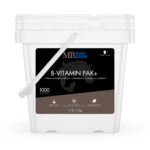 B-Vitamin Pak
  Biotin
  Omneity® Pellets
  Omneity® Premix

 Visceral+


 Athletic Performance
 Energy Metabolism
 Hoof Growth
 Resistance to Stress
 Muscle Function
 Post-Exercise Care
 Immune Function
 Skin and Coat Quality
 Competition Readiness
 Mood Balance



















