English

![Sean Jobin: Competing at the Height of Canadian Show Jumping – [Athlete Profile]](/wp-content/uploads/2024/12/sean-jobin-athlete-profile.jpg)
Photo: Sam Doswell, Doswell Creative 2024
Sean Jobin’s efficiency in the saddle jumps out. His cues are subtle and effective, his sightline is up and ahead, and his navigation of obstacles is confident and smooth. On course, as in life, Sean knows where he is going and how to get there.
Jobin is a 5* FEI showjumper who is gaining prominence on the national and international stage. He and his horses consistently find the podium at major events across North America. In addition, Jobin relishes his role as a dedicated competitor on Team Northern Lights of the popular Major League Show Jumping circuit.
Currently ranked among the top show jumpers in Canada and within the top 250 globally, Jobin has built a reputation for success. When he isn’t competing, Sean serves as president at Double Clear LLC, his sales company based in Florida and Ohio.
From Youthful Riding to a Seasoned Pro
Originally from Toronto, Canada, Sean was introduced to horses by his mother, a lifelong horse enthusiast and accomplished eventer.
Sean’s skill for developing champion horses became apparent early in his career. As a junior rider, he demonstrated an easy ability to bond with young and unfamiliar horses on short notice or in warm-up rings, making him a sought-after catch rider.
He made the most of these opportunities and showed others’ horses wherever he could. Given show demographics at the time, Sean’s development as a rider was often in the hunter or equitation rings. This versatility in the saddle makes him a well rounded rider today.
Following these early experiences, Sean began to focus his attention and competitive drive onto the high-energy demands of equestrian show jumping.
“I don’t think I really had a plan, to be honest. I was just riding the horses that were in front of me.”
— Sean Jobin, Mad Barn High Performance RiderBy 18 years old, Jobin had gained a wealth of experience at Silver and Gold level shows in Ontario, Canada. As he transitioned from junior to adult divisions, it became clear that riding, training, and showing competitive horses was his future. With that, he turned professional.
Going pro was not initially part of a long-term career plan, more a pursuit of happiness. As he puts it, “I don’t think I really had a plan, to be honest. I was just riding the horses that were in front of me.”
Well, he has a plan now.
Sightline Fixed Up & Ahead
For the past ten years, Sean Jobin has maintained his presence as a Canadian rider and trainer based in the United States. Like other Canadian-born athletes, Sean has more opportunities south of the border, especially in winter.
For Sean, those opportunities first came in the form of developing young horses for sale. This work soon evolved into competing 3-foot hunters and 1.0 – 1.10 m jumpers, experiences that would ultimately pave the way for his current success as a 1.50 m show jumper.
By positioning himself near equestrian hubs such as the World Equestrian Center (WEC) in Ocala, Florida, and the Winter Equestrian Festival (WEF) in nearby Wellington, Sean developed his competitive edge by riding top horses, competing at a high level, and immersing himself in a community of horse professionals.
As Sean’s abilities reached new heights, so did the jumps. To navigate this transition from a mixed hunter/jumper background to an all-in jumper aiming for the elite podium, Jobin needed to make some adjustments as a rider.
“Being accurate with your aids and developing a good connection with your horse are ultimately what make you a better rider.”
— Sean Jobin, Mad Barn High Performance RiderFirst, Sean adjusted his mental approach to truly embrace the speed of the jumper ride. “As you start jumping higher and higher, speed and momentum become so important. It can be hard for a rider to transition to the higher speeds without it feeling frantic,” Jobin recalls.
Second, Sean adjusted his body mechanics to help his horse better anticipate the optimal take-off distances, which are much less forgiving at Grand Prix heights.
“The other thing for me was body position,” Sean explains. “As a taller rider, you just can’t lean forward when the jump is 1.50-1.60 m. You need to be comfortable rocking back and using your body in a different way.”
Sean’s transition was eased by good fundamentals. As he puts it, he already had, “a good ability to read a canter, and to make decisions and pilot a horse with minimal interference… Being accurate with your aids and developing a good connection with your horse are ultimately what make you a better rider.”
What's your top priority with your horse's health?

Enter your email to receive your store credit
Efficiency & the Champion Mindset
As a world-ranked rider, Sean Jobin’s sightlines are not just on course, but extend over the sport. In his view, efficiency is an increasingly important skill that riders need to maneuver through today’s technically challenging courses.
“That’s a big thing that everyone’s going after in the jumper ring these days, whether it’s efficiency of jump, efficiency of movement, or efficiency of track.”
As an efficient rider himself, Sean can keep his horse moving forward in tight turns. If he needs to steady, he keeps his hands soft to avoid interfering with the horse’s momentum.
Having proven himself among North America’s most successful riders, Sean is on the move.
“That’s a big thing that everyone’s going after in the jumper ring these days, whether it's efficiency of jump, efficiency of movement, or efficiency of track.”
— Sean Jobin, Mad Barn High Performance RiderIn a break-out 2023 season, Jobin made more than 50 starts at 1.50 m or higher, and claimed more than a dozen podium finishes, including two Grand Prix. An unequivocal achievement for Sean that year was winning the Canadian Show Jumping Championship at the Royal Agricultural Winter Fair.
Following this growing momentum, Sean relocated his summer base in Ocala back to Ontario. In 2025, we can expect to see the newly branded Jobin Equestrian Team operating north of the border at Antrim Equestrian, his family’s 60-acre boarding and training facility in the heart of horse country, north of Toronto.
Building Hometown Heroes
After many years of making a second home in the United States, Sean is enjoying reconnecting with his roots and building his own performance-first system that he hopes will carry him and his team to new heights in the years immediately ahead.
Once Sean’s current horses and students are settled in, he plans to open additional opportunities for coaching and training.
“For me, the nice thing about coming back to Canada is that I have a lot of resources to work with and more help on the ground.”
Sean enjoys support from a close-knit team of dedicated grooms, nutritionists, and performance consultants. With their support, the Jobin Equestrian Team aims to compete alongside the world’s top rider combinations and ultimately bring gold medals home to Canada from international championships.
Given Sean’s upward trajectory on the international stage and dedication to long-term planning and development, we may well see Sean in the Canada-red jacket at a future Pan American Games or even the Olympics. And he has the horses to take him there.

Talent Prospecting to Future-Proof Success
Sean’s number one horse is Coquelicot VH Heuvelland Z (Licot), a 2012 grey Zangersheide stallion. In 2024, Jobin rode Licot to ten podium finishes including strong performances in 5* Major League team competitions.
Sean’s roster also includes standout performers like Sterrehof’s Edinus, a 2009 Dutch Warmblood who has flourished under his guidance for two years, and Arkuga, a specialist in speed classes.
Balancing time with these seasoned competitors, Sean rides and trains as many promising young horses as possible every day, ensuring a strong pipeline of future talent.
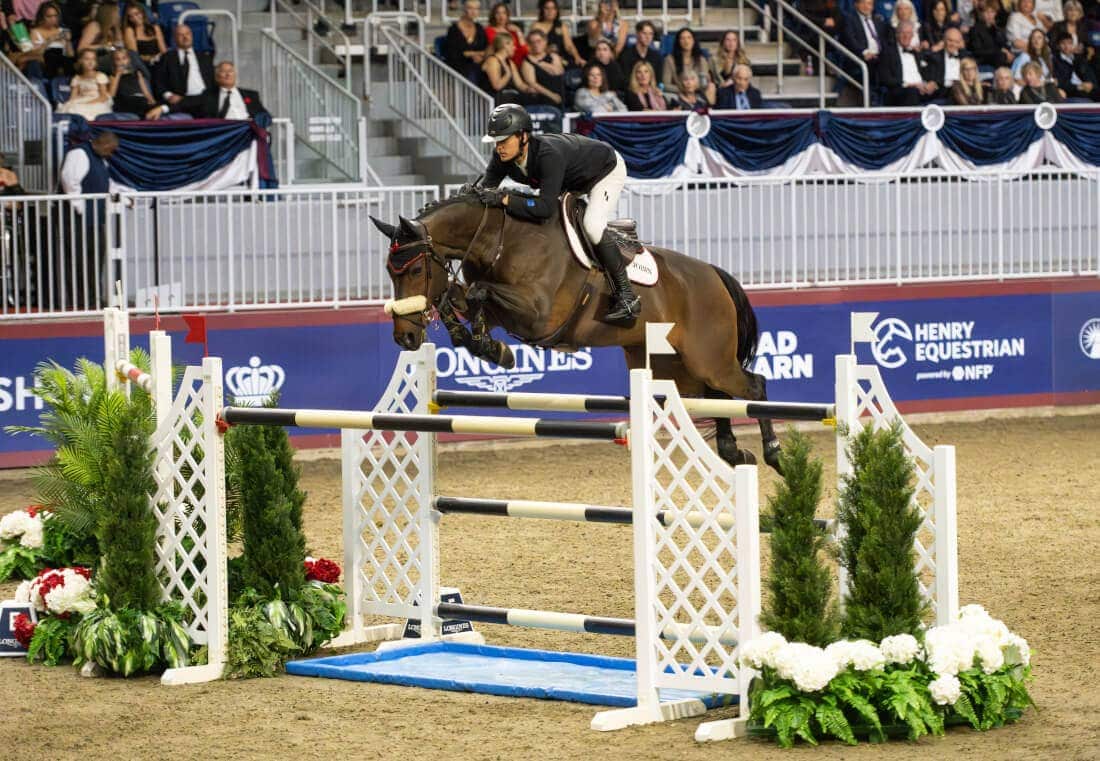 Sean and Edinus
Photo: Sam Doswell, Doswell Creative 2024
It’s tempting to always ride your proven performers, especially when competing at the top of a sport, but Sean is determined to prove that building talent is just as important for long-term success.
So, what makes a winning high-performance stable?
Sean Jobin values talent prospecting — the art of identifying young horses and transforming them into top performers. As he puts it, “That’s still the future of showjumping as far as I can tell. If you look who has sustained success over a long period of time, it is people who can identify good horses and develop them. And do that repeatedly.”
Developing horses from entry level to Grand Prix is a big investment, and success is never guaranteed. It may be risky, but Sean believes in making the commitment to developing talent progressively from the ground up.
“We've got some great horses jumping FEI right now, and we've got some great horses coming up. It's exciting!”
— Sean Jobin, Mad Barn High Performance RiderOn looking for talent in a young horse, Sean assesses each one individually: “Whether it’s their carefulness, their athleticism, or their mind – every horse is different.”
A Data-Driven Approach to Performance
Building on his early foundations in classic English riding, Sean is continually working to adapt and modernize his training system. To push the boundaries further, Jobin is exploring how sports analytics – using statistical data to study and enhance performance – can be used in the world of show jumping.
Wherever possible, Sean’s team incorporates data tracking to evaluate performance beyond traditional measures like time and faults. As he explains, “We’re effectively tracking statistics on a horse over a long period of time and across different variables; how horses have rails and how horses go clear.”
For example, if a horse has rails on a round, they note the type of fence, where it was on the course, what hoof knocked the rail, and what the broader context is, among other variables. “Basically, we track as many variables as we can to get a better picture over a long run of each horse’s performance levels,” Sean says.
“Data either reinforces or contradicts what you thought you knew, and then you need to decide. Every horse is different, each has unique parameters for success.”
— Sean Jobin, Mad Barn High Performance RiderTechnology is fundamental to this approach. Sean’s team integrates data from motion sensors to estimate the length and height of strides and jumps, the associated G-forces, and any deviations in lateral balance combined with step-by-step GPS tracking over the course distance.
By looking at the broader picture of what happened on the course, Sean is trying to reveal patterns and tendencies in a horse’s performance that might not be apparent looking at times and faults alone.
The analytic approach is still relatively new to the equestrian world, but Sean believes it holds significant competitive potential — and he’s determined to prove it. Knowing how your horse moves, loads-up and jumps can provide valuable insights to guide training decisions, especially for horses at earlier phases of development.
Sean also believes analytics help his team tailor training to optimize results. As he says, “Data either reinforces or contradicts what you thought you knew, and then you need to decide. Every horse is different, each has unique parameters for success.”
Analytics from the Inside Out
Sean’s analytic approach extends beyond motion capture to include internal variables such as gut health and diet. He is working with nutrition experts at Mad Barn to leverage what he has learned about data-informed training to ensure his horses have optimized nutrition to support it.
“We need to make sure that the building blocks are there, that the amino acids are there for the horse to respond to training, recover effectively, and develop correctly,” Sean explains.
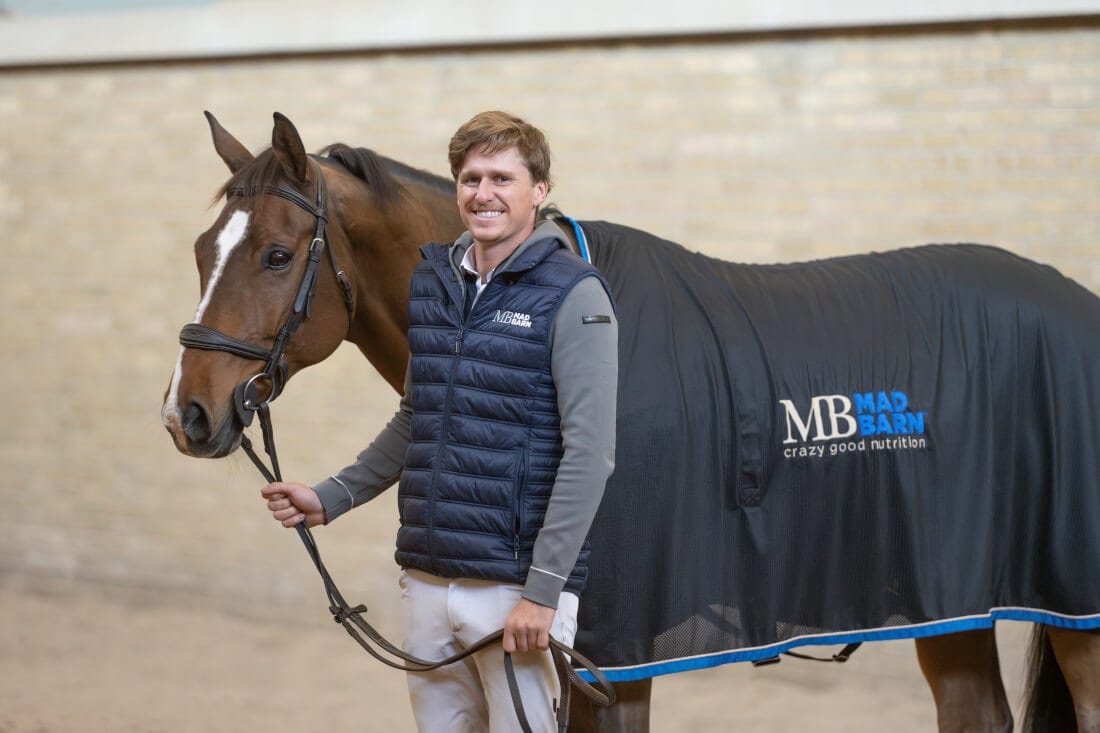 Sean and Arkuga
Photo: Sam Doswell, Doswell Creative 2024
Whether he’s at home for the summer, overwintering at his home away from home in Ocala, or on the road at competitions across Canada and the United States, Sean works closely with Mad Barn to develop and maintain a balanced feeding plan for each of his horses.
Developing an individualized feeding plan starts with performing a comprehensive diet analysis.
Each horse’s total daily intake, including forage, hay, grain and supplements, is characterized and weighed to input those values into Mad Barn’s Feed Formulation Software. Forage samples are submitted to a laboratory for in-depth forage analysis.
From there, Mad Barn’s qualified equine nutritionists can evaluate the digestible energy, protein, carbohydrate, vitamin and mineral content of each horse’s diet.
As Sean’s dedicated Mad Barn nutritionist Jessica Artman puts it, “We like to get down to the nitty gritty.”
Once a horse’s diet evaluation is completed, Mad Barn identifies any nutritional deficiencies and recommends changes based on factors like the horse’s training workload, competition schedule and current health status.
“Mad Barn have done a break down on our feeds and pointed out some blind spots of where we're missing important vitamins or minerals, and calories.”
— Sean Jobin, Mad Barn High Performance RiderFueling to Win at Home & Away
Sean keeps an open-door conversation going with his grooms and nutrition specialists all season long. Dietary needs change during travel and competition, especially in relation to workload and environmental changes.
Because riders like Sean travel long distance with their horses so frequently, local variations in forage quality and feed sources can significantly impact dietary intake. As Sean notes, “Probably the biggest thing with nutrition for us, is there is so much travel involved. We strive for similarity on the road and at home to try to not disrupt the horses’ rhythm.”
When Sean anticipates a big change in forage, he asks Mad Barn to help him formulate a diet transition plan. With Mad Barn’s expert guidance, Sean starts to introduce gradual changes to the at-home diet weeks ahead of travel, ensuring his horses are competition-ready when they arrive at their next destination. As equine nutritionist Jessica Artman, MSc explains: “We want to make sure the transition between home and away diets is seamless.”
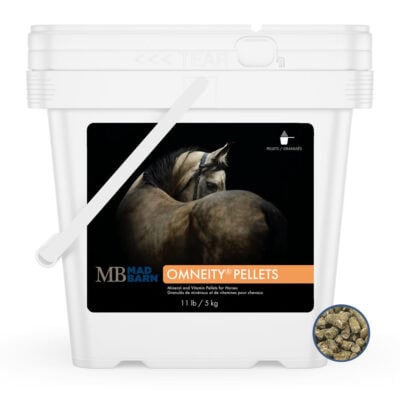
To fill any gaps, Jobin has his whole stable on Mad Barn’s all-in-one Omneity® equine vitamin and mineral supplement. Backed by science and trusted by leading equestrians and veterinarians, Omneity® delivers a balanced nutritional foundation to help each horse reach its full potential.
Formulated with 100% organic trace minerals, complete B-vitamin fortification, and added amino acids, Omneity® supports healthy hooves, post-exercise care, muscle health, immune function, and overall well being. By taking the guesswork out of equine nutrition, Omneity® allows Jobin to focus on what matters most—training and competing at the highest levels.
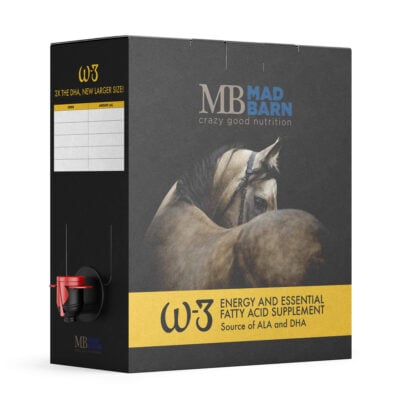
Most of Jobin’s horses also receive Mad Barn’s w-3 Oil, a DHA-enriched fat supplement that provides cool calories without the pronounced blood sugar spike associated with grain-based feeds. Feeding w-3 Oil helps elite equine athletes maintain a healthy weight under the demands of intense training, while also promoting skin health and a shiny coat.
By delivering long-chain omega-3 fatty acids — particularly DHA — this supplement also supports normal inflammatory responses, helping to maintain joint health, immune function, respiratory health and cardiovascular function.
In addition to omega-3 fatty acids, w-3 Oil is fortified with Vitamin E, an antioxidant that helps maintain cellular integrity and may reduce oxidative stress resulting from strenuous exercise. Together, these nutrients can assist in supporting muscle health and post-exercise care in horses engaged in high-level competition.
“Throughout the whole year our horses have been staying in remarkable shape. They are not dropping weight and they are keeping a healthy body condition. That had been very difficult with the amount of travel we do, but I've noticed a big improvement this year.”
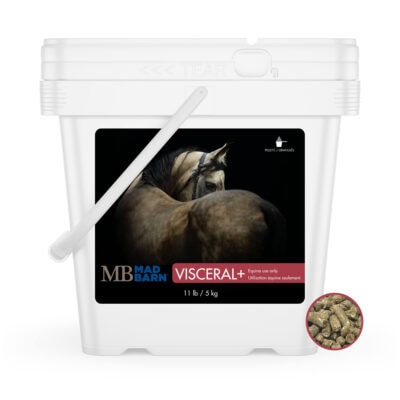
— Sean Jobin, Mad Barn High Performance RiderSean’s FEI-level horses are also on Mad Barn’s gut health formula, Visceral+, which promotes stomach and hindgut health under the elevated demands of travel and competition.
Visceral+ is veterinarian-recommended and trusted by Olympic athletes to maintain gut function in horses prone to stomach issues due to intense training schedules. Its combination of phospholipids, yeast, herbs, and amino acids helps maintain a balanced hindgut microbiome and supports healthy gastric tissue.
By supporting the immune system and normal digestive processes, Visceral+ helps elite horses stay competition-ready.
Advancing Canadian Horse Sport on the Global Stage
Sean sees a long and healthy future for Canadian show jumping. One question many North American riders face is how to truly compete at the highest levels on the international stage, especially against European powerhouses. As Sean notes, “Riding is basically a small sport in Canada compared to Europe.”
But Jobin thinks there is a way.
One option Sean sees as especially important on the Canadian scene is syndicated ownership − that is, to provide opportunity for investors to get involved in the sport and share in the success.
Developing a syndicate of promising young horses may help future-proof Canadian show jumping if it gives riders like Jobin more control over the training and development process, allowing riders to really mold their horses into competitive partners.
Ultimately, Sean’s vision is to build a program that can consistently produce medal-winning horses for major international competitions. With the launch of Sean’s new coaching and training brand, Jobin Equestrian Team, it’s an exciting time for Canadian showjumping.
But as Sean explains, his vision to advance Canadian horse sport on a global stage won’t be easy: “First, you’ve got to build success. As an individual rider, your program needs to be successful. Then you’ve got to find others interested in backing it; who want to be part of that success.”
With this sports-business model, Sean believes the pathway will be open to many up-and-coming riders from Canada, and the syndicated approach may help further the sport.
Sean has embraced other forward-thinking initiatives that stimulate the showjumping scene in North America. Not only does Sean bring visibility to the Major League Show Jumping circuit, but he believes doing so will help recruit a broad fanbase from outside the established equestrian community.
For North American-based riders like Sean, the Major League competitions are a welcome addition to the 5* circuit. They offer FEI ranking points and the league importantly serves as an accessible counterpoint to the more established professional show jumping leagues in Europe.
“First, you've got to build success. As an individual rider, your program needs to be successful. Then you've got to find others interested in backing it; who want to be part of that success.”
— Sean Jobin, Mad Barn High Performance RiderRegardless of how the next year plays out, it’s clear Sean is set to reach new heights in the ring and on the world stage. By embracing innovation and keeping sightlines focused forward, his ability to balance talent and continuous improvement make him a role model for aspiring show jumpers across Canada and beyond.
With his commitment to individualized training for every horse, Jobin may very well lay the groundwork for an entire generation of upcoming Canadian jumping horses and secure a place in the annals of equestrian history.