English






Shelly feet is a general, non-specific term that refers to an overall decline in horse hoof quality. While shelly feet are not exactly a defined medical condition, hoof health is a key consideration for any horse.
Shelly feet, also known as shelly hooves in horses, is a common complaint characterized by weak, brittle hoof walls that crack or chip easily. This situation can lead to significant problems such as difficulty holding shoes, frequent hoof damage, and in severe cases, hoof abscesses or white line disease.
As all horse owners know, hoof health is fundamental to a horse’s overall well-being and performance. Understanding the structure of the horse’s hoof and which factors contribute to shelly feet is helpful for effective management and prevention.
Shelly Feet in Horses
Shelly feet (also known as shelly hooves) in horses describes weak, brittle hoof walls that crack or chip easily. In mild cases, this is sometimes considered a cosmetic issue. However, if left untreated, it can lead to difficulties in holding shoes and may result in: [1]
- Hoof damage
- Infection
- Lameness
Hoof Anatomy
Shelly feet are characterized by defects in the hoof. The hoof is composed of horn tissue that protects the bones and tissues of the horse’s feet. Like the nails and claws of other mammals, the horse’s hoof is mostly made of a protein called keratin, and hooves grow continuously. [1]
The function of the hoof is to help the horse handle the forces from the ground and protect the inner structures of the foot during locomotion. It does this by distributing the impact between the hard outer hoof wall, the inner parts of the hoof, and the bones inside the foot. [2]
The hoof adjusts to uneven terrain and absorbs shock when the foot hits the ground.
The main structures of the hoof can be divided into three main parts: [2]
- Wall
- Sole
- Frog
The Wall
This is the portion of the hoof that is the most severely and obviously affected in shelly feet. The hoof wall is a structure made mostly of keratin, the fibrous protein that also makes up nails and hair. This portion of the foot does not have blood vessels or nerves, and grows continuously throughout the horse’s lifetime. [2]
Continuous hoof growth is the reason horses require regular farriery to keep the hoof wall height trim, clean, and balanced between all four limbs. Horseshoes are attached directly to the hoof wall where they are held in place with nails or other adhesives depending on the shoe type.
In addition to absorbing some of the impact from footfalls, the hoof wall functions to protect the internal structures of the foot. Healthy hoof walls are between 6 and 13 mm (0.25 – 0.5 in) thick. [3]
The Sole
The sole is a structure that is also made of keratin, but contains a higher proportion of water, making it softer than the hoof wall. [2] This portion of the hoof has limited blood supply and only a small number of nerves.
The sole absorbs some shock of footfalls and is the next layer of protection for the internal structures. [1] It has the added functions of providing support to the foot and sharing some of the horse’s body weight with the hoof wall. [2]
A horse requires 10 mm (0.59 in) of sole to adequately protect the frog, which ensures healthy circulation. If the horse’s sole is very thin, the circulation can become compromised. [3]
The Frog
The frog is a structure also made of keratin with an even higher proportion of water, giving it even greater flexibility than the sole or the wall. [2] This portion of the foot has a complete blood supply and many nerves. [4]
The frog creates an angled structure in the innermost layer of the hoof. It absorbs shock to protect the internal structure of the feet and leg. It also distributes pressure evenly across the foot and is involved in the horse’s perception of where the legs are relative to each other (proprioception). [2]
The frog compresses and expands as the horse steps. This creates a pumping effect that aids in blood circulation through the hoof and legs. [2]
What's your top priority with your horse's health?

Enter your email to receive your store credit
Hoof Degradation
In horses with poor hoof quality, the hoof wall and sole may not adequately protect the frog. If the frog incurs injury or is degraded as a result, its function can be compromised. [2]
When the horse’s hoof becomes too soft or fragile, the frog can become damaged, compromising its ability to adequately aid blood circulation in the distal limbs. This may lead to reduced delivery of oxygen and nutrients to the hoof wall and sole. [2]
This scenario can result in a compounding effect where lack of circulation to the hoof leads to further damage to the outer structures. This further compromises circulatory functions from the outside in, creating a cycle of damage that can ultimately lead to severe and debilitating hoof disease. [2]
Without treatment, this can result in the circulation to the feet being critically compromised, which can affect the overall health of the horse.
Risk Factors
According to one study, over 25% of horses have some type of issue with their hoof wall. [5] Poor hoof quality is one of the more common hoof disorders reported. Mares, geldings, and stallions all appear to be equally susceptible to poor quality hooves.
Poor hoof condition also has a genetic component; horses from bloodlines that have bad feet are at greater risk. [1][3]
There are also environmental and management risk factors for poor hooves. The risk of declining hoof health increases in horses who are: [3]
- Left standing in wet conditions
- Cycle through wet and dry conditions
- Kept in very dry or unhygienic conditions
Causes
Shelly feet may occur in response to a combination of factors such as: [1][3]
- Hoof morphology
- Circulatory problems
- Environment
- Genetics
- Inadequate farrier care
Hoof Morphology
Each horse’s hooves are unique, with slight variations in the size, shape, and quality of internal and external structures. These individual differences can contribute to the development of shelly feet in some horses.
Differences in horse hoof morphology are influenced by a number of factors, including genetics and the type of work the horse performs. Varying your horse’s exercise and training routines helps ensure balanced development and wear on the hooves.
Specific morphological factors associated with hoof quality in horses include: [4]
- Relative hoof length: if a horse’s foot is long relative to the coffin bone, more stress is placed on the wall of the hoof than it is meant to take.
- Underdeveloped vascular supply: if a horse’s foot is not getting adequate circulation, the hoof is not able to grow properly. Its ability to clear out infection is also compromised.
- Abnormal bone development: the palmar angle (the angle the coffin bone makes with the ground) also affects the health of the hoof wall. In horses with shelly feet, the toes are often higher than the heels putting undue stress on the hoof wall.
Environment
There are a number of environment and management factors that contribute to poor hoof quality, including: [3]
- Leaving a horse standing in too much moisture or having wet feet for too long or too often
- Excessively dry conditions
- Cycling between a wet environment and a dry one
- Damp, acidic environments including urine, feces, and mud
Genetics
Hoof condition is influenced by genetics. [1] Horses with a family history of poor hooves are more likely to develop the condition themselves.
Farriery
Horses require routine farrier care to ensure their hooves are trim, clean, and well-balanced. Consistent, proper hoof care is needed for a horse with shelly feet. [3]
Examples of inadequate farriery that can lead to hoof issues progressing to shelly feet include: [3]
- Trimming too low or not frequently enough: if a horse is left with too little wall length, the wall’s integrity and ability to provide support to other structures of the hoof can be compromised. A horse left with a long hoof is in danger of the wall breaking up.
- Improper shoeing: when a horse is shod improperly, the risk of the hoof deteriorating increases. Proper shoeing protects the hoof from wear and damage.
Poor hoof quality can cause problems with shoeing. If the hoof wall becomes too thin and fragile, it can become difficult for the hoof to hold a shoe.
Always work with a professional farrier with advanced training in hoof care, trimming, and farriery. Qualified farriers are often members of professional farrier organizations such as the International Association of Professional Farriers.
Nutrition
Nutrition plays a key role in growing and maintaining strong hooves. Hoof integrity may be compromised if a horse’s diet is deficient or unbalanced in essential nutrients, such as: [2][6][7][8][9]
- Biotin: A B-vitamin that is essential for keratin production, which is the primary component of hoof horn. Adequate biotin intake can significantly improve hoof quality, strength, and growth rate.
- Zinc: An essential trace mineral that plays a critical role in protein synthesis and cellular division, both of which are necessary for healthy hoof growth. Zinc deficiency can lead to weak, thin hoof walls and a dull coat.
- Copper: Another key trace mineral that is required for the formation of strong connective tissue in the hoof.
- Amino acids: These building blocks of protein are critical for hoof growth and repair. In particular, methionine is a sulfur-containing amino acid that is integral to keratin synthesis.
In addition to these key nutrients, maintaining a balanced diet that meets all of your horse’s vitamin and mineral requirements can help prevent brittle and weak hooves. A well-balanced diet ensures that all physiological processes, including hoof growth and maintenance, function optimally.
Symptoms
The signs of poor hoof quality include:
- Brittle hooves
- Flaking or peeling of the hoof wall
- Thin hoof walls
- Hoof cracks
- Difficulty holding shoes
- Sensitivity or discomfort particularly on hard or uneven surfaces
- Decreased performance or reluctance to work
Severity
The impact of poor hoof quality depends on how the condition affects the horse, how quickly it is resolved, and whether any complications develop.
Poor hoof quality is sometimes a matter of a mild abnormality. In other cases, it can result in catastrophic injury to the horse or develop into illness. [1]
A chronically shelly foot is at risk of impaired circulation that will further affect hoof health and hoof growth. [3]
Severe cracks can lead to pain, tenderness, and reluctance to work.
In chronic or severe cases, shelly feet can lead to other conditions in the foot including: [3]
- Hoof abscesses
- White line disease (also known as seedy toe)
- Pain

Treating Hooves
Although poor hoof quality is sometimes considered a cosmetic issue, good quality, ongoing farriery is recommended. Early intervention can prevent a cascade of issues that can quickly lead to more serious hoof problems.
Techniques to understand what is happening in the horse’s hoof include: [3]
- X-rays
- Venographs (also known as venogram; an X-ray that shows the blood vessels)
To improve hoof quality, there are several strategies that horse owners may use. These include: [3][6][10]
- Regular Trimming: Schedule regular hoof trimming by a qualified farrier to maintain proper hoof shape and prevent further damage.
- Corrective Shoeing: In some cases, corrective shoeing may be necessary to provide additional support and protection to the damaged hoof.
- Nutritional Support: Ensure adequate intake of vitamins, minerals and amino acids to support hoof integrity.
- Infection Control: Treat any bacterial or fungal infections promptly with antibiotics to prevent further damage to the hooves.
- Anti-inflammatory medication: Your veterinarian may prescribe medication to address pain and inflammation.
In addition to these interventions, maintaining a clean and dry living area for your horse is important to preventing bacterial and fungal infections that can weaken the hooves.
Implement proper manure management protocols to reduce the risk of infection. When exercising your horse, avoid excessively hard or uneven surfaces and provide soft footing whenever possible.
Nutritional Support
Work with a qualified equine nutritionist to develop a balanced feeding program for your horse to support optimal hoof health. A nutritionist will ensure that there are no deficiencies in your horse’s diet that could contribute to poor hoof quality.
Low biotin intake is associated with hoof issues such as crumbling of the white line and fissured hooves. [11] Supplementing with 20 mg of biotin daily can improve hoof wall integrity, structure and tensile strength. [11]
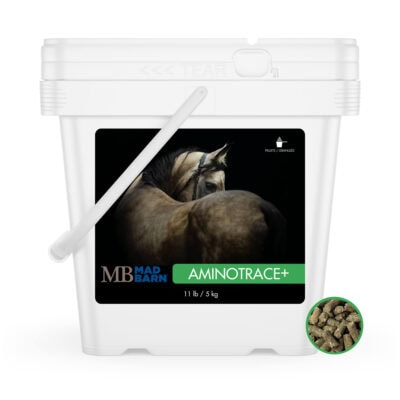
Mad Barn’s AminoTrace+ contains 20 mg of biotin, along with optimal levels of amino acids, minerals and vitamins to support healthy hoof growth. Feeding AminoTrace+ provides the nutrients required for strong, sound, robust hooves.
Prevention
With regular hoof care, it is possible to prevent the development of shelly feet. Creating and following a hoof management plan is essential. This plan should include high-quality nutrition, excellent farriery, maintaining clean and dry hooves, and consulting a veterinarian at the first sign of problems.
Preventing hoof issues starts with feeding a balanced, forage-based diet. Strategies include:
- Obtaining a hay analysis and working with an equine nutritionist to balance your horse’s diet
- Feeding a comprehensive vitamin and mineral supplement or other fortified feed
- Offering plenty of fresh water
Avoiding continuous exposure to high moisture environments helps the hoof wall stay hard and thick. Consider:
- Keeping the horse out of dewy, muddy, or wet pastures
- Bagging the feet during bathing
- Sponging instead of hosing
- Using rubber stall mats
- Using good quality absorbent bedding
- Using waterproof hoof boots
- Providing access to dry shelter at all times
Other considerations to help prevent a horse from developing shelly feet include: [3]
- Keeping the stall free from urine, feces, and mud
- Providing regular farrier care
Frequently Asked Questions
Here are some frequently asked questions about shelly feet in horses:
Shelly feet can cause problems ranging from weak hoof walls and cracks to serious complications like difficulty holding shoes, recurring hoof damage, or infections. In advanced cases, shelly feet in horses may lead to abscesses or white line disease that compromise long-term soundness.
Some horses develop shelly hooves due to a combination of genetics, hoof shape, circulation, and management practices. Environmental conditions like constant moisture or poor hygiene increase the likelihood of shelly hooves compared to horses kept in well-maintained environments.
Early signs of shelly feet include brittle walls, flaking or peeling horn, and thin hoof structure that may not hold shoes. Over time, horses with shelly feet can also show sensitivity on hard ground or reluctance to work.
Management practices that help with shelly hooves include regular farrier care, corrective shoeing when needed, and keeping hooves dry and clean. A balanced diet with nutrients like biotin, zinc, and amino acids further supports horses prone to shelly hooves.
Summary
Shelly feet is a general, non-specific term that refers to an overall decline in horse hoof quality.
- Hoof quality can decline for multiple reasons, including nutrient deficiencies, excess moisture, and conformation
- Staying up-to-date with regular farriery is important to prevent hoof quality issues and detect changes promptly
- Providing a balanced diet is a cornerstone of managing equine hoof quality
- Maintaining a hygienic environment and working with your veterinarian can help prevent serious hoof quality and performance issues
References
- Blankenship. M. et al., The Equine Hoof and the Problems It Faces. Horsemen’s Update. Grayson Jockey Club Research Foundation. 2007.
- Rueda-Carrillo. G. et al., Preliminary Study on the Connection Between the Mineral Profile of Horse Hooves and Tensile Strength Based on Body Weight, Sex, Age, Sampling Location, and Riding Disciplines. Frontiers in Veterinary Science. 2022. View Summary
- West. C., Shelly Feet. Grayson-Jockey Club Research Foundation.
- Floyd. A. E. and Mansmann. R. A., Equine Podiatry. Saunders, St. Louis (Mo.). 2007.
- Slater. M. and Hood. D. M., A Cross‐sectional Epidemiological Study of Equine Hoof Wall Problems and Associated Factors. Equine Veterinary Journal. 2010.
- Zenker. W. et al., Histological and Physical Assessment of Poor Hoof Horn Quality in Lipizzaner Horses and a Therapeutic Trial with Biotin and a Placebo. Equine Veterinary Journal. 1995. View Summary
- Burns. T. A., "Feeding the Foot". Veterinary Clinics of North America: Equine Practice. 2021. View Summary
- Spörndly-Nees. E. et al., Chemical Composition of Horse Hooves with Functional Qualities for Competing Barefoot. Journal of Animal Science. 2023. View Summary
- Josseck. H. et al., Hoof Horn Abnormalities in Lipizzaner Horses and the Effect of Dietary Biotin on Macroscopic Aspects of Hoof Horn Quality. Equine Veterinary Journal. 1995. View Summary
- Buffa. E. A. et al., Effect of Dietary Biotin Supplement on Equine Hoof Horn Growth Rate and Hardness. Equine Veterinary Journal. 1992. View Summary
- Nutrient Requirements of Horses: Sixth Revised Edition. National Academies Press, Washington, D.C. 2007.