English











![Best Stall Gates for Horse Barns: Safe & Durable Options for Equine Facilities – [Guide]](/wp-content/uploads/2025/11/best-stall-gates-for-horse-barns.jpg)
Stall gates are a core feature of modern horse barns, helping keep horses safe and properly contained. Their design also plays an important role in supporting healthy environmental conditions and creating a more engaging living space for horses.
Well-designed gates help maintain air quality by keeping stalls open to natural ventilation. They also allow horses to interact with nearby stablemates, which provides important social enrichment and reduces stress associated with confinement.
There are a variety of stall gates available, each with features to address airflow, visibility, and security. This flexibility allows owners to choose a design suited to the broader needs of their herd and operation.
Materials such as steel, aluminum, and wood provide different advantages depending on durability requirements and maintenance expectations. Selecting the right gate enhances daily care, improves safety, and supports the long-term comfort of horses.
Stall Gates for Horses
Stall gates are barriers used to provide ventilation, visibility, and access while keeping horses securely contained.
Compared to solid stall doors, stall gates allow greater airflow, which helps limit dust and ammonia buildup that can affect respiratory health. Their open structure also supports social interaction, which can lower stress and reduce anxiety in horses during confinement.
Stall gates are available in several designs to meet different management needs. Yoke-style openings give horses a safe way to extend their heads outward, encouraging awareness of their surroundings, while full mesh panels maximize airflow and keep horses fully contained within the stall.
Some models combine a solid lower panel with an open upper section for increased security while still allowing visibility.
Common stall gate materials include steel, aluminum, and heavy-duty wood. Steel offers strong impact resistance, aluminum is lightweight and resists rust, and wood provides a traditional appearance but requires ongoing maintenance to prevent wear and tear.
What's your top priority with your horse's health?

Enter your email to receive your store credit
Types of Stall Gates
Stall gates come in various designs that cater to different needs for safety, ventilation, and accessibility.
Solid Panel Stall Gates
Solid panel stall gates use a flat, continuous surface made of wood, metal, or composite materials to span the width of a stall’s entrance. Modern designs usually only cover the lower half of a stall entrance.
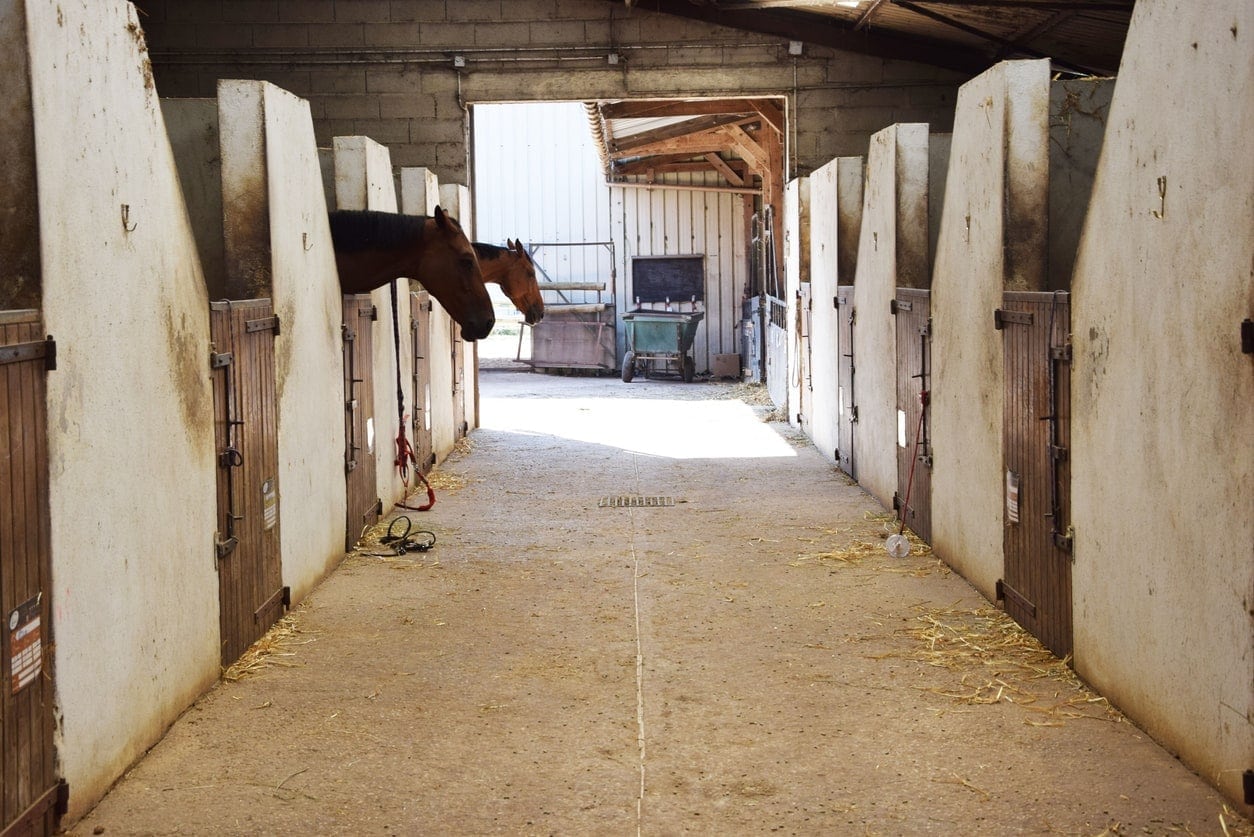
Solid panel gates work well for horses that chew, lean, or push against barriers, offering increased security and durability.
Half-Door Stall Gates
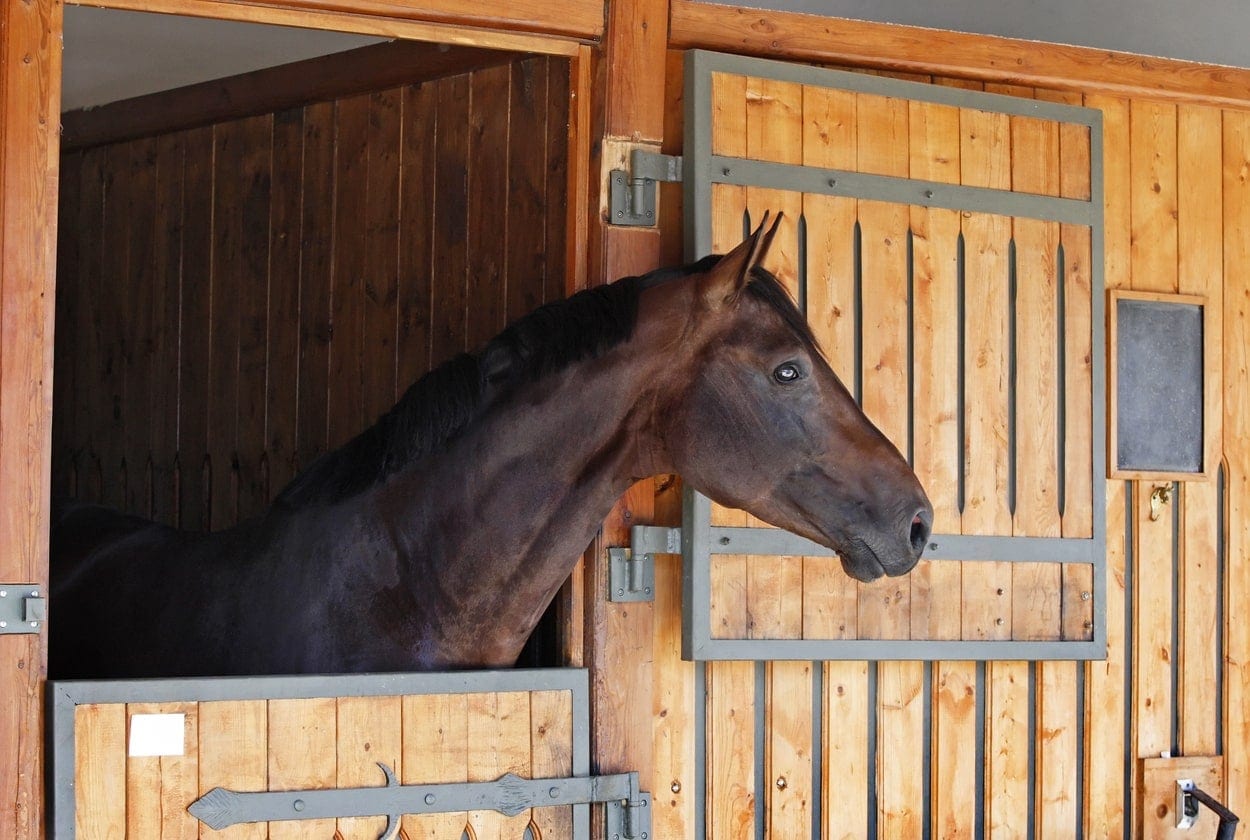
Half-door gates function like solid panel designs, but with a second door mounted above the lower section, similar to a Dutch door. This setup offers the same openness and visibility as a traditional solid gate while also allowing for more controlled management of stall access.
Mesh Stall Gates
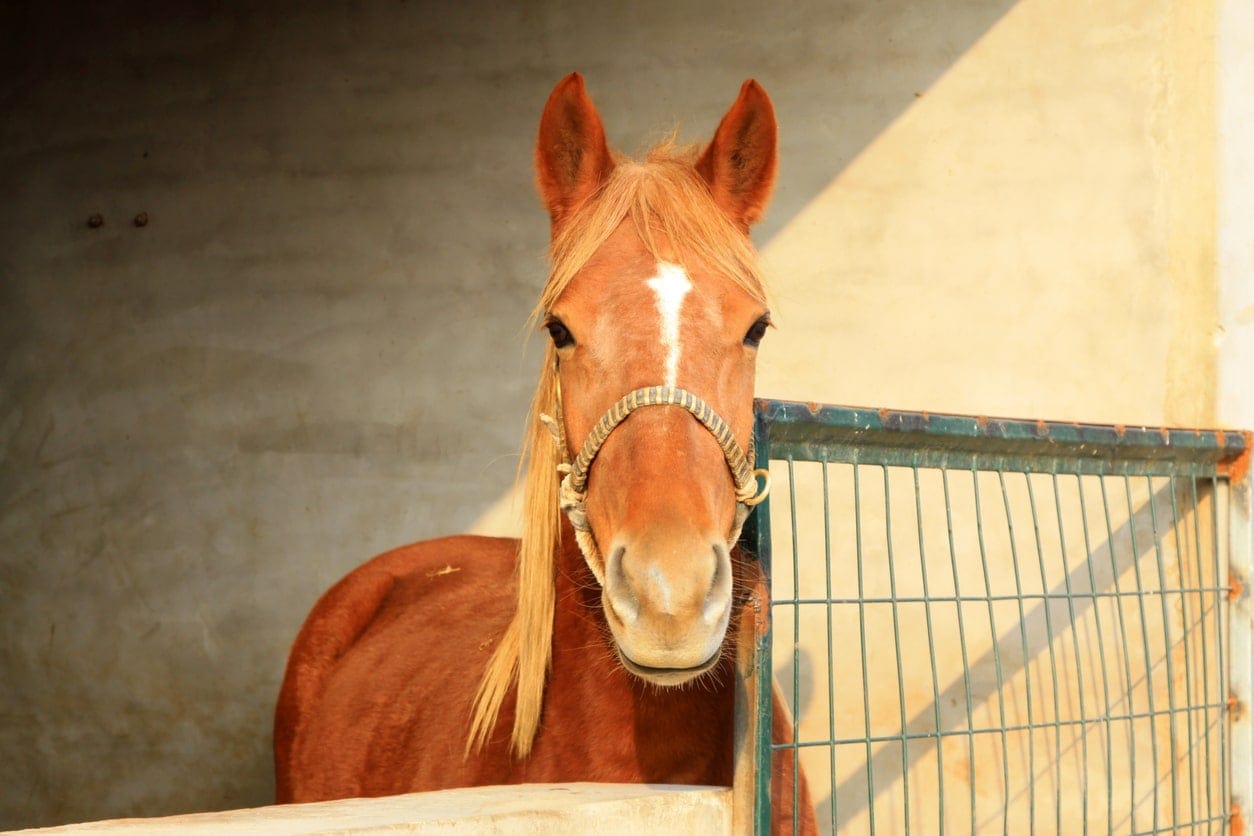
Mesh stall gates use a steel or aluminum frame fitted with a metal grid to provide stronger airflow and clearer visibility while still preventing horses from reaching through. This design is often used in warmer climates to support ventilation and limit odors inside a stall.
Bar Stall Gates
Bar-style stall gates use vertical or horizontal bars to provide ventilation and clear visibility while keeping horses safely contained.
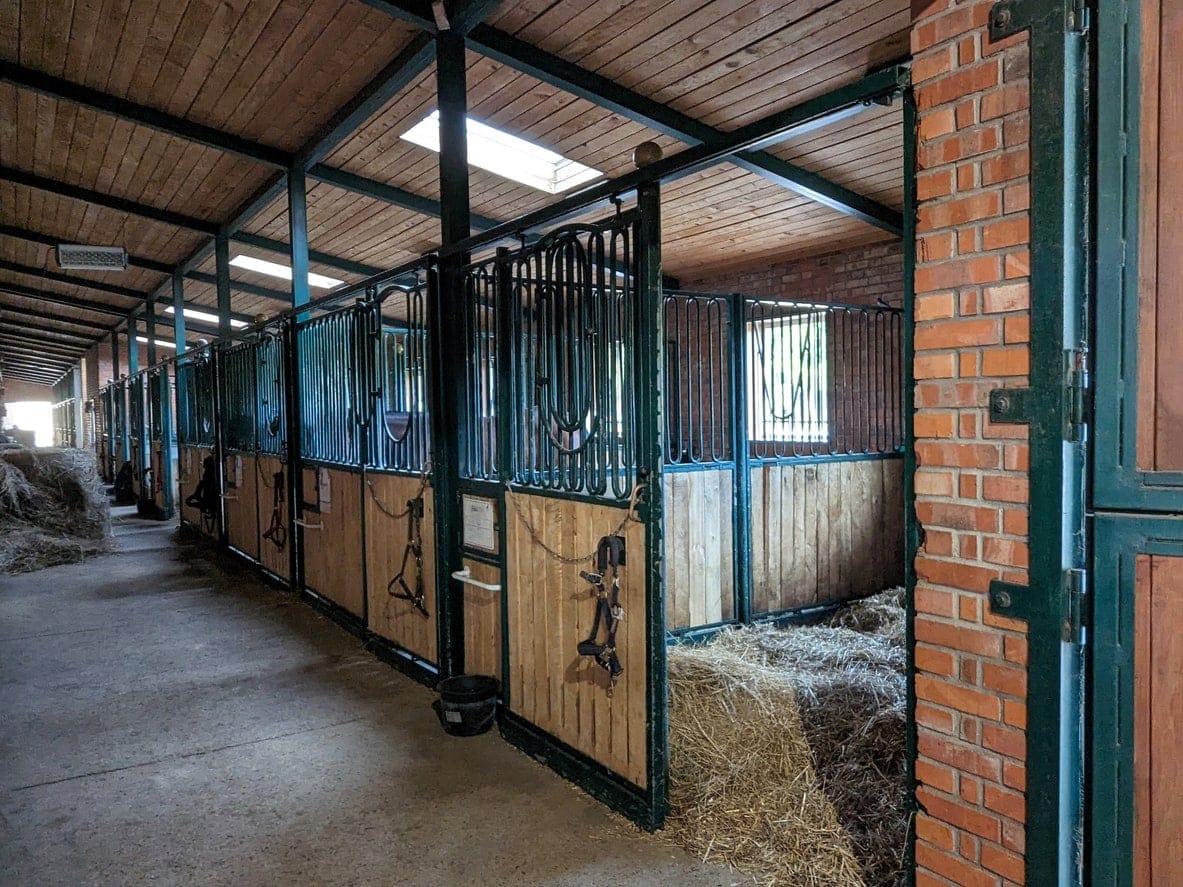
Bar spacing is the primary safety factor, since the gaps between bars must be wide enough to prevent hooves or heads from getting stuck.
Yoke-Style Stall Gates
Yoke stall gates use a solid lower section with a shaped opening above it, giving horses a safe way to extend their heads outward while remaining more contained than solid panel gates or half-door gates.
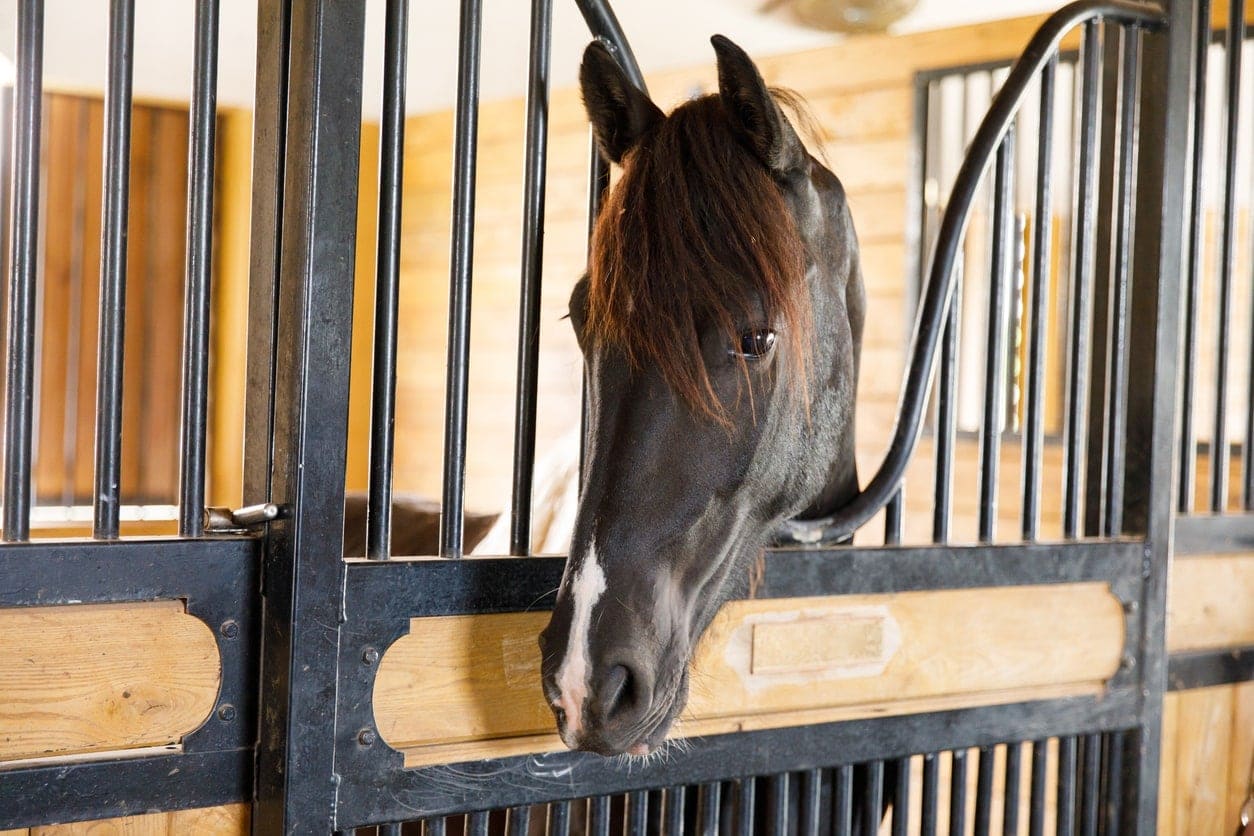
Some models include removable inserts, allowing owners to adjust the size of the opening based on each horse’s behavior and management needs. This design encourages social interaction and reduces isolation among horses sharing the same barn.
Materials for Stall Gates
The materials used in horse stall gates influence their durability, safety, and overall function. Different options provide varied levels of strength, ventilation, and maintenance needs.
Steel
Steel is one of the most durable materials for stall gates, offering strong resistance to impact and daily wear. Powder-coated finishes help prevent rust and corrosion, extending the life of the gate in damp or high-traffic barns.
Since steel maintains its shape under pressure, it is often chosen for facilities that house energetic or destructive horses.
Aluminum
Aluminum is lightweight, rust resistant, and well-suited to humid or damp environments where metal corrosion is a concern. It’s easier to handle and install than steel, making it useful for barns undergoing frequent upgrades or layout changes.
Although softer than steel and more prone to denting, its low maintenance requirements make it a practical option for many facilities.
Wood
Wood offers a traditional appearance that can be tailored to match the design of any barn. Hardwoods such as oak and maple provide better durability than softwoods, but all wood gates require regular upkeep to manage moisture-related warping and chewing damage.
Many owners choose wood for aesthetic reasons, though it demands more long-term care than metal alternatives.
Composite Materials
Composite materials combine wood fibers, plastics, metals, or synthetic resins to create strong, weather-resistant gates that require minimal maintenance.
These products are often engineered to resist chewing, splintering, and moisture absorption better than natural wood. Composites are a good choice for barns seeking durability without the weight or upkeep associated with solid metal or timber.
Heavy-Duty Plastic and PVC
Heavy-duty plastic and PVC stall gates are lightweight, moisture resistant, and easy to clean, making them useful for temporary setups or portable barns.
Plastics are not as strong as metal, but their versatility and low maintenance requirements make them useful in environments where gates are frequently moved or replaced.
Table 1. Comparison of horse stall gate materials
| Material | Key Advantages | Limitations | Best Use Cases |
|---|---|---|---|
| Steel |
|
|
|
| Aluminum |
|
|
|
| Wood |
|
|
|
| Composite Materials |
|
|
|
| Heavy-Duty Plastic / PVC |
|
|
|

Safety Considerations
Both equine and human safety are top priorities for any stall gate design.
Improperly installed or poorly matched gates can make escape attempts more likely, increase the risk of injuries, and contribute to structural failures at the barn.
Preventing Injury or Escape
Gate design features to limit the risk of injury or escape include: [3]
- Height: Should be sufficient to discourage jumping, with 48 inches as a general minimum and taller gates recommended for larger or more reactive horses.
- Yoke openings: Should allow horses to stick their heads out without being low enough to climb or jump over them.
- Bar spacing: Guidelines recommend small-gap bars should be spaced no wider than 3 inches apart; wide-gap bars should be spaced at least 12 inches apart
- Vertical bars: Horses are less likely to climb or become entrapped in vertical bars than horizontal ones.
- Solid bottom: This gate design generally does not pose a risk of entrapment, but may compromise ventilation.
- Horse-proof latches: Locking mechanisms or double-latch systems help prevent escapes, compared to simple slide latches or chains that clever horses can undo.
- Flush-mounted hardware: Reduces the risk of cuts, penetrating injuries, or abrasions by keeping bolts, hooks, and other fastenings even with the gate and stall frame.
- Smooth, rounded edges: Help protect horses from cuts or scrapes when they brush or lean against the gate.
Stall gates that are designed to reduce stress and boredom help limit escape attempts. Providing maximal turnout, social interaction, and enrichment opportunities also reduce this behavior.
Managing Stereotypies
Stereotypies are repetitive, compulsive behaviors that may develop in horses experiencing boredom, stress, or long periods of confinement. Common examples include cribbing, weaving, and stall walking. [1][2]
Stall gate design can improve the stall environment in ways that influence these behaviors. Design strategies to reduce stereotypies include:
- Minimize containment: Choosing gates and stalls with mostly open surfaces allows horses to see activity in the barn and interact with nearby stablemates, reducing isolation and boredom.
- Maximize ventilation: Designs that allow for continuous air flow promote higher air quality by reducing heat, odors, and ammonia buildup.
- Provide head space: Gates with openings for horses to extend their heads allow for greater enrichment and participation in barn activities.
- Use chew-resistant materials: Inorganic materials like metals or composite blends are less appealing to horses for cribbing.
Installation & Maintenance
Even the safest, strongest stall gate can become hazardous if it is not installed or maintained correctly. Proper installation helps ensure the gate functions as intended and does not create new risks for the horse or handler.
Best practices for installing and maintaining safe and effective horse stall gates include:
- Secure mounting: A loose or sagging gate increases the risk of leg entrapment and may enable a horse to push through. Gates should be attached firmly to their frame with heavy-duty hinges and brackets.
- Regular inspections: Routine checks for wear, rust, loose fittings, or damage are essential to prevent hazards. Early repairs reduce the chance of accidents.
- Footing: Ideally, the stall floor should be level at the point where the gate closes, since uneven surfaces can create gaps that may trap hooves.
- Routine maintenance: Keeping up with repairs as soon as damage or wear-and-tear is noted helps minimize costs and injury risks.
A well-built gate supported by secure hardware, proper installation, and routine maintenance reduces preventable injuries in the barn. Choosing designs that prioritize strength, stability, and thoughtful construction helps ensure a safer environment for both horses and handlers.
Frequently Asked Questions
Here are some frequently asked questions about stall gates for horses:
Stall gates are preferred over solid stall doors because they improve airflow, increase visibility, and allow horses to interact socially while still remaining securely contained. These benefits help reduce stress and minimize respiratory issues associated with stagnant air in enclosed stalls.
Different types of stall gates include mesh, solid-panel, yoke-style, bar-style, and half-door Dutch-style. Each gate design provides a specific balance of airflow, visibility, and containment depending on the needs of the horse and facility.
Materials commonly used for stall gates include steel for maximum strength, aluminum for a lightweight and rust-resistant option, and wood for a traditional appearance that requires more upkeep. Some gates also use composite or heavy-duty plastic materials to offer durability and low maintenance.
Stall gates can help reduce stereotypic behaviors because they give horses more visibility, promote social engagement, and support healthier airflow inside the stall. These factors ease boredom and frustration, which are common triggers for cribbing, weaving, and stall walking.
Safety features to consider include choosing a gate height that discourages jumping, selecting bar spacing that prevents entrapment, and ensuring latches are secure and tamper-resistant. Materials should also be durable enough to withstand chewing, rubbing, and general wear.
Summary
Stall gates for horse barns can incorporate a range of design elements that support airflow, visibility, and safe containment, while offering a more open, lower-stress environment than solid stall doors. Choosing an appropriate design involves considering horse temperament, stall layout, and durability requirements.
- Stall gates enhance ventilation and improve a horse's ability to see and interact with its surroundings, promoting comfort and healthy social contact
- Common gate styles include mesh, yoke-style, bar-style, solid panel, and half-door designs, each offering different levels of openness, strength, and visibility
- Safety features such as tamper-resistant latches, proper bar spacing, smooth edges, and appropriate installation height help prevent escapes, entrapments, and injuries
- More open gate designs can reduce boredom, minimize weaving or pacing, and support calmer stall behavior by increasing environmental stimulation
- Choosing the right gate involves assessing the horse's temperament, chewing habits, activity level, and the barn’s long-term durability and maintenance needs
References
- Barnes. A. Stereotypic Behaviors In Horses: Part 1. The Open Sanctuary Project. 2021.
- Lesimple. C. et al. Stall Architecture Influences Horses' Behaviour and the Prevalence and Type of Stereotypies. Applied Animal Behaviour Science. 2019.
- Fabian. E. E. Horse Stall Design. PennState Extension. 2016.