English
Anemia in Horses - When is Nutrition a Consideration? - [Vet Talk]

A diagnosis of anemia in your horse can sometimes be unexpected for horse owners, particularly when their equine companion isn’t exhibiting any clinical signs or apparent illness.
This often leaves owners scratching their heads and worrying that they’re missing something…. could their horse’s anemia be related to diet?
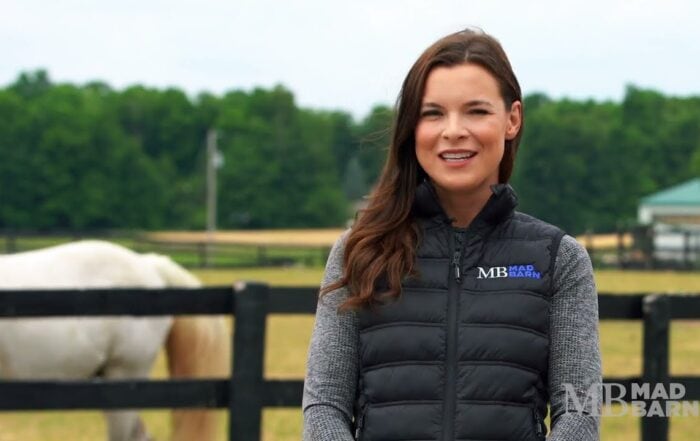
Join Dr. Fran Rowe, DVM, one of Mad Barn’s Veterinary Nutritionists, to learn more about anemia in horses. In this informative video, Dr. Rowe breaks down the basics of anemia, its impact on horses, and when there may be a connection between nutrition and this condition.
Anemia is defined as a decrease in red blood cell mass. The job of red blood cells is to carry oxygen from the lungs to every tissue in the body. When anemia occurs, it results in tissue hypoxia, which means the tissues aren’t getting enough oxygen.
The three main causes of anemia in horses are blood loss (hemorrhage), red blood cell destruction (hemolysis), and reduced red blood cell production in the bone marrow. Anemia can present in horses in a variety of different ways depending on the cause and severity, which can sometimes make reaching a diagnosis challenging for veterinarians and owners, alike.
When horse owners discover their horse is anemic, many assume it’s related to iron deficiency. However, Dr. Rowe addresses this common misconception and discusses why true iron-deficient anemia in horses is actually rare. If not iron deficiency, then what’s causing your horse’s anemia?
Tune in to Dr. Rowe’s presentation to learn about more common causes of anemia in horses and when diet can play a role in this condition.
Learn more about anemia in horses at https://madbarn.com/equine-anemia/
Or find out about a related condition, the Equine Infectious Anemia Virus, at https://madbarn.com/equine-infectious-anemia/
Have ideas for topics to cover or questions about your horse’s health? We would love to hear from you! Please send any questions or comments to vet@madbarn.com.
——————————
Mad Barn Academy is dedicated to supporting horse owners, handlers and practitioners through research, training and education.
Visit us to learn more at https://madbarn.com
You can also find Mad Barn at:
Instagram @madbarnequine
Facebook @madbarnequine
TikTok @madbarnequine
YouTube @madbarn
X (Twitter) @madbarnequine
Transcript:
[0:00]
I’m Dr. Fran Rowe, one of the veterinary nutritionists at Mad Barn. Today I’m discussing a topic we get lots of questions about: anemia — and specifically when nutrition and diet may be playing a role.
[0:39]
Basics: Anemia is defined as a decrease in red blood cell mass. Red blood cells circulate in the blood and their main job is to deliver oxygen to tissues. They pick up oxygen in the lungs, carry it throughout the body, exchange it for carbon dioxide (a waste product) in the tissues, and transport CO2 back to the lungs to be exhaled. Tissues that don’t get enough oxygen can’t function properly, and cells can die if deprived long enough — which is why maintaining an appropriate red blood cell mass is so important.
[1:48]
Red blood cell production: Red blood cells are produced in the bone marrow via erythropoiesis. The kidneys control this by secreting the hormone erythropoietin (EPO) to stimulate bone marrow when they detect reduced oxygen-carrying capacity. When oxygen delivery returns to normal, EPO secretion decreases back to baseline.
[2:31]
Causes & presentation: Common mechanisms include blood loss (hemorrhage), red blood cell destruction (hemolysis), and decreased production in the bone marrow. How anemia looks depends on the cause and severity. Horses may show no clinical signs in mild or moderate cases because they compensate remarkably well. Possible signs include lethargy, poor performance, poor coat quality, poor growth in young horses, pale or yellow gums (mucous membranes), and elevated heart and respiratory rates. In severe, acute cases, horses may progress to signs of hypovolemic shock or even death.
[3:54]
Measuring anemia: We assess the number of red blood cells and examine their appearance under the microscope. Automated analyzers also report various red blood cell indices. For anemia specifically, we look at hematocrit or packed cell volume (PCV), and on smear we evaluate cell size, shape, and any abnormalities.
[5:00]
PCV ranges & severity: The opposite of anemia is hemoconcentration. In adult horses, a typical PCV is roughly 37–42% (source-dependent). In nursing foals, it’s lower, around 33–40%. We can then describe anemia as slight through very severe based on blood results to convey case severity.
[6:40]
Regenerative vs non-regenerative: We often try to classify whether the bone marrow is responding appropriately. Regenerative anemia (often hemorrhage or hemolysis) means the marrow is compensating; non-regenerative means reduced production. Typically, we’d look for immature red cells in circulation as evidence of regeneration — but horses rarely release immature red blood cells. Some indices can offer hints, but this classification is essentially not applicable for equine veterinarians to rely on.
[8:01]
Finding the cause without regeneration markers: We use the full clinical exam and complete work-up to decide whether the anemia is due to hemorrhage, hemolysis, or decreased production in the marrow. Often, the answer isn’t immediately obvious.
[8:05]
When are diet and anemia related? Many causes of anemia are not nutrition-related — for example, blood loss from wounds or trauma, infections that cause hemolysis, or primary bone marrow cancers. The most common anemia in horses is anemia of chronic disease (e.g., chronic kidney, liver, or metabolic disease such as PPID), which typically results in a mild secondary anemia.
[9:11]
Nutrition-linked scenarios (examples):
- Blood loss: Bleeding gastric/GI ulcers — dietary management can reduce ulcer risk and support a healthier digestive tract.
- Hemolysis: Toxins such as garlic or onion, or copper poisoning (uncommon).
- Reduced production: Chronic liver/kidney disease where diet helps manage the horse; starvation/severe underweight; copper deficiency; and iron deficiency.
[10:14]
Iron deficiency notes: True iron-deficiency anemia is very uncommon in horses (rare case reports exist in foals). Horses have a strong capacity to absorb iron from the diet. Iron values on routine chemistry panels are not reliable for diagnosing deficiency because they’re influenced by feedstuffs and timing of the last meal. Definitive diagnosis requires different blood tests.
[11:20]
Key takeaways for nutrition-related anemia risks:
- Feed a diet appropriate to any underlying issue (e.g., gastric ulcers, kidney disease, metabolic disease/PPID).
- Avoid feeding garlic, onion, or related plants.
- Maintain an ideal body condition.
- Ensure balanced vitamin and mineral intake.
Thanks for listening. If you have diet questions, the Mad Barn team is happy to help.