English


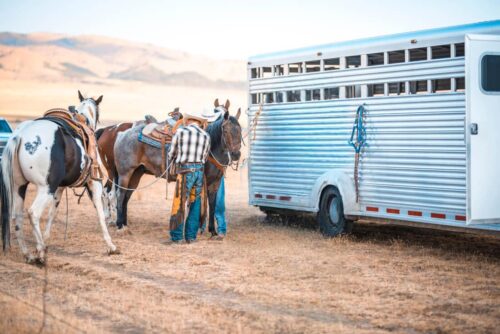
Western riding is a diverse category of equestrian sports with roots in ranch work and cattle handling.
Horses were essential partners for working on the range in the American West, and managing livestock required athleticism, stamina, and reliability. These skills eventually led to competitions and recreational activities that celebrated the abilities of the Western horse.
Today, Western riding is one of the most popular styles of horsemanship in North America. Despite their modern popularity, all Western disciplines still maintain deep connections to the traditions of the American West.
With sports that range from fast-paced rodeo events to precise arena patterns and long-distance trail competitions, the Western world offers something for every kind of rider. Whether you’re drawn to speed events, technical precision, or simply enjoying time on the trail, there’s a Western discipline to match your goals and your horse’s abilities.
Western Horseback Riding Disciplines
Understanding the historical roots of Western riding helps explain the variety of disciplines practiced today.
Western horsemanship evolved from the traditions of ranch work in North America, where horses were prized for their reliability, athleticism, and endurance. [1] This style of riding developed to meet the practical needs of working cowboys, who required horses capable of long hours in work, handling cattle, and navigating rugged terrain.
The tack, attire, and training methods used in Western riding reflect these practical origins, and certain horse breeds became closely associated with the style due to their Western heritage.
For example, Western riding utilizes a heavier saddle than English riding. These saddles have a horn, and are specifically designed for stability during cattle work and extended rides.
Today, Western riding encompasses a diverse range of disciplines, including recreational trail riding, show events, high-intensity rodeo, and performance competitions. Although different, these disciplines share a foundation of horsemanship.
Modern Western competitions emphasize a balanced seat, subtle communication, and partnership between horse and rider. Many of these sports reward riders who allow the horse to respond efficiently to cues while maintaining comfort and control.
List of Western Riding Disciplines
Western riding has developed into many specialized sports, each emphasizing different aspects of horsemanship. Some focus on speed and precision, while others highlight control, balance, or partnership between horse and rider.
The following are widely recognized types of Western riding disciplines:
- Barrel Racing
- Bareback Riding
- Breakaway Roping
- Calf Roping (Tie-Down Roping)
- Cowboy Racing
- Cutting
- Mounted Shooting
- Parade Horse
- Pleasure Riding
- Pole Bending
- Ranch Riding
- Ranch Roping
- Ranch Trail
- Ranch Versatility
- Reining
- Saddle Bronc Riding
- Steer Wrestling
- Team Penning
- Team Roping
- Trail Riding
- Western Dressage
- Western Endurance
- Western Equitation
- Western Gymkhana
- Western Pleasure
- Western Riding (Pattern Class)
- Western Showmanship
- Working Cow Horse (Reined Cow Horse)
Each of these disciplines is discussed in further detail below.
History of Western Riding
Western riding traces its origins to the early ranching traditions of North America. The style was heavily influenced by Spanish vaquero horsemanship, which was introduced to Mexico and the southwestern United States in the 16th century. [2]
Vaqueros developed specialized equipment, such as the Western saddle, and training methods designed for handling cattle across large, open ranges. [3]
As cattle ranching expanded during the 18th and 19th centuries, horses became indispensable for daily work. They were expected to cover long distances, maneuver livestock efficiently, and remain sound and reliable under challenging conditions.
At this time, horse training emphasized functional skills that supported ranch operations rather than show or competition. However, the techniques and traditions of ranch work translated easily into organized equestrian events.
Rodeos emerged as opportunities for cowboys to demonstrate their skills, while breed registries and associations began formalizing rules for competitions. By the mid-20th century, Western disciplines such as reining and cutting had become recognized sports, with governing bodies establishing standardized judging criteria.
Today, Western riding maintains its connection to these working roots while continuing to evolve in response to the needs of modern competitive and recreational settings.
Western Riding Characteristics
Western riding is distinguished by features that reflect its origins in ranch work. The equipment, rider position, and training priorities were all designed to maximize comfort and efficiency during extended periods in the saddle while handling livestock.
Tack & Attire
The Western saddle is larger and heavier than an English saddle, built to distribute weight over a greater area of the horse’s back. This design provides comfort for both horse and rider during extended work and offers stability for quick maneuvers such as roping cattle.
Riders also traditionally wear practical attire, including boots with heels for safety in the stirrups, wide-brimmed hats for sun protection, and jeans or chaps for durability. It is becoming more common for Western riders to prioritize safety and wear a helmet.
Training & Riding Style
Western horses are trained to respond to subtle cues. Historically, cowboys often rode with one hand on the reins to leave the other free for roping or handling livestock.
Neck reining and loose rein contact continue to be hallmarks of the Western riding style, promoting responsiveness and self-carriage rather than constant rein pressure. Smooth, efficient gaits are favored for conserving energy over long distances.
Horse Characteristics
Western disciplines emphasize athleticism, cow sense, and a calm temperament.
Successful Western sport horses are versatile, capable of working cattle one day and navigating obstacles or competing in a precise pattern class the next. Many Western events value balance, agility, and responsiveness over sheer speed or height.
Together, these characteristics distinguish Western riding from other equestrian traditions, while continuing to reflect its practical heritage in ranching.
Common Western Horse Breeds
Certain horse breeds are especially well-suited to Western riding due to their conformation, temperament, and athletic abilities.
While many horses can participate in Western disciplines, stock-type breeds dominate most events because they were developed specifically for ranch and cattle work. [4]
The most common breeds seen in Western disciplines include:
- Quarter Horse: The most popular Western breed. Known for its explosive speed over short distances, strong hindquarters, and calm disposition, the Quarter Horse excels in nearly every Western discipline, from reining and cutting to barrel racing and ranch versatility.
- Paint Horse: Closely related to the Quarter Horse, the American Paint Horse combines stock-horse conformation with distinctive coat patterns. Paints are versatile and commonly seen in both working and show disciplines.
- Appaloosa: Originally bred by the Nez Perce people, the Appaloosa is valued for endurance, intelligence, and versatility. Recognized for its spotted coat, the breed is used in ranch work, rodeo events, and competitive trail riding.
What's your top priority with your horse's health?

What's your top priority with your horse's health?
Cattle Work Disciplines
Many Western riding events are directly rooted in the skills required for managing cattle on working ranches. These disciplines test a horse’s agility, responsiveness, and instinct for handling livestock, often referred to as “cow sense.”
Riders must demonstrate precise communication and control, while horses anticipate and react quickly to the movements of cattle.
Common Western disciplines focused on cattle work include cutting, working cow horse, team penning, and ranch sorting.
Cutting
Cutting is a cattle work discipline that showcases the horse’s ability to separate a single animal from the herd and prevent it from returning.
The event highlights the natural instinct of a good “cow horse” along with the athleticism, balance, and responsiveness required to control livestock with minimal rider interference. [5]

History of Cutting
Cutting originated on American ranches, where cowboys used horses to separate individual cattle from herds for branding, medical care, or sale. Ranch horses with exceptional cow sense were prized for their agility and instinctive ability to anticipate a cow’s movements. [6][7]
Competitive cutting emerged in the mid-20th century, particularly in Texas and the American Southwest. The National Cutting Horse Association (NCHA) was founded in 1946 to establish standardized rules, scoring, and competition formats. [7]
Today, cutting highlights both the horse’s athleticism and the rider’s skill in handling cattle.
Overview & Rules
In a cutting competition, the rider selects and drives a cow out of a small herd, then releases control so the horse can take over. [8]
The horse must mirror the cow’s movements, anticipating changes in direction and speed. Judges score performances based on difficulty, style, and how effectively the horse maintains control of the cow. [8]
Cutting Horses
Cutting horses are prized for their quick reflexes, low-to-the-ground movement, and strong hindquarters. A well-trained cutting horse appears to “read” the cow’s intentions, making sharp stops, turns, and lateral movements with precision.
Cutting Riders
The rider’s role is to guide the horse into position and then allow it to work independently. Minimal rein and leg cues are preferred, as excessive rider interference can reduce the score. [8]
Successful cutting riders must have keen cattle-handling skills, excellent timing, and the ability to stay balanced during sudden movements.
Competitions & Associations
Cutting is governed by the National Cutting Horse Association (NCHA) and the American Quarter Horse Association (AQHA).
Significant events, such as the NCHA Futurity, attract international competitors and showcase the best cutting horses in the industry.
Working Cow Horse
The Working Cow Horse, also called Reined Cow Horse, is a discipline that combines precision riding with cattle handling.
It tests both the horse’s athletic ability and the rider’s control through two distinct phases: reining and cow work. [8]

History of Working Cow Horse
The Working Cow Horse discipline evolved from practical ranch work, combining reining and cattle-handling skills essential for managing livestock efficiently. [9]
Early California and Texas ranchers trained horses to perform precise patterns while controlling a cow, emphasizing obedience, agility, and responsiveness. [9]
In the mid-20th century, competitions emerged to test these skills formally. Modern Working Cow Horse competitions preserve the traditions of ranch horsemanship while challenging horses and riders in both controlled patterns and live cattle work. [9]
Overview & Rules
In competition, the horse first performs a reining pattern, demonstrating maneuvers such as spins, sliding stops, and rollbacks with fluidity and accuracy. [8]
Following the reining portion, the horse is tested on its ability to control a single cow along the arena fence, showcasing quick reactions, agility, and responsiveness.
Scores reflect the horse’s performance in both sections, with emphasis on smooth transitions, control, and style. [8]
Working Cow Horses
Working Cow Horses require a combination of speed, strength, and intelligence. They must maintain balance during precise reining maneuvers while remaining alert and responsive during the unpredictable movements of a cow.
Quick reflexes and strong hindquarters are essential for executing sudden stops, spins, and turns.
Working Cow Horse Riders
The rider must demonstrate both technical skill in the reining pattern and effective guidance during the cow work phase. Subtle cues, timing, and body positioning are critical to achieving high scores while allowing the horse to show its natural ability.
Competitions & Associations
Major governing bodies include the National Reined Cow Horse Association (NRCHA) and the AQHA.
Events range from local shows to international championships, with patterns and scoring standardized to highlight the partnership between horse and rider. [8]
Team Penning & Ranch Sorting
Team Penning and Ranch Sorting are collaborative Western disciplines that emphasize teamwork, strategy, and quick decision-making. Both events originate from ranch work, where separating cattle safely and efficiently was essential. [10]

History of Team Penning & Ranch Sorting
Team penning and ranch sorting developed directly from cattle ranch operations in the American West.
Ranchers needed efficient ways to separate and move specific cows from larger herds, often using multiple horses and riders to accomplish this task. These tasks required coordination, quick decision-making, and skilled horsemanship. [11]
By the mid-20th century, informal competitions had emerged, eventually giving rise to organized events with standardized rules.
Overview & Rules
In Team Penning, a team of three riders works together to separate specific cattle from a herd and guide them into a pen within a set time limit. Success depends on effective communication, coordinated positioning, and precise control of the herd. [10]
Similar in concept, Ranch Sorting requires two riders to move cattle in numerical order from one pen to another. The challenge lies in anticipating the movements of the cattle and maintaining the correct sequence under time pressure. [10]
Penning & Sorting Horses
Horses used in these disciplines must be agile, quick, and attentive to their surroundings. They need to respond immediately to rider cues while remaining steady and balanced during sharp turns and sudden accelerations.
Cow sense and the ability to read the herd are key traits for success.
Penning & Sorting Riders
Effective teamwork is essential. Riders must plan strategies, communicate efficiently, and respond in real-time to the movements of both horses and cattle.
Strong horsemanship, precise rein and leg control, and situational awareness are all critical to achieving high performance.
Competitions & Associations
Both Team Penning and Ranch Sorting are associated with organizations such as the United States Team Penning Association (USTPA).
Competitions range from local shows to international events, with classes designed for both amateur and professional riders.
Western Performance Disciplines
Precision and performance disciplines in Western riding focus on controlled, athletic movements that demonstrate the horse’s responsiveness, balance, and training.
Unlike speed-based events or ranch work, these disciplines prioritize accuracy, fluidity, and style. Horses are evaluated on their ability to execute patterns and maneuvers with consistency and finesse, while riders must exhibit subtle control and coordination.
Performance disciplines include reining, competitive Western riding, competitive Western trail, and Western dressage.
Reining
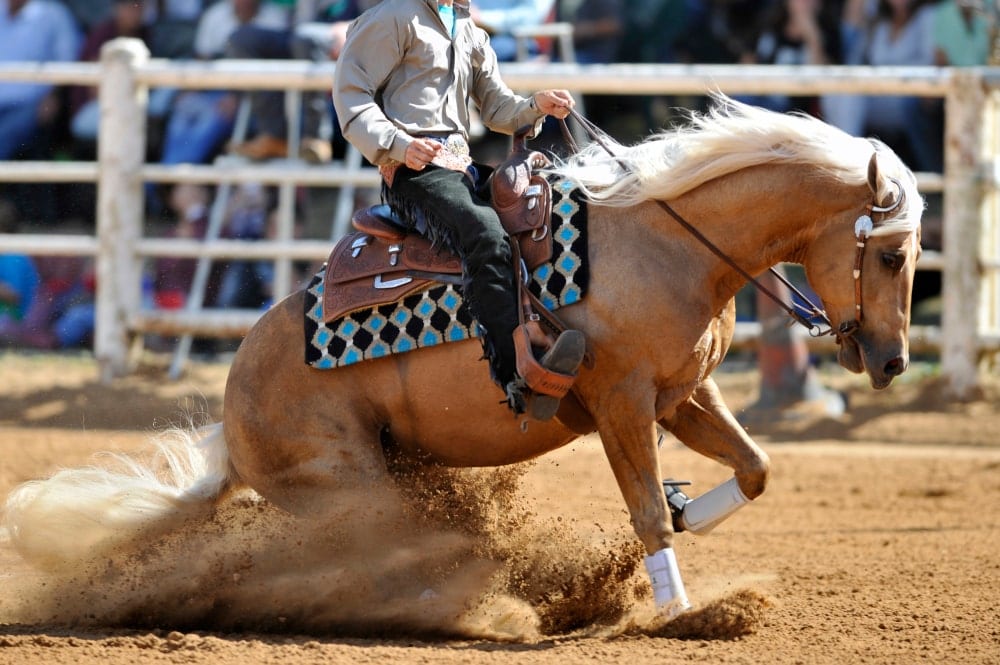
Reining is one of the most recognized performance disciplines in Western riding. This discipline is often compared to dressage due to its emphasis on controlled, flowing patterns.
The sport tests the horse’s athleticism, responsiveness, and ability to perform advanced maneuvers with style. [12]
History of Reining
Reining traces its roots to the working ranches of the American West, where riders needed horses capable of precise maneuvers for managing cattle. [13]
Cowboys trained cattle horses to stop quickly, spin, and change direction with accuracy. The sport of reining emerged in the 20th century as competitions formalized these patterns, highlighting a horse’s responsiveness, athleticism, and control.
Today, reining is a cornerstone of Western performance classes.
Overview & Rules
Reining patterns typically include spins, sliding stops, rollbacks, circles at varying speeds, and lead changes. [12]
Horses are scored on the accuracy, smoothness, and style of each maneuver, as well as overall attitude and willingness. Minor penalties may be given for excessive head movement, incorrect leads, or breaks in gait. [12]
Reining Horses
Reining horses need balance, agility, and precise coordination. Strong hindquarters and well-developed musculature allow them to perform sliding stops and rapid directional changes.
Mental focus and willingness are equally important, as horses must execute complex patterns under the guidance of subtle cues.
Reining Riders
Riders must demonstrate effective communication through seat, leg, and rein aids, maintaining light, consistent contact. Timing, precision, and the ability to anticipate the horse’s movements are crucial for achieving high scores.
Competitions & Associations
Reining is governed by organizations such as the National Reining Horse Association (NRHA) and the AQHA. Events range from local shows to international competitions.
Reining has gained worldwide popularity for both its technical demands and the impressive athletic displays it is famous for.
Competitive Western Riding (Pattern Class)
Western Riding, often referred to as the pattern class, is a precision-based discipline that evaluates a horse’s ability to perform smooth, controlled movements while demonstrating consistent lead changes and responsiveness to the rider.
Unlike reining, which emphasizes extreme maneuvers, Western Riding focuses on fluidity, accuracy, and overall style. [4]

History of Competitive Western Riding
Western riding pattern classes developed from practical ranch and working-horse skills in the American West. Ranch horses were expected to perform precise maneuvers, including lead changes, circles, and smooth transitions, while managing cattle or navigating varied terrain.
By the mid-20th century, these practical skills were formalized into competitive pattern classes to evaluate a horse’s obedience, responsiveness, and style under saddle.
Organizations like the American Quarter Horse Association (AQHA) helped standardize patterns and judging criteria, creating modern Western riding classes that reward both precision and the horse’s natural athleticism.
Overview & Rules
In competition, horses follow a predetermined pattern that includes a series of lead changes, circles at varying speeds, and transitions between gaits. [4]
Judges assess accuracy, smoothness of the lead changes, quality of gaits, and the horse’s responsiveness to subtle cues. Breaks in gait, late or missed lead changes, and lack of precision can result in point deductions. [4]
Western Riding Horses
Successful Western Riding horses combine balance, athleticism, and a calm temperament.
They must perform flying lead changes at designated points with minimal rider input and maintain steady, even gaits throughout the pattern. [4] Flexibility, rhythm, and willingness are key attributes for achieving a high-quality performance.
Western Riding Riders
Riders must maintain a consistent, centered position and use subtle cues to guide the horse through the pattern.
Timing and anticipation are critical, particularly for executing lead changes smoothly. Overall, the rider’s goal is to highlight the horse’s natural ability while maintaining harmony and precision throughout the pattern.
Competitions & Associations
Western Riding is a recognized class in AQHA competitions and other breed and show associations. [4]
Events vary from local and regional shows to national championships, with standardized patterns designed to test the horse’s training and athletic ability.
Competitive Western Trail
Trail classes are Western disciplines designed to test a horse’s obedience, training, and ability to navigate obstacles that mimic real-world trail challenges.
These competitions emphasize precision, calmness, and versatility rather than speed. [4]

History of Western Trail
Western Trail as a performance discipline evolved from the practical demands of ranch and trail riding, where horses needed to navigate natural obstacles such as gates, bridges, logs, and uneven terrain.
By the mid-20th century, breed and open shows began formalizing trail classes, creating structured patterns that tested both the horse’s versatility and the rider’s horsemanship.
Today, Western Trail classes reward precision, smoothness, and confidence over obstacles that simulate real-world conditions. [4]
Overview & Rules
In a trail class, horses complete a pattern that includes obstacles such as gates, bridges, poles, and side-passes. [4]
Riders are judged on the horse’s willingness, smoothness, and accuracy in completing each element. Penalties are applied for knocking over objects, refusing obstacles, or showing signs of tension or resistance. [4]
Western Trail Horses
Trail horses must be sure-footed, balanced, and attentive to the rider’s cues. Versatility and trainability are essential traits for success.
These horses should demonstrate calmness and confidence while negotiating obstacles, maintaining steady gaits and proper rhythm throughout the course. [4]
Western Trail Riders
Riders are expected to guide their horses through obstacles with subtle aids and a composed, steady approach. Timing, planning, and clear communication with the horse are critical for completing the course efficiently and smoothly.
Competitions & Associations
Trail classes are included in AQHA, breed-specific, and open Western shows. Some competitions also offer ranch trail or obstacle-based classes, which replicate real ranch scenarios, further testing the horse’s practical abilities and the rider’s horsemanship.
Western Dressage
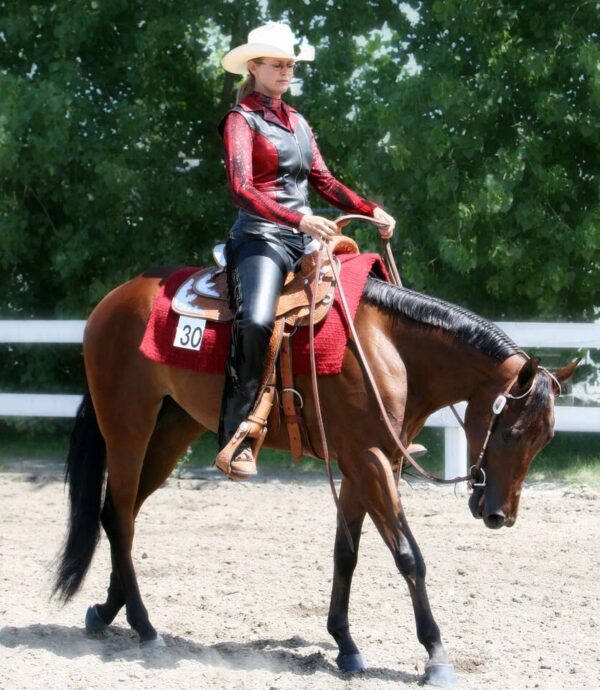
Western Dressage combines the principles of classical dressage with Western riding techniques and tack.
The discipline emphasizes precision, suppleness, and responsiveness, allowing riders to showcase the horse’s athleticism while maintaining the relaxed, balanced style of Western horsemanship.
Western Dressage is practiced both competitively and recreationally, appealing to riders who want to improve control, gaits, and partnership with their horse. [14]
History of Western Dressage
Western Dressage is a modern evolution of traditional dressage principles adapted for Western horses and riders.
The discipline emerged in the early 21st century as riders sought a way to blend classical training with the Western riding style, creating a formal system of patterns, tests, and scoring. [15]
Organizations such as the Western Dressage Association of America® (WDAA), founded in 2008, have established standardized rules, tests, and judging criteria, which have helped the sport grow rapidly across the U.S. and internationally. [15]
Overview & Rules
Western Dressage involves performing a series of patterns or tests at walk, jog, and lope, focusing on smooth transitions, correct gaits, and proper bending. [14]
Judges score each movement based on accuracy, rhythm, relaxation, and harmony between horse and rider. Classes are divided into levels, ranging from introductory to advanced, allowing horses and riders of all experience levels to compete and develop their skills progressively. [14]
Western Dressage Horses
Horses used in Western Dressage need to be balanced, supple, and responsive. Many stock-type breeds, including Quarter Horses, Paints, and Appaloosas, excel in the discipline. However, any breed can benefit from Western Dressage training.
The ideal Western Dressage horse demonstrates calmness, obedience, and fluid gaits while maintaining energy and engagement throughout the test. [14]
Western Dressage Riders
Riders in Western Dressage must maintain a centered and balanced seat, using subtle aids to guide the horse through precise patterns.
Effective communication, timing, and an understanding of classical principles are essential for smooth transitions, correct bending, and overall harmony. Rider skill is evaluated alongside the horse’s movement, emphasizing partnership and refinement. [14]
Competitions & Associations
Western Dressage competitions are overseen by organizations such as the Western Dressage Association of America® (WDAA) and USEF. [14][15]
Events range from local schooling shows to national championships, offering divisions for youth, amateurs, and professionals. [14][15] The discipline promotes skill development, precision, and the elegant presentation of Western horses in a structured competitive environment.
Western Speed Events
Speed events in Western riding test a horse’s athleticism, agility, and responsiveness under the pressure of timed competition.
These disciplines emphasize quick bursts of movement, precise maneuvering, and seamless communication between horse and rider. While some events focus on individual performance, others incorporate patterns or obstacles that challenge both speed and strategy.
Popular Western speed disciplines include barrel racing, pole bending, and Western Gymkhana.
Barrel Racing
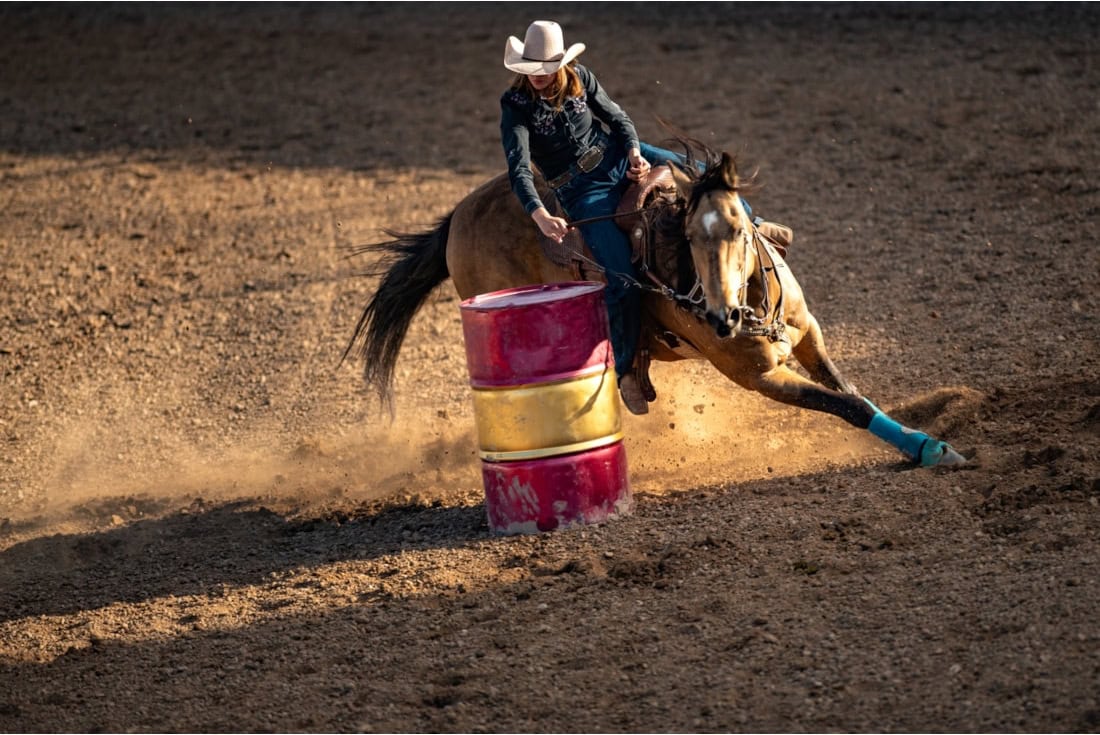
Barrel racing is one of the most recognizable Western speed events, combining explosive speed with precise maneuvering. It tests the partnership between horse and rider as they navigate a cloverleaf pattern around three barrels as quickly as possible. [16]

History of Barrel Racing
Barrel racing developed from rodeo traditions in the early 20th century, particularly in the United States, as a timed event for speed and precision. [17]
Initially popularized among women competitors, barrel racing showcased agile horses and coordinated horsemanship around a cloverleaf pattern of barrels. [17]
The sport grew through local rodeos and eventually became a standard event in organizations like the Women’s Professional Rodeo Association (WPRA), highlighting both athleticism and teamwork.
Overview & Rules
Barrel racing is a timed event in which the horse and rider complete a set pattern around three barrels. Knocking over a barrel incurs a time penalty, making both speed and accuracy essential.
The fastest clean run determines the winner, and competitions are commonly divided by age and skill level. [16]
Barrel Racing Horses
Successful barrel horses are agile, quick, and highly responsive. Strong hindquarters and balance are critical for tight turns and rapid acceleration.
Mental focus is equally important, as horses must maintain rhythm and precision under the pressure of competition.
Barrel Racing Riders
Riders need excellent timing, balance, and coordination. Subtle cues and consistent body positioning help guide the horse through sharp turns while maintaining top speed.
Anticipating the horse’s movement and staying relaxed yet engaged are key to a clean, fast run.
Competitions & Associations
Barrel racing is governed by organizations such as the Women’s Professional Rodeo Association (WPRA) and the National Barrel Horse Association (NBHA).
Events range from local competitions to high-profile rodeos and world championship circuits, drawing competitors from across North America and beyond.
Pole Bending
Pole bending is a fast-paced Western speed event that challenges a horse’s agility, flexibility, and responsiveness. Riders navigate a line of six poles in a weaving pattern as quickly as possible, making precision and rhythm just as important as speed. [4]

History of Pole Bending
Pole bending originated in Gymkhana events in the early 20th century as a way to demonstrate a horse’s agility and responsiveness.
Riders navigate a line of poles in a weaving pattern, emphasizing precision, rhythm, and speed. Initially a youth-focused activity, it quickly gained popularity across all ages, becoming a staple of timed Western games and rodeos.
Overview & Rules
In pole bending, the horse and rider enter a straight line of six evenly spaced poles, weaving through them down and back before sprinting to the finish. [4]
Knocking over a pole results in a time penalty, and the fastest clean run wins. Competitions often divide riders by age, experience, or horse size. [4]
Pole Bending Horses
Pole bending horses require agility, quick reflexes, and balance. They must execute tight, controlled turns while maintaining momentum, demonstrating both athleticism and focus.
Confidence and trust in the rider are essential to completing the course efficiently.
Pole Bending Riders
Riders must maintain a balanced position and use subtle rein and leg cues to guide the horse through the weaving pattern. Timing, anticipation, and smooth transitions between poles are critical for reducing time and avoiding penalties.
Competitions & Associations
Pole bending is commonly featured in Gymkhana events, rodeos, and local Western shows. Regional Gymkhana associations provide standardized rules and divisions, offering opportunities for both youth and adult riders to compete.
Western Gymkhana
Gymkhana and playday games are Western speed events designed for fun, skill-building, and competition. These events include a variety of timed games and obstacle courses that test both horse and rider in agility, coordination, and teamwork.

History of Western Gymkhana
Western Gymkhana originated in the early 20th century as a series of timed games designed to showcase the agility, speed, and responsiveness of both horse and rider.
Initially popularized at local fairs and youth events, Gymkhana competitions included barrel racing, pole bending, keyhole races, and other fun, fast-paced patterns.
These events were designed to teach horsemanship skills in an exciting and competitive environment, allowing riders of all ages to demonstrate precision and control.
Over time, Western Gymkhana grew into a formalized discipline with standardized rules and organized competitions at local, regional, and national levels.
Overview & Rules
Gymkhana events often feature multiple games, including keyhole races, flag races, barrel patterns, and stake races.
Riders compete individually or in teams, and the winner is determined by the fastest time or successful completion of the course. Rules vary by event, but accuracy and safety are always emphasized alongside speed.
Western Gymkhana Horses
Horses in Gymkhana events must be versatile, responsive, and quick-thinking. They need to handle rapid direction changes, tight turns, and sometimes unconventional obstacles.
Calmness under pressure, combined with athleticism, ensures the horse can perform reliably in diverse games.
Western Gymkhana Riders
Riders must demonstrate agility, timing, and precise control. Effective communication, conveyed through subtle cues and balanced positioning, is critical, particularly in events that require rapid transitions or teamwork.
Quick decision-making and adaptability are also essential for success.
Competitions & Associations
Gymkhana and playday events are popular at local, regional, and state levels. Organizations such as the United States Pony Clubs, 4-H Clubs, and various regional Gymkhana associations standardize rules and provide competitive opportunities for riders of all ages and skill levels.
Western Ranch Work
Ranch and stock work disciplines reflect the practical skills required for managing livestock on working ranches. These events test a horse’s versatility, stamina, and ability to respond calmly and efficiently.
Generally, horses competing in these classes have honed their skills in real-world scenarios after working at existing ranches.
Horses and riders are evaluated on their ability to navigate obstacles, perform cattle-related tasks, and demonstrate all-around ranch competence.
Ranch Riding
Ranch Riding is a Western discipline that highlights a horse’s versatility, smoothness, and ability to perform practical ranch tasks with style and efficiency. The class evaluates both the horse’s athleticism and its responsiveness to the rider’s cues. [4]
Ranch riding is part of a group of Western disciplines that also includes ranch trail, ranch versatility, and roping events.

History of Ranch Riding
Ranch Riding evolved from everyday ranch work, where horses were expected to cover long distances, navigate obstacles, and respond to riders’ subtle cues.
Early ranch horses were prized for their versatility, stamina, and calm temperament. In the mid-20th century, Ranch Riding was adapted into a show discipline to showcase practical skills in a competitive setting, rewarding horses that combined smooth gaits, maneuverability, and a steady disposition. [4]
Overview & Rules
In competition, horses are asked to perform a pattern that simulates ranch work, including smooth gaits, precise transitions, and optional obstacles such as gates, bridges, or poles. [4]
Judges assess the horse’s willingness, quality of movement, and overall responsiveness. Penalties may be applied for breaking gait, missing obstacles, or lack of control. [4]
Ranch Riding Horses
Successful ranch horses must be balanced, calm, and adaptable. They require steady gaits for long workdays, agility to navigate obstacles, and attentiveness to subtle rider cues. A confident, reliable temperament is essential for both performance and practical ranch tasks.
Ranch Riding Riders
Riders should maintain consistent, subtle aids, demonstrating control without excessive rein or leg pressure. Timing and anticipation are crucial when guiding the horse through obstacles and transitions.
The overall goal is to present a horse that appears obedient, fluid, and effortless in its work. [4]
Competitions & Associations
Ranch Riding is a recognized class in AQHA competitions, as well as breed-specific and open Western shows. [4] Patterns are standardized to reflect real-world ranch work, and classes are offered at local, regional, and national levels to accommodate a range of riders.
Ranch Roping
Ranch Roping is a Western discipline that demonstrates a horse’s ability to handle cattle in a practical, working-ranch context.

Unlike competitive rodeo roping, ranch roping emphasizes efficiency, calmness, and control over a cow, reflecting tasks commonly performed on working ranches. [4]
History of Ranch Roping
Ranch Roping has its origins in the practical needs of cattle ranches across the American West.
Ranchers required horses capable of roping cattle quickly and efficiently for branding, medical care, or sorting. They emphasized precision, calmness, and reliability over speed alone.
Over time, these practical skills evolved into organized competitions, often held at breed and ranch events, celebrating the horse’s cow sense, agility, and training while preserving traditional ranch horsemanship.
Overview & Rules
Unlike rodeo tie-down roping, ranch roping focuses more on effective livestock handling skills.
Another key difference is that Ranch Roping uses an extra-long, braided rawhide lasso and a softer shot thrown from a greater distance to prevent livestock from scattering. [18]
In ranch roping, the horse and rider work together to rope a single cow or steer, typically in a small arena or pasture.
Riders are judged on accuracy, smooth execution, and the horse’s responsiveness. Time may be recorded, but emphasis is placed on controlled, deliberate handling rather than speed alone.
Ranch Roping Horses
Ranch Roping horses must be steady, strong, and agile. They need the ability to anticipate the cow’s movements, maintain balance during sudden stops or turns, and remain calm under pressure. Quick reflexes and a cooperative temperament are essential.
Ranch Roping Riders
Riders must demonstrate precise timing, control, and effective communication with the horse. The goal is to rope the cow efficiently while allowing the horse to move freely and react appropriately. [4][19] This discipline requires a partnership built on trust and subtle cues.
Competitions & Associations
Ranch Roping is featured in breed shows, ranch competitions, and certain AQHA events. While not as high-speed as rodeo tie-down or team roping, it remains an important discipline for showcasing the versatility and reliability of ranch horses.
Ranch Trail & Versatility
Ranch Trail and Ranch Versatility competitions are designed to test a horse’s all-around abilities, combining elements of trail work, reining, and cattle-handling skills.
These disciplines reflect the practical demands of ranch life, where horses must be adaptable, steady, and responsive in a variety of situations. [4]

History of Ranch Trail & Versatility
Ranch Trail and Ranch Versatility classes evolved from the practical challenges faced by working ranch horses in the American West.
Ranchers needed horses that could navigate obstacles, handle gates, cross bridges, and work cattle efficiently across varied terrain.
By the mid-20th century, these skills were adapted into competitive classes that tested both the horse’s versatility and the rider’s horsemanship.
Ranch Trail emphasized smooth navigation of obstacles, while Ranch Versatility combined trail skills with reining and cattle work to evaluate an all-around ranch horse.
Today, these disciplines celebrate the agility, calmness, and adaptability that made working ranch horses indispensable.
Overview & Rules
In Ranch Trail, horses navigate obstacles such as gates, bridges, poles, and natural terrain features, simulating challenges encountered on real ranches.
Ranch Versatility expands on this by including reining patterns, cattle work, and ranch riding elements. Judges evaluate performance based on accuracy, responsiveness, smoothness, and overall calmness of the horse.
Ranch Versatility Horses
Horses must be balanced, agile, and confident, capable of transitioning smoothly between gaits, negotiating obstacles, and responding promptly to rider cues. Versatility and mental focus are essential for success across multiple tasks.
Ranch Versatility Riders
Riders are expected to guide their horses with subtle aids, demonstrating timing, control, and clear communication. Success requires planning, adaptability, and the ability to maintain harmony with the horse through a variety of exercises.
Competitions & Associations
Ranch Trail and Ranch Versatility are offered in AQHA, breed-specific, and open shows. These classes emphasize practical ranch skills and reward horses that demonstrate consistent performance, willingness, and versatility.
Rodeo Events
Rodeo events are high-intensity Western disciplines that showcase the speed, strength, and athleticism of both horse and rider.
These popular competitions are rooted in traditional ranch work but have evolved into formalized events with standardized rules and judging criteria.
Rodeo disciplines test a horse’s agility, responsiveness, and ability to perform under pressure, while riders demonstrate skill, timing, and control. [14]
Roping Events
Roping events are among the most iconic rodeo disciplines, testing the coordination and teamwork between horse and rider. These events showcase the horse’s speed, agility, and responsiveness, as well as the rider’s timing and precision.
History of Roping Events
Rodeo roping events originated from practical ranch tasks where cowboys needed to catch, control, and move cattle efficiently.

Tie-down roping, team roping, and breakaway roping evolved from these essential skills, adapted into competitive formats in early 20th-century rodeos.
The events emphasized speed, accuracy, and coordination between horse and rider, transforming everyday ranch work into a timed sport.
Organizations such as the Professional Rodeo Cowboys Association (PRCA) and Women’s Professional Rodeo Association (WPRA) later formalized rules, divisions, and scoring, creating the modern roping competitions seen in rodeos today.
Overview & Types
Rodeo roping is divided into three different types of class: [4]
- Calf Roping (Tie-Down Roping): The rider ropes a calf and quickly dismounts to tie its legs. Precision, speed, and smooth execution are key to a successful run.
- Team Roping: Two riders, a header and a heeler, work together to rope a steer. The header ropes the steer’s head while the heeler ropes the hind legs, requiring coordination and communication.
- Breakaway Roping: A growing women’s event, breakaway roping involves roping a calf without dismounting. The rope is attached to a string on the saddle horn, and the run ends when the rope breaks away.
Roping Horses
Roping horses must be quick, agile, and responsive to subtle rider cues. They need to accelerate rapidly, maintain balance during turns, and react promptly to the calf’s movements.
Calmness under pressure is also essential to maintain control during high-stress events.
Roping Riders
Successful roping requires precise timing, anticipation, and effective communication with the horse. Riders must coordinate their movements to match the animal’s speed and direction, ensuring a smooth and efficient run.
Competitions & Associations
Roping events are sanctioned by organizations such as the Professional Rodeo Cowboys Association (PRCA), Women’s Professional Rodeo Association (WPRA), and various regional rodeo associations.
Competitions range from local rodeos to national and international championships.
Steer Wrestling
Steer wrestling, also known as bulldogging, is a high-intensity rodeo event that demonstrates the strength, timing, and partnership between horse and rider. The goal is to bring a running steer to the ground as quickly and safely as possible.

History of Steer Wrestling
Steer wrestling has its roots in practical ranch work, where cowboys needed to bring cattle under control quickly for branding, medical treatment, or sorting.
The event evolved in the early 20th century as a timed rodeo competition, testing both the rider’s skill and the horse’s steadiness. Cowboys dismounted from horseback to wrestle the steer to the ground, emphasizing strength, timing, and technique. [20]
Organizations such as the Professional Rodeo Cowboys Association (PRCA) established formal rules and safety standards, shaping steer wrestling into the high-intensity rodeo event practiced today.
Overview & Rules
In steer wrestling, the rider begins on horseback alongside a running steer. At the appropriate moment, the rider dismounts, grabs the steer by the horns, and uses controlled force to bring it to the ground. [20]
The fastest time wins, with penalties assessed for unsafe techniques or incomplete control. [20]
Steer Wrestling Horses
Horses in steer wrestling must be strong, agile, and steady. They are trained to run straight and maintain consistent speed alongside the steer while remaining calm and responsive to subtle rider cues. Balance and acceleration are critical as the rider prepares to dismount.
Steer Wrestling Riders
Steer wrestling requires strength, timing, and precise coordination. Riders must judge the horse’s speed, anticipate the steer’s movements, and execute the dismount smoothly. Maintaining safety for both horse and steer is a top priority.
Competitions & Associations
Steer wrestling is a mainstay of PRCA-sanctioned rodeos and other regional competitions. Both professional and amateur divisions exist, and the discipline highlights the athleticism and partnership inherent in rodeo events. [20]
Rodeo Roughstock
Rodeo roughstock events involve horses bred and trained for bucking competitions, showcasing power, agility, and athleticism.
Unlike traditional Western disciplines, the focus is on the horse’s natural ability to perform explosive movements while the rider demonstrates balance and control.
These events highlight the strength, conditioning, and breeding of bucking stock, as well as the skills required to compete safely in high-intensity rodeo settings. [20]
Saddle Bronc Riding
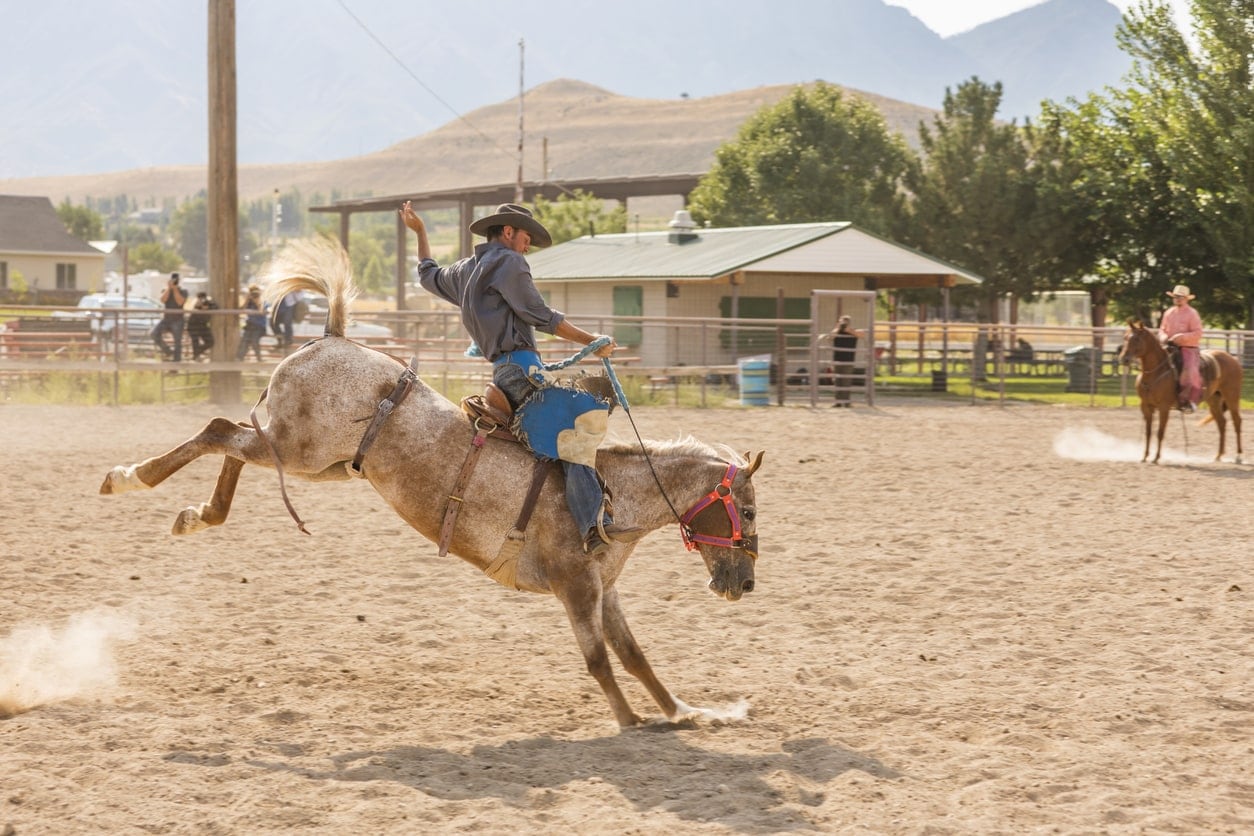
Saddle bronc riding is a classic rodeo roughstock event that tests a rider’s balance, timing, and coordination on a highly athletic, bucking horse. The discipline emphasizes skillful horsemanship over raw strength, with riders judged on style and control.
History of Saddle Bronc Riding
Saddle bronc riding developed from the practical work of ranch cowboys who rode untrained or semi-wild horses on the open range. The goal was to demonstrate skill, balance, and horsemanship while managing a spirited horse.
By the late 19th and early 20th centuries, saddle bronc riding became a featured rodeo event, with formalized rules and scoring emphasizing the rider’s style, control, and synchronization with the horse’s movements. [20]
Today, saddle bronc riding remains a celebrated rodeo discipline, highlighting both athleticism and traditional Western horsemanship.
Overview & Rules
In saddle bronc riding, the rider mounts a bucking horse using a specialized saddle and a single rein. [20]
The goal is to stay on for eight seconds while maintaining rhythm with the horse’s movements. Riders are scored on control and style, while the horse is scored on power, agility, and difficulty of bucking. [20]
Saddle Bronc Horses
Saddle bronc horses are strong, agile, and explosive. They are trained to deliver challenging bucking patterns that test the rider’s skill. The horse’s movements are rhythmic but unpredictable, requiring quick reflexes and stamina.
Saddle Bronc Riders
Riders must maintain a balanced, centered position and use proper techniques in time with the horse’s motion. Core strength, timing, and the ability to anticipate the horse’s jumps are crucial for achieving a high score and staying mounted for the full eight seconds.
Competitions & Associations
Saddle bronc riding is a featured event in PRCA-sanctioned rodeos and other regional competitions. [20]
Bareback Riding
Bareback riding is a high-intensity rodeo roughstock event that tests a rider’s strength, balance, and endurance. Unlike saddle bronc riding, riders perform without a saddle, relying solely on a rigging and their own core strength to stay mounted.

History of Bareback Riding
Bareback riding originated from the need to demonstrate a cowboy’s ability to handle untrained or minimally trained horses without the support of a saddle.
Early competitions in the early 20th century tested courage, strength, and balance, often in informal rodeo settings.
Over time, bareback riding evolved into a formal rodeo discipline, with standardized equipment and scoring focused on rider technique and style, as well as the horse’s power and difficulty. [20] It remains one of the most physically demanding and thrilling rodeo events today.
Overview & Rules
In bareback riding, the rider grips a leather rigging attached to the horse and must remain on for eight seconds. Scores are based on rider control, technique, and overall style, while the horse is judged on power, agility, and difficulty of bucking. [20]
Safety rules are strictly enforced to protect both horse and rider. [20]
Bareback Horses
Bareback horses are powerful, explosive athletes bred for intense bucking action. They require stamina, agility, and unpredictability to challenge the rider, making timing and coordination crucial for successful performance.
Bareback Riders
Riders must demonstrate exceptional balance, core strength, and timing. Proper technique and synchronization with the horse’s motion are essential for scoring well and staying mounted for the full eight seconds.
Competitions & Associations
Bareback riding is a core event at PRCA rodeos and regional competitions. [20] The discipline highlights both the horse’s natural athleticism and the rider’s skill in managing high-intensity movements without the support of a saddle.
Recreational Western Disciplines
Not all Western riding takes place in the show pen or rodeo arena. Recreational and trail disciplines focus on versatility, safety, and enjoyment for both horse and rider.
These activities test the horse’s obedience, confidence, and adaptability over varied terrain and obstacles.
Trail & Pleasure Riding
Trail and Pleasure Riding focus on the horse’s training, smooth gaits, and ability to navigate obstacles, providing both competition and recreational enjoyment. These disciplines emphasize calmness, responsiveness, and versatility over speed or extreme athleticism. [4]
History of Trail & Pleasure Riding
Trail and pleasure riding classes trace back to practical ranch and trail riding, where horses needed to navigate natural obstacles like gates, bridges, and uneven terrain.
Early competitions originated as a means to assess a horse’s training, willingness, and versatility in real-world situations. Over time, formal trail classes emerged in breed and open shows, rewarding horses that combined calmness, agility, and confidence over obstacles. [4]
Overview & Rules
In trail classes, horses complete patterns that include gates, bridges, poles, and other obstacles designed to mimic real-world trail conditions. [4]
Pleasure riding evaluates a horse’s overall performance under saddle, including gait quality, responsiveness, and suitability as a comfortable, enjoyable mount. [4]
Judges assess manners, obedience, and smoothness, with penalties for resistance, breaks in gait, or mistakes on obstacles. [4]
Trail & Pleasure Horses
Trail and pleasure horses must be balanced, steady, and attentive. Confidence, patience, and willingness to cooperate with the rider are critical. Horses require agility to navigate obstacles safely while maintaining calm and consistent gaits.
Trail & Pleasure Riders
Riders must use subtle aids and maintain a relaxed, centered position. Planning lines through obstacles, timing transitions, and anticipating the horse’s movements are key to a smooth and efficient ride.
Competitions & Associations
Western Trail and Pleasure classes are included in AQHA, breed-specific, and open Western shows. [4] Recreational riders often enjoy these disciplines because they are accessible to riders of all skill levels.
Western Endurance
Western Endurance and Trail Riding focus on the horse’s stamina, soundness, and reliability over long distances or challenging terrain. These disciplines test both the horse’s physical fitness and the rider’s planning, pacing, and horsemanship.
History of Western Endurance
Western Endurance riding evolved from the practical demands of long-distance ranch work, where horses needed stamina, sure-footedness, and reliability over rugged terrain.
Early ranchers relied on horses capable of covering many miles in a single day while remaining calm, responsive, and fit for multiple tasks.
In the mid-20th century, long-distance riding events were formalized into competitive endurance and trail challenges. Today, Western Endurance highlights both the horse’s athletic ability and the rider’s horsemanship over extended distances and varied terrain.
Overview & Rules
Endurance rides are long-distance events that can range from 25 to 100 miles in a single day. Horses are evaluated at periodic veterinary checkpoints for heart rate, hydration, and overall condition. [21]
Trail rides emphasize the safe navigation of natural terrain and obstacles, with scoring based on manners, responsiveness, and the rider-horse partnership, rather than speed. [22]

Western Endurance Horses
Endurance and trail horses must be fit, sure-footed, and mentally steady. They require balanced movement, efficient energy use, and the ability to maintain focus over extended periods. Soundness and durability are crucial for completing long rides successfully.
Western Endurance Riders
Riders need strong horsemanship skills, effective pacing strategies, and the ability to monitor their horse’s condition.
Effective communication, balanced riding, and anticipating terrain challenges help ensure both horse and rider complete the course safely and efficiently.
Competitions & Associations
Various regional trail riding associations govern Western endurance and trail events. These disciplines appeal to recreational riders and competitive equestrians seeking long-distance challenges or scenic rides.

Western Show Disciplines
Show disciplines highlight precision, style, and the horse’s responsiveness under saddle or at halter. These events focus on manners, training, and presentation, showcasing both the horse’s athletic ability and the rider’s horsemanship. [14]
Western Pleasure
Western Pleasure is a show discipline that emphasizes a horse’s calm demeanor, smooth gaits, and overall training under saddle. The goal is to present a horse that is a pleasure to ride, demonstrating consistency, balance, and responsiveness. [14]
History of Western Pleasure
Western Pleasure originated from the ranch and working horse tradition. Cowboys valued calm, smooth-gaited horses for long hours in the saddle.
Competitions emerged in the early 20th century to showcase horses that were “a pleasure to ride,” emphasizing manners, smooth transitions, and obedience.
Organizations like the American Quarter Horse Association (AQHA) helped formalize rules and judging standards, creating the modern Western Pleasure classes that reward refinement, consistency, and the horse’s natural athleticism. [4]
Overview & Rules
In Western Pleasure classes, horses perform at a walk, jog (trot), and lope (canter) in both directions of the arena. Judges assess the quality of movement, cadence, smooth transitions, and the horse’s attitude. Horses should appear relaxed and willing, with minimal visible cues from the rider. [4]
Western Pleasure Horses
Successful Western Pleasure horses are calm, balanced, and responsive. They maintain consistent gaits, demonstrate smooth transitions, and show attentiveness to the rider while moving with a natural, flowing style.
Western Pleasure Riders
Riders must maintain a subtle and consistent seat, using minimal rein and leg cues. Proper posture, timing, and smooth aids are essential to guide the horse through the required gaits while emphasizing harmony and refinement.
Competitions & Associations
Western Pleasure is a cornerstone class in AQHA, breed-specific, and open Western shows. Classes are available for all skill levels, from youth and amateur riders to professional competitors. [4]
Western Equitation
Western Equitation focuses on the rider’s form, control, and ability to communicate effectively with the horse.
Unlike performance-based classes that emphasize the horse, Western Equitation evaluates the rider’s horsemanship, posture, and precision. [4]
History of Western Equitation
Western Equitation evolved as a way to evaluate the rider’s horsemanship, posture, and control, rather than the horse’s performance alone.
Drawing on traditional ranch riding skills, early competitions emphasized precision, accuracy, and effective communication with the horse.
By the mid-20th century, Western Equitation became a standard class in breed and open shows, providing a foundation for developing balanced riders capable of handling their horses with subtle aids and refined technique.
Overview & Rules
In Western Equitation classes, riders perform patterns at a walk, jog, and lope, often including lead changes, circles, and stops. [4]
Judges assess seat, hands, leg position, smoothness of aids, and overall effectiveness in guiding the horse through the pattern. [4] Accuracy, consistency, and proper form are essential for achieving high scores.
Western Equitation Horses
While the emphasis is on the rider, horses should be willing, responsive, and smooth in their gaits. A well-trained horse allows the rider to demonstrate precision and control without interference.
Western Equitation Riders
Riders must maintain a balanced, centered seat with subtle rein and leg cues. Effective communication, proper posture, and smooth execution of patterns are essential. Timing and anticipation enhance the horse’s performance and highlight the rider’s horsemanship.
Competitions & Associations
Western Equitation is featured in AQHA, breed-specific, and open Western shows, with divisions for youth, amateurs, and professionals. [4] The discipline serves as a foundation for developing strong riding skills across all Western disciplines.
Western Showmanship
Western Showmanship is a halter-based discipline that evaluates the handler’s ability to present the horse effectively. The focus is on precision, grooming, and the partnership between horse and handler, rather than the horse’s performance under saddle.
History of Western Showmanship
Western Showmanship has its roots in halter classes designed to highlight both the horse’s grooming and the handler’s ability to present the animal effectively.
Early competitions emerged from ranch and breed exhibitions in the early 20th century, rewarding precision, accuracy, and attention to detail.
Judges assessed the partnership between horse and handler, as well as the horse’s manners and responsiveness. Today, Western Showmanship remains a cornerstone of breed and open shows, promoting horsemanship, presentation skills, and teamwork.
Overview & Rules
In Western Showmanship, horses are led through patterns that include turns, pivots, and figure-eights, often while being set up for inspection.
Judges assess the handler’s control, accuracy, and presentation, as well as the horse’s responsiveness and manners. [4]
Attention to detail, such as grooming and tack, also contributes to the overall impression. [4]
Western Showmanship Horses
Showmanship horses should be well-mannered, attentive, and responsive to subtle cues from the handler. They need to stand squarely for inspection, move willingly through patterns, and remain calm in the show environment.
Western Showmanship Riders
Success in Western Showmanship requires precise timing, posture, and control of the horse.
Handlers must anticipate the horse’s movements, execute patterns accurately, and present the horse in the best possible light. Smooth, confident handling enhances both performance and visual appeal.
Competitions & Associations
Western Showmanship is a standard class in AQHA, breed-specific, and open Western shows. [4] Divisions are available for youth, amateur, and professional handlers, providing opportunities to develop horsemanship and presentation skills.
Parade Horse
Parade Horse is a unique and visually striking discipline of Western riding, celebrated for its elegance and flashy movement. This discipline highlights showmanship, precision, and presentation, often featuring ornate tack.
History of Parade Horse
Parade riding has its roots in historical ceremonial and exhibition traditions, where horses were used to display wealth, prestige, or military prowess.
In the United States, parade horses gained particular popularity in the late 19th and early 20th centuries at local fairs, rodeos, and civic events, with a focus on flashy breeds, elaborate tack, and coordinated formations.
Over time, organized competitions developed to recognize excellence in presentation, gaits, and teamwork, preserving the tradition as a formalized Western discipline.
Overview & Rules
Parade horse classes typically involve horses performing in pairs, groups, or single entries along a set route or pattern.
Judges assess the horse’s manners, conformation, movement, and turnout. Emphasis is placed on performance, presentation, and polished execution. [14]
Parade Horses
Horses shown in parade classes are selected for their presence, flashy movement, and trainability. Breeds often include American Saddlebreds, Morgans, and stock-type horses with animated gaits.
A parade horse must be calm in crowds, responsive to subtle cues, and able to maintain consistent movement while wearing ornate tack.
Parade Horse Riders
Riders in parade classes need strong balance, poise, and the ability to guide horses smoothly in formation. Effective communication and subtle aids are essential for synchronized group routines.
Riders also play a key role in overall presentation, including attire, posture, and execution of patterns, which contribute to the performance’s visual impact.
Competitions & Associations
Parade Horse competitions celebrate showmanship, tradition, and the artistry of horse-and-rider partnerships in a public, ceremonial setting. The sport is sanctioned by the United States Equestrian Federation, and regional organizations hold local events.
Emerging Western Sports
Emerging Western sports showcase innovation, excitement, and growing participation within the equestrian community.
These disciplines combine traditional horsemanship with unique challenges, often emphasizing speed, precision, and skill in novel ways.
Mounted Shooting
Mounted shooting is an exciting emerging Western sport that celebrates horsemanship, precision, and speed. Riders navigate a course on horseback while shooting balloon targets with blank ammunition. The sport requires coordination, timing, and control.

History of Mounted Shooting
Mounted Shooting emerged in the late 20th century as a modern Western sport combining horsemanship, speed, and marksmanship.
Inspired by historical cowboy skills, competitors ride through obstacle patterns while shooting balloon targets with blank ammunition.
Today, Mounted Shooting showcases precision, timing, and partnership between horse and rider in an exciting, spectator-friendly format.
Overview & Rules
In mounted shooting competitions, riders follow a set pattern through multiple target stations. [23]
Each station contains balloons that must be popped in a designated order. Points are awarded for accuracy, and time is factored in to determine winners. Safety rules are strict, with protective gear required for both horse and rider. [23]
Mounted Shooting Horses
Horses must be calm, responsive, and confident in noisy or chaotic environments. Agility, smooth gaits, and the ability to stop, turn, and accelerate on cue are essential. The horse must remain focused on the pattern despite distractions from sound and movement.
Mounted Shooting Riders
Riders need excellent timing, hand-eye coordination, and the ability to guide the horse precisely through the course. Maintaining balance while shooting and controlling the horse simultaneously is critical for a successful run.
Competitions & Associations
Mounted shooting is sanctioned by the AQHA in partnership with Cowboy Mounted Shooting Association. [4][23] Competitions range from local events to national championships, attracting riders of all ages and skill levels.
Cowboy Racing
Cowboy Racing is an emerging Western sport that blends speed, precision, and strategy in a fast-paced obstacle-style course. Riders race against the clock, navigating patterns designed to test horsemanship and agility while showcasing the horse’s athleticism.
History of Cowboy Racing
Cowboy Racing is a relatively recent addition to Western riding. Riders navigate obstacle courses or timed patterns designed to test both horse and rider, combining elements of traditional Gymkhana with ranch-style challenges. [24]
The sport emphasizes quick reflexes, precise control, and athleticism, appealing to riders seeking fast-paced, skill-focused competitions.
Cowboy Racing continues to grow through regional events and emerging associations, highlighting innovation within the Western riding community.
Overview & Rules
In Cowboy Racing, horses and riders complete a series of obstacles or gates in a set pattern. Competitors are timed, and penalties are assessed for missed or incorrectly executed elements. The fastest clean run determines the winner, emphasizing both speed and accuracy. [24]
Cowboy Racing Horses
Cowboy Racing horses must be quick, agile, and responsive. They need the ability to accelerate, turn sharply, and navigate obstacles confidently. Mental focus and trust in the rider are crucial for performing efficiently under time pressure.
Cowboy Racing Riders
Riders must maintain a balanced, centered seat while giving subtle cues for turns, transitions, and obstacle negotiation. Timing, anticipation, and clear communication with the horse are key to completing the course successfully and quickly.
Competitions & Associations
Cowboy Racing is featured in emerging Western events and specialized competitions, often organized regionally or through developing associations. It appeals to riders seeking speed-oriented, skill-testing, and visually exciting disciplines. [24]
Choosing a Western Riding Discipline
Deciding which path to follow in Western riding often comes down to what you enjoy most in the saddle.
Some riders are drawn to precision and control, while others prefer speed, cattle work, or the endurance of long hours on the trail. The right discipline should feel rewarding and align with what excites you about riding.
Your horse’s natural abilities and temperament are just as important. Particular horses excel at quick maneuvers and agility, while others are better suited to steady, long-distance work. Paying attention to your horse’s strengths will help you choose a discipline where both of you can thrive.
It’s also helpful to think about what’s available in your area. Access to experienced trainers, appropriate facilities, and local events can make it easier to develop your skills and stay motivated.
Many riders explore more than one style before settling into a favorite. The best choice is a discipline that challenges you, supports your horse’s talents, and deepens the partnership you share.
Frequently Asked Questions
Here are some frequently asked questions about Western riding disciplines:
Western riding is a style of horseback riding that developed from ranch and working horse traditions in the American West, emphasizing control, versatility, and partnership between horse and rider.
Western riding uses a heavier saddle with a horn, prioritizing comfort, endurance, and cattle work. In contrast, English riding uses close-contact, all-purpose, or dressage saddles to prioritize athletic performance.
American Quarter Horses are the most popular due to their agility, cow sense, and versatility, though Paints, Appaloosas, and other stock-type breeds also excel in many Western disciplines.
No, Western riding is accessible to beginners, and many disciplines are designed to teach foundational horsemanship skills.
Popular Western riding disciplines include ranch work, reining, cutting, Western pleasure, barrel racing, calf roping, and other rodeo events.
Cow sense refers to a horse's instinctive ability to anticipate and respond to cattle movements, which is essential for cutting, reining, and ranch work.
Yes, trail riding, pleasure riding, and low-level show or ranch classes provide opportunities to enjoy Western riding recreationally while developing skills and confidence.
Western riding requires a Western saddle, bridle, and appropriate tack, with some disciplines requiring specialized gear for competition.
Riders develop balance, timing, core strength, subtle communication, and horsemanship, along with problem-solving and decision-making skills when working cattle or navigating obstacles.
Choosing a discipline depends on your goals, skill level, and your horse's abilities; recreational riders may prefer trail or pleasure classes, while competitive riders might explore performance, rodeo, or emerging sports.
Summary
Western riding encompasses a wide variety of disciplines, each celebrating the unique partnership between horse and rider.
- From performance events to ranch work, rodeo challenges, and emerging sports, these disciplines highlight skill, athleticism, and versatility.
- Horses that are responsive, balanced, and confident thrive across the spectrum of Western pursuits.
- Successful riders develop timing, coordination, and horsemanship
- Western riding offers opportunities for growth, challenge, and enjoyment at every level
- These disciplines honor the heritage of the American West while providing rewarding experiences for the modern horse and rider
References
- Petersen. J. L. et al. The American Quarter Horse: Population Structure and Relationship to the Thoroughbred. Journal of Heredity. 2014.
- Brand. D. D. The Early History of the Range Cattle Industry in Northern Mexico. Agricultural History. 2025.
- Chavez y Gilbert. D. Cowboys - Vaqueros: Origins of the First American Cowboys. New Mexican Hispanic Culture Preservation League. 2011.
- Rules and Regulations. AQHA. 2025.
- Rules and Regulations. NCHA. 2025.
- Evans. M. Cutting - A Sport of Precision and Strategy. Horse Journals. 2022.
- Who is the NCHA. NCHA. 2025.
- 2026 Rulebook. NRCHA. 2026.
- History. NRCHA. 2025.
- Guide to USTPA Rules and Regulations. USTPA. 2025.
- What is Team Penning and Ranch Sorting. USTPA. 2025.
- NRHA Handbook. NRHA. 2025.
- Reining. USEF. 2025.
- USEF Rulebook. USEF. 2025.
- About the Western Dressage Association®. WDAA.
- 2025 Rulebook. WPRA. 2025.
- Everything You Need to Know About the Sport of Barrel Racing. Silver Spurs Rodeo. 2015.
- Stewart. D. About. Canadian Ranch Roping Association. 2025.
- Rules. Canadian Ranch Roping Association. 2025.
- 2024 Rulebook. PRCA. 2024.
- Section J Endurance. Rules of Equestrian Canada 2025. 2025.
- Competitive Trail. Ontario Competitive Trail Riding Association. 2025.
- CMSA FAQ. Cowboy Mounted Shooting Association. 2025.
- The Extreme Cowboy Association Rulebook. Extreme Cowboy Association. 2025.