English











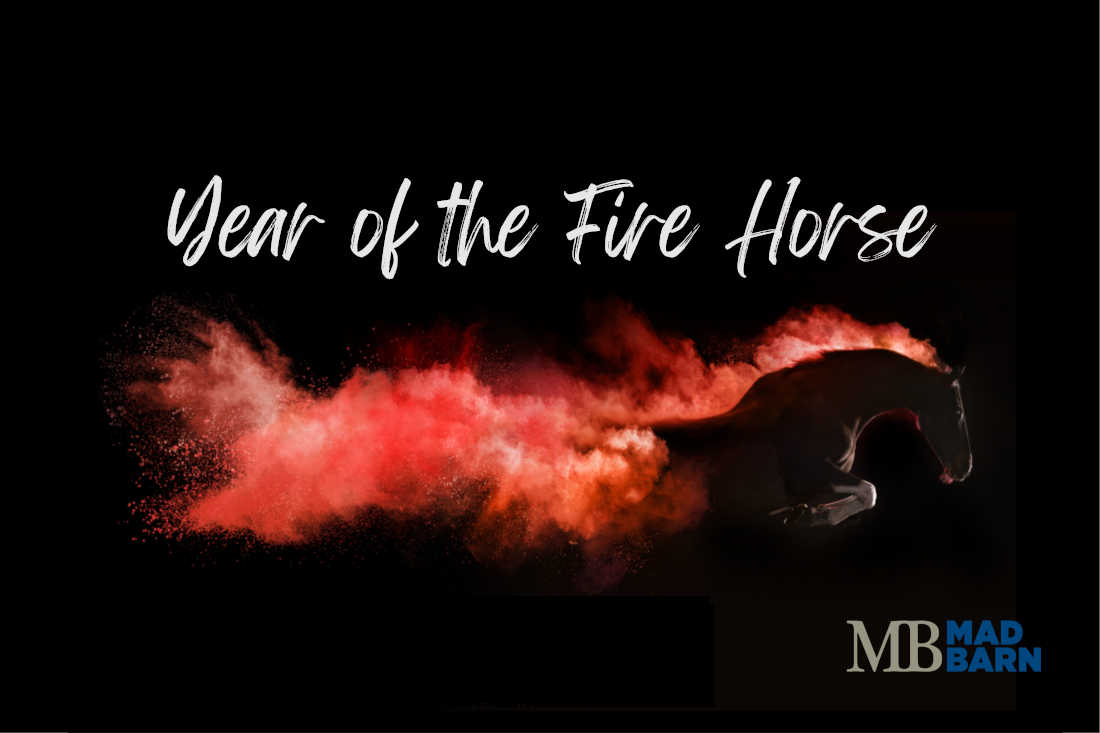
2026 is the Year of the Horse in the lunar zodiac, beginning on February 17, 2026, with the Lunar New Year, celebrated in China and other regions of Asia. In Chinese astrology, each year is assigned one of twelve zodiac animals, each associated with a distinct set of traditional traits.
Associated with vitality, movement, and independence, the Year of the Horse is traditionally seen as a time of action and forward momentum. During Lunar New Year celebrations, the Horse symbolizes progress, confidence, and the energy required to move ahead.
What sets the Horse apart is how its symbolism is grounded in lived experience. Long before the zodiac took shape, horses were central to transport, agriculture, warfare, and trade in Chinese society. These realities shaped how the horse was understood culturally, giving rise to the traits still linked to the Year of the Horse today: decisiveness, independence, and purposeful movement.
For people who work with horses, these traits are not symbolic abstractions. They are daily realities, expressed in how a horse responds to pressure, seeks space, or moves with purpose when given clarity and trust.
What the Year of the Horse Symbolizes in Chinese Culture
In Chinese culture, the horse (马, Mǎ) has long symbolized strength, vitality, and forward motion. Unlike animals associated with stillness, caution, or endurance, the horse is defined by its ability to move people, goods, and armies across long distances. This association with movement gave the horse a symbolic role closely tied to progress and ambition. [1]
The symbolic value of the horse emerged directly from its practical importance. Horses enabled communication across vast territories, supported agricultural work, and transformed military capability. Over time, these functions shaped how the horse was perceived culturally. The animal came to represent not only physical power but also movement, freedom, and momentum. [1]
Artistic and literary depictions of horses from Ancient China emphasize the horse’s energy and presence. Horses are shown in motion, with lifted heads and powerful bodies, reflecting an admiration for their strength and spirit. This imagery reinforces the idea that horses were not merely tools, but active forces within human society. [1]
In this way, Chinese horse symbolism developed from lived dependence rather than abstraction. The horse became a cultural shorthand for qualities that sustained civilization itself. Movement, ambition, and resilience were not just philosophical ideals, but practical necessities embodied by the real animals who supported the advance of civilization.
These same qualities remain recognizable today to anyone who has handled a horse with energy, independence, and a clear sense of forward intent.
What's your top priority with your horse's health?

What's your top priority with your horse's health?
Understanding the Lunar Zodiac: Animals, Elements & Cycles
The Lunar Zodiac is a calendar system developed in Ancient China, based on lunar cycles and a repeating sixty-year framework. It assigns an animal and elemental influence to each year. [2][3]
The system includes twelve animals, each associated with specific qualities and patterns of behavior. These animals are combined with the five elements, creating layered interpretations of personality, temperament, and fortune for people born in a given year. [2][3]
The twelve Lunar Zodiac animals are: [2][3]
- Rat (鼠, Shǔ)
- Ox (牛, Niú)
- Tiger (虎, Hǔ)
- Rabbit (兔, Tù)
- Dragon (龙, Lóng)
- Snake (蛇, Shé)
- Horse (马, Mǎ)
- Goat (羊, Yáng)
- Monkey (猴, Hóu)
- Rooster (鸡, Jī)
- Dog (狗, Gǒu)
- Pig (猪, Zhū)
These animals reflect observed traits drawn from daily life and nature. The system emphasizes cycles, balance, and change rather than linear prediction. [2][3]
Table 1. Summary of traits associated with each Lunar Zodiac animal
| Zodiac Animal | Key Traits | |
|---|---|---|
| Rat |  |
|
| Ox |  |
|
| Tiger |  |
|
| Rabbit |  |
|
| Dragon |  |
|
| Snake |  |
|
| Horse |  |
|
| Goat |  |
|
| Monkey |  |
|
| Rooster |  |
|
| Dog |  |
|
| Pig |  |
|
The five elements, Wood, Fire, Earth, Metal, and Water, add further depth to the zodiac system. Each element influences how an animal’s traits are expressed in a given year. Elements cycle alongside the animals, changing every two years, shaping energy, temperament, and broader cultural themes. [2][3]
Table 2. Summary of traits associated with the five elements in the Lunar Zodiac.
| Element | Associated Traits |
|---|---|
| Wood |
|
| Fire |
|
| Earth |
|
| Metal |
|
| Water |
|
Beyond animals and elements, the Lunar Zodiac is tied to traditional concepts of balance, timing, and harmony. This system is reflective rather than predictive, offering a framework for understanding cycles of action and rest, expansion and consolidation. [2][3]
What the Horse Represents in the Lunar Zodiac
Within this system, the Horse occupies a unique position. The Horse is associated with energy, independence, and movement. Horse years are traditionally seen as times of action, momentum, and outward focus. [2]
People born in Horse years are often described as energetic, intelligent, and self-directed. They value freedom and resist constraint, sometimes struggling under rigid structures. These traits mirror real equine behavior, reinforcing the Horse’s symbolic accuracy. [2]
Beliefs surrounding the Year of the Horse often emphasize opportunity through action. Progress is achieved through decisiveness rather than caution. In this sense, the Horse represents not reckless speed, but purposeful forward motion. [2]
Horses as Symbols of Power & Progress
The traits associated with the zodiac Horse are derived from the historical roles horses played in human societies. The symbolic significance of the Horse in the Lunar Zodiac reflects the practical functions horses served in early civilizations.
Across human history, horses contributed to social organization, territorial expansion, and economic development. Their strength, endurance, speed, and trainability allowed humans to exceed the physical limits of walking and manual labor. These capabilities influenced patterns of settlement, governance, trade, and warfare, giving horses an outsized role in shaping historical change.
Transport & Communication
One of the most transformative contributions of the horse was its impact on transport and communication. Horses dramatically increased the speed at which people, messages, and goods could travel across land. Administrative systems that relied on couriers, messengers, and mounted officials became possible only because horses could cover long distances efficiently and reliably. [4]
This capacity allowed early states and empires to coordinate across wide territories, maintain political authority, and respond more quickly to internal or external threats. Roads, relay stations, and postal networks often developed specifically to support horse-based transport, embedding the animal directly into social infrastructure. [4]
Agriculture
In agrarian societies, horses provided essential traction power. Before mechanization, horses were used for plowing fields, hauling loads, and transporting crops and materials. Compared to human labor alone, this significantly increased efficiency and productivity. [4]
By reducing the physical limits of farm work, horses supported surplus production and population growth. In many regions, their use allowed agriculture to expand into heavier soils or larger areas, reinforcing their role as a driver of economic stability rather than a simple farm tool. [4]
Trade
Horses were equally central to the development of long-distance trade. Overland trade routes depended on horses to carry goods, guide caravans, and maintain reliable movement across challenging terrain. [4]
Along major corridors such as the Silk Road, horses facilitated not only the exchange of commodities, but also the movement of ideas, technologies, and cultural practices. Trade networks built around horse transport linked distant regions into shared economic systems, shaping patterns of wealth and influence across continents. [4]
Military
Perhaps the most decisive role of the horse was in warfare. Mounted troops transformed military strategy by increasing speed, mobility, and tactical flexibility. Cavalry units could scout, pursue, retreat, and strike with a responsiveness unmatched by infantry alone. [4]
As a result, access to trained horses became a determining factor in military success. States that could secure and maintain strong horse populations gained strategic advantage, while those that could not were often left vulnerable. [4]
Anyone who has felt a horse lengthen its stride with purpose will recognize the same decisive energy that made mounted mobility so transformative.
Horses in Chinese History
China’s vast and varied geography made mobility a central challenge throughout its history. Governing large territories, defending long borders, and maintaining internal cohesion required reliable means of movement.
From an early stage, horses became essential to meeting these demands, shaping Chinese military organization, political stability, and territorial survival. The earliest systematic use of horses in China emerged during the Shang and Zhou periods (c. 1600 BCE to 256 BCE), when horses were primarily employed in chariot warfare. [1][5]
Chariot Warfare
Chariots functioned as elite military platforms, reserved for aristocratic warriors and high-ranking commanders. Their use reflected both technological capability and social hierarchy, with horses serving as visible markers of authority and power. [1][5]
While effective in certain contexts, chariot warfare was limited by terrain, cost, and logistical complexity. [1][5]
Cavalry Warfare
Over time, the limitations of chariots encouraged a gradual shift toward mounted riding.
Riding horses directly allowed for greater flexibility, speed, and adaptability on the battlefield. Cavalry units could respond more rapidly to changing conditions, operate across uneven landscapes, and engage in new tactical forms such as pursuit, skirmishing, and rapid withdrawal.
This transition marked a turning point in Chinese military capability, aligning it more closely with the realities of large-scale territorial defense. [1][5]
Influence of Nomadic Peoples
A key driver of this transformation was sustained contact with nomadic horse cultures from the northern and western steppes. These societies possessed great expertise in breeding, riding, and fighting on horseback.
Through conflict, trade, and cultural exchange, Chinese states adopted new equipment, riding techniques, and tactical concepts. [1][5]
The influence of nomadic cavalry fundamentally reshaped Chinese military thinking, encouraging the development of more mobile and responsive forces. Access to strong, well-bred war horses became a strategic priority.
Dependence on Horses
Dynastic stability was often closely tied to securing pasturelands and maintaining breeding programs. When access to horses was disrupted through environmental change, territorial loss, or political fragmentation, military strength declined. Conversely, periods of expansion and consolidation frequently coincided with successful horse acquisition and management. [1][5]
In this historical context, horses were never optional assets. They were decisive tools of survival. Control over horses influenced borders, determined defensive capacity, and shaped the continuity of political power.
Horses, the Silk Road & Expansion of the Chinese Empire
Beyond their military value, horses were central to China’s economic integration and imperial reach. As Chinese states expanded territorially, the ability to move people, goods, and information efficiently became a defining factor in economic stability and administrative control.
Horse-based transport enabled communication and exchange between distant regions, allowing large territories to be governed as a single imperial system. [5][6]
Unlike carts or pack animals used in local trade, horses were uniquely suited to sustained long-distance movement across steppe, desert, and frontier zones, making them indispensable to imperial logistics and cross-border exchange.
Merchants relied on horses to move goods across varied and often difficult terrain, linking inland regions with borderlands and neighboring cultures. [5][6]
Nowhere was this dependence more evident than along the Silk Road. While later remembered for silk and luxury goods, this network of overland trade routes was initially driven in large part by China’s need to acquire strong cavalry horses from Central Asia.
China’s environment was poorly suited to breeding horses with the size, speed, and stamina required for sustained military campaigns, particularly in conflicts with steppe nomadic forces. [5][6]
As a result, long-distance trade routes were shaped by the import of horses. These routes connected China with Central Asia, the Middle East, and Europe, and horses were essential to their operation. Recognizing this reliance, Chinese states invested heavily in securing reliable horse supplies to support both commercial activity and diplomatic exchange. [5][6]
To meet these demands, governments developed complex state-controlled horse systems. Horses were acquired through taxation, tribute from neighboring regions, and regulated breeding programs. [5][6]
Pasturelands were monitored and, in some cases, directly administered to ensure sustainable horse populations. Horse management became an economic concern as much as a strategic one, reflecting the animal’s central role in maintaining imperial cohesion. [5][6]
The Tang Dynasty: China’s Golden Age of Horse Culture
The Tang Dynasty is widely regarded as the high point of Chinese horse culture, a period in which military reliance on horses, cultural admiration, and artistic expression converged more than any other time in Chinese history. [7][8]
Spanning from 618 to 907 CE, the Tang era was marked by territorial expansion, political confidence, and extensive engagement with Central Asia, all of which reinforced the horse’s central role in both state power and cultural life. [7][8]
Tang military success depended heavily on elite cavalry horses. Expansion into border regions and the maintenance of long frontiers required fast, resilient mounts capable of sustained campaigns. Cavalry units became a cornerstone of Tang military organization, enabling rapid deployment, effective border control, and expansion of power across vast distances. [8][9]
Horses in Tang Era Artwork
Horses appear frequently in poetry, painting, and sculpture from the Tang era, where they are celebrated for their vitality, elegance, and spirit. They were depicted not as anonymous animals, but as individuals with presence and character.
This cultural prominence reflects a society that viewed horses as partners in success rather than mere instruments of state. The most striking material evidence of this reverence is found in Tang ceramic horses, many of which were buried in the tombs of nobles and high-ranking officials. [10][11]
 Tang Dynasty Ceramic Horse [12]
These sculptures are notable for their realism and dynamism. Broad chests, powerful necks, and alert expressions on the horses convey physical strength, while lifted heads and forward-leaning postures suggest movement and readiness. The emphasis is not on decoration, but on vitality. [13]
The Zodiac Horse
The role of the Horse in the Lunar Zodiac developed from the historical reliance on horses in Chinese society. As horses became integral to governance, warfare, trade, and daily economic activity, their practical functions informed how the animal was interpreted symbolically.
Over time, these repeated interactions linked the horse with observable characteristics such as mobility, responsiveness, and independent action. These traits reflected the animal’s real-world behavior and its capacity to support large-scale social organization.
As a result, the zodiac Horse emerged as a representation grounded in lived experience rather than abstraction, reflecting how horses functioned within human systems.
Character Traits & Year of the Horse
In Chinese philosophy, the Horse is classified as a yang animal. It is associated with outward energy, warmth, movement, and action. Sitting in contrast to yin qualities, which emphasize containment and inward focus, the Horse represents expansion and momentum. [1]
People born in the Year of the Horse are traditionally described as intelligent, energetic, fiercely independent, and confident. They are said to value freedom, resist rigid structures, and perform best when trusted with responsibility rather than being tightly controlled. [1][14]
These traits are not mere symbolic metaphors. They correspond to observable aspects of equine behavior. Horses tend to respond consistently to clear, stable cues and show measurable stress or resistance when signals are inconsistent or contradictory.
Excessive control, micromanagement, or force-based handling often leads to resistance, stress, or withdrawal. In contrast, partnership-based approaches that emphasize communication, trust, and mutual responsiveness tend to bring out the best in both horse and human.
2026: The Year of the Fire Horse
The Year of the Fire Horse brings together two of the most dynamic forces in the Lunar Zodiac. The horse is associated with movement, and independence, while the fire element represents intensity, transformation, visibility, and emotional energy. Combined, these influences create a year characterized by powerful drive, heightened expression, and rapid change.
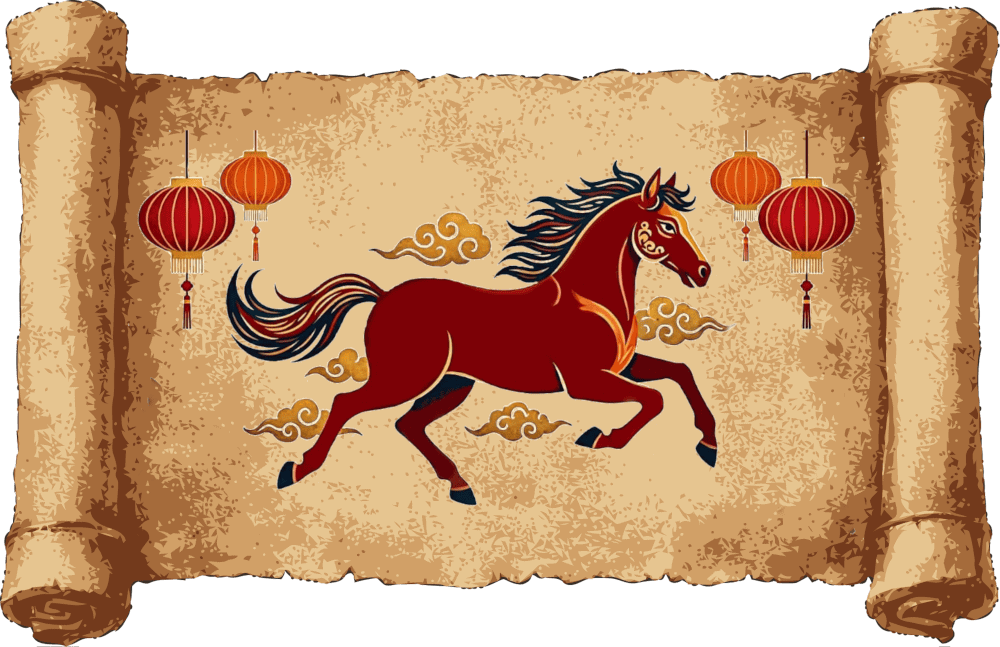
In traditional Chinese elemental theory, Fire is linked to warmth, expansion, and illumination. It fuels growth, passion, and initiative, but can also amplify volatility if left unchecked. When paired with the horse, an animal already associated with speed and forward motion, fire intensifies these traits.
The result is a year often described as energetic, bold, and demanding of action. Fire horse years are traditionally associated with strong will, courage, and decisive movement. [3]
For those accustomed to managing equine energy, the fire horse is less mysterious than it sounds: intensity magnifies both strength and instability, depending on how it is handled.
The Fire Horse & the Birth Gap in Japan
Beliefs tied to the fire horse have had measurable demographic effects in Japan, most notably in 1966. That year, births dropped sharply by around 20 to 25 percent compared to the surrounding years, creating a visible outlier in Japan’s population data. [16][17]
The decline was not driven by war, famine, or economic collapse, but by an old superstition that women born in a fire horse year would bring misfortune to their husbands and families. The origin of this belief can be traced to the Edo period, when popular stories and puppet theatre spread the idea that fire horse women were dangerously hot-tempered. Although the zodiac system itself came from China, this gendered taboo was uniquely Japanese. [16][17]
As the fire horse returns in 2026, a repeat of this phenomenon is considered unlikely. Arranged marriages are rare, belief in zodiac-linked superstition has declined, and Japan’s birth rate is already at a relative low.
Looking Ahead & Moving Forward
The Year of the Fire Horse speaks less to fate than to energy in motion. It highlights what happens when drive, intensity, and momentum are allowed to build, for better or worse.
In this sense, 2026 as the year of the fire horse symbolizes action with consequence. It rewards courage, authenticity, and engagement, while exposing fragility where foundations are weak. For those who work with horses, the lesson is intuitive. Energy is powerful, but only when guided. Fire can warm, illuminate, and drive forward, or it can take over as a destructive force.
The Year of the Horse is not merely symbolic. It reflects centuries of lived dependence on an animal that shaped transport, warfare, trade, and culture. In Chinese history, horses were engines of civilization and survival.
The Horse represents momentum because it carried societies forward in the most literal sense. For horse people, the Year of the Horse feels less like elemental divination and more like recognition of a bond that has always mattered.
Frequently Asked Questions
Here are some frequently asked questions about the Year of the Horse:
The Year of the Horse is traditionally associated with vitality, movement, independence, and forward momentum. It reflects qualities linked to progress, ambition, and action.
Horses were essential to transport, agriculture, warfare, and trade in ancient China. Their practical role in sustaining empires shaped their cultural symbolism over time.
The Lunar Zodiac follows a repeating twelve-year cycle of animals combined with five elements, creating a sixty-year cycle. Each year carries traits associated with both its animal and element.
People born in Horse years are often described as energetic, intelligent, independent, and self-directed. Traditional interpretations emphasize freedom, confidence, and resistance to rigid constraint.
Horses enabled long-distance communication, cavalry warfare, and overland trade networks like the Silk Road. Control over horse resources was closely tied to military strength and political stability.
In 2026, the Horse is paired with the Fire element, which is associated with intensity, transformation, and visibility. Fire Horse years are traditionally viewed as especially energetic and fast-moving.
Summary
The Year of the Horse reflects cultural meaning shaped by centuries of human reliance on horses rather than abstract elemental divination. Its symbolism emerged from lived experience across Chinese history, where horses enabled movement, power, and continuity.
- Horses played a foundational role in transport, agriculture, trade, and warfare, shaping how societies expanded and governed territory
- In Chinese culture, the horse became associated with progress, ambition, and momentum
- In the Lunar Zodiac system, the Horse representing outward energy, independence, and purposeful action
- The Silk Road and imperial expansion relied heavily on horses for long-distance communication, trade, and military logistics
- The Fire Horse of 2026 combines equine symbolism with the fire element, emphasizing intensity, visibility, and accelerated movement rather than fate
References
- Sá Cunha. L. The Horse in Ancient Chinese History, Symbolism and Myth: The Horse in Ancient China. Instituto Cultural de Governo da R.A.E. de Macau. 1990.
- Quelch. G. An Introduction to the Animals of the Chinese Zodiac. The Feng Shui Society. 2019.
- The Lunar Zodiac · V&A. Victoria and Albert Museum. 2024.
- Clutton-Brock. J. Horse Power : A History of the Horse and the Donkey in Human Societies. London : Natural History Museum Publications. 1992.
- Creel. H. G. The Role of the Horse in Chinese History. The American Historical Review. 1965.
- Loung. C. Why Asia's Historic Silk Road Should Have Been Called the 'Horse Road'. South China Morning Post. 2026.
- Romane. J. Rise of the Tang Dynasty: The Reunification of China and the Military Response to the Steppe Nomads (AD 581-626). Pen and Sword. 2018.
- Graff. D. A. The Eurasian Way of War: Military Practice in Seventh-Century China and Byzantium. Routledge. 2016.
- Tang Dynasty Horses - the Essential Guide. Antique Collecting. 2021.
- Horse. late 7th–first half of the 8th century.
- Southgate. M. T. Horse. JAMA. 2001. doi: 10.1001/jama.285.8.983.
- Harrsch. M. Tang Dynasty Ceramic Horse. via wikimedia Commons. 2026
- Art. D. of A. Tang Dynasty (618–907) - The Metropolitan Museum of Art. 2001.
- The Lunar Year of the Horse: Spirit, Symbolism, and Cultural Legacy. Made-in-China.com. 2026.
- Yang. M. Harry Potter’s Draco Malfoy Becomes Mascot for Year of the Horse in China. The Guardian. 2026.
- Japan's Birth Rate Dropped Sharply in 1966, Influenced by Cultural Beliefs. Our World in Data.
- The Year of the Fire Horse: Why Did Births Plummet in Japan in 1966?. nippon.com. 2025.