English
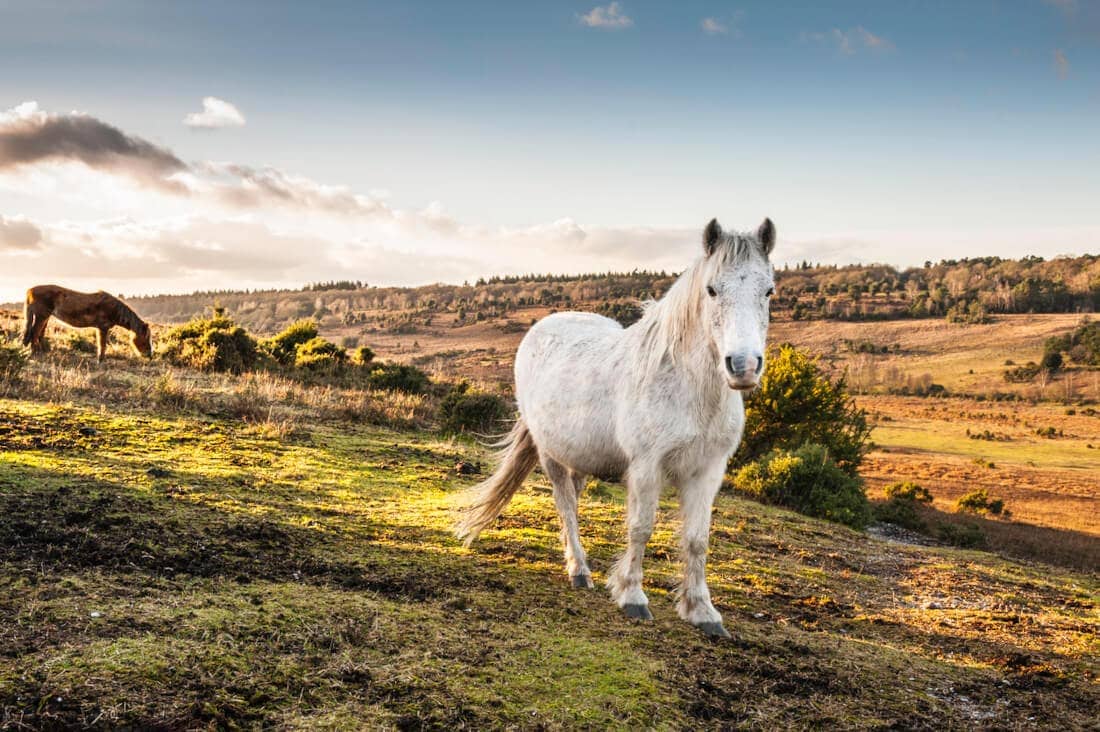
The New Forest Pony is one of several native pony breeds from the British Isles. These ponies get their name from the New Forest of Southern England, where the breed originated.
While herds of ponies still graze on the pastures of the forest land, most New Forest Ponies now enjoy domestic lives as beloved riding companions.
Known for their hardiness, versatility, and gentle nature, New Forest Ponies have earned a reputation as reliable partners for both children and adults. Their unique history and adaptability have made them a favorite among equestrians worldwide.
Attentive care and management are essential for helping ponies transition from the forest to modern stable life. Like other native British pony breeds, New Forest Ponies also require careful nutrition to stay healthy and perform at their best.
Keep reading to learn more about the history, characteristics, health problems, and nutritional needs of New Forest Ponies.
New Forest Pony History
The New Forest Pony has a unique background for a native breed. Unlike some British ponies, many outside bloodlines have influenced the breed over the last millennia.
Origin
Archaeological studies suggest ponies have inhabited the British Isles since the Bronze Age. Excavations in the areas surrounding the New Forest identified ancient skeletal remains similar in size to the ponies found there today. [1]
The New Forest was a royal hunting ground during the Middle Ages. In 1016, local farmers were granted the rights of common pasture to keep their horses on the grounds, which led to centuries of crossing native forest ponies with other breeds brought to the region by trade. [1]
Genetic research shows that New Forest Ponies display the highest overall diversity among all native British pony breeds. These studies also suggest Arabians and Welsh Ponies had the most significant influence on developing the New Forest breed. [2]
Historic Use
Farmers in the New Forest relied on the hardy and versatile forest ponies for farm work and transportation. In 1507, ponies from the region were exported for use in war. [1]
Popular myths claim Spanish horses swam ashore from wrecked ships to influence the breed around this period. However, Spanish ancestry in New Forests likely originated from Forest mares bred at the Royal Lyndhurst stud to produce cavalry horses. [3]
New Forest Ponies regularly participated in local horse races when the sport became popular in the 19th century. Breeders began introducing new bloodlines to improve the ponies, eventually setting up the first breed society of New Forest Ponies in 1891. [3]
The population of horses grazing the Forest declined sharply in the early 20th century. To preserve the breed, local farmers stopped introducing outside stallions and began only keeping New Forest Pony stallions out on the pastures during breeding season. [4]
Breed Registry
The New Forest Pony Breeding and Cattle Society (NFPB&CS) maintains the New Forest Pony Stud Book.
New Forest Ponies in the U.S. and Canada are registered with the New Forest Pony Society of North America (NFPSNA), which is officially recognized as a daughter studbook by the NFPB&CS in the UK. [5]
The NFPSNA requires DNA testing for all registered ponies to maintain the purity of the breed. [5] Maintaining quality is critical for the future of New Forest Ponies, as the breed is currently on the Rare Breeds Survival Trust’s watch list. [6]
| Breed Summary | |
|---|---|
| Breed Name | New Forest Pony |
| Breed Type | Pony |
| Origin | New Forest, Southern England |
| Breed Registry | New Forest Pony Breeding and Cattle Society (NFPB&CS); New Forest Pony Society of North America (NFPSNA) |
| Population Status | At risk; Rare Breeds Survival Trust watch list |
| Average Height | Up to 14.2 hh |
| Average Weight | 550 lb (250 kg) |
| Common Coat Colors | Bay, chestnut, grey; palomino permitted |
| Conformation | Working type, strong quarters, sloping shoulders, flat bone, deep body, straight legs, hard round feet |
| Common Uses | Trail riding, gymkhana, show jumping, eventing, dressage, driving |
| Temperament | Gentle, amenable, intelligent, trainable |
| Best For | Children and petite adults seeking a versatile riding pony |
| Common Health Concerns | Congenital myotonia, EMS, obesity, hyperinsulinemia, laminitis |
What's your top priority with your horse's health?

What's your top priority with your horse's health?
New Forest Pony Characteristics
The NFPB&CS established breed standards to encourage the preservation of the New Forest Pony’s distinct characteristics. Ponies that don’t meet the breed standard may be registered with the X-Register of the Studbook. [5]
Conformation
New Forest Ponies cannot exceed a maximum height of 148 cm, or approximately 14.2 hands. There is no minimum height, but ponies under 12 hands are rare. [5]
Breed shows classify New Forest Ponies in different sections based on size. Height A ponies stand under 138 cm, while height B ponies are taller than 138 cm. [7]
The New Forest breed has a working type with good substance. The ideal pony has strong quarters, sloping shoulders, flat bone, a deep body, straight legs, and hard, round feet. [5]
Their movement should be active, free, and straight but not overly animated.
Colors
Purebred New Forest Ponies can be any coat color except cream or pinto. Most New Forest Ponies are one of the following colors:
- Bay
- Chestnut
- Grey
Single dilute chestnut coat colors, such as palomino, are permitted if the horse has dark eyes. [5]
While blue eyes are not permitted, ponies with partially blue eyes are eligible for registration as mares and geldings. Excessive white markings beyond the head and lower limbs are not accepted. [5]
Temperament
Unlike other pony breeds known for having cheeky personalities, most New Forest Ponies have gentle, amenable temperaments. The breed is admired for its versatility, strength, and intelligence. They are easy to train and suitable for a variety of riders. [5]
While New Forest Ponies are popular with youth riders, every pony is an individual. Work with your trainer if you’re looking for a pony suitable for children or beginners.
Disciplines
Good temperaments and trainability allow New Forest Ponies to excel in many disciplines. These ponies are narrow enough for small children to ride but strong enough to carry petite adults.
The breed is still the preferred working pony for local farmers and recreational riders in the New Forest, thanks to their sure-footedness, agility, and bravery. Gymkhana, show jumping, eventing, dressage, and driving are popular disciplines for New Forest Ponies.
New Forest Pony Health
The New Forest Pony is a relatively hardy, healthy breed. However, some adaptations that helped these ponies survive in the forest can increase their risk of health problems without proper management.
Genetic Diseases
Rare breeds with small populations often struggle with low genetic diversity, which can increase the risk of genetic diseases. High genetic diversity revealed by DNA studies in New Forest Ponies may help keep the small population healthy. [2]
Congenital myotonia is the primary genetic disease of concern in the New Forest breed. Researchers first identified the disease, which is also found in humans, in a New Forest foal in 2009. [8]
Congenital myotonia is a muscle disorder characterized by delayed relaxation of the muscles after voluntary contraction. It results from mutations affecting chloride channels in the muscle cell membrane, which disrupt normal electrical activity. Affected horses may show muscle stiffness, difficulty moving after rest, and an abnormal gait that often improves with exercise. [9]
DNA testing found the foal had a missense mutation for the CLCN1 gene, which regulates the excitability of skeletal muscles. Ponies must inherit mutations from both parents to display clinical signs of this autosomal recessive condition. [8]
New Forest breed societies implemented testing to identify mutation carriers and remove them from the breeding population. [5]
Health Problems
Metabolic disorders and associated conditions are the most significant health concern for all native British pony breeds, including the New Forest Pony.
Native British pony breeds have a high risk of equine metabolic syndrome (EMS). One study identified EMS in 23.3% of 354 ponies and cobs in the UK. [10]
Research suggests several metabolic traits associated with EMS are moderately to highly heritable in native pony breeds. [11]
Equine metabolic syndrome is linked to obesity, hyperinsulinemia, and an increased risk of laminitis. Laminitis is a painful hoof condition involving inflammation and weakening of the laminae, which connect the hoof to the coffin bone. [12]
Severe cases of laminitis can cause the coffin bone to rotate or sink, leading to debilitating pain. [12]
Care and Management
New Forest Ponies need quality basic care to stay healthy throughout their lives. Your pony’s care and management should consider their physical, mental and behavioral needs.
Work with your veterinarian and other equine health practitioners to develop a preventative wellness program that includes: [4][13]
- Veterinary Exams: Schedule regular veterinary appointments to identify and address health issues early. Ponies turned out on the New Forest are monitored by Agisters, who perform annual health checks during the autumn drift to determine whether any ponies need to be removed from the Forest for winter care.
- Vaccinations: Follow a vaccination schedule recommended by your veterinarian to protect your pony from infectious diseases.
- Dental Care: Routine dental check-ups and teeth floating by a qualified practitioner help maintain oral health and chewing efficiency. As ponies age, their risk of dental issues increases. Senior ponies may need more frequent dental exams and diet adjustments to maintain body condition.
- Parasite Management: Implement a strategic parasite control program to protect against internal parasites.
- Hoof Care: Schedule regular farrier visits to maintain hoof balance and soundness. New Forest Ponies generally have strong, healthy hooves and often do well barefoot, but those in regular work may benefit from additional support such as hoof boots or shoes.
Owners who keep New Forest Ponies at home must also consider the breed’s tendency for metabolic concerns. Good pasture management is essential to reduce the risk of pasture-associated laminitis.
Strategies such as using a grazing muzzle or turning out on a dry lot can help limit intake of high-sugar grasses.

New Forest Pony Nutrition
A carefully-formulated feeding plan is essential for supporting overall health and controlling the risk of metabolic disorders in New Forest Ponies.
Weight Maintenance
New Forest Ponies are famously easy keepers. Their efficient metabolisms allow them to utilize nutrients from sparse vegetation during cold winters in the forest and maintain a healthy body weight with fewer calories.
When overfed, these ponies can quickly gain weight and become obese. It’s vital to monitor your pony’s body condition so you can adjust their diet as necessary. [14]
New Forest Ponies should easily maintain body condition on a balanced diet. If you notice unexpected weight loss, contact your veterinarian to investigate potential underlying health problems.
Sample Diet
The following sample diet is intended for a mature 250 kg (550 lb) New Forest Pony with normal body condition at maintenance (not exercising).
| Feed | Maintenance Diet |
|---|---|
| (Amount / Day) | |
| Mid-Quality Hay (10 % crude protein) | 3.5 kg (7.7 lb) |
| Straw (5 % crude protein) | 1.5 kg (3.3 lb) |
| Salt | 15 g (1 tbsp) |
| Omneity® | 100 g (1 scoop) |
| Diet Analysis | |
| Digestible Energy (% of Req) | 103 % |
| Protein (% of Req) | 121 % |
| NSC (% Diet) | 7.6 % |
A low-starch, forage-based diet is the best option for keeping New Forest Ponies healthy. These ponies typically need to avoid energy-dense concentrate feeds and rich pasture.
While hay alone can easily meet the energy requirements of most New Forest Ponies at maintenance, forage-only diets are often deficient in other essential nutrients. Fortifying the diet with a vitamin and mineral supplement can help fill these nutritional gaps. [14]
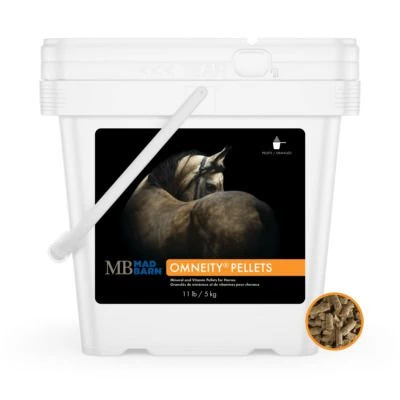
Mad Barn’s Omneity® is an excellent option for easy-keeper ponies because it contains no fillers or added sugars. This supplement provides vitamins, minerals, and essential amino acids to balance the diet without adding unnecessary calories.
Feeding Omneity® supports hoof strength, a shiny coat, and healthy metabolism with optimal levels of biotin, zinc, copper, and essential amino acids. It also contains yeast and digestive enzymes to support gut health and immune function.
New Forest Ponies also need constant access to fresh water and salt. Our nutritionists recommend adding 2 tbsp of loose salt to your pony’s daily ration to encourage hydration and meet sodium requirements. [14]
Forage
Ideally, horses and ponies should consume approximately 2% of their body weight in forage daily. For example, a 500 lb (227 kg) New Forest Pony would consume approximately 11 lb (5 kg) daily forage. [14]
Providing adequate forage promotes optimal digestive function and health in New Forest Ponies. Feeding average-quality grass hay with a low starch and sugar content allows your pony to take in enough forage without consuming excess simple carbohydrates.
For New Forest Ponies that have difficulty maintaining weight on a free-choice hay diet, straw can be added to allow continuous forage consumption at a reduced calorie intake.
A forage analysis is highly recommended to ensure your hay is suitable for your New Forest Pony, especially if your pony has metabolic health concerns.
Feeding Recommendations
While providing free-choice forage can help encourage natural grazing behaviors, ponies may go through their entire daily ration in a few hours with unrestricted access. Using a small hole hay net can help regulate intake.
High volumes of energy-dense feeds can add unnecessary calories and sugar to the diet, leading to weight gain and increasing health risks in New Forest Ponies. [14] Switch to high-fiber alternatives, such as soaked beet pulp or hay pellets.
Fat supplements are safer than high-starch feeds if your New Forest Pony is in heavy work and needs additional energy sources. Fat sources with omega-3 fatty acids provide additional benefits for ponies. [15]
Always consult an equine nutritionist when formulating a diet for New Forest Ponies with specific health concerns.
Nutritional Supplements
When designing a feeding program for your New Forest Pony, start with a balanced, forage-based diet that meets energy, protein, vitamin, and mineral needs. Once the diet is balanced, you can consider adding supplements tailored to your pony’s specific requirements, such as:
- OmegaPrime+ is a concentrated DHA and EPA supplement for New Forest Ponies needing targeted omega-3 support for joint comfort, respiratory function, and normal inflammatory balance.
- W-3 Oil is an omega-3 enriched fat supplement with DHA and natural vitamin E, useful for supporting body condition, skin health, and coat quality without added starch or sugar.
- Jiaogulan is an herbal supplement that supports circulation, respiratory health, joints, and hoof health in ponies that need targeted nutritional support.
- MagneChrome is a metabolic health supplement formulated to support glucose metabolism and insulin sensitivity. It contains chromium yeast, magnesium, turmeric, and CoQ10 for advanced nutritional support in ponies with metabolic concerns.
Submit your New Forest Pony’s diet online for a free evaluation, and consult with our experienced equine nutritionists for help with formulating a balanced diet.
Frequently Asked Questions
Here are some frequently asked questions about the New Forest Pony breed:
A New Forest Pony is a native pony breed from southern England. The breed is known for its hardiness, versatility, and gentle nature. New Forest Ponies were shaped over centuries by life on open forest pasture and by selective breeding influences from other horse and pony breeds. They are valued as reliable riding ponies for children and adults and remain one of Britain’s best-known native breeds.
New Forest Ponies are known for having gentle, intelligent, and trainable temperaments. They are generally amenable ponies that respond well to handling and are suitable for a wide range of riders. Their kind nature is one reason they are so popular as family ponies and youth mounts. As with any breed, individual temperament varies depending on training, management, and experience.
A New Forest Pony can typically carry up to about 20% of its body weight, including the rider and tack. Actual carrying capacity depends on the pony’s build, fitness, age, soundness, and level of conditioning. A well-muscled, fit New Forest Pony may comfortably carry more than a finer or less conditioned individual.
New Forest Ponies are used for riding, competition, and driving. They are especially popular as riding companions for children and petite adults, but they also compete successfully in gymkhana, show jumping, eventing, dressage, and driving. Their sure-footedness, bravery, and trainable nature make them versatile all-around ponies. In their home region, New Forest Ponies are also still used as practical working ponies by local farmers and recreational riders.
New Forest Ponies have a sturdy working build with balanced proportions. They typically have strong quarters, sloping shoulders, flat bone, a deep body, straight legs, and hard, round feet. Their conformation reflects usefulness, athleticism, and soundness rather than extreme refinement. New Forest Ponies should also move freely and straight, with active but not exaggerated action.
The most common colors in New Forest Ponies are bay, chestnut, and grey. Purebred New Forest Ponies may come in several coat colors, although cream and pinto are not accepted in the breed standard. Palomino is permitted as a single dilute chestnut color if the pony has dark eyes. Excessive white markings are also not typical or desirable in the breed.
New Forest Ponies can be up to 14.2 hands high. The breed standard sets a maximum height of 148 cm, which is approximately 14.2 hh, and ponies under 12 hands are uncommon. This moderate size helps make the breed suitable for both children and some petite adults. Their build is compact and practical, with enough substance for work while remaining pony-sized.
New Forest Ponies are often considered good for beginners because they are generally gentle, trainable, and versatile. The breed is especially popular with youth riders and families looking for a dependable riding pony. However, not every New Forest Pony is automatically suitable for a beginner, since training, temperament, and experience vary by individual. A beginner should still be matched with the right pony and guided by a knowledgeable trainer or instructor.
Common health problems in New Forest Ponies include congenital myotonia, equine metabolic syndrome, obesity, hyperinsulinemia, and laminitis. Like many native British pony breeds, New Forest Ponies are efficient keepers and can gain weight easily if overfed or kept on rich pasture. That makes metabolic issues and laminitis especially important concerns for owners. Careful feeding, weight monitoring, and appropriate management help reduce the risk of these problems.
Summary
The New Forest Pony is a hardy and versatile native British breed known for its gentle temperament, metabolic efficiency, and historical roots in southern England. Proper care, strategic nutrition, and breed-specific health management are essential to support their well-being.
- The New Forest Pony originated in the New Forest of England and has been influenced by multiple outside bloodlines, including Arabians and Welsh ponies.
- This breed is known for its balanced conformation, sturdy build, and bay, chestnut, or grey coat colors, while cream and pinto patterns are not permitted.
- New Forest Ponies are generally healthy but can be susceptible to equine metabolic syndrome (EMS), obesity, and pasture-associated laminitis if not properly managed.
- These ponies are commonly used in disciplines such as show jumping, dressage, driving, and recreational riding because of their intelligence and trainability.
References
- Dent. A. et al. The foals of Epona. A history of British ponies from the Bronze Age to yesterday. London: Galley Press. 1962.. Ecology and Evolution. Wiley. 2020.
- Winton. C. L. et al. Genetic Diversity within and between British and Irish Breeds: The Maternal and Paternal History of Native Ponies. Ecology and Evolution. Wiley. 2020. View Summary
- Macnair. D. History of the New Forest Pony. New Forest Pony Breeding & Cattle Society. 2011.
- Pratt. R. M. et al. Use of Habitat by Free-Ranging Cattle and Ponies in the New Forest, Southern England. The Journal of Applied Ecology. JSTOR. 1986.
- NFPSNA Rulebook. New Forest Pony Society of North America. 2024.
- Equine Watchlist. Rare Breeds Survival Trust.
- New Forest Pony. Equimind. 2023.
- Wijnberg. I. D. et al. A Missense Mutation in the Skeletal Muscle Chloride Channel 1 (CLCN1) as Candidate Causal Mutation for Congenital Myotonia in a New Forest Pony. Neuromuscular Disorders. Elsevier BV. 2012. View Summary
- Nicholas. F. and Tammen. I. Online Mendelian Inheritance in Animals (OMIA). University of Sydney. 1995.
- Carslake. H. B. et al. Equine Metabolic Syndrome in UK Native Ponies and Cobs Is Highly Prevalent with Modifiable Risk Factors. Equine Veterinary Journal. Wiley. 2021.
- Norton. E. M. et al. Heritability of Metabolic Traits Associated with Equine Metabolic Syndrome in Welsh Ponies and Morgan Horses. Equine Veterinary Journal. Wiley. 2019. View Summary
- Pollard. D. et al. Incidence and Clinical Signs of Owner‐reported Equine Laminitis in a Cohort of Horses and Ponies in Great Britain. Equine Veterinary Journal. Wiley. 2019.
- The New Forest Pony – A British Isles Beauty. Bit & Bridle. 2025.
- Nutrient Requirements of Horses: Sixth Revised Edition. National Academies Press, Washington, D.C. 2007. View Summary
- Hess. T. and Ross-Jones. T. Omega-3 Fatty Acid Supplementation in Horses. Revista Brasileira de Zootecnia. 2014.