English

An aneurysm is an abnormal widening or bulging of a blood vessel, most commonly an artery, caused by weakness or damage in the vessel wall. As the affected area expands, it may disrupt blood flow, contribute to blood clot formation, or rupture.
In horses, aneurysms most commonly affect arteries, including the aorta and arteries that supply blood to the intestine. Some remain intact and may cause few or no noticeable symptoms. Others can lead to severe colic, cardiovascular problems, internal bleeding, or sudden death.
The underlying cause varies depending on the artery involved. Damage to arteries supplying the intestine may be associated with parasitic infection, while aortic aneurysms can develop when abnormalities or damage weaken the aortic wall.
Continue reading to learn about aneurysms in horses, including their causes, symptoms, diagnosis and treatment, prognosis, and prevention.
What Is an Aneurysm in Horses?
An aneurysm is an abnormal widening or bulging of a blood vessel that develops when part of its wall becomes weakened or damaged.
Although aneurysms can also occur in veins, the types most commonly described in horses affect arteries, including the aorta, which carries blood away from the heart, and the cranial mesenteric artery, which supplies much of the intestine. [1][2][3][4][5]
An aneurysm may remain intact and cause few or no noticeable symptoms. However, changes in the affected artery can interfere with normal blood flow or contribute to blood clot formation.
An aneurysm is not the same as a ruptured artery. An aneurysm refers to abnormal widening of the artery, while rupture occurs when the artery wall tears. [1][3][4][5][6]
Some aneurysms can eventually rupture, potentially causing severe internal bleeding or abnormal blood flow between major blood vessels or the chambers of the heart. However, arterial rupture can also occur without a known aneurysm, so the two terms are not interchangeable. [1][2][3][7][8]
Table 1. Aneurysm in horses at-a-glance
| Category | Key Information |
|---|---|
| Definition |
|
| Primary Cause |
|
| Common Causes |
|
| Onset |
|
| Symptoms |
|
| Severity |
|
| Treatment |
|
| Recovery Time |
|
| Prognosis |
|
| Prevention |
|
Types of Aneurysms in Horses
Aneurysms in horses are usually described according to the artery they affect. Two important locations are the aorta, which carries blood away from the heart, and the cranial mesenteric artery, which supplies much of the intestine. [1][2][3][4][6]
The cause and possible complications differ depending on the artery involved. Aortic aneurysms are associated with disease or weakness of the aortic wall, while cranial mesenteric artery aneurysms are most strongly associated with damage caused by migrating Strongylus vulgaris larvae. [1][3][4][5][7]
Aortic Aneurysms
The aorta is the largest artery in the body and carries oxygen-rich blood from the heart to the rest of the horse. An aneurysm develops when part of the arterial wall becomes weakened and expands outward. In horses, aneurysms and ruptures occur near the aortic root, where the vessel leaves the heart, including just above the aortic valve. [1][2][3][7]
Aortic rupture can also occur farther along the vessel. The location varies among horses and may be influenced by breed. For example, thoracic aortic rupture in Friesian horses has been reported more often near the aortic arch than at the aortic root. [7]
An intact aneurysm may not immediately cause obvious symptoms, but rupture can lead to severe cardiovascular complications. The effects depend on where the vessel tears and where the escaping blood travels, making aortic aneurysms potentially life-threatening even when they were not previously detected. [3][7]
What's your top priority with your horse's health?

What's your top priority with your horse's health?
Mesenteric Artery Aneurysms
The cranial mesenteric artery supplies blood to a large portion of the intestines. Disease of this artery in horses is strongly associated with the migration of Strongylus vulgaris, a large strongyle parasite.
During the parasite’s immature stage, the larvae migrate through the artery and can damage its inner lining and wall. This damage can cause inflammation of the artery, known as arteritis, along with thickening of the vessel wall and formation of blood clots. [1][4][5][6]
In some horses, the weakened and inflamed artery also enlarges and forms an aneurysm. These parasite-associated changes have historically been called verminous aneurysms. [1][4][5]
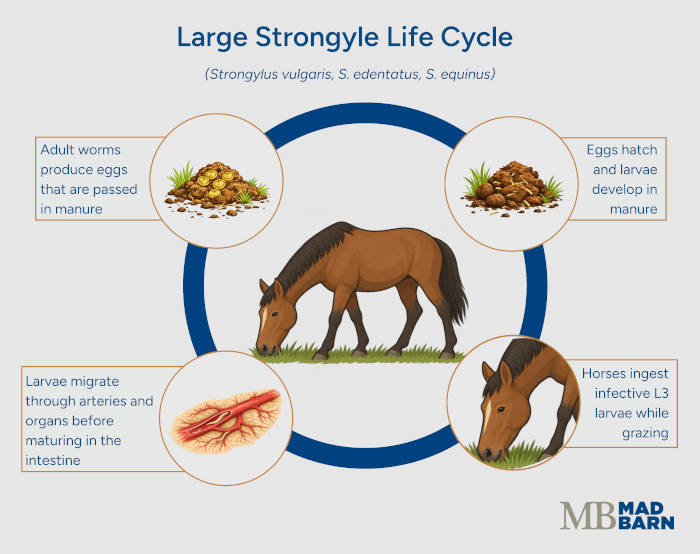 Illustration: Dr. Ana Mesa, PhD
Table 2. Types of aneurysms in horses
| Type | Location | Main Cause or Association | Possible Effects | Major Complications |
|---|---|---|---|---|
| Aortic aneurysm | Aorta, including near the heart | Weakness or abnormalities of the aortic wall | May cause no symptoms while intact; cardiovascular symptoms may develop if blood flow is affected | Rupture, internal bleeding, abnormal connections with the heart or nearby blood vessels, heart failure, sudden death |
| Mesenteric artery aneurysm | Cranial mesenteric artery supplying the intestine | Arterial damage associated with migrating Strongylus vulgaris larvae | Inflammation, abnormal widening of the artery, and blood clot formation | Reduced intestinal blood flow, intestinal tissue damage, severe colic, arterial rupture |
Causes & Risk Factors
Aneurysms develop when part of an artery wall becomes weakened or damaged, allowing the vessel to widen abnormally. The underlying cause varies depending on the artery involved. [1][2]
One of the most commonly recognized causes in horses is infection with the parasite Strongylus vulgaris. During their life cycle, S. vulgaris larvae migrate through the arteries supplying the intestine, particularly the cranial mesenteric artery. [1][4][5]
This migration can cause inflammation and damage to the artery wall, sometimes resulting in abnormal widening of the artery. Controlling S. vulgaris is an important part of reducing the risk of this form of arterial disease. [1][4][5][6]
The causes of aortic aneurysms are less clearly understood. Weakness or abnormalities in the structure of the aortic wall may be present from birth or develop over time. [3][7]
Friesian horses appear to have a higher risk of aortic disease associated with abnormalities of the vessel wall, although much of the available evidence in this breed concerns aortic rupture rather than aneurysms specifically. [7][8][9]
Symptoms of Aneurysms in Horses
Aneurysms may cause no noticeable symptoms while the affected artery remains intact. Symptoms depend on the aneurysm’s location and whether blood flow is disrupted. [1][3][6]
Possible symptoms associated with aortic aneurysms and related aortic disease include: [3][7][8]
- Rapid heart rate
- Abnormal heart rhythm
- Heart murmur
- Abdominal discomfort or colic-like symptoms
- Exercise intolerance
- Sweating
- Swelling of the limbs or lower abdomen
- Visible or unusually strong pulsation of the jugular veins
- Dullness or reduced activity
A sudden rupture can cause severe distress, weakness, collapse, or sudden death. [3][7][8]
Aneurysms and other arterial damage associated with Strongylus vulgaris may also cause no obvious symptoms. When blood flow to the intestine is affected, horses may develop reduced appetite, dullness, and colic, which can range from mild or recurring discomfort to severe abdominal pain. [1][4][5][6]
The most serious complications of an aneurysm are rupture and disruption of normal blood flow. Rupture can cause severe internal bleeding, cardiovascular collapse, and sudden death. [1][2][3][7][8]
Strongylus vulgaris-associated arterial damage can also cause blood clots that block intestinal blood flow, potentially resulting in severe intestinal damage, colic, or death. [1][4][5][6]
When to Call the Veterinarian
Symptoms that require immediate veterinary attention include: [1][3][7]
- Sudden weakness
- Collapse
- Severe colic
- Difficulty breathing
- Pale, gray or blue mucous membranes (gums)
Since aneurysms can be difficult to detect before complications develop, unexplained or recurring symptoms associated with cardiovascular or intestinal disease also warrant veterinary evaluation. [1][3][4][7]
Signs of cardiovascular disease include:
- Coughing
- Difficulty breathing
- Exercise intolerance
- Lethargy
- Swollen abdomen
Signs of intestinal disease include:
Diagnosis
Diagnosing an aneurysm in a living horse is challenging because many aneurysms develop deep within the chest or abdomen and produce few obvious signs before complications occur. Veterinarians choose diagnostic tests based on the suspected location of the aneurysm and the horse’s symptoms. [1][2][3][7]
A veterinarian might suspect disease involving the aorta when a horse develops: [1][3]
- Abnormal heart sounds
- Changes in heart rhythm
- Poor exercise tolerance
- Other signs of cardiovascular disease
These findings do not confirm an aneurysm, so veterinarians typically use imaging to investigate further. [1][3] The horse’s large body size and the location of the aorta make some sections of the vessel difficult to visualize, which limits detection of certain aneurysms before rupture.
Other tests used to assess the heart include: [1][3][7]
Echocardiography is particularly useful when an aneurysm affects the aortic root or another part of the aorta close to the heart. [3][7] An ECG does not show the aneurysm itself. Instead, it records the horse’s electrical heart activity and identifies abnormal rhythms associated with cardiovascular disease.
Veterinarians interpret ECG findings alongside the physical examination and imaging results rather than using them alone to diagnose an aneurysm. [1][3]
Ultrasound images allow veterinarians to identify enlargement or abnormal movement of the vessel and detect complications when an aneurysm ruptures into a nearby heart chamber. Ultrasound also helps veterinarians detect complications of aortic rupture, including abnormal fluid or blood accumulation within the chest. [1][7]
In some cases, veterinarians only identify an aneurysm during surgery or a postmortem examination, particularly when the abnormality produces few warning signs or develops in an area that routine imaging does not clearly show. Veterinarians combine the horse’s clinical signs, cardiovascular examination, and imaging findings when assessing a suspected aneurysm. [1][2][7]
Treatment
Since an aneurysm often goes undetected before life-limiting complications occur, treatment is not always possible.
In cases where an aneurysm is detected soon enough for veterinary intervention, treatment depends on: [1][2]
- The location and cause of the aneurysm
- The severity of the arterial damage
- Whether complications have already developed
Veterinarians focus on treating the underlying disease when possible and managing any problems caused by reduced blood flow, bleeding, or cardiovascular dysfunction. [1][2]
For aneurysms associated with Strongylus vulgaris, treatment focuses on controlling the parasite and addressing any resulting intestinal or circulatory problems. Antiparasitic medication targets the infection, and supportive care depends on the horse’s clinical signs and the extent of intestinal involvement. [1][2]
If reduced blood flow causes severe intestinal damage or colic, veterinarians treat the resulting gastrointestinal disease according to its severity. Horses with damaged or nonviable intestine might require colic surgery to remove the affected section and restore normal intestinal function. [1][2]
Treatment options for aortic aneurysms are much more limited. In many horses, veterinarians cannot repair the weakened section of the aorta directly because of its size, location, and the risk of severe bleeding. Management focuses on the horse’s cardiovascular function and any complications associated with the aneurysm. [1][2][3][7]
Supportive treatment can include management of: [1][3]
- Abnormal heart rhythms
- Heart failure
- Other cardiovascular changes caused by altered blood flow
Veterinarians also consider the risk of rupture when advising owners about activity. Strenuous exercise increases cardiovascular demands, so horses with significant aortic disease often require restricted activity or retirement from athletic work. [3][7]
Once an aortic aneurysm ruptures, treatment options become extremely limited. Severe internal bleeding or major disruption of blood flow can cause rapid cardiovascular collapse, particularly when the rupture involves the thoracic aorta. [3][7]
Prognosis & Recovery
The prognosis for a horse with an aneurysm depends on its location and whether complications develop, such as rupture or disrupted blood flow. Long-term prognosis for an intact aortic aneurysm is uncertain, although some affected horses have survived for extended periods. [1][3]
Aortic rupture carries a grave prognosis and may cause sudden death or progressive cardiovascular problems. With Strongylus vulgaris-associated arterial disease, prognosis depends largely on whether blood flow to the intestine has been affected. [1][3][4][7]

Preventing Aneurysms in Horses
Not all aneurysms in horses are preventable, particularly those involving the aorta. Aortic aneurysms and ruptures can develop from abnormalities or weakening of the arterial wall, and affected horses do not always show warning signs before serious complications occur. [3][7]
For this reason, routine management cannot prevent aortic aneurysms. Horses with known aortic disease require veterinary monitoring and individualized recommendations based on the location and severity of the abnormality. [1][3][7]
Owners have greater opportunity to reduce the risk of Strongylus vulgaris-associated damage to the cranial mesenteric artery. Following a regular parasite-control program under veterinary guidance plays an important role in preventing this form of arterial disease. [1][4]
Parasite control should specifically account for S. vulgaris. Standard fecal egg counts identify strongyle eggs but do not reliably determine whether S. vulgaris is present. Immature larvae can also cause arterial damage before adult worms begin producing eggs. [1][4]
A veterinarian can help develop a parasite-control plan that considers:
- Deworming history
- Exposure risk
- The limitations of routine fecal testing
Maintaining effective control of this parasite remains crucial to reducing the risk of serious vascular and intestinal complications. [4]
Frequently Asked Questions
Here are some frequently asked questions about aneurysms in horses:
An aneurysm in a horse is an abnormal widening or bulging of an artery caused by weakness or damage in the vessel wall. It can affect major blood vessels such as the aorta or the cranial mesenteric artery that supplies much of the intestine. Some aneurysms remain intact without causing noticeable symptoms, while others disrupt blood flow, contribute to blood clot formation, or rupture.
An aneurysm in a horse develops when part of an artery wall becomes weakened or damaged and begins to widen. The underlying cause depends on the artery involved. Damage to the cranial mesenteric artery is strongly associated with migrating Strongylus vulgaris larvae, while aortic aneurysms may be associated with abnormalities or weakening of the aortic wall.
Symptoms of an aneurysm in a horse depend on its location and whether it disrupts blood flow or ruptures. Possible signs include a rapid or abnormal heart rhythm, heart murmur, exercise intolerance, sweating, swelling, dullness, reduced appetite, or colic. Some horses show no noticeable signs while the aneurysm remains intact. Rupture may cause severe distress, sudden weakness, collapse, or sudden death.
A suspected aneurysm requires emergency veterinary attention when a horse develops sudden weakness, collapse, severe colic, or signs of cardiovascular distress. These signs may indicate arterial rupture, internal bleeding, or a serious loss of blood flow to the intestine. Unexplained or recurring cardiovascular or intestinal symptoms also warrant veterinary evaluation because an intact aneurysm can be difficult to detect.
Parasites can cause aneurysms and other forms of arterial disease in horses, particularly when Strongylus vulgaris larvae migrate through arteries supplying the intestine. This migration can inflame and damage the cranial mesenteric artery, sometimes causing it to widen abnormally. The damage may also promote blood clot formation and reduce blood flow to the intestine. However, significant arterial disease can occur without a true aneurysm developing.
A verminous aneurysm in horses is a historical term for arterial damage associated with migrating Strongylus vulgaris larvae. The cranial mesenteric artery is most commonly affected because it supplies much of the intestine. Although these changes have traditionally been called verminous aneurysms, the infection may cause inflammation and blood clots without producing a true aneurysm.
An aneurysm is not the same as a ruptured artery in a horse. An aneurysm is an abnormal widening or bulging of an artery, while a rupture occurs when the artery wall tears. An aneurysm can rupture, but an artery can also rupture without a previously identified aneurysm. Rupture is a life-threatening complication that can cause severe internal bleeding, cardiovascular collapse, or sudden death.
An aneurysm in a horse may be diagnosed using imaging and cardiovascular tests selected according to the suspected location. Ultrasound examinations, echocardiography, and electrocardiography may be used to evaluate the affected blood vessel and related heart abnormalities. Echocardiography is particularly important when an aneurysm near the heart is suspected. Diagnosis can be difficult because some horses have few or no signs before complications occur.
An aneurysm in a horse may be treated according to its location, cause, and complications, but available options can be limited. Treatment for an aortic aneurysm is generally supportive and may focus on managing abnormal heart rhythms or heart failure. Arterial disease caused by Strongylus vulgaris may require antiparasitic medication and treatment of resulting intestinal or circulatory problems. Surgery may be necessary if severe intestinal damage develops.
A horse can survive an aneurysm when the affected artery remains intact and serious complications do not develop. Some horses with intact aortic aneurysms have survived for extended periods, although the long-term outlook remains uncertain. Prognosis depends on the aneurysm's location and whether it causes rupture, blood clot formation, reduced intestinal blood flow, or cardiovascular problems.
Whether a horse with an aneurysm can be ridden depends on the location and severity of the arterial disease and the risk of rupture. Strenuous exercise may be unsafe when an aortic aneurysm or related aortic disease is present. Riding and exercise decisions should be based on an individual veterinary assessment rather than the absence of obvious symptoms.
Friesian horses appear to have a higher risk of aortic disease associated with abnormalities of the vessel wall. Much of the available evidence in this breed concerns aortic rupture rather than aneurysms specifically, so the conditions should not be treated as interchangeable. Cardiovascular signs such as exercise intolerance, an abnormal heart rhythm, a heart murmur, or unusually strong jugular pulsation warrant veterinary evaluation.
Not all aneurysms in horses can be prevented, particularly those associated with structural abnormalities or weakening of the aortic wall. Appropriate parasite control can reduce the risk of cranial mesenteric artery damage caused by Strongylus vulgaris. A parasite-control program should account specifically for this parasite because standard fecal egg counts cannot reliably determine whether a horse is infected.
Summary
Aneurysms in horses develop when a weakened or damaged artery widens abnormally, potentially disrupting blood flow or causing rupture. Their effects, treatment, and prognosis depend on the artery involved and any complications.
- Aneurysms may affect the aorta or cranial mesenteric artery and remain undetected while intact
- Aortic aneurysms can cause cardiovascular dysfunction, internal bleeding, collapse, or sudden death if they rupture
- Migrating Strongylus vulgaris larvae can damage the cranial mesenteric artery, causing inflammation and reduced intestinal blood flow
- Diagnosis combines clinical signs and cardiovascular examination findings with ultrasound or echocardiography
- Treatment addresses the underlying cause and complications because direct repair of an aortic aneurysm is generally not possible
- Parasite control can reduce Strongylus vulgaris-associated arterial damage, although not all aneurysms are preventable
References
- Reed. S. M. et al. Equine Internal Medicine, 4th Edition. Saunders. 2018.
- Auer. J. A. et al. Equine Surgery, 5th Edition. Saunders. 2019.
- Sleeper. M. M. et al. Aortic Root Disease in Four Horses. Journal of the American Veterinary Medical Association. 2001.
- Domshy. K. A. et al. A Retrospective Study of the Prevalence in Equine Postmortems of Cranial Mesenteric Arteritis Caused by Strongylus Vulgaris in Alberta (2010 to 2022). The Canadian Veterinary Journal. 2024.
- Souto. E. P. F. et al. Arteritis, Aneurysm and Thromboembolic Colic Caused by Migration of Strongylus Vulgaris Larvae in Equids. Journal of Equine Veterinary Science. 2025.
- Niwa. H. et al. Aneurysm of the Cranial Mesenteric Artery as a Site of Carriage of Salmonella Enterica Subsp. Enterica Serovar Abortusequi in the Horse. Journal of Veterinary Diagnostic Investigation. 2016.
- Ploeg. M. et al. Thoracic Aortic Rupture in Horses. Equine Veterinary Journal. 2017.
- Ploeg. M. et al. Aortic Rupture and Aorto-pulmonary Fistulation in the Friesian Horse: Characterisation of the Clinical and Gross Post Mortem Findings in 24 Cases. Equine Veterinary Journal. 2013.
- Ploeg. M. et al. Differences in Extracellular Matrix Proteins between Friesian Horses with Aortic Rupture, Unaffected Friesians and Warmblood Horses. Equine Veterinary Journal. 2017.