English



The Anglo-Arabian is a mixed horse breed with Arabian and Thoroughbred ancestry. These horses are also known as Anglo-Arabs.
Unlike other part-bred Arabians recognized by breed societies, these horses do not require a purebred Arabian parent to be registered. To qualify as an Anglo-Arabian, horses must have between 25% and 75% Arabian blood.
The resulting cross is a popular sport horse with speed and stamina that combines the talents of both breeds. However, Anglo-Arabs can also inherit a predisposition to health problems found in Thoroughbreds and purebred Arabians.
This breed profile will discuss the history, characteristics, health problems, and nutritional needs of the Anglo-Arabian breed. Keep reading to learn more about feeding and caring for Anglo-Arabian horses.
Anglo-Arabian Horse History
All Thoroughbred lines today trace back to the breed’s founding Arabian sires. Crossing Thoroughbreds back to Arabians first gained popularity in France. Today, Anglo-Arabians are recognized worldwide for their athletic abilities.
Origin
The English Thoroughbred originated with three Arabian Stallions imported from the Middle East to England in the late 17th and early 18th centuries: the Godolphin Arabian, the Darley Arabian, and the Byerley Turk. [1]
In the mid-18th century, French breeders began importing Arabian stallions to cross with English Thoroughbred mares. The first French studbook published in 1833 registered English Thoroughbreds, Arabians, and their crosses. [2]
Breeders initially sought to establish a French Thoroughbred breed. While imports of English sires were not possible during the French Revolution, Napoleon Bonaparte returned with several prominent Arabian stallions after his Egyptian campaign.
The term Anglo-Arabian first appeared in French publications in 1848 with a description of the breed as an intermediary between English and Arab breeds. This was followed by formal breed standards that were published in 1880.
Historic Use
The French used early Anglo-Arabians as racehorses and cavalry mounts. When horses became obsolete in modern warfare, breeding directions shifted to producing sport horses.
Several Anglo-Arabians competed in the Olympic Games in the first half of the 20th century. These horses helped win historic medals for France in show jumping and eventing.
Their most enduring historical contribution is the influence of Anglo-Arabians on the development of modern warmbloods. These horses refined and enhanced the athletic abilities of old-fashioned bloodlines.
The Anglo-Arabian stallions Matcho, Inschallah, and Ramzes are in many top German and Dutch bloodlines. These horses also helped form the Selle Francais warmblood breed in France. [3]
Breed Registry
The Arabian Horse Association (AHA) accepts Anglo-Arabians for registration in North America. The foals of registered purebred Arabians and registered Thoroughbreds are considered Anglo-Arabians.
However, crosses between two Anglo-Arabian parents are also acceptable if the offspring has 25% to 75% Arabian blood.
| Breed Summary | |
|---|---|
| Breed Name | Anglo-Arabian |
| Also Known As | Anglo-Arab |
| Breed Type | Sport horse |
| Origin | France |
| Breed Registry | Arabian Horse Association (AHA) |
| Average Height | 15.2 – 16.3 hh |
| Common Coat Colors | Chestnut, bay, gray |
| Conformation | Small fine head, slightly dished profile, long elegant neck, compact robust body, deep chest, solid bone, prominent withers, rounded croup, lengthy hindquarters |
| Common Uses | Eventing, hunters, jumping, dressage, endurance, pleasure riding |
| Temperament | Energetic, playful, sensitive, intelligent, hardworking |
| Common Health Concerns | Cerebellar abiotrophy, lavender foal syndrome, SCID, occipitoatlantoaxial malformation, dental crowding, gastric ulcers, joint problems, EIPH, poor hoof quality |
What's your top priority with your horse's health?

Enter your email to receive your store credit
Breed Characteristics
Like other mixed breeds, the characteristics of the Anglo-Arabian can vary between individuals depending on their ancestry. However, the ideal Anglo-Arabian combines the desirable traits of Arabians and Thoroughbreds.
Conformation
Anglo-Arabians are typically taller than the average Arabian. These horses have an average height of 15.2 to 16.3 hands. They are slightly less refined, but Anglo-Arabs should still have small, fine heads with a slightly dished profile.
Their conformation should resemble an intermediary between a Thoroughbred and an Arab. They have compact and robust bodies with sturdier builds than Thoroughbreds, but still share the breed’s long and elegant neck.
Other characteristics of Anglo-Arabs include deep chests, solid bone, prominent withers, rounded croups, and lengthy hindquarters. Their movement is smooth and flowing with good scope and speed.
Colours
Any coat colour is acceptable in the breed. The most common colours in Anglo-Arabians are:
- Chestnut
- Bay
- Gray
Temperament
Anglo-Arabians have ideal temperaments for sports that require endurance, stamina, durability, and intelligence. These horses have excellent work ethics and can advance quickly in their chosen discipline.
Most Anglo-Arabs have playful and energetic personalities. However, the breed’s sensitivity may not be suitable for timid riders or handlers.
Disciplines
Anglo-Arabians can participate in part-Arabian classes at breed shows organized by the AHA. The breed is so popular that some events separate Anglo-Arabian classes from other crosses.
Eventing is the most popular discipline for this breed. Anglo-Arabs frequently competed at the top level of the sport throughout the 20th century. These horses still occasionally appear on Olympic eventing teams.
Anglo-Arabs can have successful careers as hunters, jumpers, and dressage horses. They are also suitable for endurance racing, but many owners simply enjoy their horses as versatile pleasure mounts.
Anglo-Arabian Horse Health
Anglo-Arabians can inherit a predisposition to common health problems found in their parental lineages. But with proper care, these horses can have long, healthy lifespans.
Genetic Diseases
Arabian horses and related breeds are prone to certain inherited genetic diseases. Genetic testing can identify carriers of these conditions to make informed breeding decisions and reduce the future incidence of these diseases.
Cerebellar abiotrophy
Cerebellar abiotrophy is a neurological condition that causes head tremors and ataxia in affected foals. This defect is found almost exclusively in Arabians.
Studies show most carriers in different breeds, including Anglo-Arabs, have at least 50% Arabian blood. [4]
Lavender foal syndrome
Lavender foal syndrome is a fatal condition found primarily in Arabian horses. Severe neurological abnormalities and a dilute lavender coat characterize this condition.
Lavender foal syndrome is also known as coat colour dilution lethal. [5]
Severe Combined Immunodeficiency
Severe combined immunodeficiency (SCID) is a genetic defect of the immune system in Arabian and part-Arabian horses.
Affected foals appear normal at birth but rapidly develop clinical signs of respiratory distress, diarrhea, and fever. They do not survive past six months. [6]
Occipitoatlantoaxial Malformation
Occipitoatlantoaxial malformation is a developmental disease characterized by abnormal cervical vertebrae and subsequent neurological damage. Researchers identified an autosomal recessive variant in Arabians, but several genetic mutations are likely involved. [7]
Myostatin Gene
The Thoroughbred influence has given some Anglo-Arabians increased athletic ability partly due to specific mutations in the myostatin gene. This gene affects skeletal muscle development and muscle size and has been associated with better exercise performance.
However, not all Anglo-Arabs have these variants, so not all horses share this athletic aptitude. [9]
Health Problems
Thoroughbred horses and related breeds have a reputation for poor hoof quality. Yet one study comparing Anglo-Arabians with other unrelated breeds found these horses had healthy hoof morphology and well-conformed hooves. [8]
The Anglo-Arab’s small head and dished face may increase the risk of dental problems due to teeth overcrowding, but these horses typically have fewer issues than purebred Arabians. [10]
Most of the common health problems found in Anglo-Arabians with performance careers are associated with the increased stress of training and competition. Gastric ulcers and joint problems were the most commonly reported issues in one study of eventing horses. [11]
Anglo-Arabians that participate in performance disciplines are also prone to respiratory problems such as Exercise-Induced Pulmonary Hemorrhage (EIPH). This condition frequently goes undiagnosed, but can lead to poor exercise tolerance and reduced stamina.
Care and Management
All Anglo-Arabian horses need quality basic care that meets their physical, behavioural and psychological needs. Proper management can help mitigate some health risks linked to intense training and competition.
Work with your veterinarian, farrier and other equine health practitioners to implement a preventative wellness program that includes:
- Veterinary Exams: Detect and address health issues by scheduling regular veterinary check-ups.
- Vaccines: Help protect your horse from infectious diseases by following your veterinarian’s recommendations on which vaccines to give.
- Dental Care: Schedule yearly dental exams with teeth floating to maintain tooth balance. Senior horses with dental issues may need more frequent exams.
- Parasites: Protect your horse from worms and internal parasites by implementing an appropriate deworming plan.
- Farrier Care: Ensure that your Anglo-Arabian gets frequent farrier visits for hoof care and trimming. Poor hoof balance can cause excess wear and tear on distal limb structures and contribute to musculoskeletal problems.
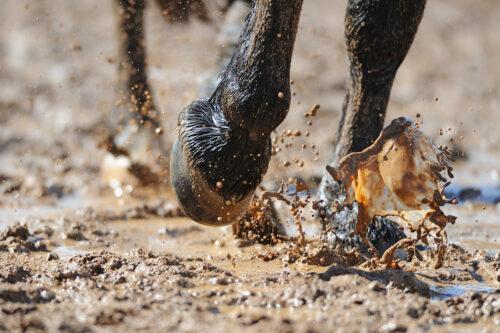
Anglo-Arabs with more Thoroughbred blood may struggle with poor hoof quality. [8] Good nutrition, farrier care and environmental management, such as reducing mud in paddocks, can support healthy hooves in these horses.
If your Anglo-Arabian lives inside, provide daily turnout to ensure they get sufficient exercise, mental stimulation, and the opportunity to socialize with other horses. Turnout helps decrease stress, supports musculoskeletal health and reduces the risk of gastric ulcers, colic and stereotypic behaviors.
These horses do best in regular exercise programs that provide positive training and a productive outlets for their energy. Spend time grooming your Anglo-Arab before training sessions to strengthen your bond and support skin and coat health.

Anglo-Arabian Horse Nutrition
The best diet for your Anglo-Arabian horse can vary depending on their individual metabolism, activity level, and physiological status.
Weight Maintenance
Most Anglo-Arabians are average keepers, but there can be significant variation within the breed, largely due to the differing characteristics they may inherit from their Arabian and Thoroughbred parentage.
Arabians typically need less feed than Thoroughbreds because of their efficient metabolism, a trait they have adapted over centuries of living in harsh desert environments where food was scarce. On the other hand, Thoroughbreds, bred primarily for racing, typically have a faster metabolism and require a higher caloric intake.
Monitor your horse’s weight using body condition scoring to ensure your horse’s diet provides the right amount of calories for his needs. A body condition score of 5 on the 9-point Henneke scale is considered ideal.
Horses with equine metabolic syndrome (EMS) may gain weight more easily and have an increased risk of laminitis. EMS is more common in Arabians than in Thoroughbreds so the proportion of these genetic influences can impact your Anglo-Arabian’s predisposition to EMS. [12]
Sample Diet
The following sample diet is intended for a mature 450 kg (1000 lb) Anglo-Arabian horse with normal body condition at maintenance (not exercising).
The diet analysis is based on an average forage sample from North America and the NRC (2007) requirements. For a better estimation for your horse, submit your forage for analysis and consult with an equine nutritionist.
| Feed | Amount per day |
|---|---|
| Mid-Quality Hay (8% crude protein) | Free-choice |
| Salt | 30 g (2 tbsps) |
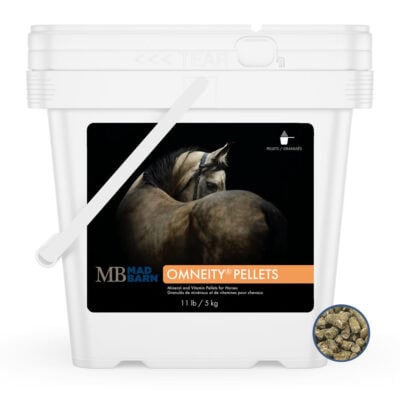
| Omneity® Pellets | 200 g (2 scoops) |
| Diet Analysis | |
| Digestible Energy (% of Req) | 105% |
| Protein (% of Req) | 127% |
| HC (ESC + starch; % of Diet) | 8.8% |
Forage should form the foundation of an Anglo-Arabian’s diet. High-quality hay or pasture provides essential fiber, which is crucial for digestive health.
However, forage commonly lacks essential nutrients that horses need to support hoof, joint, cardiovascular, neurological, and overall health. Feeding a vitamin and mineral can help fill these nutritional gaps and ensure your Anglo-Arab gets everything he needs.
Mad Barn’s Omneity® is a comprehensive vitamin and mineral supplement designed to balance forage-based diets, providing essential vitamins, minerals and amino acids.
Forage
When selecting forage for Arabian horses, it’s important to consider their body condition and activity level. Average-quality hay can meet the energy requirements of most Anglo-Arabs in light work, but performance horses may need higher quality forage.
Leisure horses or those in light work typically eat 2% of their bodyweight in forage dry matter per day. This means a 450 kg (1,000 lb) Anglo-Arabian is expected to eat approximately 9 kg (20 lb) of hay on a dry matter basis every day. To maximize hay intake while preventing weight gain, choose a mid-maturity grass hay with low starch and sugar content. Starch and sugar (ESC) make up the hydrolyzable carbohydrate (HC) portion of NSC. It is digestible in the small intestine and stimulates insulin release.
Choose energy-dense forage, such as early growth grass hay or fresh pasture, for Anglo-Arabians with heavy workloads. These horses have bigger appetites and need more forage to fulfill their increased energy and protein needs.
Soft, palatable hay is ideal. Alfalfa is also an excellent high-protein forage to add to the diet of Anglo-Arabs with performance careers. Keep in mind that feeding too much alfalfa can throw off mineral ratios in the diet if the high calcium content is not correctly balanced. [13]
Providing horses with free-choice forage is the best way to mimic natural grazing behaviours. However, if your Anglo-Arabian gains too much weight with unrestricted access to forage, consider using a slow feeder. Anglo-Arabs prone to obesity and metabolic problems may also need a grazing muzzle or dry lot turnout to limit the intake of grass.
Feeding Recommendations
To meet the energy needs of hard-keeping Thoroughbreds and related breeds, some owners use commercial concentrates. However, feeding large amounts of high-starch grains can heighten the risk of digestive upset, ‘hot’ behaviour and laminitis in Anglo-Arabs. [14]
To add calories, consider adding fiber sources to the diet, such as soaked alfalfa pellets or beet pulp. The high calcium content can be balanced with plain oats or wheat bran in amounts determined by the mineral profile of the whole diet.
You can also feed fat supplements as a source of cool energy. [15] Choose fat sources high in omega-3 fatty acids to provide additional benefits.
If you are feeding grain-based concentrates, split the daily ration into multiple small meals throughout the day to reduce the risk of digestive issues. [14]
Free access to fresh water and salt should be available at all times. Salt licks are convenient but most horses won’t get enough salt from them to meet their sodium requirement. Instead, our nutritionists recommend feeding at least 2 tablespoons of plain loose salt per day to meet baseline requirements.
Exercising Anglo-Arabs have higher sodium requirements and might also benefit from an electrolyte supplement, added to their daily salt provisions, especially in hot weather or before and after exercise.
Nutritional Supplements
The primary goal in creating a new feeding program for your Anglo-Arabian is to ensure a balanced, forage-based diet that avoids nutritional deficiencies. Once the diet is balanced, you can consider introducing supplements to address individual needs or performance goals.
- W-3 Oil is an energy and fat supplement with high levels of the omega-3 fatty acid DHA. This important nutrient supports joint health, respiratory health, cardiovascular function, and skin and coat quality.
- Visceral+ is a comprehensive supplement designed to support both stomach and hindgut health. It can be particularly beneficial for performance Anglo-Arabians, helping to keep them competition-ready and mitigate the impact of intense training on their digestive system.
- MSM is an organic sulfur compound which supports comfortable movement.
- Vitamin E is an important antioxidant that plays a key role in neurological health and muscle function. Anglo-Arabian horses engaged in exercise benefit from higher levels of this vitamin in the diet.
Do you have questions about what to feed your Anglo-Arabian horse? Submit their diet online for a free evaluation by our expert equine nutritionists.
Frequently Asked Questions
Here are some frequently asked questions about Anglo-Arabian horses:
The Anglo-Arabian is a sport horse breed developed from Arabian and Thoroughbred ancestry. To qualify for registration, these horses typically must have between 25% and 75% Arabian blood. The breed was refined in France, where breeders crossed Arabians with English Thoroughbreds to combine stamina, speed, and athleticism. Today, Anglo-Arabians are recognized for blending the refinement and endurance of the Arabian with the size and performance ability of the Thoroughbred.
Anglo-Arabians are generally not the easiest horses for the average rider to handle. They tend to be intelligent, sensitive, and energetic, with quick reactions that suit confident, consistent riders best. Their strong work ethic and athletic ability can make them very rewarding partners, but timid or inexperienced riders may find them too sharp. With regular exercise, patient training, and knowledgeable handling, they often become responsive and dependable sport horses.
Anglo-Arabians are most often used for disciplines that reward stamina, agility, and athleticism. Eventing has historically been the breed’s signature sport, and Anglo-Arabs have competed successfully at high levels, including international competition. They are also seen in show jumping, dressage, hunters, and endurance riding, where their combination of speed and toughness is especially valuable. Many owners also enjoy them as versatile pleasure horses for riders who want an active, forward partner.
Anglo-Arabians can be predisposed to health issues associated with both Arabian and Thoroughbred bloodlines. Inherited concerns linked to Arabian ancestry include cerebellar abiotrophy, lavender foal syndrome, severe combined immunodeficiency (SCID), and occipitoatlantoaxial malformation. Intense training schedules can also lead to performance-related problems such as gastric ulcers and joint strain, respiratory issues like exercise-induced pulmonary hemorrhage (EIPH), and hoof challenges. Good management, routine veterinary care, and genetic testing for breeding stock can help reduce the risk of some of these issues.
Anglo-Arabians do not usually need unusual care, but like all horses, they benefit from thoughtful management and care. Regular veterinary exams, farrier visits, dental care, turnout, and consistent exercise are all important for keeping these horses sound and mentally settled. Horses with more Thoroughbred influence may need closer attention to hoof quality and weight maintenance, while those with stronger Arabian traits may be easier keepers and may require more careful calorie control. A balanced forage-based diet, free access to water and salt, and stress-reducing management also help support long-term health.
Anglo-Arabians are typically intelligent, energetic, and hardworking horses with plenty of sensitivity. They are known for having the stamina, durability, and athletic mindset needed for demanding sport disciplines. Many are playful and eager to work, and they often advance quickly with consistent training. Because they can be reactive and forward-going, they usually do best with confident riders who provide structure, regular exercise, and clear communication.
Anglo-Arabians are medium-to-tall horses with an athletic build that falls between the Arabian and the Thoroughbred in type. They typically have a small, refined head with a slightly dished profile, a long elegant neck, and a compact but robust body. Other common features include a deep chest, solid bone, prominent withers, a rounded croup, and long hindquarters that support power and stamina. Their movement is generally smooth, flowing, and ground-covering, with the scope and speed expected in a versatile sport horse.
Anglo-Arabians can be found in any coat color, as the breed standard does not limit accepted colors. However, the most common colors are chestnut, bay, and gray. These shades reflect the influence of both Arabian and Thoroughbred ancestry within the breed. While color varies widely, performance ability and overall type are far more important than coat color in Anglo-Arabian breeding and evaluation.
Most Anglo-Arabian horses stand between 15.2 and 16.3 hands high. This makes them taller than the average Arabian while still maintaining a refined, athletic appearance. Their height and build suit a wide range of sport disciplines, especially those that require stamina, stride length, and jumping ability. Individual size can vary depending on how much Arabian or Thoroughbred influence a particular horse inherits.
Summary
Anglo-Arabian horses are versatile sport horses that combine Arabian and Thoroughbred ancestry, valued for speed, stamina, and athletic ability. These horses are recognized worldwide for their influence on modern warmbloods and their success in eventing, jumping, and dressage.
- Anglo-Arabians must have between 25% and 75% Arabian blood to be accepted by the Arabian Horse Association for registration
- Anglo-Arabs are athletic horses with compact builds, refined heads, and strong temperaments suited for demanding sports, though their sensitivity may challenge inexperienced handlers
- Health considerations include genetic risks from Arabian ancestry and performance-related issues such as gastric ulcers and joint stress
- A forage-based diet supported with balanced vitamins and minerals is recommended, with adjustments for energy and protein needs depending on workload and metabolism
References
- Cunningham, E. et al. Microsatellite diversity, pedigree relatedness and the contributions of founder lineages to thoroughbred horses. Anim Genet. 2001.View Summary
- Huggins, M. Cultural Transfer, Circulation, and Diffusion between Britain and Europe from the 1770s to the 1870s: The Case of Thoroughbred Horse-Racing and Breeding, Int J Hist Sport. 2019.
- Dubois, C. et al. Efficiency of past selection of the French Sport Horse: Selle Français breed and suggestions for the future. Livest Sci. 2007.
- Brault, L. et al. The frequency of the equine cerebellar abiotrophy mutation in non-Arabian horse breeds. Equine Vet J. 2011.View Summary
- Bierman, A. et al. Lavender foal syndrome in Arabian horses is caused by a single-base deletion in the MYO5A gene. Anim Genet. 2010.
- AbouEl Ela, N. et al. Molecular Detection of Severe Combined Immunodeficiency Disorder in Arabian Horses in Egypt. J Equine Vet Sci. 2018. View Summary
- Borbari, M. et al. Deletion of 2.7 kb near HOXD3 in an Arabian horse with occipitoatlantoaxial malformation. Anim Genet. 2017.View Summary
- Tocci, R. et al. Hoof quality of Anglo-Arabian and Haflinger horses. J Vet Res. 2017.
- Pira, E. et al. Polymorphisms at Myostatin Gene (MSTN) and the Associations with Sport Performances in Anglo-Arabian Racehorses. Animals 2021.View Summary
- Dixon, P. et al. A review of equine dental disorders. Vet J. 2005. View Summary
- Leahy, E. et al. Nutrition-associated problems facing elite level three-day eventing horses. Equine Vet J. 2010.
- Lewis, S. et al. Genomewide association study reveals a risk locus for equine metabolic syndrome in the Arabian horse. J Anim Sci. 2017. View Summary
- Woodward, A. et al. Protein quality and utilization of timothy, oat-supplemented timothy, and alfalfa at differing harvest maturities in exercised Arabian horses. J Anim Sci. 2011.
- Clarke, L. et al. Feeding and Digestive Problems in Horses: Physiologic Responses to a Concentrated Meal. Vet Clin North Am Equine Pract. 1990. View Summary
- Zeyner, A. et al. Effect of feeding exercised horses on high-starch or high-fat diets for 390 days. Equine Vet J. 2010.View Summary