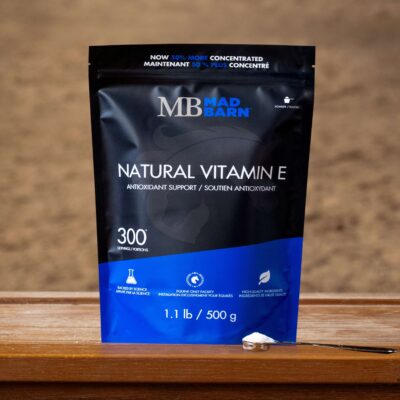
Our Natural Vitamin E supplement provides a highly bioavailable source of pure d-alpha-tocopheryl acetate with no added fillers. Vitamin E is essential for immune function, muscle health, neurological support and antioxidant defenses. Horses on a hay-based diet require supplemental Vitamin E in their diet.
Helps maintain muscle function and post-exercise care
Supports normal resistance to illness and stress
Contributes to a healthy nervous system
Affordable and easy to add to any feeding program
Research shows any horse not grazing on grass needs additional Vitamin E. Mad Barns Natural Vitamin E is excellent. All of their products are great
Suzanne Brennan
Verified Customer
My gelding is on Madbarn’s Vitamin E and I couldn’t be happier with it! Not only is it palatable and he eats it happily, but it also keeps his vitamin E levels normal...
Megan
Verified Customer
My 4 year old gelding was diagnosed with Vitamin E deficiency, he was laying down constantly and had tremors in his legs. 2 weeks on Mad Barn Vitamin E and his tremors stopped.
mpatricialunn
Verified Customer
I decided to supplement with MB’s bioavailable vitamin E.... I didn’t really realize how much Vit E helped muscle function until I supplemented with it this year.
Alison Mitchell
Verified Customer
I've seen a big difference in my horses coats after feeding this to them for about two months now (noticed probably after a few weeks!). They both eat it mixed in their balancer which is fantastic.
Anna Marlin
Verified Customer
We have been feeding this product to all the horses on our place young and old. Have seen an improvement in all. Their overall appearance, the way they eat all improved.
Andrea Esqueda
Verified Customer
We've been on the Mad Barn Vit E for roughly two months now and my geldings has a bit more spring to his step and is building up a nice top line.
Natalie Reinhardt
Verified Customer
Absolutely love this product and all the products I use from madbarn. Shipping is always fast as well. So glad I found this company.
Tammy Herman
Verified Customer
The product was delivered quickly and was exactly as described. My horse's eat it with their feed with no problems. I am pleased to have found a great supplier
Raelyn Knudson
Verified Customer
Great price for natural vitamin E recommended by our vet for both our horses. Small scoop requirement makes it easy to dose and is palatable
Yvonne Cates
Verified Customer
I love this product. No filler and it goes further for my money when compared against another popular brand. Mad Barn gets my money!
Nancy Payne
Verified Customer
My horse has Vitamin E deficiency and he does great on this product. It's also much more affordable than the alternative products available.
Karen Bardecki
Verified Customer
As always, prompt reliable delivery service for a competitively priced natural source Vit E for my senior horse.
Linda McKennedy
Verified Customer
Before Mad Barn vitamin E was available I was using Elevate E which is a great product but very expensive. Mad Barn vitamin E is equal to or better and is less expensive, especially when having to feed high doses.
hjliving
Verified Customer
We stand behind our products to provide the best nutrition for your horse. No fillers, just research-backed ingredients. If your horse doesn't love this product, our Customer Happiness team is here to help or give you a refund guaranteed.
Natural Vitamin E
Natural Vitamin E (d-alpha-tocopherol) is a fat-soluble antioxidant that protects cells and tissues from oxidative damage. It supports immune health, muscle recovery, cardiovascular function, and neural integrity in horses. Compared to synthetic dl-alpha-tocopherol, the natural form is significantly more bioavailable and efficiently incorporated into cell membranes, making it the preferred source for supplementation.
Vitamin E is a key component of the body’s antioxidant defense system, neutralizing free radicals produced during metabolism and exercise. It helps maintain the integrity of muscle and nerve tissues, supports red blood cell stability, and reduces oxidative stress associated with intense training or illness. Chronic deficiency can lead to neuromuscular disorders such as equine motor neuron disease or vitamin E–deficient myopathy.
Fresh green pasture is the richest natural source of vitamin E, but levels decline rapidly during hay storage and are negligible in most grains. Horses without regular access to pasture, those in heavy work, or individuals with metabolic conditions benefit from daily supplementation of natural vitamin E to maintain optimal antioxidant status and support recovery.
Supplementing bioavailable natural forms of vitamin E has been shown to enhance immune response, improve muscle enzyme stability, and reduce inflammation following exercise, contributing to overall vitality and performance in horses.
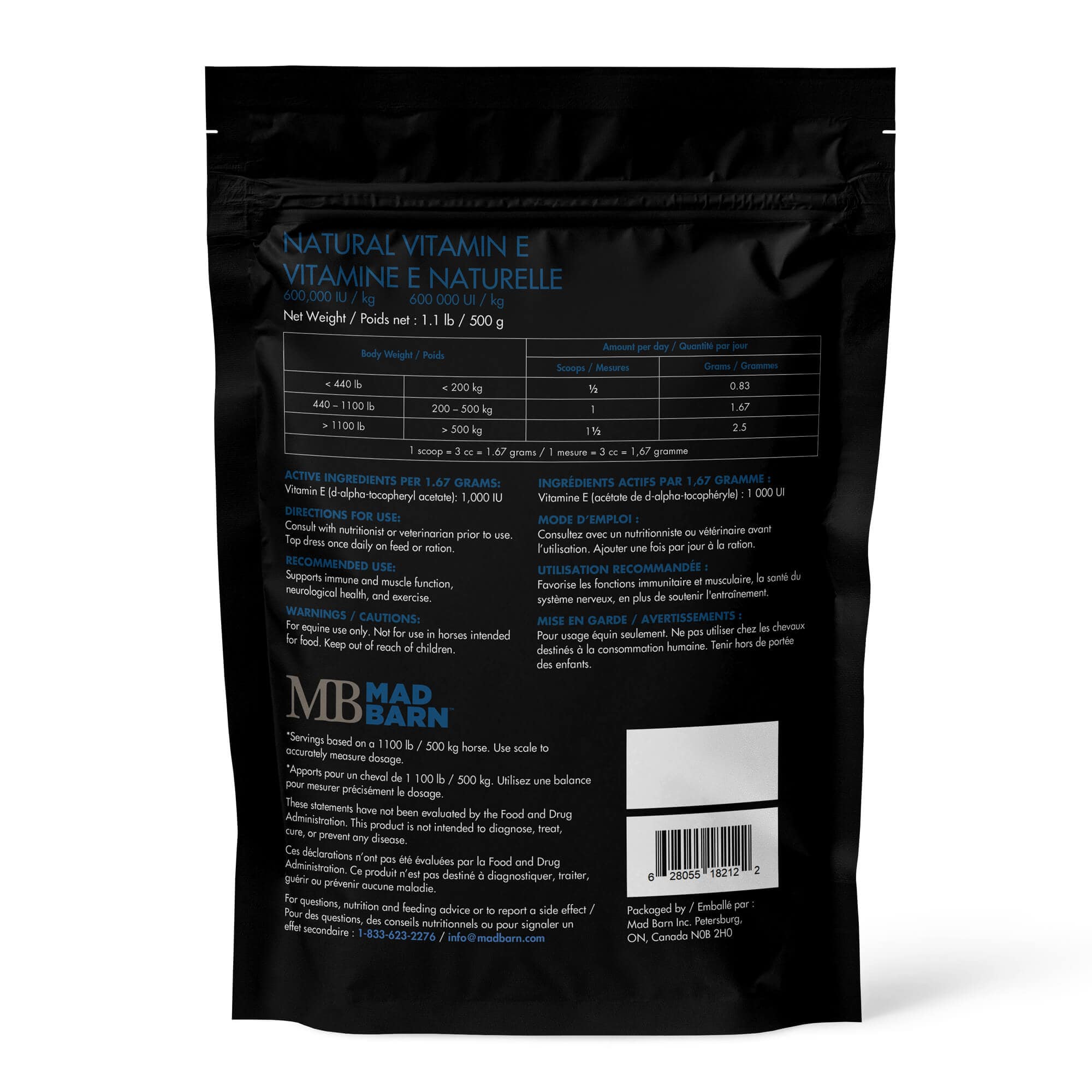
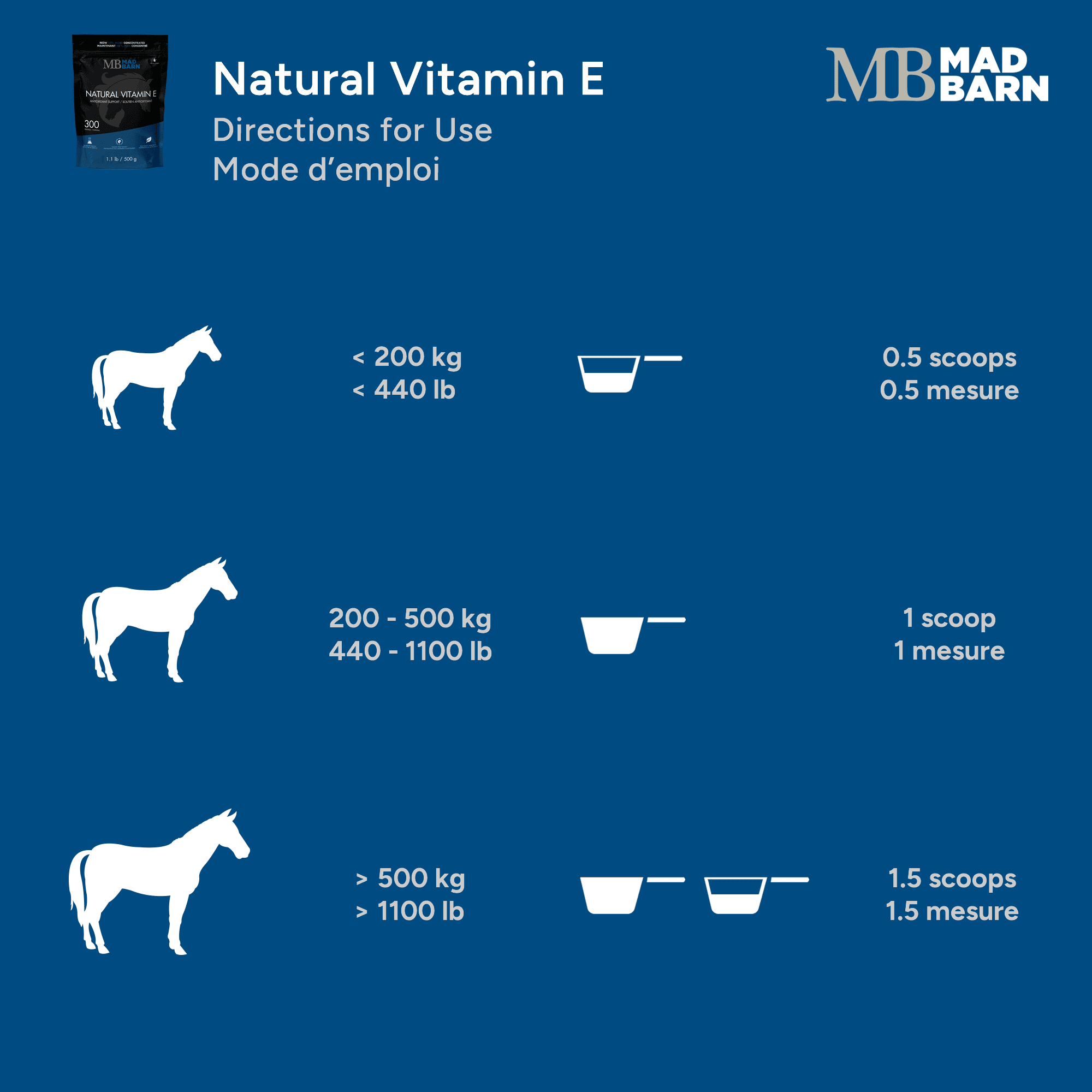
Consult with a nutritionist or veterinarian prior to use.
Top dress once daily on feed or ration.
Body Weight
Scoops
Dose
IU
< 200 kg
½ scoop
0.83 g
500 IU
200 – 500 kg
1 scoop
1.67 g
1000 IU
> 500 kg
1 ½ scoops
2.5 g
1500 IU
1 scoop = 3 cc = 1.67 grams = 1000 IU
Body Weight
Scoops
Dose
IU
< 440 lb
½ scoop
0.83 g
500 IU
440 – 1100 lb
1 scoop
1.67 g
1000 IU
> 1100 lb
1 ½ scoops
2.5 g
1500 IU
1 scoop = 3 cc = 1.67 grams = 1000 IU
Warning / Caution:
A scale should be used with all individual ingredients to ensure accurate dosing.
For equine use only. Not for use in horses intended for food. Keep out of reach of children.
GUARANTEED ANALYSIS: Per gram serving
Nutrient
Concentration
Per 1.67 g
Natural Vitamin E
600,000 IU/kg
1000
IU
Ingredients: Natural Vitamin E (d-alpha-tocopheryl acetate)
Recommended Use: Supports immune and muscle function, neurological health, and exercise.
Registered & manufactured by: Mad Barn Inc., Petersburg, ON, Canada.
Disclaimer: These statements have not been evaluated by Health Canada or the FDA. This product is not intended to diagnose, treat, cure or prevent any disease.
500 g (1.1 lb): SKU 628055182122
Cost Calculator
Metric (kg)
Imperial (lb)
kg
grams
* Recommended serving size of 0.2 grams per 100 kg (220 lb) of body weight
Servings
Cost Per Day
Disclaimer: Recommended feeding rate varies depending on your horse's condition and current diet. Consult with a nutritionist to determine the appropriate inclusion rate for your horse.
Frequently Asked Questions
Vitamin E is a powerful antioxidant that protects cells from oxidative damage. It supports muscle health, immune function, nerve tissue, recovery, and overall well-being. Adequate Vitamin E intake helps maintain muscle integrity, strengthens the immune system, and supports horses in heavy training, on hay-only diets, or with metabolic or neurological concerns.
Horses most at risk of Vitamin E deficiency include those on hay-only diets with little or no fresh pasture, horses in heavy training, broodmares, growing horses, seniors, and horses with neurological disease or chronic immune challenges. Horses with restricted pasture access or metabolic conditions may also benefit from additional supplementation. A blood test is the best way to determine if your horse requires more Vitamin E.
Signs of low Vitamin E status may include poor muscle development, muscle soreness, impaired coordination, dull coat, reduced immunity, and slower recovery after exercise. Severe deficiencies may result in neurological problems. Because these signs can overlap with other conditions, blood testing is the most reliable way to confirm deficiency.
Fresh green pasture is the richest natural source of Vitamin E. However, levels decline rapidly once forage is cut and dried. Horses on hay or with limited pasture may not receive enough Vitamin E from forage alone. Supplementing with a natural, bioavailable source such as Mad Barn’s Natural Vitamin E (d-alpha-tocopherol) ensures horses meet their daily requirements.
Mad Barn’s Vitamin E is the natural form, known as d-alpha-tocopherol. This form is identical to the Vitamin E found in plants and is used more efficiently by the horse’s body. Natural Vitamin E is considered roughly 2–3 times more bioavailable than the synthetic form (dl-alpha-tocopherol), meaning your horse absorbs and utilizes more of each unit fed.
Synthetic Vitamin E is made from petroleum derivatives and contains a mixture of isomers, many of which are not well utilized by the body. In contrast, natural Vitamin E provides a single, active isomer that is preferentially absorbed and incorporated into tissues. This makes natural Vitamin E the preferred choice for ensuring optimal antioxidant protection, muscle health, and immune support in horses.
Our Natural Vitamin E is derived from vegetable oils. During purification, only pure d-alpha-tocopherol remains, so no residual proteins are present in the final product.
Vitamin E is fat-soluble, but additional oil is not required for absorption. Horses naturally consume small amounts of fat in forage and concentrates, which is sufficient for uptake. For horses with absorption issues or chronically low blood Vitamin E, feeding with an oil such as Mad Barn’s W-3 Oil may help improve uptake, but it is not necessary in most cases.
The typical feeding rate is 1,000–5,000 IU per day, depending on the horse’s diet, workload, and health status. Horses with neurological disease or confirmed deficiency may require higher levels under veterinary supervision. One scoop of Mad Barn’s Natural Vitamin E provides 1000 IU. For accuracy, use a scale to measure the exact dose your horse requires.
The NRC (2007) lists the tolerable upper intake level for Vitamin E at 10,000 IU/day for a 500 kg (1100 lb) horse, though some studies have safely used higher amounts. While Vitamin E is generally safe above minimum requirements, supplementation beyond the upper limit should be done with veterinary guidance to ensure overall balance in the diet.
Yes. Natural Vitamin E is considered safe to use with most common equine medications, including Prascend, NSAIDs, and ulcer treatments. Consult your veterinarian if your horse is on prescription medications.
Yes. Vitamin E can be safely fed alongside Mad Barn’s Omneity, AminoTrace+, or other supplements. Omneity and AminoTrace+ already supply Vitamin E at levels sufficient for most horses, but additional supplementation may be needed for horses with higher demands, such as those in heavy training or with confirmed deficiency. A diet evaluation is the best way to know if extra Vitamin E is required.
Yes. Vitamin E can be top-dressed on feed and mixed with other supplements. It can be fed wet or dry. If adding to soaked hay cubes or beet pulp, mix it in just before feeding to preserve potency.
Mad Barn’s Natural Vitamin E has a concentration of 600,000 IU per kg. One scoop provides appproximately 1,000 IU of vitamin E. For accuracy, always use a scale when measuring.
The time frame to see results depends on the horse’s baseline Vitamin E levels and health condition. In many cases, improvements in muscle soreness, topline, energy levels, and immune function may be observed within 4–8 weeks of consistent supplementation. Horses with documented deficiencies or neurological conditions may require several months of supplementation before changes are noticeable. Regular blood testing can help to monitor Vitamin E levels and assess the effectiveness of supplementation.
Mad Barn’s Natural Vitamin E supplement provides d-alpha-tocopherol in a concentrated powdered form, making it ideal for situations where additional Vitamin E alone is required. Natural E/Organic Se combines natural Vitamin E with organic selenium in a pelleted format. Selenium is another key antioxidant that works synergistically with Vitamin E to support immune health, muscle integrity, and metabolic balance. Choosing between the two depends on whether your horse’s diet already supplies adequate selenium; if not, Natural E & Organic Selenium may be the more complete option. For help deciding which product is best for your horse, submit their diet for a free diet evaluation.
Mad Barn’s Natural Vitamin E is a highly concentrated, pure source of d-alpha-tocopherol, a bioavailable form of Vitamin E for horses. Our formula contains no fillers or additives and is standardized at 600,000 IU/kg, providing more Vitamin E per gram than many other products. Other supplements often use synthetic forms or lower concentrations, making Mad Barn’s Natural Vitamin E a more effective and cost-efficient choice.
Natural Vitamin E has a guaranteed shelf life of two years from the date of manufacture. Store sealed in a cool, dry, temperature-controlled environment. For long-term storage, keep it in the original packaging or an opaque container. Exposure to light and air can degrade Vitamin E, so clear containers are not recommended for more than 2–4 weeks.
Yes. Vitamin E supplementation is safe for horses with insulin resistance (IR), PPID, EMS, or laminitis. It contains no sugar or starch and does not affect blood glucose or insulin response.
Yes. Mad Barn’s Natural Vitamin E is competition-legal and contains no prohibited substances. Always confirm with your sport’s governing organization, as regulations may change.
Most horses readily consume Vitamin E when top-dressed on feed. For picky eaters, introduce it gradually or mix with soaked pellets, beet pulp, or mash. Mad Barn also offers a 100% Customer Happiness Guarantee to ensure your horse is satisfied with our products.
Ask A Question
Have a question about this product? Ask below and our nutritionists will be happy to assist.
“Horses in regular exercise have a higher requirement for vitamin E, an essential antioxidant for neuromuscular health. Mad Barn’s Natural Vitamin E is a great way to supplement this vitamin in the diet.”
Mad Barn's Natural Vitamin E delivers a highly concentrated source of natural d-alpha-tocopherol, the form of vitamin E horses use most efficiently. Every scoop helps support healthy muscles, neurological function, immune defenses, and recovery after exercise.
Feed it to help maintain vitamin E levels in any horse whose diet may fall short, especially horses on hay-based diets, horses with limited pasture intake, metabolic horses, and performance horses with higher nutritional demands.
✓Supports healthy muscle function and post-exercise recovery
✓Helps maintain antioxidant defenses and nerve health
✓Contributes to healthy immune function and stress response
✓No fillers, just high-potency natural vitamin E at a great price
Why Horses Need Vitamin E
Low vitamin E is common. Don't wait for signs.
Vitamin E is an essential fat-soluble antioxidant that horses must obtain from the diet. In the body, vitamin E is incorporated into cell membranes, where it helps protect fatty acids and other cellular structures from oxidative damage.
During exercise or stress, horses produce more free radicals and require adequate vitamin E to maintain normal antioxidant defenses. This is especially important in tissues with high metabolic activity, including skeletal muscle, nerves, immune cells, and reproductive tissues.
Mad Barn's Natural Vitamin E provides a cost-effective way to add a precise dose of highly bioavailable d-alpha-tocopherol to your horse's diet, without unnecessary fillers or extra bulk.
600 IU/g
High Potency
A concentrated powder that supplies a meaningful dose in a small, easy-to-feed serving.
1,000 IU
Per Scoop
One 3 cc scoop provides 1,000 IU from approximately 1.67 grams of powder.
Natural
More Bioavailable
Supplies natural d-alpha-tocopherol, not synthetic dl-alpha-tocopherol.
$0.24
Cost Per 1,000 IU
Affordable vitamin E supplement with no fillers, sugar, starch, or unnecessary ingredients.
Which Horses are Most Likely to Benefit from Vitamin E?
Any horse can fall short on vitamin E when fresh pasture is limited. This includes horses eating mostly hay or fortified grain, horses kept on dry lots, horses with restricted turnout, and horses on controlled grazing programs.
Needs can also increase when the body is under more oxidative stress, such as during training, illness, recovery, aging, breeding, growth, or when higher-fat rations are fed. Natural Vitamin E provides a simple way to support vitamin E status when intake, demand, or both are working against the horse.
Limited pasture intake
Horses on hay, dry lots, winter turnout, drought-stressed pasture, restricted grazing, or grain-based diets without fresh grass may not get enough vitamin E from feed alone.
Performance horses
Exercise increases oxygen use and free radical production. Vitamin E supports normal antioxidant defenses, muscle cell membrane integrity, stamina, and post-exercise recovery.
Metabolic horses
Metabolic horses are often managed with restricted pasture access and calorie-controlled diets. Vitamin E helps support antioxidant status without adding sugar, starch, or calories.
Senior horses
Senior horses may benefit from targeted vitamin E support for muscle maintenance, immune function, nerve health, skin and coat quality, and overall antioxidant status.
Neuromuscular support
Low alpha-tocopherol status is associated with several neuromuscular disorders. Horses with diagnosed deficiency or neuromuscular concerns should be supplemented under veterinary guidance.
High-fat diets
Oil and fat supplements add useful calories, but polyunsaturated fats increase antioxidant needs. Vitamin E helps protect lipid-rich cell membranes from oxidative damage.
Stress & recovery
Travel, stress, competition, training, and recovery periods can increase oxidative stress. Vitamin E helps maintain antioxidant defenses when the body is under greater demand.
Breeding & growth
Broodmares, foals, and growing horses have important developmental and reproductive needs. Work with your veterinarian or nutritionist to ensure vitamin E and selenium status are adequate.
Immune support
Vitamin E helps protect immune cell membranes from oxidative damage, supporting the cells involved in normal defense, inflammatory response, and tissue repair.
Vitamin E Requirements
How Much Vitamin E Does Your Horse Need?
The National Research Council (NRC) establishes minimum vitamin E requirements for horses based on body weight and workload. These values estimate the amount of vitamin E needed to prevent deficiency. Exercise increases requirements by raising oxygen use, muscle activity, and oxidative demand.
The following requirements are based on mature adult horses. For help formulating a diet for a growing horse, a breeding or lactating mare, or a horse with documented low vitamin E status, submit your horse's information for a free nutrition consultation.
Horses with documented deficiency, neuromuscular concerns, neurological signs, chronic illness, or poor exercise tolerance may require higher levels of vitamin E. Feeding rates should be determined in consultation with your veterinarian and monitored with bloodwork when low vitamin E status is suspected.
Daily Requirement
Vitamin E in International Units (IU) per day
Maintenance
1,0007505002500
500
Maintenance
800
Light Work
900
Moderate Work
1,000
Heavy Work
250 kg 550 lb400 kg 880 lb550 kg 1,210 lb700 kg 1,540 lb800 kg 1,760 lb
Adequacy target: NRC requirements estimate the minimum vitamin E intake needed to maintain normal status and prevent deficiency signs under typical feeding conditions. These values are based on average nutrient availability, and NRC notes that individual horses may require adjustments based on diet, physiological state, and management conditions. Because vitamin E is required for antioxidant defense, neuromuscular health, immune function, and reproductive support, Mad Barn nutritionists use an adequacy target of 200% of the NRC minimum requirement when additional daily vitamin E support is desired.
How It Works
Vitamin E protects cell membranes from oxidative damage.
Vitamin E works inside the lipid layer of cell membranes, where polyunsaturated fatty acids are most exposed to oxidative damage. Its main role is to act as a chain-breaking antioxidant, stopping lipid peroxidation before it spreads through the membrane.
This is important because cell membranes control what enters and leaves the cell, help maintain electrical gradients, and support normal communication between tissues. When membranes are protected, cells are better able to maintain structure, signaling, and function under normal metabolic stress.
1
Incorporated in cell membranes
As a fat-soluble nutrient, vitamin E localizes within lipid-rich membranes that are susceptible to oxidative damage.
2
Neutralizes free radicals
Vitamin E donates an electron to lipid radicals, stopping the chain reaction of lipid peroxidation before it spreads.
3
Preserves cell function
By protecting membrane lipids, vitamin E helps cells maintain normal structure, transport, signaling, and metabolic activity.
4
Supports antioxidant systems
Vitamin E works with selenium-dependent enzymes and other antioxidant systems that help neutralize reactive oxygen species.
Cellular health affects overall function. Metabolism, exercise, aging, illness, and stress all produce free radicals. Vitamin E helps limit membrane damage at the cellular level before it affects the tissues responsible for strength, movement, immunity, and recovery.
You Get More for Less with Natural Vitamin E by Mad Barn
Mad Barn's Natural Vitamin E provides high-quality d-alpha-tocopherol, a stable form of vitamin E that is converted to active alpha-tocopherol in the body. This is the same highly bioavailable form that horses get from fresh pasture grass.
Unlike other natural vitamin E powders, Mad Barn's formula is made with no fillers, dextrose, or added sugars. That means a smaller serving size, more servings per container, and a lower cost per 1,000 IU.
✓Concentrated d-alpha-tocopheryl acetate powder
✓More bioavailable than synthetic vitamin E
✓Preferred when fresh pasture is limited or unavailable
✓300 servings per package at a 1,000 IU daily dose
Comparison
Better Value Mad Barn's Natural Vitamin E
Other Brand's Natural Vitamin E
Vitamin E form
Natural d-alpha
Natural d-alpha
Vitamin E per serving
1,000 IU
1,000 IU
Serving size
1.67 g
7 g
Concentration
600 IU/g
143 IU/g
Other ingredients
No fillers
Contains dextrose
Cost per 1,000 IU
$0.24
$0.40
Signs of Low Vitamin E
How Low Vitamin E Can Show Up in Horses
Vitamin E is the horse's primary lipid-soluble antioxidant. It is concentrated in cell membranes, where it helps interrupt lipid peroxidation and protect polyunsaturated fatty acids and membrane structures from oxidative damage.
When vitamin E status is low, tissues with high oxygen use and high metabolic activity are most vulnerable, especially skeletal muscle, nerves, immune cells, red blood cells, and reproductive tissues. Signs can be subtle at first and may appear as poor recovery, muscle soreness, weakness, loss of topline, dull coat, reduced performance, or changes in coordination.
1
Poor recovery after work
Working muscles produce reactive oxygen species. When vitamin E is undersupplied, horses may be slower to recover after exercise or show reduced stamina, muscle comfort, or performance.
2
Muscle soreness or weakness
Vitamin E helps protect muscle cell membranes from oxidative injury. Low status may contribute to muscle soreness, stiffness, weakness, trembling, or difficulty maintaining normal muscle function.
3
Topline or muscle loss
Chronic vitamin E deficiency is associated with neuromuscular disorders that can involve muscle atrophy, weakness, and loss of condition. Bloodwork helps assess whether vitamin E status is part of the problem.
4
Neurological changes
Nervous tissue is highly sensitive to oxidative damage. Low vitamin E status can be associated with neuromuscular signs such as weakness, poor coordination, abnormal gait, or difficulty with normal nerve-muscle communication.
Low vitamin E is evaluated with bloodwork. Signs of deficiency overlap with pain, training issues, illness, selenium deficiency, muscle disorders, and neurological disease. If your horse has sudden, persistent, or unexplained changes in performance, movement, recovery, or coordination, consult your veterinarian and consider testing serum alpha-tocopherol status.
Not all forms of vitamin E deliver the same results for your horse.
Vitamin E can appear on feed and supplement labels as either natural or synthetic, but these forms do not provide the same support for your horse. The difference is stereochemistry, the three-dimensional shape of the molecule, which affects how the body uses vitamin E after absorption.
Natural vitamin E provides d-alpha-tocopherol, a stable natural vitamin E ester. During digestion, it is converted to d-alpha-tocopherol, also known as RRR-alpha-tocopherol, the natural form found in fresh green forage.
In contrast, synthetic vitamin E provides dl-alpha-tocopherol or dl-alpha-tocopheryl acetate. These are all-racemic forms, meaning they contain a mixture of eight stereoisomers. Only one of those eight matches the natural RRR form that the horse preferentially retains in blood and tissues.
Natural Vitamin E
Natural alpha-tocopherol stereoisomer
This form supplies the single natural RRR stereoisomer of alpha-tocopherol. It matches the form horses obtain from fresh pasture and is preferentially retained in circulation and tissues.
RetentionSelected and retained more efficiently after absorption
Synthetic Vitamin E
A mixture of alpha-tocopherol stereoisomers
Synthetic vitamin E is all-racemic (all-rac) alpha-tocopherol. It contains eight stereoisomers with vitamin E activity, but only one of those eight is the natural RRR form.
StructureEight stereoisomers in one synthetic mixture
RetentionNon-RRR forms are metabolized and cleared more readily
How vitamin E is metabolized by horses
Vitamin E is released and absorbed. Tocopheryl acetate forms are converted to free alpha-tocopherol during digestion. Because vitamin E is fat-soluble, it is absorbed with dietary fat and transported in lipid particles.
The liver processes the different forms. After absorption, alpha-tocopherol reaches the liver, where alpha-tocopherol transfer protein, or alpha-TTP, binds the natural RRR form more readily than synthetic stereoisomers.
RRR-alpha-tocopherol is preferentially retained. The natural RRR form is preferentially released by the liver and distributed to the rest of the body.
Natural d-alpha supports status more effectively. Because it supplies the preferred RRR form directly, natural vitamin E is better suited for raising or maintaining blood and tissue alpha-tocopherol levels.
If your horse needs vitamin E support, the form you choose matters.
Two vitamin E products can provide the same IU per serving, but they may not provide the same antioxidant support. Natural vitamin E supplies the RRR form of alpha-tocopherol, the form horses preferentially absorb, retain, and use in tissues. Synthetic vitamin E contains a mixture of forms, with only one matching RRR. For horses that need supplementation, natural vitamin E is the better choice for maintaining healthy alpha-tocopherol status.
Owners love Mad Barn's Natural Vitamin E because it's palatable, easy to feed, supports vitamin E levels, made without fillers, and offers better value compared with other natural vitamin E powders.
★★★★★
Low Cost Per Day
"Before Mad Barn vitamin E was available, I was using Elevate E which is a great product but very expensive. Mad Barn vitamin E is equal to or better and is less expensive, especially when having to feed high doses."
Customer theme
✓ Verified Customer
★★★★★
Vitamin E Status
"My horse has Vitamin E deficiency and he does great on this product. It's also much more affordable than the alternative products available."
Karen Bardecki
✓ Verified Customer
★★★★★
Natural Form
"I only use NATURAL Vitamin E for my horses. Research shows any horse not grazing on grass needs additional Vitamin E."
Suzanne Brennan
✓ Verified Customer
★★★★★
Muscle Function
"His movement improved and was more fluid. I didn’t really realize how much Vit E helped muscle function until I supplemented with it this year."
Alison Mitchell
✓ Verified Customer
★★★★★
Palatable Supplement
"Not only is it palatable and he eats it happily, but it also keeps his vitamin E levels normal (I have checked his blood work frequently to ensure that)."
Megan
✓ Verified Customer
★★★★★
No Fillers
"Excellant source of natural Vit E and for a decent price. I was using Elevate but when reading the fine print I saw it had dextrose in it, so made the switch."
Feed Vitamin E Consistently. Monitor Results Over Time.
Natural Vitamin E is a palatable powder that can be top-dressed once daily on feed or mixed into soaked feeds immediately before feeding. It is fat-soluble, but most horses consume enough natural fat in the diet for typical absorption.
1
Feed once daily
For a 200 - 500 kg (440 - 1,100 lb) horse, the typical feeding rate is 1 scoop per day, providing 1,000 IU of natural vitamin E.
2
Adjust based on horse
Pasture access, workload, reproductive status, and health needs influence the best dose. Consult a nutritionist or veterinarian to determine the right feeding rate.
3
Monitor response
Track recovery, muscle comfort, stamina, and movement quality over 4 - 8 weeks. If deficiency is suspected, assess vitamin E status with bloodwork.
Feeding Guide
Vitamin E Supplied
Scoops
Serving Size
Cost Per Serving
500 IU
1/2 scoop
0.83 g
$0.12
1,000 IU
1 scoop
1.67 g
$0.24
1,500 IU
1 1/2 scoops
2.5 g
$0.36
2,000 IU
2 scoops
3.34 g
$0.48
5,000 IU
5 scoops
8.35 g
$1.20
One scoop = 3 cc = approximately 1.67 g = 1,000 IU
Need selenium too? Vitamin E and selenium work together in antioxidant defenses. If your horse's diet also requires selenium support, consider Natural E/Organic Se, a pelleted formula with natural vitamin E and organic selenium yeast.
100% Customer Happiness Guarantee
Try Natural Vitamin E Risk-Free
We're confident you'll love Natural Vitamin E. If you're not satisfied with the product, our team is here to help you find the right solution or provide a full refund.
Less than 1% of customers ever use our satisfaction guarantee.
Need help deciding? Talk to a nutritionist for free before you buy.
Every horse is different, including their forage, turnout, workload, body condition, age, supplement regimen, selenium intake, and health history. Always consult a qualified nutritionist or veterinarian before changing the feeding program, especially when deficiency or neurological signs are suspected.
Submit your horse's diet for analysis online.
One of our equine nutritionists will be happy to provide a complimentary review and help determine whether Natural Vitamin E or Natural E/Organic Se is the best fit.


 English





 AminoTrace+
  Natural E/Organic Se
  OmegaPrime+
 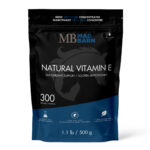 Vitamin E
  w-3 Oil