English

Horse treats play a meaningful role in strengthening the bond between caregivers and their horses, offering a way to reinforce trust and encourage positive behavior. They can also serve as an effective tool in equine training, as using treats helps your horse to associate certain tasks with rewards.
There are several important factors to consider when choosing treats to give to your horse, such as storage, palatability, and your horse’s health status. One way to ensure your horse’s snacks are fresh, wholesome, and tailored to their individual needs is to make their treats yourself at home from scratch.
Our collection of DIY recipes has been designed and tested by our equine nutritionists and include a variety of delicious and nutritious options, from refreshing peppermint cookies to low-sugar snacks for metabolic horses.
These recipes cater to different dietary needs and are simple to make with just a few kitchen tools and easy-to-find ingredients. Always be sure to introduce new treats gradually and consider your horse’s unique health requirements when feeding treats.
Treats for Horses
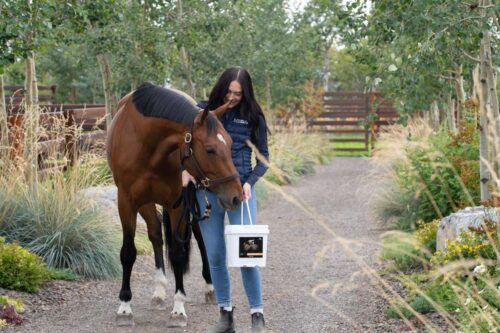
Treats play a valuable role in strengthening the horse-human bond by fostering positive interactions and reinforcing trust. Just as treats are used in training and behavioral management for dogs and cats, they serve as an essential tool for equine training and enrichment. [1]
Positive reinforcement methods, such as clicker training, often use treats as a primary training tool. These methods are widely recognized as an effective and humane approach to shaping behavior and encouraging actions in horses. Whether rewarding a horse for calmly accepting grooming, responding to cues, or completing a task, treats provide motivation and encourage the horse’s learning process. [1]
Beyond training, treats contribute to the overall well-being of horses by creating positive experiences, which can improve their quality of life. Associating treats with positive reinforcement helps horses build strong, cooperative relationships with their caregivers. This can reduce stress associated with routine care tasks, such as: [1]
- Hoof trimming
- Veterinary visits
- Loading onto trailers
Horse Treats & Nutrition
While horse treats are a key part of management for most caretakers, it’s important to consider treats within the context of the horse’s entire diet and lifestyle. For example, research on dog owners indicates that caretaker attitudes toward treat feeding vary widely. Some owners see treats as beneficial, while others recognize potential risks like weight gain and poor nutrition. [2]
These findings highlight the importance of responsible treat feeding for all species, including horses. To maintain your horse’s overall health and body condition, it’s important to ensure they receive appropriate treats in moderation.
Veterinarians and equine nutritionists can provide recommendations on healthy treat options that support digestive health, weight management, and specific dietary needs. Low-sugar treats, for example, are the best choice for horses prone to metabolic disorders, while fiber-rich options can promote gut health. [1]
Additionally, providing treats in ways that encourage natural foraging behavior — such as hiding them in hay or using treat-dispensing toys — can offer mental stimulation and prevent boredom, contributing to your horse’s overall well-being. By integrating treats thoughtfully into your horse’s routine, you can enhance both their physical health and the bond between the two of you. [1]
Feeding Guidelines
There are a few key considerations when choosing treats to feed to your horse. The four most important factors are: [3]
- Palatability
- Health status
- Storage
- Quantity
Palatability
Horses can be particular about flavors, and some may take time to accept new treats. Research shows that horses find certain flavors very appealing, including: [4]
- Fenugreek
- Banana
- Cherry
- Rosemary
- Cumin
- Carrot
- Peppermint
- Oregano
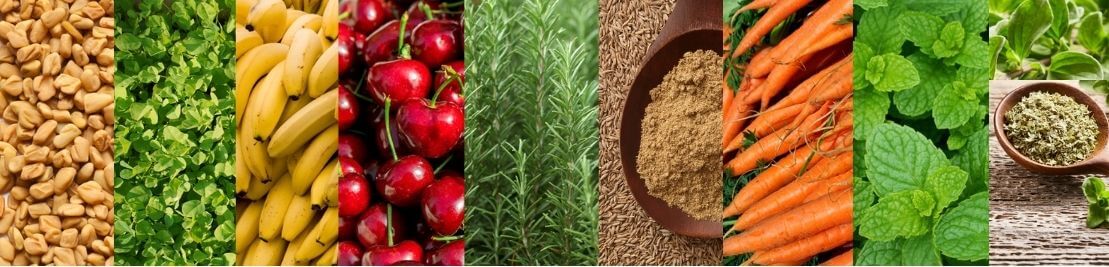
Even though these flavors are commonly popular with horses, individual preferences vary, so owners may need to experiment with different treats before finding one their horse enjoys.
Health
A horse’s health status can limit what treats are appropriate for them. Horses with conditions like equine metabolic syndrome or obesity require low-sugar and low-calorie treats, while those with hyperkalemic periodic paralysis (HYPP) must avoid high-potassium options like bananas. [5]
Dental problems can make chewing difficult, making softer treats a better choice. Consult a veterinarian or equine nutritionist for recommendations when managing a horse with specific dietary restrictions.
Storage
Proper storage ensures that treats remain fresh and safe. They should be kept in sealed containers and stored in a cool, dry place to prevent mold growth and rodent contamination. Checking expiration dates on commercial treats is essential, and any treats showing changes in odor, texture, or color should be discarded. [6]
By considering these factors, horse owners can safely incorporate treats into their horse’s diet while maintaining their health and enjoyment.
Quantity
Keeping track of how many treats you give your horse is important, as excessive feeding can lead to digestive issues, weight gain, or dietary imbalances. A safe guideline is to limit treats to one or two pieces per day, though smaller treats may be used more frequently in training. [6]
Treat size also matters, as large or hard treats can pose a choking hazard. Breaking treats into small, bite-sized pieces—especially for older horses or horses with dental issues—helps minimize this risk. [6]
What's your top priority with your horse's health?

What's your top priority with your horse's health?
Safe & Unsafe Foods
There are a number of foods you can use to make safe treats for horses, but there are also plenty of ingredients that owners might not realize are dangerous for equines. If you are unsure whether your horse can have a particular kind of food, check with your veterinarian or equine nutritionist. [6]
Safe Foods
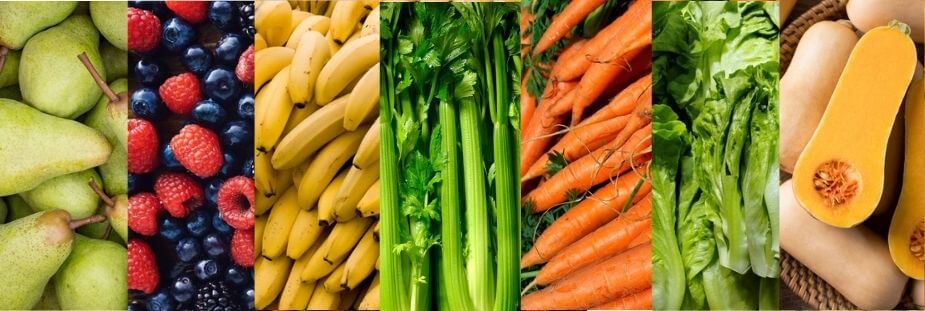
Some common foods that are safe for horses include:
- Pears
- Berries
- Bananas
- Celery
- Carrots
- Lettuce
- Squash
Unsafe Foods
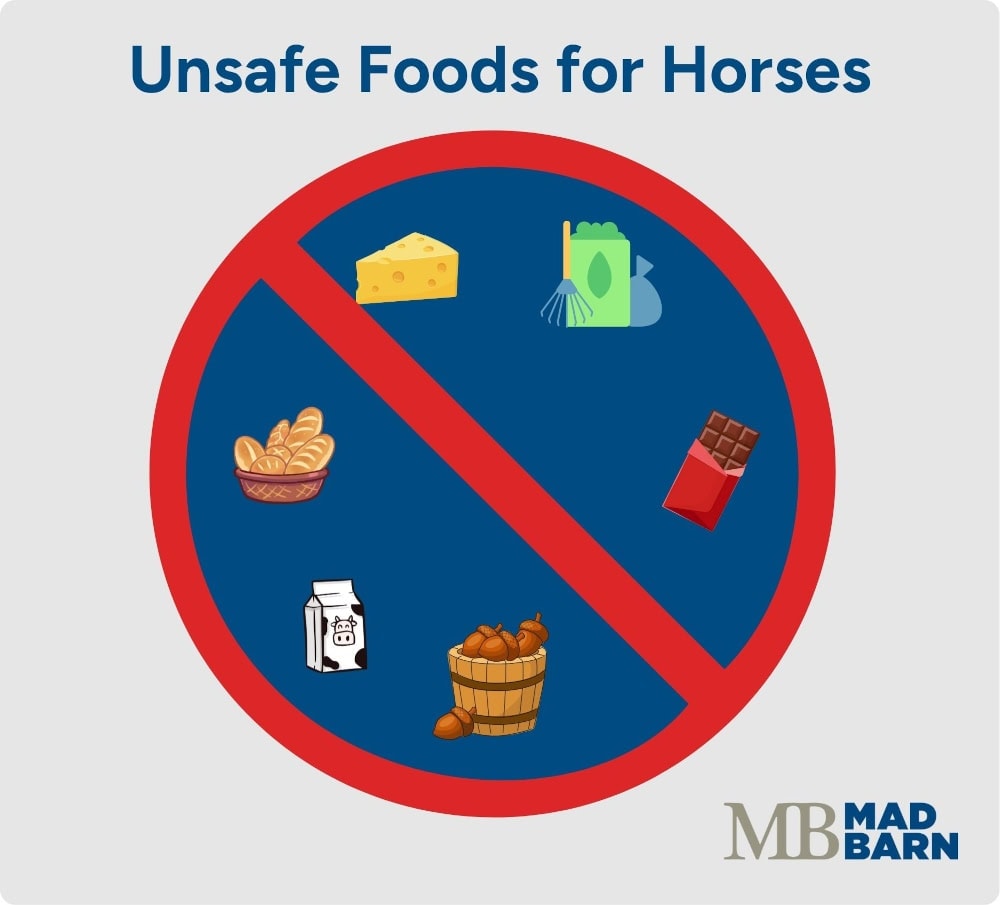
Some foods that can be mistaken as safe for horses but are actually harmful include:
- Bread products
- Dairy products
- Acorns
- Chocolate, coffee, or tea
- Lawn, hedge or garden clippings
DIY Horse Treat Recipes
At Mad Barn, all of our horse treat recipes have been carefully developed and tested by our expert equine nutritionists.
Whether you’re rewarding good behavior, masking medications, or just sharing a little love, these horse-approved recipes are designed to be both delicious and appropriate for your horse’s health. Dive in and find the perfect homemade snack to delight your equine partner!
No-Bake Sweet Treats
Looking for a simple, nutritious treat to spoil your horse? These no-bake cookies are an excellent choice for hard keepers who may need a few extra calories. You can also customize the recipe by swapping in soybean or flax meal instead of chia seeds.
These cookies are not suitable for metabolic or PPID horses, as the recipe contains elevated starch and sugar.
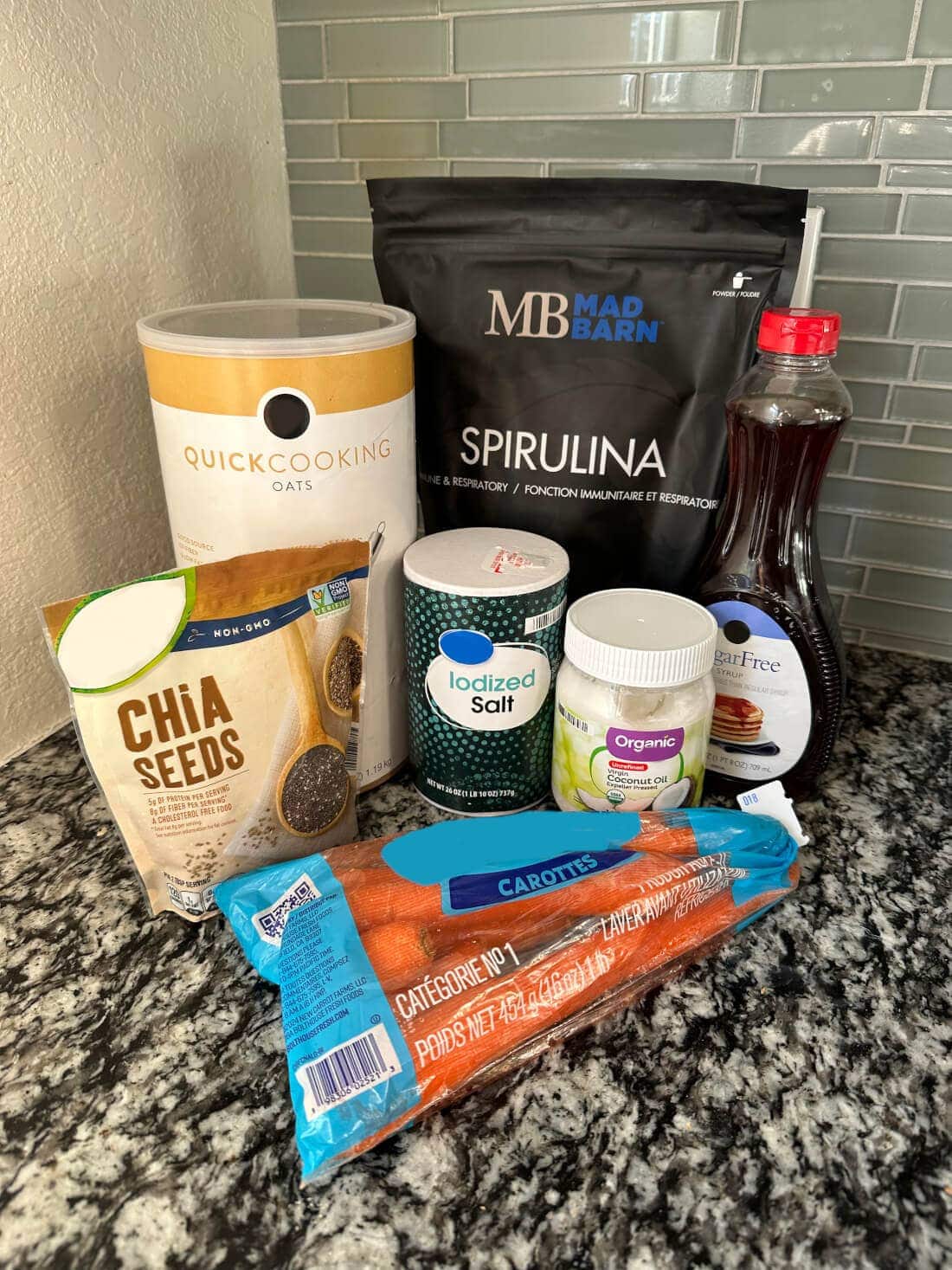
Ingredients & Tools
Time: 20 minutes prep; 30 – 60 minutes chill time
Makes: 20 cookies
Ingredients:
- 1 cup oats
- 1 cup chopped carrots or apples
- ¼ cup chia seeds (or substitute with soybean or flax meal)
- 2 tbsp melted coconut oil
- 3 tbsp maple syrup (or molasses or honey)
- ¼ cup salt
- 40g (2 scoops) Spirulina
Tools:
- Mixing bowl
- Spoon
- Cookie Sheet
- Parchment or wax paper
- Spatula
 Photos by: Jessica Artman, MSc
 Instructions
- Line a baking tray with parchment or wax paper.
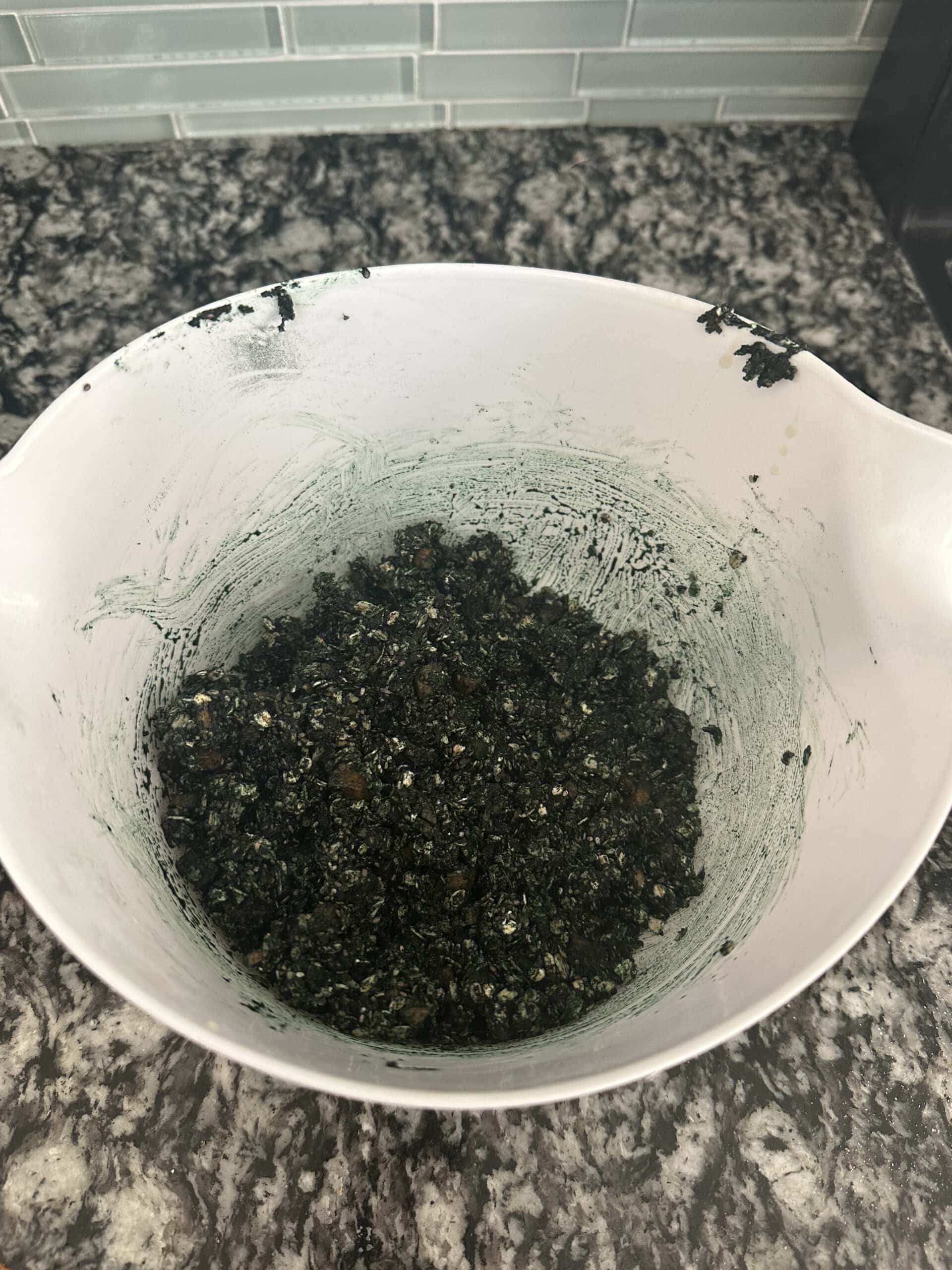
- In a mixing bowl, combine all ingredients until well mixed.
 Photos by: Jessica Artman, MSc
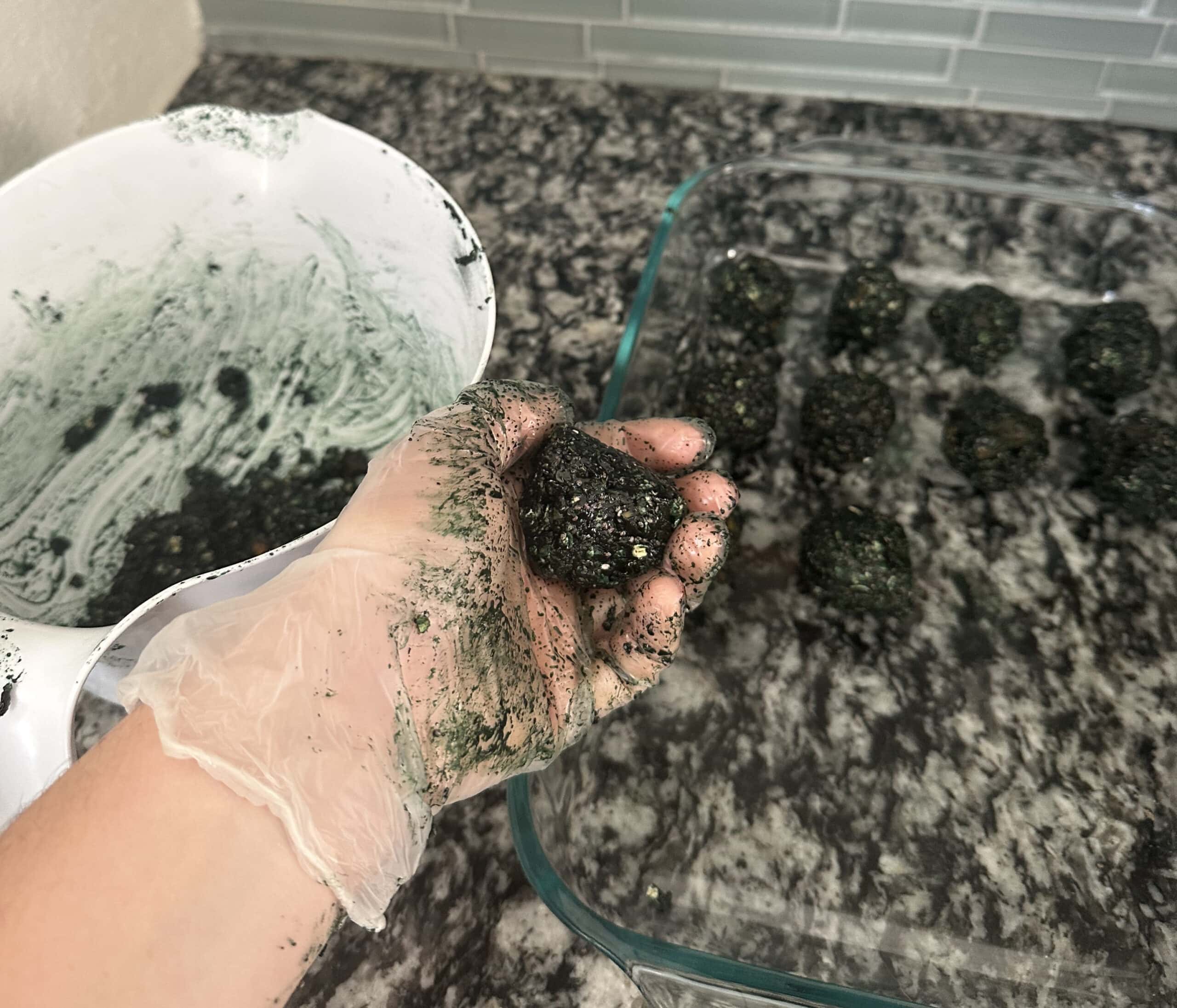
 - Use your hands or a spoon to shape the mixture into bite-sized balls.
 Photos by: Jessica Artman, MSc
 - Place in the fridge for 30 to 60 minutes to allow the treats to set.
- Serve as a special reward or use them to hide supplements!
Homemade Peppermint Cookies for Horses
These Peppermint Cookies are a festive and flavorful treat for your horse. They are perfect for hard keepers who need a few extra calories but are not suitable for metabolic or PPID horses due to their higher starch and sugar content.
Many horses love the refreshing taste of peppermint, making these cookies an ideal wintertime treat.
Ingredients & Tools
Time: 30 minutes prep; 10 minutes chill time; 8 – 12 minutes bake time
Makes: 40 cookies
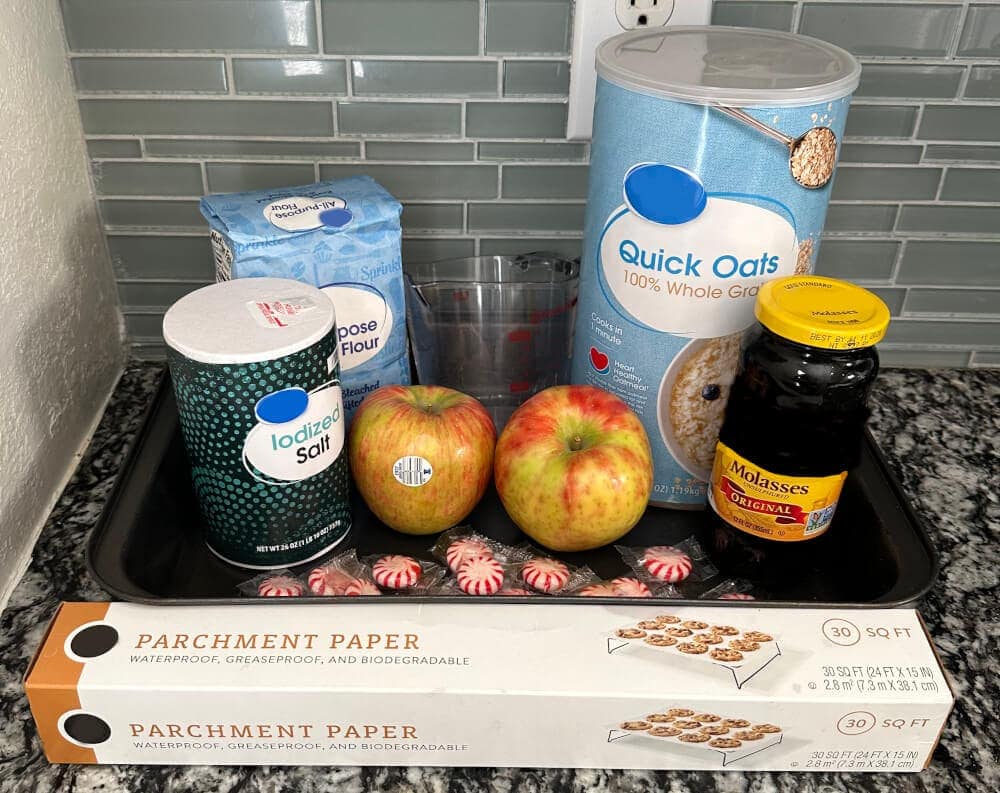
Ingredients:
- 12 crushed peppermint discs or 6 candy canes
- 2 cups flour
- 1-2 medium apples, cored and finely chopped
- 1 cup rolled oats
- ⅓ cup molasses
- 1 cup water
- ¼ cup salt
Tools:
- Oven
- Cookie sheet
- Parchment paper
- Plastic storage bag
- Hammer, rolling pin, or meat tenderizer
- Mixing bowl
- Spatula
 Photos by: Jessica Artman, MSc
 Instructions
- Preheat oven to 350°F (175°C) and line a cookie sheet with parchment paper.
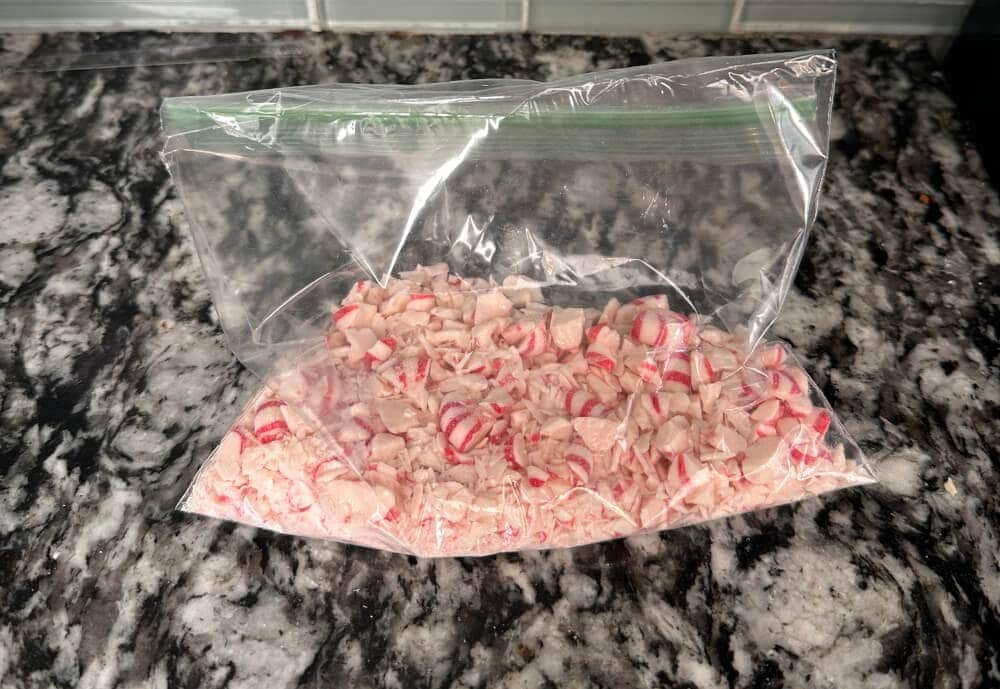
- Place peppermints in a storage bag and crush them using a hammer, rolling pin, or meat tenderizer. Set aside.
 Photos by: Jessica Artman, MSc
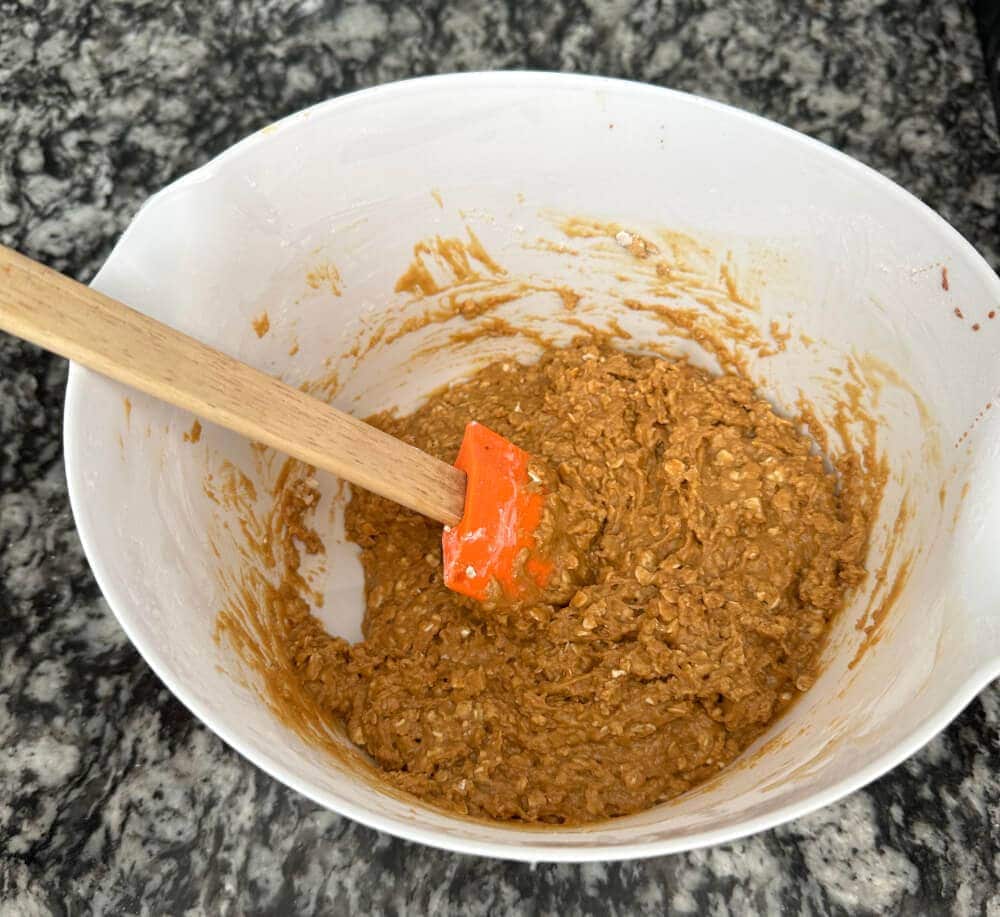
 - In a large bowl, combine flour and oats, mixing well. Stir in molasses until well combined.
- Gradually add water until the mixture holds together, similar to chocolate chip cookie dough.
 Photos by: Jessica Artman, MSc
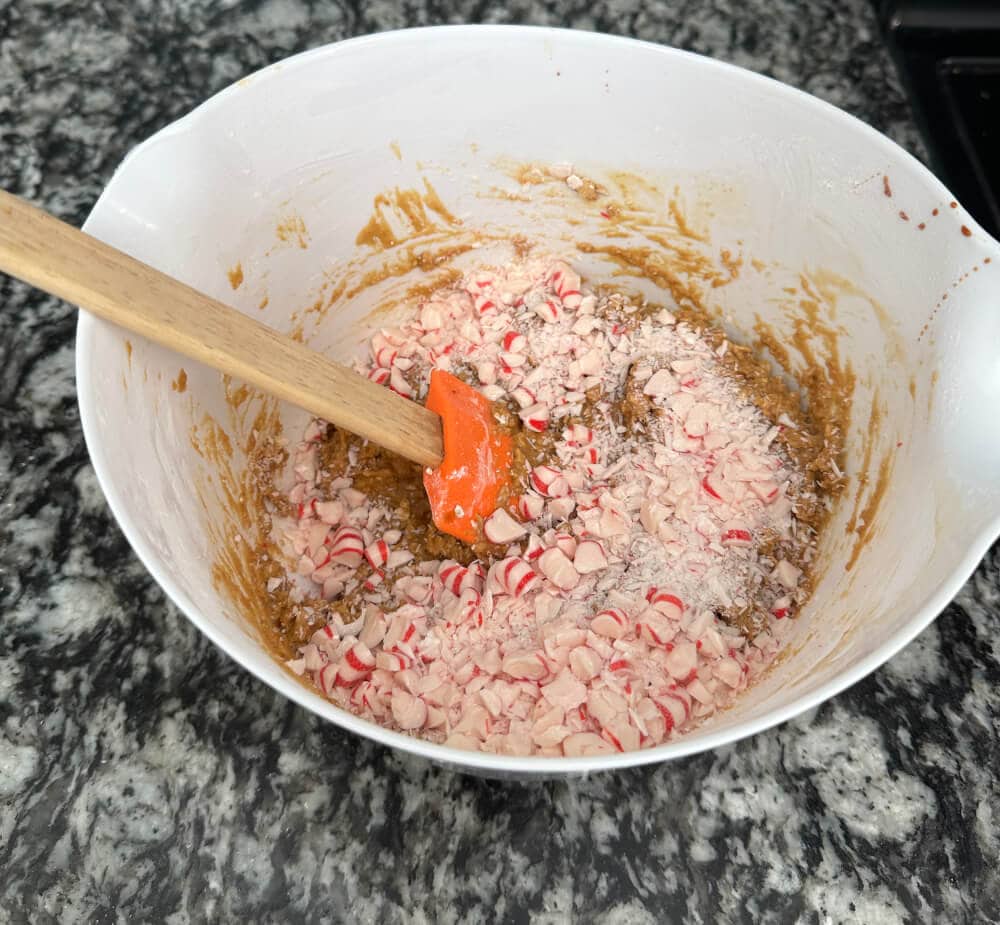
 - Mix in the crushed peppermints and chopped apples until combined.
 Photos by: Jessica Artman, MSc
 - Drop 1 tbsp balls of dough onto the lined cookie sheet.
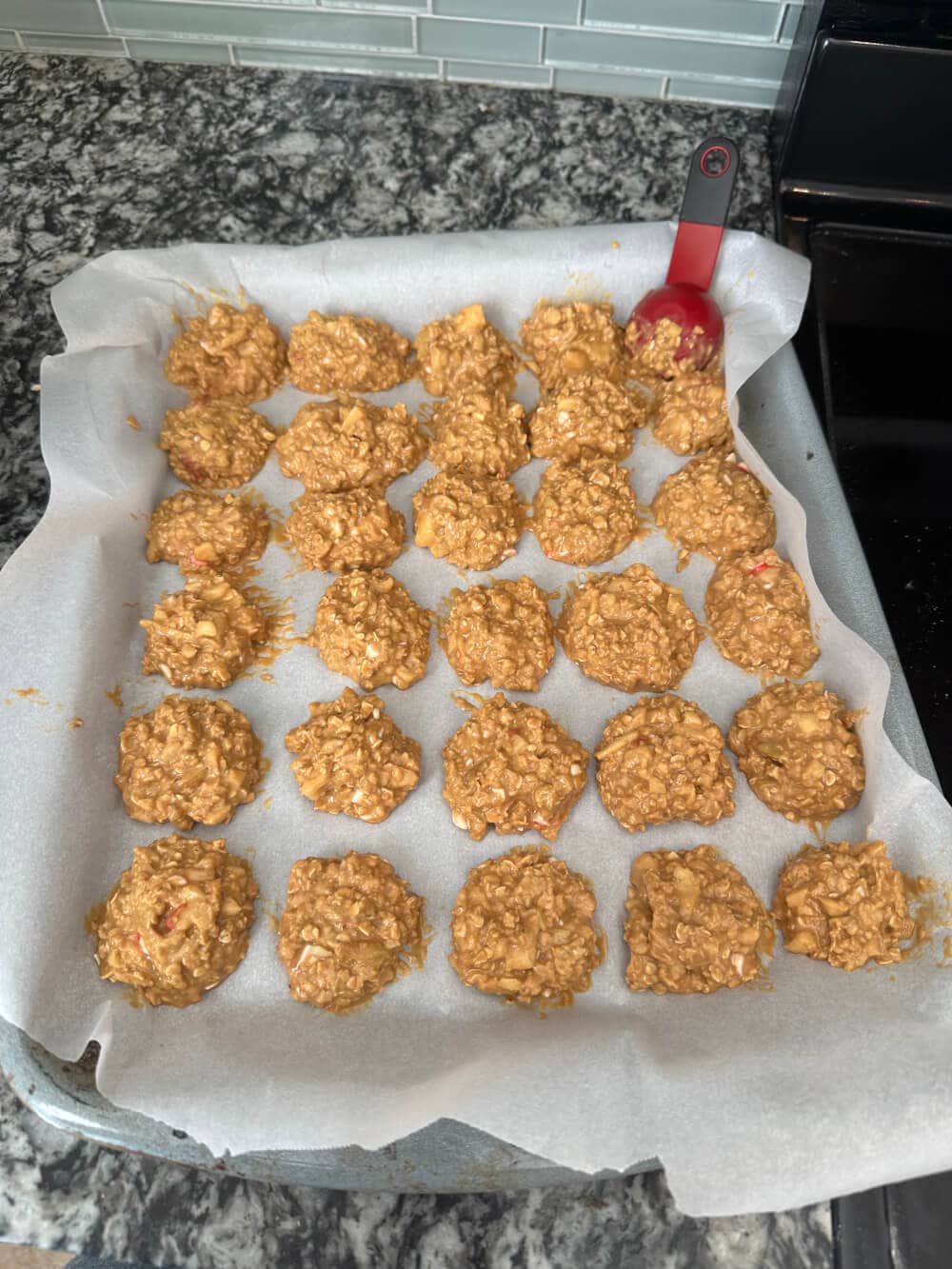 Photos by: Jessica Artman, MSc
 - Place the cookies in the freezer for 10 minutes.
- Bake for 10 minutes or until golden brown.
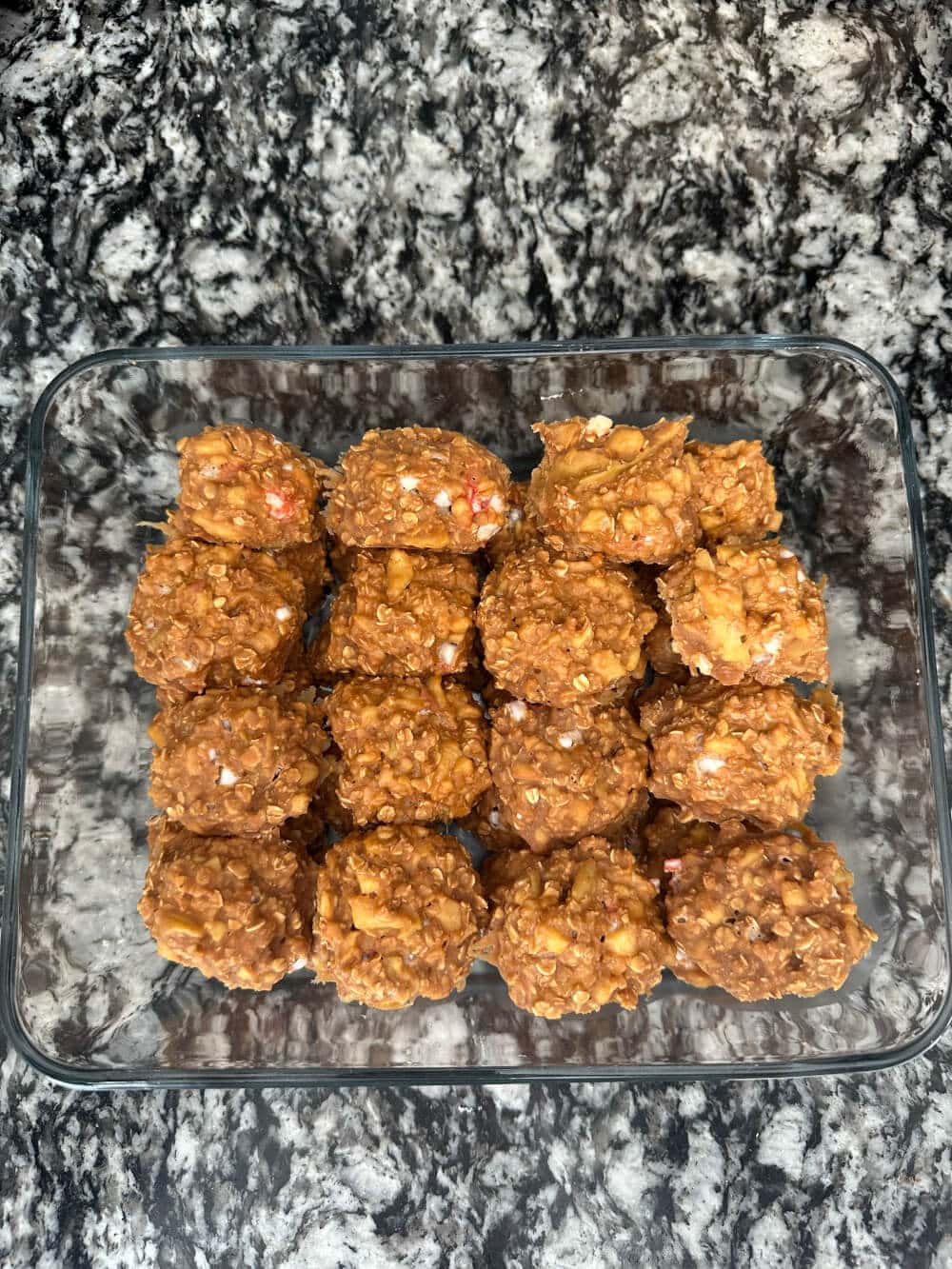 Photos by: Jessica Artman, MSc
 - Allow the cookies to cool completely before serving or storing.

Low-Starch Apple Cinnamon Treats
These low-starch apple cinnamon treats are an excellent recipe for horses with metabolic concerns, with a hydrolyzable carbohydrate (starch + sugar) content of 2.4%.
You can even add salt to help encourage hydration in your horse year-round.
Ingredients & Tools
Time: 35 minutes prep; 60 – 75 minutes bake time
Makes: 50 – 80 cookies
Ingredients:
- 1 lb of ground flax seed
- 2 tbsp cinnamon
- 1 ¼ cup salt (optional)
- ¼ cup unsweetened applesauce
- 2 cups hot water
Tools:
- Oven
- Mixing bowl
- Spatula
- Cookie Sheet
- Parchment paper
- Knife
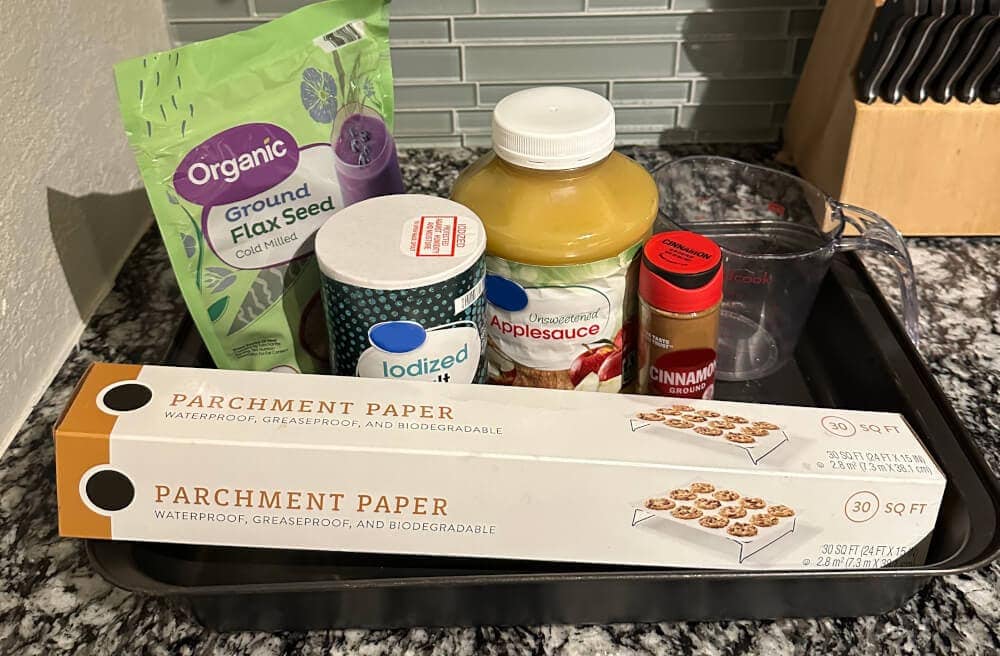 Photos by: Jessica Artman, MSc
 Instructions
- Preheat oven to 350°F (175°C).
- In a mixing bowl, combine the flaxseed, cinnamon, and salt.
- Add applesauce and hot water, then mix.
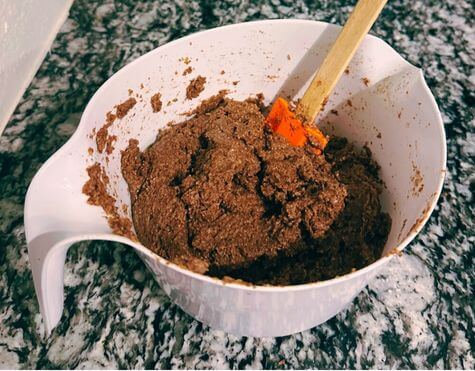 Photos by: Jessica Artman, MSc
 - Once the mixture has cooled slightly, knead it with your hands until the dough is smooth. The final dough should be thick and sticky, but spreadable.
- Line a cookie sheet with parchment paper (do not use cooking spray).
- Spread the dough evenly in the pan, about 1 inch thick.
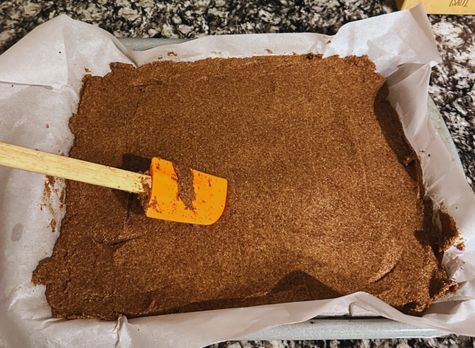 Photos by: Jessica Artman, MSc
 - Score the dough into small squares before baking, as it is difficult to cut after baking.
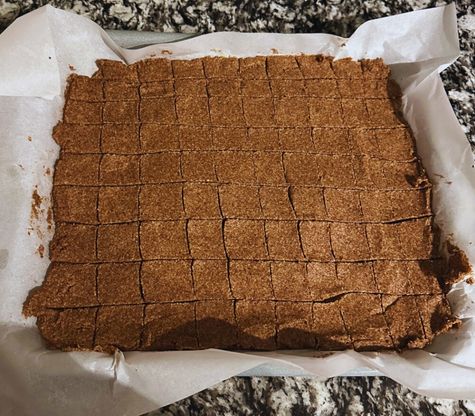 Photos by: Jessica Artman, MSc
 - Bake for 60 minutes for chewy cookies or 75 minutes for crunchy cookies.
- Allow the cookies to cool. Store in the fridge for up to a week or freeze for longer storage.
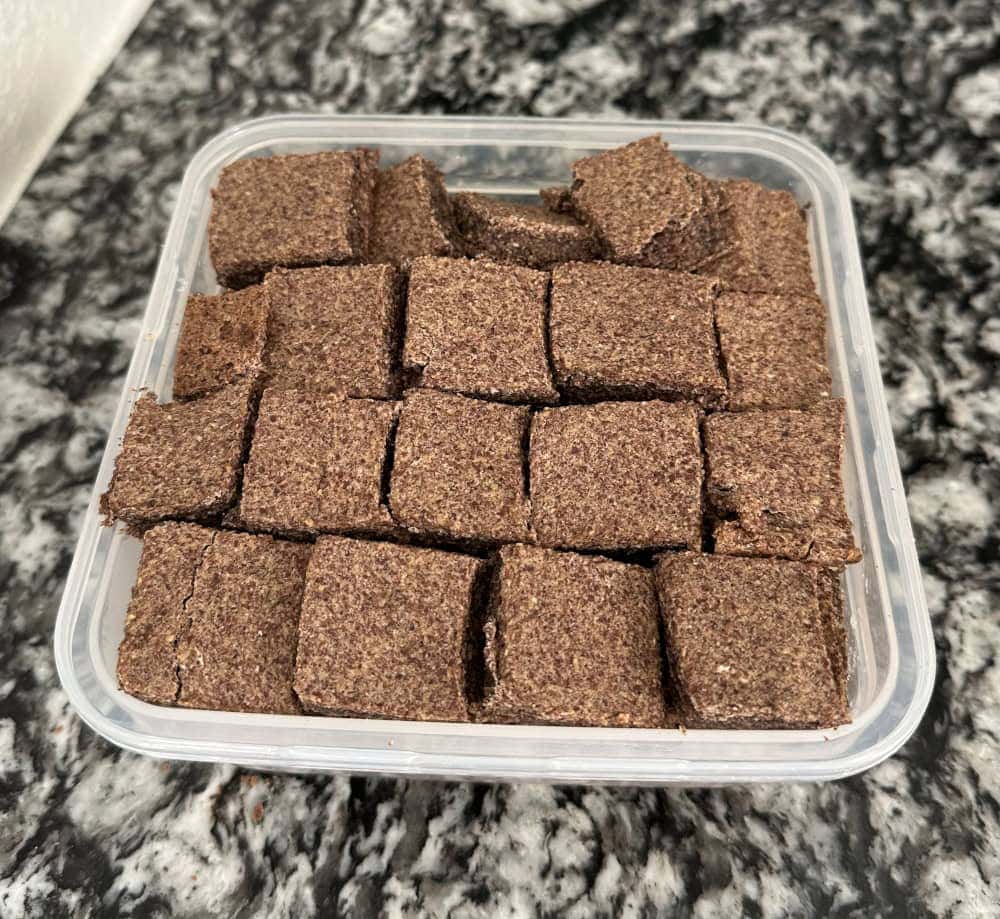 Photos by: Jessica Artman, MSc
Low-Sugar Peanut Butter Treats for Horses
If you’re looking for a safe and delicious treat for metabolic or PPID horses, these Low-Sugar Peanut Butter Treats are packed with healthy fats and fiber while staying low in sugar.
They can also be customized by swapping flax meal for chia or soybean meal. With minimal ingredients, putting these cookies together is a snap.
Ingredients & Tools
Time: 30 minutes prep; 25 – 30 minutes bake time
Makes: 20 cookies
Ingredients:
- 2 cups ground flax (or substitute with chia seed or soybean meal)
- 1 cup unsweetened applesauce
- ⅓ cup unsweetened peanut butter
- 1 teaspoon ground cinnamon
- ¼ cup salt
Tools:
- Oven
- Cookie sheet
- Parchment paper
- Mixing bowl
- Spatula
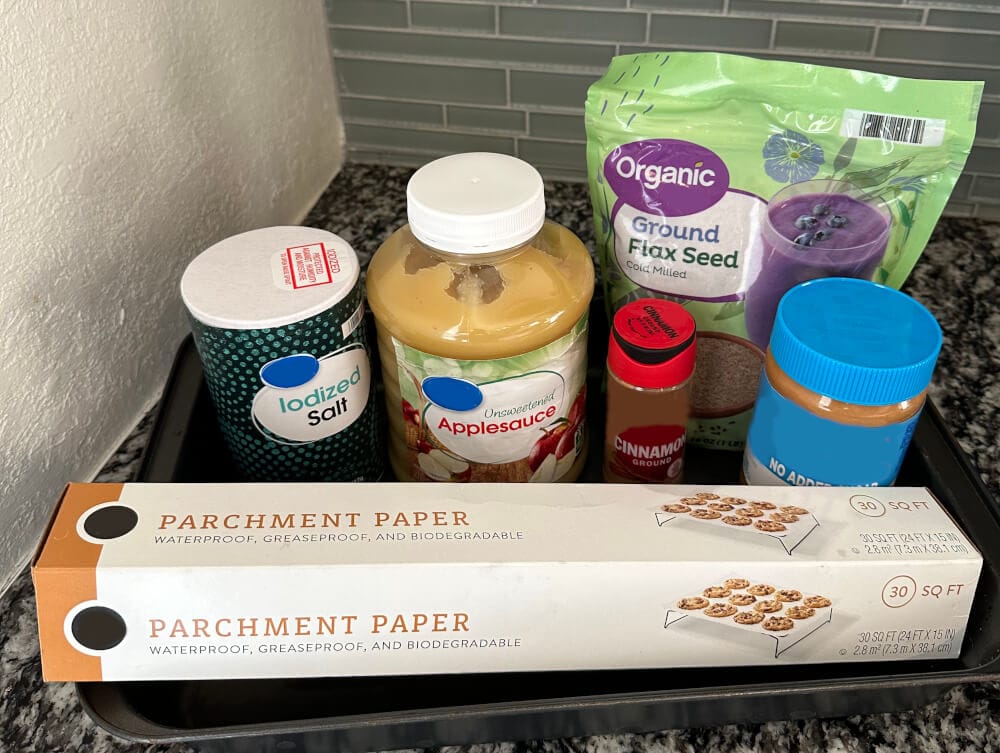 Photos by: Jessica Artman, MSc
 Instructions
- Preheat oven to 350°F and line a baking sheet with parchment paper.
- In a large mixing bowl, combine flax, cinnamon, and salt.
- Add applesauce and peanut butter, stirring until well mixed.
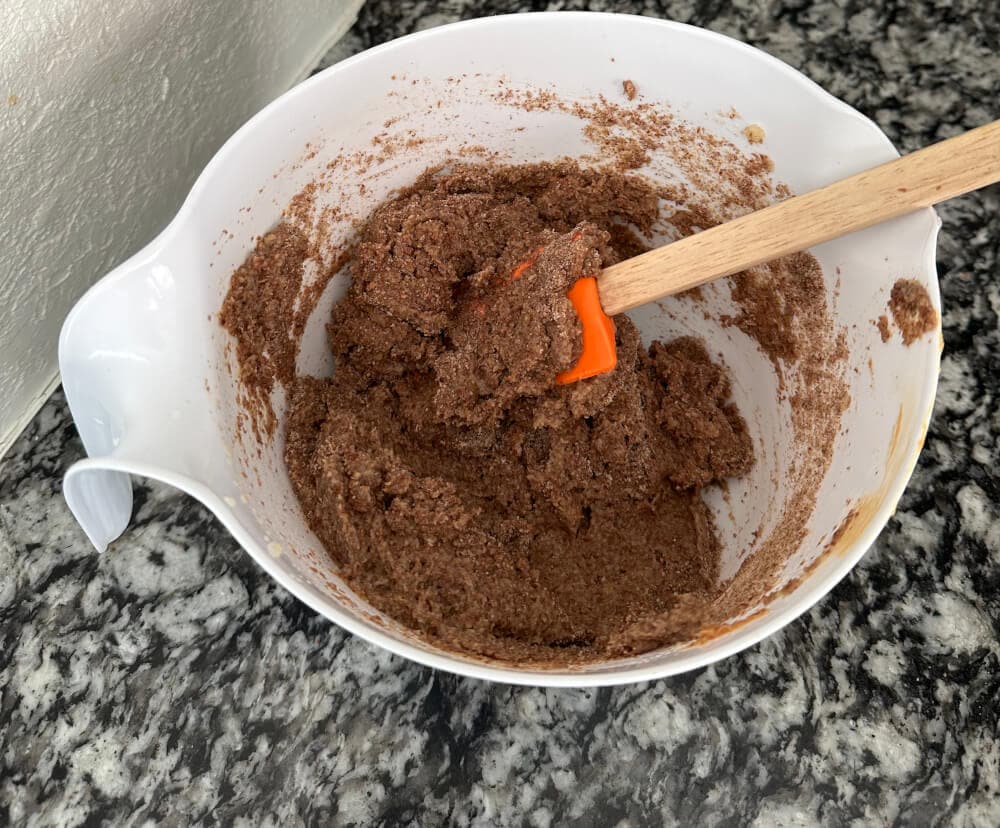 Photos by: Jessica Artman, MSc
 - Roll the mixture into ½ to 1-inch balls and place them on the prepared baking sheet.
- Bake for 25 to 30 minutes or until firm.
- Allow to cool completely before serving.
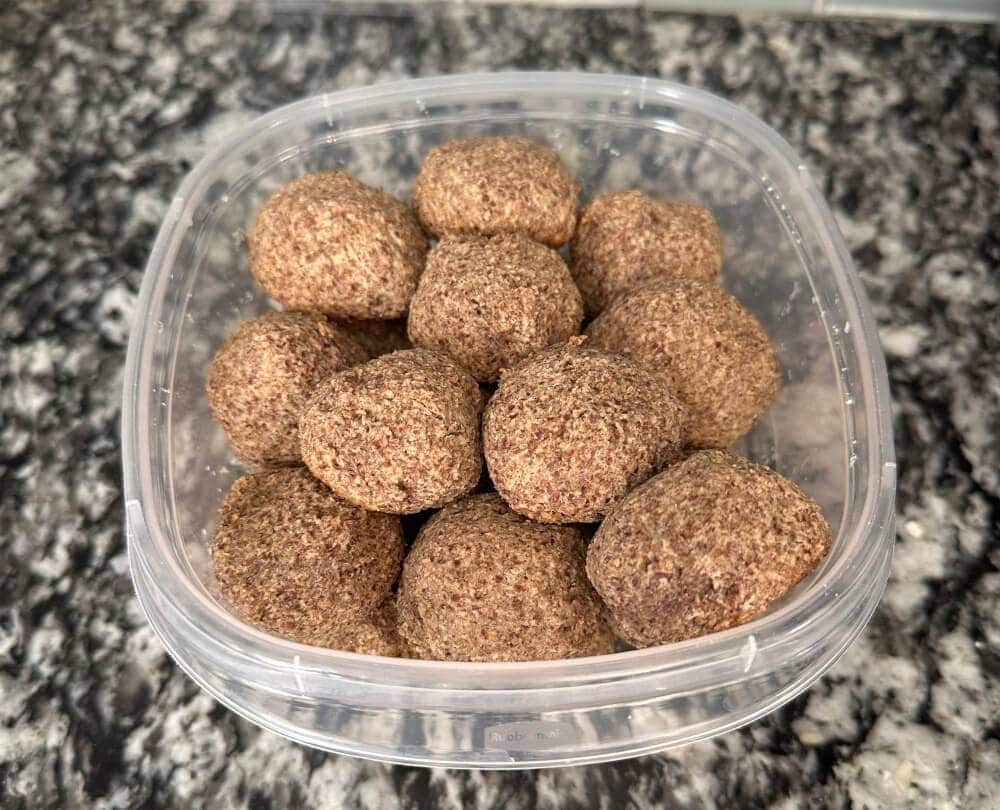 Photos by: Jessica Artman, MSc
Frequently Asked Questions
Here are some frequently asked questions about DIY treat recipes for horses:
Homemade horse treats can include simple baked cookies, no-bake snacks, low-starch apple cinnamon squares, and low-sugar peanut butter treats. Good options depend on your horse’s health status, body condition, and dietary needs. Recipes made with horse-safe ingredients, such as carrots, apples, flaxseed, oats, or unsweetened applesauce, should still be fed in small portions as part of a balanced diet.
DIY horse treats for metabolic horses should be low in starch and sugar. Flax-based recipes, low-starch apple cinnamon treats, and low-sugar peanut butter treats may be suitable when made without molasses, honey, oats, flour, or high-sugar fruit. Horses with metabolic concerns or PPID need treats chosen carefully, so owners should review ingredients with a veterinarian or equine nutritionist.
Healthy horse treats are small, low-sugar snacks that fit the horse’s overall diet and health needs. For many horses, fiber-rich treats made with ingredients like ground flaxseed, hay pellets, or small amounts of safe produce are better choices than sugary cookies. Horses with obesity, metabolic syndrome, dental issues, or HYPP may need more specific treat options.
No-bake horse treats can be made at home using simple ingredients that bind together without baking. Common options include oats, chopped carrots or apples, chia seeds, flax meal, coconut oil, maple syrup, molasses, or honey. However, no-bake recipes with higher starch and sugar are not appropriate for metabolic horses or horses with PPID.
Unsafe horse treat ingredients include chocolate, coffee, tea, dairy products, bread products, acorns, and lawn, hedge, or garden clippings. These foods may be toxic, difficult to digest, or unsafe for equine feeding. Owners should also avoid ingredients that do not suit a horse’s health condition, such as high-potassium bananas for horses with HYPP.
Horse treats should usually be limited to one or two pieces per day, although very small treats may be used more often during training. Large amounts can contribute to weight gain, digestive upset, or diet imbalances. Treat size also matters, since large or hard pieces can increase choking risk, especially for older horses or horses with dental problems.
New DIY horse treats should be introduced gradually in small amounts. Starting slowly helps reduce the risk of digestive upset and gives owners time to watch for changes in appetite, manure, or behavior. Horses can also be picky about new flavors, so it may take a few tries to find a recipe your horse enjoys.
Homemade horse treats should be stored in an airtight container to help keep them fresh and safe. The DIY recipes in this article can be kept in the fridge for up to one week or frozen for up to six months. Treats should be discarded if they develop mold, unusual odor, color changes, or texture changes.
Popular horse treat flavors include fenugreek, banana, cherry, rosemary, cumin, carrot, peppermint, and oregano. Many horses enjoy familiar sweet or aromatic flavors, but preferences vary by individual. When testing a new flavor, owners should offer a small amount first and choose ingredients that match the horse’s health needs.
Horse treats can support training by rewarding desired behavior and helping horses form positive associations with specific tasks. Treats are commonly used in positive reinforcement and clicker training, including for grooming, trailer loading, hoof care, and veterinary handling. Small, easy-to-chew pieces work best so the reward does not interrupt the training session.
Summary
You can make your horse customizable treats at home with just a few simple ingredients and common kitchen tools.
- Be sure to introduce any new treats gradually and always keep your horse's health needs in mind when choosing their food
- When picking treats for your horse, consider the palatability of ingredients, the quantity your horse requires, your horse's specific health needs, and how you will store the treats
- Horses with certain health issues, such as PPID or EMS, require a particular diet and cannot eat some foods with specific ingredients. Check with your veterinarian or equine nutritionist if you are unsure of whether your horse can have certain foods
- Some safe foods for horses include bananas, berries, carrots, and celery
- Some unsafe foods for horses include chocolate, bread products, acorns, and garden clippings
- Find these recipes and more in Mad About Horses magazine, available for free at your local Mad Barn retailer
References
- Nielson. S. A. et al., Talking Treats: A Qualitative Study to Understand the Importance of Treats in the Pet-Caregiver Relationship. Preventive Veterinary Medicine. 2024.
- White. G. A. et al., "Who’s Been a Good Dog?" – Owner Perceptions and Motivations for Treat Giving. Preventive Veterinary Medicine.
- van den Berg. M. et al., Acceptance of Novel Food by Horses: The Influence of Food Cues and Nutrient Composition. Applied Animal Behaviour Science. 2016.
- Goodwin. D. et al., Selection and Acceptance of Flavours in Concentrate Diets for Stabled Horses. Applied Animal Behaviour Science. 2005.
- Reed. S. M. et al., Equine Internal Medicine. 3rd ed. Saunders Elsevier. 2010.
- Trick or Treat: Things to Think About When Giving Your Horse a Treat. PennState Extension. 2023.