English












The Barb horse is a light breed from the Maghreb in North Africa. These horses descend from Berber horses of the region used by indigenous people thousands of years ago.
Barb horses had a significant impact on the development of Iberian breeds in Spain. Many breeds in the Western Hemisphere can trace their ancestry to Spanish Barbs brought to the New World by European explorers and settlers.
Modern owners cherish this historic breed for their unique personality and physical traits, which allow Barbs to excel as riding horses. Researchers also emphasize the importance of preserving Spanish and North African Barb horses to protect their distinct genetic heritage.
This breed profile will discuss the history, characteristics, health problems, and nutritional needs of the Barb horse breed. Keep reading to learn more about feeding and caring for Barb horses.
Barb Horse History
Barb horses are one of the oldest breeds of horses in the world. While several outside influences have shaped Spanish and North African Barbs throughout their long history, Barb bloodlines have also played a pivotal role in developing new breeds.
Origin
The history of horses in North Africa is still a matter of debate. Archeological findings suggest domesticated horses first came to the region in the second millennium BC. [1]
There is no evidence of horses inhabiting the African continent during early prehistoric times. Historians believe Equus caballus migrated to Africa together with humans through Egypt and the Strait of Gibraltar. [1]
The origins of the North African Barb horse have been traced to the Barbary Coast in the Maghreb. Today, the Maghreb is home to the countries of Algeria, Tunisia, and Morocco. Peaking in the 7th century, the region served as a busy transit route during conquests and migrations.
Heavy warhorses brought by the Romans likely influenced the breed, along with Arabian horses ridden during the Arab conquests of North Africa. [1]
Throughout the Moorish occupation of the Iberian Peninsula from the early 8th to the late 15th century, there was frequent migration of horses between North African and Iberian populations. Native Iberian breeds crossed with African Barb horses to produce the Spanish Barb.
Arabian influences eventually threatened the survival of the purebred Barb horse in their native Maghreb region as Arabian-Barbs and other crosses gained popularity in the late nineteenth century. However, recent genetic studies have found substantial diversity in early sire lines. [1]
Historic Use
Ancient civilizations in North Africa relied on horses to transport goods and people across the Mediterranean shrubland and the Sahara Desert. Horses were also used for war and conquests in the region.
The Moors used Barb horses to invade and occupy the Iberian Peninsula. Spanish Barbs descending from these war horses gained popularity in Europe as cavalry mounts, accompanying Spanish explorers and soldiers.
Horses brought to the Western Hemisphere during the Spanish colonization of the Americas had to be hardy to survive the stressful voyage. Colonial settlers relied on Spanish Barbs as all-around horses for riding, farm work, and war. [2]
Some Spanish Barbs left behind by explorers established the feral horse populations of the Americas. Today, the influence of Spanish Barbs is evident in Mustangs, Appaloosas, Criollo Horses, Paso Finos, and several other Western Hemisphere breeds. [2]
Horse breeding declined in North Africa when cavalry horses became obsolete in the 20th century. From 1965 onwards, African horse sickness significantly reduced the North African Barb population and temporarily halted the export of equines to Europe. [3]
According to census estimates, only 5500 North African Barb horses live in the Maghreb region today. While most horses with Barb ancestry in Spain belong to other Spanish breed registries, breeders are working to preserve a distinct Spanish Barb breed in North America. [1]
Breed Registry
Founded in 1972, the Spanish Barb Horse Association (SBHA) maintains and supports the selective breeding of horses in North America with a distinct Spanish Barb type to preserve the endangered historic breed.
The registry represents several foundation strains of Spanish Barbs that come from a particular area or breeder. Some of these strains of Colonial Spanish horses remained pure due to geographic isolation from feral populations with mixed gene pools.
These strains include the Wilbur-Cruce horses, an isolated population descended from horses brought to Arizona by Spanish missionaries in the late 1600s. Researchers found these horses have a close genetic relationship to North African Barbs and Old Spanish breeds. [4]
| Breed Summary | |
|---|---|
| Breed Name | Barb |
| Also Known As | Spanish Barb; North African Barb |
| Breed Type | Light horse |
| Origin | Maghreb, North Africa |
| Breed Registry | Spanish Barb Horse Association (SBHA) |
| Population Status | Rare; about 5,500 North African Barbs in the Maghreb |
| Average Height | 13.3 – 15 hh |
| Common Coat Colors | Black, bay, gray, chestnut, dun, grullo, roan, pinto |
| Conformation | Refined head, broad forehead, tapering nose, large eyes, small to medium curved ears, slightly convex profile, low-set neck, deep body, medium-wide chest, well-sprung ribs, deep heart girth, round hindquarters, short back, well-angled shoulder, flexible pasterns, large bones and joints, hard hooves |
| Common Uses | Pleasure riding, endurance, dressage, trail riding, ranch work, English and Western riding |
| Temperament | Friendly, intelligent, willing, calm |
| Common Health Concerns | OCD, African horse sickness, lameness, gastric ulcers, degenerative joint disease, obesity, metabolic disorders, laminitis |
What's your top priority with your horse's health?

Enter your email to receive your store credit
Barb Horse Characteristics
The SBHA operates an open studbook that accepts horses for registration and breeding based on characteristics to uphold the ideal breed standard for Spanish Barbs. The traits that made them thrive in Colonial America now help these horses excel under saddle.
Conformation
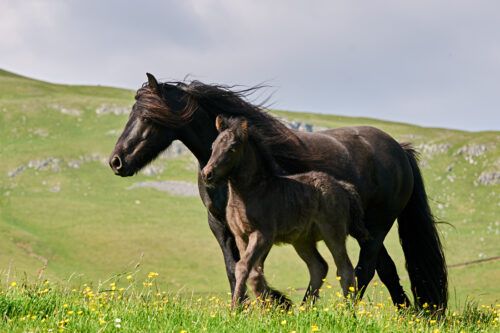
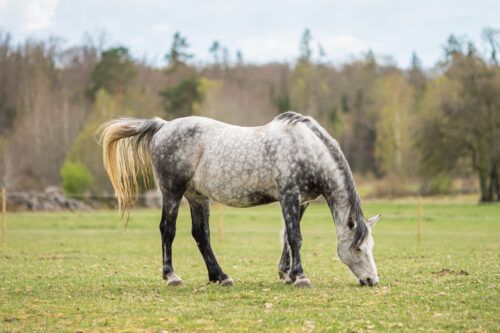
Spanish Barbs have an average height of 13.3 to 15 hands. These horses have a distinct type with Spanish characteristics that produce a balanced overall impression.
Their heads are refined with a broad forehead, tapering nose, large eyes, and small to medium curved ears. Profiles are often slightly convex. Their necks tie in low to deep bodies with medium-wide chests, well-sprung ribs, and deep heart girths.
Round hindquarters with long muscling, short backs, well-angled shoulders, and flexible pasterns produce smooth but active gaits. Their legs are proportionate to their body, with large bones and joints. Hooves should be well-shaped and hard.
Colours
Spanish Barbs can be any colour. Standard coat colours include:
- Black
- Bay
- Gray
- Chestnut
- Dun
- Grullo
- Roan
- Pinto
These horses also have thick, full manes, tails, and forelocks.
Temperament
Spanish Barb horses have good temperaments and a strong willingness to please. These friendly, intelligent horses are quick learners who enjoy bonding with humans.
Owners often find these horses straightforward to start under saddle and calm in new environments. But like all horses, personality can vary between individuals and some Spanish Barbs may be more reactive.
Disciplines
Barb horses today are typically pleasure mounts. These horses are suitable for both English and Western disciplines. Their bravery and calm dispositions also make them popular trail horses.
Spanish Barbs are competitive in modern endurance racing thanks to their history covering long distances over barren terrain. Their trainability and conformations are also well suited for the dressage arena. Some continue to work as cattle horses on ranches in the American West.
Barb Horse Health
Barb horses are a relatively healthy breed. While they are not susceptible to the same genetic disorders as their Arabian relatives, infectious disease outbreaks have threatened Barb horse populations in their native countries.
Genetic Diseases
One study investigating the prevalence of equine genetic diseases in the Middle East and North Africa found significant differences between Arabians, Arab-Barbs, and Barb Horses. [5]
Researchers found genotypes associated with cerebellar abiotrophy (CA) and severe combined immunodeficiency (SCID) in populations of purebred Arabians. One study observed the genotype for CA and SCID in Barb crosses, but not purebreds. [5]
These results suggest purebred North African Barb horses are not susceptible to the same genetic diseases as Arabians. But crossbreds or Barb horses with Arabian ancestry are at risk of inheriting CA and SCID. [5]
Spanish Barbs may share a genetic predisposition for osteochondrosis dissecans (OCD) with Iberian breeds. OCD is a joint condition in horses characterized by lesions in cartilage and bone, leading to pain, swelling, and potential lameness.
Research in Lusitano and Andalusian horses found osteochondral lesions in about 50% of animals. One study identified three candidate genes associated with OCD in Spanish horses. [6]

Health Problems
In the late 20th century, the emergence of African horse sickness significantly impacted North African Barb horse populations. First reported in Morocco in 1965, African horse sickness is an often fatal disease caused by a virus spread by biting midges. [4]
The virus causes fever, respiratory issues, and cardiac complications in horses, and can result in sudden death. While outbreaks have occurred in Spain, there is no history of reported cases in the United States or Canada. [7]
Other health problems affecting Spanish Barbs vary based on their use and management, and can include lameness, digestive disorders, and metabolic issues.
Barb horses with competition careers are more susceptible to conditions typical of performance horses, such as gastric ulcers and degenerative joint disease.
Care and Management
Barb horses require attentive care and management to ensure their well-being and longevity.
Regular veterinary check-ups are essential to identify health issues early. Work with your veterinarian to develop a preventative wellness program with annual vaccinations, deworming, and dental exams.
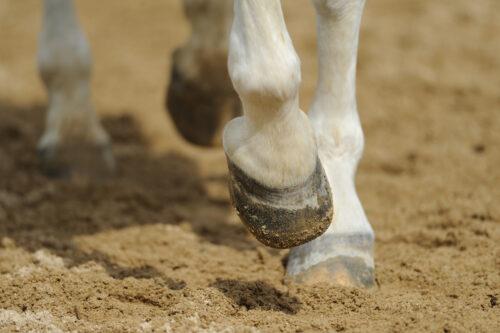
Spanish Barbs generally have good-quality feet, but still need regular farrier care from a qualified professional to maintain hoof balance. While many stay sound barefoot, Barbs with heavy workloads or hoof problems may need extra protection from shoes.
The Barb horse’s thick mane and coat can quickly tangle without regular brushing. Daily grooming not only keeps your horse’s coat shiny and healthy, but also provides a bonding opportunity and gives handlers a chance to check for skin conditions or injuries.
While the breed is known for its adaptability to different environments, these horses thrive when living outside in conditions that mimic their native habitat. Make sure your horse has access to safe shelter and suitable companions to promote the expression of social behaviours.
If your Barb horse lives inside, provide adequate daily turnout to support their health and well-being. Turnout gives horses an opportunity for free exercise and social interaction, while also decreasing the risk of OCD in young horses. [8]
Spanish Barbs are athletic horses that do well with regular exercise. Work with your trainer and veterinarian to develop a conditioning program that keeps your horse sound and healthy.
Barb Horse Nutrition
Nutrition significantly impacts the health and performance of your Barb horse. Feeding a balanced diet is essential to preventing metabolic concerns and ensuring your Barb horse receives nutrients required to support muscle development, hoof health, immune function and a shiny coat.
Weight Maintenance
Like other breeds originating from regions with sparse vegetation, Barb horses are susceptible to metabolic disorders and weight gain if not provided with appropriate nutrition.
Most Barb horses are easy keepers, which means they have little difficulty maintaining body condition and are prone to obesity. Overweight horses face a range of health issues, from joint stress to heat stress. Horses that become overweight easily because of metabolic syndrome are prone to laminitis.
Regular body condition scoring provides a clear indication of your horse’s nutritional status. On the Henneke 9-point scale, a body condition score of 5 is ideal. Adjust your Barb horse’s diet based on their condition, activity level, age, and health status to ensure they maintain an ideal weight.
Unexplained weight loss, particularly if it is associated with muscle wastage and reduced stamina, could indicate an underlying health issue, such as gastric ulcers. Contact your veterinarian if you have any concerns about your horse’s weight.
Sample Diet
The following sample diet is intended for a mature 1000 lb (450 kg) Barb horse with normal body condition at maintenance (not exercising).
| Feed | Amount per day |
|---|---|
| Mid-Quality Hay (8% crude protein) | Free-choice |
| Salt | 30 g (2 tbsps) |
| Omneity® Pellets | 200 g (2 scoops) |
| Diet Analysis | |
| Digestible Energy (% of Req) | 106% |
| Protein (% of Req) | 128% |
| HC (ESC + starch; % Diet) | 8.8% |
While forage provides adequate energy and protein for most horses, a hay-only diet will be lacking in several key nutrients. Supplementing the diet with essential vitamins and minerals is key to preventing nutrient deficiencies.
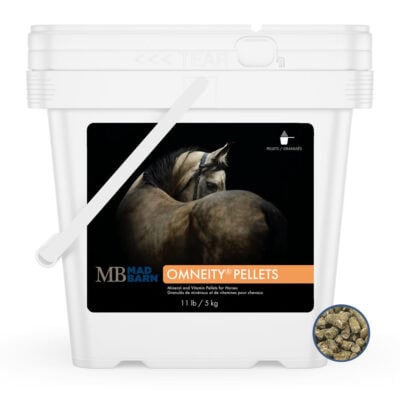
Mad Barn’s Omneity® is a concentrated vitamin and mineral supplement that also provides essential amino acids, digestive enzymes and yeast to support overall health in Barb horses.
Feeding your horse Omneity® ensures they get the nutrients required to maintain hoof health, immune function and a healthy metabolism. Furthermore, Omneity® is formulated without any added grains or sugars, making it appropriate for easy keepers, such as Barb horses.
Forage
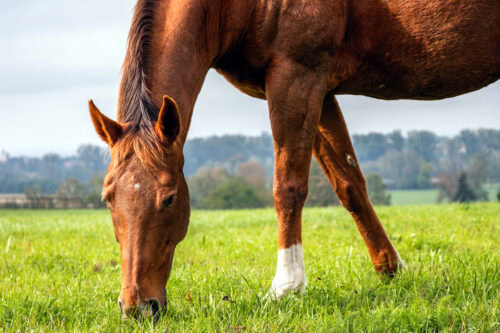
A forage-based diet mimics the natural grazing habits of wild horses, promoting optimal digestive health for your Spanish Barb. Most horses need 2% of their body weight in forage daily, equivalent to 20 pounds (9 kg) of hay per day for an average 1000-pound Barb horse.
Medium-quality, low-starch, low-sugar grass hay is recommended for easy-keeper breeds. High quality hay, such as alfalfa, should be reserved for Spanish Barbs with increased calorie demands due to training or competition. [11]
Although providing your horse with free-choice forage can prevent behavioural issues and support gut health, Barb horses may consume too many calories with unrestricted forage access. Consider using a slow feeder or grazing muzzle to regulate forage intake. [11]
Full-time turnout on fresh grass pasture may not be appropriate for this breed, especially during the spring when grass is particularly lush. Excess starch and sugar intake from grass can contribute to pasture-associated laminitis in horses with insulin resistance. [9]
If your horse is overweight, turnout on a dry lot with hay is a good way to maximize turnout time while limiting pasture access.
Feeding Recommendations
Barb horses in rigorous training are often fed commercial grain-based feeds to provide extra energy. However, the high levels of sugar and starch in these feeds are often unnecessary and increase the risk of metabolic disorders and gut problems.
If you feed a commercial concentrate, split the daily ration into multiple small meals to reduce the risk of gastric upset. Consider replacing grain with fiber-based alternatives, such as soaked hay pellets or beet pulp.
If your Barb horse is in heavy work, feed fat supplements to provide cool energy, which is safer and more metabolically efficient. [10]
All Barb horses need constant access to fresh, clean water to avoid complications related to dehydration. Providing your horse with free-choice plain loose salt also encourages thirst.
Many horses do not get enough sodium in their diet. Adding 1 – 2 ounces of plain salt in their daily ration can help meet sodium requirements and is more effective than providing a salt lick or block.
Nutritional Supplements
When planning a feeding program for your Barb horse, it’s important to start with a balanced diet to prevent nutritional deficiencies. Once your horse’s diet is balanced, you can consider other supplements to address any specific health needs they might have.
- W-3 Oil by Mad Barn is an omega-3 fatty acid supplement enriched with DHA and natural vitamin E. This palatable fat supplement provides cool energy for exercising horses, supports joint health and maintains healthy regulation of inflammation.
- Visceral+ is a comprehensive gut supplement that supports stomach and hindgut health in performance horses. Visceral+ is formulated with probiotics, yeast, herbs, minerals, and amino acids that help maintain the intestinal barrier and support the immune system.
- MSM is a natural source of sulfur that helps maintain healthy connective tissue and cartilage.
- Vitamin E is essential for neurological health, muscle function, the immune system, and post-exercise care in horses. Deficiencies in this antioxidant vitamin can contribute to the development of neurological disorders in growing Spanish Barbs.
Consult an equine nutritionist if you have any questions before changing your horse’s feeding program.
Frequently Asked Questions
Here are some frequently asked questions about Barb horses:
The Barb horse is an ancient, light breed from the Maghreb region of North Africa. Barb horses are known for their endurance, hard hooves, efficient movement, and ability to thrive in hot, dry conditions with limited forage. Developed over centuries by Berber peoples, the breed became valued for riding, transport, and war. Today, the Barb horse is admired for its athleticism, resilience, and historical influence on other breeds.
A Spanish Barb horse is a colonial horse type in the Americas that descends from Barb- and Iberian-influenced horses brought by Spanish explorers and settlers. Spanish Barbs developed from horses that adapted to the New World and later contributed to many breeds in the Western Hemisphere. Today, Spanish Barbs are typically preserved through type-based registries that focus on maintaining the historical characteristics, structure, and genetic heritage of these early colonial horses. While related to the North African Barb horse, the Spanish Barb is usually discussed as a distinct preservation type.
Barb horses originated in the Maghreb of North Africa from the regions that are now Morocco, Algeria, and Tunisia. The breed developed along the Barbary Coast, where horses were shaped by arid environments and centuries of use in transport, warfare, and daily life. Historical movement of horses through Roman and Arab influence also helped shape the breed. As a result, the Barb horse became known as a hardy and efficient riding horse adapted to difficult terrain and climate.
Barb horses are best known for their stamina, toughness, sure-footedness, and efficient use of energy. These qualities made Barb horses valuable as war horses and long-distance riding horses throughout history. Modern owners also value the breed for its resilience in regular work. The Barb horse is especially respected for combining endurance with soundness and adaptability.
The Barb horse has a compact, balanced build with a refined head, broad forehead, expressive eyes, and a slightly convex profile. Barb horses typically have a deep body, strong hindquarters, a short to medium-length back, sloping shoulders, and hard, well-shaped hooves. Their legs are proportionate and supported by substantial bone, which contributes to durability and soundness. Most Barb horses stand between 13.3 and 15 hands, giving them an agile, efficient outline rather than a large or heavy type.
Barb horses can come in many different coat colors. Common Barb horse colors include bay, black, chestnut, gray, dun, grullo, roan, and pinto patterns. Many Barb horses also have thick manes, tails, and forelocks, which add to their distinctive appearance. Their color variety reflects the breed’s broad historical development across North Africa and the Iberian world.
The Barb horse is generally known for being intelligent, willing, calm, and people-oriented. Many Barb horses are quick learners that bond well with handlers and adapt well to new environments. Their steady nature and trainability make them appealing riding horses, though individual temperament still depends on breeding, handling, and management. In the right program, a Barb horse is often a practical and responsive partner.
Barb horses are generally considered a hardy breed, but they can still develop certain health problems. Like many easy-keeper breeds, Barb horses may be prone to weight gain, insulin dysregulation, laminitis, and other metabolic issues if overfed or kept on rich pasture. Horses in training may also develop problems seen in other performance horses, such as gastric ulcers, lameness, or degenerative joint wear. While purebred Barb horses appear less affected by some inherited disorders associated with Arabian horses, management and nutrition still play a major role in long-term health.
Barb horses are commonly used for pleasure riding, trail riding, endurance, dressage, ranch work, and both English and Western disciplines. Historically, the Barb horse was used for transport, war, and long-distance travel in North Africa and the Iberian Peninsula. Barb horses of modern day are especially valued as practical riding horses because they combine bravery, stamina, and trainability. Their versatility allows them to succeed in both recreational and working roles.
Most Barb horses stand between 13.3 and 15 hands high. This moderate height suits the Barb horse’s traditional role as an agile, efficient riding horse rather than a large carriage or draft breed. Even though they are not especially tall, Barb horses are athletic and well balanced. Their compact frame supports endurance, soundness, and sure-footed movement.
Some Barb horses can be good for beginners, but suitability depends on the individual horse’s temperament, training, and management. Barb horses are often willing, intelligent, and calm, which can make them approachable for less experienced riders. However, not every Barb horse is the right match for a novice, especially if the horse is sensitive or lightly trained. The best Barb horse for a beginner is one with a steady disposition, solid training, and an experienced support system.
Summary
The Barb is an ancient light horse breed from the Maghreb in North Africa that influenced Iberian horses and many Colonial Spanish-derived breeds in the Americas. Modern Barbs are valued for athleticism, trainability, and durability, and ongoing conservation efforts aim to preserve distinct Spanish and North African bloodlines.
- The breed developed in North Africa and contributed to Iberian horse populations through centuries of movement between the Maghreb and the Iberian Peninsula
- Spanish Barbs later spread to the Americas during Spanish colonization, shaping multiple Western Hemisphere breeds and feral horse populations
- Barbs are typically compact, balanced horses (about 13.3–15 hands) with active gaits, strong bone, and hard, well-formed feet
- They are used as versatile riding horses across English and Western disciplines, including trail riding, ranch work, endurance, and dressage
- Purebred Barbs appear less predisposed to certain inherited disorders seen in Arabians, though crossbreds with Arabian ancestry may carry genetic disease risk
References
- Radovic, L. et al. Y Chromosome Haplotypes Enlighten Origin, Influence, and Breeding History of North African Barb Horses. Animals. 2022. View Summary
- Sponenberg, D. Preservation of the Spanish horse in North America. Anim Genet Resourc. 2011.
- Carpenter, S. African Horse Sickness Virus: History, Transmission, and Current Status. Ann Rev Entomol. 2017. View Summary
- Sponenberg, D. North American Colonial Spanish Horse. Virginia-Maryland Regional College of Veterinary Medicine. 2011.
- Ayad, A. et al. Investigation of Cerebellar Abiotrophy (CA), Lavender Foal Syndrome (LFS), and Severe Combined Immunodeficiency (SCID) Variants in a Cohort of Three MENA Region Horse Breeds. Genes (Basel). 2021. View Summary
- Sevane, N. et al. Candidate gene analysis of osteochondrosis in Spanish Purebred horses. Anim Genet. 2016. View Summary
- Rodriguez, M. et al. African horse sickness in Spain. Vet Microbiol. 1992. View Summary
- Bell, R. et al. Daily access to pasture turnout prevents loss of mineral in the third metacarpus of Arabian weanlings. J Anim Sci. 2001. View Summary
- Watts, K. Forage and pasture management for laminitic horses. Clin Techniq Equine Pract. 2004
- Zeyner, A. et al. Effect of feeding exercised horses on high-starch or high-fat diets for 390 days. Equine Vet J. 2010. View Summary
- Nadeau, J. et al. Evaluation of diet as a cause of gastric ulcers in horses. Am AJ Vet Res. 2000. View Summary