English






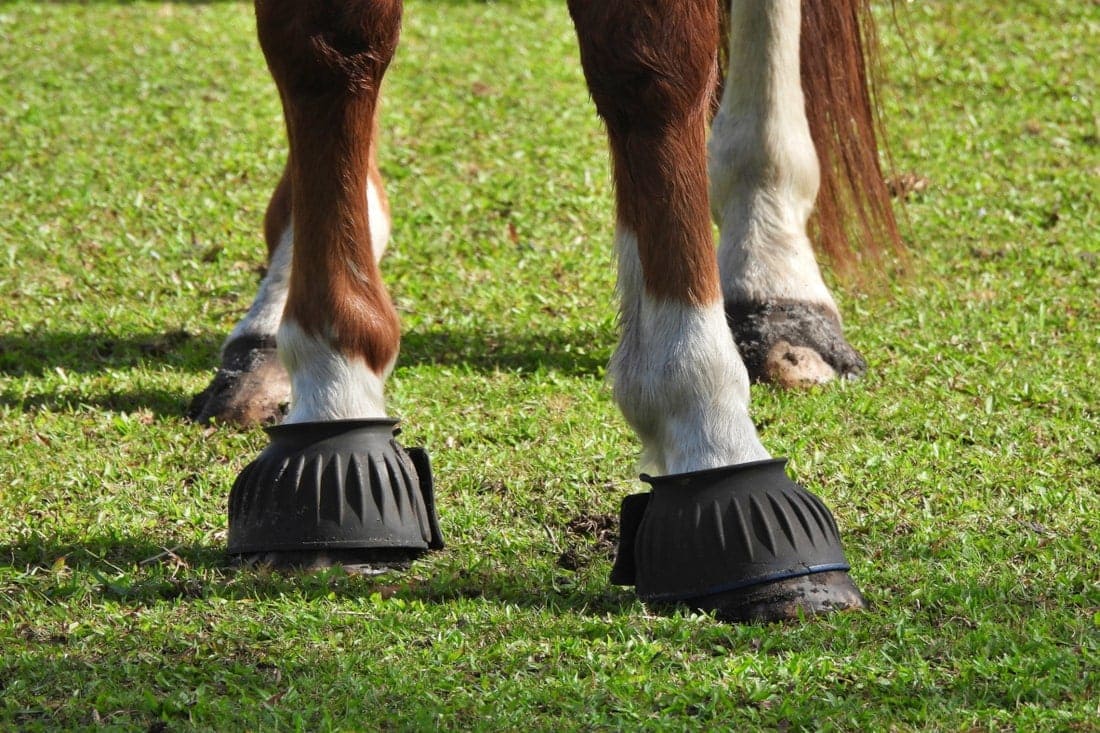
Bell boots, also known as over-reach boots, are protective gear for horses, designed to shield the hooves and pasterns from injuries. They can also protect horseshoes, and may improve confidence during movement for certain horses and disciplines. [1][2]
These boots are most often used to prevent overreaching and interference injuries, which occur when a horse accidentally strikes its own legs during motion. [1][2] Such impacts can cause painful bruising, pulled shoes, or soft tissue injuries that may affect long-term soundness.
Overreaching happens when the hind hooves reach too far forward and hit the front feet, particularly at faster gaits or during athletic activity. Interference, also called brushing, occurs when a horse strikes itself laterally with one leg while moving.
With a wide range of designs and materials available, horse owners can choose bell boots that balance protection, comfort, and durability to suit their horse’s individual needs. Read on to learn more about bell boots for horses, including how they work, when they are most useful, and what to consider when choosing the right style and fit.
Bell Boots for Horses
Bell boots, sometimes called over-reach boots, are protective coverings worn over a horse’s hoof and part of the pastern. They act as a barrier against overreaching, interference (brushing) and accidental impacts during work, turnout, or trail riding. [3][4][5]
While not every horse requires bell boots, they are beneficial for many in specific situations. Horses prone to overreaching, those wearing certain shoe types, or those participating in high-impact disciplines may gain the most protection.
Key benefits of bell boots for horses include: [2][5][6]
- Injury prevention: Overreaching occurs when the hind hoof strikes the back of the front hoof, potentially causing cuts, bruising, or pulled shoes. Bell boots act as a protective barrier to reduce this risk.
- Shoe protection: Shod horses in regular work risk pulling their front shoes off through overreaching or interference. Bell boots help prevent this, making them especially valuable for horses in egg bar or therapeutic shoes, which are more prone to being stepped on and torn off.
- Hoof protection: Horses with tender heels or recovering from minor pastern or hoof injuries may benefit from the cushioning that bell boots provide.
Even horses that rarely overreach may benefit from bell boots when turned out with energetic companions or in unfamiliar areas, reducing the chance of accidental injury.
Over-Reaching & Interference
Over-reaching happens when a horse’s hind hoof makes contact with the back of a front hoof, often resulting in damage to the front heels. Brushing, a form of interference, occurs when a hoof strikes the opposite leg, typically affecting the inner sides of the fetlocks on either the front or hind limbs. [3][4][7]
Both over-reaching and interference can lead to scuffs, lost shoes, bruising, or injuries to sensitive areas such as the heel bulbs, coronet band, or tendons. [7]
Risk Factors
Certain horses are prone to over-reaching or interference due to conformation, movement, or workload. Factors that influence over-reaching and interference in horses include: [3][4][7][8][9][10][11][12]
- Conformation: Horses with long hind legs and shorter backs may reach further underneath themselves, increasing the chance of striking the front feet
- Gaits: Horses with big, swinging strides, or those with a quick hind action may be more likely to overreach
- Shoeing and hoof balance: Improperly balanced hooves, long toes, or delayed breakover can make it harder for the front feet to get out of the way in time
- Speed and intensity of work: Activities like jumping, galloping, or fast turns in sports such as eventing, racing, or cutting increase the risk of hind hooves contacting the front feet
- Age and condition: Young, unbalanced horses or those fatigued from training are more likely to misstep and overreach
- Environment: Slippery, deep, or uneven footing can alter stride timing and increase the likelihood of contact between front and hind hooves
Repeated overreaching can lead to bruising, cuts, pulled shoes, or more serious soft tissue injuries.
What's your top priority with your horse's health?

Enter your email to receive your store credit
Types of Bell Boots
Understanding the different types of bell boots helps horse owners choose the best option for their horse’s comfort, protection, and activity level.
Styles
Bell boots come in several styles, each offering different levels of convenience, security, and stability.
- Open bell boots feature Velcro® or hook-and-loop fasteners, making them adjustable and easy to put on or remove. Horses with sensitive pasterns might be more comfortable in this style.
- Pull-on bell boots stretch over the hoof without fasteners. This type is more durable and secure, which is often preferred for turnout or heavy use. [3]
- No-turn bell boots are designed so the boot can’t spin around the hoof during movement, offering extra stability for active horses. [3]
Materials
Bell boots are made from a variety of materials, each with its own advantages for comfort, durability, and protection. Materials include: [3][13]
- Rubber: Durable, impact-resistant, and suitable for high-intensity activities and turnout. Provides cushioning and moderate insulation.
- Neoprene: Flexible, lightweight, comfortable, and gentle on sensitive skin. Offers high insulation, reduces rubbing, and cushions the leg.
- Plastic: Rigidity provides more impact protection, often combined with softer inner layers for comfort.
- PVC (Polyvinyl chloride): Rigid but flexible, waterproof, and moderately insulating. Commonly used for durable outer layers.
- Polycarbonate: Lightweight, strong, and heat resistant. Provides impact protection without adding excessive weight.
- Synthetic/Fabric: Lightweight, breathable, sometimes padded or reflective, better suited for low-impact activities or aesthetic preference. May provide minimal insulation depending on thickness.
- Carbon-Fiber/Kevlar®: Extremely strong and tear-resistant, ideal for horses that are particularly active or prone to damaging their boots.
Many modern bell boots combine materials and often have a soft inner layer like neoprene for cushioning and insulation with a harder outer shell like PVC or polycarbonate for impact protection. Using a combination of materials provides a balance of safety, comfort, and heat management.
Specialty Bell Boots
Specialty bell boots are designed to address specific needs or provide extra protection in unique situations.
Common examples of specialty bell boots include:
- Reinforced toe or extra padding: Provides additional protection for horses prone to overreaching or toe injuries
- Reflective or high-visibility: Useful for trail riding or low-light conditions
- Therapeutic or medical: Designed to aid recovery from hoof or tendon issues, offering extra support or cushioning
How to Use Bell Boots for Horses
While there are many different types of equine bell boots available, the basic guidelines for care and use are the same. Below are general instructions for using bell boots. Always follow the manufacturer’s directions for best results.
Putting Bell Boots On
Correct application ensures the boots stay in place, protect effectively, and don’t cause rubbing or discomfort.
Here are the key steps for putting your horse’s bell boots on:
- Clean the hoof and pastern: Remove dirt, mud, or debris from the hoof and pastern to prevent rubbing or irritation.
- Loosen fasteners (if applicable): Open the boot closures fully to allow easy application.
- Position the boot: For pull-on boots, lift the hoof and turn the boot inside out. Slide it over the toe, then carefully roll it back over the heel bulbs. Flip it right-side out so it sits properly on the hoof and pastern. For boots with fasteners, place the boot over the heel bulbs and fasten it securely, ensuring a snug but comfortable fit.
- Check fit and comfort: Ensure the top edge sits comfortably around the pastern and that the boot covers the heel bulbs adequately.
Tips for Pull-On Boots
Pull-on boots are sometimes more challenging to pull into the correct position over the hoof capsule. Some strategies to make it easier include:
- Warm the boot slightly before use to make it more flexible
- Roll, don’t pull the boot over the hoof to avoid overstretching or tearing
Introduce pull-on boots gradually by having your horse wear them for short periods until they adjust to the snug fit.
Removing Bell Boots
Removing bell boots is usually quicker than putting them on, but doing it correctly prevents damage to the boot and keeps your horse comfortable.
Here are the general steps for removing your horse’s bell boots:
- Prepare the horse: Pick up the hoof and make sure the horse is standing balanced before removing the boot.
- Loosen fasteners (if applicable): Undo the fastener completely, then slide the boot gently back over the heel bulbs and off the hoof.
- Remove the boot: If the boot has fasteners, gently slide the open boot back over the heel bulbs and off the hoof. For pull-on boots, lift the hoof and carefully roll the boot inside out over the heel bulbs, then slide it forward over the toe.
Avoid yanking or overstretching the boot, which can cause damage to the boot and discomfort for the horse.

Maintenance & Care
Keeping bell boots clean and in good condition helps extend their lifespan and prevents irritation for your horse. [3]
Best practices for keeping your horse’s bell boots in working condition include:
- Clean regularly: Rinse off mud, manure, and sweat after each ride or turnout. For stubborn dirt, scrub with mild soap and water.
- Dry thoroughly: Always allow boots to dry fully before reuse to prevent rubbing, odor, or fungal growth. Avoid direct heat sources that may damage rubber or neoprene.
- Check for damage: Inspect boots frequently for cracks, tears, or worn Velcro that may cause the boot to come loose or rub. Replace when they no longer fit securely or comfortably.
- Rotate pairs: Having an extra set allows time for one pair to dry completely, reducing wear and tear.
- Store properly: Keep boots in a clean, dry area out of direct sunlight to prevent materials from breaking down.
These are general guidelines for bell boot care. Always follow the manufacturer recommendations for cleaning, storage, repairs, and maintenance.
Tips for Choosing the Right Bell Boot
The right bell boot depends on your horse’s routine, activity level, and individual needs. Matching the style and material to your horse’s lifestyle ensures both protection and comfort. [3]
The recommended style depends on which lifestyle factor is most important for your horse. Considerations include:
- Turnout: Pull-on or durable rubber boots offer long-lasting protection during daily wear
- Riding: Neoprene or non-rotating (anti-rotation) boots provide comfort and stability while under saddle
- Sensitive horses: Open-front boots with adjustable fasteners reduce rubbing and often easier to put on and take off
- High-risk horses: Kevlar® or reinforced designs give maximum durability and impact resistance
By selecting the right type, you can help prevent injuries, support long-term hoof health, and keep your horse comfortable during both work and turnout.
Fitting Bell Boots
A correct fit is essential for bell boots to protect the hoof without causing rubbing or discomfort. Poorly fitted boots can spin, rub, or fail to provide adequate coverage. [1][3]
Follow these steps to ensure your horse’s bell boots fit properly.
1. Measure Your Horse’s Hoof
Most bell boots are fit according to the hoof width and length.
Take these measurements according to:
- Width: Across the widest part of the hoof.
- Length: From the toe to the back of the heel bulbs.
Compare these measurements with the manufacturer’s sizing chart.
2. Check Coverage
The bottom edge of the bell boot should cover the heel bulbs without dragging on the ground. When viewed from the side, the boot should extend about ¼ to ½ inch below the heel bulbs for full protection. The boot may gently touch the ground when the horse is standing.
3. Assess Fit Around the Pastern
The top edge should sit snugly around the pastern without pinching. You should be able to slip a finger between the pastern and the boot to ensure comfort and prevent rubbing.
4. Test Movement
Walk and trot the horse to verify that the boots stay in place. Make sure the boot does not spin excessively, slide up, or interfere with movement.
Frequently Asked Questions
Here are some frequently asked questions about horse bell boots:
Bell boots protect a horse's hooves and pasterns from injuries caused by overreaching, interference (brushing), or accidental impacts. They help prevent scuffs, bruising, and pulled shoes, especially in active horses or those wearing certain types of shoes.
Horses should wear bell boots if they are prone to overreaching, have sensitive heels, are recovering from minor hoof or pastern injuries, or are turned out or worked in environments where accidental impacts are likely. They are also useful during riding or turnout for horses in high-intensity disciplines.
Yes. Many bell boots are designed for use during riding. Make sure bell boots fit properly and do not interfere with the horse's stride before using them under saddle.
Bell boots and over-reach boots are two names for the same protective gear. Both cover the horse's hoof and part of the pastern to prevent the hind hoof from striking the front hoof.
Summary
Bell boots protect horse hooves and pasterns from injuries caused by overreaching, brushing, or impacts, and are useful for active or high-risk horses.
- Over-reaching happens when a hind hoof strikes the back of a front hoof, causing bruising, cuts, or pulled shoes.
- Interference happens when a horse kicks themself laterally during movement.
- Bell boots come in a variety of styles suited to different lifestyles and environments.
- Horse bell boots should be properly fitted to prevent discomfort and ensure full functionality.
References
- Green. L. Bell Boots Without the Rub! Practical Horseman. 2001.
- Moorman. V. J. et al. Heel Bulb Lacerations in Horses. Merck Veterinary Manual. 2024.
- Watson. R. Maximum Protection with Minimum Fuss?. Equine Health. Mark Allen Group. 2016.
- Animal Health - Interference. Understanding Equine Welfare Issues. Brooke. 2016.
- Back. W. and Clayton. H. M. Equine Locomotion. Saunders. 2013.
- Franklin. S. H. et al. Investigation of the Incidence and Type of Injuries Associated with High-Speed Treadmill Exercise Testing. Equine Veterinary Journal. 2010.
- Thal. D. Hoof Limb Contact Foot Interfering Or Overreaching. Horse Side Vet Guide. 2018.
- Munroe. G. and Witton. C. Foot: Trimming and Balancing in Horses (Equis). Vetlexicon.
- Aoun. R. et al. Shoe Configuration Effects on Equine Forelimb Gait Kinetics at a Walk. Biochemistry, Biophysics and Molecular Biology. 2025.
- Dabbene. I. et al. Clinical Findings and Prognosis of Interference Injuries to the Palmar Aspect of the Forelimbs in Standardbred Racehorses: A Study on 74 Cases. Equine Veterinary Journal. 2018. View Summary
- Horan. K. et al. Influence of Speed, Ground Surface and Shoeing Condition on Hoof Breakover Duration in Galloping Thoroughbred Racehorses. Animals. 2021.
- Navarra. K. Understand Breakover and the Implications of Manipulating It. American Farriers Journal. 2021.
- Hopegood. L. et al. The Influence of Boot Design on Exercise Associated Surface Temperature of Tendons in Horses. Comparative Exercise Physiology. 2013.