English


Bromegrasses, including Smooth and Meadow Bromegrass, are cool-season perennials widely used for equine forage in North America. Valued for their drought tolerance, soil adaptability, and consistent nutritional profile, these grasses are a reliable option for many equine diets.
Bromegrass typically offers high protein and low hydrolyzable carbohydrate (HC; sugar + starch) levels, making it suitable for performance horses and those with metabolic sensitivities.
A forage-first diet centered on Bromegrass can support digestive health and overall wellness in horses. However, its protein, fiber, and hydrolyzable carbohydrate levels vary depending on harvest timing, climate, and drying methods.
To ensure consistent nutrition and food safety, proper harvest and storage practices are essential. Vitamin, mineral, or calorie supplementation may be needed to fully meet a horse’s dietary requirements.
Keep reading to learn everything you need to know about bromegrass for horses, including its nutrient profile and feeding recommendations.
Bromegrass for Horses
Bromegrasses are cool-season perennial grasses from the genus Bromus, with several varieties cultivated for horse forage. Notable types include Smooth Bromegrass (Bromus inermis) and Meadow Bromegrass (Bromus biebersteinii), both of which are known for their drought resistance.
Smooth Bromegrass, native to Eastern Europe and China, is now widespread throughout the northern hemisphere. It was first introduced to the United States in 1884 and rose in popularity during the droughts of the 1930s. [1]
Meadow Bromegrass is originally from Turkey, and was brought to the U.S. around 1949. [2] Today, these species are among the most widely used cool-season forages in North America. [3]
These grasses are well-suited to dry, harsh environments, performing best in well-drained soils with a pH between 6.0 and 7.0, although they are somewhat tolerant of alkaline soils. [2][3] Despite this adaptability, Bromegrasses require fertile soil to thrive and are not well-suited to heavy grazing or frequent cutting. [2][3]
Nutrient Profile
The nutrient content of Bromegrass is broadly comparable to that of other cool-season grasses. As with other forages in this category, maturity stage at harvest is a key factor in its nutritive value. [3]
Table 1. Average nutrient content of fresh Meadow and Smooth Bromegrass (dry matter) at different levels of maturity. [4][5]
| Nutrient | Immature Meadow Bromegrass |
Immature Smooth Bromegrass |
Mid-Maturity Meadow Bromegrass |
Mid-Maturity Smooth Bromegrass |
|---|---|---|---|---|
| Digestible Energy | 3.3 Mcal / kg | 3.3 Mcal / kg | 2.7 Mcal / kg | 2.6 Mcal / kg |
| Crude Protein | 28 % | 26.4 % | 22.2 % | 19.8 % |
| Neutral Detergent Fiber (NDF) | 41 % | 39.3 % | 55.9 % | 60.2 % |
| Acid Detergent Fiber (ADF) | 20.8 % | 20.5 % | 28.6 % | 30.4 % |
Pastures containing Smooth Bromegrass were found to have higher protein content than some other pasture grasses including: [6]
- Kentucky Bluegrass
- Orchardgrass
- Creeping Foxtail
- Timothy
In addition, some studies show lower HC content compared to Timothy, Kentucky Bluegrass, Meadow Fescue, and Perennial Ryegrasses. [6][7]
Table 2. Average nutrient content of Bromegrass hay (dry-matter basis) [8]
| Nutrient | Bromegrass |
|---|---|
| Digestible Energy | 1.96 Mcal / kg |
| Crude Protein | 11 % |
| Acid Detergent Fiber (ADF) | 41 % |
| Neutral Detergent Fiber (NDF) | 66 % |
Factors Affecting Hay Quality
The nutritional value of bromegrass hay is determined by both genetic characteristics of the species and environmental and management variables during production.
While research has documented specific nutrient trends in different species of forage, growing and harvesting conditions differ considerably across the industry. These real-world variations in climate, soil, and management practices often have a greater impact on nutrition content than species-specific differences.
Fertilization
Fertilization can affect the mineral and nutrient content in Bromegrass forage. Soil fertility depends on nutrient availability, pH level, moisture content, soil structure, and microbial activity.
Fertilization has been shown to increase potassium and protein content in Bromegrass, although calcium and magnesium levels tend to decrease in response to the same treatments. [9]
Phosphorus content is typically higher in early cuts, but falls below non-fertilized levels in later harvests. Nitrogen is frequently added to fertilizers to promote protein synthesis. [10][11]
Implementing consistent fertilization practices is beneficial for maintaining soil fertility and maximizing both Bromegrass yield and nutritional content. This leads to healthier, more productive forage for hay production and grazing programs.
Growing Conditions
Sunlight and water are among the most important resources for plant health and productivity, and cultivation outside optimal conditions can cause changes in a plant’s composition. For example, drought conditions can increase the leaf-to-stem ratio for Bromegrass, typically leading to higher protein content and lower fiber levels. [12]
Research into other cool-season grasses suggests that warmer temperatures decrease digestibility and increase fiber, while cooler temperatures promote greater HC content and lower fiber. [13][14] These environmental influences affect digestibility and palatability, making climate and water management key considerations when optimizing yield and forage value.
Harvesting
The nutritional value of hay is heavily affected by factors including plant maturity, time of day when harvesting, moisture levels during baling, and weather conditions throughout the cutting and drying process.
As plants mature, they shift resources from leaf growth to stem development. With this comes an increase in fiber content and decreased protein levels. Bromegrasses, like other forage species, show a rise in neutral detergent fiber and a decrease in protein as they mature. [15][16]
Time-of-day also impacts forage quality. Grasses accumulate HCs through photosynthesis during daylight hours and metabolize them overnight. As a result, HC levels are typically higher in grasses harvested in the afternoon than the morning. [7]
Drying
Post-harvest handling plays a crucial role in preserving nutritional value. Drying hay after harvest ensures clean and hygienic forage.
Weather conditions can affect both drying speeds and the nutritive quality of forage. When hay dries slowly, continued plant respiration depletes HC content and diminishes forage quality. [17]
Rainfall during the drying process compounds these losses, leaching protein, non-fiber carbohydrates, and minerals, leading to a lower nutrient density. [17]
Spoilage
Spoilage during storage is a significant concern for horse owners relying on hay-based diets. It most often occurs when hay is baled or stored with excess moisture, creating conditions for microbial and fungal growth. This can generate heat and toxic byproducts, posing a fire risk and contributing to respiratory and digestive problems in horses. [17]
Spoilage also results in hay wastage, which can be costly over time. Implementing proper storage and feeding practices can reduce these losses.
What's your top priority with your horse's health?

Enter your email to receive your store credit
Forms of Bromegrass in the Equine Diet
There are a number of options for incorporating Brome into your horse’s diet, including pasture, hay, and processed forms. Each delivers its own advantages and can be incorporated into your horse’s diet depending on their needs.
Pasture
Pasture grass is a form of fresh forage that horses consume straight from the field, offering them an opportunity to engage in natural grazing behaviors.
When it comes to horse pasture preference, Meadow Bromegrass is generally less palatable to horses than other cool season grasses like Kentucky Bluegrass, Timothy, and Meadow Fescue. [6] However, in one study horses were found to prefer Meadow Bromegrass to Tall Fescue and related mixes. [18]
In terms of forage production and pasture persistence, Smooth Bromegrass may underperform other cool-season grasses like Orchardgrass, Meadow Fescue, and Kentucky Bluegrass. Bromegrass has also been shown to have lower persistence and lower yields, particularly when compared to Orchardgrass. [19]
While Bromegrass can be resilient and adaptable, its reduced yield, lower persistence, and varied palatability should be evaluated carefully. When selecting grasses for horse pasture seeding, it’s essential to match forage traits and horse grazing preferences with your overall pasture management goals.
Hay
Hay is harvested forage that is dried, baled, and stored for future use. It’s most commonly used when pasture access isn’t available or warranted.
Brome hay offers good digestibility and a favorable nutrient profile compared to other common grasses like prairie hay and fescue. [20] While it may be less preferred than alfalfa, studies show that young horses tend to prefer Bromegrass over Bermudagrass. [21] It is also considered a safe and nutritious forage choice for pregnant and lactating mares, as well as foals. [22]
Overall, Brome hay is a reliable, digestible forage option that meets the dietary needs of various classes of horses. Although it may not match alfalfa in palatability, its safety and nutritional benefits make it a valuable component of many equine feeding programs.
Chopped & Pelleted Hay
Brome hay can be processed into alternative forms after drying, providing versatile feeding solutions for horses with specific care requirements. Despite differences in form, processed brome hay — such as chopped hay and pellets — typically retains nutrient content comparable to long-stem brome hay.
Chopped brome hay, made by cutting long-stem hay into shorter pieces, is especially beneficial for horses with dental issues that make chewing difficult. Though not always available commercially, it can be prepared at home using equipment like a leaf mulcher.
Pelleted brome hay, made by grinding hay and compressing it into pellet form, offers an easy-to-chew, low-dust forage option. Both dry and soaked pellets are good alternatives for horses with respiratory conditions, while soaked pellets can also support horses with dental problems by easing forage consumption.
Pros & Cons of Bromegrass
Like all forages, Bromegrass has benefits and limitations that depend on how it is grown, harvested, and fed. Understanding these factors can help you determine whether Bromegrass is the right choice for your horse’s nutritional needs.
Benefits of Bromegrass
Nutritionally, Brome is characterized by a high protein content and moderate-to-low sugar and starch content. These qualities make it a valuable forage for specific classes of horses.
Brome’s relatively protein-rich profile supports the dietary needs of horses in heavy exercise, lactation, or early growth stages, reducing the need for additional protein supplements.
The naturally lower hydrolyzable carbohydrate (HC) content in Bromegrass also makes it an attractive option for horses with metabolic concerns or sensitivities to high sugar intake. However, since factors like harvesting conditions can significantly affect HC levels, testing your hay is crucial before feeding it to metabolic horses.
Disadvantages of Bromegrass
Bromegrass has few disadvantages when the variety and quality are well matched to your horse’s needs, and it is generally a safe and dependable forage choice.
However, it may be less palatable than some other cool-season grasses, which can reduce voluntary intake in certain horses. It also tends to have lower persistence and yield under heavy grazing, making it less suitable for pastures where high productivity is a priority [19].
Nutrient content can vary widely depending on harvest maturity, fertilization, and environmental conditions. In some cases, bromegrass hay may be lower in certain vitamins and minerals, requiring supplementation to achieve a balanced diet.
Availability can also be limited in some regions, potentially making it more expensive or harder to source compared to more common forages like timothy or orchardgrass.

How to Feed Bromegrass
Feeding a forage-first diet is essential for supporting your horse’s digestive health and overall well-being. Testing your hay helps ensure that the forage, which makes up the bulk of a bromegrass diet, meets your horse’s nutritional requirements.
1) Select the Right Hay
To optimize your horse’s forage intake, start by choosing a hay that matches their energy and protein requirements without exceeding them. Choosing the right hay is essential for maintaining a balanced equine diet.
Overweight horses often benefit from mature, lower-nutrient Brome hay, which tends to be high in fiber but low in energy. This supports digestive health by allowing greater forage consumption without excessive calorie intake.
For horses requiring additional calorie control, soaking Brome hay effectively reduces soluble carbohydrates and overall energy content, making it suitable for metabolic horses or those prone to weight gain.
Mid-maturity or average-quality hay is well-suited for maintenance horses or those engaged in light to moderate exercise. This hay provides adequate energy and protein to meet their daily nutritional needs.
Immature Brome generally offers higher levels of energy and protein compared to mature hay. This option is well-suited for horses with increased nutritional needs, including foals, lactating mares, and performance horses. Feeding nutrient-dense Brome hay to these horses can reduce reliance on grain and supplements, promoting better digestive health while offering a more economical feeding strategy.
2) Feed the Optimal Amount
Feeding free-choice hay is an effective way to support your horse’s digestive health and mental well being—provided the hay matches their energy and nutrient needs. The amount of hay a horse consumes naturally depends on factors such as activity level, growth stage, and reproductive status.
Maintenance horses, those in light work, or pregnant mares typically eat about 2% of their body weight in dry matter each day. Horses in moderate work may consume around 2.25% of their bodyweight. [17]
Lactating mares, foals, and heavy-work horses often need closer to 2.5% of their bodyweight, although high quality Brome alone may not meet their needs. [17] Supplementing with protein-rich feeds such as alfalfa, beet pulp, or oil-based additives can help provide the extra nutrients they require.
For easy keepers, Brome forage may lead to excess calorie intake, so offering controlled hay rations is recommended to maintain ideal body condition. Limiting access to Brome pastures can also regulate calorie consumption.
3) Balance the Diet
Brome hay generally meets the energy and protein needs of the average horse but often falls short in key nutrients like sodium, zinc, copper, selenium, and vitamin E. To ensure a balanced diet, horses fed primarily on Brome should receive a comprehensive vitamin and mineral supplement to fill these deficiencies.
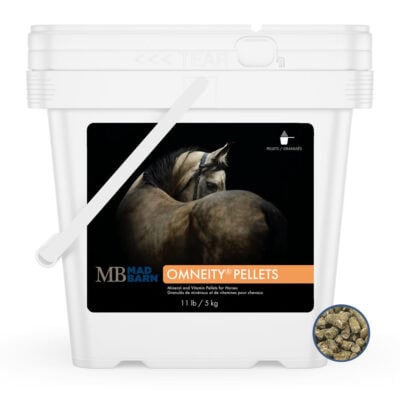
Mad Barn’s Omneity® Pellets is an all-in-one supplement that provides organic trace minerals, a complete B-vitamin complex, essential amino acids, digestive enzymes, and yeast to support hoof strength, metabolic function, immune health, and digestive efficiency.
When paired with a suitable salt source to meet sodium needs, Omneity® provides a balanced, low-calorie way to round out your horse’s feeding program.
Example Diet
Here is an example diet for a 1,100 lb (500 kg) horse in light work, based on average-quality Brome hay containing 10% crude protein and 57% neutral detergent fiber (NDF).
| Feed | Amount / Day |
|---|---|
| Mid-Maturity Bromegrass Hay | 25 lb (11.5 kg) |
| Salt | 30 g (2 tbsp) |
| Omneity® Pellets | 200 g (2 scoops) |
| Diet Analysis | |
| Digestible Energy | 100 % |
| Protein | 144 % |
| HC (ESC + Starch) | 8.8 % |
Keep in mind that individual horses have unique nutritional needs, and this sample may not be appropriate for every situation. For tailored guidance, schedule a free consultation with one of our qualified equine nutritionists today.
Frequently Asked Questions
Here are some frequently asked questions about Bromegrass for horses:
Bromegrass is a cool-season perennial grass known for its drought tolerance, adaptability to various soil types, and balanced nutrient profile. It offers moderate energy and elevated protein, and is available in multiple forms including pasture, hay, chopped forage, and pellets.
Bromegrass is suitable for maintenance horses, those in light to moderate work, pregnant mares, and horses with metabolic sensitivities due to its typically high protein and low non-structural carbohydrate content. However, it may not be ideal for easy keepers as it can lead to excess calorie intake if fed free-choice.
Horses typically consume between 2% and 2.5% of their body weight in dry matter daily, depending on activity level. Maintenance horses and those in light work or pregnancy generally consume about 2%, moderate work horses around 2.25%, and heavy work, lactating mares, and growing horses up to 2.5%. Feeding amounts should be adjusted to individual needs.
Yes, Bromegrass is a safe forage for horses. When harvested, handled, and stored properly, Bromegrass is a safe and nutritious forage. Its moderate energy and protein content, combined with typically low non-structural carbohydrates, make it appropriate for many horses, including those with metabolic concerns. Hay testing is recommended to confirm nutrient levels.
Summary
Bromegrass is a versatile, nutritious forage commonly used in horse diets. Valued for its nutrition content, Bromegrass is a suitable choice for owners seeking a high-fiber, balanced foundation for their horse's nutritional needs. Its adaptability makes it a reliable choice for many feeding programs.
- Brome is a cool-season perennial grass that grows well in temperate climates with well-drained soils
- It has a moderate energy and elevated protein content, which varies depending on harvest timing, fertilization, and growing conditions
- Bromegrass can be provided as pasture, hay, chopped forage, and pellets—making it adaptable to horses with different care needs
- To optimize feeding, testing Bromegrass hay through a nutrient analysis is essential to ensure it meets your horse's specific nutritional requirements
References
- Mackiewicz-Walec. E. et al. Smooth Brome (Bromus Inermis L.) — A Versatile Grass: A Review. Agriculture. MDPI. 2024.
- MEADOW BROME. United States Department of Agriculture. 2012.
- Hall. M. Smooth Bromegrass. PennState Extension. 2025.
- Ferdinandez. Y. S. N. and Coulman. B. E. Nutritive Values of Smooth Bromegrass, Meadow Bromegrass, and Meadow × Smooth Bromegrass Hybrids for Different Plant Parts and Growth Stages. Crop Science. 2001.
- Pagan. J. D. Measuring the Digestible Energy Content of Horse Feeds. Advances in equine nutrition. Nottingham University Press United Kingdom. 1998.
- Allen. E. et al. Forage Nutritive Value and Preference of Cool‐Season Grasses under Horse Grazing. Agronomy Journal. 2013.
- Pelletier. S. et al. Forage Nonstructural Carbohydrates and Nutritive Value as Affected by Time of Cutting and Species. Agronomy Journal. 2010.
- Beck. P et al. Nutritive Value of Feeds. OK State Extension. 2024.
- Russell. J. S. et al. Effect of Nitrogen Fertilizer on the Nitrogen, Phosphorus, and Cation Contents of Bromegrass. Soil Science Society of America Journal. 1954.
- McCaughey. W. and Simons. R. Harvest Management and N-Fertilization Effects on Protein Yield, Protein Content and Nitrogen Use Efficiency of Smooth Bromegrass, Crested Wheatgrass and Meadow Bromegrass. Canadian Journal of Plant Science. NRC Research Press. 1998.
- Lkhagvasuren. B. et al. Plant and Soil Responses to Nitrogen and Phosphorus Fertilization of Bromegrass-Dominated Haylands in Saskatchewan, Canada. Grass and Forage Science. 2011.
- Sheaffer. C. C. et al. Drought Effects on Yield and Quality of Perennial Grasses in the North Central United States. Journal of Production Agriculture. 1992.
- Kugler. J. Producing High Quality Orchardgrass and Timothy Hay. Proceedings National Alfalfa Symposium. 2004.
- Thorvaldsson. G. et al. The Effects of Growth Temperature on Digestibility and Fibre Concentration of Seven Temperate Grass Species. Acta Agriculturae Scandinavica, Section B — Soil & Plant Science. Taylor & Francis. 2007.
- Karn. J. F. et al. Nutritive Quality of Four Perennial Grasses as Affected by Species, Cultivar, Maturity, and Plant Tissue. Agronomy Journal. 2006.
- Ferebee. D. B. et al. Digestibilty and Chemical Composition of Brome and Alfalfa Throughout the Growing Season. Farm Research. 1972.
- Nutrient Requirements of Horses: Sixth Revised Edition. National Academies Press, Washington, D.C. 2007. View Summary
- Pagan. J. D. Advances in Equine Nutrition. Nottingham university press, Nottingham. 2009.
- Allen. E. et al. Yield and Persistence of Cool-Season Grasses under Horse Grazing. Agronomy Journal. John Wiley & Sons, Ltd. 2012.
- Harbers. L. H. et al. Digestibility of Three Grass Hays by the Horse and Scanning Electron Microscopy of Undigested Leaf Remnants2. Journal of Animal Science. 1981.
- LaCasha. P. A. et al. Voluntary Intake, Digestibility, and Subsequent Selection of Matua Bromegrass, Coastal Bermudagrass, and Alfalfa Hays by Yearling Horses. Journal of animal science. Oxford University Press. 1999.
- Guay. K. A. et al. Matua Bromegrass Hay for Mares in Gestation and Lactation. Journal of Animal Science. Oxford University Press. 2002. View Summary