English



The Caspian horse is a rare Iranian breed of small equine that originated in ancient Persia. Although most Caspians are less than 12 hands tall, their conformation resembles full-size horses, not ponies.
These horses are descendants of miniature Caspian-type horses that contributed to the early development of several Middle Eastern horse breeds. Formerly, historians believed these horses were extinct until the late 20th century.
Today, breeding programs worldwide are dedicated to preserving this endangered breed. Modern Caspian horses are excellent riding mounts for small children, but their small size also influences their health and management needs.
This breed profile will discuss the history, characteristics, health problems, and nutritional needs of the Caspian horse breed. Keep reading to learn more about feeding and caring for Caspian horses.
Caspian Horse History
The history of the Caspian horse breed spans thousands of years, showcasing its enduring legacy and cultural significance.
Although only recognized internationally as a breed in the second half of the 20th century, morphological and genetic evidence suggest these horses have an ancient origin.
Origin
Caspian horses originated in the mountainous regions of present-day northern Iran. Ancient literature and art from the Persian empire depict a small breed of horses from the area that were exported to Greece, Egypt, and Assyria. [1]
In 2011, archeologists discovered horse remains in Iran dating back to 3400 BC. Scientists later asserted that these remains resembled the skeleton of the modern Caspian. Caspian horses have anatomical differences that distinguish their bones from other modern breeds. [1]
Genetic studies suggest Caspian horse bloodlines influenced the development of several Iranian breeds, with strong links to Turkmen and Arabian horses. Some researchers believe that Caspians are ancestors of all hot-blooded horses. [2]
The harsh mountain environment of their homeland likely contributed to the maintenance of their small stature over millennia. Smaller horses require less vegetation to survive and are more agile over challenging terrain compared to larger breeds. [2]
Some believe the miniature Persian horses depicted in ancient sources went extinct long ago. Louise Firouz, an American living in Iran, named the breed in 1965 after discovering a small population of miniature horses in the Alborz Mountains by the Caspian Sea. [1]
Historic Use
Research suggests human civilizations first domesticated horses around 4000 BC. Horse-drawn chariots emerged for use in the Middle East by 1800 BC, but early farmers in modern-day Iran likely domesticated tiny wild horses in the region before then. [3]
Ancient art often depicted small horses pulling the chariots of Persian nobility. Humans in the Persian Empire also relied on horses to facilitate trade and transportation over the region’s vast land mass. [1]
Small horses also worked as pack animals to transport goods over mountainous terrain, while larger breeds gained popularity as riding horses in other areas of the Middle East.
After the Arab conquest of Iran in the 7th century, the region’s population of miniature horses declined into obscurity. The Caspian horse wouldn’t regain international attention until 1300 years later. [1]
Following the rediscovery of the breed by Firouz, breeders started exporting Caspian horses from Iran to establish breeding programs worldwide. These horses are also commonly used for cross-breeding to improve other breeds. [1]
Breed Registry
The Caspian Horse Society of the Americas (CHSA) maintains the official registry and studbook for the breed in the Western Hemisphere. Other registries such as the Caspian Horse Breeders Association also manage studbook with public access.
The CHSA also works with the Livestock Conservancy, which classifies the Caspian horse as a Critical Rare Breed.
| Breed Summary | |
|---|---|
| Breed Name | Caspian Horse |
| Breed Type | Small horse |
| Origin | Northern Iran (ancient Persia) |
| Breed Registry | Caspian Horse Society of the Americas (CHSA); Caspian Horse Breeders Association |
| Population Status | Critical Rare Breed |
| Average Height | 10 – 12 hh |
| Average Weight | 400 – 600 lb (180 – 270 kg) |
| Common Coat Colors | Bay, grey, chestnut, dun, black |
| Conformation | Refined head, dished face, prominent jaw bones, fine muzzle, small ears, fine throatlatch, graceful neck, long sloping shoulder, close-coupled back, deep heart girth, defined hindquarters, slender limbs, dense flat bone, oval-shaped hooves |
| Common Uses | Youth riding, driving, halter, dressage, show ring, jumping, eventing |
| Temperament | Intelligent, alert, willing, kind, friendly, sensitive |
| Best For | Experienced youth riders |
| Common Health Concerns | Hyperlipidemia, oral discomfort, dental overcrowding, digestive problems |
| Price Range | $3,500 to $10,500 |
| Lifespan | About 25–30 years |
What's your top priority with your horse's health?

What's your top priority with your horse's health?
Breed Characteristics
The breed’s elegant conformation and small size attracted the attention of Firouz, who recognized their potential as riding mounts for youth. However, the breed also has several unique primitive characteristics.
Conformation
The average Caspian horse stands between 10 and 12 hands in height. Although similar in size to small pony breeds, Caspians are small horses with conformation resembling full-size breeds.
Their average body weight typically ranges between 180 and 270 kg (about 400 to 600 lbs), depending on their age, gender, health, and overall condition.
These miniature equines have a similar build to other hot-blooded breeds, such as the Arabian and Thoroughbred. They have slimmer bodies and longer legs than ponies. Their refined heads often have dished faces, prominent jaw bones, fine muzzles, small ears, and a fine throat latch.
Caspian horses have graceful necks that attach to a long, sloping shoulder. Their backs are close-coupled with deep heart girths and defined hindquarters. Limbs are slender with dense, flat bone and oval-shaped hooves.
Other distinguishing morphological characteristics of the breed include extra molar teeth, a unique parietal bone, and a lack of hyaline cartilage in their tongue. [1]
Colours
Common coat colours in Caspian horses include:
- Bay
- Grey
- Chestnut
- Dun
- Black
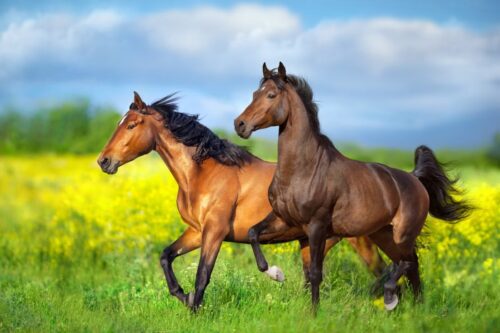
Their coats have fine hair, and their mane and tails grow long and silky.
Temperament
Like other hot-blooded horse breeds, Caspian horses have intelligent and alert personalities. They are quick learners with willing work ethics, and many owners also find these tiny horses to be kind and friendly.
This breed is typically more sensitive than pony breeds commonly ridden by children, and are best suited for more experienced riders.
Disciplines
Their sensitivity and intelligence allow them to excel in many competitive equestrian disciplines. While they are too small for most adults to ride, larger equestrians can also enjoy Caspians in driving disciplines and halter shows.
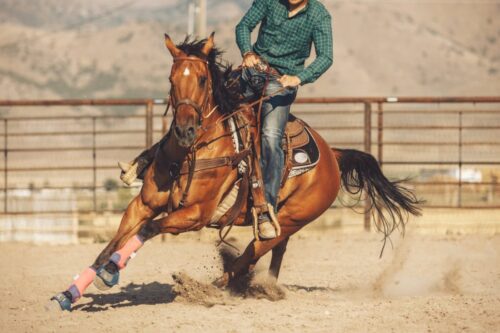
Most Caspian horses excel in careers as riding ponies for youth riders. Their smooth gaits and floating movements stand out in the dressage and show rings. Their agility and athleticism are also well-suited for jumping and eventing.
Caspian Horse Health
Ensuring the health of the Caspian horse breeding population is crucial for the preservation of this ancient breed. While relatively hardy, these horses are susceptible to common health problems found in miniature horse breeds.
Genetic Diseases
Despite the small breeding population, studies have found substantial genetic diversity in the breed. However, research also reveals recent genetic bottlenecks that pose a threat to the breed’s diversity, highlighting the importance of good breeding management. [4]
More research is needed to investigate the prevalence of genetic diseases in the Caspian horse population.
One study of Caspian horses identified a gene associated with equine degenerative myeloencephalopathy, a progressive neurological disorder. [5] However, other studies have not found a link between this gene and a higher risk of EDM in Caspians.
Research is ongoing into other candidate genes that may contribute to a genetic predisposition to the disease. [6]

Health Problems
Like other miniature horse breeds, Caspian horses are susceptible to hyperlipidemia, a transient increase in blood lipids disturbance during negative energy balance (calorie deficit). [7]
One study found that 48 hours of feed restriction caused a significant elevation of serum triglycerides in overweight Caspian horses. However, Caspian horses did not show classic symptoms of hyperlipemia syndrome seen in American miniature horses. [7]
Caspian horses have a unique mouth anatomy, with an extra molar instead of wolf teeth. This can lead to oral discomfort with ill-fitting bits. Studies also show Caspian horses don’t have hyaline cartilage in their tongues. [8]
Some horse breeds with smaller, dished heads are susceptible to dental problems due to a lack of space in the mouth. Research suggests miniature horses are predisposed to dental overcrowding, which can cause unbalanced teeth and difficulties eating. [9]
Care and Management
All Caspian horses need quality basic care to meet their physical and behavioural needs. Work with your veterinarian to develop a preventative wellness program with routine vaccinations, deworming, and dental exams.
Due to their mouth anatomy, these horses may need more frequent dental check-ups than other breeds. Poor bridle or bit fit may contribute to behavioural problems under tack, so work with a bridle and bit fitter to ensure your equipment fits appropriately.
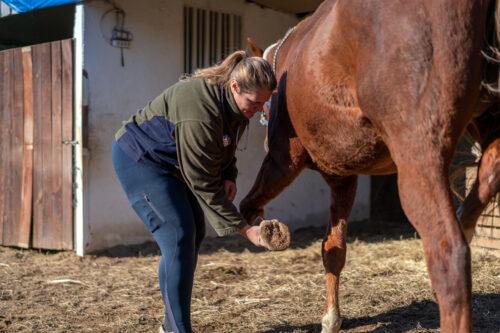
Caspians have unique oval-shaped hooves that require regular farrier care to maintain hoof balance and integrity. Horses with heavier workloads may need protection with shoes, while other Caspians can stay sound barefoot.
This breed has fine hair adapted to hot climates, so they may require blanketing in extreme cold. However, they should still get daily turnout that provides the opportunity for free exercise and social contact. Always ensure your horse has access to shelter in case of inclement weather.
These small but mighty equines are athletic animals that thrive with regular exercise. Work with your trainer to develop an exercise program that supports long-term strength and soundness.
Excessive stress associated with training and competition can increase the risk of digestive problems. Management should prioritize minimizing stress in Caspians, even if they have a performance career.
Nutrition Program
While Caspian horses are known for their hardiness, it’s essential to provide them with the right nutrition to support their lifestyle, whether for competition, breeding, or leisure. An imbalanced diet can increase the risk of health problems and weight management issues.
In this section, we’ll outline the basics of balancing a diet for the needs of your Caspian horse, whether for competition, breeding, or leisure.
Weight Maintenance
Caspian horses are easy keepers. This hardy breed evolved to survive on desert vegetation and can quickly gain weight when consuming energy-dense feeds.
Weight management is crucial for Caspian horses as obesity may be caused by metabolic disorders such as insulin resistance. Additionally, excess weight puts undue strain on their joints and musculoskeletal system.
Owners can monitor their horse’s weight with body condition scoring to determine if dietary changes are necessary. On the 9-point Henneke Body Condition Scale (BCS), a score of 5 is considered ideal, and scores between 6 to 9 are considered overweight or obese.
Sample Diet
The following sample diet is intended for a mature 500 lb (227 kg) Caspian horse with normal body condition at maintenance (not exercising).
| Feed | Amount per day |
|---|---|
| Mature Grass Hay (8% crude protein) | Free choice |
| Salt | 15 g (1 tbsp) |
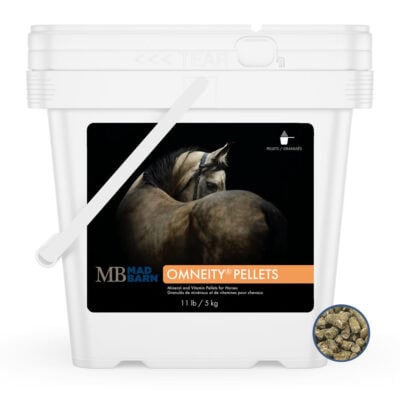
| Omneity® Pellets | 100 g (1 scoop) |
| w-3 oil | 15 ml (0.5 oz) |
| Diet Analysis* | |
| Digestible Energy (% of Req) | 105% |
| Protein (% of Req) | 125% |
| HC (ESC + starch % Diet) | 6.9% |
*These values are estimated based on NRC requirements and average forage values. For a more precise assessment, analyze your forage and submit your horse’s diet for evaluation.
While hay provides adequate calories and protein for most horses, a forage-only diet will be deficient in several essential nutrients. Fortifying the diet with a vitamin and mineral supplement is important to prevent nutrient deficiencies. [10]
Mad Barn’s Omneity® is a concentrated supplement that provides vitamins, minerals, essential amino acids, yeast cultures, and more to support overall health in Caspian horses.
Adding Omneity® to your horse’s diet ensures they get nutrients required to support hoof health, metabolic function, the immune system and more.
Omneity® is also formulated without the inclusion of grains or sugars, ensuring the diet remains balanced without adding unnecessary calories and starch.
Forage
Most Caspian horses in maintenance or light work do well on a forage-based diet with no additional grains or feeds.
A forage-based diet is the best way to support your horse’s overall health by promoting optimal digestive function and enabling natural grazing behaviour.
The amount of forage your horse needs on a daily basis depends on their body weight. Since Caspians are significantly smaller than most horse breeds, they require much less hay.
An average 500 lb Caspian horse should eat approximately 10 pounds of average-quality, low-starch grass hay daily. Some Caspian horses with heavy workloads may need higher-quality forage. Learn more about how to choose hay for your horse in this guide.
Your horse may be able to consume 10 pounds of hay in a relatively short period. However, it’s important to ensure your horse doesn’t go without hay for extended periods to reduce the risk of digestive issues. [7]
A slow feeder can help to regulate hay intake while ensuring your Caspian pony has continuous access to forage. If you turn your Caspian out on pasture, consider using a grazing muzzle to control the intake of high-starch grasses. [11]
Feeding Recommendations
Although Caspian horses have origins in the desert, they still require plenty of water to remain adequately hydrated. Ensure your horse has constant access to fresh, clean water in their environment.
Nutritionists recommend feeding one tablespoon of plain loose salt per day to ensure your Caspian horse meets their sodium requirements. Adding salt to your horse’s diet also promotes thirst and encourages hydration.
Caspian horses in heavy training are sometimes fed commercial concentrates for extra calories. However, most Caspians don’t need high-starch and sugar grains in their diet, and these feeds increase the risk of metabolic disorders and hindgut issues.
Instead of feeding a ration balancer, choose a concentrated vitamin and mineral supplement with no unnecessary calories. Instead of feeding grains, consider forage-based supplement carriers, such as soaked beet pulp or hay pellets. [12]
Fat supplements are a good source of additional calories for exercising Caspian horses. Fat sources high in omega-3 fatty acids provide additional benefits, such as supporting joint health.
Research in Caspian horses has also shown that the omega-3 DHA improves semen quality in stallions. Fertility is a significant concern for the breed due to the small breeding population. [13]
Nutritional Supplements
Formulating a balanced diet to prevent nutritional deficiencies should be the main focus when developing a feeding program for your Caspian horse. Once your horse’s diet is balanced, you can consider additional supplements to support their unique health needs.
- W-3 Oil is an omega-3 fatty acid supplement that provides microalgae-synthesized DHA. This essential fatty acid supports joint health, respiratory health, reproductive function and more in Caspian horses.
- Natural Vitamin E: Caspian horses with neurological health concerns need a diet enriched with higher levels of Vitamin E. This important antioxidant protects cells from oxidative damage.
- MSM Powder: Caspian horses engaging in regular exercise may benefit from extra support for cartilage and joints. MSM is a natural source of the mineral sulphur that supports the homeostatic responses to inflammation in your horse’s joints.
- Visceral+: If your Caspian horse tends to have high stress levels or a history of digestive issues, feed a gut supplement such as Visceral+. This comprehensive gut formula provides probiotics, yeast, herbs, minerals, and amino acids to maintain stomach and hindgut health.
Ensure that the feeding rates for any supplements in your Caspian horse’s diet are adjusted to match their small body weight. Submit your Caspian horse’s diet online for a free consultation from our qualified equine nutritionists to get help with formulating a balanced diet.
Frequently Asked Questions
Here are some frequently asked questions about Caspian horses:
The Caspian horse is a rare Iranian horse breed that originated in ancient Persia. Most Caspian horses are under 12 hands tall, making them a smaller breed, but their conformation resembles a full-size horse rather than a pony. The breed is considered ancient and endangered, with modern breeding programs focused on preserving their unique history and build.
The main traits of a Caspian horse are its small size, refined build, and intelligent, sensitive temperament. Caspian horses are elegant, athletic, and light-framed, with longer legs and a more refined outline than most ponies. They are also known for being alert, willing, and well-suited to youth performance work.
Caspian horses are different from ponies because they have the conformation of small horses rather than the compact build typical of pony breeds. They usually have longer legs, slimmer bodies, finer bone, and a more refined head and neck. Although they are similar in height to some ponies, their overall structure is more like that of a full-size hot-blooded horse.
Caspian horses are used primarily for youth riding, but they also compete in driving, dressage, jumping, eventing, and halter classes. Their small size makes Caspian horses especially well suited for children, while their athleticism, intelligence, and smooth movement help them perform well in a variety of sport disciplines. Small horses of this type were also used for transportation, pack work, and pulling light chariots in ancient Persia. The Caspian horses of today are valued for their versatility, agility, and refinement, and they are also used in some breeding programs to influence other horse breeds.
Caspian horses are typically intelligent, alert, willing, and kind. They are quick learners that often enjoy having a job and respond well to thoughtful, consistent handling. Caspian horses are usually friendly and hardworking, but they can also be more sensitive than many pony breeds. Because of that sensitivity, they are often best suited to experienced youth riders and knowledgeable handlers.
The conformation characteristics of Caspian horses include a refined head, long legs, a graceful neck, sloping shoulders, and a slim, athletic body. Caspian horses typically have a dished face, fine muzzle, small ears, prominent jaw bones, a deep heart girth, defined hindquarters, and slender limbs with dense flat bone. They also have oval-shaped hooves and several unusual anatomical traits, including extra molars and other primitive skeletal features.
Common colors in Caspian horses include bay, gray, chestnut, dun, and black. The Caspian horse breed usually has fine coats, along with long, silky manes and tails. While they come in several solid colors, they are not known for the metallic sheen seen in some other rare breeds.
Most Caspian horses stand between 10 and 12 hands high. Although they are pony-sized, Caspian horses have more horse-like proportions than many true pony breeds, with long legs and a refined build. Their small stature makes them well suited for children, while their elegant movement and athletic appearance reflect the breed’s ancient heritage.
Adult Caspian horses typically weigh between 400 and 600 pounds (180 to 270 kg), depending on age, sex, and workload. Caspian horses are small but athletic, and their weight should stay in proportion to their refined frame. Because they can gain weight easily, regular body condition monitoring is important for maintaining long-term health and soundness.
Caspian horses are generally not the best choice for complete beginners. The Caspian horse breed is kind, willing, and intelligent, but they are also more sensitive and reactive than many pony breeds commonly used for novice riders. They usually do best with experienced youth riders or knowledgeable handlers who can provide consistent training and thoughtful management.
Common health problems in Caspian horses include hyperlipidemia, dental overcrowding, oral discomfort related to their unusual mouth anatomy, and digestive problems. Like other small equines, Caspian horses can be vulnerable to metabolic and feeding-related issues if they become overweight or enter negative energy balance. Their extra molars and distinctive oral structure can also make dental care and proper bit fit especially important.
To keep a Caspian horse at a healthy weight, feed a forage-based diet built around appropriate amounts of grass hay and avoid unnecessary high-calorie concentrates. Caspian horses are easy keepers, so owners should monitor body condition closely and adjust feed intake before the horse becomes overweight. A ration balancer or concentrated vitamin and mineral supplement can help meet nutrient needs without adding excess calories.
To care for a Caspian horse’s hooves, schedule regular farrier visits to maintain proper balance and prevent excessive wear. Caspian horses have distinctive oval-shaped hooves that need consistent trimming, even when they are kept barefoot. Horses in heavier work may need additional hoof protection, while those in lighter work often stay sound with routine trimming and good overall management.
Summary
Caspian horses are small, hardy animals from northern Iran, well-suited as riding mounts for children. Despite their small size, they are robust and versatile, excelling in various equestrian disciplines.
- Caspian horses stand between 10 and 12 hands tall and have a conformation similar to full-size horses, not ponies.
- Their build is refined, resembling hot-blooded breeds like the Arabian and Thoroughbred, with unique anatomical features, such as extra molar teeth and a parietal bone.
- Known for intelligence and agility, they excel in disciplines like youth riding, driving, and halter shows.
- Caspian horses are susceptible to health issues like genetic diseases and dental problems due to their unique mouth anatomy.
- Their diet requires careful management to prevent obesity, with an emphasis on weight control and a forage-based diet supplemented with vitamins and minerals.
References
- Pluta, M. et al. The state of breeding and use of Caspian horses in Europe and around the world. Acta Sci Pol Zootechnica. 2020.
- Mousavi, S. et al. Genetic diversity and signatures of selection in four indigenous horse breeds of Iran. Heredity. 2023. View Summary
- McMiken, D. et al. Ancient origins of horsemanship. Equine Vet J. 1990.
- Amirinia, C. et al. Bottleneck Study and Genetic Structure of Iranian Caspian Horse Population Using Microsatellites. Pak J Biol Sci. 2007. View Summary
- Posbergh, C. et al. A Nonsynonymous Change in Adhesion G Protein–Coupled Receptor L3 Associated With Risk for Equine Degenerative Myeloencephalopathy in the Caspian Horse. J Equine Vet Sci. 2018.
- Marquardt, S. et al. Previously Identified Genetic Variants in ADGRL3 Are not Associated with Risk for Equine Degenerative Myeloencephalopathy across Breeds. Genes. 2019. View Summary
- Seifi, H. et al. Hyperlipidemia in Caspian miniature horses: Effects of undernutrition. J Equine Vet Sci. 2002.
- Rezaian, M. Absence of hyaline cartilage in the tongue of 'Caspian miniature horse'. Anat Histol Embryl. 2006. View Summary
- Dixon, P. et al. A review of equine dental disorders. Vet J. 2005. View Summary
- National Research Council. Nutrient Requirements of Horses. National Academies. 2007.
- Watts, K. Forage and pasture management for laminitic horses. Clin Techniq Equine Pract.
- Zeyner, A. et al. Effect of feeding exercised horses on high-starch or high-fat diets for 390 days. Equine Vet J. 2010.View Summary
- Garmsir, A. K. et al. Effects of Dietary Thyme (Thymus vulgaris) and Fish Oil on Semen Quality of Miniature Caspian Horse. J Equine Vet Sci. 2014.