English





Conditioning is the process of gradually increasing a horse’s fitness level through training to meet the demands of their work.
Horses that are well-conditioned and physically fit are better able to perform and compete in their discipline. A fit horse also has a reduced risk of injury and soreness, and their increased strength allows them to work more efficiently.
Achieving peak performance in horses requires strategic training that boosts endurance, strength, and overall fitness. By assessing your horse’s current fitness, implementing effective conditioning exercises, and developing a customized plan, you can improve performance while supporting long-term health.
Read on to explore the science of equine conditioning, the benefits of terrain training, and how to design targeted exercise routines to help your equine partner reach peak performance this show season.
Conditioning for Horses
Conditioning refers to the systematic process of preparing a horse’s body for the physical demands of work or competition.
Proper conditioning enhances aerobic capacity, muscular strength, endurance, joint flexibility, and overall performance while reducing wear and tear on the horse’s body. [1]
Key principles of equine conditioning include:
- Gradual Progression: Increases in intensity, duration, and workload should occur incrementally to allow the horse’s musculoskeletal and cardiovascular systems time to adapt.
- Specificity: Conditioning should reflect the type of activity the horse will perform. Different sports (e.g., dressage, racing, eventing) require different conditioning methods.
- Consistency: Regular training is critical to success. Gaps in your conditioning schedule can lead to loss of fitness and increased injury risk.
- Recovery: Adequate rest between training sessions is key to allow muscles to repair and adapt. Overtraining can cause stress, fatigue and decreased performance.
- Monitoring: Heart rate, respiratory rate, hydration status, and soundness should be regularly assessed to track progress and identify early signs of overexertion.
Effects of Conditioning
Exercise impacts all of the horse’s body systems — particularly the skeletal, muscular, cardiovascular, and respiratory systems. Conditioning produces beneficial effects on each of these systems individually, including: [1]
- Cardiovascular System: Includes the heart, veins, capillaries, and arteries. Conditioning strengthens the heart muscle, improves circulation, and helps the horse perform longer before fatigue sets in.
- Muscular System: Muscles move the horse’s body by contracting and relaxing in coordination. Conditioning improves muscle strength, coordination, and stamina, helping reduce the risk of injury.
- Skeletal System: Made up of tendons, ligaments, joints and bones. Conditioning strengthens bones and connective tissues, helping them withstand physical stress. However, progressing too quickly can lead to injury, so gradual progression is key.
- Respiratory System: Comprised of the lungs and airways, this system delivers oxygen to the blood and removes carbon dioxide. Conditioning improves lung function by enhancing airflow and oxygen delivery. Fit horses breathe more easily and recover faster after exercise.
Setting Expectations
With busy show schedules and costly entry fees, it’s important for owners to plan their horse’s conditioning program so they are in top form on show day. This is especially important when returning to work after a break, such as during the off-season or due to injury.
How long it takes to condition your horse depends on their starting fitness level. It can take weeks or months of consistent work to reach peak condition.
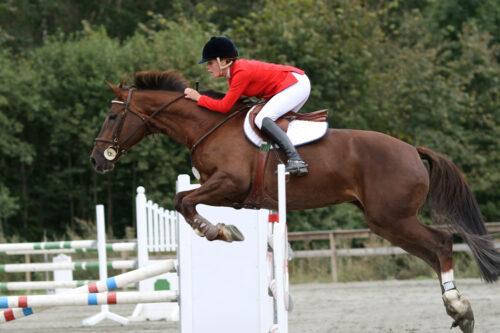
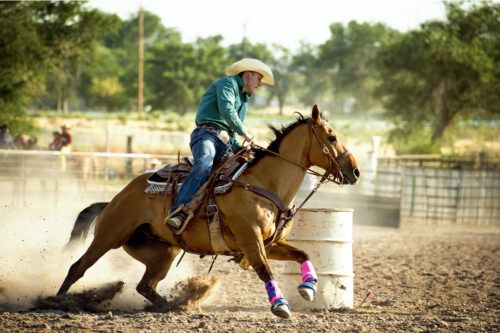
The optimal level of conditioning also depends on the performance goals you set for your horse. High-intensity sports like jumping, eventing, or barrel racing demand specific skills and advanced conditioning. [1]
Other factors that influence conditioning schedules include: [1]
- Age
- Injury history
- Health status
What's your top priority with your horse's health?

Enter your email to receive your store credit
Considerations for Conditioning Plans
Before creating a conditioning plan, assess your horse’s current level of fitness, body condition and diet. This step is important because it ensures your horse has the nutritional support they need to perform and also provides a starting point for their conditioning program.
It’s also important to work with your veterinarian and farrier before increasing your horse’s level of work. Your farrier can help ensure your horse’s hooves are well-balanced and shaped for the type of work they will be doing, and help identify any injury risk factors related to the condition of their feet.
By staying up to date with routine veterinary care like vaccinations and deworming, your veterinarian can help identify any potential health issues early so your horse is set up for success at the start of training.
Determine Fitness Level
It’s important to understand your horse’s starting level of fitness before increasing training demands. Working with your veterinarian and a qualified trainer can help you establish a baseline and track progress over time.
Horse owners can monitor heart and respiratory rates, but a thorough assessment should also include evaluations of muscle development, soundness, and post-exercise recovery.
Depending on your discipline, a trainer can help identify specific performance indicators to monitor and assess conditioning progress. Together, these measures allow you to design a conditioning program suited to your horse’s current abilities and goals.
Heart & Pulse Rates
A horse’s heart rate after exercise can help gauge how they are responding to conditioning. Training at or above the aerobic zone (i.e., heart rate > 130 BPM) indicates that the heart muscle is working hard enough to build endurance without causing excessive fatigue. Monitoring whether your horse reaches and maintains this range helps ensure effective conditioning without overtraining.
To check your horse’s heart rate, you can use a stethoscope, a heart rate monitor, or manually measure the pulse.
To manually check a horse’s heart rate: [4]
- Before exercise, check their resting heart rate using their facial artery. This artery runs in the notch between the horse’s cheek and their lower jaw.
- Count the number of pulses for 60 seconds. This is the heart rate in beats per minute (BPM)
- Repeat the heart rate check again immediately after peak intensity (before cooling out)
 Facial Pulse Check
Heart rates between 130–150 BPM indicate that your horse is working within the aerobic zone. Time spent in this zone — and how quickly the heart rate returns to normal after exercise — are key indicators of improving fitness. [1]
A general rule of thumb for assessing fitness based on heart rate recovery is as follows: [1]
- Heart rate returns to resting within 15 minutes: The workout maintains your horse’s current fitness level
- Heart rate returns within 30 minutes: The workout improves your horse’s aerobic fitness
- Heart rate takes more than 30 minutes to recover: Indicates overexertion and the need to reduce workout intensity
It’s important to note that a horse’s resting heart rate remains relatively stable and is not significantly altered by conditioning. The normal resting heart rate for a horse is typically 30 to 40 beats per minute (BPM). [1]
Respiratory Rate
Checking your horse’s respiratory rates can also help you gauge their fitness level during conditioning. The normal resting respiration rate for a horse is 8 to 14 breaths per minute. [5]
You can check your horse’s respiratory rate by: [5]
- Watching the rise and fall of the ribs near the flank or placing your hand near their nostrils
- Count the number of breaths your horse takes in and out for 15 seconds
- Multiply the number of breaths by 4 to get the per-minute respiratory rate
Intense exercise can increase respiratory rates to 120 breaths per minute, but 60 to 100 breaths per minute is common for regular exercise. The horse’s breathing rate should return to normal within 10 – 15 minutes after exercise. [5]
Assessing Your Horse’s Diet
Horses in work have increased nutritional demands. As training intensity rises, their need for energy, protein, and other essential nutrients also increases. [1]
While high-quality forage provides adequate nutrition for many exercising horses, it may not fully meet the increased demands of horses in intense training. [1]
To ensure your horse is receiving adequate nutrition throughout a conditioning program, regularly assess their body condition score (BCS). This helps identify early signs of weight loss caused by increased workload. [2]
Feeding a horse in a high-performance training program requires more than just meeting caloric needs. The diet must support muscle development, recovery, and immune function. Key nutrients include:
- Vitamin E and selenium: Antioxidants that protect muscle tissue from oxidative stress during exertion
- Amino acids and B-vitamins: Support immune health, energy metabolism, tissue repair, and red blood cell production [2]
- Electrolytes (sodium, chloride, potassium, magnesium, calcium): Essential for hydration, muscle contraction, and nerve function, particularly in sweating horses
- Zinc and copper: Involved in collagen synthesis, tissue repair, hoof health and overall well-being
Performance horses are also exposed to stress from frequent travel and unfamiliar environments. This increases the need for targeted nutritional support for the immune system and gastrointestinal tract. [1]
For horses in intense competition or showing signs of condition loss, feeding small amounts of oats after cooling out may help replenish energy stores and maintain weight. Up to 1 lb can be offered every 1–2 hours for several hours following strenuous activity. [1]
To prevent digestive issues such as ulcers or colic, avoid high hydrolyzable carbohydrate (HC) diets. These high-sugar and -starch grains can disrupt gut function and metabolic health.
Instead, support digestive health with fat and fiber-based energy sources, including beet pulp, flax oil, and Mad Barn’s w-3 Oil.
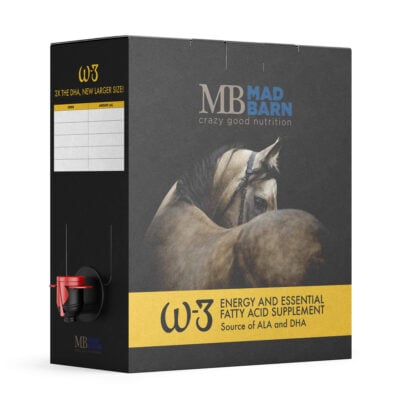
If you are conditioning your horse for high-performance, it’s important to match their workload with a balanced nutrition plan. [3] Consult with an equine nutritionist throughout your horse’s conditioning process to ensure their diet is meeting their changing needs.
Conditioning Methods for Horses
Conditioning methods for horses are designed to progressively improve cardiovascular fitness, muscular strength, coordination, and endurance while minimizing the risk of injury.
Incorporating multiple approaches into a conditioning program helps balance muscular development, reduce mental fatigue, and target both cardiovascular and neuromuscular systems more effectively than relying on a single training method.
Effective programs include a mix of long, slow distance (LSD) work to build aerobic capacity, interval training to enhance cardiovascular and muscular adaptation, and discipline-specific exercises that reflect the demands of competition.
Additional methods such as hill work, pole exercises, and transitions help develop balance, core strength, and coordination. Cross-training with varied terrain and gaits further reduces the risk of overuse injuries and keeps horses mentally engaged.
The best conditioning plans are tailored to the horse’s current fitness level, age, and discipline, and include regular monitoring and sufficient rest to support long-term performance and soundness.
LSD Training
One foundational approach to building aerobic capacity and physical resilience is Long, Slow Distance (LSD) training. This method builds aerobic energy pathways, strengthens ligaments, tendons, and bones, and prepares the musculoskeletal system for work. [6]
LSD training starts by building a fitness foundation through progressively longer sessions before advancing to higher-intensity work. This can be as simple as starting at a walk or trot, gradually increasing the distance each training session, and eventually including more strenuous gaits such as cantering or galloping. [6]
Riders can integrate other types of exercises like strength training into LSD work, including gallop sets, hill work, jumping efforts, and high impact interval training (HIIT).
High Impact Interval Training (HIIT)
In contrast to LSD, which emphasizes steady endurance, High Impact Interval Training (HIIT) uses short bursts of intensity to enhance speed, strength, and cardiovascular power. This type of conditioning is often used with Thoroughbred racehorses, as it improves strength, speed, and overall fitness. [6]
To get the most out of interval training, monitor your horse’s heart rate throughout the set and keep track of the data from one workout to the next. As your horse’s fitness improves, they should be able to complete longer and/or more intense intervals before hitting their maximum heart rate.
Varied Terrain
Beyond changing pace and intensity, the environment in which a horse trains also plays a critical role in conditioning. Using varied terrain challenges the horse’s body in different ways and builds adaptability. Given this, using varied terrain in training can provide more well-rounded conditioning for your horse. [4][7]
Variation also helps develop the horse’s confidence and coordination, especially when navigating unfamiliar or uneven ground. Regular exposure to different surfaces, such as grass, sand, gravel, or trails, can improve foot placement, increase adaptability, and build resilience in joints, tendons, and ligaments.
Incorporating a range of terrain into your conditioning plan can enhance both physical development and mental sharpness, preparing your horse for a wide variety of performance demands.

How to Design an Equine Conditioning Plan
The most effective conditioning plans are based on a horse’s starting level of fitness and the rider’s goals. If the horse is starting from a low level of fitness, much of their early work will include walking, trotting, and endurance training before increasing intensity. [6]
To create a conditioning plan, make a weekly and daily schedule that incorporates a variety of exercises, methods, and terrain, and gradually increase the intensity of the work each week. [9]
The following is an example of a one-week conditioning schedule for a horse that is at a moderate or high level of fitness. This plan balances cardiovascular, muscular, and endurance exercises while also ensuring proper recovery. [6][8]
Table 1. Weekly conditioning plan for a moderate to highly fit horse
| Day | Focus | Steps |
|---|---|---|
| 1 | LSD & Groundwork |
|
| 2 | Hill Work & Strength |
|
| 3 | Recovery or Light Hack |
|
| 4 | Interval/Speed Work |
|
| 5 | Groundwork & Cross Training |
|
| 6 | Endurance Ride |
|
| 7 | Recovery |
|
Some tips for beginning an equine conditioning plan include:
- Horses require adequate warm up and cool down time, which can be accomplished with 10–15 minutes of walking. This limits muscle stiffness and prevents injuries after workout.
- Monitor your horse’s post-exercise heart rate to track their fitness progress.
- Vary training routines to prevent your horse from burning out.
- Soreness due to conditioning can be alleviated by temporarily reducing the number of days you condition your horse, allowing them to recover.
- Cold therapy, liniments, or poultices can also minimize discomfort, swelling, and soreness after workouts.
Frequently Asked Questions
Here are some frequently asked questions about conditioning horses:
Conditioning duration varies depending on the horse’s fitness level, age, injury history, and performance goals—it can take weeks to months of consistent work. High-intensity disciplines like eventing or barrel racing require more advanced conditioning. [1]
Monitor post-exercise heart and respiratory rates—heart rate should return to resting (30–40 BPM) within 15–30 minutes, and respiratory rate (normally 8–14 breaths/min) should normalize within 10–15 minutes. Delayed recovery indicates overexertion. [1][4][5]
Long, Slow Distance (LSD) training builds aerobic capacity and strengthens bones, ligaments, and tendons by gradually increasing distance at a slow pace. This foundational work prepares horses for more intense exercise. [6]
Conditioning strengthens the cardiovascular, muscular, skeletal, and respiratory systems, enhancing endurance, reducing injury risk, and boosting overall performance. Each system adapts uniquely to the type and intensity of work. [1]
Summary
Conditioning is the process of gradually increasing a horse’s fitness level through a structured exercise or training program.
- Conditioning is essential for preparing horses for higher levels of performance
- By progressively strengthening key body systems with a varied exercise plan and supportive nutrition, horses can reach peak fitness while minimizing risk of injury
- A well-designed conditioning plan, customized to the horse’s current fitness and goals and supported by rest, regular monitoring, and proper feeding, can help develop a strong, sound, and confident athlete
References
- Hiney, K. Physical Conditioning of Horses. Oklahoma State University. 2017.
- National Research Council. Nutrient Requirements of Horses. The National Academies Press. 2007.
- Pratt-Pjillips Shannon Nutrition of the performance horse . The Athletic Horse (SECOND EDITION). 2014.
- Ivey. J. L., Monitoring Equine Fitness. University of Tennessee. 2017.
- Liburt, N. et al., FS1262: Measuring Temperature, Pulse, & Respiration (TPR): What’s Normal for My Horse?. Rutgers. 2016.
- Harkins. J. D. and Kamerling. S. G., A Comparative Study of Interval and Conventional Training Methods in Thoroughbred Racehorses. Journal of Equine Veterinary Science. 1990.
- Walker A. V. et al., Effect of Ground and Raised Poles on Kinematics of the Walk . Journal of Equine Veterinary Science. 2022. View Summary
- Kelley, C., The Classic Series Conditioning Schedule with Jim Wofford. United States Eventing Association Inc. 2020.