English








English riding is one of the most recognizable and widely practiced forms of horsemanship in North America and Europe. Rooted in classical traditions, it has evolved into a diverse family of disciplines that emphasize balance, precision, and effective communication between horse and rider.
From the elegance of dressage to the excitement of show jumping, English disciplines challenge both horses and riders in unique ways. Some prioritize athleticism and speed, while others highlight refinement, style, or endurance.
What unites them all is the partnership at the heart of the sport, which showcases the ability of horse and rider to work together in harmony. Each sport comes with its own demands, but they all share a common focus on developing the horse’s strength, agility, and willingness while maintaining long-term health and soundness.
English Horseback Riding Disciplines
Defined by the English saddle and a focus on balance and harmony, it has grown into a wide range of disciplines that test both the athleticism of the horse and the skill of the rider.
Today, English riding continues to blend art, sport, and partnership while inspiring equestrians around the world.
English Horseback Riding Disciplines
English horseback riding is a long-established riding tradition shaped by European cavalry training, fox hunting, and early competitive riding systems.
English riding refers to a group of mounted and driving disciplines that use the English saddle and bridle. Over time, these systems evolved into formal sports with standardized rules, training progressions, and competition formats.
English equestrian disciplines are defined by:
- Use of a close-contact English saddle
- Direct rein contact, typically with a snaffle or double bridle
- An upright rider position with shorter stirrups
- Emphasis on balance, straightness, rhythm, and controlled gaits
Modern English riding includes flat classes, jumping disciplines, multi-phase competitions, team sports, and carriage driving events. Some are governed internationally by the FEI, while others are regulated nationally by organizations such as USEF.
Disciplines vary in focus. Some evaluate movement quality and accuracy (e.g., dressage), others test jumping technique and speed (e.g., show jumping), while others assess stamina over distance (e.g., endurance) or combined performance across phases (e.g., eventing).
What’s the Difference Between English vs. Western Disciplines?
English and Western riding developed from different working traditions and use different equipment, rider positions, and training priorities.
English riding grew out of European military and hunting systems and was later formalized into sport disciplines. Western riding evolved from North American ranch work, where horses were used for cattle handling and long hours in the saddle.
The primary differences include:
- Saddle design: English saddles are smaller and lighter, allowing closer contact and greater freedom of movement. Western saddles are larger and built to distribute weight and provide stability for extended riding and ranch tasks.
- Rein contact: English riders typically maintain steady, direct contact with both reins. Western riders often use lighter contact and may guide the horse one-handed using neck reining.
- Rider position: English riders generally use shorter stirrups and a more upright seat suited to jumping and collected work. Western riders use longer stirrups and a deeper seat for comfort and stability.
- Traditional focus: English disciplines emphasize structured training systems and competitive performance. Western disciplines developed around practical ranch skills and later expanded into judged show events.
While both traditions now include competitive and recreational forms, they differ in equipment design, riding mechanics, and historical purpose.
List of English Riding Disciplines
English riding has evolved into a wide range of disciplines, each emphasizing different elements of training, athleticism, and harmony between horse and rider. Some sports focus on precision and elegance, while others highlight speed, endurance, or jumping ability.
The following are widely recognized types of English riding disciplines:
- Carriage Pleasure Driving
- Dressage
- Driving and Para-Driving
- Endurance
- English Pleasure
- Equitation
- Eventing
- Fox Hunting
- Haute École
- Horseball
- Hunter
- Mounted Games & Gymkhana
- Para-Equestrian
- Polo
- Roadster
- Saddle Seat
- Show Jumping
- Vaulting
- Working Equitation
History of English Riding
English riding developed from European cavalry training systems and mounted hunting traditions between the 16th and 19th centuries. In Britain and continental Europe, horses were trained for military maneuvering, controlled battlefield movement, and cross-country travel during hunts.
Classical riding schools of the Renaissance contributed structured training methods that emphasized balance, straightness, and responsiveness. These systems later influenced civilian riding and early sporting competitions.
The modern English saddle began to take shape in the 18th century, evolving from earlier military and hunting saddles into a lighter design that allowed closer contact between horse and rider. This design improved balance, mobility, and control, particularly for jumping and precision work. [1]
During the 19th century, fox hunting and cavalry officer training helped standardize riding position and technique. By the early 20th century, English riding had transitioned from primarily military and hunting use into organized sport. Governing bodies established formal rules, competition formats, and judging systems for disciplines such as dressage, show jumping, and eventing.
Today, English riding forms the foundation of many international equestrian sports and continues to influence training systems and competition structures worldwide. [1]
What's your top priority with your horse's health?

Enter your email to receive your store credit
English Riding Characteristics
Key characteristics that distinguish English riding include:
- Precision: Riders maintain an upright, balanced position with heels down, back straight, and eyes forward, which allows for precise communication with the horse.
- Tack: English saddles are lighter and smaller than Western saddles, designed to give the rider close contact. Bridles and bits are also more refined to support subtle aids.
- Gait Quality: Emphasis is placed on controlled, collected gaits, including walk, trot, canter, often with transitions that demonstrate training and responsiveness.
- Training Approach: English riding emphasizes clear, consistent communication through seat, leg, and rein aids, with training systems that prioritize balance, responsiveness, and progressive skill development.
Common English Horse Breeds
Certain horse breeds excel in English riding disciplines due to their athleticism, conformation, and temperament.
Some breeds commonly seen in English competitions include:
- Thoroughbred: Known for speed, endurance, and agility, frequently used in eventing.
- Warmbloods: Breeds like Hanoverians and Dutch Warmbloods excel in dressage and show jumping thanks to their trainable nature and powerful gaits.
- Arabian: Valued for stamina and elegance, often ridden in endurance riding.
- Connemara Pony: A smaller breed known for versatility, often used for jumping and young rider programs.
Driving Disciplines
Although English riding is often associated with mounted sports, it also encompasses related driving disciplines, where horses pull carriages or carts. These disciplines test precision, responsiveness, and athleticism, similar to mounted English sports.
Driving disciplines showcase the versatility of English-trained horses and provide an additional avenue for equestrians to develop skills in communication, precision, and partnership with their horses.
Olympic Disciplines
English riding is closely linked to the history of the Olympic Games. Horses first entered the modern Olympics at the 1900 Games in Paris, France. After a brief absence, equestrian events returned permanently in 1912 at the Stockholm Games, establishing a tradition that continues to this day. [2]
What sets equestrianism apart from other Olympic sports is its emphasis on cross-species partnership and teamwork. Unlike most athletic competitions, success relies not only on the skill and fitness of the human athlete but also on the training, athleticism, and well being of the horse.
Equestrian divisions are also among the few Olympic sports where men and women compete directly against each other on equal terms. This further reflects the central role harmony and communication play over strength in these disciplines.
Today, three English disciplines form the backbone of equestrian competition at the Summer Olympics: dressage, show jumping, and eventing. These sports showcase different aspects of the horse’s ability. Together, they demonstrate the depth of training and trust required to succeed in equestrian sport, highlighting the horse as a true athlete in its own right.
Dressage
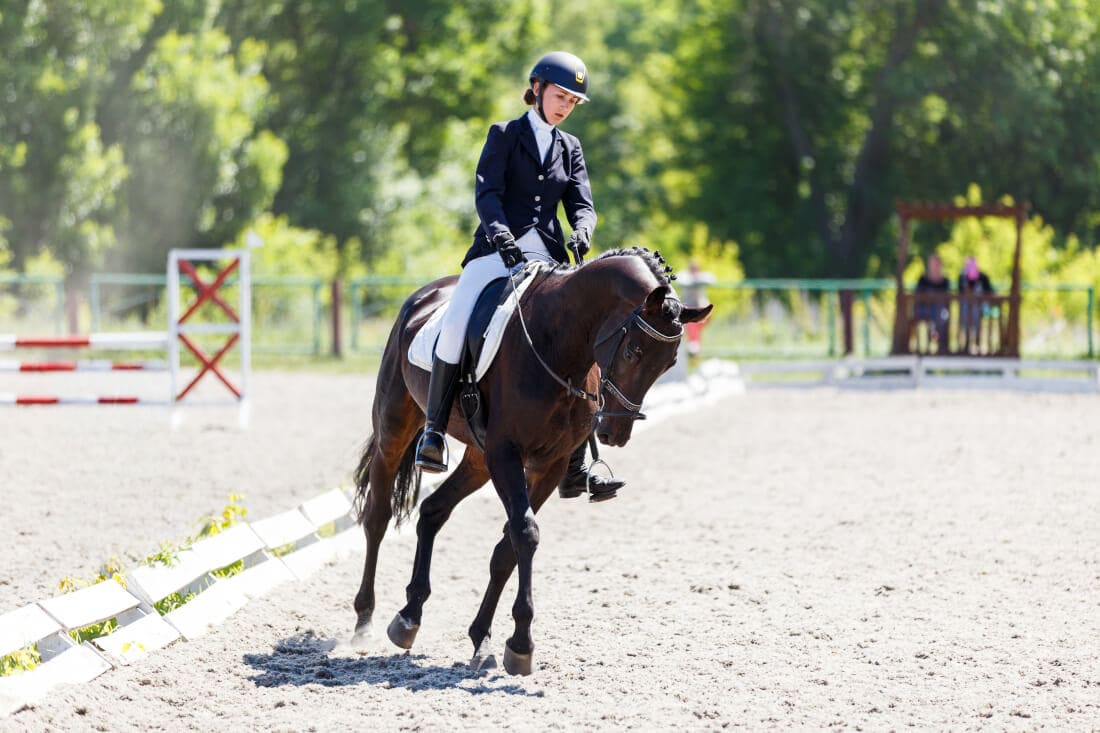
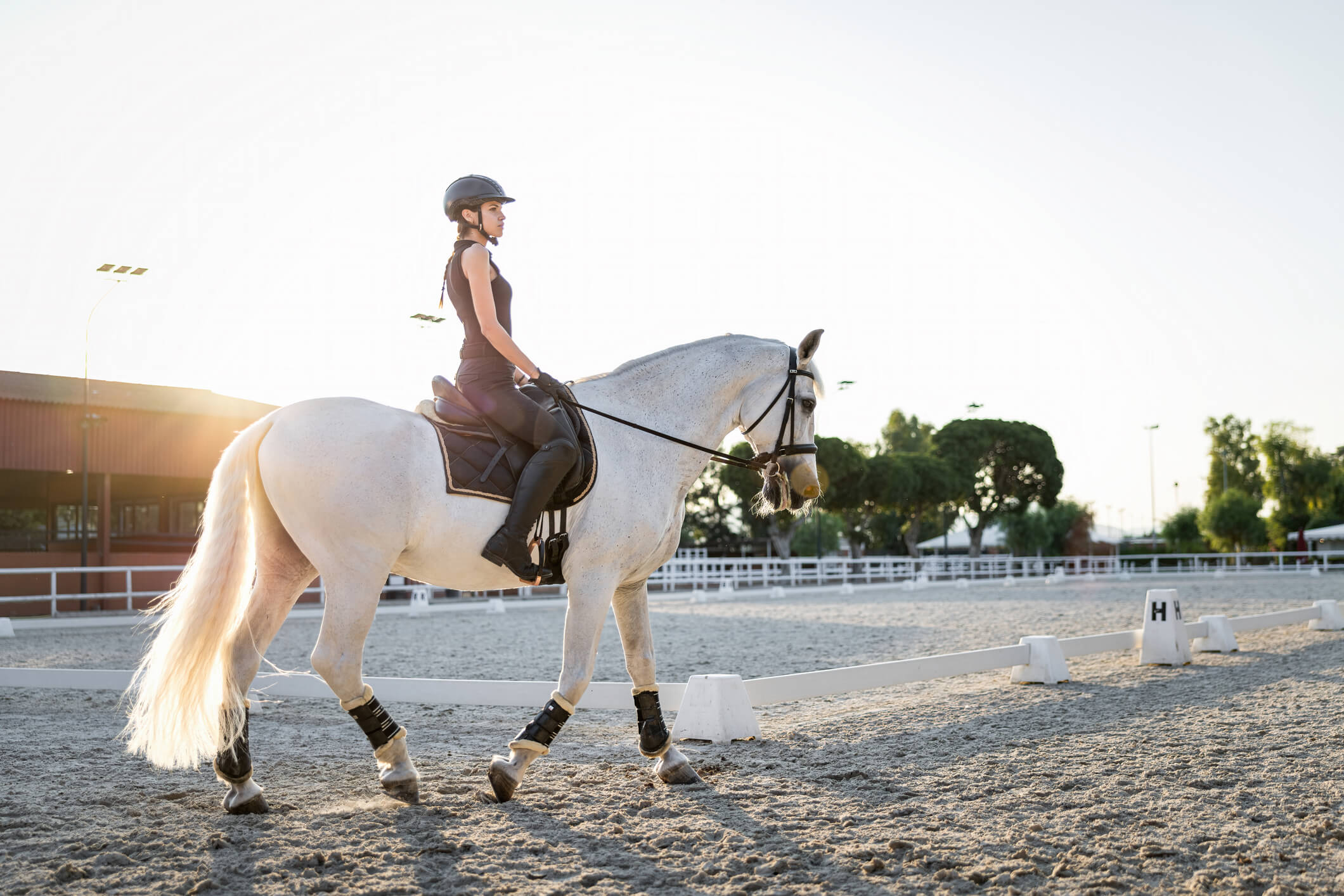
Dressage is often described as the art of riding and training a horse in a way that develops balance and rideability, all while maintaining harmony between horse and rider.
The word itself originates from the French term for “training,” and the discipline has its roots in classical military horsemanship, where precision and control on the battlefield were crucial.
Today, dressage has evolved into one of the most respected and elegant equestrian sports, celebrated for its combination of athleticism and artistry. [3]
History & Evolution
The principles of dressage date back to the Renaissance, when European cavalry schools emphasized the importance of controlled, precise movements to prepare horses for military service.
Over centuries, riders refined these techniques into a system that prioritizes the horse’s willingness, balance, and suppleness. By the 20th century, dressage had emerged as a competitive sport, eventually becoming one of the three Olympic equestrian disciplines in 1912. [2]
Modern dressage competitions range from introductory levels to the Grand Prix, the pinnacle of the sport, which is showcased at the Olympics and international championships.
Movements such as piaffe, passage, and flying changes showcase the horse’s athleticism, training, and ability to respond subtly to the rider’s aids.
The progression through levels emphasizes gradual development, ensuring the horse builds strength, flexibility, and confidence over time.
Key Principles & Movements
At its core, dressage is about partnership and harmony. Success relies on the horse’s physical capability and mental focus, and on the rider’s ability to communicate clearly and subtly. Training emphasizes relaxation, suppleness, contact, impulsion, and collection.
Movements progress from basic gaits and lateral work to advanced maneuvers that demand strength and precision. The Grand Prix level includes challenging movements such as piaffe (a trot performed in place), passage (a collected, elevated trot), and canter pirouettes, which challenge both horse and rider at the highest level. [3]
Competitions & Judging
Dressage tests are evaluated on the horse’s accuracy, fluidity, and expression. Judges assess each movement individually and provide an overall score for harmony and presentation. [3]
Competitions can be held at national levels, international championships, and the Olympic Games, each offering riders and horses the chance to showcase their training, skill, and partnership.
Dressage Horses & Riders
What sets dressage apart is the emphasis on subtle communication. The best performances appear effortless, with the rider guiding the horse through precise cues that are almost invisible to the audience. This partnership requires trust, consistency in training, and an understanding of the horse’s natural abilities and temperament.
Dressage is a discipline that rewards patience and dedication. While it may appear slow compared to other English sports, every movement reflects countless hours of training, conditioning, and practice. The result is a display of athleticism and artistry that celebrates the horse as both a partner and an athlete.
Show Jumping
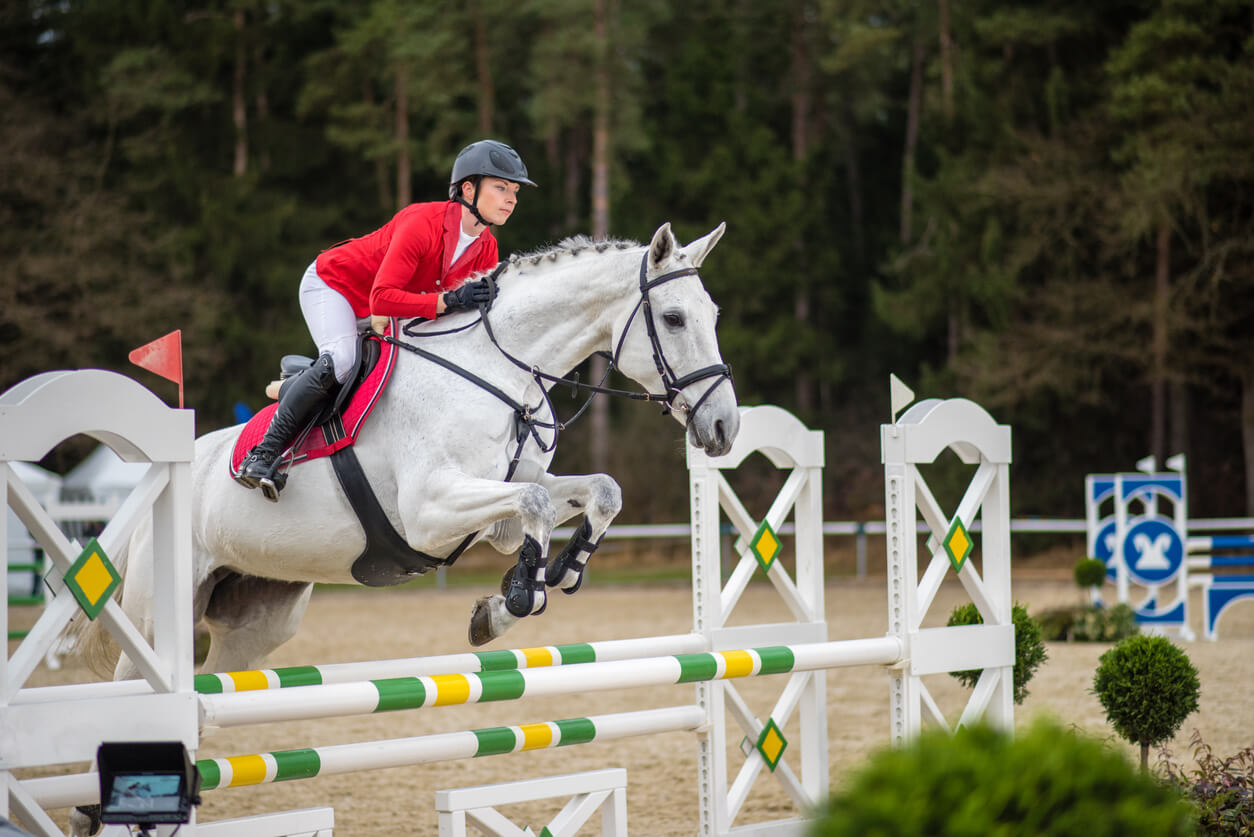
Show jumping is one of the most thrilling and widely recognized equestrian sports, combining athleticism, precision, and strategy.
Unlike dressage, which emphasizes controlled movement and elegance, show jumping tests the horse and rider’s ability to navigate a course of obstacles with speed, accuracy, and confidence. It’s a sport that combines the physical prowess of the horse with the tactical decision-making of the rider. [4]
History & Evolution
The origins of show jumping can be traced back to the hunting fields of 18th- and 19th-century England. Riders needed horses capable of clearing fences, ditches, and other obstacles encountered during fox hunts. [5]
Over time, these practical challenges evolved into formal competitions, and by the early 20th century, show jumping became a standardized sport with regulated courses and judging. [5]
Today, show jumping is a highlight of the Olympic Games and international equestrian competitions, with riders competing over intricate courses designed to test control, agility, and composure.
Grand Prix events showcase the highest level of difficulty, featuring fences up to 1.60 meters (over 5 feet) and combinations that demand precision and timing. [4]
Core Skills & Principles
At the heart of show jumping are three key elements:
- Precision: Horses and riders must accurately judge distances and adjust strides to clear each fence cleanly
- Agility: Quick turns, changes in pace, and careful landings are essential for a smooth, flowing round
- Composure: Both horse and rider must remain calm under pressure, particularly when mistakes are costly
Riders must guide the horse with clear cues while maintaining rhythm and balance, and horses need courage to approach each jump confidently. Successful partnerships appear effortless, though achieving this level requires extensive training, conditioning, and trust.
Competitions & Course Design
Show jumping courses are designed to challenge the horse-rider partnership. Obstacles may include verticals, oxers, combinations, and water jumps, often arranged to test both technical skill and speed. [4]
Penalties are given for knocking down fences, refusals, or exceeding the time allowed, making strategy as important as raw ability. [4]
At the highest levels, riders must adapt to a wide variety of courses within a single competition, often with little practice over the exact layout. This dynamic environment tests problem-solving, timing, and the horse’s responsiveness, creating a sport that is as mentally demanding as it is physical.
Show Jumping Horses & Riders
In show jumping, split-second decisions can make the difference between a clear round and faults on the scoreboard.
The rider must read the horse’s stride and confidence, adjusting approaches as needed while maintaining a smooth pace. Horses, in turn, must trust their rider’s guidance while relying on their athleticism and instinct.
Show jumping celebrates courage, speed, and precision, showcasing the horse as a versatile athlete capable of navigating complex challenges. The connection required in this discipline exemplifies the blend of skill, trust, and mutual understanding that defines all English riding sports.
Eventing
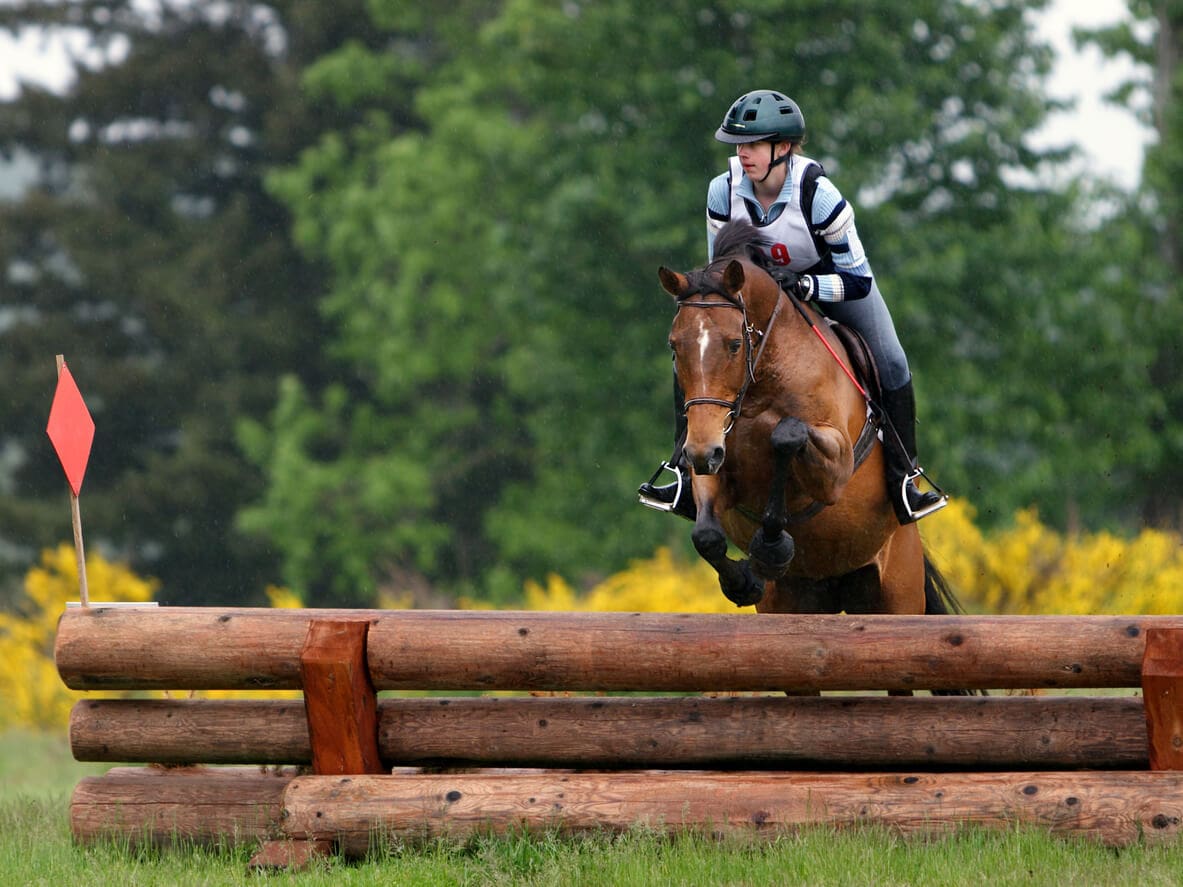
Eventing is often referred to as the equestrian triathlon, combining dressage, cross-country, and show jumping into a single, multi-day competition.
The sport tests a horse’s versatility, athleticism, and temperament, as well as the rider’s skill, judgment, and partnership with their horse. Unlike single-discipline sports, eventing challenges both horse and rider to excel across a range of physical and mental demands. [6]
History & Evolution
Eventing has its origins in military training, where horses were expected to perform with precision, endurance, and courage on the battlefield. [7] Early competitions mirrored these requirements, testing a horse’s willingness, stamina, and jumping ability.
Over time, eventing evolved into a formal sport, now featured at the Olympic Games and international championships. Today, it is a true test of all-around horsemanship, blending the elegance of dressage, the stamina of cross-country, and the precision of show jumping.
The Three Phases
Eventing consists of three phases: [6]
- Dressage: Horses are evaluated on their ability to perform precise movements with rhythm and ease, demonstrating harmony with the rider. This phase sets the tone for the competition, allowing judges to assess the horse’s training and temperament.
- Cross-Country: Tests stamina, bravery, and agility over varied terrain. Horses jump fixed obstacles, water complexes, banks, and ditches, often at high speed. This phase is physically demanding and requires courage, careful pacing, and trust between horse and rider.
- Show Jumping: Horses navigate a course of fences in an arena. This tests precision, carefulness, and recovery after the endurance required of cross-country performed the day before. Mistakes are penalized, emphasizing the importance of accuracy and control under pressure.
Training Challenges & Risks
Eventing presents unique training challenges. Horses must develop endurance, strength, and agility to handle long cross-country courses, while also maintaining the finesse required for dressage. Riders must strike a balance between conditioning and skill development across multiple disciplines.
Cross-country riding also carries a higher risk of jumping-related accidents, making careful conditioning, progressive training, and clear communication essential. Riders are required to wear protective gear to ensure their safety, and cross-country obstacles are built with frangible devices that are designed to reduce the risk of injury.
Eventing Horses & Riders
Success in eventing depends on a deep bond between horse and rider. Communication, trust, and responsiveness are critical, particularly in high-stakes moments on cross-country courses.
Horses must be confident, athletic, and adaptable, while riders must make split-second decisions to navigate complex challenges safely and efficiently.
Eventing is a celebration of versatility, endurance, and teamwork. By combining the precision of dressage, the courage of cross-country, and the accuracy of show jumping, it showcases the full spectrum of a horse’s athletic potential and the profound partnership between horse and rider.
FEI Disciplines
Beyond the Olympic arena, international equestrian sport is governed by the Fédération Équestre Internationale (FEI).
Founded in 1921, the FEI sets the rules and standards for equestrian competition worldwide, ensuring consistency across nations and preserving the welfare of both horses and riders.
While dressage, show jumping, and eventing are the Olympic cornerstones, the FEI also oversees a range of other disciplines that highlight different aspects of horsemanship. These disciplines include driving, endurance, vaulting, and para-equestrian.
Each discipline has its own community of dedicated athletes, showcasing the versatility of the horse in unique ways, from the precision of carriage driving to the stamina required in long-distance endurance rides.
While not every FEI discipline enjoys the global spotlight of the Olympics, they are all integral to the international equestrian landscape. They represent centuries of tradition, cultural heritage, and innovation in training, while continually evolving in accordance with modern standards of horse welfare.
Para-Dressage
Para Dressage allows athletes with physical impairments to compete at the highest levels of equestrian competition.
Like traditional dressage, it emphasizes skill, precision, and harmony between horse and rider, while providing adaptive opportunities that showcase athleticism, trust, and partnership. [8]
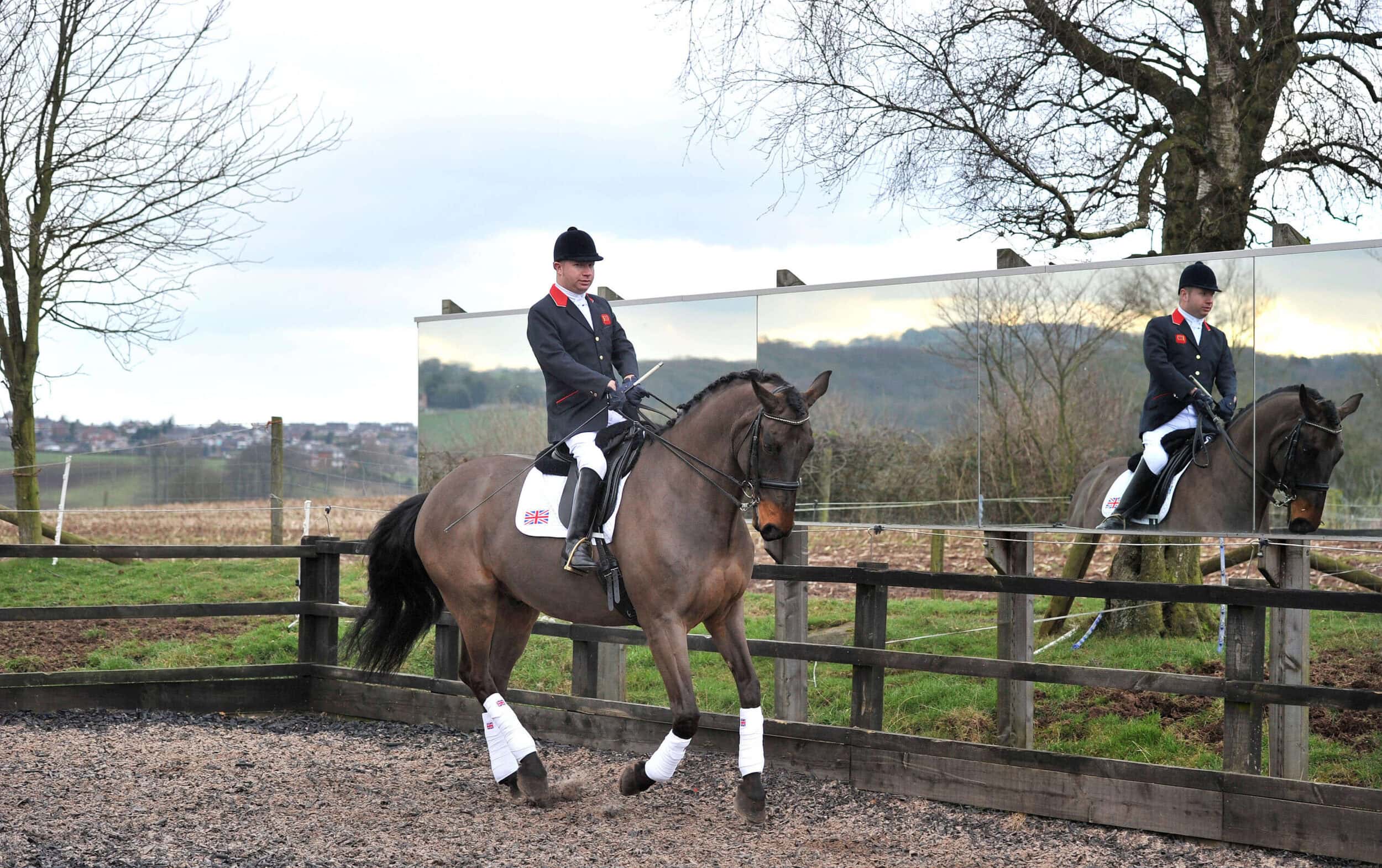 Para Dressage Rider Lee Pearson (Great Britain), 2012
History & Origins
Para Dressage riding emerged in the mid-20th century, originally as a form of rehabilitation for injured military veterans and individuals with physical impairments. [9]
Over time, it evolved into a competitive sport with structured rules and classification systems to ensure fairness.
The FEI began formalizing international competitions in the late 20th century, setting standards for training, judging, and competition structure that closely mirror traditional dressage while accommodating the needs of individuals with adaptive requirements.
Para Dressage at the Paralympics
Para-dressage made its Paralympic debut at the 1996 Atlanta Games and has since become a cornerstone of the Paralympic program. Riders compete in both individual and team events, judged on technical precision and artistic expression.
Para Grades
Para riders are classified into five grades (I–V) based on adaptive needs: [8]
- Grade I: Riders with the most significant impairment; tests focus primarily on walk movements.
- Grade II: Riders with moderate impairments; tests include walk and trot movements.
- Grade III: Riders with mild impairments; tests involve walk, trot, and limited canter movements.
- Grade IV: Riders with minimal impairment; tests include walk, trot, canter, and some lateral movements.
- Grade V: Riders with the least impairment; tests feature advanced movements.
Each grade allows riders to compete on an even playing field while demonstrating their skills and the horse’s athleticism.
Competitions include both compulsory tests and freestyle routines, choreographed to music, which highlight creativity, rhythm, and harmony. [8]
Training & Preparation
Para Dressage training mirrors traditional dressage but incorporates adaptations to suit the rider’s abilities.
Horses are trained to be responsive, consistent, and calm in response to subtle cues, while riders focus on maintaining balance, core strength, and precise timing.
Adaptive equipment, such as modified saddles, reins, or stirrups, is used as needed to optimize communication and performance. The goal is to create a partnership in which both horse and rider can perform at their highest potential.
Para Horses & Riders
The foundation of Para Dressage success lies in the relationship between the horse and rider.
Horses must be steady, athletic, and sensitive, able to adjust to the ride’s aids while maintaining rhythm and suppleness. Riders rely on trust, communication, and coordination to execute movements with accuracy and expression.
Together, horse and rider demonstrate the artistry, athleticism, and inclusivity of equestrian sport, showing that excellence in riding transcends physical limitations.
Endurance
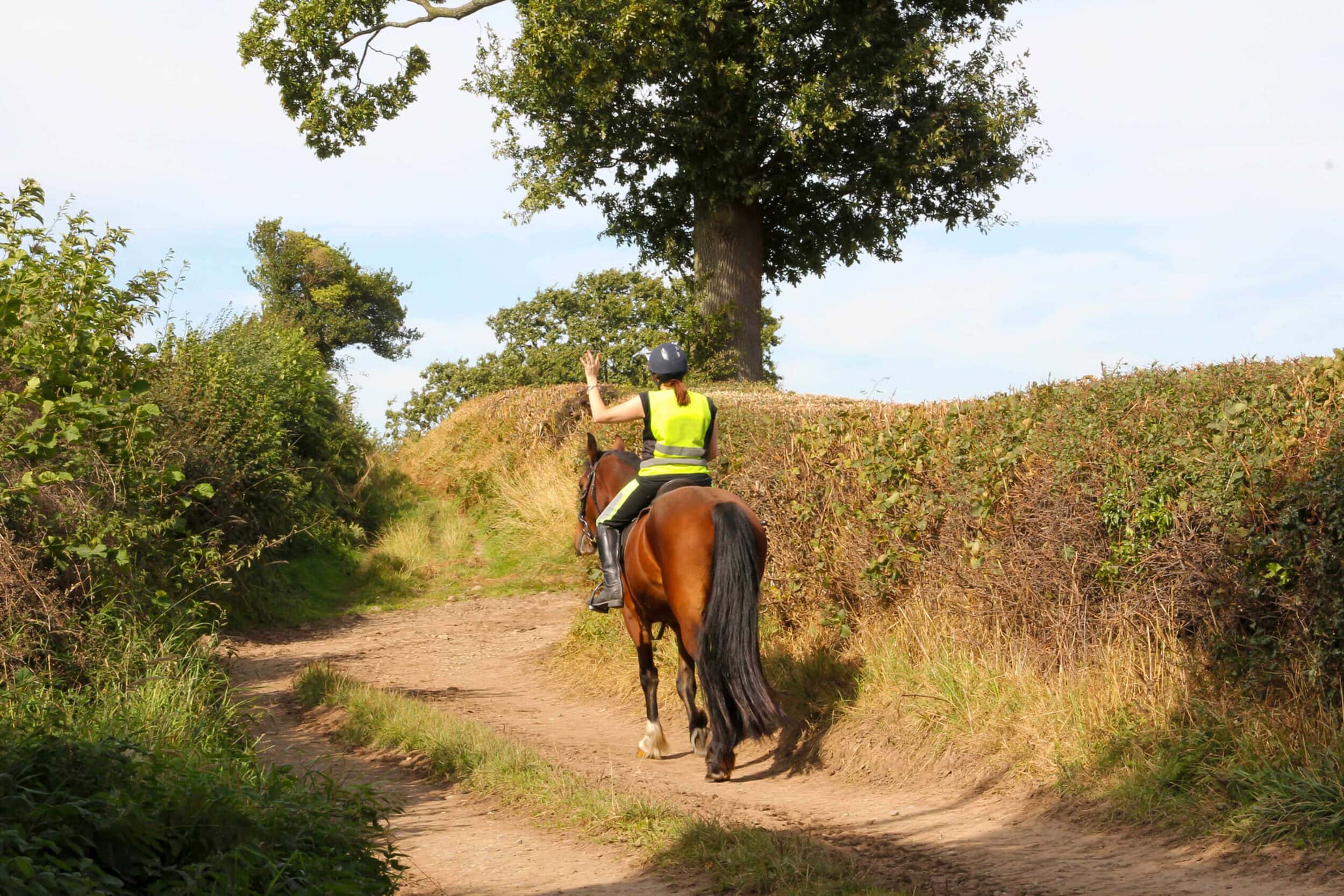
Endurance riding is a true test of stamina, fitness, and partnership. This sport challenges horses and riders to cover long distances across varied terrain while maintaining speed, precision, and overall soundness.
Unlike arena-based disciplines, endurance emphasizes the horse’s cardiovascular fitness, recovery, and resilience, as well as the rider’s ability to make strategic decisions about pacing, hydration, and terrain navigation. [10]
History & Evolution
Endurance riding has its origins in military and long-distance travel, where horses were required to cover great distances efficiently while carrying troops or messages. [11] In the 20th century, it evolved into a formal competitive sport, with the FEI standardizing rules and establishing international championships.
Today, endurance rides range from shorter national competitions to challenging international rides of up to 160 km (100 mi) in a single day. [10]
Competition Structure
Endurance competitions are typically divided into stages called phases, with veterinary inspections at key points to ensure the horse’s fitness and well being. [10]
Phases are usually divided into the following categories: [10]
- Start and Early Phases: Horses begin at a controlled pace to conserve energy for later stages. Riders must monitor their horse’s heart rate, hydration, and gait.
- Middle and Long Phases: Terrain often varies, from open fields to hills, forests, and trails. Riders make strategic decisions about speed, footing, and when to encourage their horse to push harder.
- Final Phase and Veterinary Checks: Horses are examined at the finish line to ensure they are sound, hydrated, and fit. Completion is not just about speed; horses must pass these checks to be placed.
Competitions are judged primarily on completion time while ensuring the horse’s welfare, rather than subjective scoring or style. Horses that fail veterinary inspections are eliminated, highlighting the sport’s focus on health and endurance rather than speed alone. [10]
Physical & Mental Demands
Endurance horses face a combination of cardiovascular, muscular, and mental challenges. Training focuses on long, progressive rides over varied terrain to build stamina and resilience, while also teaching horses to remain calm and willing in the face of fatigue. Riders develop skills in pacing, monitoring vital signs, and reading subtle cues from their horse.
The sport requires careful balance. Too much speed too early can compromise performance or cause injury, while a slow, conservative approach may reduce competitiveness. Riders must adjust continuously based on terrain, weather, and the horse’s condition.
Physical & Environmental Challenges
Endurance riding carries unique risks. Fatigue, dehydration, metabolic stress, and musculoskeletal strain are common concerns, making progressive conditioning and veterinary oversight critical.
Riders must also anticipate environmental hazards, such as uneven terrain, water crossings, and heat, and adjust their strategy to protect their horse while maintaining forward momentum.
Endurance Horses & Riders
Success in endurance relies on the teamwork between horse and rider. Horses must be resilient, athletic, and mentally steady, able to sustain a consistent pace over hours of riding. Riders need stamina, strategic thinking, and the ability to interpret subtle signs of fatigue or discomfort.
Together, they form a team built on trust, awareness, and mutual support. Endurance riding highlights the extraordinary athleticism of the horse and the depth of understanding a rider must develop to navigate both physical and mental challenges over extended distances.
Vaulting
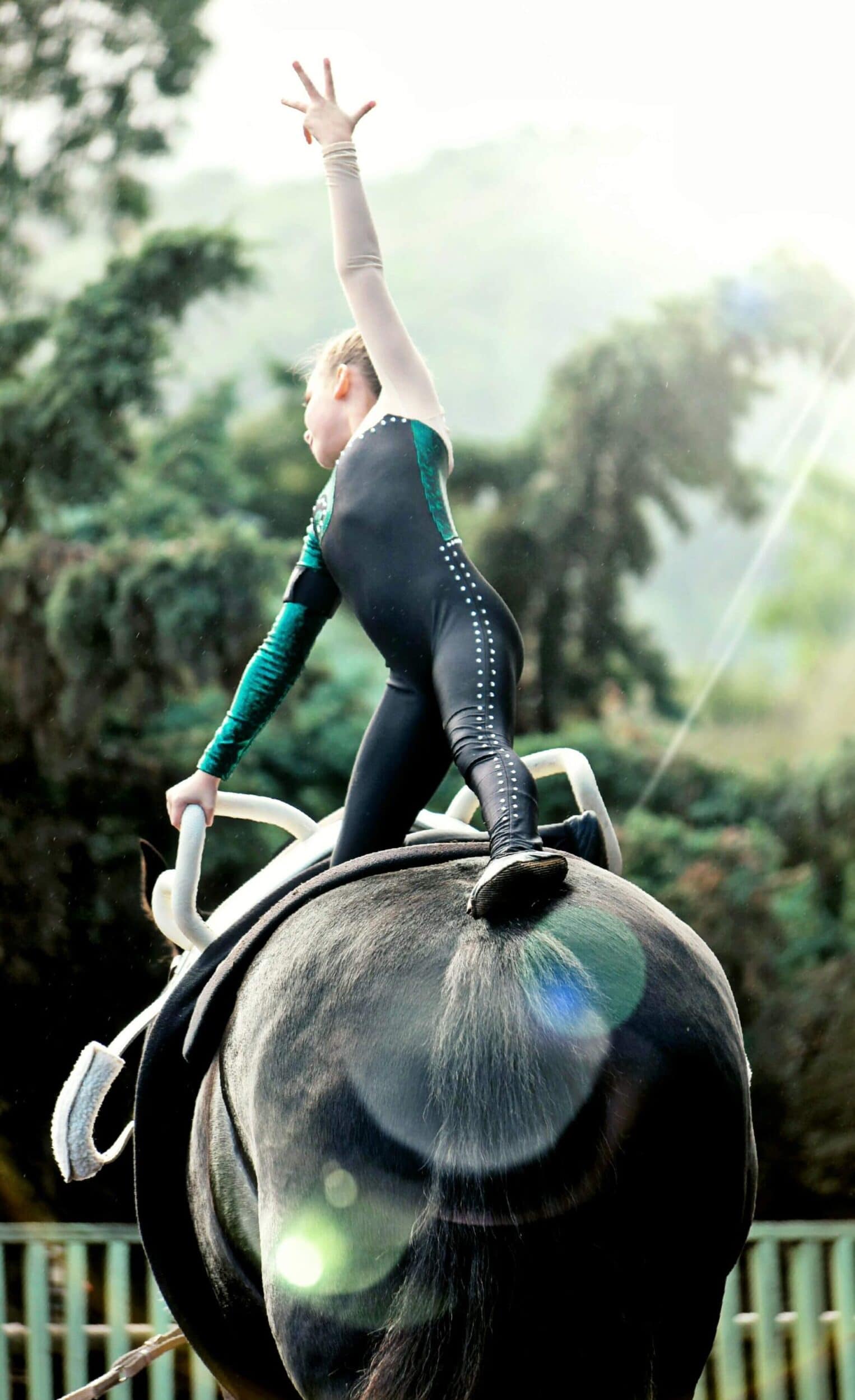
Vaulting is a combination of gymnastics and dance performed on a moving horse, blending athleticism, artistry, and partnership in a unique equestrian discipline.
Unlike other sports, the horse moves in a controlled circle on a longe line while vaulters perform coordinated routines, emphasizing balance, flexibility, and timing.
This discipline celebrates the horse as an active partner in performance and demands precise communication between horse, vaulter, and lunger. [12]
History & Origins
Vaulting has ancient roots, with references to acrobatic riding dating back to Roman cavalry exercises. In modern form, it developed in Europe as both a training tool for riders and a performance art.
Vaulting gained international recognition in the 20th century and is now governed by the FEI, with World Championships and inclusion in multi-discipline equestrian events.
Routines & Scoring
Vaulting competitions are divided into team, pair, and individual events, each requiring different skills and levels of coordination. Vaulters develop routines with the hope of earning high scores from judges.
Vaulting routines vary by competition, but usually contain the following elements: [12]
- Compulsory Exercises: Standardized movements performed by all competitors, assessing balance, posture, and basic technique.
- Freestyle Routines: Choreographed sequences set to music, allowing creativity and expression while demonstrating strength, agility, and synchronization with the horse’s movement.
- Technical Evaluation: Judges score both vaulters and horses, assessing precision, rhythm, and overall harmony.
The horse’s movement and consistency are crucial. Even the most skilled vaulter cannot succeed without a calm, steady, and well trained mount.
Training & Preparation
Vaulting horses require exceptional training and conditioning. They must maintain a steady, even gait on the lunge line and remain calm despite dynamic movements on their back.
Training focuses on rhythm, responsiveness to the lunger’s commands, and the ability to tolerate repeated weight shifts and acrobatic maneuvers.
Vaulters themselves build strength, flexibility, and balance off the horse before translating those skills to a moving mount. Practice emphasizes coordination, timing, and trust, ensuring that both horse and vaulter can execute routines safely and effectively.
Unique Aspects of Vaulting
Vaulting carries unique challenges. Horses can be sensitive to uneven weight distribution or sudden movements, and vaulters must maintain body control on a moving animal. Lungers also have an essential job of managing the horse’s canter quality throughout the performance.
Injuries can occur from falls or missteps, highlighting the importance of proper spotting and coordination between team members. The discipline also demands intense focus and endurance from both horse and vaulter during longer routines or competitions.
Vaulters & Vaulting Horses
Success in vaulting depends on the partnership between the horse, vaulter, and lunger. Horses must be calm, athletic, and consistent, capable of maintaining smooth, rhythmic movement under changing conditions.
Vaulters require strength, poise, and precision, adapting their movements to the horse’s rhythm. Lunge riders coordinate and guide the horse, creating a foundation for safe and effective performance.
Together, this team demonstrates a unique harmony, blending equestrian skill with athletic artistry in a way no other discipline can replicate.
Driving & Para-Driving
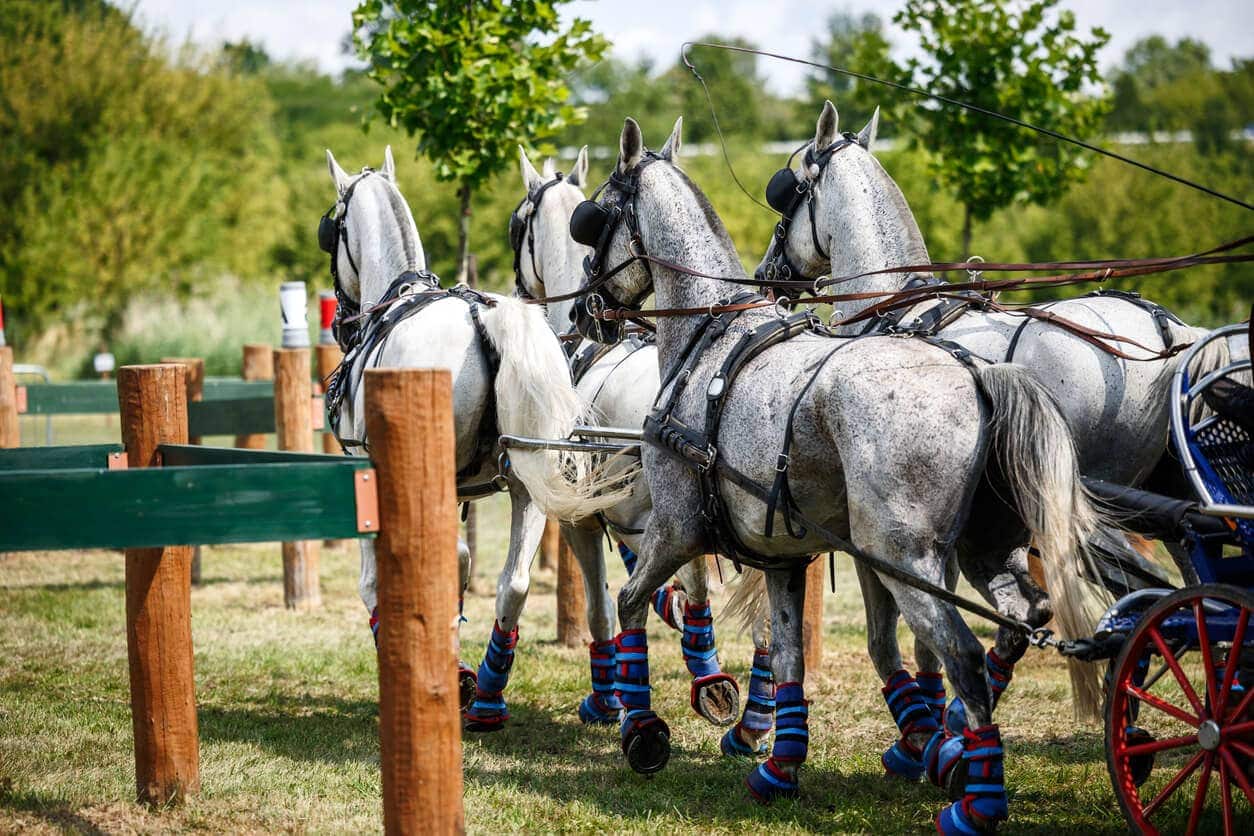
Driving, sometimes referred to as combined driving, is a dynamic FEI discipline where horses pull a carriage through structured tests of skill, precision, and endurance.
Para-driving is the adaptive counterpart, designed for athletes with physical impairments, allowing competitors to navigate similar courses using specially modified equipment.
Both disciplines emphasize teamwork, athleticism, and communication, but with a unique twist. The rider is not mounted, and the horse’s movement and responsiveness are guided entirely from the carriage. [13]
History & Evolution
Driving has its roots in practical horsemanship, originating in Europe as a method of transportation.
It evolved into a competitive sport in the 19th century, when carriage clubs and formal driving competitions gained popularity across Britain, France, and Germany.
The FEI recognized competitive driving in 1970, standardizing rules and establishing it as an international sport. Para-driving was introduced later, reflecting a growing commitment to adaptive equestrian competition, and has gained prominence on the world stage.
Competition Structure & Phases
Driving has a similar competition structure to eventing. Competitions typically consist of three main phases, each designed to test a distinct set of skills.
Combined driving competitions have the following phases: [13]
- Dressage Phase: Horses demonstrate willingness, rhythm, and suppleness as they navigate a series of precise movements in an arena. Drivers are judged on control, accuracy, and harmony with their horses.
- Marathon Phase: This is the endurance and cross-country component, where horses and drivers traverse a course with natural and artificial obstacles, including water crossings, tight turns, and uneven terrain. The marathon tests stamina, agility, and teamwork under more physically demanding conditions.
- Cones Phase: Precision and timing are emphasized as horses navigate narrowly spaced cones fitted with balls. Penalties are assessed for knocking down balls, refusals, or exceeding time limits. This phase requires precise coordination and clear communication between the horse and driver.
Para-driving competitions mirror this structure, with adaptive modifications to carriages, reins, and other equipment as needed, ensuring fairness while maintaining the technical challenges of the sport.
Training & Preparation
Horses in driving disciplines need strength, endurance, and remarkable focus. Pulling a carriage demands well-developed hindquarters, balance, and rhythm. They must also be agile and responsive, able to change pace or direction quickly while remaining calm under pressure.
Driving and para-driving carry unique challenges. Marathon courses in particular can be physically demanding, and errors in timing or communication can lead to penalties or accidents.
Proper conditioning, progressive training, and attention to the horse’s welfare are essential. Training programs blend conditioning, skill-building, and obstacle practice, progressing gradually to minimize fatigue and reduce the risk of injury.
Drivers require physical stamina, precise hand-eye coordination, and quick decision-making skills. The ability to anticipate obstacles, judge distances, and maintain control at speed is critical. Training often includes repeated practice over cones and marathon courses, paired with dressage-style schooling to maintain suppleness, willingness, and responsiveness.
Driving Horses & Drivers
Success in driving relies on a finely tuned partnership. Horses must combine strength, agility, and a calm temperament, while drivers provide guidance, strategy, and timing from the carriage. In para-driving, adaptive athletes demonstrate extraordinary skill and trust in their horses, highlighting the discipline’s accessibility and the versatility of both horse and driver.
The relationship is one of mutual respect and understanding. The horse responds to subtle cues, and the driver makes rapid, precise decisions to navigate technical courses safely.
Together, they form a dynamic, high-performing team capable of meeting the sport’s complex demands with precision, stamina, and elegance.
USEF Disciplines
In the United States, the governing body for equestrian sport is the United States Equestrian Federation (USEF). Established in 1917, the USEF is responsible for overseeing national-level disciplines, setting competition rules, and promoting the growth of equestrian sport across the country.
Many of the disciplines recognized by USEF are rooted in American traditions, show culture, and breed associations. While some overlap with internationally recognized sports, others are unique to the U.S. show ring, reflecting a North American approach to presenting and celebrating horses.
These disciplines may not appear on the Olympic stage, but they play an essential role in shaping the equestrian experience for countless riders. They provide opportunities for youth development, showcase the qualities of specific breeds, and foster community within the broader English riding tradition.
Hunter
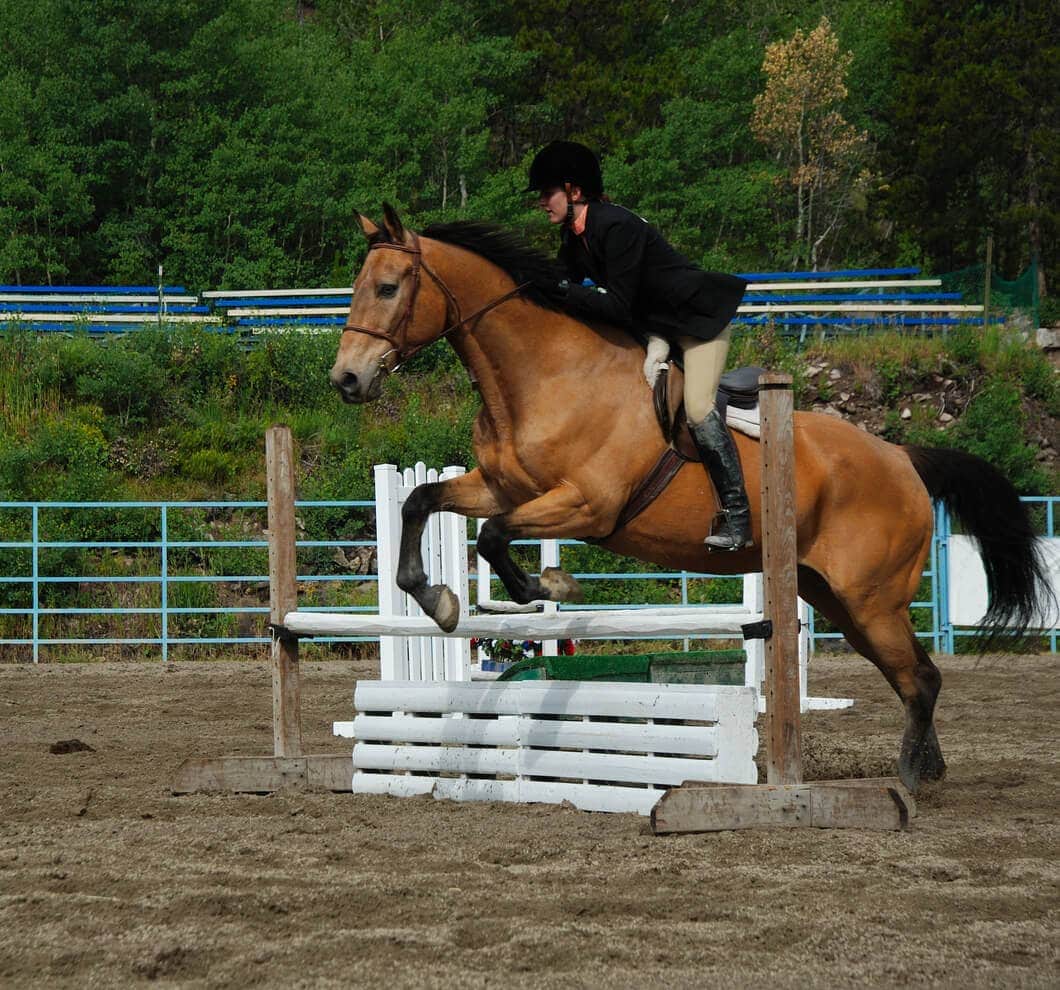
Hunter is one of the most popular USEF disciplines, emphasizing style, rhythm, and smoothness over fences rather than speed or extreme difficulty.
The goal is to showcase the horse’s elegance, consistency, and carefulness while creating a harmonious picture of horse and rider moving together across a course. [14]
History of Hunters
Hunters originated from fox hunting traditions in England, where horses were evaluated on their ability to jump natural obstacles smoothly and safely while maintaining a steady pace.
When fox hunting evolved into the American show hunter tradition, the emphasis shifted toward judged courses in arenas and over constructed fences.
Today, hunters remain a central discipline in USEF competitions, with classes ranging from local shows to national championships. The sport is also gaining recognition abroad, particularly in Europe.
Competition Structure
Hunter competitions appear similar to show jumping, but this discipline is judged on the overall picture, rather than timing alone.
Classes may include: [14]
- Over-Fences Classes: Horses navigate a course of jumps with emphasis on style, rhythm, and evenness. Judges look for smooth takeoffs and landings, consistent stride, and a confident, relaxed performance.
- Flat Classes (Under Saddle): Evaluates the horse’s manners, movement, and responsiveness on the flat, including transitions, rhythm, and willingness.
- Equitation Classes: Focus on the rider’s form, effectiveness, and control, highlighting the partnership and balance over fences.
Courses are designed to flow naturally, allowing horses to demonstrate a comfortable rhythm and careful technique rather than speed.
Training & Preparation
Hunter horses require training that develops strength, rhythm, and calmness. Conditioning emphasizes balanced gaits, proper jumping technique, and responsiveness to subtle aids.
Riders work on maintaining position, guiding the horse smoothly through turns, and creating a polished, harmonious performance. Exercises often include gymnastics, flatwork, and practice over varied jump types to build confidence and consistency.
Hunter Horses & Riders
Success in the hunter ring depends on subtle communication and mutual trust. Horses must remain relaxed, confident, and adjustable to the rider’s cues, while riders must maintain steady contact, rhythm, and balance.
The partnership is evaluated on the appearance of ease and harmony, making hunters a discipline that celebrates style, training, and refined horsemanship.
A strong hunter team combines athleticism, elegance, and trust, creating a performance that is both technically proficient and visually pleasing.
Equitation
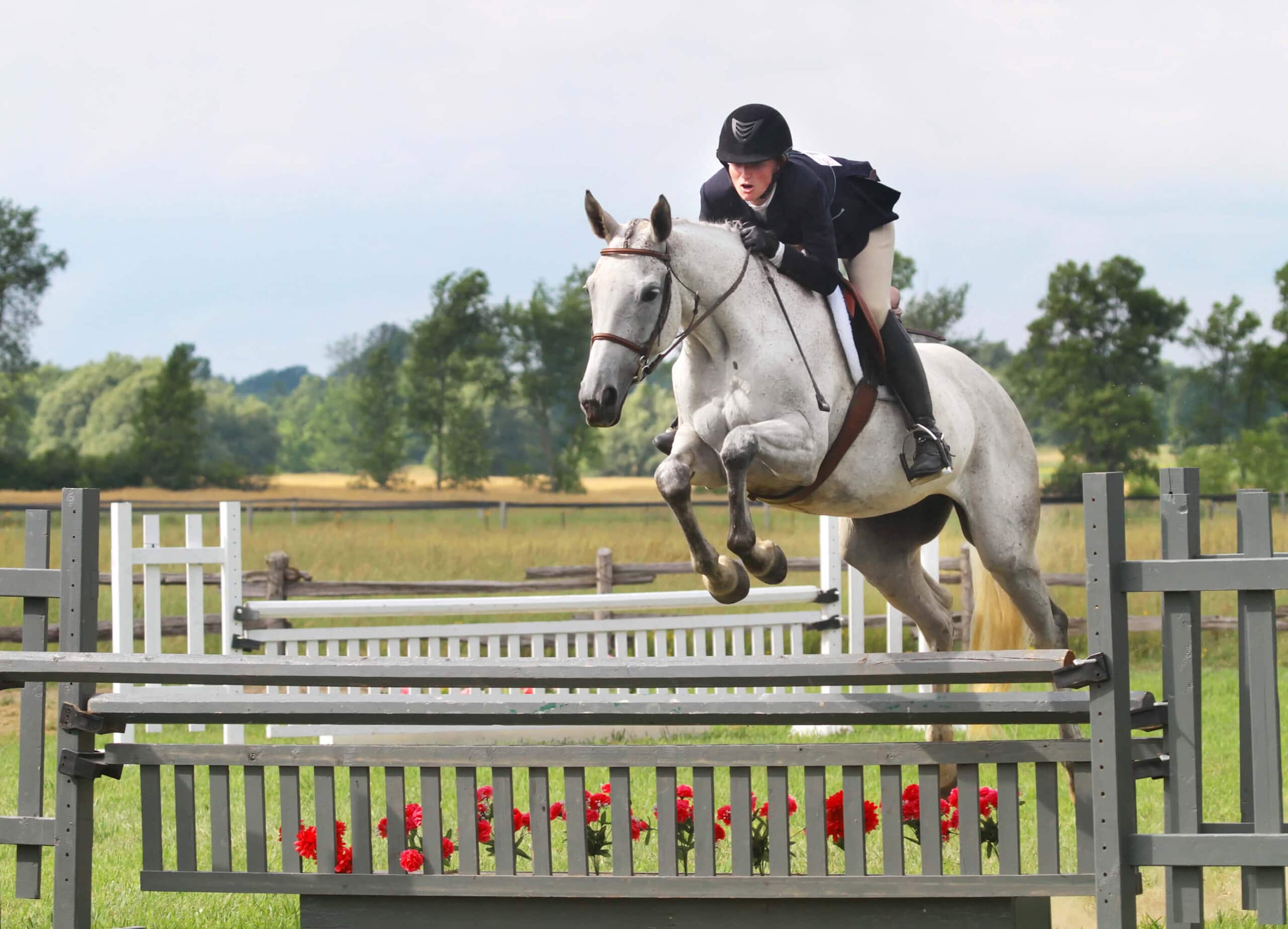
Equitation classes focus on the rider’s skill, position, and effectiveness over fences and on the flat, highlighting the quality of the rider’s training and ability to communicate with the horse.
Unlike hunters, which emphasize the horse’s style, equitation places the rider’s form and performance at the center of judging. [15]
History of Equitation
Equitation evolved from classical riding schools, where maintaining proper position, balance, and technique was crucial for safe and effective horsemanship.
In the United States, equitation became a formalized show discipline in the 20th century, particularly in hunter and jumper arenas, to train riders and evaluate their ability to guide horses with precision and poise.
Competition Structure
Equitation competitions typically include: [15]
- Over-Fences Classes: Riders navigate a course of jumps while being judged on position, balance, and effectiveness. Points are awarded for the rider’s control, posture, and ability to present the horse correctly.
- Flat Classes: Riders demonstrate correct position, control, and smooth transitions on the flat. Judges assess aids, symmetry, and overall communication with the horse.
Courses in equitation are designed to test the rider’s adaptability and skill, including turns, changes of pace, and technical combinations, challenging both precision and confidence.
Training & Preparation
Riders in equitation spend extensive time on both flatwork and over-fences practice. Flatwork develops balance, core strength, and subtle communication, while jumping exercises improve timing, seat, and hand position.
Gymnastics and gridwork are commonly used to enhance the rider’s ability to stay centered, smooth, and consistent over obstacles.
Equitation Horses & Riders
Equitation horses are typically athletic, responsive, and willing, often sourced from sport horse breeds such as Warmbloods, Thoroughbreds, or hunter-type crosses.
They possess balanced movement, calm temperament, and a rhythmic, adjustable stride to support rider performance.
Riders in equitation are usually disciplined, focused, and balanced, with strong core strength and excellent body awareness. They must combine precision with subtle communication, demonstrating the ability to guide their horse confidently and stylishly through complex courses.
Success depends on the harmony between the horse’s athletic attributes and the rider’s skill and poise.
Saddle Seat
Saddle seat is a distinctive USEF discipline that emphasizes high-stepping action, elegance, and showy presence.
Unlike hunters or equitation, saddle seat highlights the horse’s flashy movement and the rider’s ability to present the horse with precision, style, and confidence. [14]
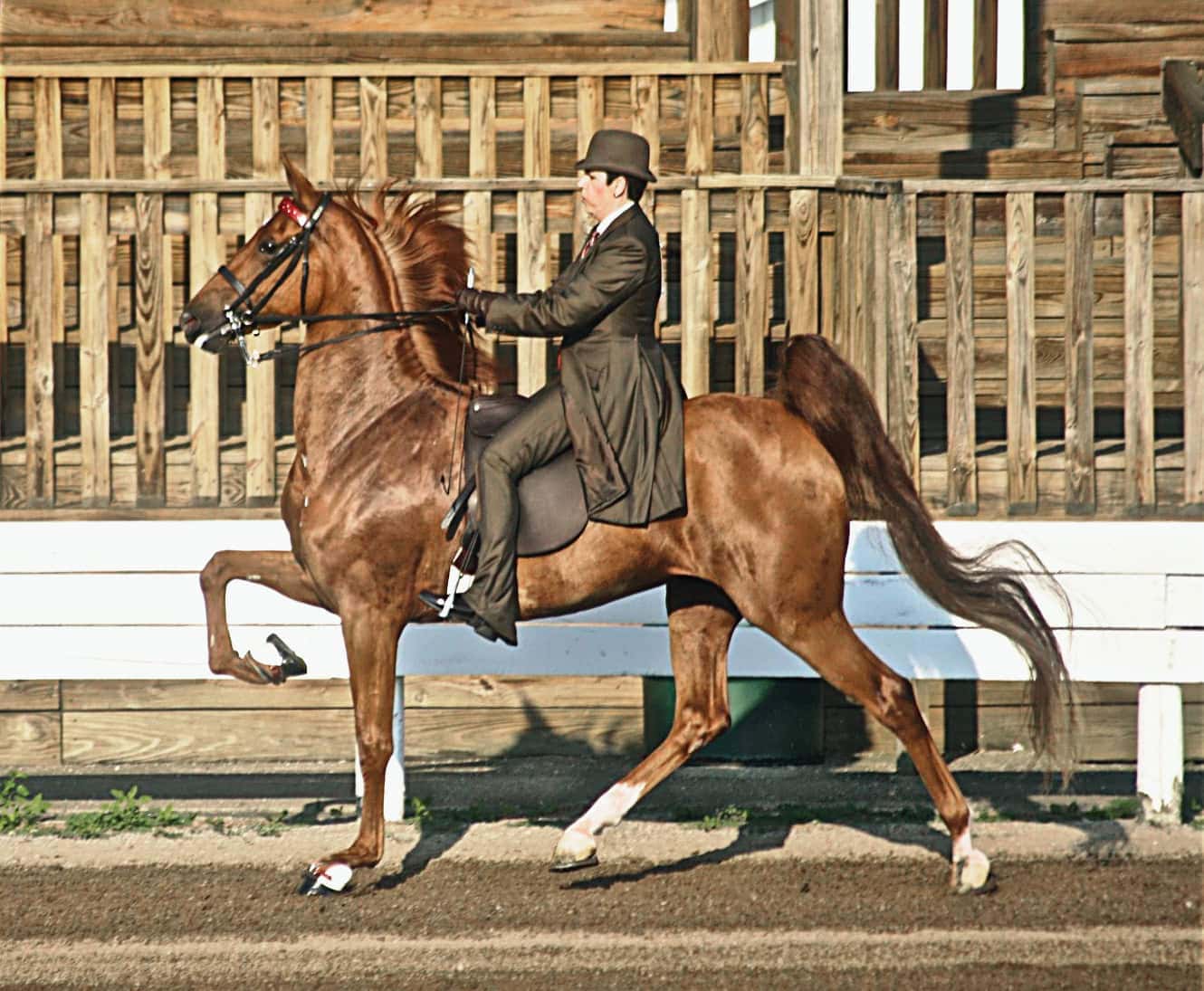 via Creative Commons [16]
History of Saddle Seat
Saddle seat was developed in the United States in the 19th and early 20th centuries. The discipline was heavily influenced by horse breeding in the American South and the desire to showcase breeds with naturally elevated action.
It evolved as both a show discipline and a way to preserve the unique gaits and high head carriage of American Saddlebreds, Morgans, and Arabians.
Competition Structure
Saddle seat competitions typically include: [14]
- Rail Classes: Horses are shown on the flat at various gaits, emphasizing collection, animation, and consistent rhythm. Judges look for elegance, responsiveness, and the horse’s presence.
- Equitation Classes: Riders are judged on position, form, and ability to present the horse effectively, demonstrating balance and control over the horse’s animated movements.
- Performance Classes: Horses are often shown under saddle at walk, trot, and canter, including specialty gaits such as the rack or slow gait for specific breeds.
Classes reward both the horse’s natural action and the rider’s ability to display it correctly, making presentation and poise essential components of success.
Training & Preparation
Training for saddle seat focuses on developing the horse’s naturally expressive gaits and collection while maintaining harmony and elegance.
Riders work on their posture, seat, and aids to guide the horse in a subtle and consistent manner. Conditioning emphasizes rhythm, suppleness, and strength in both horse and rider to execute extended trot work, canter transitions, and specialized gait patterns.
Saddle Seat Horses & Riders
Saddle seat horses are typically American Saddlebreds, prized for their high action, expressive movement, and alert temperament. They are athletic, responsive, and able to maintain animated gaits while listening to the rider’s cues.
Riders in saddle seat are often upright, poised, and confident, with a strong, independent seat to support and showcase the horse’s movements.
They must combine elegance with expression, guiding the horse to display both power and refinement. Success relies on the harmony between the horse’s natural athletic attributes and the rider’s skill in presenting them to their fullest potential.
English Pleasure
English Pleasure is a USEF discipline that emphasizes smooth, balanced gaits, connection, and overall presentation of horse and rider.
Unlike hunters or equitation, the focus is on the horse’s training, movement, and the effortless partnership between horse and rider, making it a showcase of elegance, refinement, and harmony. [14]
History of English Pleasure
English Pleasure evolved from traditional English riding classes, where horses were evaluated on their suitability for comfortable, stylish riding on the flat.
The discipline eventually developed into a formal show category in North America. In this type of class, riders emphasize the horse’s smooth gaits, calm demeanor, and consistent performance in the show ring.
Competition Structure
English Pleasure competitions typically include: [14]
- Flat Classes: Horses are evaluated at walk, trot, and canter, demonstrating rhythm, consistency, and responsiveness.
- Performance Classes: Some competitions may incorporate patterns, hand gallops, or transitions to showcase willingness, smoothness, and expression.
- Rider Presentation: Riders are judged on their ability to maintain proper position and subtle communication, highlighting the harmony and effectiveness of the partnership.
Judging prioritizes the horse’s manners, quality of movement, and suitability for pleasure riding, rather than speed or jumping ability.
Training & Preparation
Training for English Pleasure focuses on developing balanced, smooth gaits, responsiveness to subtle aids, and a calm, confident demeanor. Horses are schooled to maintain consistent rhythm, collection, and engagement of the hindquarters, while riders refine seat, posture, and communication.
Conditioning encompasses flatwork, transitions, and light exercises to enhance suppleness and willingness, thereby preparing the horse and rider to deliver a polished performance.
English Pleasure Horses & Riders
English Pleasure classes are common in many breed shows. Any breed with smooth gaits, a willing work ethic, and a gentle temperament can succeed in this discipline. The best English Pleasure horses are elegant, willing, and consistent, able to maintain composure and style throughout the class.
English Pleasure riders are generally balanced, calm, and attentive, with a focus on subtle communication and maintaining harmony with the horse.
Success depends on a partnership in which the horse’s natural movement is complemented by the rider’s skill in guiding, presenting, and supporting the horse’s performance.
Carriage Pleasure Driving
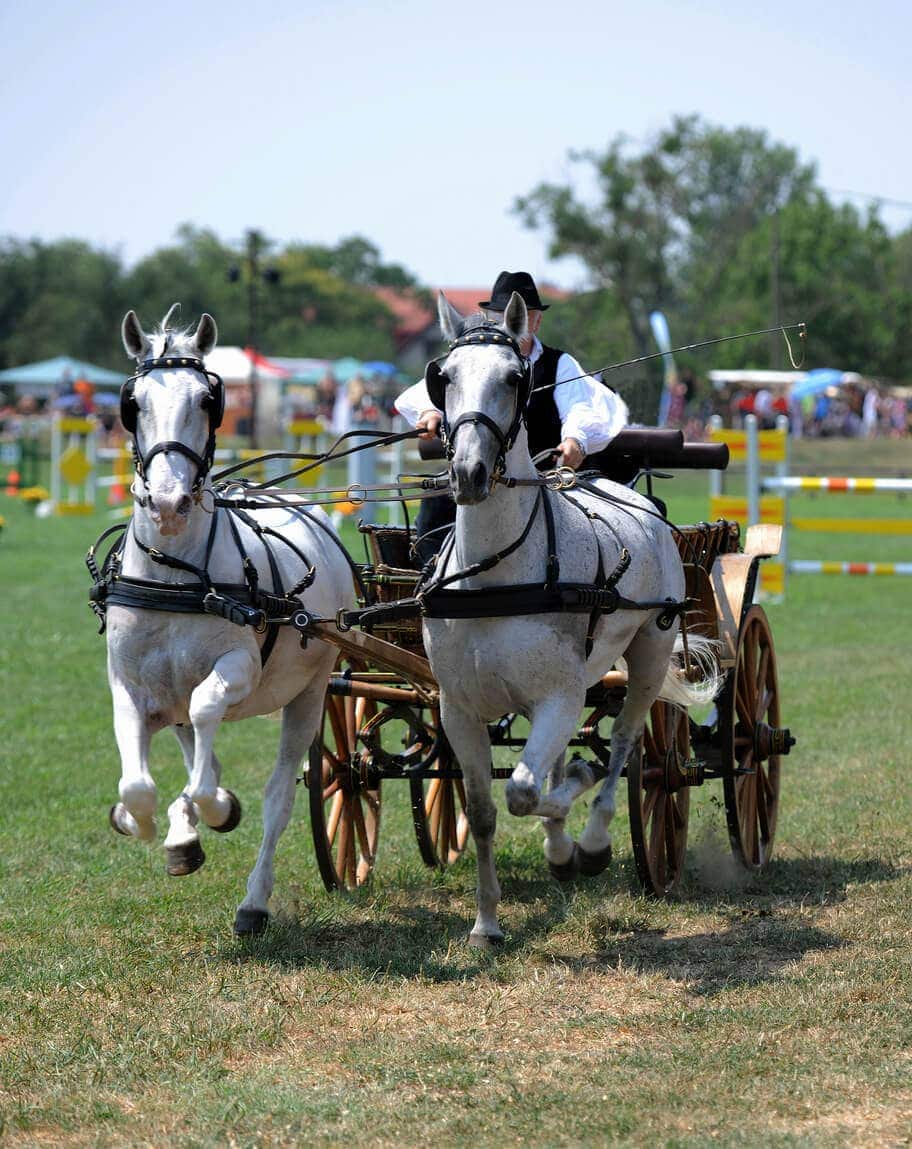
Carriage Pleasure Driving is a USEF discipline that emphasizes elegance, manners, and style in the show ring, showcasing horses in harness pulling a light carriage.
Unlike competitive driving events that focus on speed or obstacles, Carriage Pleasure Driving prioritizes smooth movement, obedience, and overall presentation, creating a polished and refined display of horsemanship. [14]
History of Carriage Pleasure Driving
Carriage Pleasure Driving has its roots in the 19th-century tradition of showing horses in harness for quality and manners. Initially, owners and breeders displayed fine harness horses in carriage competitions to highlight style, elegance, and training.
Over time, these exhibitions evolved into formal show classes in the United States, and remain a popular discipline for riders and drivers who value presentation and partnership.
Competition Structure
Carriage Pleasure Driving competitions typically include: [14]
- Halter or Presentation: Horses are judged on turnout, overall condition, and quality of movement while in harness.
- Driven Classes: Horses are driven at walk, trot, and extended trot, demonstrating manners, responsiveness, and smooth transitions.
- Performance and Obedience: Drivers guide their horses through patterns or cone courses that highlight control, balance, and consistency in the horse’s gaits.
Judges look for elegance, steady rhythm, and the horse’s willingness to respond to subtle cues from the driver while maintaining style and composure.
Training & Preparation
Training focuses on developing calm, willing horses with balanced, expressive gaits suitable for driving.
Horses are trained to respond promptly to rein and voice cues, maintain proper frame, and move with rhythm and consistency. Drivers focus on posture, rein handling, and timing to present their horses effectively, ensuring smooth and controlled performance.
Practice often includes arena work, patterns, and turnout exercises to refine both the horse’s and the driver’s skills.
Carriage Pleasure Driving Horses & Drivers
Carriage Pleasure Driving Horses must be expressive, steady, and capable of maintaining composure under show conditions.
Popular breeds for Carriage Pleasure Driving include the American Hackney and Morgan. These breeds are valued for elegance, high-stepping movement, and a willing, responsive temperament.
Drivers must be attentive, poised, and skilled in rein management to communicate clearly and subtly with the horse. Success relies on the harmony between horse and driver, with the horse providing expressive movement and responsiveness while the driver ensures presentation, rhythm, and precision.
Together, they create a refined, polished performance that exemplifies the beauty and tradition of carriage driving.
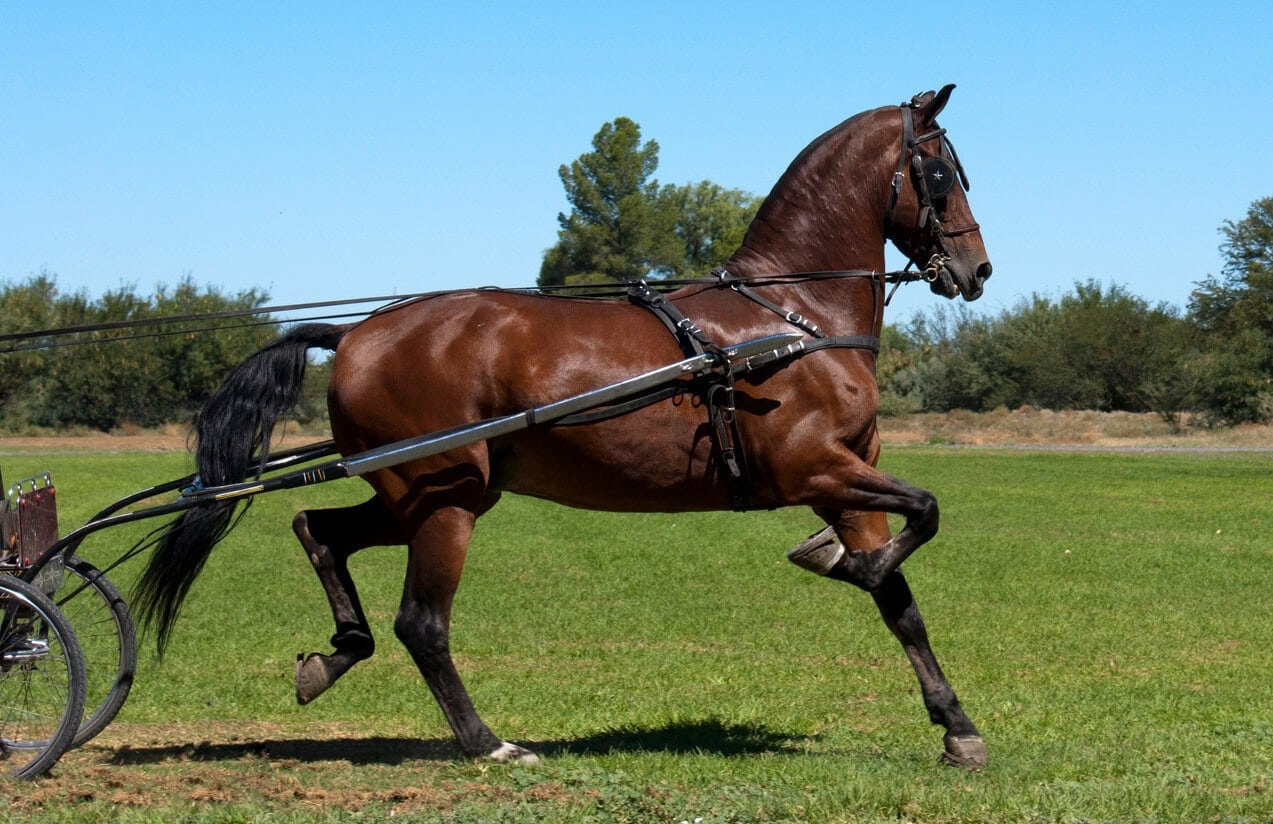
Roadster
Roadster is a USEF discipline that emphasizes speed, style, and precision on the flat, often featuring horses in harness or under saddle performing at the trot or pace.
The sport evolved from harness racing and popular carriage-driving traditions, combining athleticism with elegant presentation.
Roadster competitions showcase a horse’s movement, responsiveness, and ability to maintain rhythm at faster paces while being guided by the rider. [14]
History of Roadster
Roadster originated in the United States in the late 19th and early 20th centuries as a competitive outlet for trotters and pacers trained for harness racing. Over time, it evolved into a judged sport that emphasizes style, correctness, and suitability for show ring performance, rather than purely racing ability.
The discipline preserves the speed and elegance of the gaited horse while integrating traditional show ring aesthetics. [14]
Competition Structure
Roadster classes are typically divided into: [14]
- Flat Classes: Horses are judged at trot or pace, demonstrating speed, straightness, rhythm, and responsiveness. Riders or drivers must maintain balance and control while allowing the horse to move freely.
- Over-Fences (Optional): Some competitions include small jumps to test responsiveness and coordination, though speed and style remain the primary focus.
- Performance Classes: Horses may be shown in harness or under saddle, judged on overall presence, manners, and animation at speed.
Judging emphasizes rhythm, style, and correctness of the gait, as well as the horse’s willingness to respond to the rider’s guidance.
Training & Preparation
Training for roadster horses focuses on developing a strong, balanced trot or pace, as well as stamina and responsiveness. Conditioning includes long trots, transitions, and precise steering work to prepare horses for high-speed presentation.
Drivers work on maintaining proper position, rein control, and timing to maximize the horse’s natural athletic ability while maintaining safety and composure.
Roadster Horses & Drivers
Roadster horses are often American Standardbreds, prized for their speed, rhythm, and willingness to move freely at fast paces. They are athletic, responsive, and capable of sustaining collected and extended gaits in harness.
Riders and drivers in roadster classes are typically balanced, confident, and highly coordinated, with the ability to maintain control at speed while presenting the horse’s movement effectively.
Success relies on the partnership between a fast, responsive horse and a rider or driver who can guide it with precision, rhythm, and style.
Other English Disciplines
Not every English discipline falls under the banner of the Olympics, the FEI, or the USEF. Many exist as traditional pursuits, recreational activities, or specialized sports. These other disciplines are just as crucial for understanding the diversity of English riding.
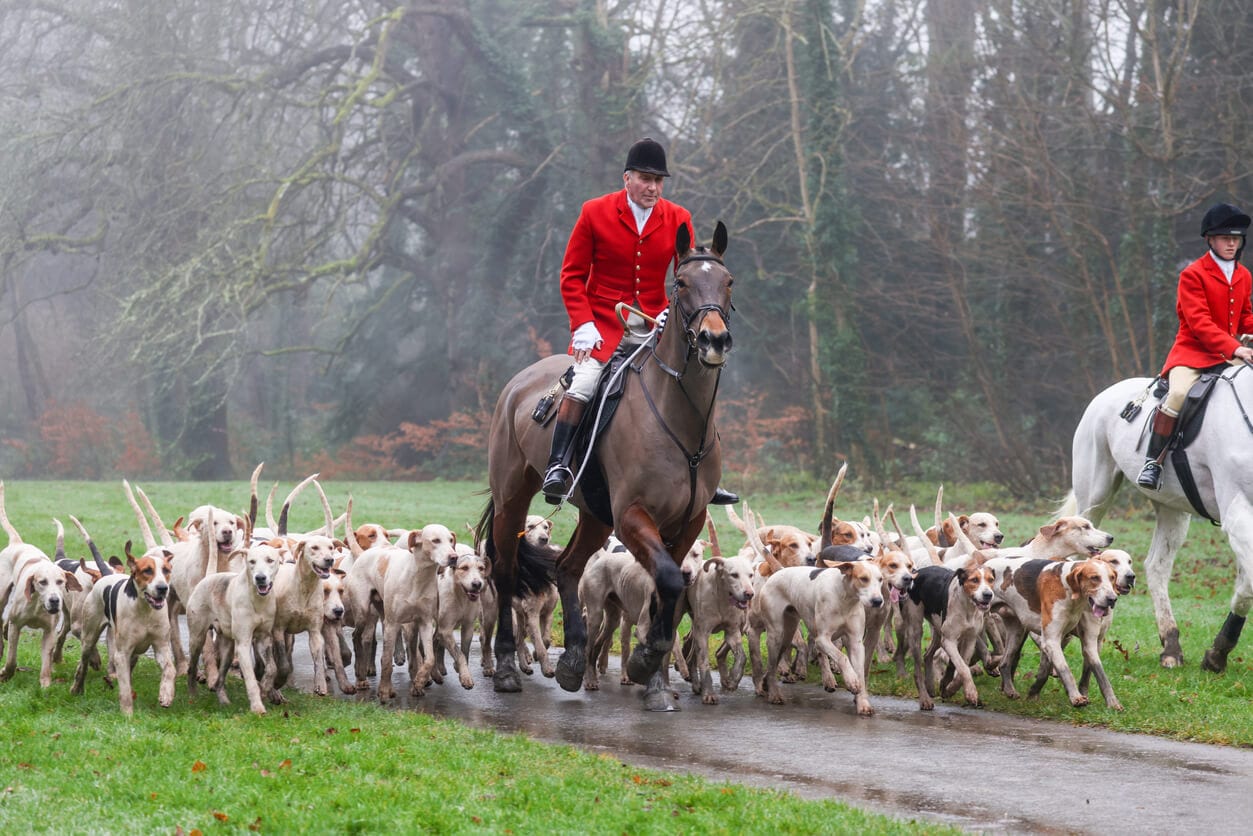
Fox Hunting
Fox hunting is a traditional English discipline that tests stamina and horsemanship across varied and often unpredictable terrain.
Unlike arena-based disciplines, this sport combines endurance, agility, and skill in natural settings, requiring horses and riders to work in harmony while navigating a diverse range of obstacles.
Historical Roots & Modern Adaptations
Fox hunting originated in England in the 16th century as a practical means to control fox populations.
Riders followed packs of hounds trained to track the scent of a fox, combining horsemanship with outdoor strategy. By the 18th and 19th centuries, it had evolved into an organized sport with codified rules, hunt masters, and structured meet days. [1]
Drag hunting developed later as a safer alternative, replacing the live quarry with a pre-laid scent trail. Using a drag allowed riders and horses to experience similar challenges without the ethical concerns of hunting live foxes.
Today, the sport remains popular on both sides of the Atlantic, blending tradition, social culture, and athletic challenge.
Stamina & Adaptability
Courses in hunting are diverse, covering open fields, wooded paths, water crossings, ditches, and hedgerows.
Horses must maintain consistent rhythm, endurance, and confidence over long distances, often traveling several miles in a single hunt. Riders must navigate variable footing, maintain balance, and make split-second decisions regarding pacing and obstacle approach.
Unlike arena disciplines, terrain is unpredictable, requiring horses to remain calm under pressure and riders to anticipate environmental changes.
Success depends not only on fitness but also on mental sharpness and the ability to work as a team with both the horse and the pack of hounds.
Training & Preparation
Fox hunting horses undergo specialized conditioning to build stamina, strength, and agility.
Long rides over varied terrain simulate hunt conditions, while schooling over fences, banks, and natural obstacles improves confidence and technique. Riders focus on fitness, balance, and timing to stay in sync with the horse across changing terrain.
Preparation also involves developing a strong partnership between the horse and rider. The horse trusts the rider’s guidance over jumps and tricky footing, and the rider can accurately read the horse’s cues for fatigue, hesitation, or excitement.
Fox Hunting Horses & Riders
Irish Sport Horses, Thoroughbreds, and hunter-type crosses are popular breeds for fox hunting.
Key attributes include endurance, athleticism, sure-footedness, bravery, and a calm but responsive temperament. These horses can navigate obstacles confidently while sustaining a steady pace over long distances.
Riders are generally experienced, fit, and adaptable, capable of maintaining position over varied terrain and making real-time decisions while coordinating with their horse and the hounds.
Success in hunting relies on deep bonds between horse, human, and hound. Trust, communication, and athleticism allow both horse and rider to perform effectively in this dynamic, outdoor sport.
Working Equitation
Working Equitation is a versatile discipline that tests obedience, agility, and adaptability across multiple phases.
Combining elements of dressage, trail work, and timed obstacle courses, it highlights the horse’s versatility and the rider’s ability to communicate subtly and effectively. [15]
Classical Origins & Evolution
Working Equitation traces its roots to Portugal and Spain, where it was initially used to evaluate horses for farm and ranch work. These horses were expected to be obedient, agile, and calm in a variety of situations, enabling them to perform traditional agricultural and herding tasks.
Over time, enthusiasts transformed these practical tests into a competitive sport. Today, working equitation is practiced worldwide, combining classical horsemanship with modern competition standards.
Competition Structure
Working Equitation competitions may consist of different phases: [15]
- Dressage Phase: Horses and riders perform a series of precise movements, demonstrating obedience, suppleness, and responsiveness. Judges evaluate accuracy, balance, and harmony.
- Ease of Handling (Obstacle) Phase: Horses navigate obstacles such as bridges, gates, cones, or poles. This phase tests agility, calmness under pressure, and the horse’s willingness to respond to subtle cues.
- Speed Phase: Similar obstacles are negotiated at a faster pace, challenging both horse and rider to maintain control, rhythm, and accuracy while under time constraints.
This multi-phase structure emphasizes versatility rather than specialization, requiring horses and riders to excel in both precision and adaptability.
Training & Preparation
Training for working equitation focuses on developing the horse’s responsiveness, agility, and confidence.
Horses are schooled on flatwork for obedience, then gradually introduced to obstacles and varied terrain. Riders practice subtle aids, timing, and strategy to guide their horses efficiently through each phase of the competition.
Conditioning emphasizes balance, rhythm, and fitness for both horse and rider to handle extended sessions and high-demand obstacles.
Success depends on repetition, patience, and consistent communication, building a partnership where the horse anticipates cues and the rider can rely on the horse’s confidence and skill.
Working Equitation Horses & Riders
Working Equitation horses are often Iberian breeds, chosen for athleticism, agility, and a cooperative temperament. They must be bold, responsive, and able to perform with precision while navigating complex obstacles.
Working Equitation riders are disciplined, strategic, and adaptable. They must be able to communicate subtly and guide the horse through varied challenges.
Success in working equitation arises from a harmonious partnership, where horse and rider combine skill, agility, and trust to excel across multiple phases.
Mounted Games & Gymkhana
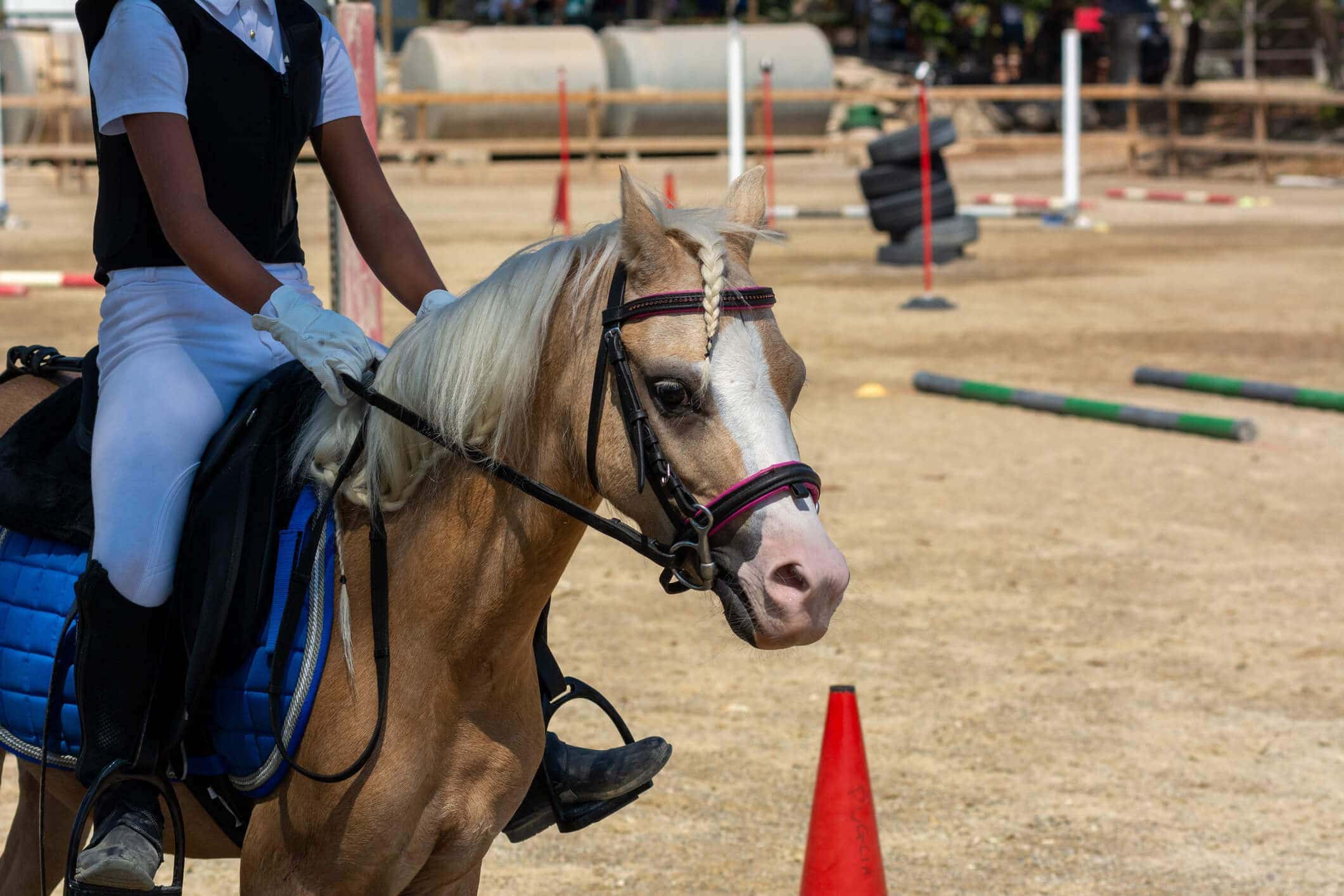
Mounted Games and Gymkhana are high-energy, agility-focused disciplines often practiced by youth and Pony Club participants.
These events combine speed, coordination, and teamwork, offering a fun yet challenging arena to develop horsemanship skills and rider confidence. [17]
Youth & Pony Club Competitions
Mounted Games and Gymkhana competitions are typically organized around timed races, relay events, and obstacle courses.
Young riders navigate their horses through a series of patterns or stations, demonstrating control, precision, and agility. Events may include baton exchanges, barrel races, poles, or creative challenges that test both speed and strategy. [17]
These competitions emphasize teamwork, learning, and enjoyment, cultivating riding skills in a supportive environment while still rewarding accuracy and quick thinking.
Agility-Focused Events
Courses demand rapid changes of pace, sharp turns, and accurate navigation through obstacles. Riders must maintain balance, anticipate movements, and coordinate effectively with their horses.
Horses must remain agile, responsive, and confident in the presence of distractions, other horses, and varying terrain. The fast-paced nature of these events encourages the development of quick reflexes, timing, and partnership.
All of the skills developed by youth participating in Mounted Games carry over into other English disciplines.
Training & Preparation
Training for mounted games focuses on short bursts of speed, agility, and responsiveness. Riders practice patterns and relay techniques repeatedly to build muscle memory, timing, and smooth coordination.
Horses are gradually exposed to obstacles, cones, and poles, developing confidence and trust in the rider’s guidance. Conditioning emphasizes short, energetic sessions to build quickness and responsiveness without overstressing the horse.
Gymkhana Horses & Riders
Welsh Ponies are popular youth mounts thanks to their agility, intelligence, and energy. They must be bold, responsive, and able to accelerate or pivot quickly while remaining calm and focused in high-pressure situations.
Riders are typically young, energetic, and courageous. This sport is ideal for helping young people develop balance, coordination, and timing skills in dynamic, fast-paced environments.
Success relies on a partnership in which the horse’s speed and responsiveness complement the rider’s precision and decision-making, creating a synchronized team capable of navigating challenging courses efficiently and safely.
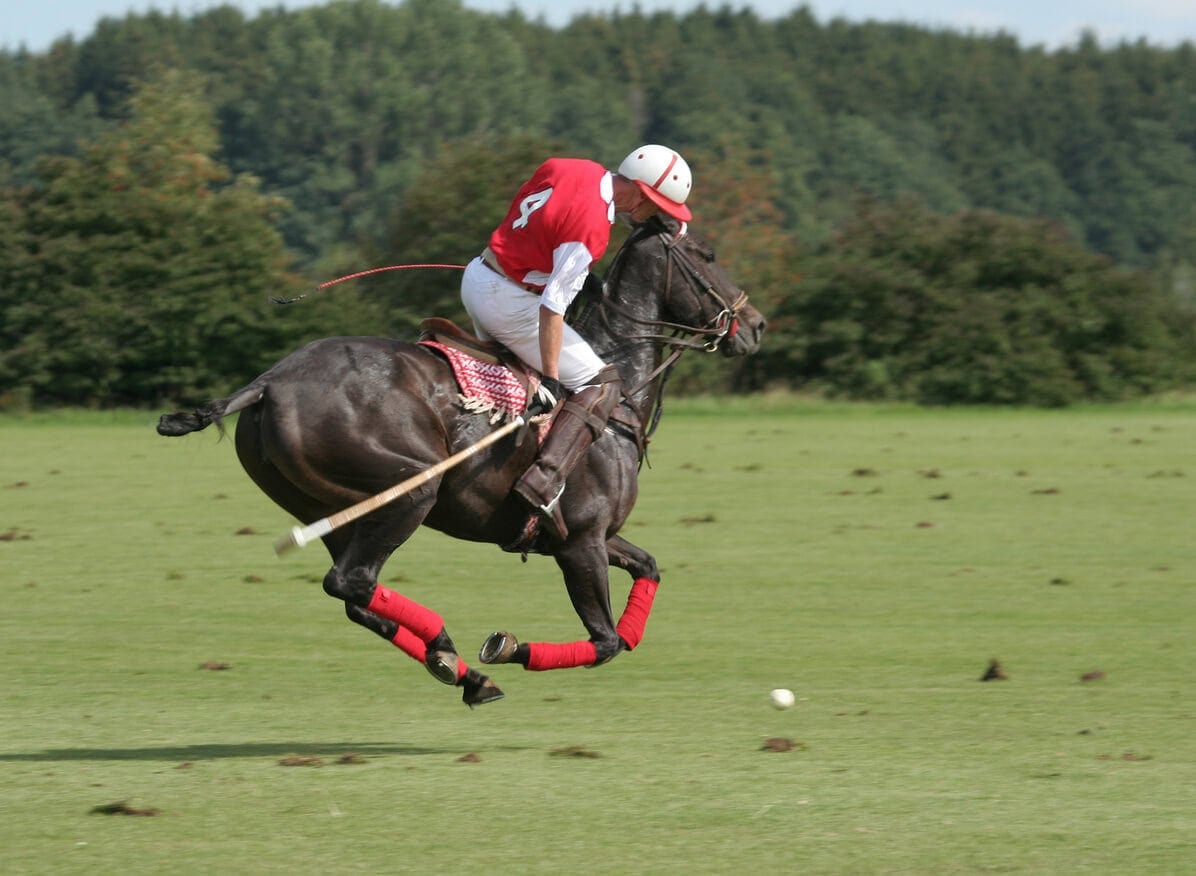
Polo
Polo is a fast-paced, team-oriented sport that emphasizes speed, strategy, and coordination between horse and rider.
Often referred to as “the sport of kings,” polo combines elements of mounted agility, horsemanship, and teamwork, making it one of the most dynamic English-influenced disciplines. [18]
Team Dynamics
Polo is played in teams of multiple riders on each side, competing to score goals by hitting a small ball through the opposing team’s posts using a mallet.
Matches are divided into periods called chukkas, typically lasting seven minutes each. Success requires rapid changes of pace, sharp turns, and precise timing as players navigate the field at high speed. [18]
Effective communication among teammates is crucial, as is understanding the game’s flow. Riders must anticipate both the horse’s movements and the actions of other players, creating a fast-moving, strategic environment that tests horsemanship and athleticism simultaneously.
Training & Preparation
Polo horses are trained to be responsive, agile, and have stamina. They must learn to accelerate, decelerate, and pivot quickly.
Riders practice riding at speed while striking the ball accurately, developing coordination, balance, and precise rein control. Conditioning focuses on sprinting, turns, and repeated bursts of energy, building both horse and rider fitness for multiple chukkas.
Polo Horses & Riders
Polo horses are most commonly Thoroughbreds or Thoroughbred crosses, selected for athleticism, agility, speed, and temperament. They must be bold yet obedient, capable of sudden stops, quick turns, and rapid accelerations without losing focus.
Riders are fit, agile, and strategic, combining horsemanship with teamwork and situational awareness to achieve success.
Successful polo partnerships require mutual trust and responsiveness, where the horse provides power and precision while the rider directs strategy, timing, and execution. The result is a highly synchronized performance at high speed, showcasing the athleticism and skill of both horse and rider.
Horseball
Horseball is a fast-paced, team-oriented sport that combines elements of polo, basketball, and rugby on horseback. It emphasizes speed, agility, teamwork, and precise horsemanship, offering an energetic and strategic alternative to traditional English disciplines.
Origins & Development
Horseball originated in France in the 1970s as a recreational sport inspired by traditional mounted games and team ball sports. It has since grown internationally, with competitions governed by the Federation of International Horseball (FIHB) and national federations.
The sport is played on an enclosed field, with teams aiming to score goals by throwing a ball through vertical hoops, while maintaining control of the horse.
Competition Structure
Matches are divided into timed periods, and teams must combine speed, strategy, and coordination to score points. [19]
Key components of the sport include: [19]
- Ball Handling: Players pick up the ball from the ground while mounted and pass it among teammates.
- Scoring: Points are scored by throwing the ball through the opponent’s hoop.
- Team Strategy: Players work in formation, anticipating opponents’ movements and managing space on the field.
Horseball requires rapid acceleration, sharp turns, and synchronized teamwork, testing both horse and rider in a dynamic and fast-moving environment.
Training & Preparation
Training emphasizes speed, agility, and responsiveness. Horses are conditioned for short bursts of sprinting, sudden stops, and quick directional changes.
Riders develop balance, coordination, and the ability to manage the horse while handling the ball and communicating with teammates. Both horse and rider must learn to anticipate movements, maintain rhythm, and work seamlessly as a team under pressure.
Horseball Horses & Riders
Horses are typically Thoroughbreds, prized for speed, stamina, agility, and a willing, responsive temperament. They must remain focused and confident while performing sudden maneuvers and interacting closely with other horses.
Riders are athletic, coordinated, and strategic, combining horsemanship with game awareness and teamwork.
Success relies on a partnership where the horse’s agility and responsiveness complement the rider’s skill, timing, and tactical decision-making, resulting in a fast-paced, highly synchronized performance.
Haute École
Haute École is a school of Classical Dressage that emphasizes precision, elegance, and advanced training. This type of riding focuses on movements beyond modern competitive dressage. [3]
Rooted in centuries-old European riding traditions, the discipline highlights the harmony, balance, and artistry of horse and rider.
Historical Origins
Classical dressage originates from Renaissance Europe, where mounted schools trained horses for war, ceremonial duties, and elite equestrian pursuits. The Spanish Riding School in Vienna, along with other renowned schools, has developed systematic methods for training horses in collection, suppleness, and elevated movements.
Haute École, or “high school” dressage, incorporates advanced maneuvers such as the piaffe, passage, and airs above the ground, representing the pinnacle of classical training.
Beyond Competitive Dressage
While modern dressage focuses on standardized tests, classical disciplines prioritize expression, balance, and responsiveness.
Movements are performed with artistry and precision, especially the airs above the ground. Riders emphasize subtle communication, ensuring that even the most complex maneuvers appear effortless and harmonious.
Training & Preparation
Training in classical dressage is a gradual and methodical process. Horses are conditioned for strength, flexibility, and mental focus, progressing through foundational work before advanced movements are introduced.
Riders develop a deep understanding of biomechanics, balance, and timing, learning to influence the horse with the lightest aids possible. Success requires patience, consistency, and a long-term commitment to building trust and mutual understanding.
Haute École Horses and Riders
Horses are often Lipizzaners, Andalusians, or other Iberian breeds. These horses are prized for elasticity, collection, and expressive movement. They possess strength, responsiveness, and a calm temperament, allowing them to perform advanced movements with precision and elegance.
Riders are disciplined, patient, and highly skilled. They must be capable of subtle communication and maintaining balance through complex maneuvers.
Classical partnerships rely on mutual trust, precision, and artistry, resulting in performances that are both aesthetically captivating and technically impressive.
Choosing an English Riding Discipline
Finding the right fit in English riding starts with your goals as a rider.
Some people are motivated by the challenge of perfecting small details, while others enjoy the thrill of fast-paced activities. There’s no single right path. What matters most is choosing something that excites you and keeps you motivated to improve.
Your horse also plays an important role in this decision. Different horses are better suited to specific activities, depending on their temperament, movement, and natural abilities. Paying attention to what your horse enjoys can help guide you toward a discipline where both of you can succeed.
Practical factors are just as important. The availability of good instruction, access to facilities, and opportunities to compete or participate in local events will influence which direction makes the most sense for you.
Many riders try out several styles before finding the one that feels like home. The best choice is a discipline that challenges you, matches your horse’s strengths, and supports the partnership you’ve built together.
Frequently Asked Questions
Here are some frequently asked questions about English riding disciplines:
English riding emphasizes close contact with the horse, precision, and style, often in arenas, while Western riding focuses on relaxed seat, utility, and ranch or trail work.
Dressage, show jumping, and eventing are the three Olympic English disciplines, testing precision, athleticism, and versatility at the highest level.
Horses with athleticism, balance, and responsiveness are ideal, including Thoroughbreds, Warmbloods, and Morgans, depending on the discipline.
Not all English disciplines involve jumping. Flat classes, dressage, pleasure riding, and equitation focus on flatwork, precision, and the partnership between horse and rider.
Hunt seat emphasizes forward motion, long strides, and traditional jumping or hunter classes, while saddle seat showcases high-stepping gaits and elegant presentation.
Working equitation is a multi-phase sport that combines dressage, obstacles, and speed tests, designed to showcase the horse’s versatility and responsiveness.
Yes, organizations like Pony Club host events that include mounted games and gymkhana disciplines to provide fun, safe, and educational experiences for young riders.
Absolutely. Trail riding, schooling, and hacking provide non-competitive opportunities that build foundational skills.
Riders develop balance, coordination, timing, subtle communication, and an understanding of horse behavior across a variety of terrains and challenges.
Yes, each discipline requires tailored training to develop the horse’s athleticism, responsiveness, and confidence, from jumping and dressage to driving and mounted games.
Summary
English riding includes a wide range of disciplines rooted in classical horsemanship, each emphasizing balance, precision, and communication between horse and rider.
- English disciplines span Olympic, FEI, USEF, and traditional sports, from dressage and show jumping to endurance, polo, and driving
- Each discipline places unique physical and mental demands on horses and riders while sharing a focus on long-term soundness and welfare
- Training systems prioritize balance, responsiveness, and progressive development to support athletic performance
- Horses of many breeds and sizes participate, with suitability influenced by temperament, movement, and discipline-specific demands
- Beyond competition, English riding supports lifelong horsemanship through recreational, youth, and adaptive disciplines
References
- Landry. D. Learning to Ride in Early Modern Britain, or, The Making of the English Hunting Seat. The Culture of the Horse. Early Modern Cultural Studies. 2005.
- De Haan. D. and Dumbbell. L. C. Equestrian Sport at the Olympic Games from 1900 to 1948. Int J Hist Sport. 2016.
- FEI Dressage Rules. Federation Equestre Internationale. 2025.
- FEI Jumping Rules. Federation Equestre Internationale. 2025.
- The Essential History of Show Jumping. Horse Network. 2020.
- FEI Eventing Rules. Federation Equestre Internationale. 2025.
- History of 3 Day Eventing. Elite Equestrian Magazine.
- FEI Para Dressage Rules. Federation Equestre Internationale. 2025.
- Tracing the Evolution of Therapeutic Horseback Riding: From Ancient Practices to Modern Healing. Banbury Cross Therapeutic Riding.
- FEI Endurance Rules. Federation Equestre Internationale. 2025.
- Endurance. Old Dominion Equesterian Endurance Organization.
- FEI Vaulting Rules. Federation Equestre Internationale. 2025.
- FEI Driving Rules. Federation Equestre Internationale. 2025.
- USEF Rulebook. United States Equestrian Federation. 2025.
- United States Rules for Working Equitation. USA Working Equitation. 2021.
- Jean. C.C. American Saddlebred Shelbyville CF 212. Creative Commons. 2012.
- Gymkhana Rulebook. United States Pony Club. 2025.
- USPA Rulebook. US Polo Association. 2025.
- Manuel de l’A.H.B.Q. ASSOCIATION HORSE-BALL QUÉBEC. 2017.