English











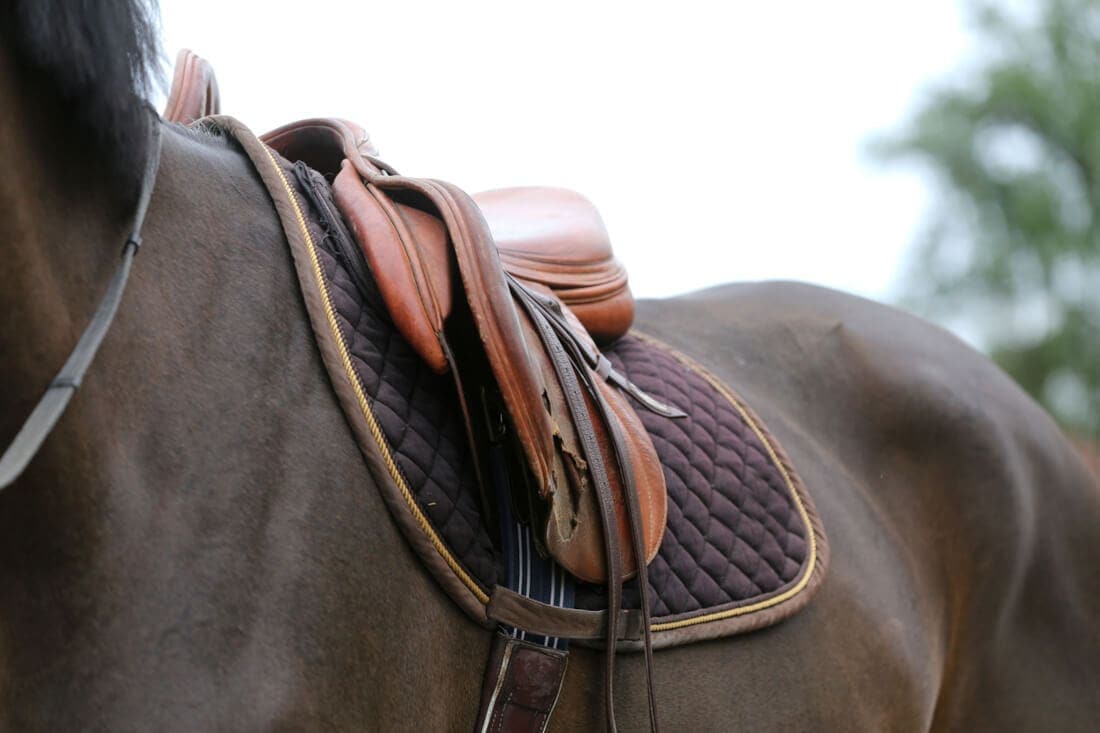
English saddle pads play an important role in protecting your horse’s back, improving saddle fit, and extending the life of your tack. Designed to cushion, reduce friction, and wick away sweat, saddle pads help keep horses comfortable and performing their best.
Available in a variety of shapes, sizes, and materials, English saddle pads are designed to suit different riding styles, from dressage and eventing to hunter/jumper disciplines. Some riders opt for traditional square pads for everyday training, while others prefer shaped or contoured designs for a more streamlined appearance in competition.
A well-chosen saddle pad can help prevent soreness, skin irritation, and uneven pressure distribution under the saddle. Factors such as thickness, breathability, and moisture-wicking ability affect your horse’s comfort and performance, especially during longer rides or in hot weather.
Understanding how different designs, fabrics, and features work allows you to make the best decision for you and your horse. Read on to learn everything you need to know about English saddle pads, including functions, types, and care so you can choose the best option for your horse and riding goals.
English Saddle Pads
Saddle pads are a basic piece of English riding equipment, providing a layer of protection and comfort between the horse and the saddle. They are typically made from cushioned material and cut in a square, rectangular, or contoured shape to fit securely between the horse’s back and the saddle. [1]
Designed to prevent skin rubbing, absorb sweat and protect the saddle from dirt and wear, these pads also help maintain the well-being of your horse during exercise.
While these pads may seem like a simple accessory, proper use and fit of a saddle pad can influence riding performance, saddle longevity, and overall equine comfort. [1]
English saddle pads come in various styles, materials, and thicknesses, each suited to specific riding disciplines and horse conformations. Choosing the right pad and using it correctly helps ensure the saddle fits properly, prevents rubbing or soreness, and promotes a more enjoyable riding experience for horse and rider alike. [1]
What's your top priority with your horse's health?

Enter your email to receive your store credit
Uses & Benefits
The saddle pad is placed between the saddle and the horse’s body to provide cushioning. Saddle pads have multiple uses in English tack, including: [1][2]
- Protecting the horse’s back from the saddle rubbing on the skin leaving marks, sores, or other issues
- Absorbing sweat so the saddle stays in place without slipping, and the horse is more comfortable
- Protecting the saddle from wear and tear
- Applying magnetic therapy in some cases
Additionally, the saddle pad can also help the saddle fit more snugly. [1] If the pommel/horn area of the saddle is too high, padding can be used under the back of the saddle to even it out. This should be done with caution, ensuring the saddle sits flat so that it does not rub the horse’s withers at the front edge. [1]
If the saddle is rubbing the horse’s withers because it is too low in the front, a wither pad can be added to the saddle’s front. [1]
Although these small corrections can be made using pads, anything more significant should be managed by finding a better fitting saddle. Saddle pads can only help with small adjustments. [1]
A numnah is a specific type of saddle pad that follows the outline of the saddle. To many riders, especially those from the UK, the terms saddle pad and numnah are used interchangeably. [1]
Sizing & Fitting
The width and length of a saddle pad is measured to fit comfortably under the outline of the saddle’s frame without too much extra pad outside of that area. [2]
A pad that is too small can result in rubbing and discomfort. A pad that is too large can get in the way of a proper fitting saddle.
The thickness of the pad is equally important, and should be determined by the width of the saddle’s tree and the shape of the horse’s back. [3]
A pad that is too thick can disrupt the proper fit of the saddle, while one that is too thin can result in discomfort to the horse from the saddle rubbing against its skin. [3]
Materials for an English Saddle Pad
Typically, saddle pads used in English riding are made up of thick, absorbent, and insulating fabrics. These include fleece, felt, wool, and sheepskin. [2][3]
Since English saddles are lighter than Western saddles, pads for English riding can be lighter and thinner than those used in Western riding. [1]
Synthetic pads are also available. These may be easier to clean and maintain but sometimes compromise the pad’s ability to absorb sweat and protect the horse’s back. [1] Pads made of fleece and wool allow for better temperature control and can be used for longer, harder rides. [3]
Guide to Using an English Saddle Pad
Proper placement of an English saddle pad helps keep your horse comfortable, prevents irritation and protects the saddle from wear and tear.
Follow these steps to ensure the pad is positioned correctly: [1][2][3][4]
- Prior to placing the pad, shake it out to ensure that the underside is clean and free from debris that might irritate the horse’s skin.
- Prepare the saddle by ensuring that the stirrup safety bar is down, the stirrups are up, and the girth is set across the seat.
- Place the pad onto the horse’s back. It should be placed high on the withers, then adjusted back along the horse’s body until it is in the proper position. This allows the horse’s hair to lie smoothly under the pad, decreasing the risk of discomfort.
- Ensure that the pad is even on both sides of the horse’s body. Smooth out the pad so there are no wrinkles or folded corners that might cause irritation or improper fit.
- Once the pad is in position, the saddle can be placed on top. Once it is in position, it is a good idea to pull the pad up into the saddle’s gullet. This prevents pressure on the withers and keeps the pad clear of the spine. It also ensures the pad doesn’t bunch up under the saddle and allows for ventilation over the horse’s back.
- Once the pad is properly positioned under the saddle, secure the saddle using the girth.
To remove the pad, push up and secure the stirrup irons, unbuckle the girth on both sides, and lay it across the saddle. Then lift the saddle and pad off the horse’s back together. [1]
Maintenance
When not in use, the saddle pad should be stored on top of the saddle with the dirty side up so it dries before next use. [1]
The pad should be kept clean and well maintained. Brush or vacuum the saddle pad frequently to remove dirt, dried sweat, and other contaminants. [1][2]
If the pad is made from washable materials, it should be washed regularly. After use, it should be checked for wear and tear and repaired or replaced when necessary. [1][2]
Between uses, saddle pads should be stored in a location where air can circulate freely to allow them to dry completely. [2]
Pads may also be made of materials that are attractive to mice and other rodents as nesting materials. Storing pads away from the reach of these animals is recommended. [2]

Drawbacks of Using Saddle Pads
While saddle pads offer cushioning and protection, improper use or maintenance can create problems for both horse and rider.
- Fit issues: Pads cannot correct an ill-fitting saddle and, in some cases, may make the problem worse. If a saddle does not fit properly without a pad, adding one can cause the material to bunch or wrinkle, creating pressure points that lead to discomfort, rubbing, or sores. Saddles should always be fitted directly to the horse’s back before adding a pad. [1]
- Heat buildup and moisture retention: Some pad materials can trap heat and moisture against the horse’s skin, particularly during long rides or in hot weather. This can lead to overheating, skin irritation, or fungal infections. Choosing breathable, moisture-wicking fabrics can help reduce these risks.
- Hygiene concerns: Pads, like other tack, can harbor parasites, bacteria, fungi, and other microorganisms. Mites, for example, can be transmitted to healthy horses through shared saddle pads. To reduce the risk of disease or parasite transmission, pads should be cleaned and disinfected before being used on another horse. [2]
Frequently Asked Questions
Here are some frequently asked questions about English saddle pads:
An English saddle pad serves several important functions when riding. It provides a cushioned layer between the saddle and the horse's back, reducing friction and preventing soreness, chafing, or pressure points. The pad also absorbs sweat, which helps keep the horse more comfortable and prevents the saddle from slipping during a ride. In addition, using a saddle pad helps protect the saddle from sweat, hair, and dirt, preserving its condition and extending its lifespan. While some experienced riders may adjust saddle fit without relying heavily on pads, for most riders, the saddle pad is considered an essential piece of tack.
Choosing the right saddle pad involves finding one that fits the saddle's shape and the horse's back correctly. The length and width of the pad should extend just slightly beyond the saddle's edge to provide protection without interfering with saddle placement. Thickness should be chosen based on the horse's build and the fit of the saddle. Pads that are too thick can cause the saddle to lift or shift, while very thin pads may not offer enough cushioning or protection. Always ensure that the saddle fits well on the horse before adding a pad, as pads are best used for comfort and small fit adjustments rather than to fix poor saddle fit.
A numnah is a specific type of English saddle pad that is shaped to closely follow the contour of the saddle. Unlike general square or rectangular pads, a numnah has a more tailored outline that matches the saddle panels, offering a neater appearance and reducing excess fabric. In everyday conversation, especially in the UK, riders often use the terms "numnah" and "saddle pad" interchangeably. However, technically, a numnah is one kind of saddle pad. Riders who prefer a closer fit or who ride in disciplines requiring a tidy look often choose numnahs.
When placing a saddle pad on your horse, begin by ensuring the pad is clean and free of dirt, hair, or debris that might cause irritation. Position the pad high on the horse's withers, then slide it gently backward along the hair to settle it in place and smooth the coat. Make sure the pad is even on both sides. After placing the saddle, gently lift the front of the pad up into the saddle's gullet to prevent it from pressing on the withers or spine. This technique also improves airflow along the horse's back and prevents the pad from bunching up under the saddle during riding.
To maintain both hygiene and performance, saddle pads should be cleaned regularly. Brush or vacuum the underside to remove hair, sweat, and debris after each use. If made of washable materials, pads should be laundered as needed to prevent the buildup of grime and dirt. Store pads with the underside facing up so they can dry properly, and place them in a well-ventilated area to allow air circulation. Since pads may attract rodents that use the fabric for nesting, store them off the ground or in sealed containers when not in frequent use.
Summary
An English saddle pad is a cushioned layer placed between the horse and the saddle to enhance comfort, protect the horse's back, and maintain saddle condition. It plays a vital role in everyday equestrian care, offering both functional support and riding safety when used correctly.
- English Saddle Pads are a basic but important piece of tack used to protect the horse's back and absorb sweat during English riding
- They provide comfort, prevent rubbing and saddle damage, and may assist with minor saddle fit adjustments
- They must be properly sized in both length and width as well as thickness to ensure comfort and prevent interference with saddle fit
- Common materials for saddle pads include fleece, felt, wool, sheepskin, and synthetic fabrics—each with different benefits for comfort, sweat control, and durability
- Proper placement and maintenance of the saddle pad ensure effectiveness, comfort, and a secure fit under the saddle
References
- Andrews. T. et al. Horse Reference Manual. 4H Alberta. 2015.
- The 4-H Horse Project. Pacific Northwest Extension. 2018.
- MA1500F Member's Manual. 4-H Horse Project. 2018.
- Moffitt. D. 4AF-05MA: Basic Horse Safety Manual. Cooperative Extension Service University of Kentucky College of Agriculture. 1989.