English









![Polocrosse on Horseback: History, Competition & Rules – [Equestrian Sport]](/wp-content/uploads/2024/12/polocrosse-discipline-guide.jpg)
Polocrosse is a distinctive equestrian sport that blends the speed and horsemanship of polo with the passing tactics and handheld equipment of lacrosse. Players ride on horseback and use a netted racquet to propel a soft rubber ball across the field, striving to outmaneuver opponents and score goals.
Originating in the mid-20th century, polocrosse shares polo’s emphasis on teamwork and strategic play but introduces a fresh dynamic through its specialized racquet, family-friendly appeal, and inclusive atmosphere.
Known for its accessibility and ability to accommodate various horse breeds — including Australian Stock Horses — polocrosse has grown steadily in popularity, particularly in Australia, the UK, and South Africa.
Today, the sport’s global recognition continues to rise, with players of all ages and skill levels embracing its energy, camaraderie, and fast-paced excitement.
History of Polocrosse
Polocrosse is a modern variation of the traditional sport of polo, originating in Australia in the late 1930s. [1] Unlike standard polo, which relies on the use of a mallet and a ball, polocrosse borrows elements from the field sport, lacrosse.
The sport was first formalized when an Australian couple, Mr. and Mrs. Hirst, came across an article describing an indoor equestrian game called “Polo La Crosse” being played at a riding school in England. Intrigued, the Hirsts traveled to the UK to observe the game in action.
Inspired by their observations, they returned to Australia and with the assistance of local polo expert A. Pitty, adapted the indoor concept into an outdoor field sport — giving rise to polocrosse. [2]
Success in this unique sport requires elements of advanced horsemanship, tactical gameplay, and physical athleticism. Since its initial conception, polocrosse has gained popularity in countries including the UK, New Zealand, South Africa, and the USA. [1][3]
Polocrosse Sport Organizations
Modern polocrosse is overseen by a network of international and national governing bodies that establish rules, promote competitions, and support the sport’s growth. At the highest level, the International Polocrosse Council (IPC) sets standardized regulations, coordinates international fixtures, and fosters cooperation among 18 member nations. [4]
Many countries, particularly those where polocrosse has established roots, also maintain their own national associations or federations to organize local leagues, training programs, and tournaments. These organizations often work closely with clubs and regional associations to develop talent, ensure fair play, and encourage youth participation.
International Polocrosse Council (IPC)
The organization was established in 1976 by the founding nations of Australia, New Zealand, Papua New Guinea, Zimbabwe, and South Africa. The highlight of the IPC’s annual season is the Polocrosse World Cup. [4]
National Organizations
Polocrosse enjoys a dedicated following in several regions around the world. Australia, as the birthplace of polocrosse, continues to lead in both player base and organizational structure, hosting regular national championships and producing top-level competitors.
The United Kingdom, New Zealand, South Africa, Zimbabwe, the United States, and parts of Europe have similarly active communities, with clubs offering introductory clinics, structured team play, and national competitions that qualify teams for the World Cup.
National organizations that oversee polocrosse include: [2][5][6][7][8]
- Polocrosse Australia: As the country where polocrosse was established, Polocrosse Australia oversees the highest number of national players globally. The Australian National Championships are held every other year, and each of the seven participating states takes a turn hosting the event.
- American Polocrosse Association (APA): The sport of polocrosse was introduced to the United States after a group of students learned the game while studying abroad in Australia in 2003. Those students returned to the US and established the APA, which oversees the sport in America today.
- Irish Polocrosse Association (IPA): As polocrosse gains popularity in the Northern Hemisphere, the IPA works to promote the sport in Ireland. The IPA emphasizes inclusion, highlighting that anyone who can ride a horse can play polocrosse, and has widened its reach after being added to the Irish Pony Club’s list of official horse sports.
- New Zealand Polocrosse: With men’s, women’s, intermediate, and junior leagues, NZ Polocrosse is a leader in promoting the sport alongside their Australian neighbors.
- Polocrosse Association of South Africa (PASA): The PASA boasts members of all ages, with an emphasis on merit, ability, and accessibility. Their handicap committee meets three times a year to ensure ongoing in-season play is fair for all.
Other participating countries include Zambia, Zimbabwe, and the United Kingdom. [4]
What's your top priority with your horse's health?

Enter your email to receive your store credit
Rules & Game Play
Polocrosse is a fast-paced equestrian sport in which two opposing teams vie to score points by sending a ball through the opponent’s goalposts. The team with the most goals at the end of the match wins.
Each team is composed of six players, split into two sections of three riders. These sections alternate each chukker (period), ensuring rest periods for both horses and players. The game typically consists of six to eight chukkers, each lasting around six to eight minutes. [9]
The playing field measures approximately 60 by 160 yards, smaller than a traditional polo field, which encourages closer interaction and more dynamic play. Unlike polo, where a mallet is used to strike the ball, polocrosse players handle the ball with a racket fitted with a net , allowing them to carry, pass, and shoot the ball into the goal. [9]
While there are no formal “ride-offs” as in polo, strategic positioning, effective passing, and timely cooperation are critical. The sport’s rules, set and enforced by various national associations, are designed to promote accessibility, teamwork, and continuous action, fostering an environment where players can develop their skills and engage in a more inclusive, family-oriented equestrian experience. [9]
Training
Polocrosse horses undergo rigorous conditioning programs designed to develop agility, responsiveness, and resilience in a high-contact sport.
They must learn to move swiftly in response to subtle rein cues, enabling them to execute sharp turns, abrupt stops, and rapid accelerations with minimal guidance. This heightened level of control allows players to focus on maneuvering the racket and ball while maintaining stable positioning in tight quarters.
Training emphasizes tolerance for close physical proximity with other horses and riders, as polocrosse often involves frequent encounters at speed. Horses must remain composed under pressure, staying calm in crowded situations and reacting confidently to sudden changes in pace or direction.
Conditioning exercises may include exposure to simulated match scenarios, practicing quick directional shifts, maintaining balance on uneven terrain, and building stamina through interval training.
In addition to physical conditioning, polocrosse horses benefit from consistent desensitization work that familiarizes them with the sudden motions of a swinging racket and the unpredictable flight of the ball. Through attentive, patient handling, these horses develop the mental fortitude necessary to excel in the intense, fast-paced atmosphere of a competitive polocrosse match. [10]
Safety
Both polo and polocrosse share similar safety practices for both players and horses: [11]
- Leg protection: Horses wear wraps and boots on their legs to guard against impacts from sticks, balls, and contact with other horses
- Mane and tail management: To prevent the equipment from getting tangled, the horses’ manes are clipped or braided, and tails are often tied. This reduces the risk of interference with player movements, whether handling a mallet or racket.
- Hydration and recovery: Hydration and proper recovery practices are crucial to both sports. Horses get an opportunity to cool down between chukkas to stabilize heart rate and cool down from high-intensity activity.
Equipment
The equipment for polocrosse is similar to polo, with the main distinction being the netted racket use to carry and shoot the ball.
Horse Tack & Grooming
Polocrosse horses typically have a lightweight saddle with a surcingle, allowing riders to maneuver with ease. As in polo, polocrosse horses typically wear a martingale to facilitate sharp turns and quick stops. Horses wear protective wraps and boots to prevent injuries from quick stops, turns, or impacts. [1]
Polocrosse horses usually have their mane clipped or braided, and the tail tied back during matches to prevent interference or injuries.
Rider Attire
Polocrosse riders wear collared polocrosse shirts in their team colors with their player number emblazoned on the sleeves and back. A racket with a netted head is used to catch and throw the ball.
Helmets, gloves, and optional padding for knees or elbows protect players in falls and collisions. Some players elect to have a guard cage around the face of their helmets for added protection, but this safety feature is not currently mandatory.
Polo vs. Polocrosse
Polo holds a prominent position in several countries, particularly Argentina and the UK. Argentina, home to some of the world’s best polo players, has a long-standing polo tradition and boasts tournaments that attract global attention. The prestige of polo has earned it a following among royalty and celebrities, adding to its glamorous image.
Polocrosse, by contrast, has garnered popularity due to its accessibility and family-friendly nature. Its emphasis on teamwork and inclusion has led to a growing fan base, particularly in countries like Australia, the UK, and South Africa.
While polo and polocrosse share key elements of athleticism, horsemanship, and high-intensity team play, they also differ in unique ways that shape each sport’s strategies and gameplay.
Similarities
Both polo and polocrosse demand high levels of athleticism from horses and riders, with rapid speed, quick directional changes, and close-contact play. Both sports require rigorous conditioning, protective gear, and strategic management to safeguard horse welfare. Here is a deeper look into these shared elements:
- Horse Preparation and Gear: Both sports require the horses to be conditioned for short bursts of high-speed action interspersed with rest. Horses must be mentally prepared for close contact and physical exertion. Protective equipment such as leg wraps are essential in both sports to protect the horses during intense gameplay.
- Intense Training: Horses in both polo and polocrosse undergo rigorous training that emphasizes agility, stamina, and responsiveness. In polo, a horse must learn to ‘neck rein’ — a form of guidance with minimal rein contact on the horse’s neck — while in polocrosse, training incorporates ball handling to enhance both horse and rider’s response to a flying object.
- Game setup and structure: Both sports involve brief periods, known as chukkas, where players rapidly maneuver their horses across the field to score goals. The structure and pace of the game are similar, with teams alternating play and resetting after each goal. This structure makes both sports highly entertaining and physically demanding for participating horses and humans alike.
Differences
The differences between polo and polocrosse contribute to the unique style and strategy of each sport. From the mallet and ball used in polo to the netted racket and smaller field in polocrosse, these differences shape how each game is played and the skills required by players and horses alike. Differences include: [4][12]
- Equipment and Ball: Polo utilizes a mallet and a wooden or plastic ball, while polocrosse involves a racket with a net and a soft rubber ball. The difference in equipment affects the strategy and approach to each game, as polocrosse incorporates elements similar to ball sports like lacrosse and requires players to maintain the ball in the racket while riding. Working with the polo mallet requires players to make accurate ball strikes without hitting the horses or each other, and the horses must be sufficiently habituated to the mallets and close-contact with the opposing players.
- Field Size and Layout: Polo fields are typically larger than polocrosse fields, allowing players more space for strategic positioning and longer, faster runs. Polocrosse fields are smaller, focusing on agility and quick plays rather than sustained speed. This difference in field size forces an emphasis on agility and close-range goal.
- Team Size and Rotation: Polo teams consist of four players who specialize in specific roles, while polocrosse teams have three players who rotate positions, ensuring a more dynamic experience for both players and horses.
- Horse rotation: In polo, it’s common for riders to play different horses throughout the same match. In polocrosse, each rider must play the same horse for the entire game (except in cases of injury). That is why to this day, fans and participants proudly refer to polocrosse as the “King of One Horse Sports.”

Polocrosse Horses
Polocrosse has more diverse horse participation than polo, with Australian stock horses among the most prevalent as the most common breed in the sport’s home nation.
In both games, a horse’s athleticism and mental condition are crucial, as the high-energy play demands horses remain calm, focused, and responsive to their riders, despite the close proximity to other horses and the unique equipment used in each sport.
Managing Polocrosse Horses
Horses who play polocrosse are prone to certain conditions because of the intense nature of the sport. The musculoskeletal and respiratory systems are particularly affected by the strain polocrosse puts on horses. Some common health concerns are: [10][13][14]
- Exercise-induced pulmonary hemorrhage (EIPH): A condition often seen in high-intensity equine sports, EIPH is the rupturing of blood vessels in the lungs when a horse is under physical strain. This results in traces of blood in the horse’s trachea. While this condition is not typically life-threatening, it may signal underlying issues such as inflammatory airway disease.
- Myositis and rhabdomyolysis: Conditions known as myositis or rhabdomyolysis (tying up) are muscle inflammation and stiffness caused by intense and repetitive muscle activity. Proper management can help maintain muscle health, and preparing before intense activities with warm-ups and cool-downs can alleviate the risk of this condition.
- Leg and joint injuries: Rapid changes in direction, abrupt stops, and physical impacts can place significant strain on a horse’s joints and ligaments. These activities increase the risk of joint inflammation, ligament injuries, and tendon strains.
- Gastric ulcers: Performance horses are known to have higher rates of stomach ulcers due to increased physical exertion, stress from frequent travel and competitions, irregular feeding schedules, and grain-based diets. Exercise also increases the risk of gastric acid splashing in the unprotected squamous region of the stomach.
Robust training and management are essential for polocrosse horses to perform at their highest potential. Training programs focus on developing agility, stamina, and mental resilience. In addition, thorough health management — including regular farrier care, routine veterinary check-ups, and carefully balanced nutrition — contributes to each horse’s overall health and readiness for competition.
Nutrition Program
Optimal nutrition for polocrosse horses ensures they have the energy, nutrients, and hydration necessary to sustain intense bursts of activity and recover effectively after matches.
Polocrosse features a wider range of horse breeds than many other equestrian disciplines, yet all participating horses must receive adequate energy and protein to endure the game’s fast pace and physical demands.
Key considerations for feeding polocrosse horses include:
- Forage-based diet: High-quality forage, such as grass hay or a grass-alfalfa mix, should form the base of the diet. Consistent access to forage supports healthy digestion and provides a steady supply of slow-release energy.
- Additional energy sources: Incorporating fat- and fiber-rich feeds (e.g., soaked beet pulp, vegetable oil) can provide the energy required to maintain body condition without causing metabolic spikes that may occur with high-grain, high-starch diets.
- Protein and amino acids: Adequate protein intake is vital for muscle repair and development. Essential amino acids, including lysine, methionine, and threonine, support muscle recovery and overall conditioning.
- Vitamins and minerals: A comprehensive vitamin and mineral supplement ensures that all micronutrient needs are met, contributing to joint health, bone strength, and overall resilience. Using a well-balanced supplement helps fill nutritional gaps left by forage-based diets.
- Electrolyte replenishment: During intense competition and training, horses lose key electrolytes (sodium, potassium, chloride) through sweat. Offering free-choice loose salt, providing electrolyte supplements, and ensuring abundant fresh water intake helps maintain hydration and support nerve and muscle function.
- Individualized approach: Each horse’s nutritional needs vary depending on age, breed, training intensity, body condition, and health status. Consulting with an equine nutritionist can help tailor a feeding program to meet specific requirements.
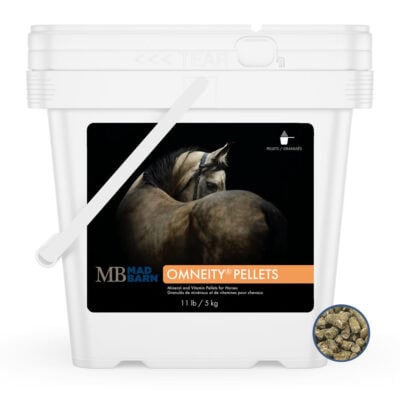
Mad Barn’s Omneity® Pellets is a complete vitamin and mineral supplement formulated with added amino acids to help polocrosse horses perform at their best. It provides 100% organic trace minerals, comprehensive B-vitamin fortification, yeast, and digestive enzymes to support endurance, energy metabolism, hoof integrity, and optimal recovery after training and competition.
For more in-depth information on optimizing your polocrosse horse’s diet, explore our complete guide on How to Feed a High Performance Horse for Training & Competition.
If you want personalized advice to ensure your horses are getting the best nutrition, schedule a free consultation with our qualified equine nutritionists. They can develop a customized feeding plan to support the health, stamina, and overall performance of your polocrosse horse.
Frequently Asked Questions
Here are some frequently asked questions about the equestrian sport of polocrosse:
Polocrosse combines elements of polo and lacrosse, using a racket with a net to handle a soft rubber ball instead of a mallet. It emphasizes agility, teamwork, and accessibility, with a smaller field and simpler equipment compared to polo. [1]
Polocrosse originated in Australia in the late 1930s and has since gained popularity in countries like South Africa, the UK, and New Zealand. The sport is governed by the International Polocrosse Council, which oversees play in 18 countries. [1][3]
Players use a racquet with a netted head for handling the ball, and horses wear protective wraps and boots. Riders also use helmets, gloves, and lightweight saddles to enhance agility and safety during gameplay. [1]
Each polocrosse team has six players, divided into two sections of three. These sections alternate chukkers, ensuring regular rest periods for both horses and riders.
A standard polocrosse match typically consists of six to eight chukkers, each lasting six to eight minutes. Actual durations may vary depending on tournament rules and formats.
Various breeds can excel, but horses need agility, responsiveness, and endurance. Calm temperaments and quick reaction times are especially valuable for handling the fast-paced, close-contact nature of the sport.
To score, a player carries the ball into the designated scoring area and attempts to throw it through the opponent’s goalposts. Each successful goal adds to the team’s overall score.
Newcomers can reach out to local clubs or national associations offering introductory lessons, clinics, and friendly matches. Many organizations provide guidance to develop riding skills, ball-handling techniques, and strategic understanding of the game.
Summary
Polocrosse is a fast-paced equestrian field sport that combines elements of polo and lacrosse. The goal is to shoot a ball through the opposing teams goalposts to earn points.
- Polocrosse originated in Australia in the late 1930s, blending polo’s horsemanship with lacrosse-inspired ball handling.
- The sport is governed internationally by the International Polocrosse Council (IPC) and played in numerous countries, including Australia, the UK, New Zealand, South Africa, and the USA.
- Polocrosse uses a smaller field than polo and features rackets with nets instead of mallets, making the game more accessible, family-friendly, and inclusive of various horse breeds.
- Common health risks for horses who play polocrosse include respiratory issues, muscle strain, gastric ulcers, and joint injuries due to intense play and quick maneuvers.
- Horses require specialized training for agility, responsiveness, and mental resilience, as well as careful management of health, nutrition, hydration, and electrolyte balance.
References
- Seals. B., Polocrosse Australian Horse Sport, Team Strategy & Rules. Britannica. 2017.
- History. American Polocrosse Association.
- Polocrosse. The Australian Stock Horse Society. 2024.
- Welcome. International Polocrosse Council. 2016.
- About Polocrosse. Polocrosse Australia. 2024.
- About Polocrosse. Irish Polocrosse Association.
- What is it?. NZ Polocrosse. 2024.
- About PASA. Polocrosse Association of South Africa.
- Polocrosse. British Equestrian.
- Kaneps. A. J. et al., Eds., Equine Sports Medicine and Surgery: Basic and Clinical Sciences of the Equine Athlete. Second edition. Saunders/Elsevier, Edinburgh. 2014.
- PoloHUB, The Role of The Horse in Polo: A Closer Look. Medium. 2023.
- About Us - FIP . Federation of International Polo. 2021.
- Schumacher. A. and Gehlen. H., Health of Polo Horses. Animals. Multidisciplinary Digital Publishing Institute. 2024. View Summary
- Lascola. K. M., Exercise-Induced Pulmonary Hemorrhage in Horses. Merck Veterinary Manual. 2023.